How to Calculate Wallpaper Quantities for Any Room
By Housey · Last reviewed 30th of May 2026
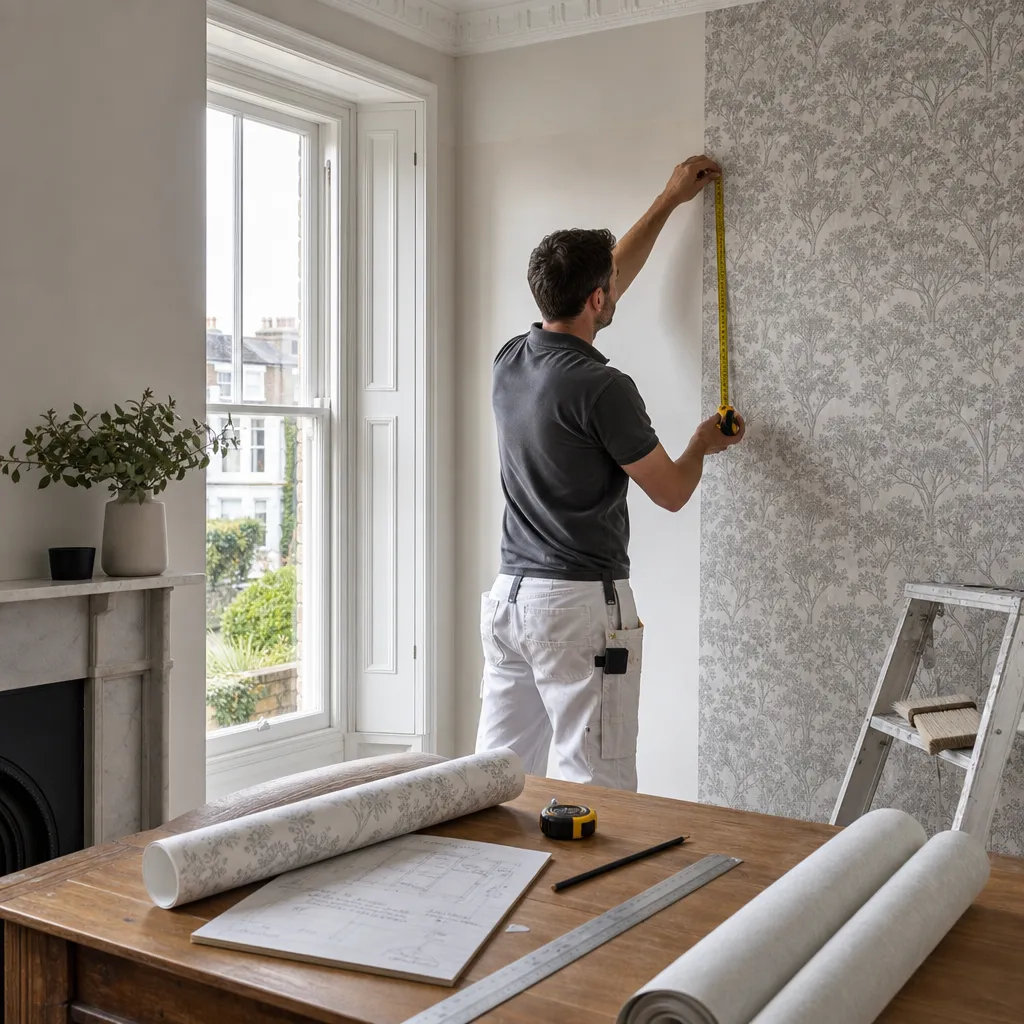
How to Calculate Wallpaper Quantities for Any Room
Getting the maths right before ordering wallpaper avoids two equally frustrating outcomes: running out mid-wall and finding your design is discontinued, or over-ordering and wasting money on unused rolls. The calculation involves a few straightforward measurements, but pattern repeats and awkward room features — chimney breasts, alcoves, stairwells — can catch even experienced decorators out.
Key points
- A standard UK single roll of wallpaper is typically 10 m long and 52 cm wide, giving approximately 5.2 m² of paper per roll before waste.
- Pattern repeat adds waste: a 64 cm offset repeat can reduce usable drops per roll from three to two on a standard 2.4 m ceiling height.
- Add 10% waste allowance for straight-match patterns and 15–20% for large offset or random-match repeats.
- Always buy all rolls from the same batch number — printed on the label — to ensure consistent colour and tone across the room.
- Alcoves, chimney breasts, and stairwells require individual calculation; a flat-perimeter formula alone will underestimate these features.
Understanding roll dimensions and usable area
Most wallpaper sold in the UK comes in single rolls of 10 m × 52 cm, though some European and designer ranges use different widths (typically 53 cm or 70 cm) or are sold as double rolls (20 m). Always check the product specification before calculating.
The theoretical area of a standard roll is 10 m × 0.52 m = 5.2 m². The usable area is less once you account for trimming at ceiling and skirting level (typically 10–15 cm per drop) and any waste from pattern repeats.
A reliable rule of thumb: assume approximately 5 m² of usable paper per standard roll for a quick estimate, then round up to the nearest whole roll at the end.
How to measure your room step by step
Step 1: Measure the room perimeter
Measure the width of every wall you intend to paper, including walls that contain windows and doors. Add all widths together to get the total perimeter.
Example: a 3.6 m × 4.2 m room has a perimeter of (3.6 + 4.2 + 3.6 + 4.2) = 15.6 m.
Step 2: Measure the ceiling height
Measure from the top of the skirting board to the ceiling cornice (or ceiling if there is no cornice). A Victorian terrace may have 2.5 m ceilings; a 1960s semi around 2.35 m; a modern home typically around 2.4 m.
Step 3: Calculate drops per roll
A "drop" is one full-length strip from ceiling to skirting.
- Drop length needed = ceiling height + 0.30 m (trimming allowance top and bottom)
- Drops per roll = 10 m ÷ drop length (round down to the nearest whole number)
Example for a 2.4 m ceiling: drop length = 2.70 m; drops per roll = 10 ÷ 2.70 = 3.7 → 3 drops per roll.
Step 4: Calculate total drops needed
Total drops needed = room perimeter ÷ roll width (0.52 m), rounded up to the nearest whole number.
Example: 15.6 m ÷ 0.52 = 30 drops.
Step 5: Calculate number of rolls
Rolls needed = total drops ÷ drops per roll.
Example: 30 ÷ 3 = 10 rolls.
Step 6: Add waste allowance and round up
Add 10% for plain or straight-match papers; 15–20% for offset or large-repeat patterns. Round up to the nearest whole roll.
Pattern repeats: the biggest variable
Pattern repeat is the vertical distance between identical points in a repeating design. It significantly affects how many usable drops you can cut from each roll.
Pattern type | Typical repeat | Waste allowance | Notes |
|---|---|---|---|
Plain or textured | 0 cm | +10% | Most efficient; drop cut to exact length |
Straight match | Up to 30 cm | +10–12% | Moderate waste; easier to align at the join |
Offset or half-drop | Up to 64 cm | +15–20% | Every other drop cut differently; more offcuts |
Large geometric | 64 cm+ | +20–25% | Can halve usable drops per roll |
Random or free match | N/A | +10% | No repeat alignment needed |
How to adjust your drop length for a pattern repeat: Divide the basic drop length by the repeat length and round up to the next whole number of repeats. Multiply back to get the adjusted drop length.
Example: basic drop 2.70 m, repeat 0.64 m → 2.70 ÷ 0.64 = 4.2 repeats → round up to 5 → 5 × 0.64 = 3.20 m per drop. At 3.20 m per drop, you get only 3 drops from a 10 m roll rather than 3.7.
Worked example: 1930s semi living room
A homeowner is papering three walls of a 4.0 m × 3.5 m living room in a 1930s semi-detached house; one wall is left plain. Ceiling height is 2.4 m. The chosen wallpaper has a 32 cm straight-match repeat and comes in standard UK single rolls (10 m × 52 cm).
Walls to paper: 4.0 + 3.5 + 4.0 = 11.5 m perimeter
Adjusted drop length:
- Basic drop = 2.4 + 0.30 = 2.70 m
- Repeats needed = 2.70 ÷ 0.32 = 8.4 → round up to 9
- Adjusted drop = 9 × 0.32 = 2.88 m
Drops per roll: 10 ÷ 2.88 = 3.47 → 3 drops per roll
Total drops needed: 11.5 ÷ 0.52 = 22.1 → round up to 23 drops
Rolls before waste: 23 ÷ 3 = 7.67 → round up to 8 rolls
Add 12% waste: 8 × 1.12 = 8.96 → round up to 9 rolls
Order: 9 rolls, all verified as the same batch number.
Alcoves, chimney breasts, and stairwells
These features need separate treatment rather than being absorbed into a flat perimeter total:
- Alcoves: measure each alcove wall individually. The recess depth creates additional narrow strips that still require a full drop each.
- Chimney breast: treat each face separately — the front panel and the two return walls beside it. Do not average it into the room perimeter.
- Stairwells: drops are considerably longer on a stairwell wall, which can reduce usable drops per roll to just one or two. Measure the longest and shortest drops, and add at least 20% waste. Note that working at height beyond 2 m on a stairwell requires appropriate access equipment — a standard stepladder is not sufficient.
Checklist before placing your order
When to get professional help
If you are using a premium or heritage wallpaper where a miscalculation is costly, or if the room features a stairwell, multiple alcoves, or a chimney breast, consider asking a professional decorator to measure and calculate quantities before you order. A decorator can also advise on hanging sequence and pattern-matching strategy for complex rooms, reducing the risk of a wasteful or mismatched result.
How Housey can help
If you would prefer a professional to handle measuring, material ordering, and hanging, Housey's service directory makes it straightforward to compare quotes from vetted decorators and tradespeople in your area.
Frequently asked questions
How do I account for a chimney breast when calculating wallpaper?
Treat the chimney breast as a separate mini-calculation. Measure each face individually — the front panel and each return wall beside it — and calculate the drops needed for each. Do not average the chimney breast into the main room perimeter or you will underestimate the quantity required.
Should I order extra rolls beyond my calculation?
Yes. Order at least one spare roll from the same batch. If the design is discontinued or the batch changes between orders, you will have no way to match it if you run short months later. Many retailers accept returns on unopened rolls within a set period — check the returns policy before placing your order.
What if my walls are not perfectly square or plumb?
Measure at several points along each wall and use the largest measurement for each dimension. Walls that are out of plumb do not significantly change the roll calculation, but they do affect the hanging method: always start from a plumb vertical line rather than a corner to prevent the pattern running visibly off-level.
Do I calculate differently when papering a ceiling?
Yes. For a ceiling, drops run along the room's length or the shorter dimension to minimise joins. Measure the ceiling length and width, calculate drops along the shorter dimension, and add at least 15% waste — ceilings are harder to paper neatly and tend to generate more offcuts than walls.
Sources and further reading
- Decorating advice and techniques — Dulux
- Find a professional decorator — Painting and Decorating Association (PDA)
- Work at Height: Frequently Asked Questions — Health and Safety Executive (HSE)
Useful next reads
 Improvement & Build
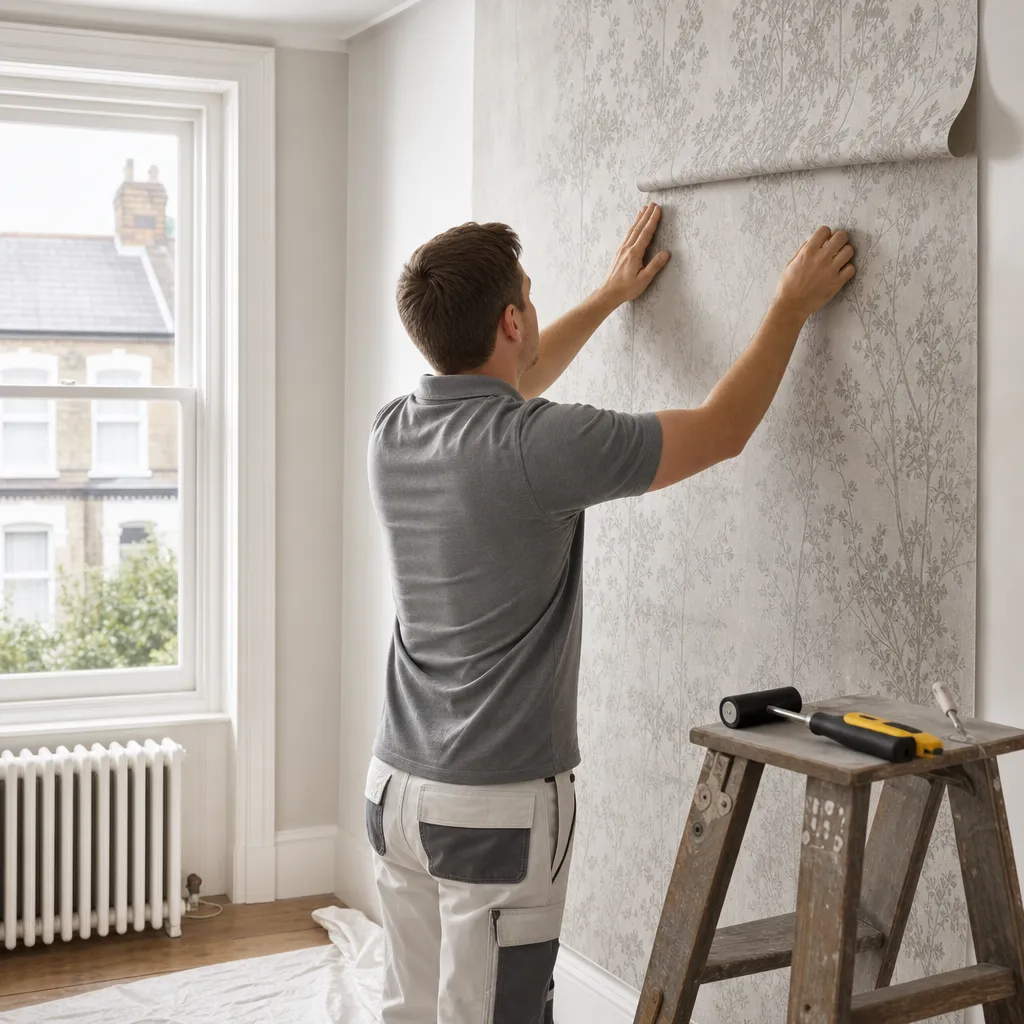
Installing Peel-And-Stick Wallpaper: Application Techniques
Peel-and-stick wallpaper works best on smooth, emulsion-painted walls cured for at least 30 days, in rooms between 13°C and 30°C.
 Improvement & Build
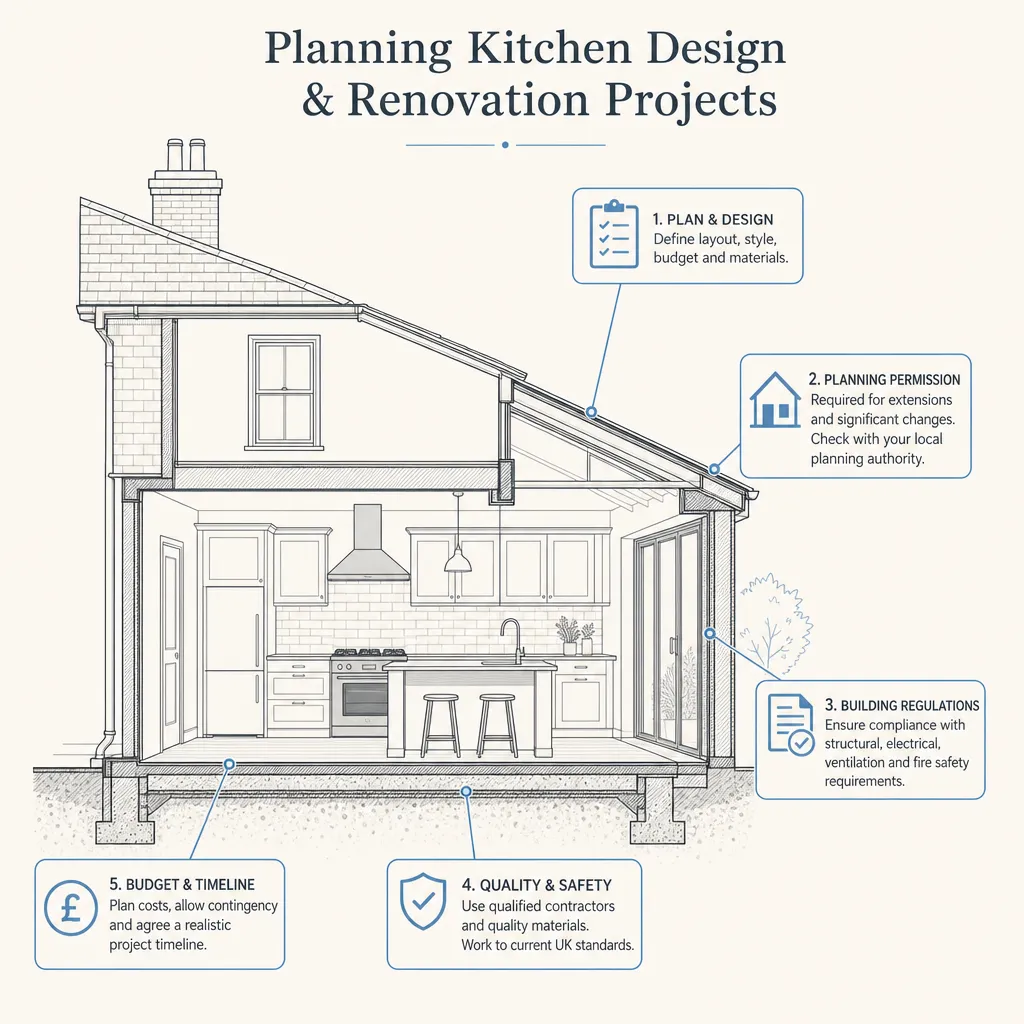
Planning kitchen design and renovation projects
Planning a kitchen renovation in the UK typically involves choosing a layout, setting a budget, deciding which contractors you need, and understanding which regulations apply.
 Improvement & Build
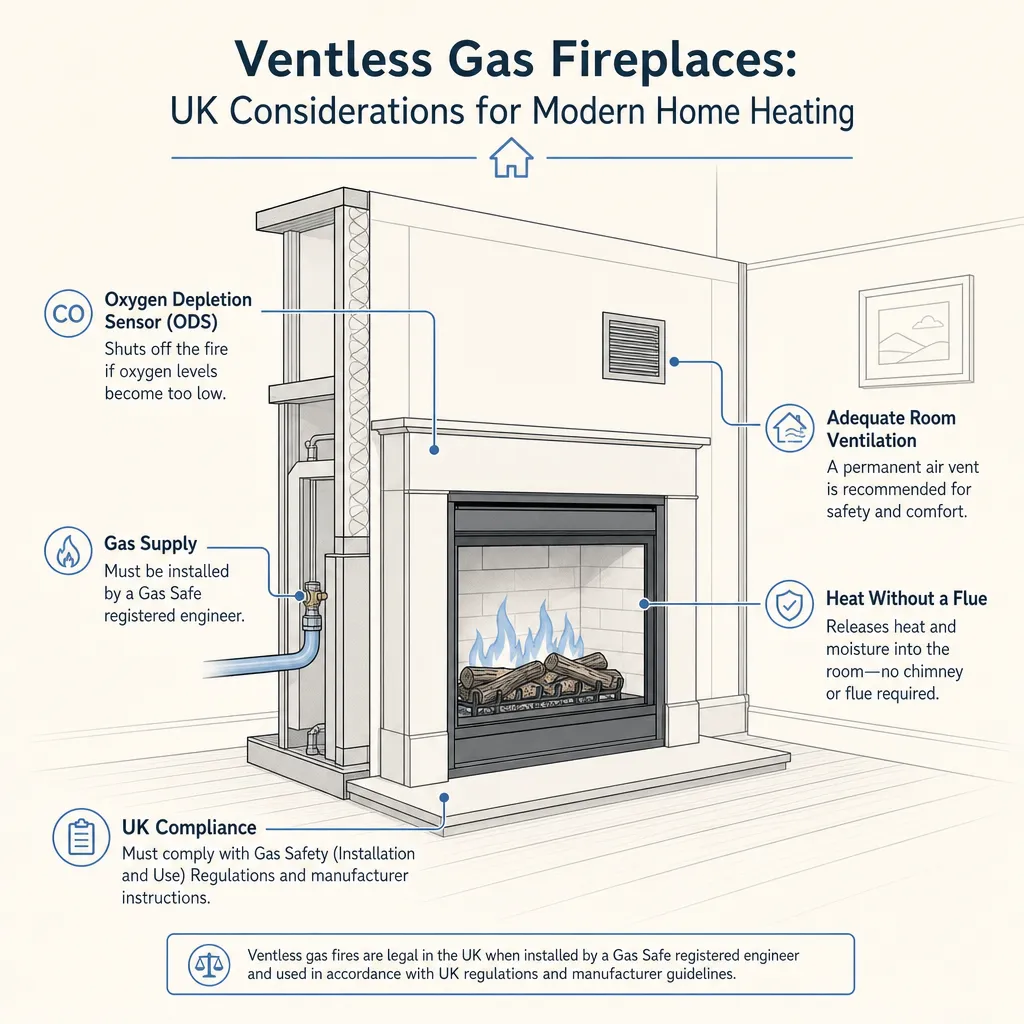
Ventless Gas Fireplaces: UK Considerations for Modern Home Heating
In the UK, ventless gas fires are known as flueless gas fires and are permitted only in specific circumstances under Building Regulations Approved Document J and the Gas Safety Regulations 1998.
 Improvement & Build
Creating Your Home Sanctuary: Design and Comfort Principles
Creating a home sanctuary is about balancing sensory comfort, functional layout, and personal aesthetic.
 Improvement & Build
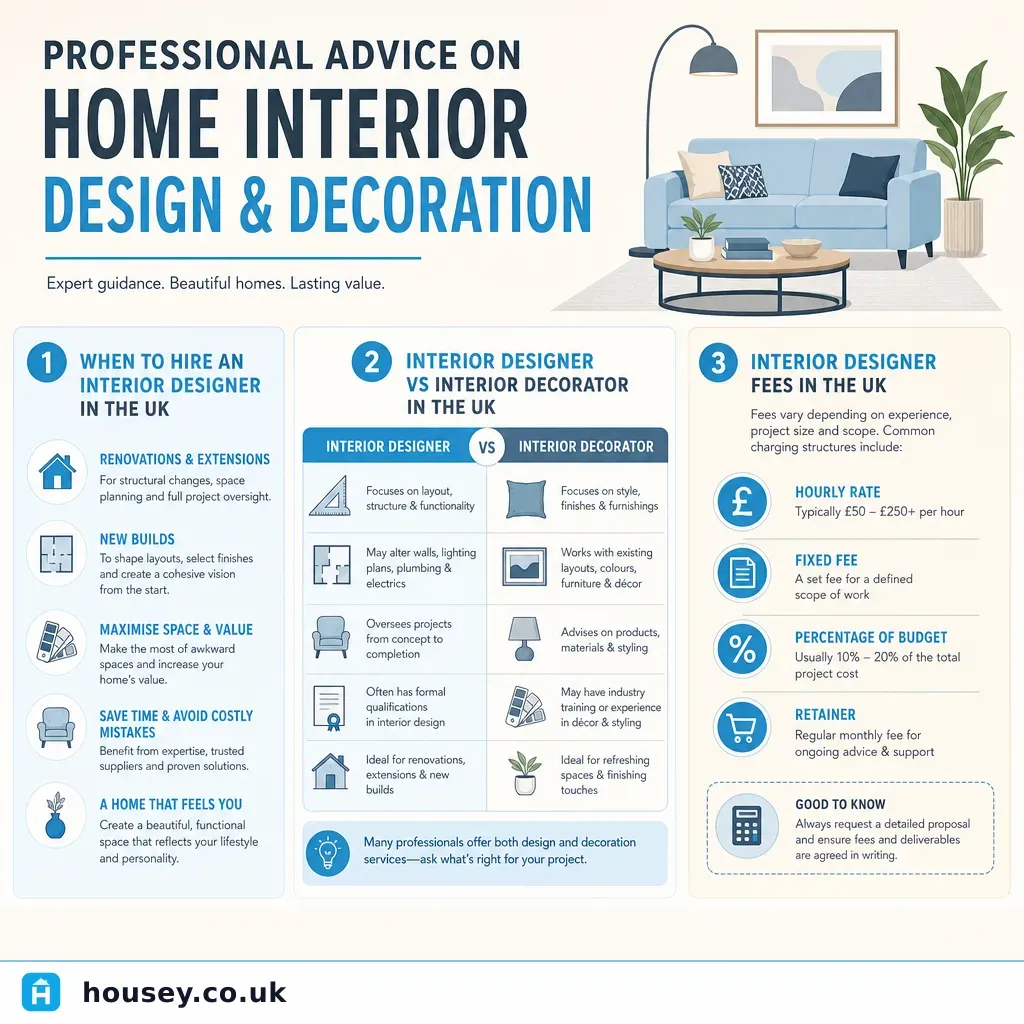
Professional Advice on Home Interior Design and Decoration
In the UK, interior designers typically handle space planning, material specification, and contractor coordination, while decorators focus on surface finishes and styling.