Professional Advice on Home Interior Design and Decoration
By Housey · Last reviewed 30th of May 2026
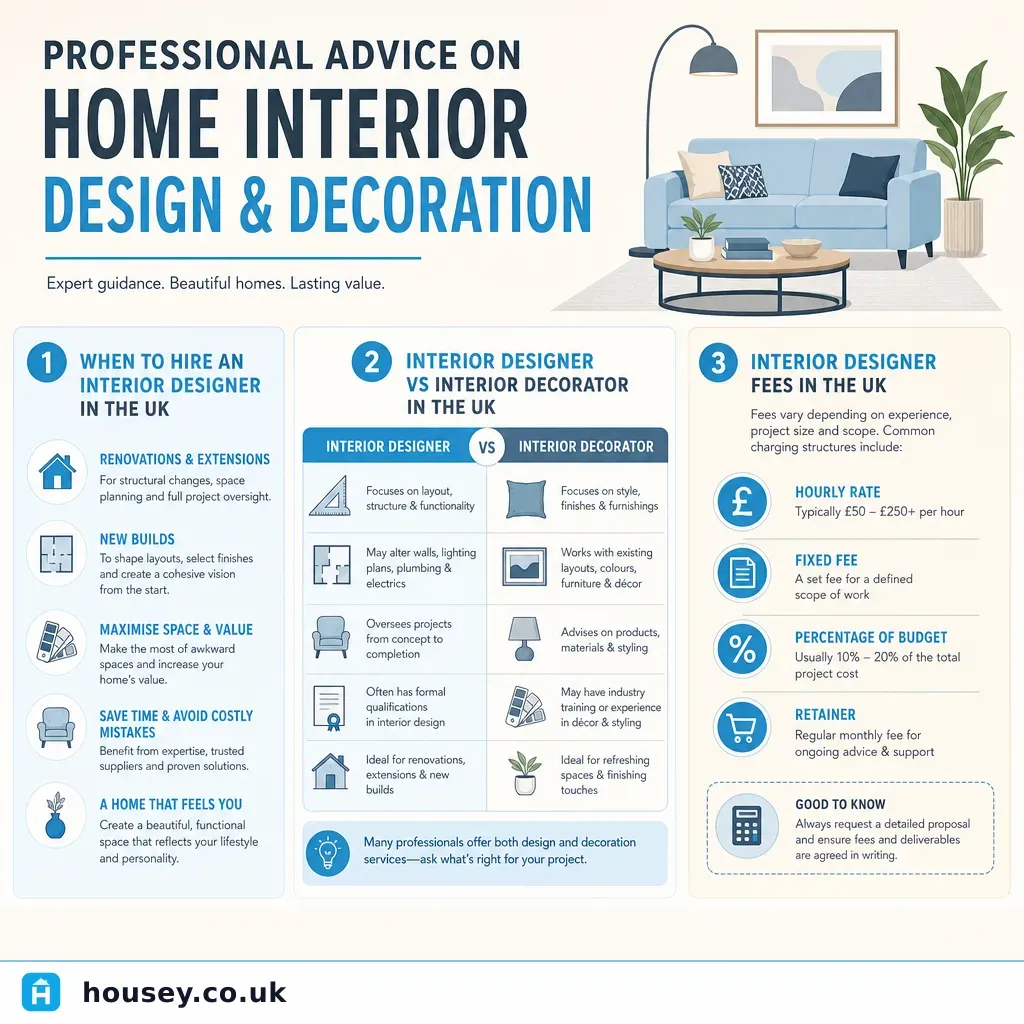
Professional Advice on Home Interior Design and Decoration
Whether you are refreshing a tired living room, remodelling after a loft conversion, or furnishing a newly purchased property from scratch, the right professional support can save time, money, and the frustration of costly mistakes. The interior design industry in the UK is largely unregulated, which means understanding the different types of professionals available — and what to expect from each — is essential before you commit to a fee or a scope of work.
Key points
- Interior designers in the UK are not regulated by a statutory body, but professional membership of the British Institute of Interior Design (BIID) or the Chartered Society of Designers (CSD) indicates peer-reviewed competence and adherence to a published code of conduct.
- Interior designers typically charge in one of three ways: an hourly rate (commonly £75–£250/hr), a flat project fee, or a fee plus a percentage mark-up on goods and materials sourced on your behalf — always clarify which model applies before signing an agreement.
- A full interior design service covers space planning, material specification, furniture procurement, contractor coordination, and project management; it is not limited to colour schemes or mood boards.
- An interior decorator focuses on surface finishes, furnishings, and styling without structural or spatial planning input — a meaningful distinction when scoping what your project actually requires.
- For renovation projects that involve structural changes, planning applications, or building regulations sign-off, an architect or architectural technologist is needed in addition to or instead of an interior designer.
Interior designer, decorator, or stylist: understanding the difference
The terms "interior designer", "interior decorator", and "home stylist" are used interchangeably in UK marketing, but they describe meaningfully different scopes of work and qualifications.
Professional | Scope of work | Typical qualifications | Best for |
|---|---|---|---|
Interior designer | Space planning, structural layout input, materials specification, lighting design, contractor coordination, project management | Degree in interior design; BIID or CSD membership | Full renovations, extensions, new builds, loft conversions |
Interior decorator | Paint colours, soft furnishings, furniture selection, surface finishes | Varied — no statutory minimum qualification | Room refreshes, styling existing spaces, post-move updates |
Home stylist | Staging, visual presentation, styling for photography or sale | Varied | Property sales, short-let presentation, show homes |
Architectural technologist | Technical design drawings, building regulations compliance, planning applications | MCIAT qualification (Chartered Institute of Architectural Technologists) | Any project requiring plans, building control, or planning permission |
If your project involves structural changes — removing a wall, adding a dormer, converting a garage — you will need a professional who can produce technical drawings for planning and building regulations purposes. An interior designer without a technical design qualification cannot fulfil this role alone. An architectural technologist bridges the gap between design intent and regulatory compliance for renovation projects where both spatial creativity and technical rigour are required.
When is professional interior design worth the fee?
Professional interior design services tend to be most cost-effective when:
- You are undertaking a significant renovation — kitchen, bathroom, open-plan living, loft conversion — where specification decisions have long-term cost and maintenance implications
- You are coordinating multiple trades and want someone to manage procurement, scheduling, and quality control across the project
- You are purchasing a period property and want to respect or enhance its original character while modernising the interior
- The property is a leasehold flat where works require freeholder approval, and design documentation may be needed to support that request
- You are furnishing an investment property or buy-to-let and want a coherent, durable scheme that photographs well and minimises ongoing maintenance costs
For a straightforward room refresh — new paint, some new soft furnishings, a rug — most homeowners can manage without a professional. The value of a designer increases with the complexity and budget of the project.
What to expect from the design process
A typical interior design engagement in the UK follows these stages:
- Initial consultation — usually charged at an hourly rate or offered as a fixed-fee discovery session. The designer visits the property, discusses your brief, lifestyle, and budget, and establishes whether the scope suits their practice.
- Concept design — mood boards, material palettes, and spatial layouts are presented. You agree or amend the direction before detailed work proceeds.
- Detailed specification — full material, furniture, and finish schedules are produced. Trade quotes are obtained on your behalf if the designer is managing procurement.
- Procurement and installation — the designer coordinates deliveries, manages contractors, and oversees installation and final dressing.
- Handover — a snagging visit confirms the scheme is complete and the space is handed over, usually with maintenance notes for specialist finishes.
Not all designers offer all stages. Some provide consultancy only, leaving implementation to you. Clarify the scope in writing before work begins and confirm whether a formal letter of engagement or contract will be issued.
Homeowner checklist: preparing for a design consultation
Before your first meeting with an interior designer, prepare the following:
What not to assume about interior design services
A lower day rate does not mean a lower total project cost. Some designers charge modest hourly fees but apply significant mark-ups on goods and materials sourced on your behalf. Always ask how a designer structures their fees and whether you have access to supplier pricing breakdowns before agreeing to a procurement arrangement.
Not all designers can produce technical drawings. If your project requires plans for planning permission, a party wall award, or building regulations sign-off, you need a professionally qualified designer for those aspects. An interior designer without a technical qualification cannot substitute for an architectural technologist or architect in this respect.
Changing the brief mid-project will usually increase the fee. Additional rooms, design revisions beyond the agreed number of rounds, or material upgrades after specification is finalised typically trigger additional charges. Define the scope carefully before work begins and agree how changes will be priced.
Trade discount does not always represent a saving. When a designer sources goods on your behalf, a mark-up over trade price is normal and is usually disclosed in the engagement letter. Understand the net cost to you compared with retail sourcing before agreeing to a goods procurement arrangement.
When to get professional help
Seek a qualified interior designer — rather than a decorator or home stylist — if:
- Your project involves structural or spatial changes, including wall removals, new openings, or layout reconfiguration
- The property is a listed building where alterations require Listed Building Consent
- You are coordinating multiple contractors across a programme of several months or more
- Your combined materials and furniture budget exceeds approximately £25,000–£30,000, at which point professional procurement management is likely to offset the design fee
- Formal drawings or schedules are required for contractor tendering or building control
How Housey can help
For renovation projects where interior design intersects with technical drawings, planning permission, or building regulations compliance, an architectural technologist can provide the documentation that an interior decorator alone cannot produce. Housey connects you with qualified professionals matched to your project type and postcode — request quotes and compare credentials before committing.
Frequently asked questions
How much does an interior designer charge in the UK?
Interior designer fees in the UK typically range from £75 to £250 per hour, or are structured as a flat project fee. A full kitchen and living space redesign might cost £3,000 to £15,000 or more in professional fees, depending on scope and location. Always confirm whether VAT is included and ask how goods procurement mark-ups are calculated. Indicative costs, last reviewed 2026-05-30 — obtain at least three quotes for projects above £5,000.
Do I need an interior designer or an architect for my renovation?
It depends on the project. If structural changes, planning permission, or building regulations approval are involved, you need a professionally qualified designer — an architect or architectural technologist — for those aspects of the work. If the project is purely decorative (paint, furniture, finishes, soft furnishings), an interior designer or decorator can manage it independently without additional technical qualifications.
Can an interior designer help with a leasehold flat?
Yes, but leasehold flats often require freeholder consent for alterations, particularly structural changes, wet-room installations, or changes to services. A good interior designer will flag these requirements early and help prepare documentation for consent requests. They cannot advise on the legal terms of your lease — a solicitor should clarify the position if there is any uncertainty about what works are permitted under your lease.
Is interior design VAT-exempt in the UK?
No. Interior design services are subject to the standard UK VAT rate of 20%. Some supply of goods may be treated differently depending on the item, but professional design fees are always standard-rated. Always confirm whether quoted fees are inclusive or exclusive of VAT before signing any agreement, as the difference can be significant on larger projects.
Sources and further reading
- British Institute of Interior Design (BIID) — BIID
- Chartered Society of Designers (CSD) — CSD
- Chartered Institute of Architectural Technologists (CIAT) — CIAT
- VAT: buildings and construction (Notice 708) — HMRC / GOV.UK
- Problems with a service — Citizens Advice
Useful next reads
 Improvement & Build
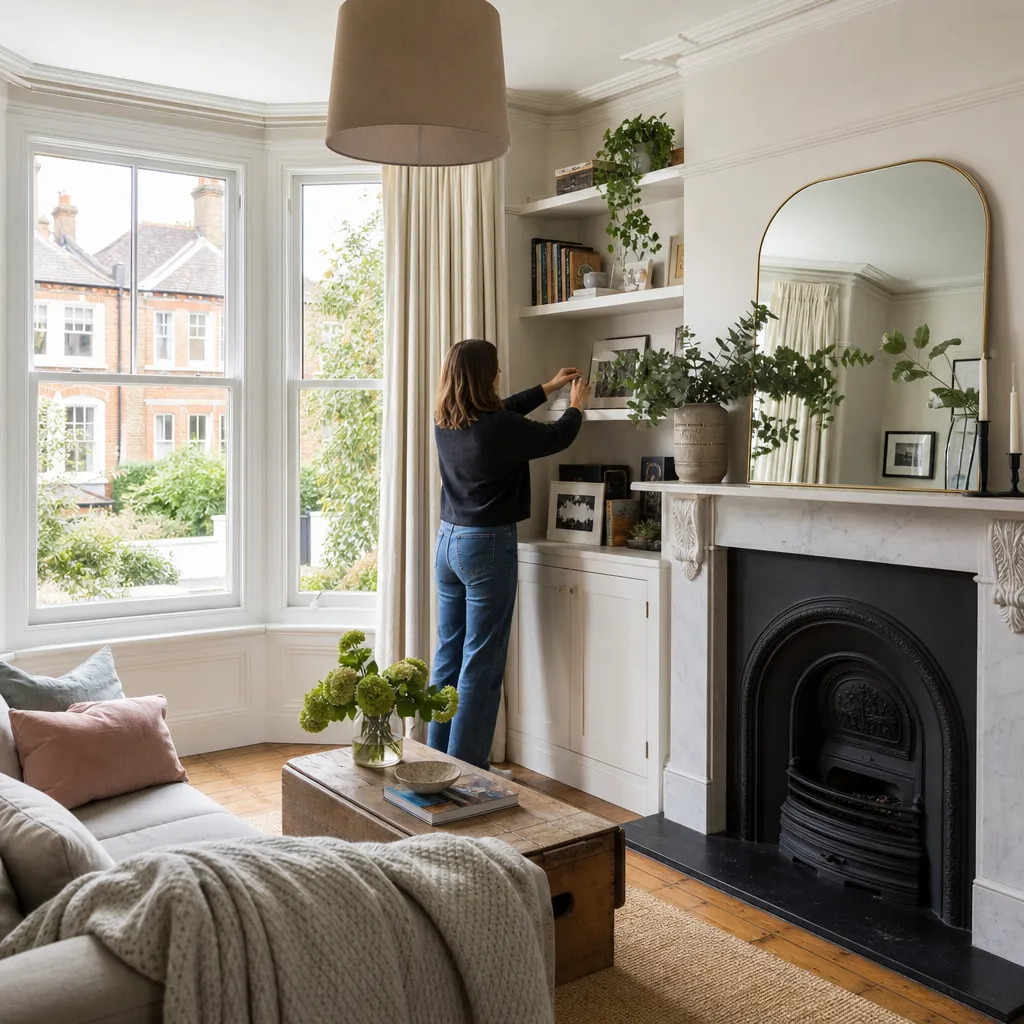
Ways to Personalise Your Home's Character and Style
Personalising your home works best when you build on what's already there — restoring original features, choosing paint colours that suit the architecture, layering lighting beyond the central pendant, and editing objects before adding new ones.
 Improvement & Build
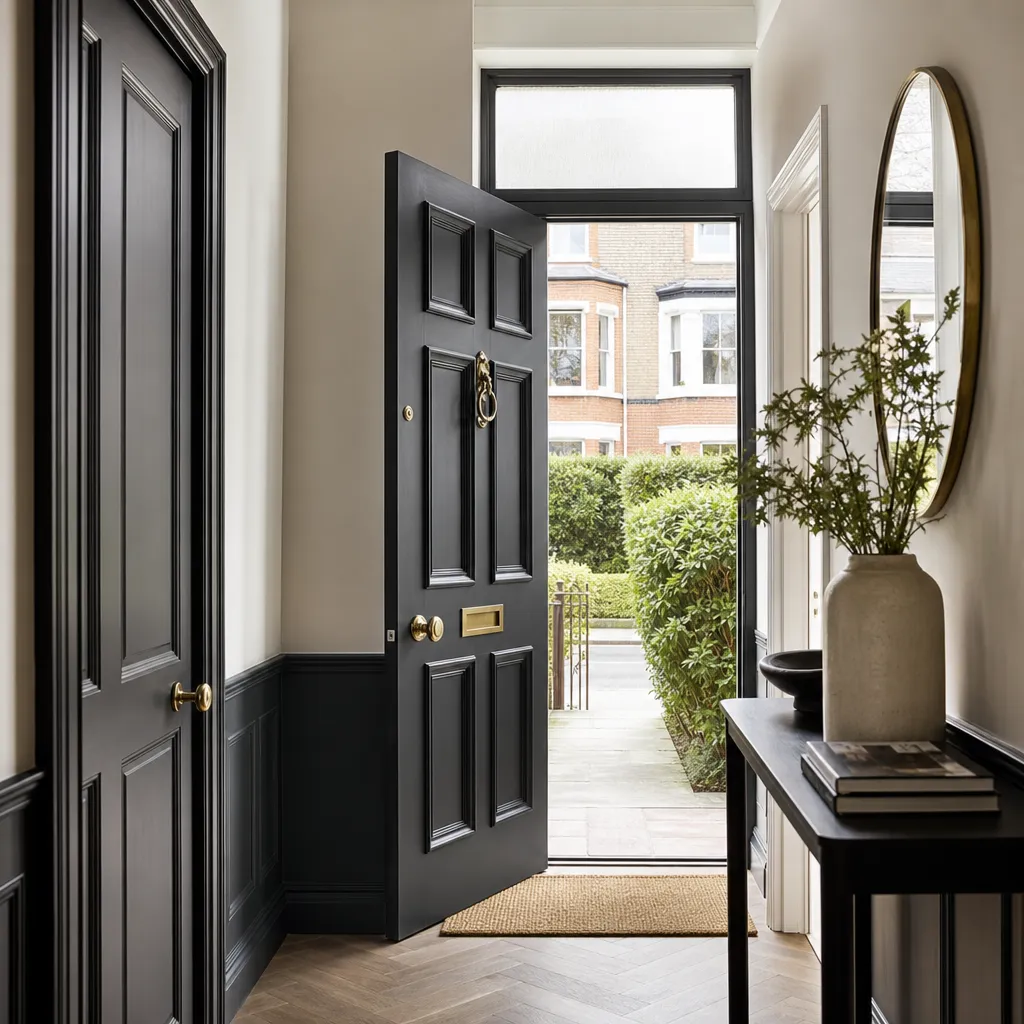
Interior Design Ideas: Painting Doors in Dark Finishes
Dark interior doors work well when sheen level, surface preparation, and room lighting are considered together.
 Improvement & Build
Installing Peel-And-Stick Wallpaper: Application Techniques
Peel-and-stick wallpaper works best on smooth, emulsion-painted walls cured for at least 30 days, in rooms between 13°C and 30°C.
 Improvement & Build
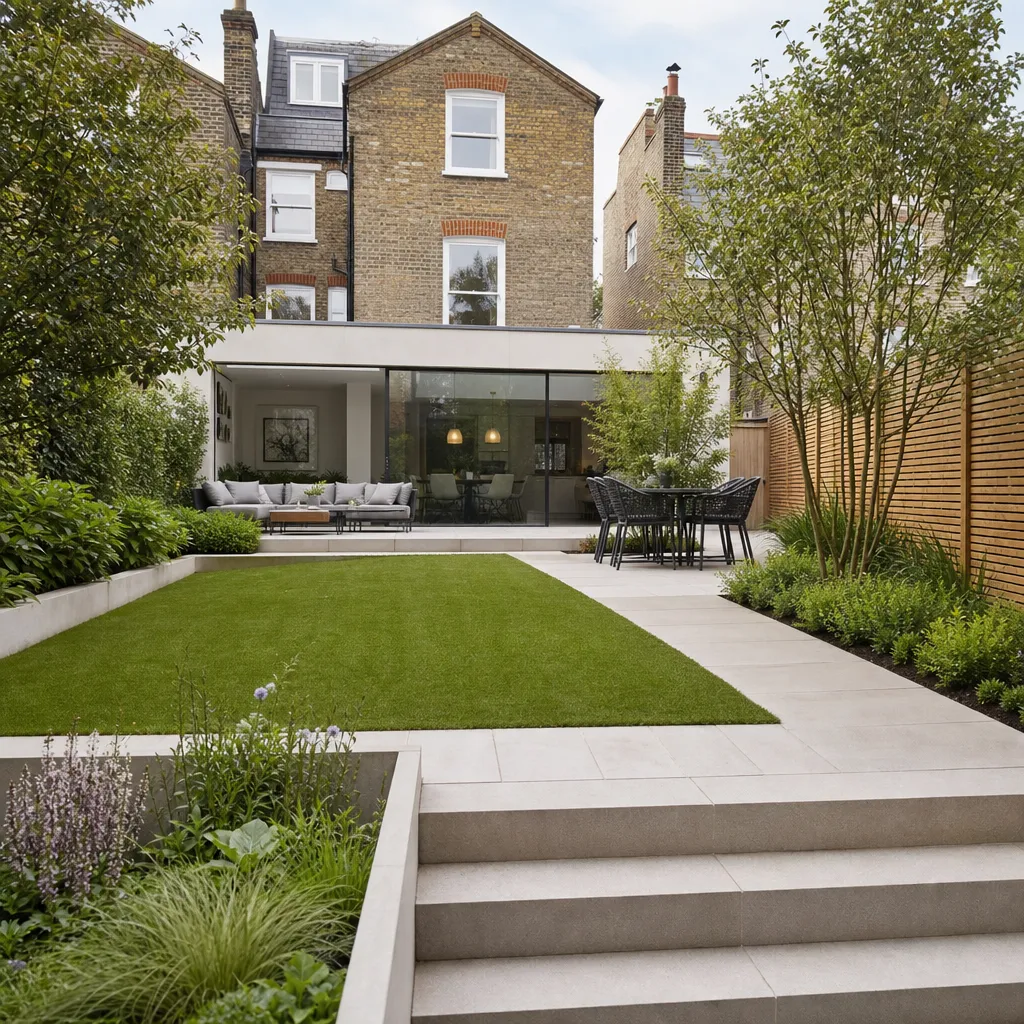
Garden Design Trends and Contemporary Landscaping Ideas
Contemporary UK garden design centres on low-maintenance naturalistic planting, multi-functional outdoor spaces, sustainable hard landscaping materials, and wildlife-friendly rewilded areas.
 Improvement & Build
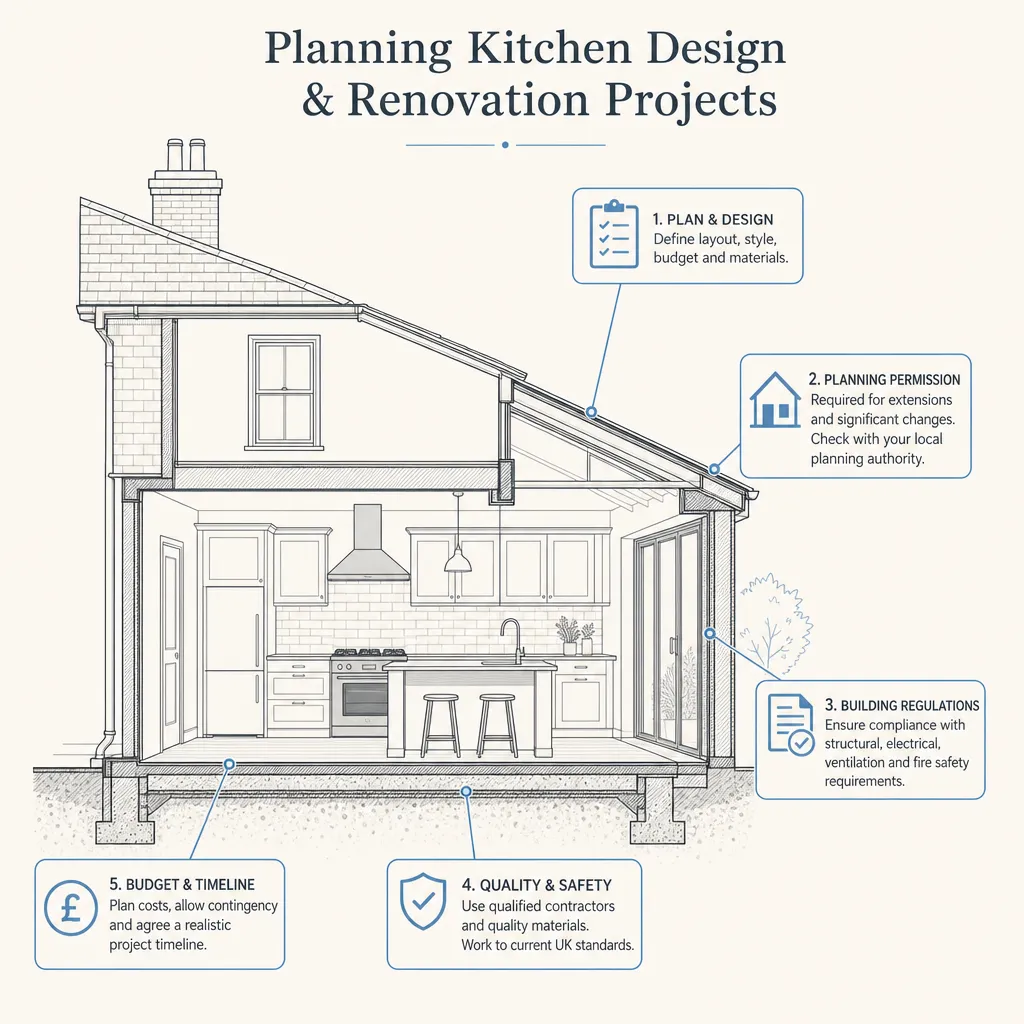
Planning kitchen design and renovation projects
Planning a kitchen renovation in the UK typically involves choosing a layout, setting a budget, deciding which contractors you need, and understanding which regulations apply.