How to relight a boiler pilot light
By Housey · Last reviewed 11th of May 2026
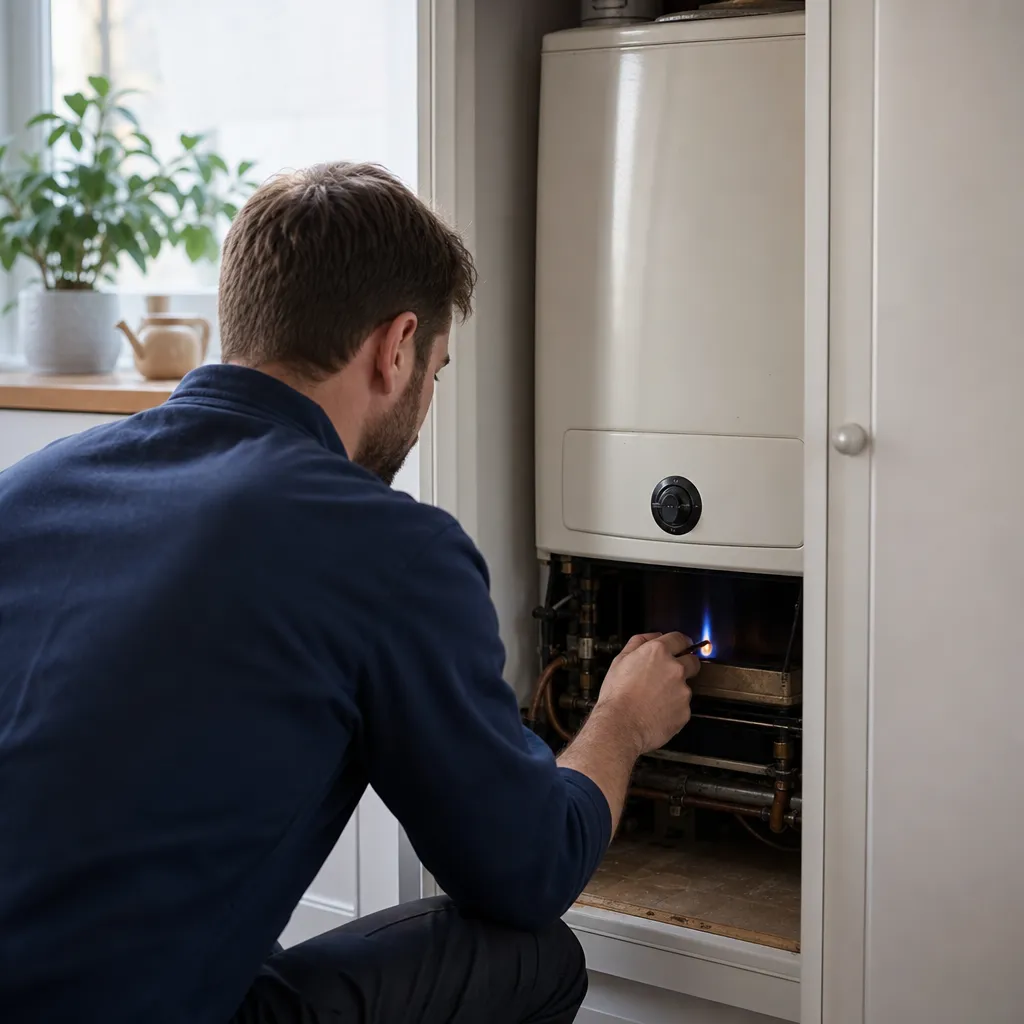
How to relight a boiler pilot light
Standing pilot lights are a feature of older gas boilers — typically those installed before the mid-1990s — and they can be extinguished by draughts, gas supply interruptions, or a failing thermocouple. For homeowners with these older appliances, a pilot light that has gone out raises an immediate question: can you safely relight it yourself, and how? The answer depends on your specific boiler, whether you can access the manufacturer's instructions, and whether there are any signs of a gas problem before you begin.
Key points
- Most boilers manufactured from the mid-1990s onwards use electronic ignition and do not have a standing pilot light — if your boiler has one, it is almost certainly an older appliance.
- The Gas Safe Register states that relighting a pilot light by following the boiler manufacturer's own instructions is not classed as gas work and can be done by a homeowner.
- Before any relight attempt, check for a gas smell — if you detect gas, do not proceed; leave the property and call the National Gas Emergency Service on 0800 111 999 (free, 24 hours).
- If the pilot light relights but will not stay on after the specified hold period, the most likely cause is a faulty thermocouple — a safety component that must be replaced by a Gas Safe registered engineer.
- Boilers with persistent pilot light problems are often old enough that replacement with a modern condensing boiler is more cost-effective than ongoing repair.
Does your boiler actually have a pilot light?
Before troubleshooting, confirm whether your boiler has a standing pilot light at all — many homeowners mistake an electronic ignition lockout for a pilot light failure.
Feature | Older boiler with standing pilot | Modern boiler with electronic ignition |
|---|---|---|
Typical installation era | Pre-mid-1990s | Mid-1990s onwards |
Ignition method | Continuous small flame | Electronic spark on demand |
What you see when idle | Small observation window or visible flame | No visible flame when burner is off |
What you hear when firing | Click of piezo, then main burner lights | Click then a whomp as main burner ignites |
Homeowner can relight? | Yes, following manufacturer guide | No — lockouts reset via a panel button |
If it won't start | Pilot out or thermocouple fault | Fault code on display; press reset button |
If your boiler shows a fault code on a digital display, it has electronic ignition and does not have a pilot light. Refer to your manufacturer's reset instructions or the guide on boiler troubleshooting after a power cut instead.
Before attempting a relight: safety checks
Complete all of these checks before approaching the boiler pilot light control:
Check for a gas smell. Sniff near the boiler and near the gas meter. If you detect a sulphur or rotten egg odour, do not proceed. Leave the property without operating any electrical switches, close the front door behind you, and call the National Gas Emergency Service on 0800 111 999 immediately.
Ensure the area is ventilated. Open a window or door near the boiler before attempting a relight.
Confirm the gas supply is on. Check that your gas meter isolation valve is open (handle aligned with the pipe) and that other gas appliances — a hob ring, for example — are igniting normally. If there is a wider supply interruption, contact your gas supplier and wait until it is resolved before attempting a relight.
Locate your boiler manufacturer's manual. Relighting procedures vary significantly between makes and models. The correct sequence, hold time, and safety guidance are specific to your appliance. If you do not have the manual, search for your boiler's model number (found on the data plate on the appliance) on the manufacturer's website — most publish archived manuals as PDFs.
Relighting the pilot light: follow your manufacturer's instructions
Because the procedure varies significantly between boiler models, the Gas Safe Register advises following your boiler manufacturer's own relighting instructions rather than a generic method. Your manual will specify:
- The location of the pilot light control knob or button
- The correct sequence (typically: set the control to the pilot position, press and hold, ignite using the piezo igniter or a long match, and hold for a set period to allow the thermocouple to heat)
- The safe wait period between failed attempts — usually at least 3 minutes, to allow residual gas to disperse
- How many attempts are recommended before calling a professional
Do not improvise or deviate from the manufacturer's sequence. If you cannot locate the manual and cannot identify the correct procedure with certainty, do not attempt a relight — call a Gas Safe registered engineer.
Why the pilot light won't stay lit after relighting
If the pilot relights but goes out again when you release the button after the specified hold time, the thermocouple is almost certainly the cause.
A thermocouple is a safety device — a metal probe positioned in the pilot flame that generates a small electrical current when heated. This current holds open a gas valve, allowing gas to continue flowing to the pilot. If the thermocouple is worn, corroded, or faulty, it cannot generate sufficient current; the valve closes and the pilot goes out as soon as you release the button.
Thermocouple replacement is straightforward for a Gas Safe registered engineer but is not a task a homeowner should attempt, as it involves disconnecting gas connections inside the appliance.
Other reasons a pilot light may not stay lit:
- A persistent draught affecting the pilot flame — check for nearby open air vents, gaps in the building fabric, or unsealed penetrations close to the boiler
- Dirt or debris partially blocking the pilot jet — cleaning requires a Gas Safe engineer
- Low gas supply pressure — check that other gas appliances in the property are working normally
Decision tree: what to do with your pilot light
- No gas smell and gas supply confirmed working → Follow the manufacturer's relighting instructions carefully.
- Gas smell detected at any point → Do not relight; leave the property and call 0800 111 999.
- Pilot relights and stays on → Normal operation resumed; monitor the appliance over the next few hours.
- Pilot relights but won't stay on after the full hold time → Likely thermocouple fault; call a Gas Safe registered engineer.
- Pilot won't relight at all after following manufacturer instructions → Call a Gas Safe registered engineer; do not attempt further ignition.
- Pilot light goes out repeatedly over days or weeks → Underlying fault (thermocouple, pilot jet, or draught); arrange a Gas Safe engineer inspection.
- No manual available and procedure is uncertain → Do not guess; call a Gas Safe registered engineer.
Important limitations
This article is general guidance only. Gas boilers and pilot light assemblies vary significantly between makes, models, and installation dates. Procedures, risks, and appropriate actions depend on your specific appliance, its condition, and its maintenance history. This guide does not replace your boiler manufacturer's instructions or the advice of a Gas Safe registered engineer. If you are in any doubt at any stage, stop and call a registered professional.
When this becomes urgent
Stop and call a Gas Safe registered engineer — or the National Gas Emergency Service on 0800 111 999 — immediately if:
- You smell gas before, during, or after any attempt to relight the pilot.
- The boiler makes unusual sounds — banging, hissing, or whistling — at any point.
- You cannot confidently identify and follow the manufacturer's relighting sequence.
- The pilot light has gone out on multiple occasions within a short period.
- The boiler is visibly damaged, corroded, or shows signs of water leaks.
- You are unsure when the boiler was last serviced or inspected by a Gas Safe engineer.
What to ask a qualified professional
When you contact a Gas Safe registered engineer about a pilot light problem, ask:
- Can I see your Gas Safe Register ID card, and may I verify your registration number at gassaferegister.co.uk?
- What is the most likely cause of the pilot going out — thermocouple wear, draught, or a gas pressure issue?
- Will you carry out a full boiler safety inspection alongside fixing the pilot?
- Given this boiler's age, is repair cost-effective compared with replacement by a modern condensing boiler?
- What does the repair include, and what is the total cost with VAT?
- If you recommend a replacement, which models would you suggest and why?
When to get professional help
Any pilot light issue that cannot be resolved by a single relight following the manufacturer's instructions warrants a Gas Safe registered engineer's visit. Older boilers with pilot lights are typically 25 or more years old — an age at which multiple components may be nearing the end of their service life. An annual boiler service, required by most manufacturers to maintain warranty terms and recommended by the HSE, provides an opportunity for a Gas Safe engineer to inspect the pilot assembly, thermocouple, and all safety controls.
How Housey can help
Housey connects UK homeowners with qualified local tradespeople, including Gas Safe registered engineers for boiler inspections, repairs, and annual servicing. If your pilot light issue has not been resolved by following your manufacturer's guidance, Housey can help you find and compare verified engineers in your area.
Frequently asked questions
Can I relight my boiler pilot light myself?
The Gas Safe Register confirms that relighting a standing pilot light by following your boiler manufacturer's instructions is not classed as gas work — homeowners may attempt it, provided there is no smell of gas and the gas supply is confirmed on. If you cannot locate the instructions, or are in any doubt about the correct procedure, call a Gas Safe registered engineer rather than guessing.
How long do I hold the button when relighting a pilot light?
The hold time varies by boiler model and is specified in your manufacturer's manual — typically between 10 and 30 seconds. This allows the thermocouple to heat up and generate enough current to hold the gas valve open. Releasing too soon is the most common reason a successfully lit pilot immediately goes out again. Always follow the timing stated in your specific boiler's instructions.
My pilot light keeps going out even after relighting — what's wrong?
A pilot light that relights but will not stay on, or goes out repeatedly, almost always indicates a faulty thermocouple. This safety component must be replaced by a Gas Safe registered engineer. Other causes include a draught affecting the pilot flame or a partially blocked pilot jet — both of which also require professional attention rather than DIY investigation.
Is it worth repairing an old boiler with a pilot light?
Boilers with standing pilot lights are typically 25 or more years old and considerably less efficient than modern A-rated condensing boilers. Whether repair is worthwhile depends on the specific fault, the boiler's overall condition, and repair cost versus replacement. A Gas Safe registered engineer can give an honest assessment — ask them to compare repair cost against a new boiler installation, including any available government support schemes.
Sources and further reading
- Gas Safe Register: boiler safety and maintenance — Gas Safe Register
- HSE: gas safety in domestic premises — Health and Safety Executive
- National Gas Emergency Service: smell gas? — National Gas
- Energy Saving Trust: heating and hot water — Energy Saving Trust
Useful next reads
 General property advice
Why is your boiler leaking water and how to fix it?
A boiler leak is most often caused by excessive system pressure activating the pressure relief valve, a failing pump seal, or a corroded heat exchanger.
 General property advice
Troubleshooting common problems with Glow-worm boilers
Glow-worm boiler faults are usually displayed as F or E codes.
 General property advice
Combi boiler not producing hot water: troubleshooting guide
The most common causes of a combi boiler not producing hot water are low system pressure (below 1 bar), a stuck diverter valve, or a frozen condensate pipe.
 General property advice
Boiler not working after a power cut: troubleshooting steps
After a power cut, most gas boilers enter a protective lockout because their electronic controls detect an abnormal shutdown — the gas supply is unaffected.
 General property advice
What to do when your boiler stops working
When your boiler stops working, check the pressure gauge (should read 1–1.