How to safely box in a boiler in your home
By Housey · Last reviewed 11th of May 2026
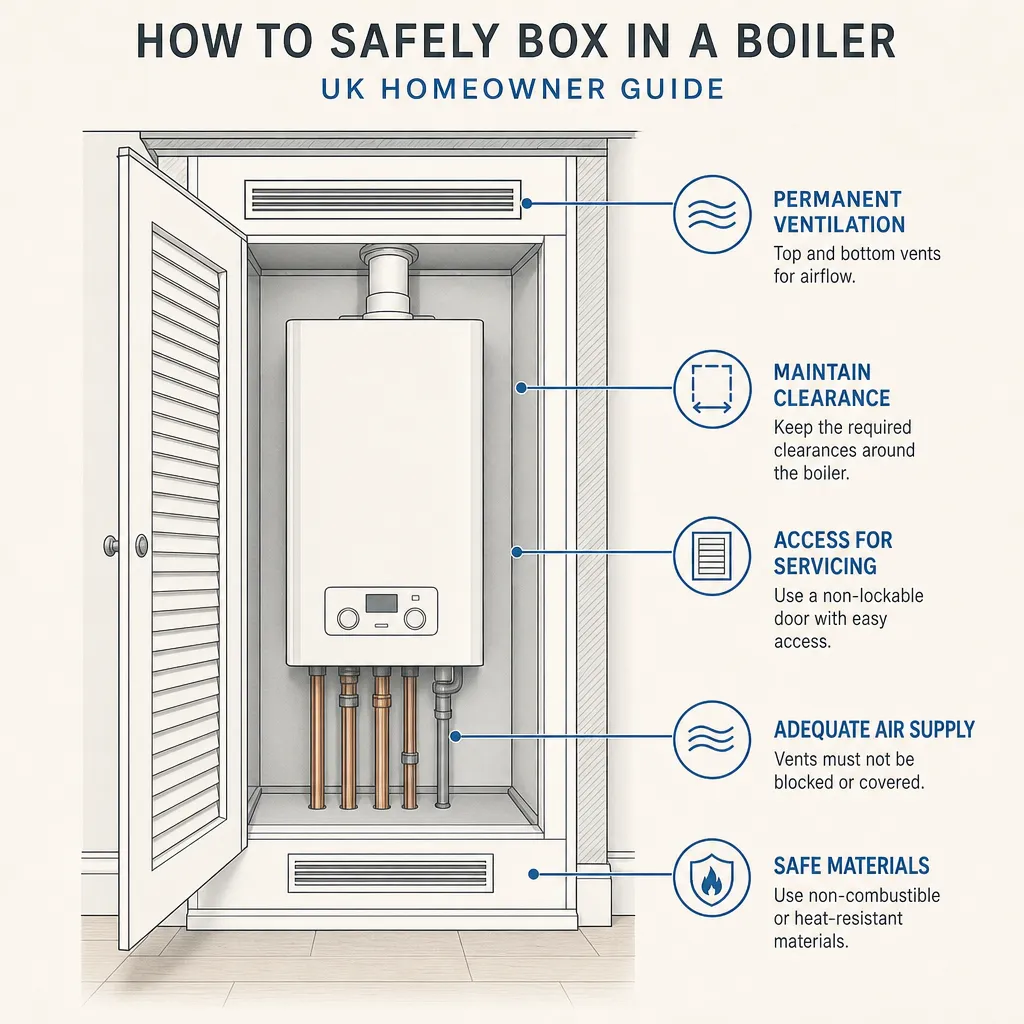
How to safely box in a boiler in your home
Boxing in a boiler — enclosing it within a purpose-built cupboard or casing — is a popular way to improve the appearance of a kitchen, utility room, or airing cupboard. In most properties, the carpentry itself is straightforward. What is less straightforward are the safety and regulatory requirements that govern how the boxing must be designed: the Gas Safety (Installation and Use) Regulations 1998, Building Regulations Approved Document J, and your boiler manufacturer's installation specifications all place obligations on the design that, if ignored, can create a fire hazard, obstruct essential maintenance, or allow combustion gases to accumulate inside the enclosure.
Key points
- Under the Gas Safety (Installation and Use) Regulations 1998, any boxing or enclosure around a gas appliance must not obstruct ventilation, the flue, or access for inspection and servicing.
- Approved Document J (Building Regulations, England) sets out clearance distances and material requirements for enclosures near combustion appliances and flue pipework.
- Most modern combi and system boilers are room-sealed — they draw combustion air from outside via the flue — and do not require ventilation openings within the boxing itself; however, open-flued boilers do.
- BS 6798:2014, the British Standard for gas-fired boiler installation, requires the boiler to remain accessible for inspection, adjustment, and maintenance at all times.
- A carbon monoxide (CO) alarm must be fitted in any room where a new or replacement combustion appliance is installed under Building Regulations Part J; one is strongly recommended in rooms with any existing gas boiler.
Why boxing in a boiler carries safety obligations
A gas boiler is not an appliance you can simply enclose in a timber frame and close off. Several safety systems depend on unobstructed conditions:
Flue integrity. The flue carries combustion gases — including carbon monoxide — safely out of the building. If any part of the flue is incorrectly enclosed or the terminal is obstructed, gases may accumulate inside the boxing and could enter the living space.
Ventilation. Room-sealed (balanced flue) boilers draw combustion air directly from outside and do not require additional room ventilation. Open-flued boilers require a permanent air supply from the room where they are installed — an air vent that must remain unobstructed by any boxing.
Servicing access. Gas Safe Register guidance and BS 6798:2014 both require the boiler to be accessible for annual inspection, cleaning, and adjustment. If access is inadequate, a Gas Safe engineer may be unable to service the appliance safely, and your boiler may fail its annual safety check as a result.
Emergency isolation. The gas isolation valve, pressure gauge, and reset controls must remain visible and operable without tools in an emergency.
Room-sealed vs open-flued: which boiler do you have?
The type of boiler determines your ventilation obligations and significantly affects the complexity of any boxing design.
Feature | Room-sealed (balanced flue) boiler | Open-flued boiler |
|---|---|---|
Typical installation era | 1990s onwards | Pre-1990s |
Where combustion air comes from | Directly from outside via concentric flue | From the room where the boiler is installed |
Ventilation opening in boxing needed? | No — but flue terminal must remain clear externally | Yes — permanent, calculated ventilation opening required |
Enclosure design complexity | Straightforward if clearances and access are correct | More complex — requires ventilation sizing; seek specialist advice |
Common in modern UK homes? | Yes, the majority of installed boilers | Increasingly rare; found mainly in older properties |
If you are unsure which type of boiler you have, check the data plate on the appliance (usually inside the front casing) or ask a Gas Safe registered engineer before designing the boxing.
Design rules: what every boiler boxing must include
1. A full-width access panel or door
This is the most important design requirement. The boxing must include an access panel or hinged door large enough to allow a Gas Safe engineer to:
- Reach the boiler's service points — filters, pump, heat exchanger, and electrical connections
- Read the pressure gauge and operate the controls
- Access and operate the gas isolation valve
- Remove the boiler's front casing for internal inspection
A small inspection hatch is not sufficient. The access opening must allow a person to work safely at the appliance. Ask the Gas Safe engineer who services your boiler to confirm that the proposed access arrangement is adequate for your specific model before the boxing is built.
2. Manufacturer-specified clearances
Every boiler manufacturer publishes minimum clearance distances — the free space required on each side, above, and below the appliance — for safe operation and servicing. These are listed in the boiler's installation manual and must be maintained within the boxing. The boxing must not be built flush against the appliance casing.
3. Flue clearances from combustible materials
Approved Document J specifies minimum separation distances between flue pipes and combustible materials. These distances vary depending on the flue type, temperature classification, and the materials used. Where any part of the flue passes through or near the boxing, these clearances must be maintained — which may require non-combustible spacers, heat shields, or a purpose-made flue enclosure. If your flue route passes through the proposed boxing, have a Gas Safe engineer review this specifically before any work begins.
4. Suitable materials
Materials used near the boiler body and flue pipework must have appropriate fire resistance. Plasterboard on a timber frame is commonly used and is acceptable where manufacturer and Approved Document J clearances are maintained. Confirm that the specific materials you plan to use are appropriate for the proximity to any hot surfaces — your Gas Safe engineer can advise.
5. Carbon monoxide alarm
Building Regulations Part J (England) requires a carbon monoxide alarm to be fitted in any room where a new or replacement combustion appliance is installed. If there is no CO alarm currently in the room where the boiler is located, fit one before the boxing work is treated as complete. Check with your local building control authority for the specific requirements that apply to your property and region.
Homeowner checklist before boxing in a boiler
Complete this before commissioning any carpentry or purchasing materials:
Does boxing in a boiler need planning permission or building control approval?
In most cases, boxing in a boiler is minor carpentry work that falls within permitted development rights and does not itself require a planning permission application or a formal building control notification. However, if you are in a listed building or a conservation area, check with your local planning authority before making any alterations, as restrictions may apply.
The requirements of Building Regulations Approved Document J apply regardless of whether a formal building control submission is made — they are material legal obligations that exist independently of the application process. Non-compliance could affect your home insurance, complicate future sale conveyancing, and — in the case of gas safety — put your household at risk.
Important limitations
This article is general guidance only. The requirements for boxing in a boiler depend on your specific appliance type, age, flue configuration, installation room, and the design of the proposed enclosure. Approved Document J requirements, your manufacturer's clearance specifications, and the Gas Safety (Installation and Use) Regulations 1998 apply to your specific circumstances and may differ from the generalised information provided here. A Gas Safe registered engineer should review your proposed design before any work begins. If your boiler is open-flued, in an unusual location, or has a non-standard flue arrangement, seek professional advice rather than relying solely on general guidance.
When this becomes urgent
Stop and seek professional advice immediately if:
- You smell gas at any point near the boiler or proposed boxing — leave the property and call the National Gas Emergency Service on 0800 111 999.
- You discover that existing boxing or a fitted cupboard has already been built without adequate access or ventilation around the boiler.
- The existing flue appears to run through an enclosed void or ceiling without visible clearance from combustible materials.
- You cannot locate the boiler's installation manual and cannot identify the minimum clearances required.
- The boiler is open-flued and you are uncertain about the ventilation requirements.
- The boiler has not been serviced recently and its condition is unknown.
What to ask a qualified professional
Before instructing a carpenter and before any boxing work begins, discuss your proposals with a Gas Safe registered engineer:
- Is my boiler room-sealed or open-flued, and what does that mean for the boxing design?
- What are the minimum clearances for my specific boiler model on all sides, top, and bottom?
- Will the access panel I am planning be sufficient for you to carry out the annual service safely?
- Does any part of the flue pass through the proposed boxing, and if so, what clearances and materials are required?
- Do I need ventilation openings in the boxing, and if so, what size and position?
- After the boxing is built, will you inspect it and confirm it meets requirements before we treat the job as finished?
- Is a CO alarm fitted in this room, and is it appropriately positioned for the appliance type?
When to get professional help
A Gas Safe registered engineer should be consulted before any boxing work is designed or built — not as an afterthought once the carpentry is complete. This is also a natural opportunity to arrange the boiler's annual service if it is overdue. Once the boxing is finished, the same engineer should confirm that access, ventilation, and clearances are satisfactory. If you are commissioning a builder or carpenter for the work, ensure they have been briefed with the engineer's requirements before they price or start the job.
How Housey can help
Housey connects UK homeowners with qualified local tradespeople. If you are planning to box in a boiler and need a Gas Safe registered engineer to review your design, inspect the existing installation, or carry out an overdue annual service before work proceeds, Housey can help you find and compare verified engineers in your area.
Frequently asked questions
Do I need to consult a gas engineer before boxing in my boiler?
Yes — a Gas Safe registered engineer should review your proposed design before any carpentry begins. They can confirm that your planned access panel, clearances, and ventilation arrangements are adequate for your specific boiler and flue type. Building an enclosure that prevents proper servicing access is a safety risk, may breach the Gas Safety (Installation and Use) Regulations 1998, and can invalidate your boiler manufacturer's warranty.
Does boxing in a boiler affect my home insurance?
It can. If inadequate access means the boiler cannot be properly serviced annually, your insurer may decline claims related to boiler or heating system damage. Ensure the Gas Safe engineer who services your boiler confirms the access arrangement as adequate after the boxing is complete, and that annual servicing continues without interruption.
Can I do the boxing work myself, or does it need a professional?
The carpentry element — building the frame and fitting the access door — can be done by a competent DIYer or joiner, provided the design has been confirmed as compliant by a Gas Safe registered engineer. The gas-related aspects, including verifying ventilation, checking flue clearances, and inspecting the installation before use, must be carried out by a Gas Safe registered engineer.
What size does the access panel need to be?
The access panel must be large enough for a Gas Safe engineer to carry out a full annual boiler service safely. This typically means a full-width or near-full-width hinged door rather than a small inspection hatch. The exact minimum size depends on your boiler model and its service requirements — discuss this with your Gas Safe engineer before building the boxing.
Sources and further reading
- Approved Document J: combustion appliances and fuel storage systems — Ministry of Housing, Communities and Local Government
- Gas Safety (Installation and Use) Regulations 1998 — legislation.gov.uk
- Gas Safe Register: boiler safety and maintenance — Gas Safe Register
- HSE: gas safety in domestic premises — Health and Safety Executive
Useful next reads
 Improvement & Build
Laundry Room Renovation and Fitting Costs
A basic UK laundry room fit-out typically costs £2,000–£6,000 where plumbing and electrics are already in place, rising to £8,000–£15,000 or more when structural work, new drainage connections, or new electrical circuits are needed.
 Improvement & Build
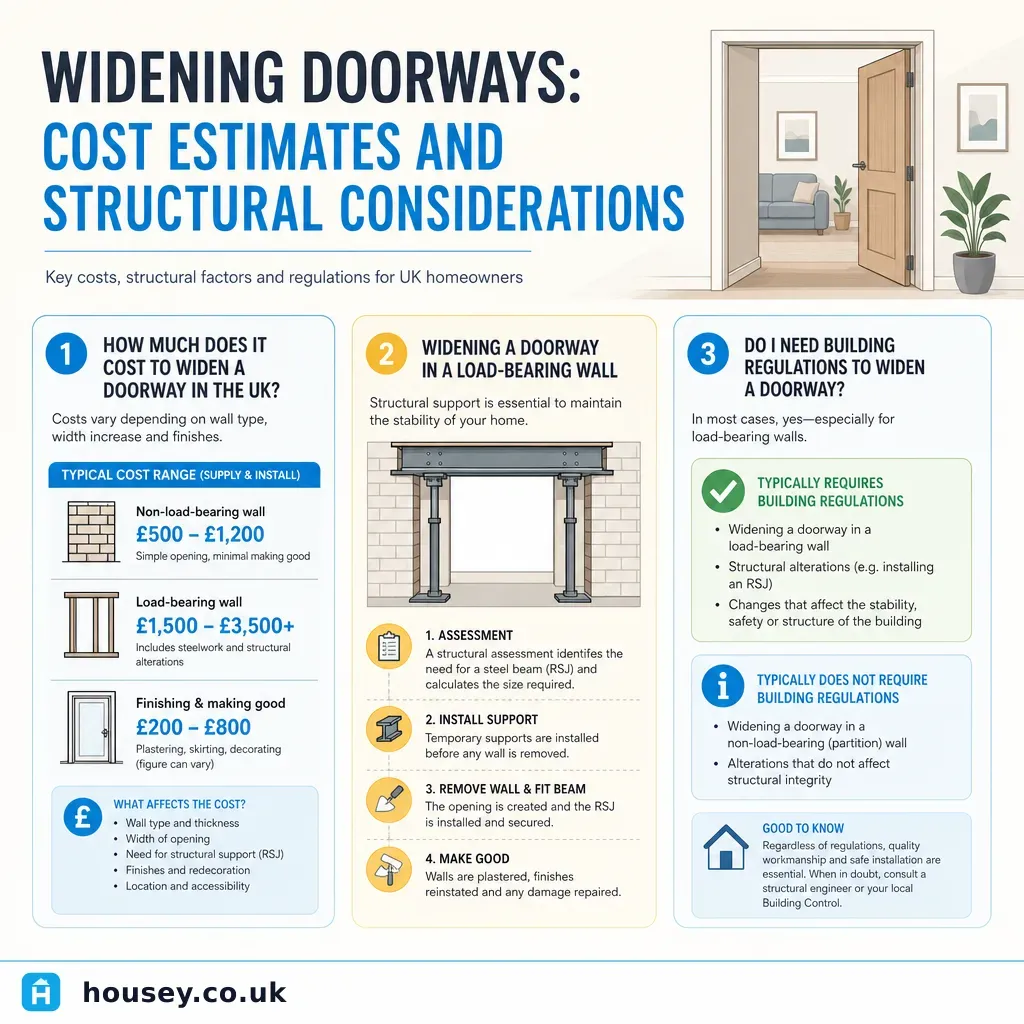
Widening Doorways: Cost Estimates and Structural Considerations
A doorway in a non-load-bearing partition can usually be widened for £500–£1,500.
 Improvement & Build
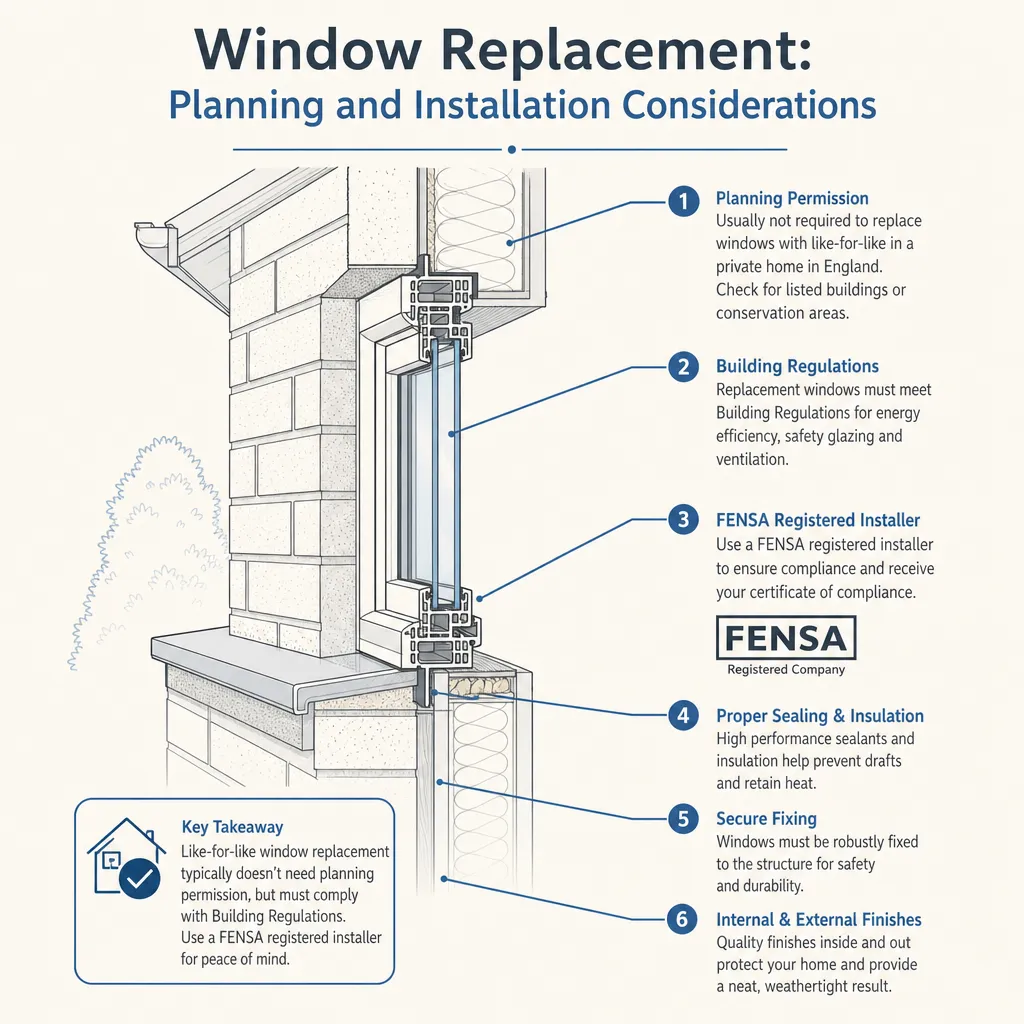
Window Replacement: Planning and Installation Considerations
Most window replacements in England fall under permitted development and do not need planning permission, though listed buildings, flats, and conservation areas are exceptions.
 Improvement & Build
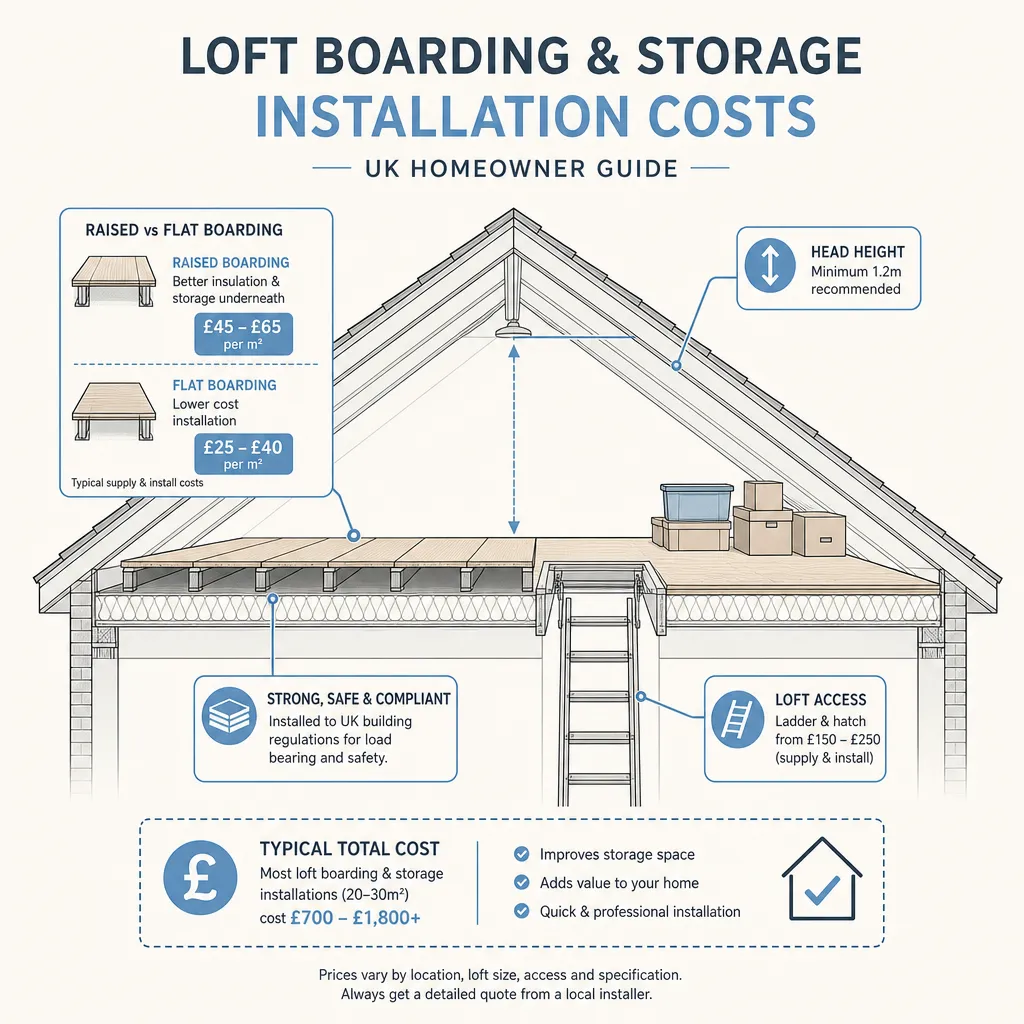
Loft Boarding and Storage Installation Costs
Basic loft boarding for an average semi-detached home costs £500–£1,500; a raised system that preserves insulation runs £800–£2,500.
 Improvement & Build
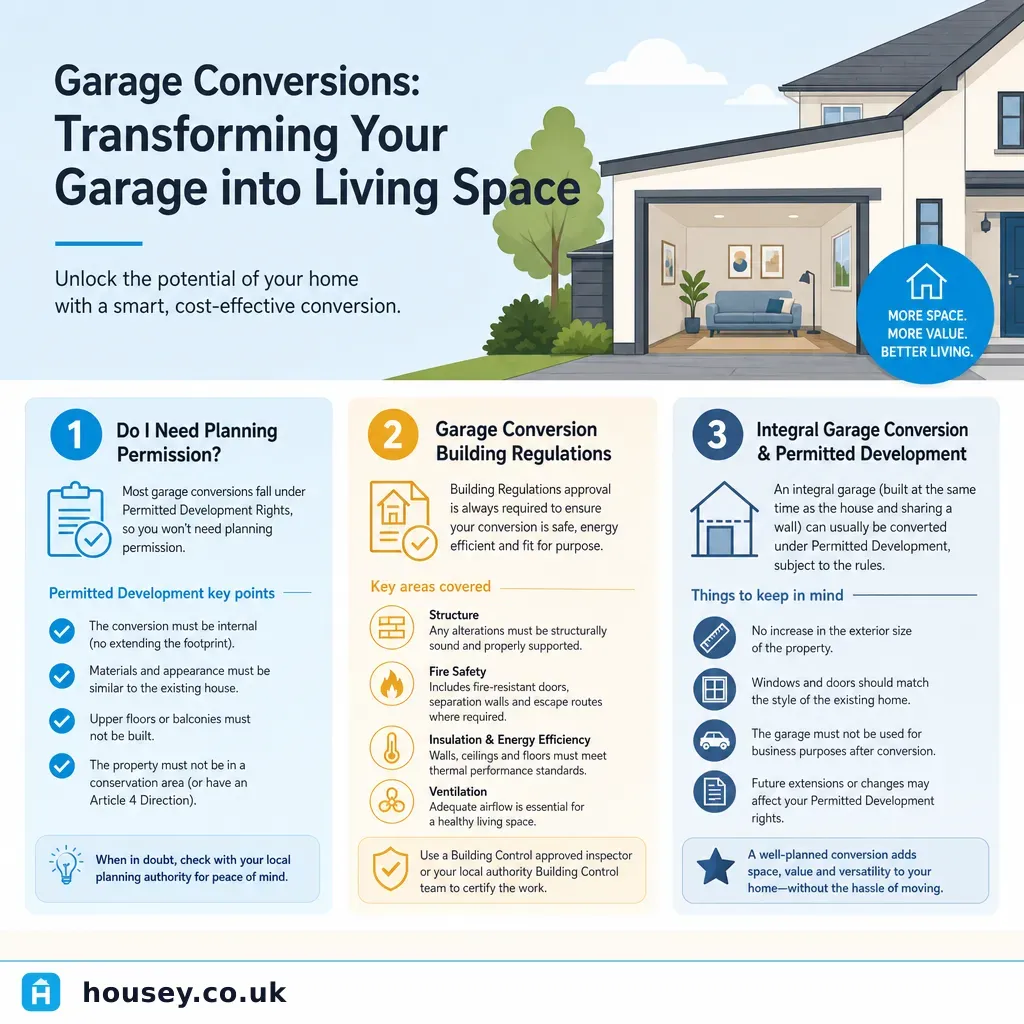
Garage Conversions: Transforming Your Garage into Living Space
Most integral garage conversions in England fall within permitted development and do not require a planning application, but Building Regulations approval is required in virtually all cases.