HVAC System Installation and Maintenance Costs in the UK
By Housey · Last reviewed 7th of May 2026
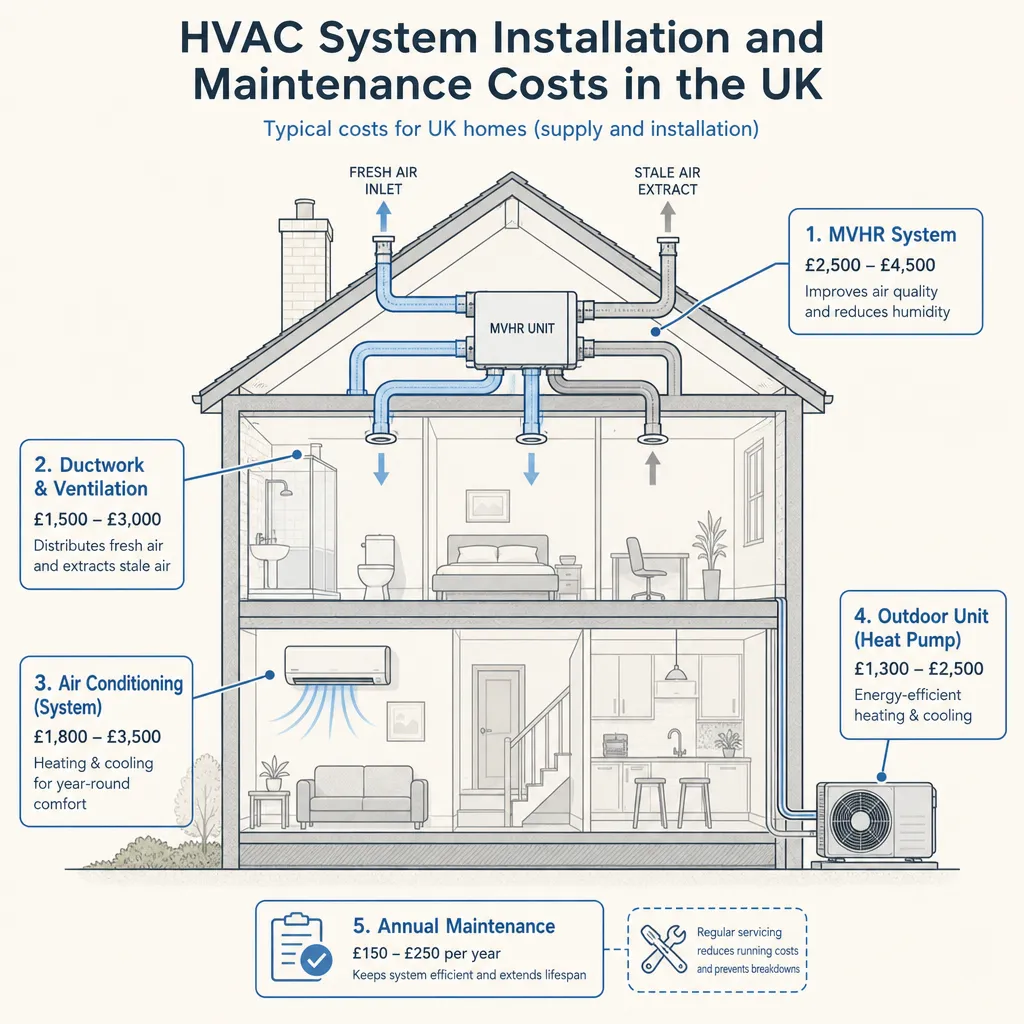
HVAC System Installation and Maintenance Costs in the UK
Whole-house climate control is no longer confined to commercial buildings: more UK homeowners are considering mechanical ventilation, cooling systems, and integrated heating controls as part of wider retrofits. Whether you are tackling persistent condensation in a Victorian terrace, improving air quality in a newly insulated semi, or adding comfort cooling to a new extension, understanding what different HVAC components cost — and what maintaining them involves — helps you plan realistic budgets and ask the right questions when gathering quotes.
Key points
- Building Regulations Approved Document F sets minimum ventilation rates for new and converted dwellings in England and Wales; compliance is required when carrying out certain building work.
- Mechanical ventilation with heat recovery (MVHR) whole-house systems typically cost £3,000–£8,000 installed, depending on property size and ductwork complexity (indicative UK costs, last reviewed 2026-05-07).
- Split-system air conditioning units cost approximately £800–£2,500 per indoor unit installed by a qualified F-Gas-registered engineer.
- Annual servicing for residential HVAC equipment typically costs £80–£200 per system, varying by type and provider.
- Installers of refrigerant-based systems — including all air conditioning and heat pump split systems — must hold F-Gas certification under UK F-Gas Regulation SI 2015/310.
What does "HVAC" mean in a UK home?
HVAC — heating, ventilation, and air conditioning — is a term more common in commercial settings, but it increasingly describes combinations of systems managing temperature, air quality, and moisture in UK homes. In practice, most homeowners are dealing with one or more of:
- Ventilation systems: mechanical extract ventilation (MEV), positive input ventilation (PIV), or whole-house MVHR.
- Air conditioning: single-room split systems or multi-room multi-split systems.
- Integrated heating controls: smart thermostats and zoned heating linked to boilers or heat pumps.
Each component is specified, priced, and installed separately, so the total cost for a UK home depends heavily on which combination you need and the condition of your existing systems.
How much does whole-house ventilation cost?
Ventilation is often the highest-priority HVAC element in UK homes, particularly in well-insulated or recently draught-proofed properties where natural air movement is reduced. The table below compares the main options.
System type | Typical installed cost | Best for | Limitations |
|---|---|---|---|
Positive input ventilation (PIV) | £300–£700 | Existing homes with condensation problems | Not a whole-house solution; not suited to all layouts |
Mechanical extract ventilation (MEV) | £600–£1,500 | Wet rooms in older or rented homes | One-way airflow; no heat recovery |
MVHR (whole-house) | £3,000–£8,000 | New builds, airtight retrofits, extensions | Requires ductwork; most disruptive to install retrospectively |
Single-room heat recovery unit | £400–£900 per unit | Rooms where full MVHR is impractical | Partial solution only |
Indicative UK costs, last reviewed 2026-05-07. Costs vary by property size, ductwork run length, and installer. Obtain at least three quotes.
MVHR systems recover heat from outgoing stale air and transfer it to incoming fresh air, improving energy efficiency. They are most cost-effective when installed during a renovation or new build, where ductwork can be concealed within the structure. Retrofitting ductwork into an occupied home typically adds cost and disruption.
How much does residential air conditioning cost in the UK?
Residential air conditioning typically means a refrigerant-based split system: an outdoor compressor unit paired with one or more indoor units. All refrigerant work must be carried out by an F-Gas-certified engineer.
- Single split system (one outdoor, one indoor unit): £1,000–£2,800 installed.
- Multi-split system (one outdoor, two to four indoor units): £2,500–£6,000+ installed.
Modern inverter split systems also provide heating, functioning effectively as single-room heat pumps in mild to moderate UK winters. This dual function can make them a cost-effective supplement to central heating in specific rooms such as home offices or garden rooms.
Running costs depend on the system's SEER/SCOP efficiency rating, property insulation, and usage patterns. An energy-efficient system with a high SCOP will cost less to run than an older or poorly specified unit.
What are typical HVAC maintenance costs?
Component | Typical annual maintenance cost | What is usually included |
|---|---|---|
MVHR whole-house system | £100–£200 | Filter replacement, fan check, duct inspection |
Split-system air conditioning | £80–£200 per unit | Filter clean, refrigerant level check, coil inspection |
Gas boiler (for comparison) | £80–£150 | Annual service by Gas Safe registered engineer |
Integrated smart controls | £100–£250 | Software updates, sensor calibration |
Indicative UK costs, last reviewed 2026-05-07.
Filters in MVHR and air conditioning systems require regular replacement or cleaning — typically every three to twelve months depending on manufacturer guidance and local air quality. Neglecting filters reduces efficiency, increases energy bills, and can void manufacturer warranties.
What to ask before accepting an HVAC quote
- What system specification (airflow rates, cooling capacity in kW) is the quote based on, and how was sizing calculated?
- Are supply, installation, and commissioning all included, or priced separately?
- What F-Gas certification or MCS registration does the installer hold?
- Is VAT included in the quoted price?
- What ongoing maintenance is required, and does the installer offer a service contract?
- What manufacturer warranty applies, and what does the installer's workmanship guarantee cover?
- What could change the price after the site survey?
Red flags when choosing an HVAC installer
- No F-Gas registration for any refrigerant-based work — this is a legal requirement, not optional.
- Unable to confirm compliance with Approved Document F ventilation rates for your property.
- No written specification or heat/ventilation load calculation before installation begins.
- Verbal-only quotes with no itemised written breakdown.
- Pressure to install quickly without a full site survey.
- No mention of commissioning and balancing the system after installation.
When to get professional help
If you are experiencing persistent condensation, mould growth, poor indoor air quality, or uncomfortable temperatures, commission a professional ventilation or condensation assessment before specifying any system. An independent assessment identifies the root cause — excess moisture, inadequate extract paths, thermal bridging — and recommends the most proportionate solution, which may be simpler and cheaper than a full MVHR installation.
Seek independent advice before specifying HVAC if:
- Your home has been recently draught-proofed or insulated without a review of ventilation.
- A loft conversion or extension will disrupt existing ventilation paths.
- You have noticed mould forming on walls, ceilings, or around window frames.
- You plan to combine air conditioning with a heat pump and are uncertain how systems will interact.
How Housey can help
If you are unsure which ventilation system your property needs, Housey can connect you with qualified specialists. A ventilation and condensation assessment identifies your property's specific needs before you commit to any installation. An energy-efficiency consultant can advise on how ventilation and cooling choices fit within a wider retrofit strategy, helping you avoid spending on the wrong system.
Frequently asked questions
Do I need planning permission for air conditioning in my UK home?
External air conditioning units may require planning permission in conservation areas, on listed buildings, or where the unit is large or prominently sited on a flat roof. On many houses, installation falls within permitted development, but rules depend on your property type and location. Always check with your local planning authority before installation to avoid enforcement problems.
Is MVHR worth installing in an older UK home?
MVHR offers the most value in highly airtight homes — typically new builds or deep retrofits achieving below 3 m³/h/m² air permeability. In a draughty Victorian terrace, a simpler mechanical extract ventilation system or positive input ventilation unit may be more appropriate and significantly cheaper. An independent ventilation assessment will identify which approach suits your property.
How long do residential HVAC components last?
Well-maintained MVHR units typically last 15–25 years. Split-system air conditioning units usually last 10–20 years. Filter and component replacement is normal throughout this period — factor maintenance costs into whole-life comparisons when evaluating systems.
Can I install air conditioning myself in the UK?
No. Work involving refrigerants (F-Gases) is legally restricted to F-Gas-certified engineers under UK SI 2015/310. Attempting DIY refrigerant handling is illegal and can result in significant fines. Always use a qualified, registered installer for any refrigerant-based system.
Sources and further reading
- Building Regulations Approved Document F: Ventilation — GOV.UK
- UK F-Gas Regulation guidance for equipment users — GOV.UK
- Ventilation advice for homes — Energy Saving Trust
- CIBSE Guide A: Environmental Design — Chartered Institution of Building Services Engineers
Useful next reads
 Energy & Retrofit
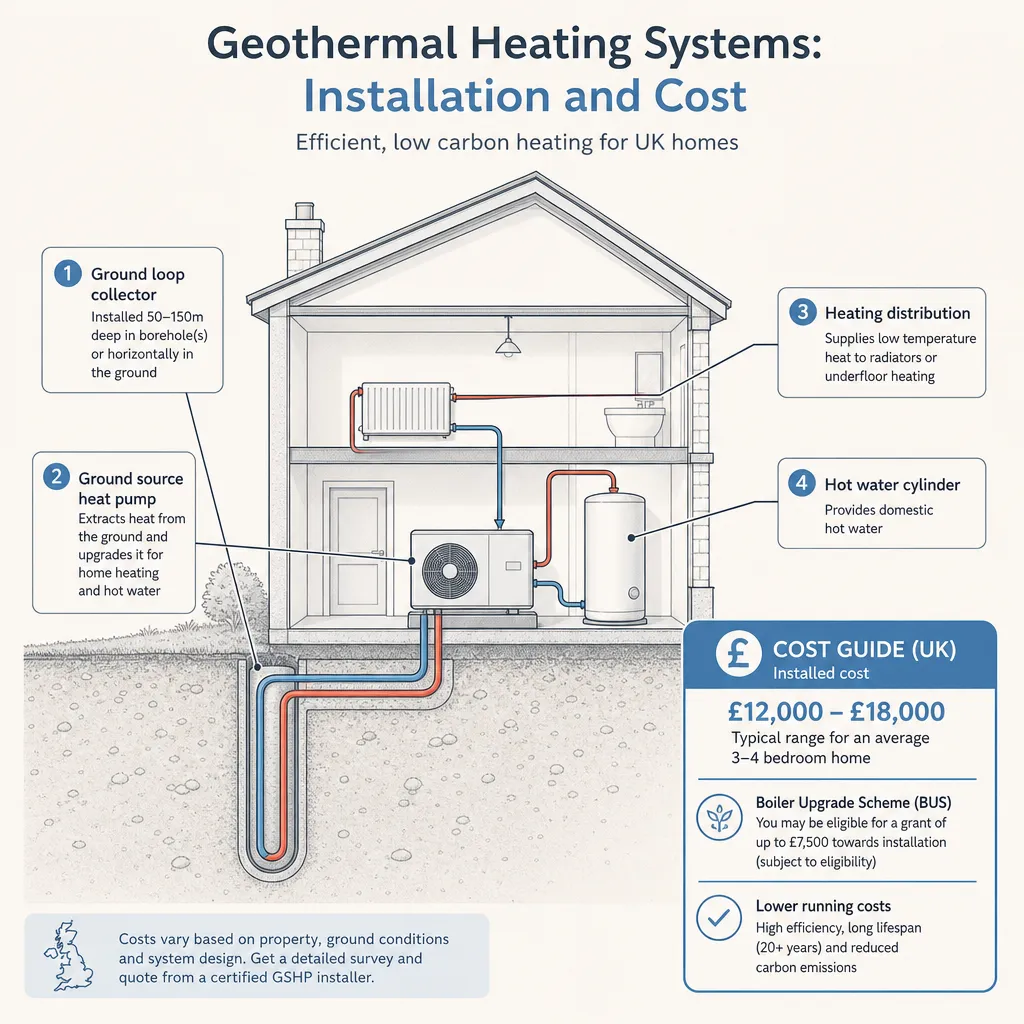
Geothermal Heating Systems: Installation and Cost
Ground source heat pumps extract stored solar energy from the earth via buried ground loops and convert it to usable heat for radiators and hot water.
 Energy & Retrofit
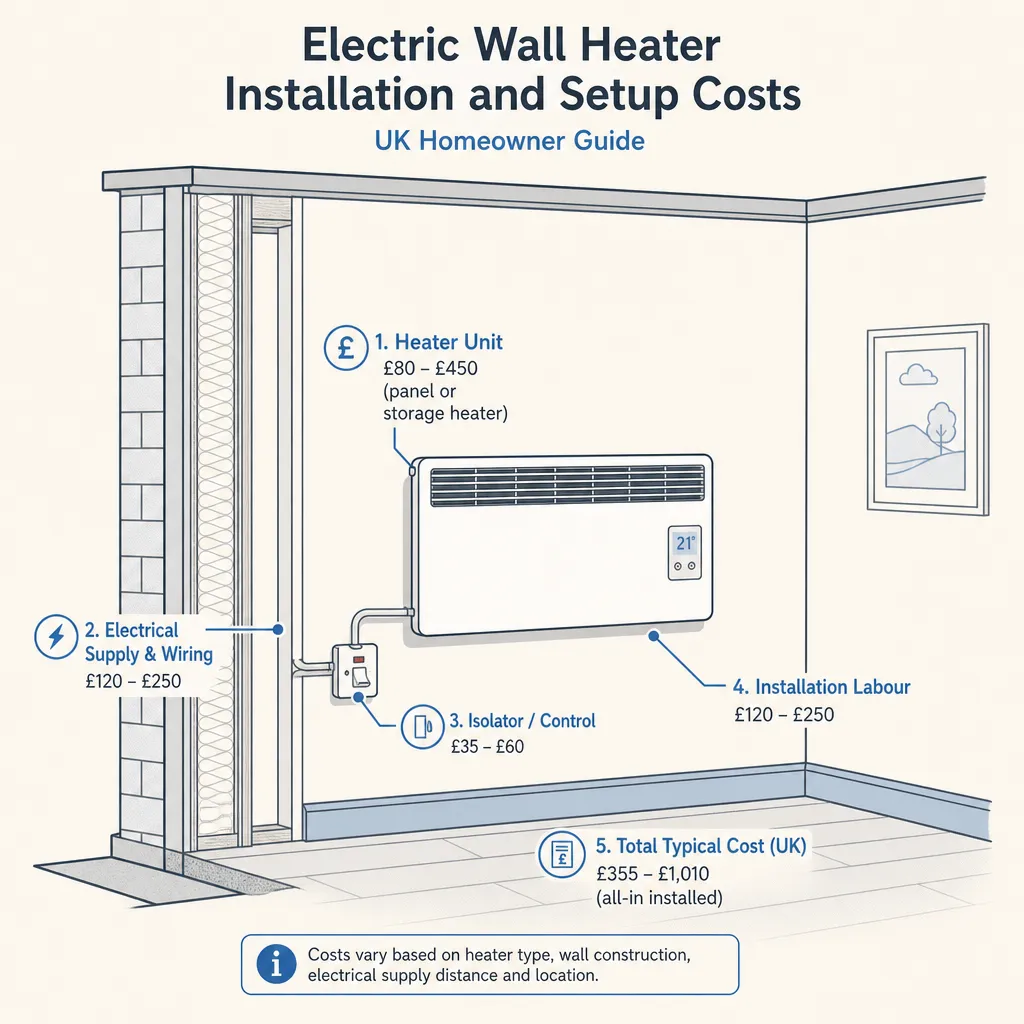
Electric Wall Heater Installation and Setup Costs
Electric wall heater installation in the UK typically costs £150–£350 per unit for a panel heater, plus £100–£250 if a new spur or circuit is needed.
 Energy & Retrofit
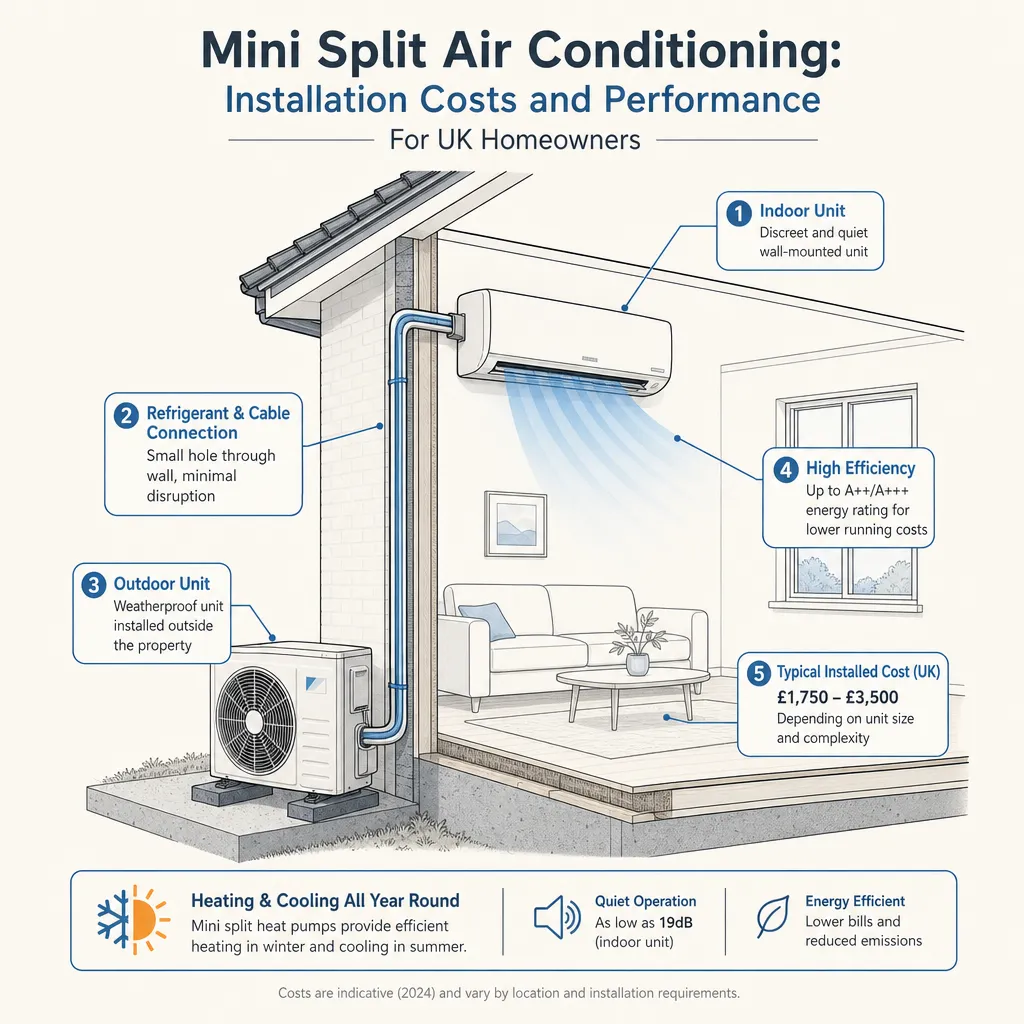
Mini Split Air Conditioning: Installation Costs and Performance
A mini-split (ductless) air conditioning unit costs roughly £1,500–£4,000 installed for a single room in the UK.
 Energy & Retrofit
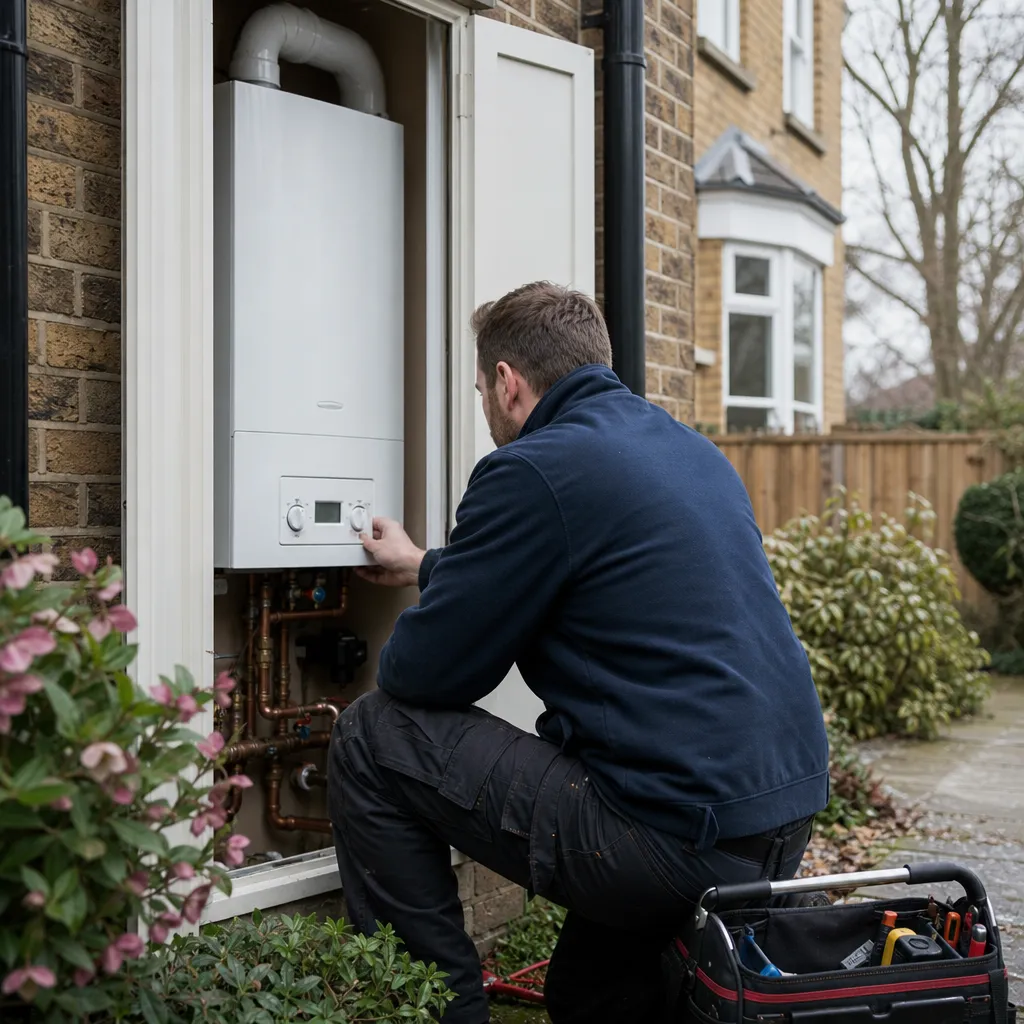
Winterising Your Central Heating System
Winterising a UK central heating system involves bleeding radiators, checking system pressure, topping up corrosion inhibitor, and arranging a Gas Safe registered engineer's annual boiler service before the heating season begins.
 Energy & Retrofit
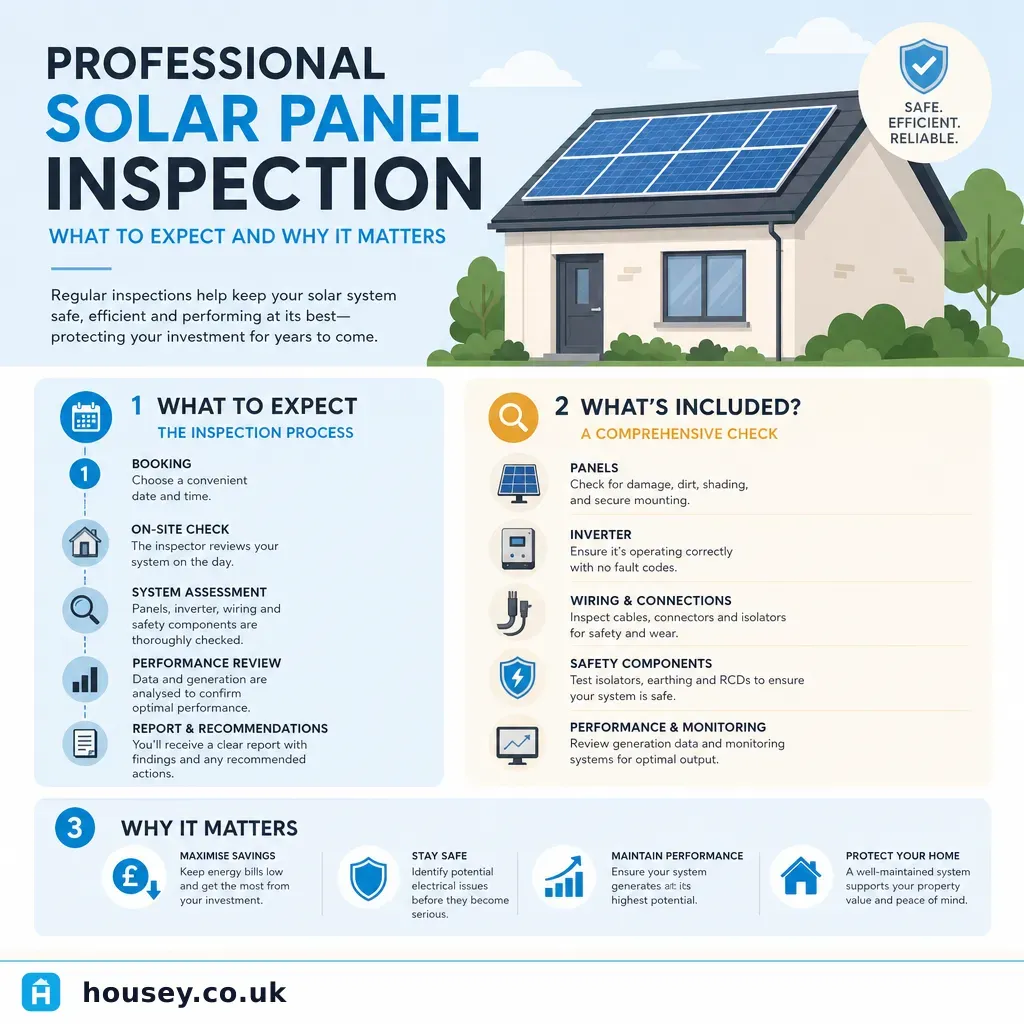
Professional solar panel inspection: what to expect and why it matters
A professional solar panel inspection typically takes 1–3 hours and covers visual panel condition, mounting hardware, inverter performance, wiring integrity, and often thermal imaging to detect hidden faults.