Ideal Humidity Levels in Homes: Achieving Comfort and Health
By Housey · Last reviewed 12th of May 2026
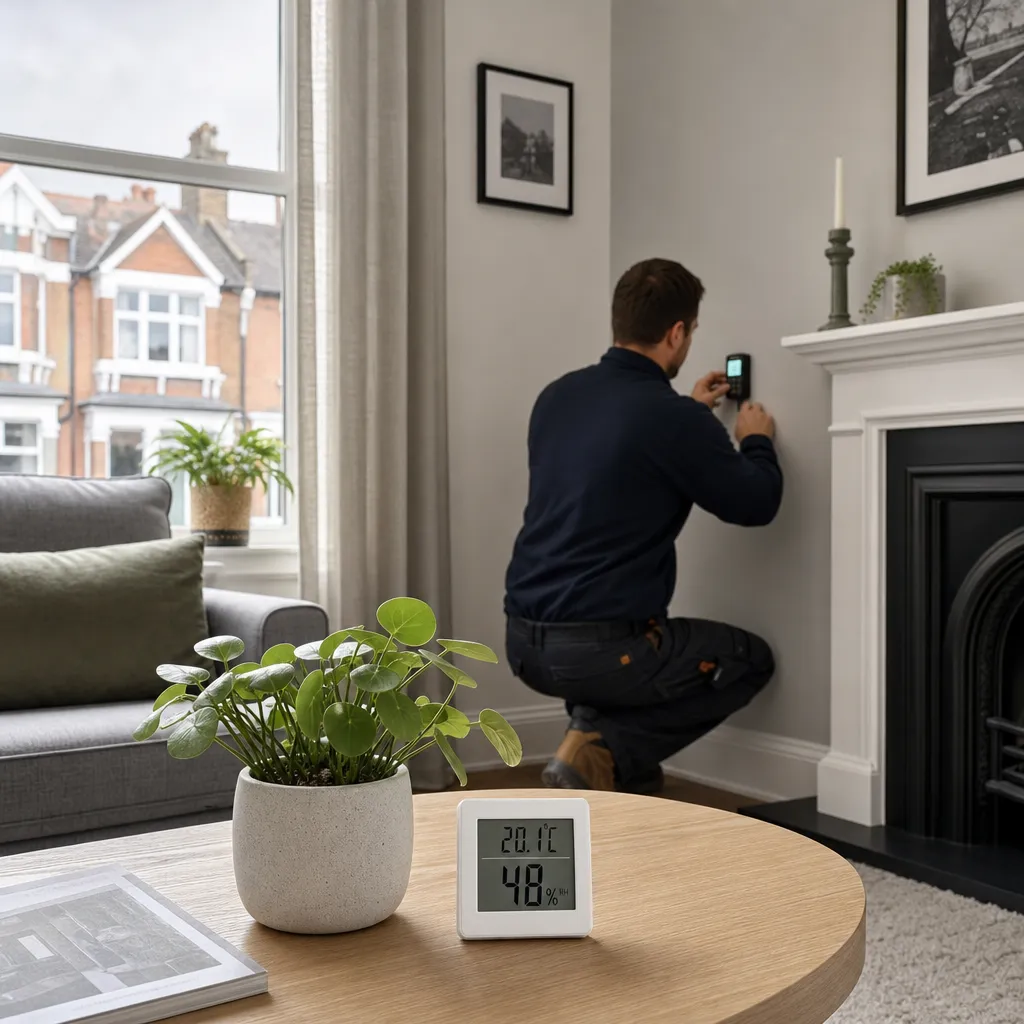
Ideal Humidity Levels in Homes: Achieving Comfort and Health
Relative humidity — the amount of moisture in the air compared with what it could hold at a given temperature — directly affects how comfortable a home feels and whether conditions favour mould growth, dust mite activity, or respiratory irritation. Most homeowners notice the effects before they know the cause: condensation on windows in winter, a musty smell in a spare bedroom, or skin that feels dry despite the heating being on. Managing indoor humidity is one of the more cost-effective ways to improve air quality and protect a home's fabric.
Key points
- WHO and NHS guidance indicates that indoor relative humidity between 40% and 60% is optimal for human health and comfort in a UK home.
- Below 40% RH, respiratory irritation and dry skin become more likely; at or above 70% RH, conditions are conducive to mould growth and dust mite proliferation.
- UK homes in winter are particularly prone to localised high humidity from cooking, bathing, drying laundry indoors, and inadequate ventilation.
- Building Regulations Approved Document F sets minimum ventilation rates for new and substantially refurbished dwellings; many older UK homes fall below these rates.
- A digital hygrometer (£10–£30) is the most practical tool for monitoring household humidity — consumer models are accurate enough for domestic use when placed correctly.
What is the recommended indoor humidity range?
The generally accepted target for indoor relative humidity in a UK home is 40–60%. Within this band:
- Dust mite activity is reduced (mites thrive above 70% RH).
- Mould growth is less likely (most mould species require sustained RH above 70% at the surface to colonise).
- Respiratory comfort is maintained (air below 40% RH can dry mucous membranes and irritate airways).
- Building materials — timber joinery, plasterboard, and insulation — remain within their design moisture content range.
Outside this range, problems tend to escalate gradually rather than suddenly. Brief excursions above 60% (a long shower, cooking a large meal) are entirely normal; the risk arises from sustained elevated humidity over days or weeks.
How humidity varies across a typical UK home
Humidity is not uniform throughout a property. Cooking, bathing, breathing, and drying laundry all add moisture to the air locally. Without adequate ventilation to remove that moisture, it migrates to cooler surfaces — typically external walls, window reveals, and unheated rooms — where it condenses.
Room or situation | Typical RH without extraction | Common consequences if unmanaged |
|---|---|---|
Kitchen during cooking | 80–90%+ | Condensation on windows and cold surfaces |
Bathroom during or after showering | 90–100% | Surface mould on grout, sealant, and ceiling |
Bedroom overnight (two occupants) | 60–75% | Condensation on window glass; possible mould at cold external corners |
Living room with trickle vents open | 45–60% | Within target range; comfortable |
Unheated spare room | 65–80% | Mould risk, especially on cold external wall |
These figures are indicative — actual readings depend on insulation quality, heating regime, occupancy, and how well the property is ventilated.
Seasonal variation in UK homes
UK homes experience significant humidity swings between summer and winter.
In winter, cold outdoor air holds very little moisture. When heated indoors it becomes relatively dry — but any moisture generated by occupants has nowhere to go if ventilation is limited. Condensation on windows and cold-surface mould are predominantly winter problems.
In summer, warmer outdoor air carries considerably more moisture. Humid summer air entering a cooler building can produce condensation on cold surfaces such as poorly insulated ground-floor slabs or basement walls — sometimes described as summer condensation and distinct from the winter variety.
Monitoring humidity with a hygrometer across both seasons gives a much clearer picture than a single reading.
Decision guide: what to do based on your humidity reading
- 40–60% RH — within the target range; maintain current ventilation and heating habits.
- 60–65% RH — borderline; improve ventilation habits (run extraction fans, open trickle vents) and monitor over the following weeks.
- 65–75% RH sustained — action needed; check for obvious moisture sources, improve extraction, and consider a professional ventilation assessment if the problem persists.
- Above 75% RH sustained — high risk of mould and dust mite activity; seek a professional condensation and ventilation assessment and check for underlying damp or hidden leaks.
- Below 40% RH sustained — unusual in most UK homes; check MVHR commissioning if applicable and consider a humidifier.
How to reduce humidity if it is too high
If sustained readings above 60–65% are common, the most effective measures are:
- Improve background ventilation — trickle vents on windows, intermittent extract fans in kitchens and bathrooms, or whole-house mechanical ventilation. Building Regulations Approved Document F provides guidance on minimum ventilation rates.
- Use extract fans consistently — bathroom fans should run during and for at least 15 minutes after bathing; kitchen fans during and after cooking.
- Avoid drying laundry indoors where possible — a single load adds roughly 2 litres of water vapour to the air as it dries.
- Maintain background heating — cold surfaces cause condensation regardless of average room humidity. A background temperature of at least 16°C in occupied rooms significantly reduces surface condensation risk.
- Use a dehumidifier — for persistent problems, a dehumidifier manages humidity while longer-term ventilation improvements are planned.
What not to assume about home humidity
A number of common assumptions can lead to misdiagnosis or wasted expenditure.
- Condensation on windows means I have a structural damp problem. Window condensation is usually a ventilation issue, not penetrating or rising damp. If moisture appears consistently on internal walls rather than glass, a damp survey may be warranted.
- A dehumidifier will fix the underlying problem. Dehumidifiers manage symptoms — they do not address inadequate ventilation, a faulty damp-proof course, or a leaking roof.
- New builds do not have humidity problems. Tightly sealed new-build homes can have high humidity if mechanical ventilation with heat recovery (MVHR) systems are not correctly commissioned, or if build-in moisture from concrete and plaster has not fully dried out.
- Humidity is the same throughout the house. Moisture sources are localised; a well-ventilated living room may read 50% while a poorly ventilated bathroom corner reads 80%.
- Opening a window always solves condensation. In cold weather, briefly opening a window helps clear moisture — but persistent problems usually require permanent background ventilation rather than occasional airing.
When to get professional help
If you have addressed obvious moisture sources and ventilation habits but humidity remains consistently above 65%, or if mould has appeared on plasterwork or wall surfaces, consider a professional assessment. A competent assessor will measure humidity at multiple points, assess ventilation provision against Approved Document F, and check for structural damp as a contributing factor.
Signs that professional help is needed sooner rather than later:
- Mould growth on plasterwork, wallpaper, or soft furnishings rather than just sealant or window frames.
- A persistent musty smell that does not clear with regular airing.
- Occupants experiencing recurring respiratory symptoms that improve when they leave the property.
- Condensation appearing on internal walls rather than on glass.
How Housey can help
If you are dealing with persistent condensation or unexplained moisture and want a proper assessment rather than a guess, Housey can connect you with specialists offering ventilation and condensation assessments in your area. A professional measurement and written report gives you a much sounder basis for any remedial decision.
Frequently asked questions
What is a healthy humidity level for a bedroom?
The 40–60% RH target applies to bedrooms as much as any other room. Bedrooms are particularly prone to overnight humidity rises from breathing; a slightly opened trickle vent or window restrictor can keep levels within range without causing draughts. If morning condensation is a regular occurrence, monitoring overnight humidity over several days is worthwhile.
Does humidity affect mould growth?
Yes. Most mould species require sustained relative humidity above 70% at the surface to grow. Keeping room humidity below 60% and ensuring cold surfaces are adequately insulated and heated reduces mould risk significantly. Surface temperature matters as much as air humidity — a cold external wall corner can show 90% surface RH even when the room air reads 55%.
How do I measure humidity at home?
A digital hygrometer measures relative humidity and temperature; accurate consumer models are widely available for under £20. Place it at mid-wall height, away from windows, radiators, and cooking areas, for representative readings. Record readings at different times of day across at least a week before drawing conclusions about your home's humidity profile.
Can high humidity damage my home?
Sustained high humidity can cause mould growth on plasterwork and timbers, accelerate corrosion of metal fixings, cause timber to swell and warp, and degrade insulation materials over time. It also supports dust mite populations, which can worsen asthma and allergy symptoms in sensitive occupants.
Sources and further reading
- Building Regulations Approved Document F: Ventilation — GOV.UK
- Damp and mould — NHS
- WHO Guidelines for Indoor Air Quality: Dampness and Mould — World Health Organisation
- Ventilation and condensation guidance — Energy Saving Trust
Useful next reads
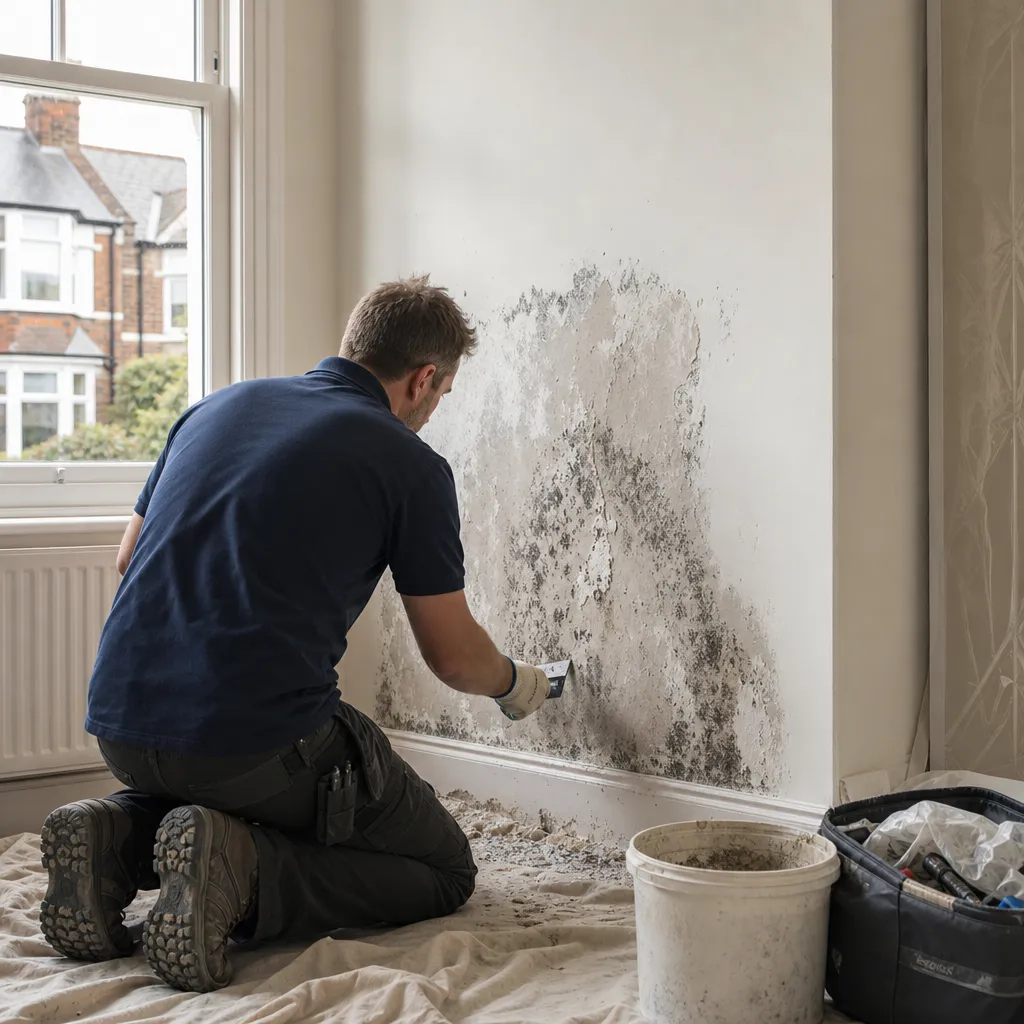 Surveys & Inspections
Treating Mould Contamination in Interior Walls
Mould on interior walls is caused by excess moisture — from condensation, penetrating damp, rising damp, or a plumbing leak.
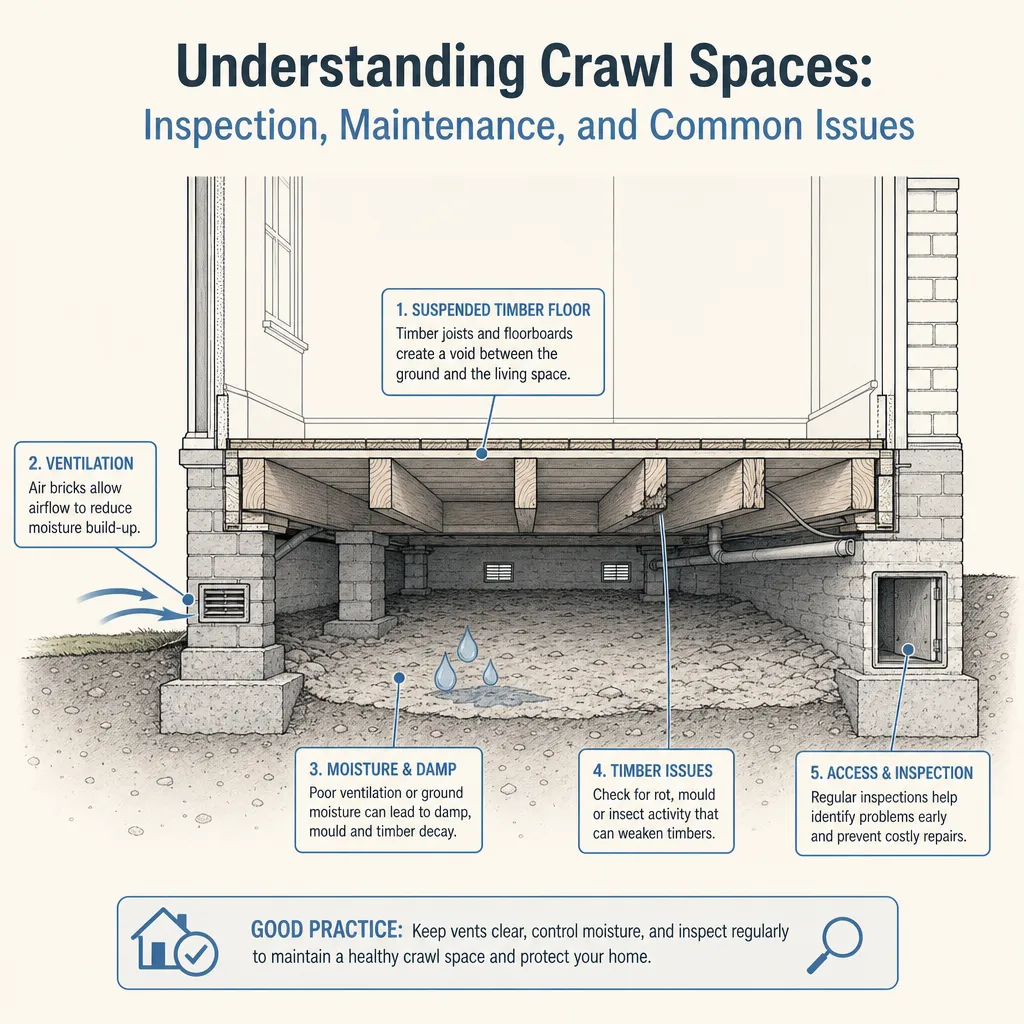 Surveys & Inspections
Understanding Crawl Spaces: Inspection, Maintenance, and Common Issues
Sub-floor voids beneath suspended timber ground floors in pre-1960 UK homes need cross-ventilation through airbricks to prevent dry rot and wet rot in floor timbers.
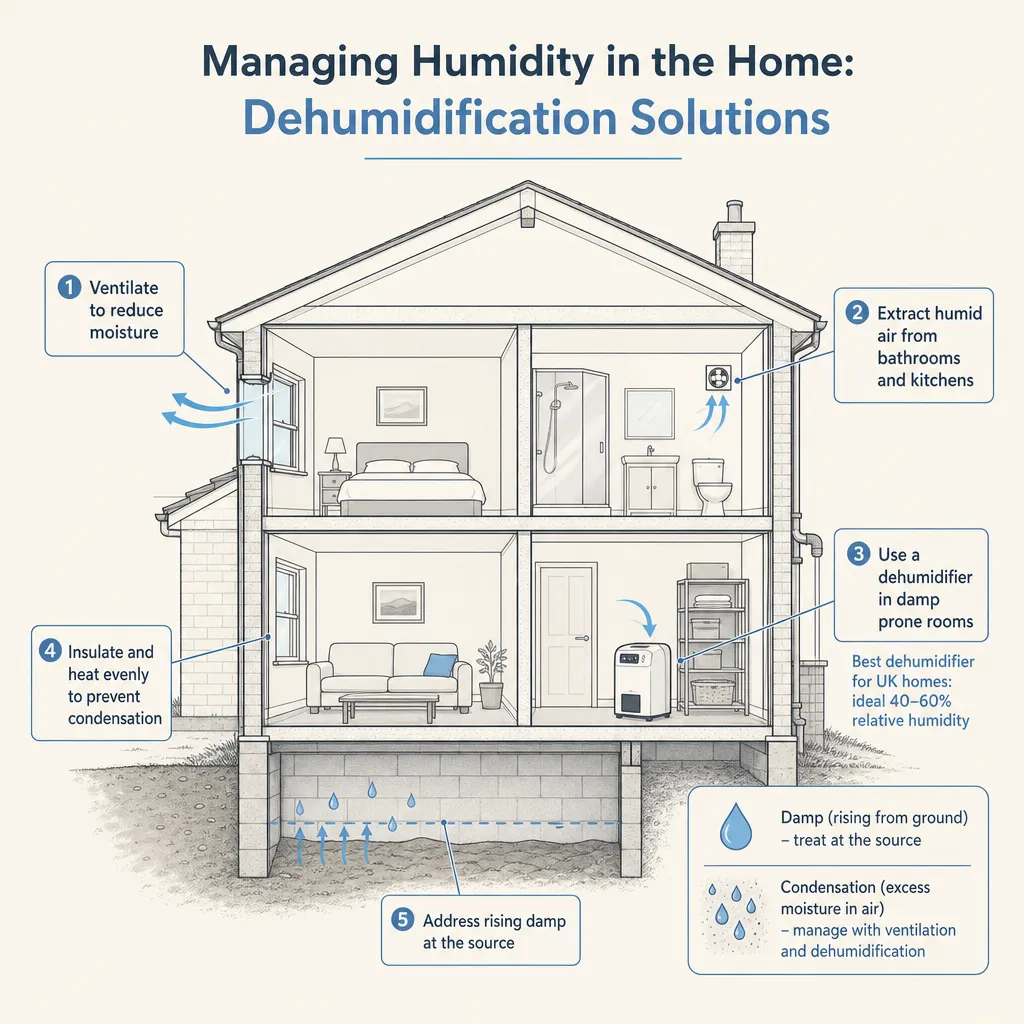 Surveys & Inspections
Managing Humidity in the Home: Dehumidification Solutions
Managing indoor humidity usually means combining adequate ventilation with a correctly sized dehumidifier.
 Surveys & Inspections
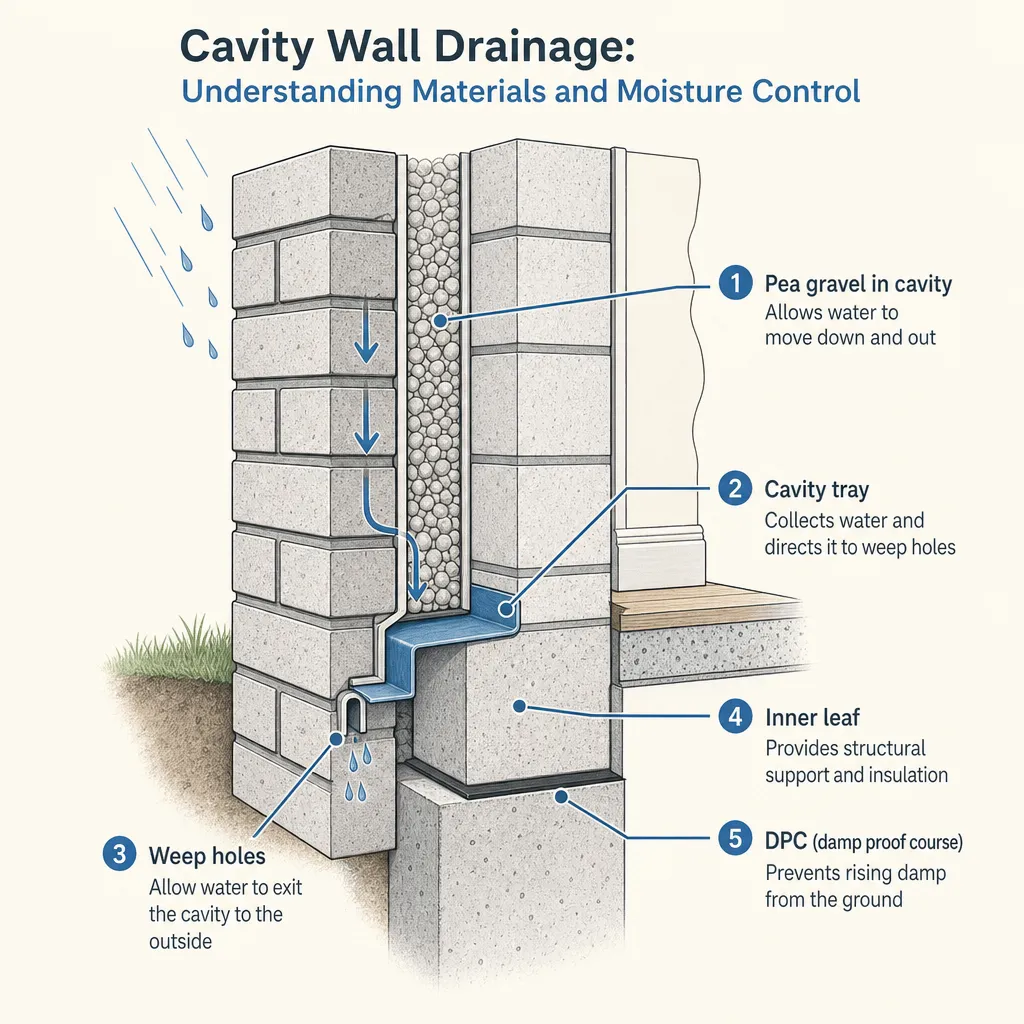
Cavity Wall Drainage: Understanding Materials and Moisture Control
Cavity walls control moisture through a drainage system of weep holes, cavity trays, and DPC at ground level.
 Surveys & Inspections
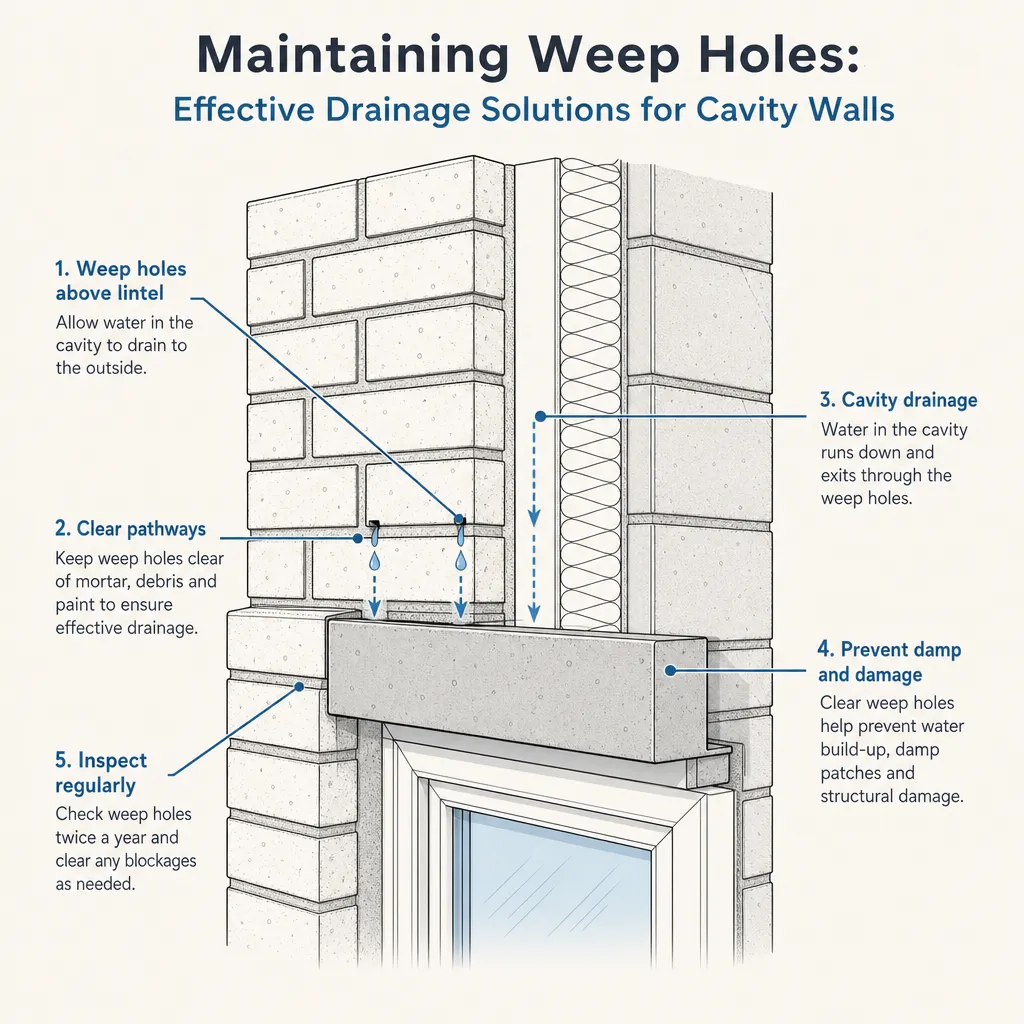
Maintaining Weep Holes: Effective Drainage Solutions for Cavity Walls
Weep holes are unmortered perpend joints in the outer leaf of a cavity wall, positioned at DPC level and above lintels, allowing moisture that enters the cavity to drain outward.