Treating Mould Contamination in Interior Walls
By Housey · Last reviewed 30th of May 2026
Treating Mould Contamination in Interior Walls
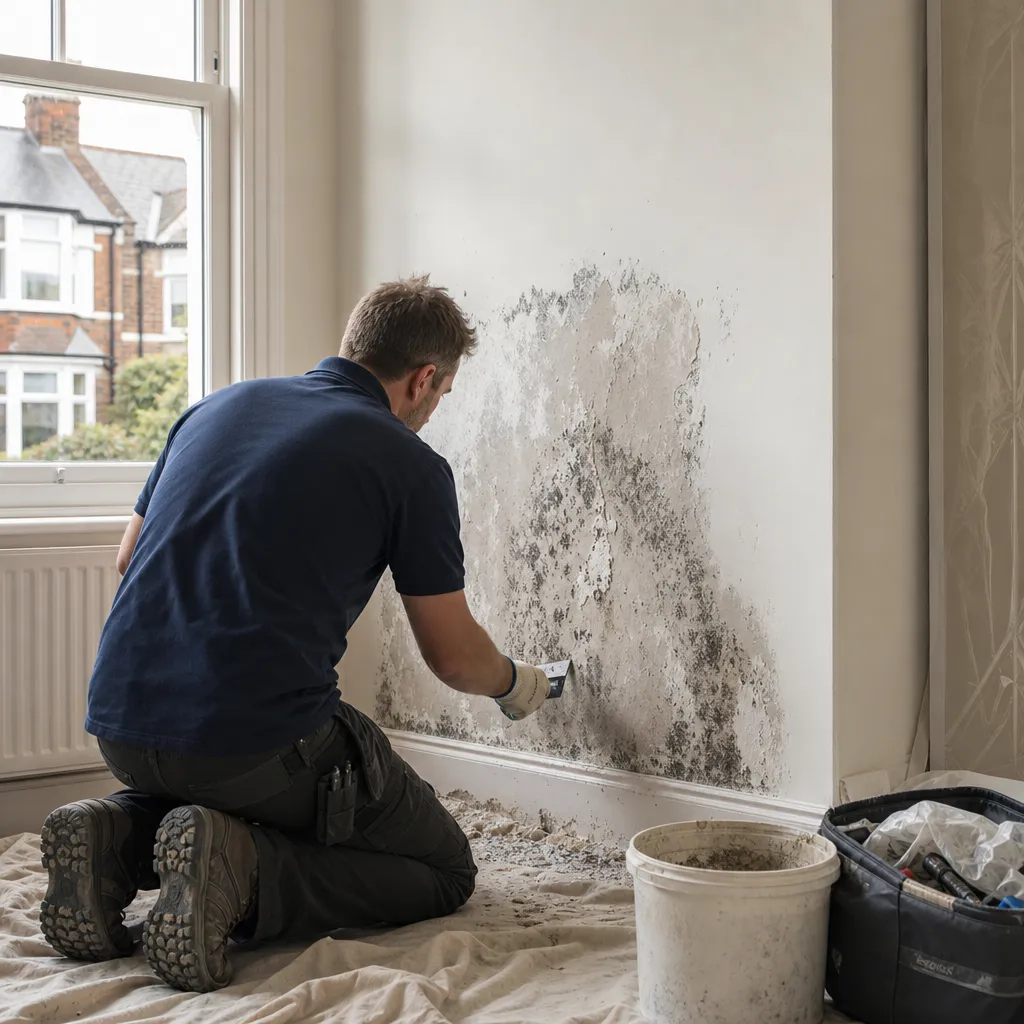
Mould on interior walls is one of the most common complaints in UK homes, particularly in older properties with solid walls, inadequate ventilation, or persistent condensation. The question tends to arise when a homeowner notices dark patches spreading across plasterwork, detects a musty odour in a room, or discovers growth behind furniture. Getting the treatment wrong — or treating the surface without addressing the underlying moisture — will mean the mould returns.
Key points
- Surface mould treatments (fungicidal washes and biocides) will only produce lasting results once the underlying moisture source has been identified and resolved.
- NHS guidance links prolonged exposure to indoor mould to respiratory problems, allergies, and exacerbated asthma — people with weakened immune systems, children, and elderly residents face higher risk.
- RICS recommends professional investigation for mould patches exceeding 1 m² or for mould that recurs within weeks of treatment.
- Penetrating damp, rising damp, and condensation each require a different treatment approach — misdiagnosis is a common and costly mistake.
- PAS 2035:2019, the standard governing energy retrofit of domestic buildings, specifically addresses moisture risk management to prevent mould growth caused by airtightness improvements.
What causes mould to grow on interior walls?
Mould is a fungus that requires moisture, a suitable surface, and warmth to establish. In UK homes, the most common triggers are:
- Condensation — warm, humid air from cooking, bathing, or breathing meets a cold surface (typically an external wall or thermal bridge) and deposits moisture. This is the most common cause in post-war housing.
- Penetrating damp — rainwater entering through defective pointing, cracked render, failed flashings, or blocked guttering. It typically affects one localised area or follows a visible water trail.
- Rising damp — groundwater wicking up through porous masonry below the damp-proof course (DPC), or where the DPC has failed or been bridged. Usually appears at low level with a characteristic tide mark.
- Plumbing leaks — hidden pipe leaks inside wall cavities can produce localised damp patches easily mistaken for penetrating damp.
Identifying the correct cause matters because each requires a different fix. A fungicidal wash applied over a leaking pipe chase will not resolve the problem.
Health risks: when mould becomes urgent
The NHS identifies mould as a significant indoor air quality concern. Mould releases spores and microbial volatile organic compounds (mVOCs) that can irritate airways, trigger allergic reactions, and worsen conditions such as asthma.
High-risk occupants include:
- Children under five
- Adults over 65
- Anyone with asthma, chronic obstructive pulmonary disease (COPD), or a compromised immune system
If any occupant is experiencing respiratory symptoms that may be linked to the home environment, seek medical advice and do not delay remediation. The Homes (Fitness for Human Habitation) Act 2018 requires rented properties to be free of hazards that would make them unfit for habitation — severe mould can constitute such a hazard under the Housing Health and Safety Rating System (HHSRS).
Diagnosing the damp source before you treat
Treating mould without diagnosing the moisture source is the most common and costly mistake homeowners make. Before buying any fungicidal product, consider the following:
Where is the mould?
- High on walls or on ceilings → likely condensation
- Around window reveals and cold corners → condensation or a thermal bridge in the wall construction
- A spreading patch on one external wall, horizontal or diagonal → penetrating damp
- Low on walls, with salt staining or a tide mark → possible rising damp
- Near a bathroom or kitchen, or following pipe runs → possible plumbing leak
Is it seasonal? Condensation mould typically worsens in winter when cold surfaces are most pronounced. Penetrating damp tends to follow rainfall events.
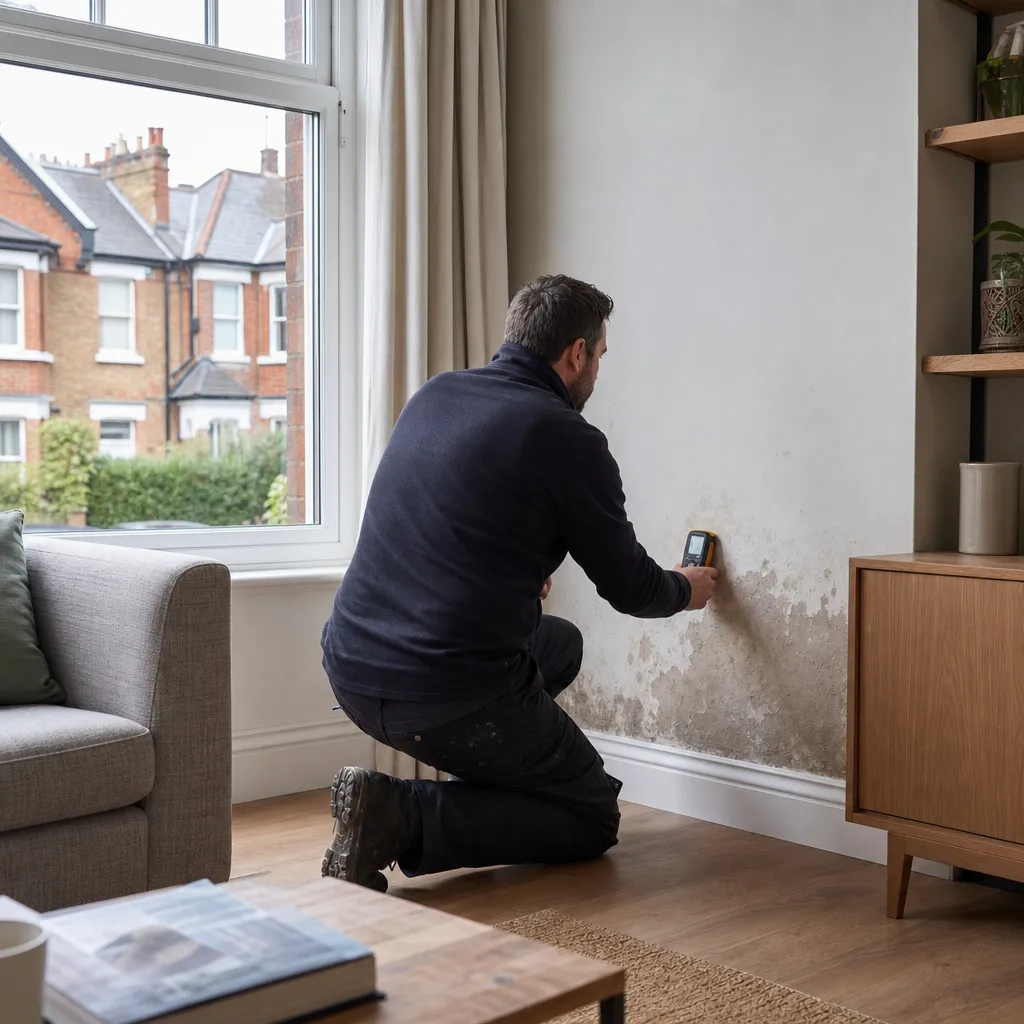
If the cause is unclear or the problem is recurring, a damp and timber survey uses moisture meters, thermal imaging, and professional interpretation to identify the source accurately.
What you can do yourself
For small patches of surface mould (under 0.3 m²) caused by condensation, careful treatment can be part of a broader remedy:
- Protect yourself: wear disposable gloves, an FFP2 or FFP3 respirator mask, and eye protection before disturbing any mould.
- Apply a proprietary fungicidal spray or a dilute bleach solution (1 part bleach to 4 parts water). Leave for the full dwell time stated on the product label.
- Wipe down with disposable cloths and seal them in a bag before disposal.
- Once the wall is dry, apply a fungicidal primer before redecorating.
- Improve ventilation: install or upgrade extractor fans, use trickle vents, and reduce moisture-generating activities in the affected room.
Do not scrub dry mould without wetting it first — this aerosolises spores and spreads contamination. Do not use a standard vacuum cleaner on visible mould unless it is fitted with a HEPA filter.
This approach treats the surface only. If the underlying moisture source is not resolved, mould will return — often more extensively.
Decision tree: what type of help do you need?
- Patch under 0.3 m², first occurrence, in a bathroom or kitchen, no other damp signs → clean with a fungicidal wash, improve ventilation, and monitor.
- Patch between 0.3 m² and 1 m², or recurring within a few weeks of cleaning → arrange a professional damp investigation before treating further.
- Patch over 1 m², or mould appearing in multiple rooms → commission a damp and timber survey and seek specialist remediation.
- Mould at low level with salt staining, tide marks, or soft or hollow plaster → likely rising or penetrating damp; consult a damp proofing specialist for diagnosis and remediation.
- Property is rented → notify the landlord in writing; they have legal obligations under the Homes (Fitness for Human Habitation) Act 2018.
- Occupant has respiratory symptoms → seek medical advice and expedite professional assessment.
Professional remediation: what it involves
Where mould contamination is extensive or the underlying damp source requires structural work, a specialist will typically:
- Identify and repair the moisture source (re-pointing, DPC injection, improved drainage, roof repairs).
- Remove contaminated plaster where the substrate has been compromised.
- Apply a biocide treatment to all affected masonry and timber.
- Re-plaster with a moisture-resistant backing coat where required.
- Advise on ventilation improvements to prevent recurrence.
For condensation-driven mould, improvements to the thermal envelope — insulation, draught-proofing, window upgrades — may be recommended, but these must be balanced with adequate ventilation to avoid trapping moisture, as set out in PAS 2035.
A specific defect survey can provide an independent assessment of the extent of damage and a remediation specification, which is useful before instructing a contractor or making an insurance claim.
When to get professional help
Seek professional help if:
- Mould covers more than 1 m² on any surface
- Mould has returned within four to six weeks of surface treatment
- You can detect mould by sight or smell but cannot identify the source
- Plaster is soft, hollow, or crumbling in the affected area
- Salt efflorescence (white crystals) is visible alongside the mould
- The property houses vulnerable occupants with respiratory conditions
- A RICS surveyor has flagged damp in a pre-purchase inspection report
How Housey can help
If mould is recurring or widespread, a professional diagnosis is the only reliable starting point. Housey connects you with vetted damp proofing specialists and RICS-registered surveyors who can carry out a damp and timber survey to identify the moisture source accurately and recommend a targeted remediation plan — not just a surface fix that will fail within weeks.
Frequently asked questions
Is black mould on walls dangerous?
Black mould in UK homes is most often Cladosporium or Stachybotrys chartarum. Prolonged exposure to any mould species can irritate airways and trigger allergic reactions. Stachybotrys is linked to more serious respiratory effects, particularly in vulnerable people. If occupants have health concerns, seek medical advice and arrange professional remediation promptly rather than attempting DIY cleaning alone.
Can I paint over mould on a wall?
No. Painting directly over mould without treating it first will not kill the growth — the mould continues to spread beneath the surface and eventually breaks through the new paint. Always treat with a fungicidal wash, allow to dry fully, then apply a fungicidal primer before redecorating. Skipping these steps means the mould will return quickly.
Will home insurance cover mould remediation?
Most UK home insurance policies exclude gradual damage and damp — mould is typically treated as a maintenance issue, not an insured event. Cover may apply if mould results from an insured peril such as a burst pipe. Check your policy wording carefully and speak to your insurer before arranging remediation if you believe a covered peril is the underlying cause.
How much does professional mould remediation cost in the UK?
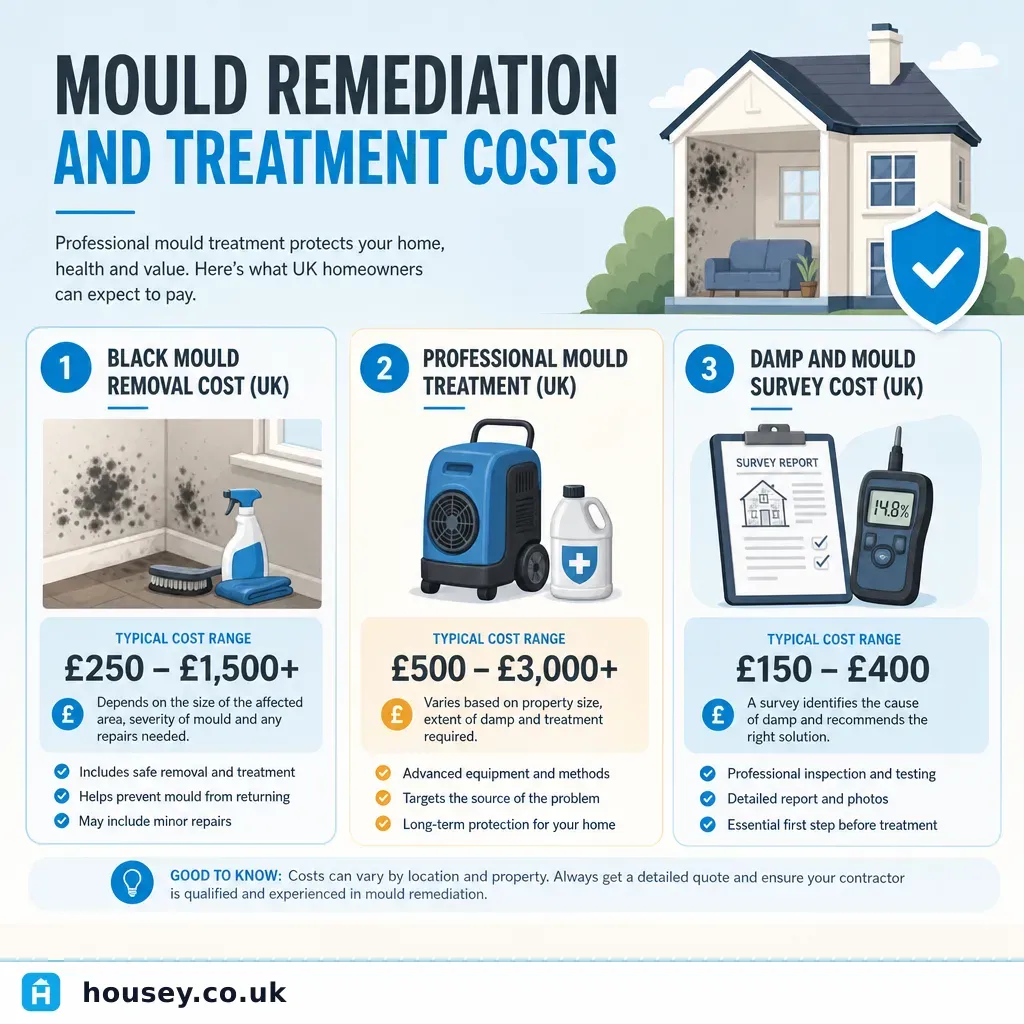
Indicative UK costs, last reviewed 2026-05-30: a damp survey typically costs £200–£400. Professional mould remediation including treatment and replastering an affected wall can range from £500 to several thousand pounds, depending on the extent of contamination, the damp source, and whether structural repairs are required. Obtain at least three quotes from vetted specialists.
Sources and further reading
- Understanding and addressing the health risks of damp and mould in the home — UK Health Security Agency / DHSC
- Damp and mould — NHS
- Housing Health and Safety Rating System (HHSRS) operating guidance — GOV.UK
- Homes (Fitness for Human Habitation) Act 2018 — legislation.gov.uk
- PAS 2035:2019 — Retrofitting dwellings for improved energy efficiency — BSI
Useful next reads
 Surveys & Inspections
Mould Remediation and Treatment Costs
Professional mould remediation in the UK typically costs £150–£1,500+ depending on the extent of growth, underlying cause, and materials affected.
 Surveys & Inspections
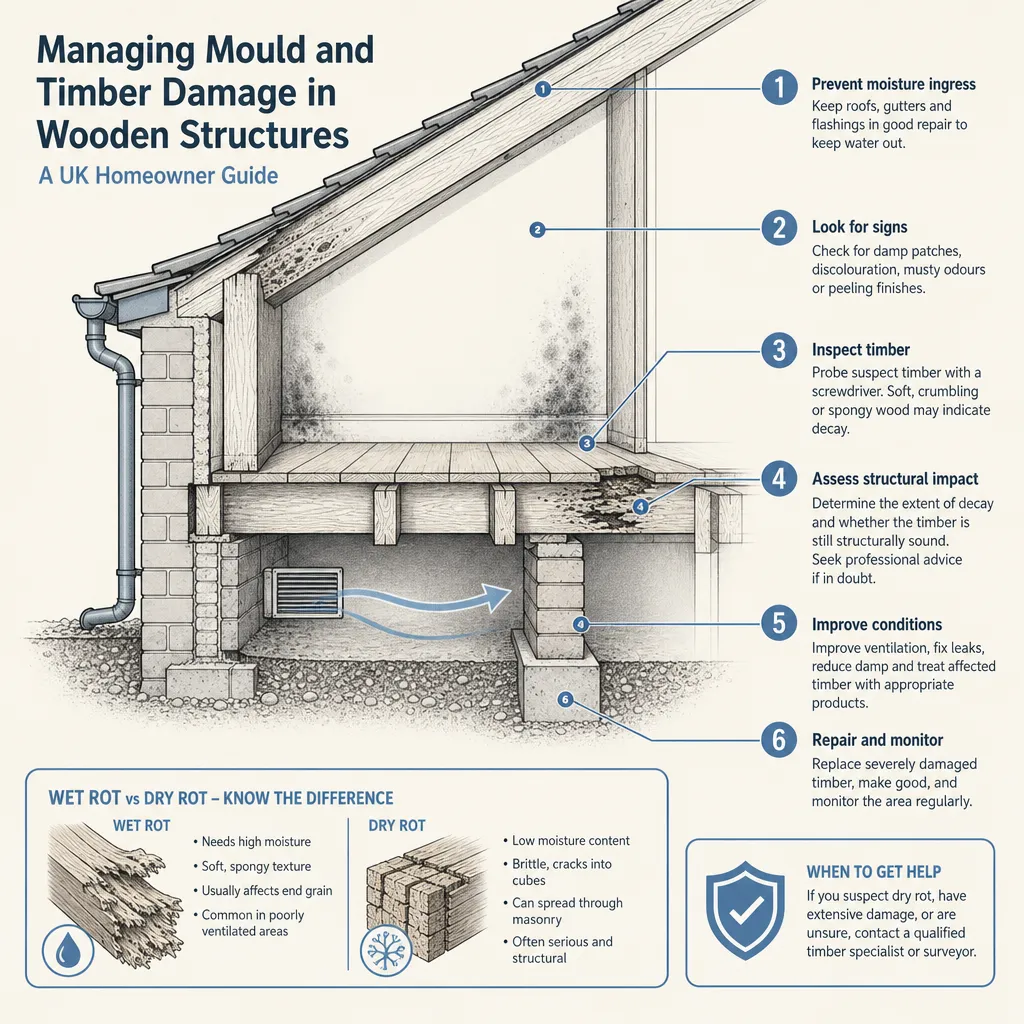
Managing Mould and Timber Damage in Wooden Structures
Mould and timber decay in wooden structures are usually symptoms of excess moisture rather than standalone problems.
 Surveys & Inspections
Identifying Asbestos Insulation: What You Need to Know for Your Property
Asbestos insulation was widely used in UK properties built before 2000, commonly found in pipe lagging, ceiling tiles, loose-fill loft insulation, and around boilers.
 Surveys & Inspections
Managing Property and Contents After Damp Treatment
After damp treatment in a UK home, allow walls to dry fully before re-plastering or decorating — this typically takes six months to two years depending on construction and damp severity.
 Surveys & Inspections
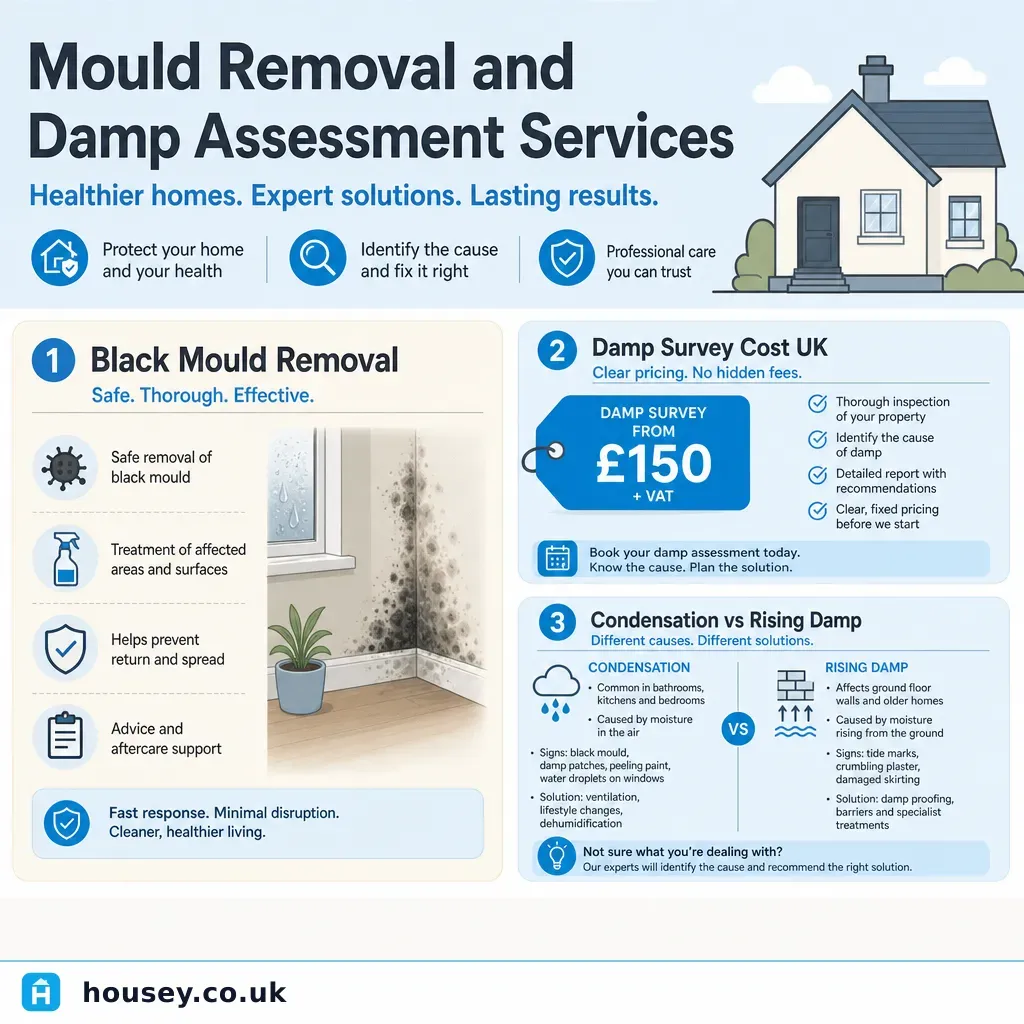
Mould Removal and Damp Assessment Services
Professional mould removal and damp assessment starts with identifying the moisture source—condensation, rising damp, or penetrating damp—before any treatment begins.