When to Prune Trees: Timing Guide for UK Tree Care
By Housey · Last reviewed 19th of May 2026
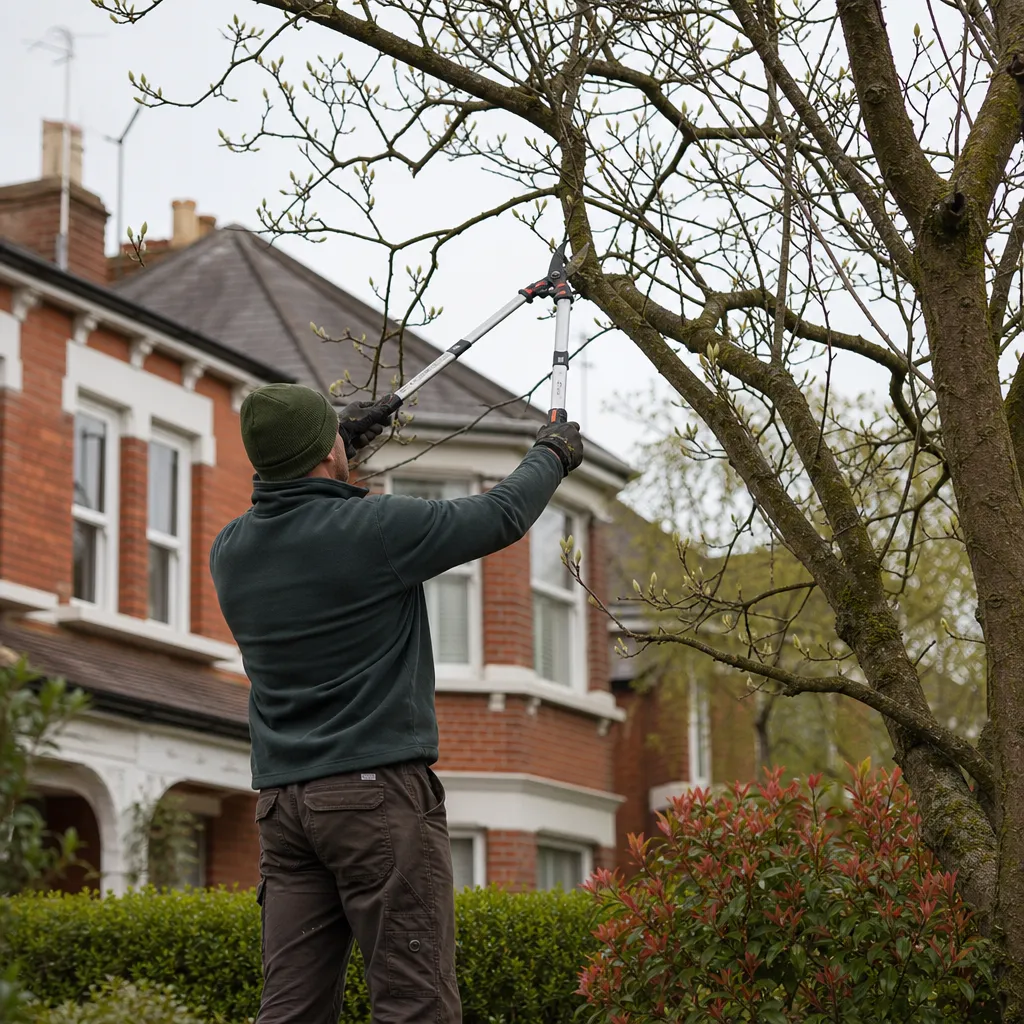
When to Prune Trees: Timing Guide for UK Tree Care
Trees in UK gardens range from compact ornamental cherries to mature oaks spanning multiple decades — and the right pruning window depends on species, condition, and local legal constraints. Whether you are managing a Victorian-era garden with established specimens or shaping younger trees after a new planting scheme, getting the timing wrong can invite disease, reduce flowering, or cause unnecessary stress to the tree. In conservation areas and on properties where Tree Preservation Orders apply, it can also carry serious legal consequences.
Key points
- Most deciduous trees should be pruned between November and February, when dormancy reduces the risk of disease infection through fresh cuts.
- Stone fruit trees — plums, cherries, damsons, and gages — should be pruned in summer (July–August) to minimise the risk of silver leaf disease (Chondrostereum purpureum) and bacterial canker.
- Trees subject to a Tree Preservation Order (TPO) require prior written consent from the local planning authority before any pruning; undertaking works without consent is a criminal offence under the Town and Country Planning Act 1990.
- Trees in conservation areas are protected under Section 211 of the Town and Country Planning Act 1990: you must give 6 weeks' written notice to the local planning authority before pruning or felling.
- Working at height above 2 metres should be carried out by a qualified arborist; the Work at Height Regulations 2005 place legal duties on those managing such work.
Why timing matters for tree health
Pruning at the wrong time of year exposes fresh wood to fungal spores and disease vectors that are most active in particular seasons. The principle behind winter pruning of deciduous trees is straightforward: without leaves the tree is dormant, sap bleed is minimal, structural branches are clearly visible, and fresh wounds are less attractive to pathogens.
Spring and early summer are generally avoided because:
- Sap-bleeders such as birch (Betula), maple (Acer), and walnut (Juglans) bleed heavily if pruned in late winter or early spring when sap pressure is rising.
- Nesting birds are protected under the Wildlife and Countryside Act 1981; if an active or likely nest is present in the tree, pruning must be delayed until the nest is vacated.
- Oak trees in eastern and southern regions carry some risk from oak processionary moth (OPM) and should not be disturbed during the moth's active season (April–August) without professional assessment.
Seasonal pruning guide by tree type
Tree type | Recommended window | Avoid | Key reason |
|---|---|---|---|
Deciduous (general) | November–February | March–June | Dormancy; low disease risk; clear branch structure visible |
Apple / Pear | December–February | When in leaf | Improves fruiting structure; reduces scab risk |
Plum / Cherry / Damson | July–August | Autumn–winter | Prevents silver leaf fungus entering fresh cuts |
Birch / Maple / Walnut | November–December | January–March | Avoids heavy sap bleed when pressure rises |
Oak | November–February | April–July (OPM risk areas) | Dormancy; avoids OPM exposure; TPO likely on mature trees |
Evergreen (general) | March–April or August | Winter | New growth cushions frost; avoids peak nesting season |
Wisteria | February and August | — | Two-cut method promotes flowering spurs |
Guidance based on Royal Horticultural Society pruning recommendations. Check the Forestry Commission OPM distribution map if your property is in Greater London or the Home Counties.
Should you DIY or hire a tree surgeon?
This decision guide covers the most common situations UK homeowners face:
- DIY with care if the tree is under 3 metres tall, all work can be done from the ground or a short stepladder (below 2 metres), the branch is under 25mm in diameter, no TPO or conservation area protection applies, and no active nest is present.
- Hire a qualified arborist if any branch requires working above 2 metres, the tree is subject to a TPO or sits in a conservation area, large limbs need removing, or the tree shows signs of disease or structural weakness.
- Consult your local planning authority first if you are unsure whether a TPO applies to your tree, the property is in a conservation area, or the tree is close to a boundary with a highway.
- Seek a specialist assessment if you spot shelf fungi at the base, significant bark damage, sudden dieback in one part of the crown, or surface roots lifting — these may indicate structural problems that need diagnosis before any pruning.
What not to assume about tree pruning
Several common misconceptions lead UK homeowners into avoidable difficulties:
- "Small trees don't have TPOs." Tree Preservation Orders can apply to trees of any size, including groups of trees and some hedgerows. Always check with your local planning authority.
- "Winter is always safe." Dormancy reduces disease risk, but trees with existing structural weakness should be assessed by a qualified arborist before pruning in any season.
- "Topping a tree is a valid pruning technique." Crown topping — cutting all main branches back to stubs — is widely condemned by the Arboricultural Association and the RHS. It typically produces vigorous but weakly attached regrowth and accelerates long-term decline.
- "Any tree surgeon will do." A qualified arborist holds at minimum City & Guilds Level 2 Awards in Arboriculture. The Arboricultural Association's Approved Contractor scheme is a useful starting point for finding vetted professionals.
When to get professional help
Contact a professional arborist before touching the tree if any of the following apply:
- The tree is large, overhangs structures or boundaries, or shows signs of decay — hollow sections, bracket fungi, weeping sap, or significant deadwood in the crown.
- You believe a TPO may apply, or the property is in a conservation area.
- Bird nests may be present during the nesting season (broadly March to August).
- The work requires a ladder above 2 metres or the use of a chainsaw.
- The tree is close to overhead power or telecommunications lines — contact your network operator before any pruning in such cases.
How Housey can help
Housey can connect you with vetted tree surgeons who cover your local area and are familiar with Tree Preservation Orders, conservation area requirements, and seasonal pruning practice. Getting a professional assessment before any significant work protects both the tree and your legal position with the local planning authority.
Frequently asked questions
Do I need permission to prune a tree in my garden?
If the tree is covered by a Tree Preservation Order (TPO), you must apply to your local planning authority for consent before pruning. If the tree is in a conservation area, you must give 6 weeks' written notice to the local planning authority. Other trees in private gardens generally do not need permission, but check with your local planning authority if you are unsure whether a TPO applies.
Can I prune a tree in summer?
For most deciduous trees, summer is not ideal. Stone fruit trees — plums, cherries, and damsons — are the key exception and should be pruned in July or August to reduce silver leaf disease risk. Avoid pruning any tree during active bird nesting season (typically March to August) unless you are certain no active nests are present.
When is the best time to prune an oak tree?
Oaks are best pruned during winter dormancy — November to February. In areas affected by oak processionary moth (OPM), particularly Greater London and the South East, avoid the active moth season (April–August). Mature oaks are frequently subject to Tree Preservation Orders; always check with your local planning authority before starting work.
When should I prune fruit trees in the UK?
Apple and pear trees are best pruned in winter, typically December to February, to improve fruiting structure and reduce disease risk. Plum, cherry, damson, and other stone fruit should be pruned in summer — ideally July to August. Pruning stone fruit in autumn or winter significantly increases the risk of silver leaf disease and bacterial canker entering through the cut.
Sources and further reading
- Tree Preservation Orders and trees in conservation areas — GOV.UK
- Pruning trees and shrubs — Royal Horticultural Society
- Oak processionary moth — Forestry Research
- Work at Height Regulations 2005 — legislation.gov.uk
- Find an Arboricultural Association Approved Contractor — Arboricultural Association
Useful next reads
 Improvement & Build
Identifying and Addressing Dying Tree Branches: Common Causes
Dying branches on UK garden trees can result from fungal diseases such as ash dieback or honey fungus, pest damage, drought stress, physical injury, or root problems.
 Improvement & Build
Essential Window Maintenance Tips for Homeowners
Most UK windows benefit from a thorough check twice a year — spring and autumn.
 Improvement & Build
Winter Damage to Driveways: Repair and Prevention Strategies
Winter freeze-thaw cycles are the leading cause of UK driveway damage, cracking concrete, lifting block paving, and forming potholes in tarmac.
 Improvement & Build
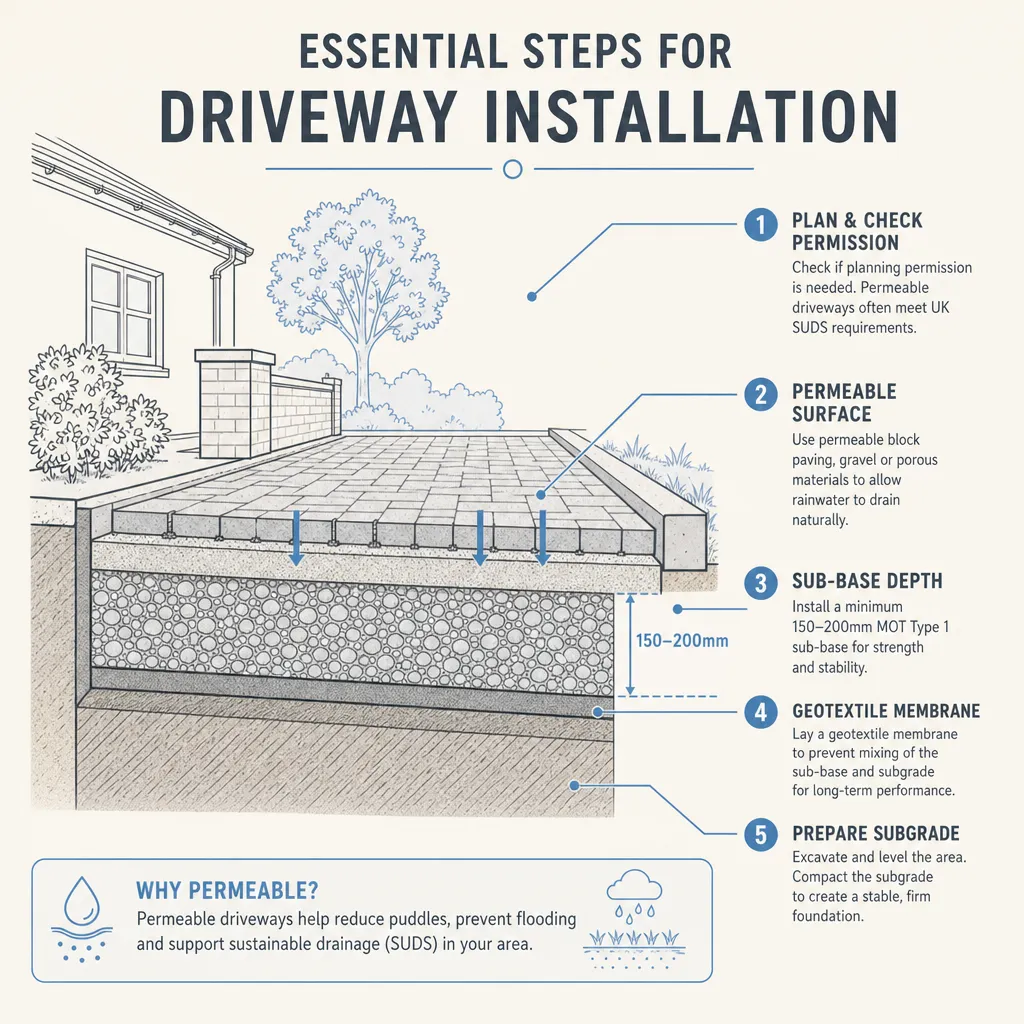
Essential Steps for Driveway Installation
Installing a driveway in England requires planning permission only when using an impermeable surface (standard tarmac, concrete, or block paving) on a front garden area over 5 m².
 Improvement & Build
Preparing Walls for Patching: Surface Preparation Best Practice
Durable wall patching starts with removing all loose material, cutting back to a clean and stable edge, cleaning the substrate, and priming with a construction-grade PVA bonding agent before applying any filler or plaster.