Identifying and Treating Damp Before Interior Decoration: Remediation First
By Housey · Last reviewed 18th of May 2026
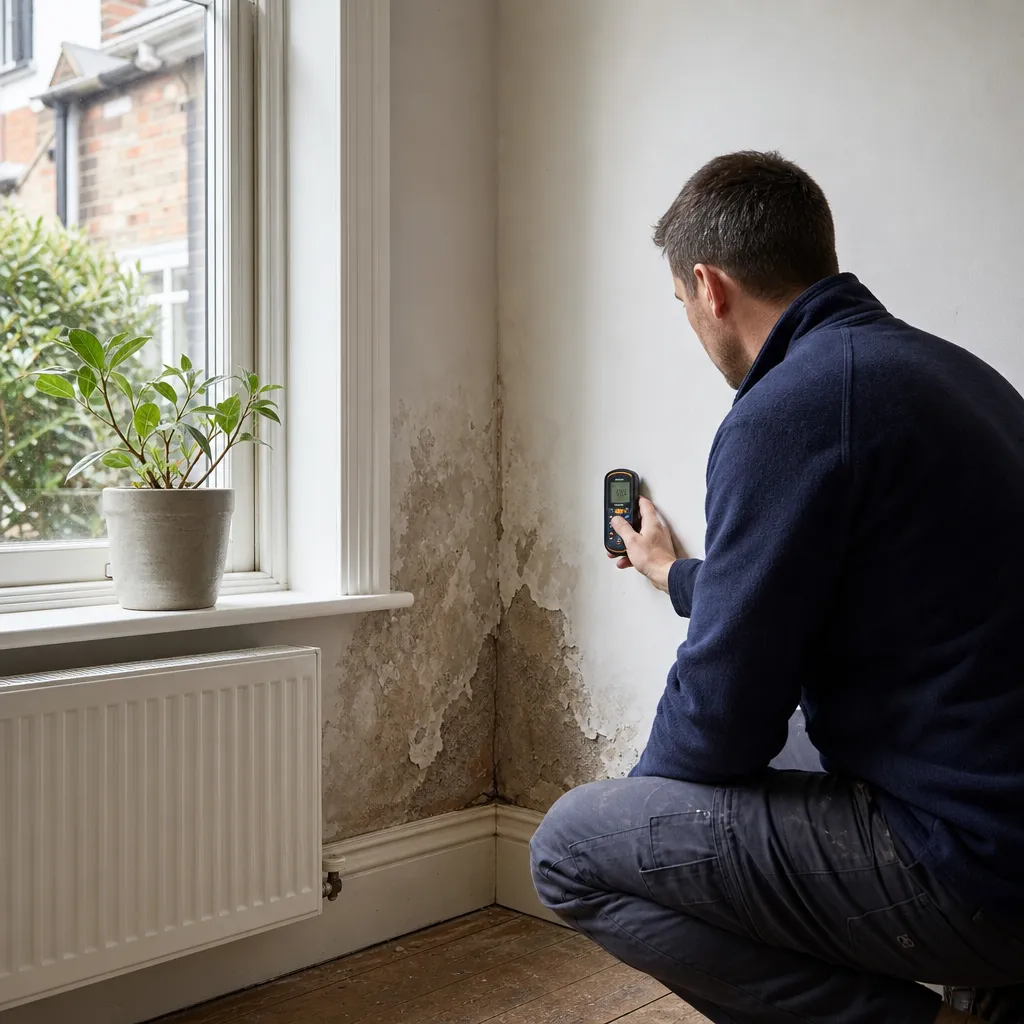
Identifying and Treating Damp Before Interior Decoration: Remediation First
Decorating a damp wall is one of the most common — and expensive — mistakes UK homeowners make. Whether you have noticed tide marks on a ground-floor wall in a 1930s semi, a persistent damp patch on a chimney breast in a Victorian terrace, or black mould spots forming in a bathroom corner, treating the cause before picking up a paintbrush is the only approach that produces a lasting result. Skipping remediation means the decoration fails within months, requiring further stripping, replastering, and redecoration.
Key points
- Decorating over untreated damp will almost certainly fail — paint and wallpaper typically bubble, stain, or peel within weeks to months as moisture continues to move through the wall.
- Three main damp types affect UK homes: rising damp (typically below 1m, caused by a failed or absent damp-proof course), penetrating damp (entering from outside through defective walls, roofs, or gutters), and condensation (warm moist air meeting cold surfaces).
- The Property Care Association (PCA) is the main trade body accrediting damp-proofing and timber treatment contractors in the UK; seek PCA-accredited firms and ask for an insured guarantee.
- Walls must dry fully before decoration — a saturated 100mm brick wall can take several months to reach equilibrium after the cause is resolved, at approximately 1mm depth per day of drying time.
- Anti-damp paint and tanking slurry are surface treatments, not cures; they do not address the root cause and will eventually fail if the source of moisture is not eliminated first.
Identifying which type of damp you have
Treating the wrong type of damp wastes money and often makes the situation worse. Applying a chemical DPC injection for what is actually condensation will have no effect; sealing a wall internally when penetrating damp continues to enter will fail within a season. Use the decision tree below to narrow down the cause before commissioning any work.
Which type of damp do you have?
- Is the affected area below 1m from floor level on a ground-floor wall, with a tide mark, white powdery deposits (efflorescence), or plaster that feels persistently damp? → Likely rising damp. Check whether the damp-proof course — a thin horizontal strip in the mortar course, usually 150mm above external ground level — is present, absent, or bridged by raised paths, soil, or solid render.
- Do damp patches appear near windows, roof junctions, chimney breasts, or party walls, and do they worsen after rain or dry out during dry spells? → Likely penetrating damp. Inspect external brickwork, pointing, flashings, gutters, and window sills for defects.
- Does black mould appear on mid-to-upper-height external walls, in corners, around windows, or in kitchens and bathrooms — particularly in autumn and winter? → Likely condensation. Check whether extractor fans, trickle ventilators, and adequate background heating are present.
- Symptoms appear in multiple locations, or none of the above fits clearly? → Commission a professional damp and timber survey from a PCA-accredited specialist before spending on any treatment.
Rising damp in detail
Rising damp is caused by groundwater being drawn upward through masonry by capillary action. It typically affects the lower 600–900mm of a wall and is most common in properties built before 1965, where a physical damp-proof course may be absent, damaged, or bridged by a raised external ground level. White salt deposits (efflorescence) form as moisture carries soluble salts from the masonry to the surface. These salts remain hygroscopic — meaning they continue to attract moisture — even after the DPC is repaired, which is why the affected plaster must be replaced as part of any lasting treatment.
Penetrating damp in detail
Penetrating damp enters from outside through a specific defect — cracked render, eroded pointing, a failed flashing, a blocked gutter, or a leaking roof. It does not follow the horizontal tide mark pattern of rising damp and is often localised near the defect. Repairing the external cause is the primary fix; applying an internal sealant without addressing the exterior will fail because water continues to enter.
Condensation in detail
Condensation is the most common cause of damp-related problems in UK homes and is frequently misdiagnosed as rising or penetrating damp. It occurs when warm, humid air meets a cold surface and deposits moisture. Black mould growth typically follows. Remedies focus on improving ventilation (extractor fans, trickle vents), raising internal surface temperatures through insulation at cold bridges, and reducing internal moisture sources such as unvented tumble dryers or clothes drying on radiators.
What not to assume about damp
Do not assume a moisture meter reading alone confirms rising damp. A high reading could result from condensation, a recent plumbing leak, or a newly plastered surface as well as rising damp. A professional damp survey includes inspection of the external envelope, assessment of internal humidity levels, and often thermal imaging — a moisture meter is one tool among several, not a standalone diagnosis.
Do not assume anti-damp paint or sealant fixes the problem. Waterproof masonry paints and tanking slurries seal the surface but do not address the source of moisture. Hydrostatic pressure can eventually breach a surface seal, and in some cases trapping moisture within the wall causes freeze-thaw damage to masonry. These products may serve a role as part of a broader treatment programme, but they are not a standalone cure.
Do not assume rising damp treatment is quick. After DPC injection, the wall must begin to dry before replastering — this can take many weeks or months depending on wall thickness and extent of saturation. New plaster then needs to cure before decoration: typically four to six weeks for a standard 13mm coat. Attempting to decorate too soon is one of the most common causes of failed redecoration.
Do not assume rising damp and condensation cannot both be present. In older solid-wall properties with inadequate heating and ventilation, both types can occur simultaneously and require a combined remediation and ventilation approach.
Treating damp before decorating: a step-by-step approach
Once you have identified the damp type and its cause, follow the appropriate sequence before any decoration begins.
For rising damp:
- Lower any external ground levels bridging the DPC, or install a physical barrier where needed.
- Commission DPC injection from a PCA-accredited contractor.
- Hack off all salt-contaminated plaster to at least 1m above the highest tide mark.
- Allow masonry to begin drying — several weeks to months depending on the wall.
- Apply a sand-cement re-plastering system with a waterproof admixture (not standard gypsum plaster, which will re-absorb salts and fail again).
- Allow new plaster to cure fully — a minimum of four to six weeks — before applying a diluted mist coat then full decoration.
For penetrating damp:
- Identify and repair the external defect: repoint eroded joints, replace a failed flashing, clear blocked gutters, or rerender cracked external walls.
- Allow the wall to dry fully — possibly several months for a heavily saturated stone or solid-brick wall.
- Remove any plaster damaged by hygroscopic salt deposits and replaster with a suitable system where needed.
- Apply a stabilising solution to any friable or powdery surfaces before applying a finish coat.
For condensation:
- Treat existing mould with a proprietary fungicidal wash, following manufacturer guidance, before any decoration.
- Improve ventilation: install or upgrade extractor fans in affected rooms, add trickle ventilators to windows.
- Apply anti-mould primer to previously affected surfaces.
- Use anti-mould paint in bathrooms, kitchens, and other high-humidity rooms.
- Monitor indoor relative humidity after works — persistently above 70% suggests further ventilation improvement is needed.
Red flags: stop and get professional help
- Tide marks that reappear within weeks of apparent treatment
- Plaster that sounds hollow when tapped (blown plaster) across large sections of wall
- External render pulling away from the substrate in sheets or large sections
- Any structural cracking adjacent to or within the damp area
- Damp affecting a chimney breast with an unlined or unused flue — flue condensate can be acidic and cause rapid deterioration
- Visible timber joists, floorboards, or structural timbers within or near the damp area — these may be at risk of wet rot or dry rot and need specialist assessment before works proceed
When to get professional help
Instruct a PCA-accredited specialist or a RICS-registered surveyor if the damp is widespread, recurring, of unknown cause, or if structural timber is nearby. A dedicated damp and timber survey will identify the damp type, specify a treatment programme, and flag any associated timber decay before you commit to any treatment spend. Misdiagnosis is common — an independent survey from a specialist who does not also sell the treatment can be a worthwhile first step.
How Housey can help
Housey connects homeowners with independent damp and timber survey specialists who can diagnose the damp type before any treatment is commissioned, and with vetted damp proofing specialists for remediation work backed by an insured, transferable guarantee.
Frequently asked questions
How long must I wait after treating damp before I can decorate?
This depends on construction type and the extent of saturation. A rough guide: a saturated 100mm solid-brick wall can take 100 days or more to dry at approximately 1mm per day after the cause is fixed. Lightweight blockwork dries faster. Use a moisture meter and aim for readings below 15–18% in the plaster before applying paint or wallpaper. Decorating too soon is one of the most common causes of early redecoration failure.
Can I use anti-damp paint instead of treating the cause?
Anti-damp and waterproof masonry paints are surface treatments that may slow moisture ingress in minor cases but will not prevent failure if the root cause — a failed damp-proof course, defective flashing, or poor ventilation — is not addressed. Most specialist damp-treatment guarantees specifically exclude areas where only a surface treatment was applied without resolving the underlying cause.
Will a damp treatment guarantee be useful when I sell the property?
Most PCA-accredited firms issue guarantees of 20–30 years for chemical DPC injection, which are usually transferable to a new buyer and accepted by most mortgage lenders and conveyancers. Keep the original paperwork, as it will be requested in the TA6 property information form during conveyancing. A lost or non-transferable guarantee may need to be replaced with indemnity insurance.
Is rising damp in a rented property the landlord's responsibility?
Under the Homes (Fitness for Human Habitation) Act 2018, landlords in England must ensure rental properties are free from damp that makes them unfit for habitation. Rising damp and penetrating damp caused by structural defects are the landlord's responsibility. Condensation caused wholly by tenant behaviour is less clear-cut, but structural cold bridges that cause condensation are the landlord's responsibility regardless of occupier behaviour.
Sources and further reading
- Property Care Association: find an accredited contractor — Property Care Association
- Homes (Fitness for Human Habitation) Act 2018 — legislation.gov.uk
- Historic England: damp in traditional buildings — Historic England
- Energy Saving Trust: condensation and ventilation — Energy Saving Trust
- NHS: damp and mould in the home — NHS
Useful next reads
 Improvement & Build
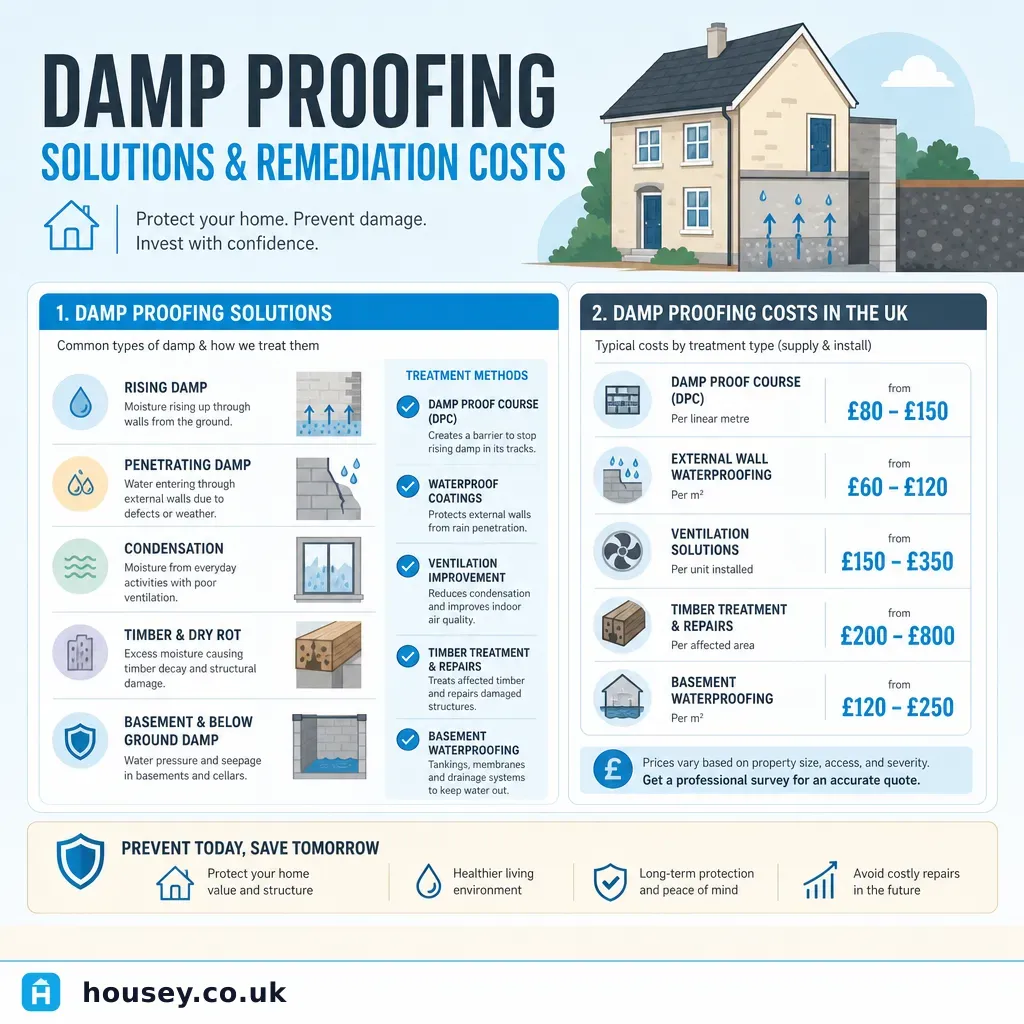
Damp Proofing Solutions and Remediation Costs
Damp proofing costs depend on the type of damp present: ventilation improvements for condensation start at around £300–£700, chemical DPC injection plus replastering typically costs £1,500–£3,500, and full basement waterproofing can reach £7,000–£15,000 or more.
 Improvement & Build
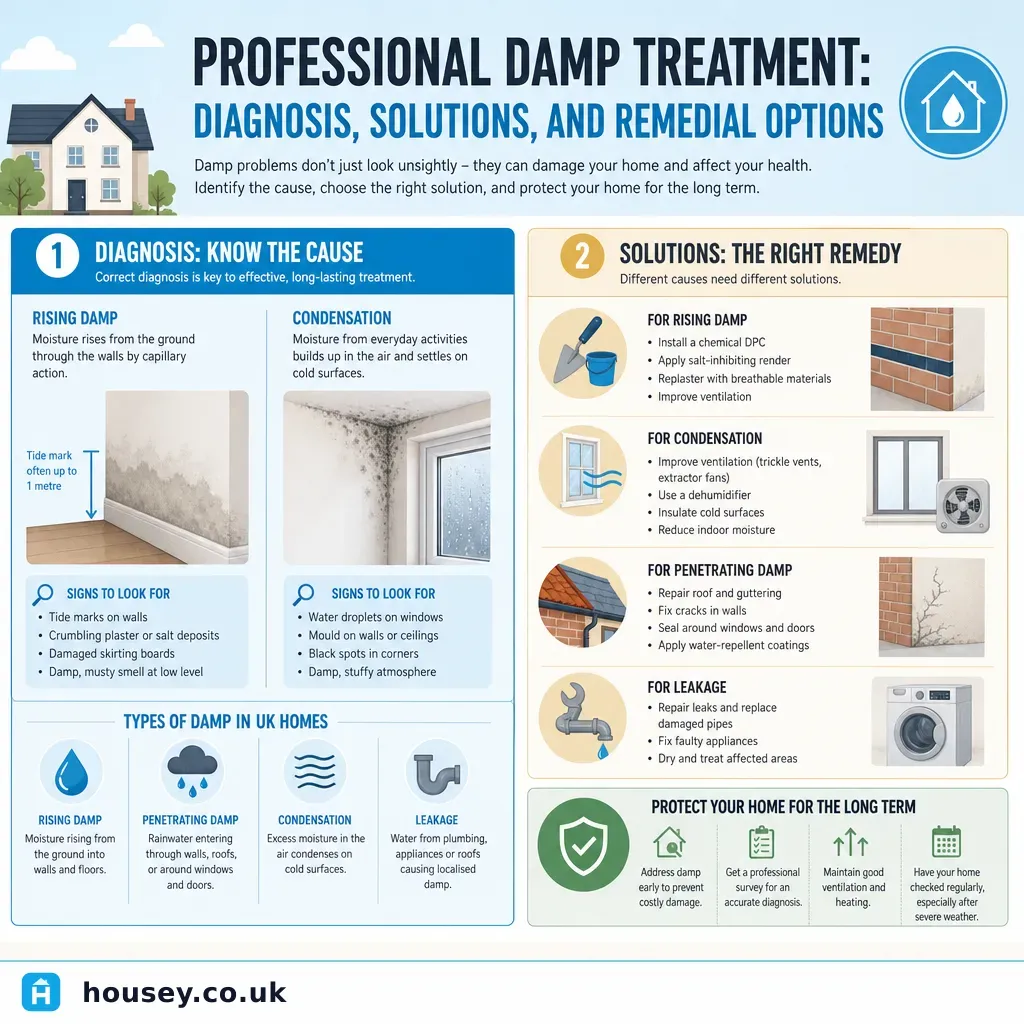
Professional Damp Treatment: Diagnosis, Solutions, and Remedial Options
Professional damp treatment begins with correct diagnosis of which type of dampness is present — rising damp, penetrating damp, or condensation — as each requires a different remedial approach.
 Improvement & Build
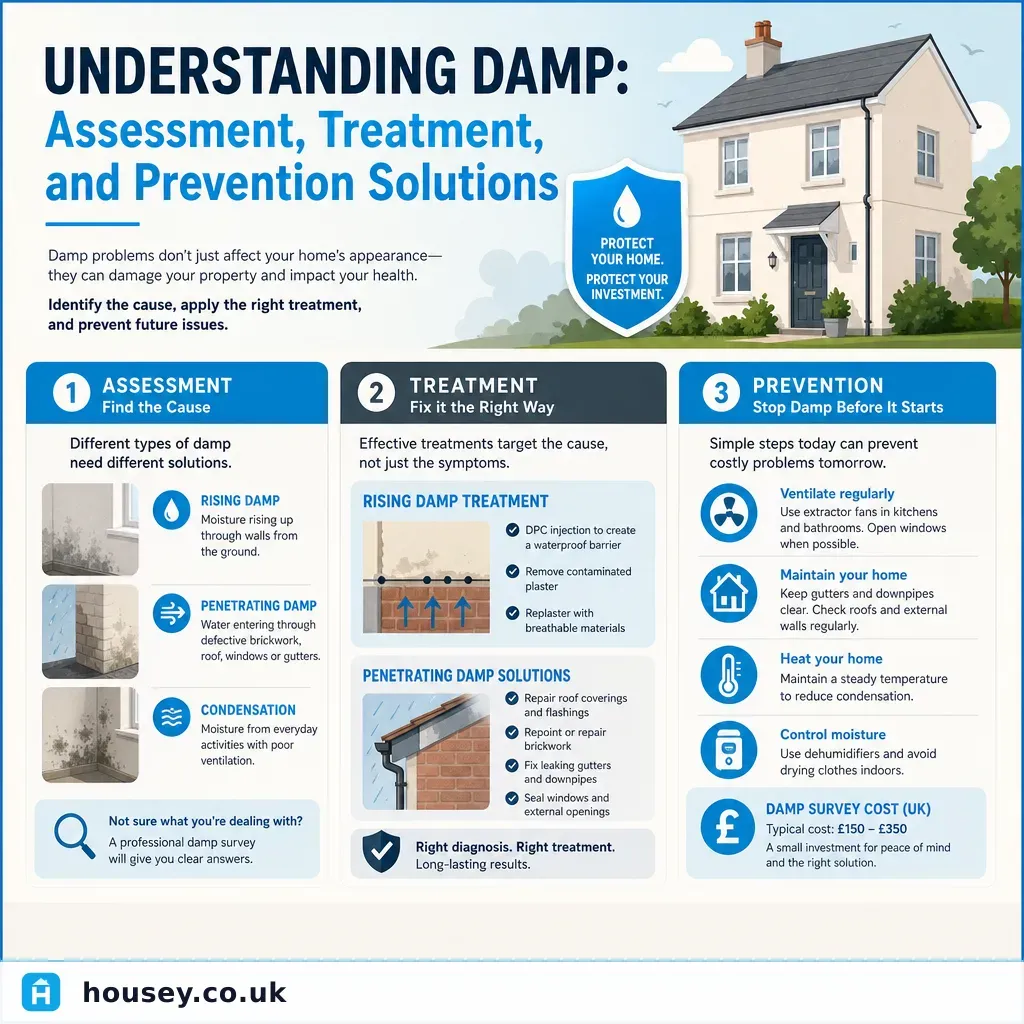
Understanding Damp: Assessment, Treatment, and Prevention Solutions
Damp in UK homes usually falls into three categories — rising damp, penetrating damp, and condensation — each requiring a different remedy.
 Improvement & Build
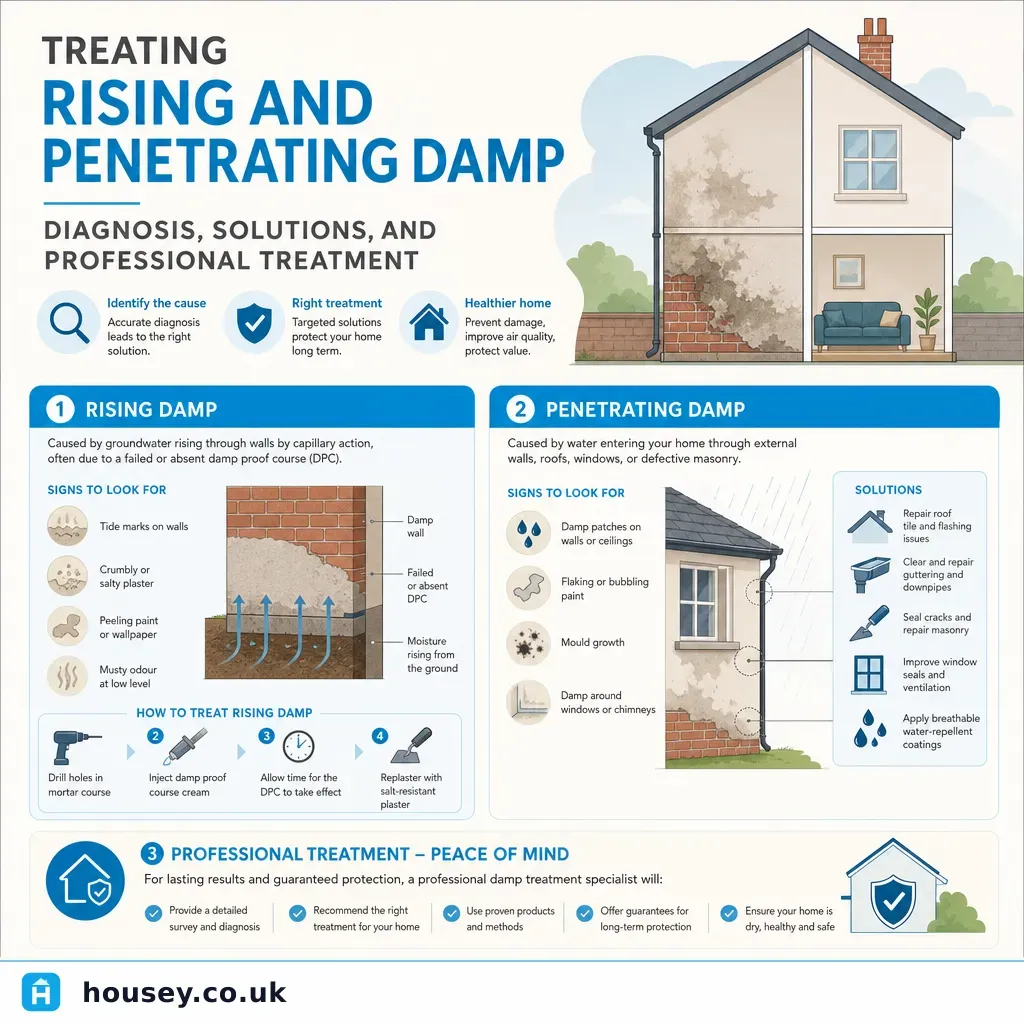
Treating Rising and Penetrating Damp: Diagnosis, Solutions, and Professional Treatment
Rising damp appears as a tide mark at the base of ground-floor walls and is caused by a failed or absent damp-proof course.
 Improvement & Build
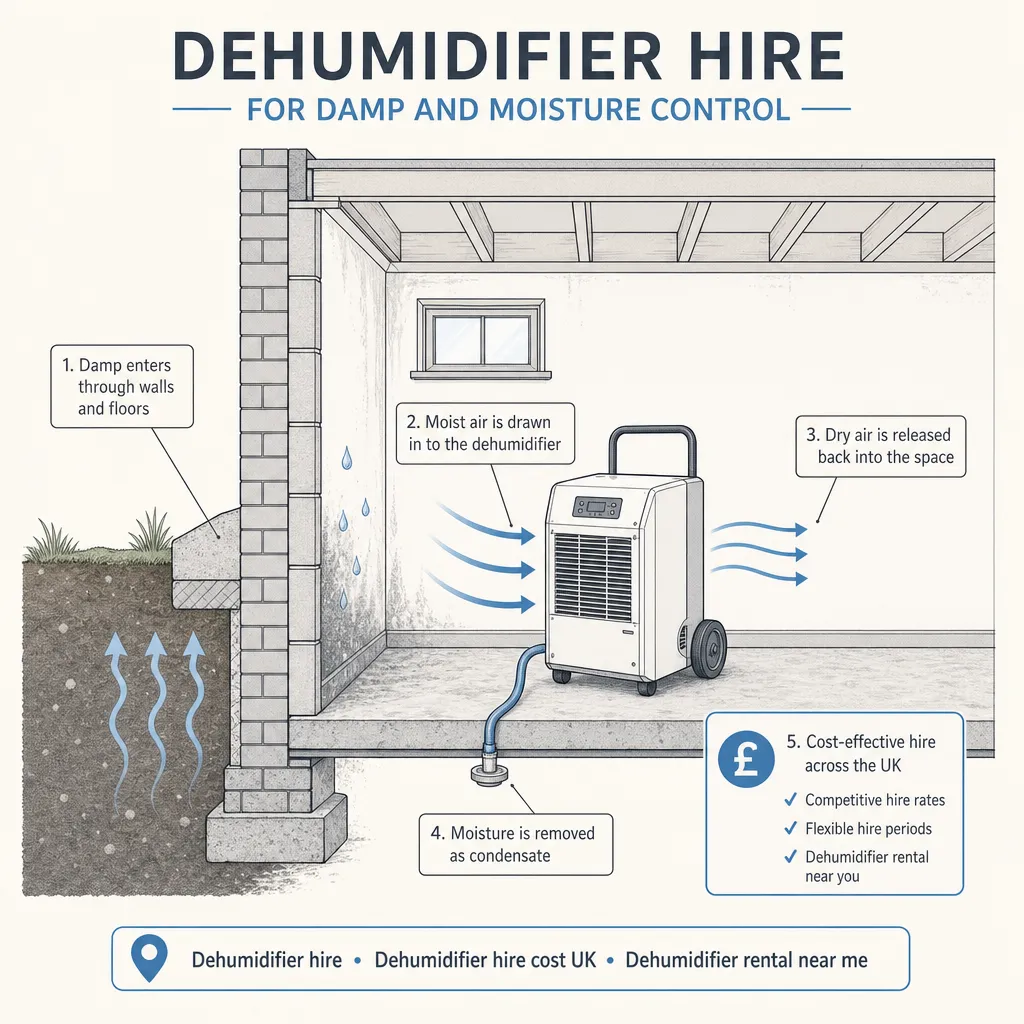
Dehumidifier Hire for Damp and Moisture Control
Hiring an industrial dehumidifier in the UK typically costs £25–£60 per day or £100–£250 per week for a standard 50-litre-per-day unit.