Identifying Structural Damage from Carpenter Ant Infestations
By Housey · Last reviewed 30th of May 2026
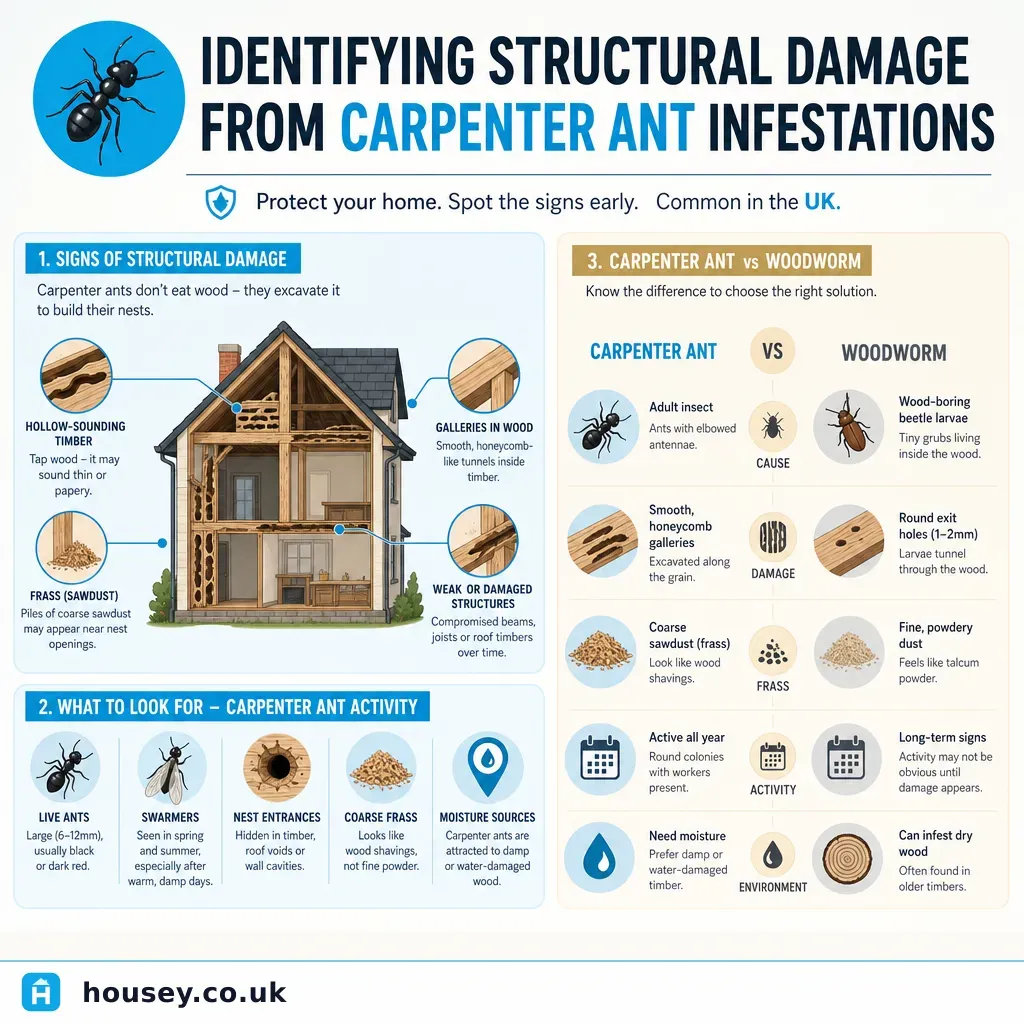
Identifying Structural Damage from Carpenter Ant Infestations
Black carpenter ants (Camponotus herculeanus) are native to the UK and found primarily in Scotland and parts of northern England, though they may occasionally be encountered in properties further south. While far less prevalent as a structural pest here than in North America, when a colony establishes inside a building — typically in roof timbers, window frames, or sub-floor voids — the damage can easily be mistaken for woodworm or wet rot, delaying the correct treatment. For older UK properties containing softwood structural timbers, knowing how carpenter ant damage presents, and what it means for a building's condition, is the first step to addressing it correctly.
Key points
- Camponotus herculeanus — the UK's native carpenter ant — nests in wood but does not eat it; it excavates smooth galleries for nesting, preferring timber already softened by damp or fungal decay.
- Carpenter ant damage produces coarse, fibrous frass mixed with insect debris and soil particles, distinctly different from the fine, powdery bore dust left by furniture beetle (woodworm, Anobium punctatum).
- Because carpenter ants target pre-decayed timber, an infestation almost always indicates an unresolved moisture problem — treating only the ants without addressing the damp source will typically result in reinfestation.
- Building Regulations Approved Document A (Structure) applies to any repair work affecting structural timbers; significant remediation should be assessed by a competent person, and listed building consent may be required for listed properties.
- UK carpenter ant infestations in buildings are relatively uncommon — if you suspect timber pest damage, woodworm or wet rot is statistically more likely, and correct identification matters because the treatments differ.
How carpenter ant damage compares with other UK timber pests
Correct identification is essential — each timber pest has a different cause, treatment, and structural implication.
Pest | Key evidence | Timber affected | Moisture link | Typical UK location |
|---|---|---|---|---|
Carpenter ant (Camponotus spp.) | Coarse frass with insect debris; smooth, clean galleries | Already-damp or decaying softwood | Strong — targets pre-softened timber | Roof voids, window frames, sub-floor areas; mainly Scotland and northern England |
Furniture beetle / woodworm (Anobium punctatum) | 1–2 mm round exit holes; fine, powdery bore dust | Seasoned softwood and hardwood | Moderate — prefers slightly elevated moisture | Roof timbers, floorboards, joinery — common UK-wide |
Death watch beetle (Xestobium rufovillosum) | 3 mm round exit holes; cylindrical pellets; ticking sound | Hardwoods such as oak and chestnut | Strong — associated with damp | Churches, listed buildings, older oak-framed properties |
House longhorn beetle (Hylotrupes bajulus) | Large oval exit holes; oval frass pellets | Sapwood of structural softwood | Low — targets drier timber | Restricted mainly to parts of Surrey and surrounding areas |
Wet rot (Coniophora puteana) | No insect frass; soft, dark, fibrous wood | Any persistently damp timber | Essential — requires sustained moisture | Any persistently wet area — sub-floor, sills, flat roofs |
Signs of carpenter ant activity in a building
Frass — the key diagnostic indicator
The most reliable indicator distinguishing carpenter ants from other timber pests is the frass they eject from their galleries. Carpenter ant frass is coarse and fibrous — resembling coarse sawdust — and typically contains fragments of insect body parts, soil, and dead ants. It often accumulates in small, irregular piles below or beside infested timber.
Compare this with:
- Woodworm bore dust: very fine, almost flour-like, cream-coloured powder that falls from exit holes
- Death watch beetle pellets: small, cylindrical or bun-shaped particles, not powdery
- Wet rot: no frass at all — timber simply softens and darkens
Gallery structure
Where accessible, carpenter ant galleries are smooth-walled and clean, with multi-directional tunnels rather than the grain-following pattern typical of woodworm. Unlike beetle larvae, the ants leave no round exit holes to the surface — they enter and leave through a single access point, often a split in the wood or a crack in a joint.
Live ant sightings and sounds
Carpenter ant workers are large — roughly 6–12 mm — and predominantly black or dark brown. Sighting large black ants inside a property at night, particularly near timber elements, warrants closer inspection. In established colonies, faint rustling or tapping inside timber may be audible in a quiet room.
Where to look first
Because carpenter ants seek pre-softened timber, prioritise inspection of:
- Roof timbers around leaking valleys, flashings, or chimney bases
- Window and door frames with failed or absent sealant and paintwork
- Sub-floor joists near waste pipe leaks or where the damp-proof course may have been bridged
- Loft boarding resting directly on damp insulation
- Timber built into external masonry close to ground level
Assessing whether structural damage has occurred
The structural significance of carpenter ant damage depends on two factors working together.
1. The depth and extent of excavation. Early-stage colonies work in the sapwood and surface layers of already-decayed timber. Longer-running colonies can excavate deeply into otherwise sound heartwood, reducing the effective cross-section of a joist or rafter.
2. The pre-existing decay that attracted the colony. Damp-induced rot often progresses independently of the ant activity, sometimes faster. The structural loss is usually a combination of both, and the moisture source driving the decay must be resolved for any repair to be durable.
Decision tree: choosing the right professional response
- Choose pest control only if the infestation appears recent, frass deposits are small, and the affected timber feels firm — not spongy — when probed.
- Choose pest control plus a damp investigation if the infested timber feels damp or soft on probing, or if you cannot identify the moisture source. Resolving the damp is essential — the infestation will recur without it.
- Instruct a chartered surveyor if galleries appear extensive, timber sounds hollow across a run longer than 300–400 mm, or if visible sagging, deflection, or associated cracking is present.
- Consult a structural engineer where damage affects principal load-bearing members — main floor joists, a ridge beam, or structural purlins — or where there is visible deflection of a structural plane.
- Check listing status first if the property is a listed building — removing or replacing structural timbers requires listed building consent from your local planning authority, in addition to any building regulations approval.
What not to assume
- Don't assume carpenter ants are the primary problem. They are almost always a symptom of a pre-existing moisture defect. Treating only the infestation without resolving the damp means reinfestation is likely.
- Don't assume a pest controller can assess structural damage. Pest professionals can identify and treat the colony, but assessing whether load-bearing capacity is compromised requires a chartered surveyor or structural engineer.
- Don't assume the damage is limited to where you can see frass. Galleries extend inside the timber; surface evidence may reflect only a fraction of the internal excavation.
- Don't apply woodworm treatment and expect it to address carpenter ants. The treatments are entirely different — woodworm products target larvae inside timber grain; carpenter ant treatment targets the living colony. Misidentification wastes money and leaves the problem unresolved.
When to get professional help
Arrange professional inspection if any of the following apply:
- Frass is found beneath roof timbers, floor joists, or other structural members
- Affected timber feels spongy or sounds hollow across more than 300–400 mm
- Visible deflection, sagging ceilings, or associated cracking coincides with known ant activity
- The property is a listed building or has complex period timber framing, such as a barn conversion
- The sub-floor void is inaccessible without lifting boards
A damp and timber survey identifies moisture sources, assesses the condition of affected timbers, and determines the extent of decay and insect damage together. Where the structural significance is unclear, a structural survey by a chartered surveyor provides a load-bearing assessment. For targeted investigation of a specific element or area, a specific defect survey is often the most efficient starting point.
How Housey can help
Housey connects UK homeowners with qualified surveyors offering damp and timber surveys, structural surveys, and specific defect surveys. If you suspect carpenter ant activity or associated timber decay, request and compare quotes from local professionals through Housey.
Frequently asked questions
Are carpenter ants common in UK homes?
Camponotus herculeanus — the main UK carpenter ant species — is native to Britain but uncommon as a structural pest, found mainly in Scotland and northern England. Woodworm (furniture beetle) and wet rot are far more prevalent causes of timber damage in UK homes. Correct identification matters because the treatments differ substantially from one another.
How do I tell carpenter ant damage from woodworm?
The key difference is the frass. Woodworm (furniture beetle larvae) produce very fine, powdery bore dust and leave 1–2 mm round exit holes. Carpenter ants leave coarser frass containing insect debris and soil particles, alongside smooth, clean internal galleries with no surface exit holes. A damp and timber surveyor can confirm identification where doubt remains.
Will carpenter ant damage worsen if untreated?
Yes, particularly because the underlying damp and decay that attracted the ants will typically continue independently of the colony. Untreated combinations of moisture ingress, fungal decay, and ant excavation can progressively reduce the load-bearing capacity of structural timbers. Early professional assessment limits the scope and cost of any remediation required.
Can I treat carpenter ants with DIY ant products?
Surface sprays and household ant treatments are unlikely to eliminate a colony established inside structural timber, as the queen and brood remain protected within the galleries. Professional treatment using targeted bait systems or perimeter application is considerably more effective. Structural damage requires a separate professional assessment from a surveyor or structural engineer.
Sources and further reading
- Building Regulations Approved Document A (Structure) — GOV.UK
- Timber and damp in historic buildings — Historic England
- Wood-boring insects in buildings — Historic England
- Prevention of Damage by Pests Act 1949 — legislation.gov.uk
Useful next reads
 Surveys & Inspections
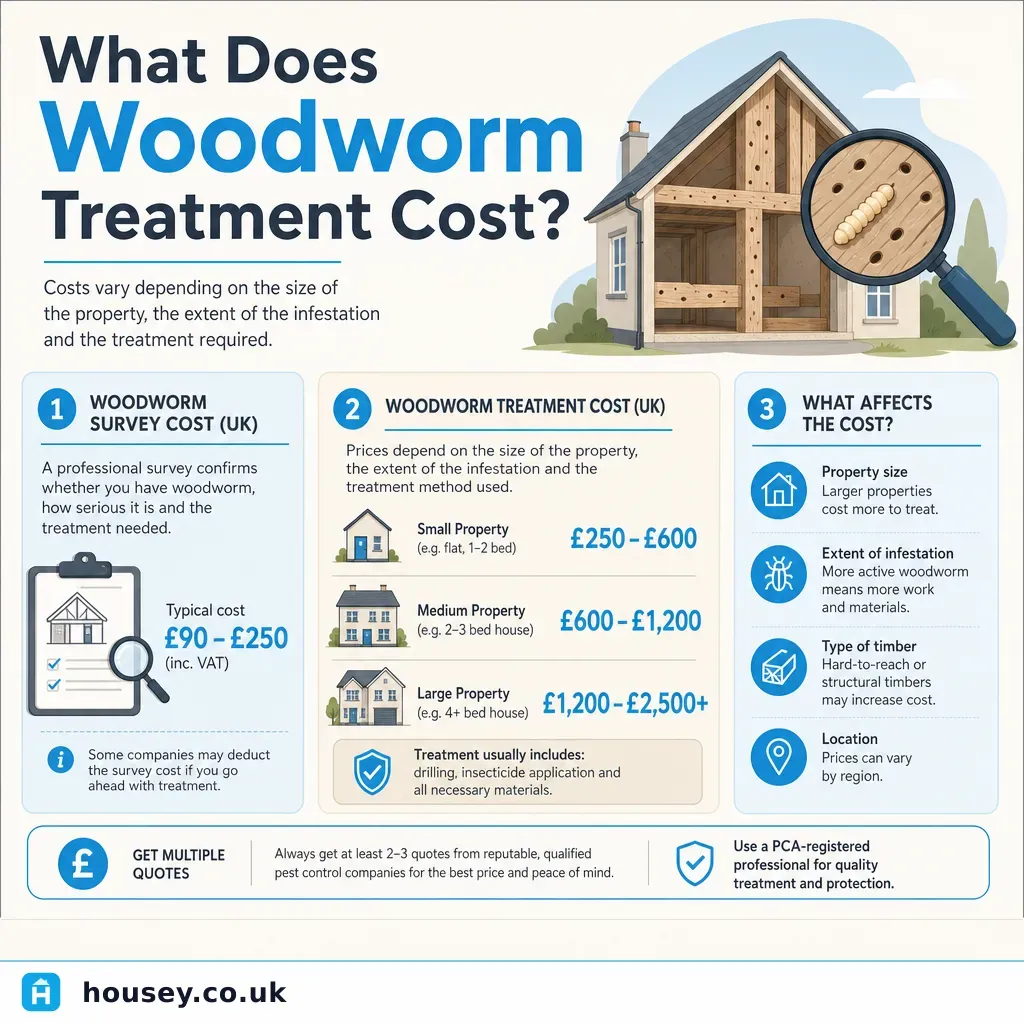
What Does Woodworm Treatment Cost?
Woodworm treatment in the UK typically costs £300–£900 for a standard three-bedroom home, depending on the extent of infestation and timbers affected.
 Surveys & Inspections
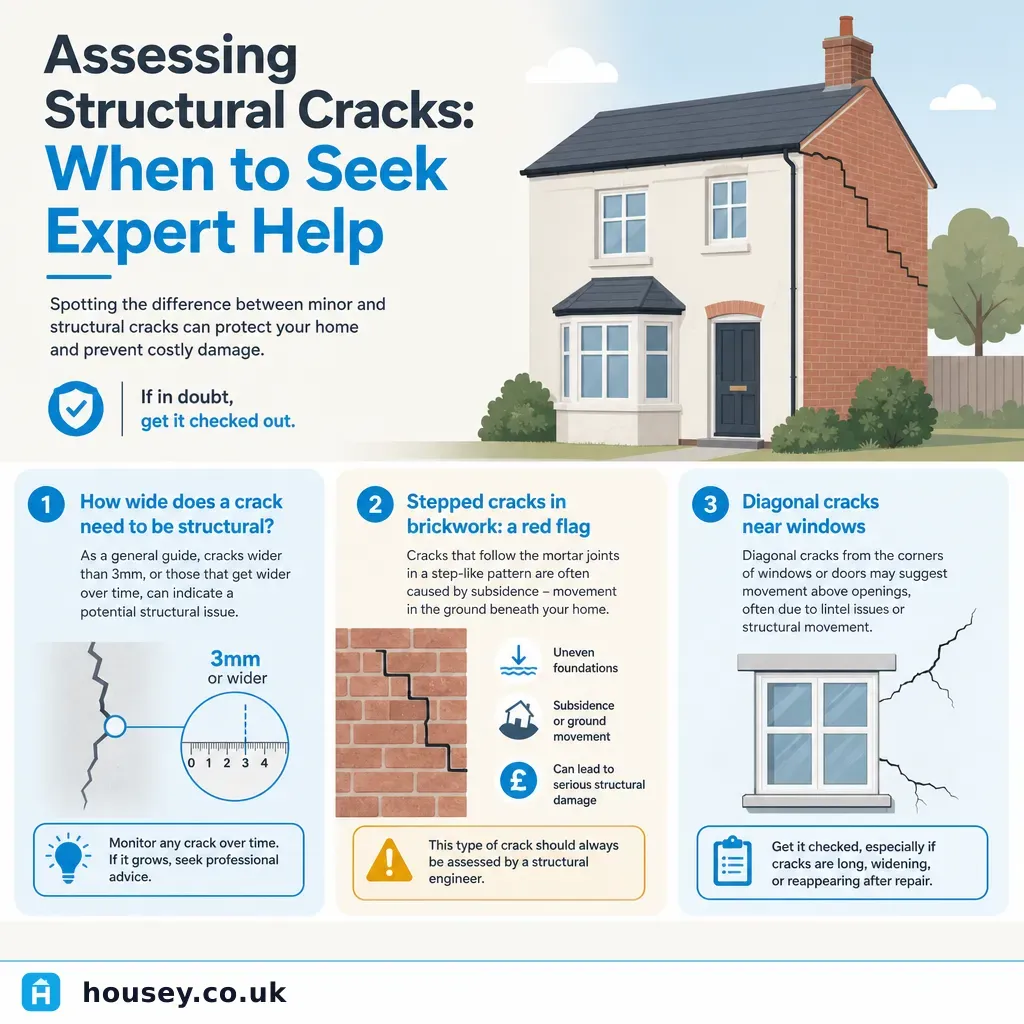
Assessing Structural Cracks: When to Seek Expert Help
Structural cracks range from harmless shrinkage hairlines to signs of subsidence or foundation movement.
 Surveys & Inspections
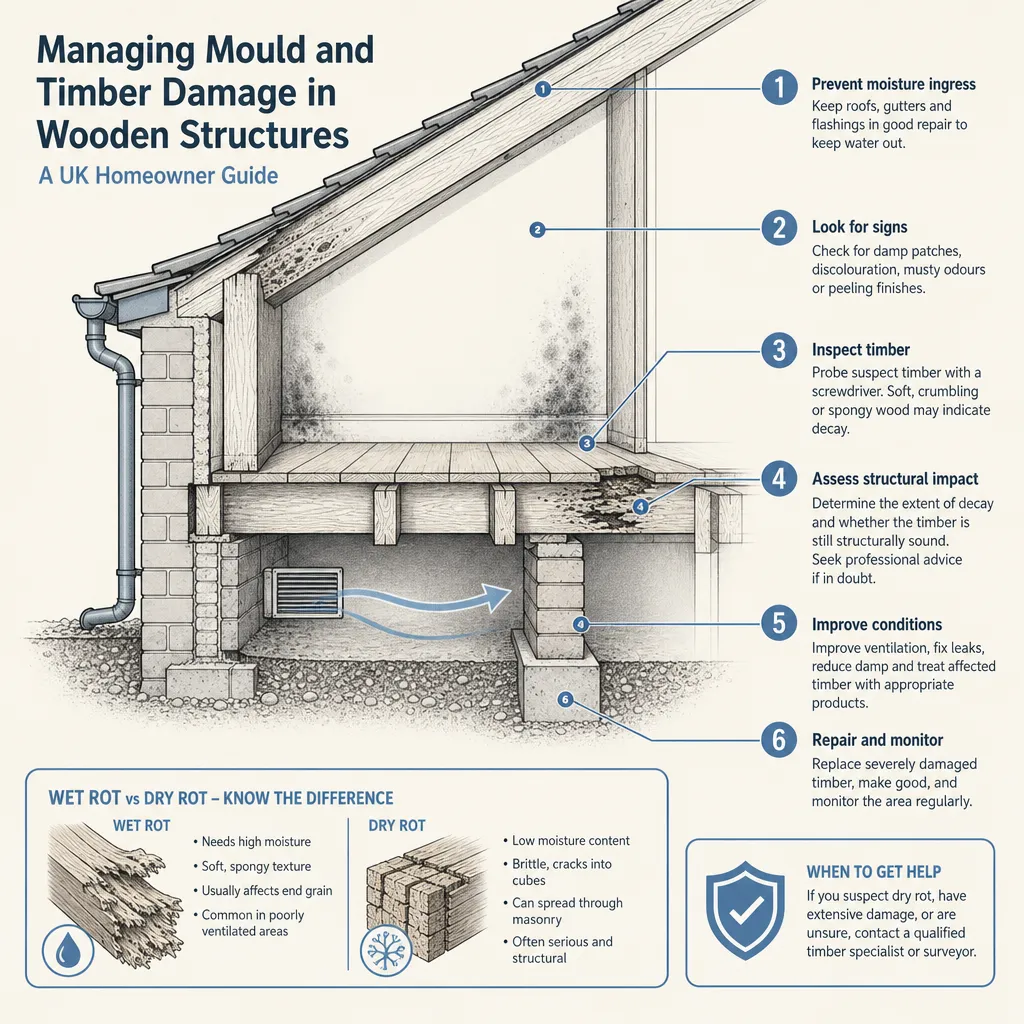
Managing Mould and Timber Damage in Wooden Structures
Mould and timber decay in wooden structures are usually symptoms of excess moisture rather than standalone problems.
 Surveys & Inspections
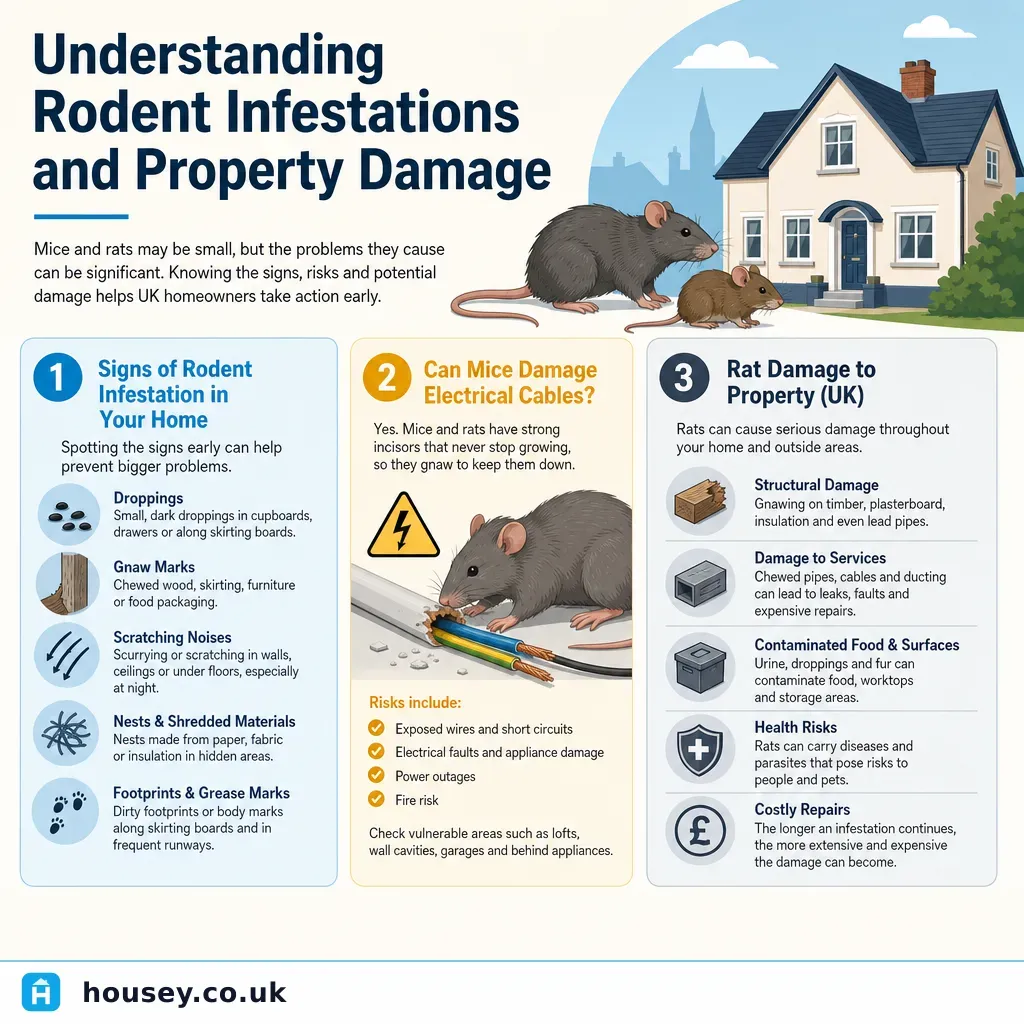
Understanding Rodent Infestations and Property Damage
Rats and mice can cause significant property damage in UK homes, including gnawed electrical cables that create fire risk, damaged pipework causing hidden leaks, and burrowing near foundations in older properties.
 Surveys & Inspections
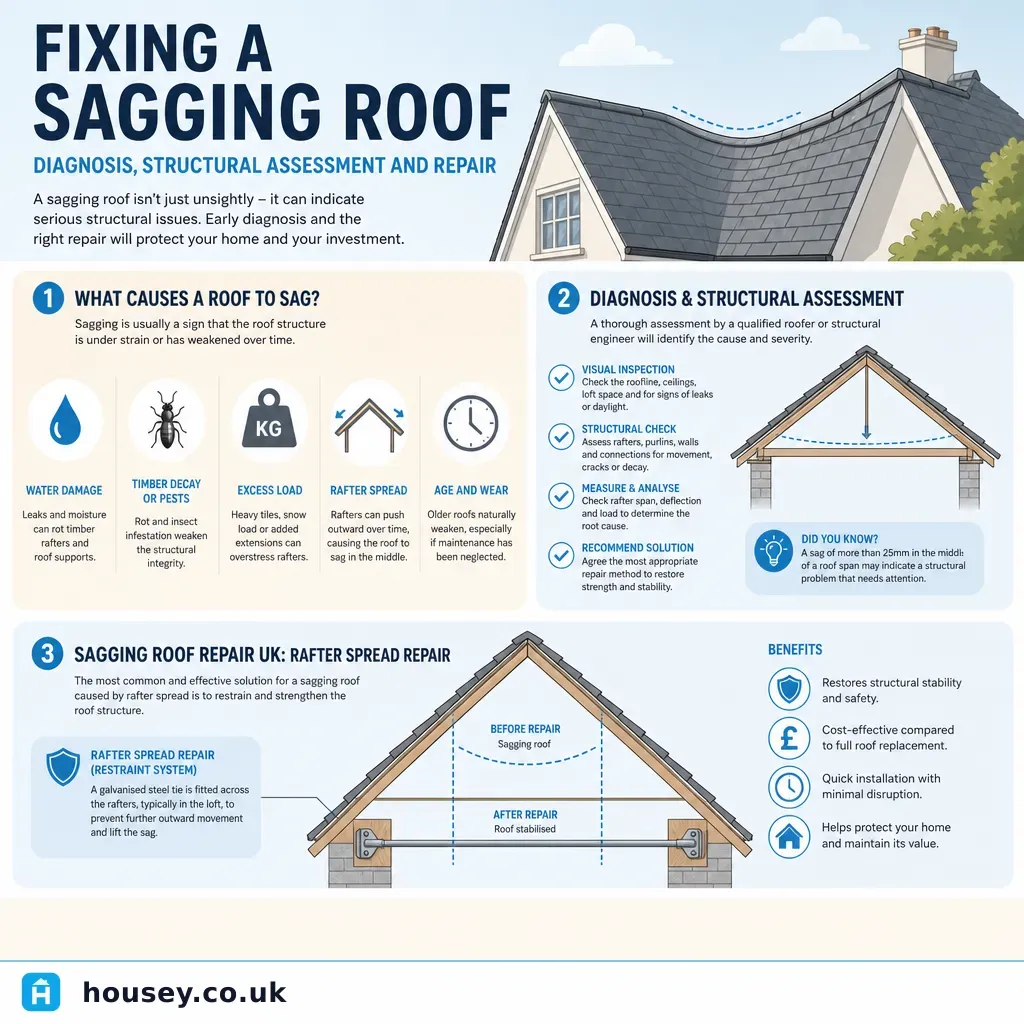
Fixing a Sagging Roof: Diagnosis, Structural Assessment and Repair
A sagging roof usually points to failed or overloaded roof timbers, rafter spread, or a compromised ridge board.