Identifying Damp Defects: A Buyer's Property Inspection Guide
By Housey · Last reviewed 30th of May 2026
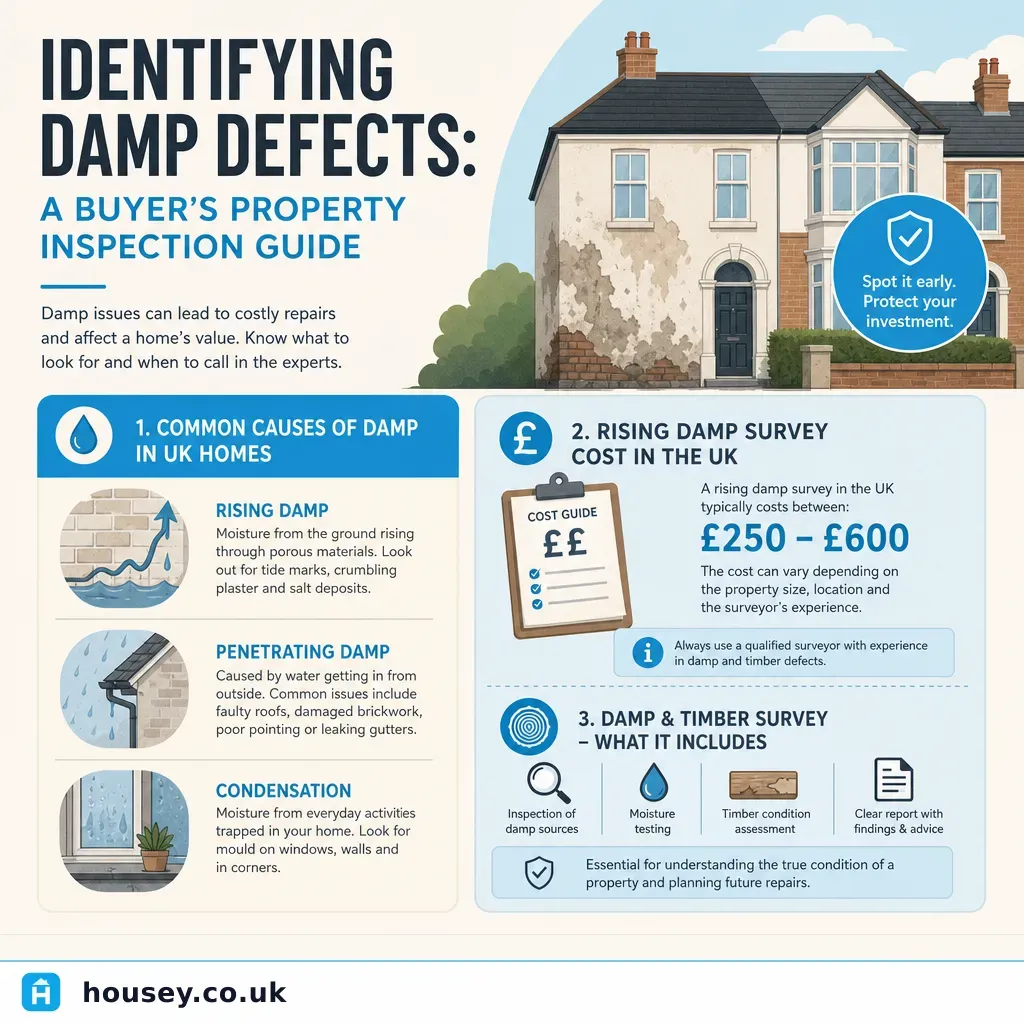
Identifying Damp Defects: A Buyer's Property Inspection Guide
Damp is one of the most frequently identified defects in UK home surveys, yet it is also among the most commonly misdiagnosed. Whether you are considering a Victorian terrace, a 1930s semi, or a post-war flat, understanding how moisture presents — and what it actually signals — can help you make a more informed buying decision, negotiate a realistic price, or avoid a costly mistake before exchange of contracts.
Key points
- Rising damp is caused by groundwater travelling upward through porous masonry; it rarely exceeds 1 metre in height, and a missing, bridged, or failed damp-proof course (DPC) is the most common cause.
- Penetrating damp accounts for the majority of moisture problems in UK homes; typical entry points include defective pointing, cracked render, failed flashings, and blocked or leaking gutters.
- Condensation is responsible for a significant proportion of damp complaints — particularly in post-war and newer properties — and is driven by poor ventilation rather than structural failure.
- Dry rot (Serpula lacrymans) can spread through masonry and is substantially more expensive to treat than wet rot; remediation costs typically range from £3,000 to over £15,000 depending on extent (indicative UK costs, last reviewed 2026-05-30).
- A RICS Level 3 Building Survey or a specialist damp and timber survey uses calibrated moisture meters and may include thermal imaging; visual inspection alone is insufficient for a reliable diagnosis.
The three main damp types: how to tell them apart
Identifying the correct damp type matters because the remediation route differs entirely. Treating condensation as rising damp, for example, can lead to expensive waterproofing works that make no difference to the underlying cause.
Rising damp
Rising damp leaves a characteristic "tide mark" on internal walls, typically below 1 metre. Plaster may be stained, and white salt deposits (efflorescence) often appear on the wall surface. Skirting boards are frequently swollen, soft, or rotten at their base. Externally, low-level darkening of brickwork can be visible. Rising damp is most common in pre-1919 properties with no DPC, or where a DPC has been bridged — for example, by raised external ground levels, abutting render, or a path laid above the DPC line.
Penetrating damp
Penetrating damp can appear at any height and is almost always traceable to a specific defect in the building envelope: open mortar joints, cracked or spalled brickwork, defective chimney flashings, failed window reveals, or damaged render. Internally, the damp patch tends to worsen after rainfall and improves in dry periods — a useful distinguishing pattern from condensation.
Condensation
Condensation is the most prevalent damp type in UK housing stock and is particularly common in post-war properties, modern flats, and any home where ventilation is inadequate. It forms where warm, moisture-laden air meets cold surfaces — window reveals, north-facing external walls, and behind built-in furniture. Black mould is the most visible result. Condensation is not a structural defect but does need to be addressed for health and comfort reasons.
Comparing damp types at a glance
Damp type | Where it appears | Worsens after rain? | Typical cause | Remediation route |
|---|---|---|---|---|
Rising damp | Below 1 m, base of walls | No | Missing or failed DPC | DPC repair or injection; replastering |
Penetrating damp | Any height, localised patch | Yes | Defective envelope (pointing, flashings, render) | Repair the defect source; dry out and redecorate |
Condensation | Cold surfaces, reveals, glazing | No — linked to occupancy | Inadequate ventilation or heating | Improved ventilation; heating and insulation |
Roof or ceiling leak | Ceilings, upper walls | Yes | Damaged tiles, valleys, or flat-roof coverings | Roofer inspection and repair |
Timber defects associated with damp
Where moisture persists, timber decay commonly follows. Buyers should pay close attention to:
- Wet rot — timber feels soft and spongy, darkens, and may crack along the grain. Wet rot will not spread once the moisture source is removed.
- Dry rot (Serpula lacrymans) — presents as cotton-wool mycelium, rust-coloured spore dust, and severely distorted or crumbling timber. Unlike wet rot, dry rot can travel through masonry to find new timber, making it significantly harder and more costly to eradicate.
- Wood-boring beetle (woodworm) — small circular flight holes (1–2 mm) and fine powder (frass) are the visible signs. Distinguishing active from historic infestation requires a specialist opinion.
A specialist damp and timber survey will probe accessible timbers with a calibrated moisture meter and inspect sub-floor and roof voids where entry is possible.
Buyer's pre-survey inspection checklist
A preliminary visual inspection before you instruct a surveyor helps you ask better questions and flag concerns in your brief. Walk the property methodically and note:
Red flags that warrant specialist investigation
Certain findings should prompt you to instruct a specialist — or to re-evaluate the purchase — rather than accepting reassurances:
- Any confirmed or suspected dry rot anywhere in the property
- Structural timber visibly affected: joists, purlins, lintels, or wall plates
- Damp presenting in multiple locations with different apparent causes
- Evidence of previous damp treatment that has been covered or masked
- No sub-floor ventilation bricks visible on a suspended timber ground floor
- Repeated damp in a leasehold flat that may indicate a common-parts responsibility (check the lease)
Important limitations
This article provides general information about how damp and timber defects typically present in UK residential properties. It is not a substitute for a professional inspection of any specific property. Damp causes are frequently overlapping and easily misidentified without calibrated measurement equipment and knowledge of the property's construction history. Before incurring any remediation costs, obtain a written report from a suitably qualified and insured professional.
What to ask a qualified professional
Before instructing a surveyor or damp specialist, ask:
- Are you RICS-qualified, or do you hold a PCA (Property Care Association) qualification?
- What survey methodology will you use — moisture meter, borescope, thermal imaging?
- Will you inspect sub-floor voids and roof spaces if access is available?
- Will your report state the cause of damp as well as the remediation recommendation?
- Are you independent, or do you also carry out remediation work? (A conflict of interest can affect diagnosis.)
- If remediation guarantees are available, who underwrites them and what do they cover?
- Is VAT included in your fee?
When to get professional help
If you spot any of the red flags listed above during a viewing, or if a general survey report recommends specialist investigation, instruct a RICS-qualified surveyor or PCA-qualified damp specialist before exchange. Where dry rot or significant timber decay is suspected, a specialist contractor should also produce a costed scope of works so you can factor remediation into your negotiating position or financing plans.
How Housey can help
Housey connects buyers and homeowners with vetted specialists for damp and timber surveys and structural surveys across the UK. Describe your property and concerns to receive comparable quotes from qualified local professionals before you commit to a purchase.
Frequently asked questions
How much does a damp survey cost in the UK?
A standalone specialist damp and timber survey typically costs £200–£500 for an average-sized property, though larger or more complex homes cost more (indicative UK costs, last reviewed 2026-05-30; quotes vary by region and scope). A RICS Level 3 Building Survey — which covers damp alongside all other structural and fabric defects — typically ranges from £600 to over £1,500.
Can I trust a damp survey the vendor has already commissioned?
No. A vendor's survey may be out of date, may not reflect the full extent of the problem, and the surveyor does not owe you a professional duty of care. Always commission your own independent report from a surveyor who is engaged by and owes a duty of care to you.
Is rising damp commonly over-diagnosed?
Yes — rising damp is a genuine condition but is frequently misdiagnosed. Research from the Building Research Establishment and others in the field suggests that many cases attributed to rising damp are actually condensation or penetrating damp. A calibrated moisture meter, salt analysis, and thermal imaging are needed for a reliable diagnosis.
What if damp is discovered after exchange?
Damp found after exchange is generally not grounds for rescinding a purchase contract unless the vendor made a specific misrepresentation. If a surveyor failed to identify a defect that a competent professional should have found, you may have a professional negligence claim — seek independent legal advice promptly.
Sources and further reading
- RICS Home Survey Standard — Royal Institution of Chartered Surveyors
- Property Care Association — damp treatment guidance — Property Care Association
- BRE — dampness in buildings — Building Research Establishment
- GOV.UK — buying or selling your home — HM Government
- Citizens Advice — problems with a house you have bought — Citizens Advice
Useful next reads
 Surveys & Inspections
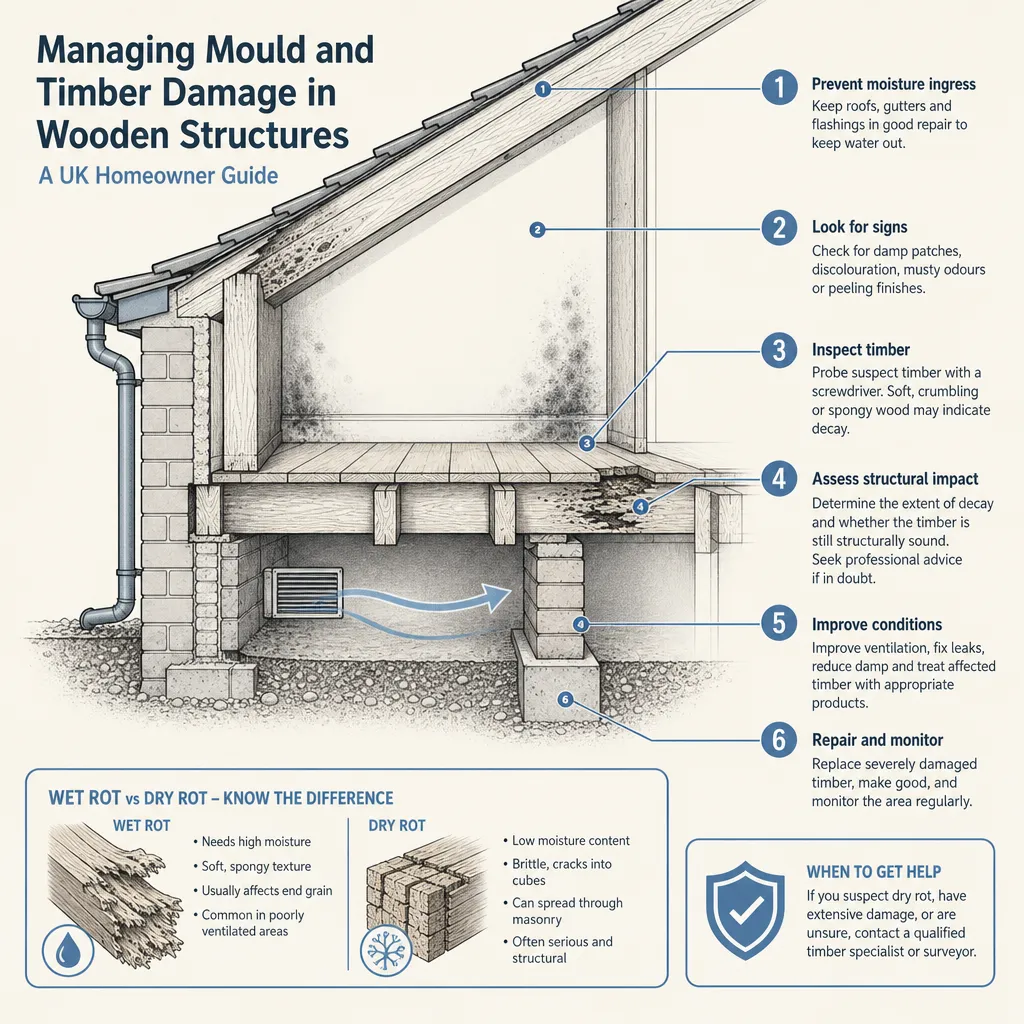
Managing Mould and Timber Damage in Wooden Structures
Mould and timber decay in wooden structures are usually symptoms of excess moisture rather than standalone problems.
 Surveys & Inspections
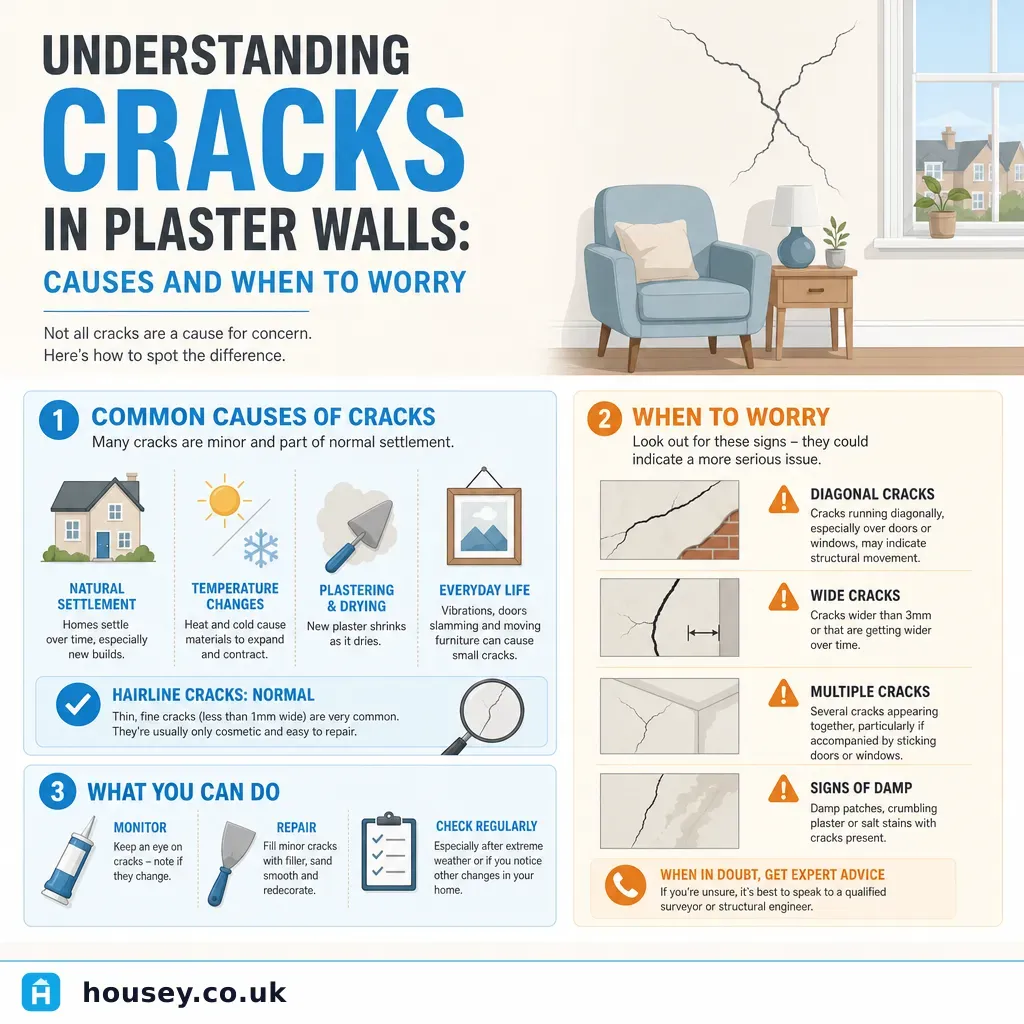
Understanding Cracks in Plaster Walls: Causes and When to Worry
Most hairline plaster cracks are cosmetic, caused by seasonal shrinkage or minor settlement.
 Surveys & Inspections
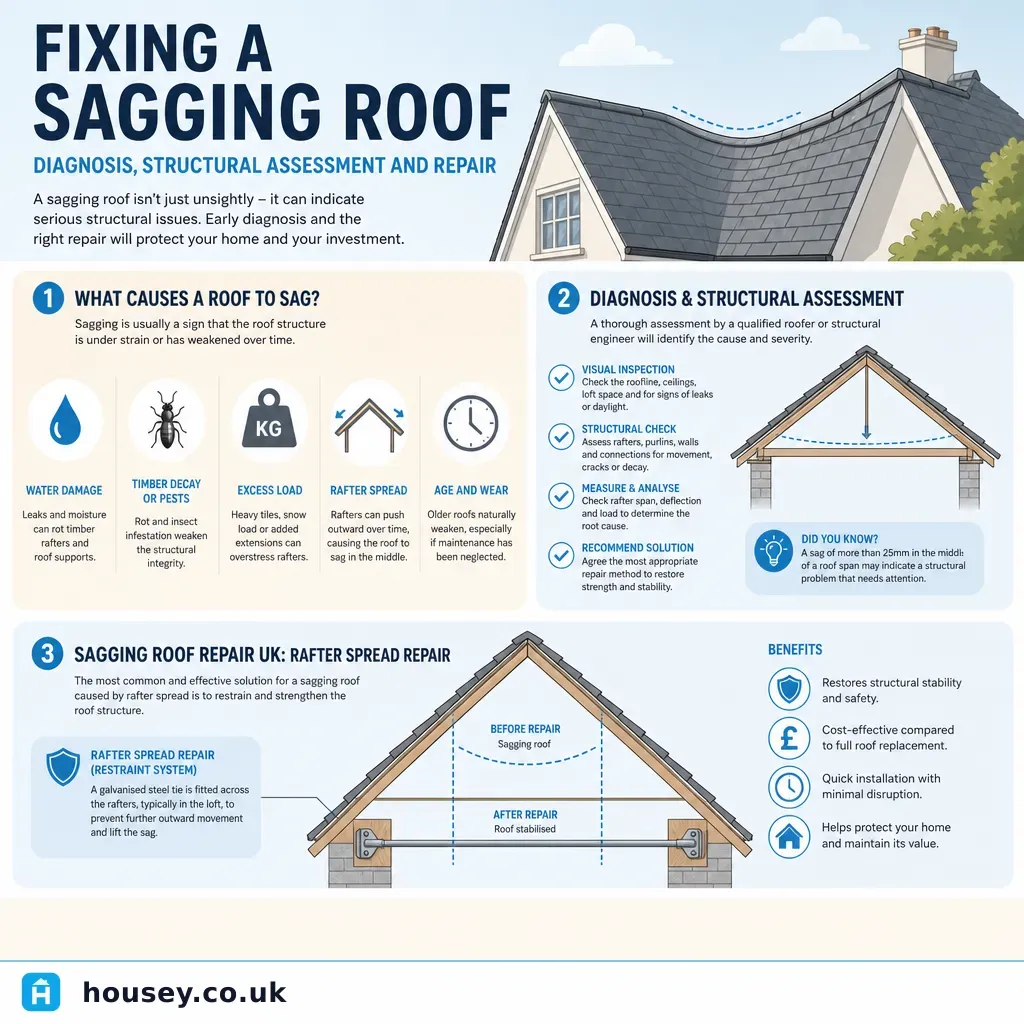
Fixing a Sagging Roof: Diagnosis, Structural Assessment and Repair
A sagging roof usually points to failed or overloaded roof timbers, rafter spread, or a compromised ridge board.
 Surveys & Inspections
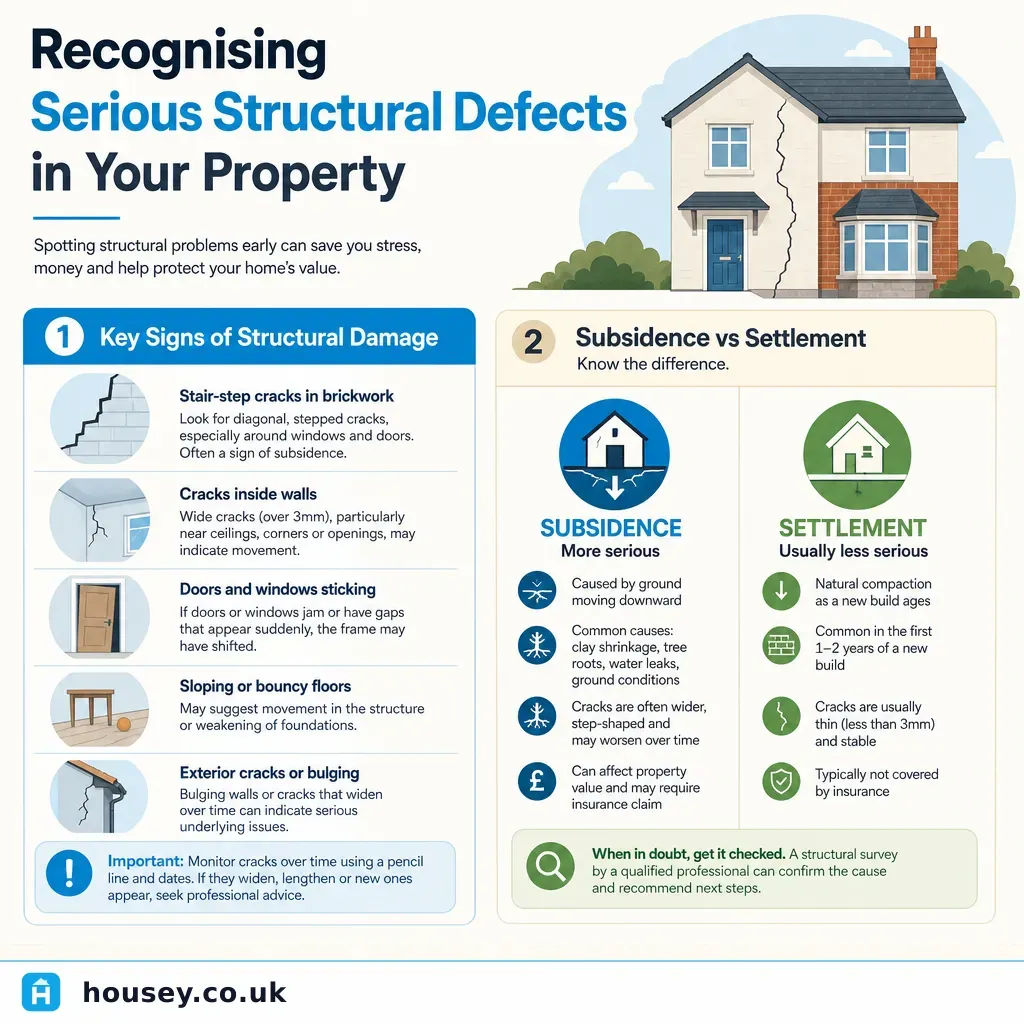
Recognising Serious Structural Defects in Your Property
Serious structural defects in UK homes include wide or diagonal cracks through brickwork, bowing or leaning walls, a sagging roof ridge, and floors or door frames notably out of level.
 Surveys & Inspections
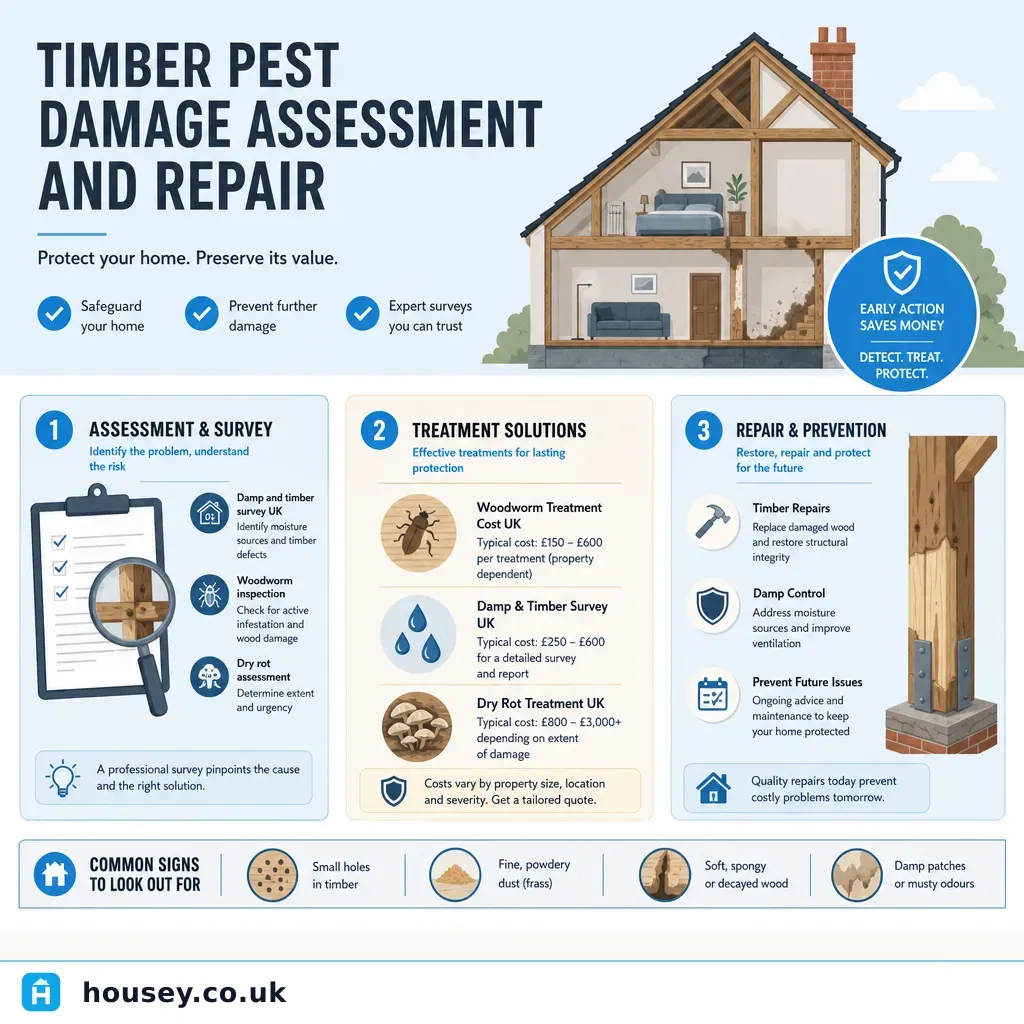
Timber Pest Damage Assessment and Repair
Timber pest damage in UK homes is most commonly caused by Common Furniture Beetle (woodworm), Death Watch Beetle, or fungal decay such as dry rot.