Identifying Hidden Home Hazards Affecting Health and Wellbeing
By Housey · Last reviewed 30th of May 2026
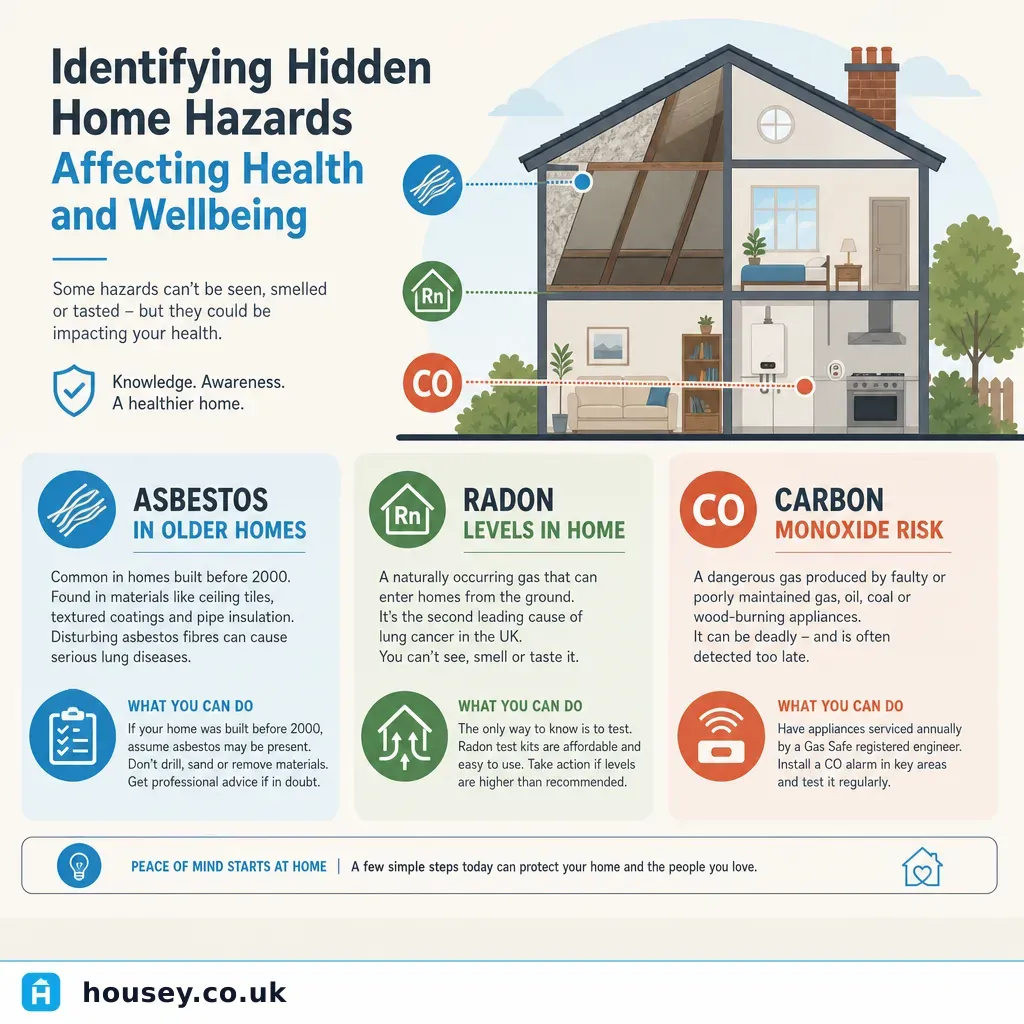
Identifying Hidden Home Hazards Affecting Health and Wellbeing
Hidden health hazards can be present in a wide range of UK homes — from Victorian terraces with lead paintwork and asbestos artex ceilings to post-war semis with persistent damp and inadequate ventilation. These hazards rarely announce themselves, and the risks they pose can compound over years of low-level exposure. Whether you have recently bought an older property, are planning renovation work, or have noticed unexplained health symptoms, understanding where to look — and who to call — is the practical starting point.
Key points
- Asbestos-containing materials (ACMs) were banned in the UK in 1999; any property built or significantly refurbished before 2000 may contain asbestos in artex coatings, vinyl floor tiles, pipe lagging, soffit boards, and corrugated garage roofing.
- The UK Health Security Agency (UKHSA) estimates that radon causes around 1,100 lung cancer deaths per year in England; higher-risk areas include Cornwall, Devon, Derbyshire, Northamptonshire, and parts of Somerset.
- The Smoke and Carbon Monoxide Alarm (Amendment) Regulations 2022 require landlords in England to install CO alarms in all rooms with a fixed combustion appliance — including gas boilers — from 1 October 2022.
- Lead paint was widely used in UK homes built before 1970 and poses the greatest risk when sanded, scraped, or disturbed during renovation work, generating inhalable lead dust.
- Awaab's Law, enacted under the Social Housing (Regulation) Act 2023, places legal duties on social landlords to address damp and mould within specified timeframes, reflecting the recognised health impact of indoor mould on respiratory conditions.
Which hidden hazards are most common in UK homes?
Asbestos
Asbestos was used extensively in UK construction from the 1950s until a complete ban in 1999. Common locations include artex and textured ceiling coatings (pre-1990s), vinyl floor tiles and adhesive (pre-1980s), pipe lagging and boiler insulation, corrugated roof and soffit panels on garages, and wall partitions in local authority housing. Asbestos fibres become dangerous when disturbed — for example, during drilling, sanding, or demolition. Undisturbed ACMs in good condition can often be managed in place, but any planned renovation work in a pre-2000 property should be preceded by a professional asbestos survey before any tools touch the fabric of the building.
Radon
Radon is a naturally occurring radioactive gas produced by uranium decay in underlying rock and soil. It enters buildings through floors and gaps and accumulates indoors over time. Long-term exposure is the second leading cause of lung cancer in the UK after smoking. UKHSA's interactive radon map can indicate whether your postcode falls in an affected zone. Measurement using approved track-etch detectors over at least three months gives the most reliable result.
Carbon monoxide
CO is produced by incomplete combustion from gas boilers, open fires, wood-burning stoves, and oil-fired appliances. It is colourless and odourless, making detector technology the only reliable safeguard. Symptoms of low-level chronic exposure — headache, fatigue, nausea — are easily mistaken for flu or general tiredness. A Gas Safe registered engineer should service combustion appliances annually and inspect flues for blockages or damage.
Damp and mould
Persistent damp creates conditions for mould growth, including Cladosporium, Penicillium, Aspergillus, and — in more severe cases — Stachybotrys species. The NHS links mould exposure to respiratory symptoms, asthma exacerbation, and immune effects, particularly in children and elderly residents. A damp and timber survey can distinguish between rising damp, penetrating damp, and condensation — each requiring different remediation approaches.
Lead paint
Pre-1970 UK homes commonly used lead-based paint on woodwork, walls, and metalwork. Lead is not hazardous when the paint is intact and sealed, but becomes a risk when sanded, scraped, or disturbed, generating lead dust that can be inhaled or ingested. Children are particularly vulnerable. Specialist test kits are available from DIY retailers, or a qualified contractor can carry out paint sampling and analysis.
Volatile organic compounds (VOCs) and indoor air quality
Modern, well-insulated homes with high airtightness can accumulate VOCs from furniture, flooring adhesives, paints, cleaning products, and synthetic furnishings. Symptoms can include eye and throat irritation, headaches, and in cases of high prolonged exposure, more serious effects. Adequate ventilation — mechanical extract ventilation (MEV), heat recovery ventilation (MVHR), or improved natural ventilation — is the primary mitigation.
Which professional do you need?
Hazard | Professional to engage | What they provide | Relevant regulation |
|---|---|---|---|
Asbestos | UKAS-accredited asbestos surveyor | Management, refurbishment, or demolition survey and written report | Control of Asbestos Regulations 2012 |
Radon | UKHSA-approved measurement provider | Track-etch detectors; measurement report; remediation referral | Building Regulations Part C; Action Level 200 Bq/m³ |
Carbon monoxide | Gas Safe registered engineer (gas); HETAS-registered installer (solid fuel) | Appliance service, flue inspection, CO detector siting advice | Gas Safety (Installation and Use) Regulations 1998 |
Damp and mould | RICS-qualified surveyor or PCA-member specialist | Cause diagnosis, moisture mapping, remediation specification | HHSRS Hazard Category |
Lead paint | UKAS-accredited analyst or specialist contractor | Paint sampling, analysis, management or removal plan | Control of Lead at Work Regulations 2002 |
Indoor air quality / VOCs | Local authority environmental health officer; specialist air quality consultant | Testing, sampling, and risk assessment | No single domestic VOC limit in UK law |
Fire hazards (communal/HMO) | Competent fire risk assessor | Fire risk assessment, evacuation planning recommendations | Regulatory Reform (Fire Safety) Order 2005 |
Red flags: when to act immediately
Stop work and seek specialist advice without delay if you encounter any of the following:
- Suspicious fibrous or crumbly materials in old insulation, ceiling coatings, or vinyl floor tiles — do not sand, drill, or disturb until professionally tested for asbestos.
- White or grey crystalline deposits on walls with a musty smell — may indicate rising damp or salt migration through masonry.
- Black or dark mould patches on walls, particularly around window reveals or in poorly ventilated bathrooms.
- Staining or discolouration above skirting boards or on ground-floor walls — potential rising or penetrating damp.
- Persistent headaches, dizziness, or nausea that improve when you leave the property — seek medical advice and arrange CO testing immediately.
- Damaged or corroded flue pipes on boilers, fires, or stoves — risk of CO leakage; call a Gas Safe registered engineer without delay.
- Peeling paint in a pre-1970 home — arrange lead paint testing before any sanding, scraping, or stripping work begins.
Important limitations
This article provides general information only. The presence, concentration, and health risk of any hazard depends on the specific property, its construction materials, occupant behaviour, and local environmental conditions. It is not a substitute for a professional survey, air quality test, structural assessment, or medical advice. Conditions identified during renovation can differ substantially from those anticipated before work begins. Always engage a suitably qualified specialist before disturbing any material you suspect may be hazardous, and consult your GP promptly if you are concerned about health symptoms related to your home environment.
What to ask a qualified professional
Before instructing a specialist surveyor, assessor, or contractor:
- Are you accredited by a recognised body for this type of assessment — UKAS, RICS, Gas Safe Register, PCA, or HETAS as appropriate?
- Will you provide a written report detailing all findings, risk classification, and recommended actions?
- Do your recommendations distinguish clearly between materials that must be removed and those that can be safely managed in place?
- Who would carry out any remediation work, and is that a separate engagement or included in your quote?
- What disruption should I expect during and after the survey — do I need to vacate the property?
- If you identify a notifiable hazard, what is the process for informing regulators, local building control, or other relevant bodies?
When to get professional help
Do not delay instructing a specialist if:
- You are planning renovation or refurbishment work on any property built or refurbished before 2000 — arrange an asbestos survey before any work touches the fabric of the building.
- A CO alarm has activated or occupants have experienced symptoms consistent with CO poisoning — evacuate the building immediately and call the National Gas Emergency Service on 0800 111 999.
- Visible mould covers more than one square metre, or is affecting vulnerable occupants including children, elderly residents, or those with respiratory conditions.
- You are buying, selling, or renting out an older property and a specialist survey has been recommended by a solicitor or conveyancer.
- A fire risk assessment is required for a property with communal areas or classified as a house in multiple occupation (HMO).
How Housey can help
Housey connects UK homeowners with vetted specialists for asbestos surveys, damp and timber surveys, and fire risk assessments — all from a single platform. Submit a brief and compare quotes from UKAS-accredited or RICS-registered professionals before any renovation work begins.
Frequently asked questions
How do I know if my home contains asbestos?
There is no reliable way to identify asbestos-containing materials by visual inspection alone. Any property built or significantly refurbished before 2000 may contain ACMs. A management survey for occupied homes, or a refurbishment and demolition survey before any renovation work, carried out by a UKAS-accredited asbestos surveyor, is the only definitive method of identification and risk assessment.
Are carbon monoxide alarms a legal requirement in rented homes in England?
Yes. Since 1 October 2022, landlords in England must install CO alarms in all rooms containing a fixed combustion appliance, including gas boilers. Check the GOV.UK guidance for the specific requirements in Wales, Scotland, and Northern Ireland, which each have their own regulations. Owner-occupiers are not legally required but are strongly advised to install CO alarms.
What is the safe radon level in a UK home?
UKHSA recommends remediation action when long-term radon levels exceed 200 becquerels per cubic metre (Bq/m³). For new homes in high-radon areas, Building Regulations Part C requires radon-resistant construction measures. Measurement over at least three months using approved track-etch detectors provides the most reliable result; short-term devices are less accurate.
Is black mould always dangerous?
Not all black or dark mould is Stachybotrys chartarum. However, any persistent mould in a habited home indicates excess moisture and poses some health risk, particularly for people with asthma, allergies, or respiratory conditions. The underlying cause — condensation, rising damp, or penetrating moisture — must be properly diagnosed and addressed; surface cleaning alone is rarely a lasting solution.
Sources and further reading
- Control of Asbestos Regulations 2012 — legislation.gov.uk
- Radon: guidance for the public, workplaces and industry — UK Health Security Agency
- Smoke and Carbon Monoxide Alarm (Amendment) Regulations 2022 — GOV.UK
- Housing Health and Safety Rating System (HHSRS) — operational guidance — GOV.UK
- Social Housing (Regulation) Act 2023 — legislation.gov.uk
- Mould in the home — NHS
Useful next reads
 Surveys & Inspections
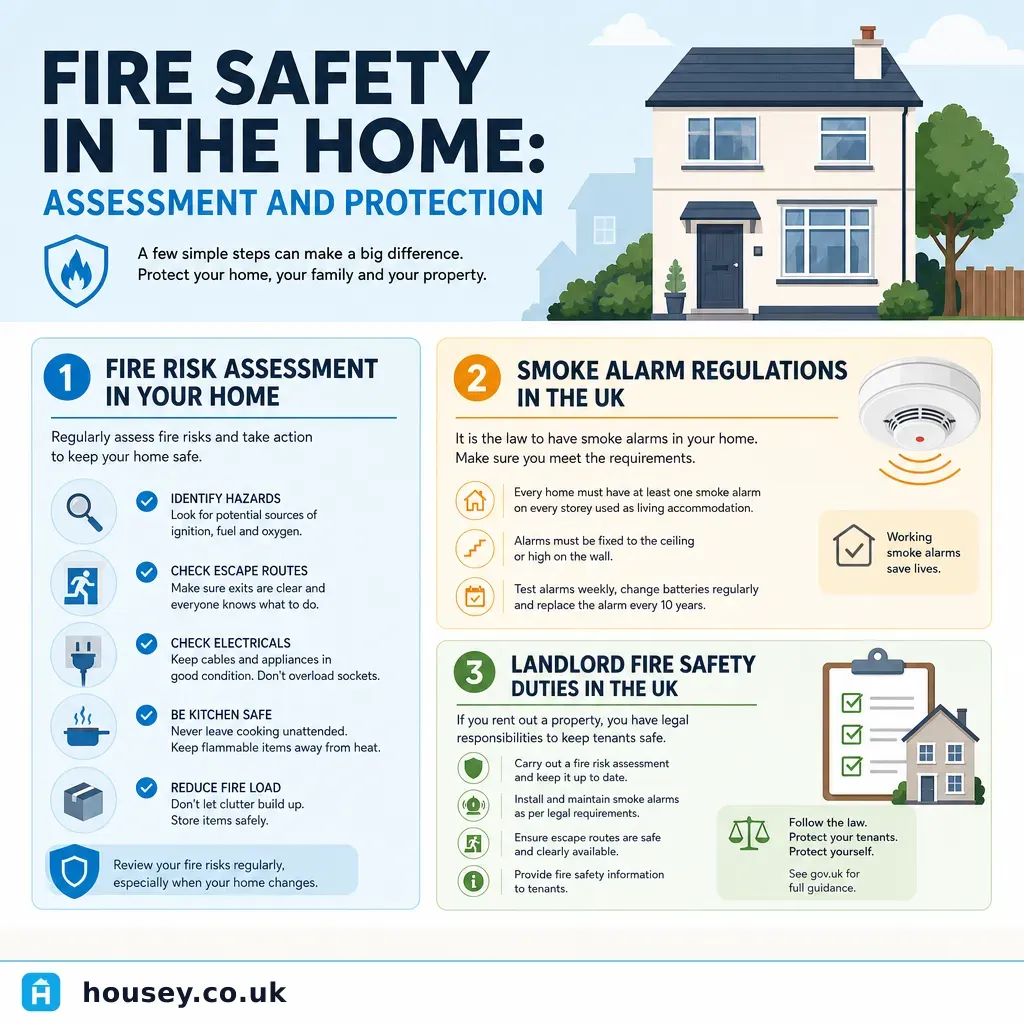
Fire Safety in the Home: Assessment and Protection
Most UK owner-occupied homes are the homeowner's responsibility to make fire-safe, while landlords have a legal duty to carry out fire risk assessments under the Regulatory Reform (Fire Safety) Order 2005.
 Surveys & Inspections
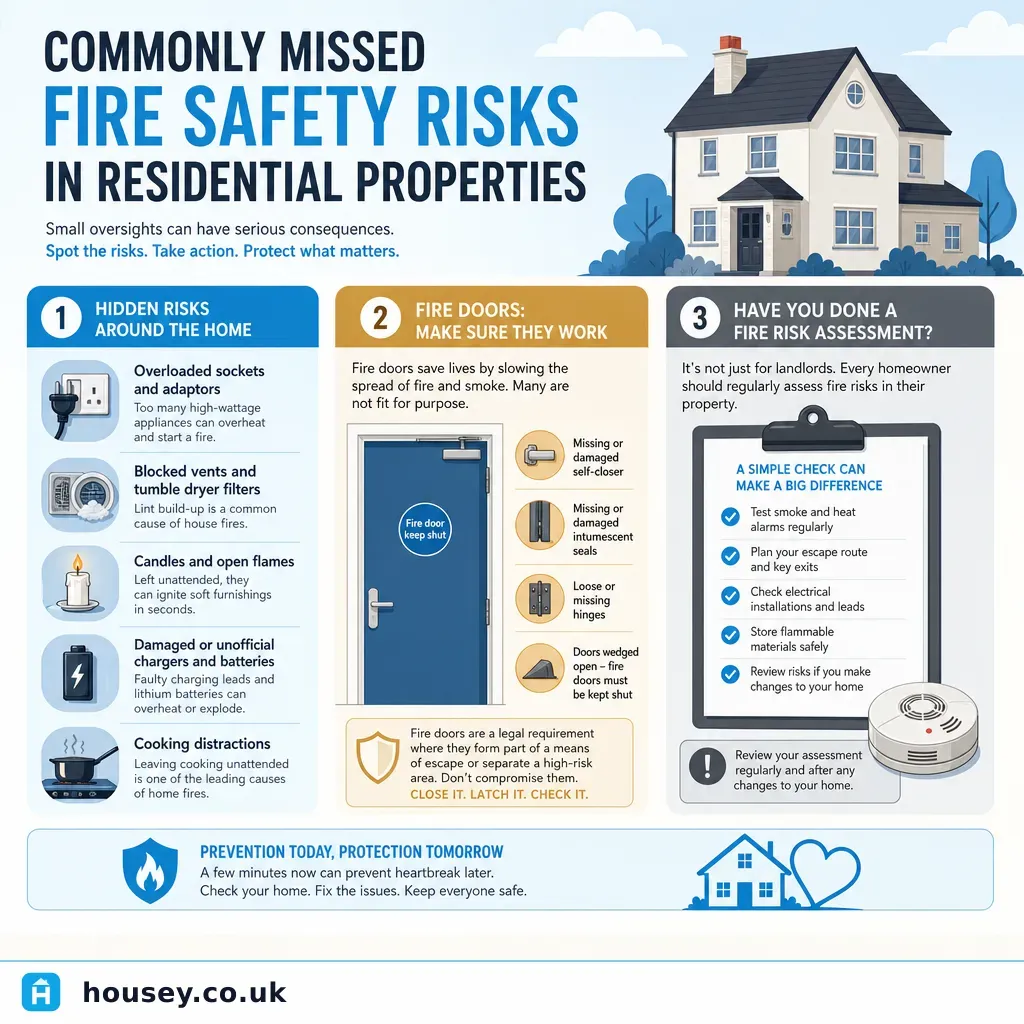
Commonly Missed Fire Safety Risks in Residential Properties
Commonly missed fire safety risks in UK homes include damaged fire doors without intumescent strips, breached compartmentation in roof spaces and floor voids, daisy-chained extension leads, and recessed downlighters without fire-rated covers.
 Surveys & Inspections
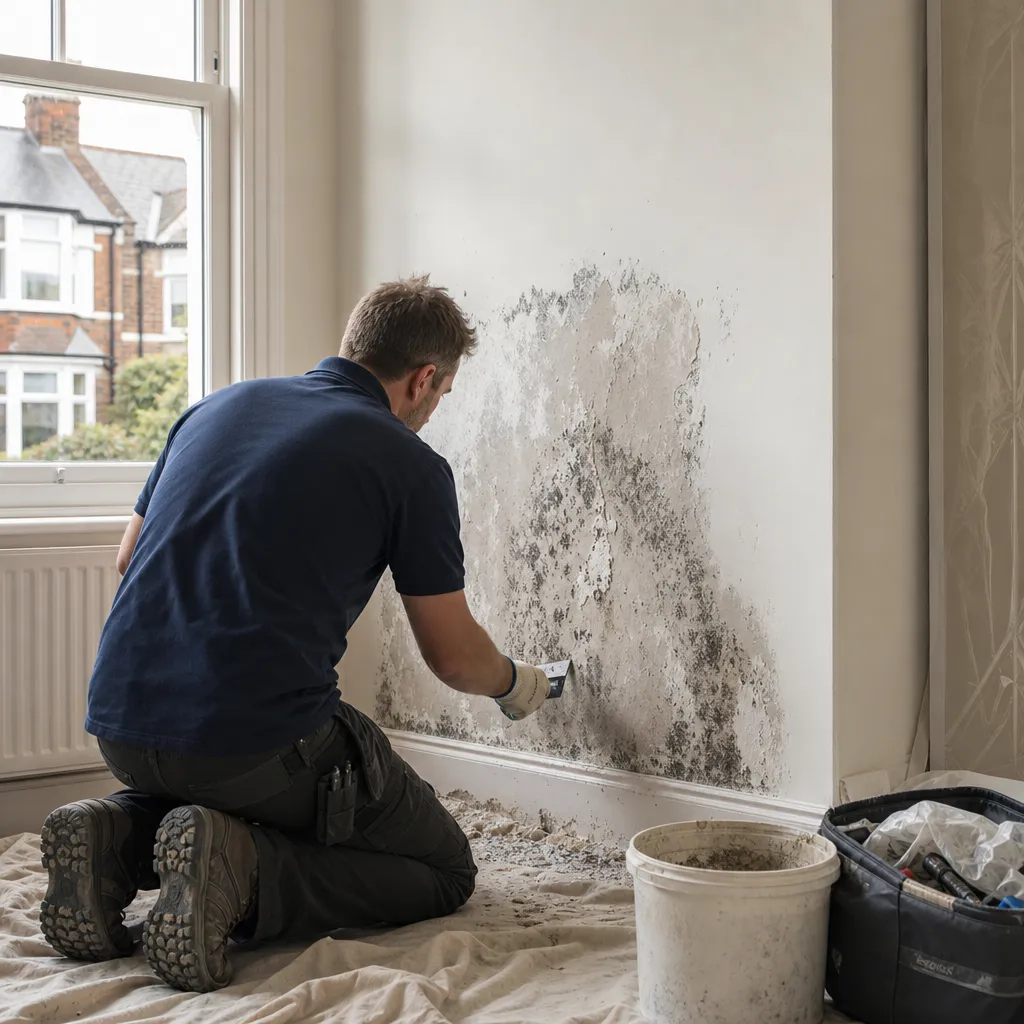
Treating Mould Contamination in Interior Walls
Mould on interior walls is caused by excess moisture — from condensation, penetrating damp, rising damp, or a plumbing leak.
 Surveys & Inspections
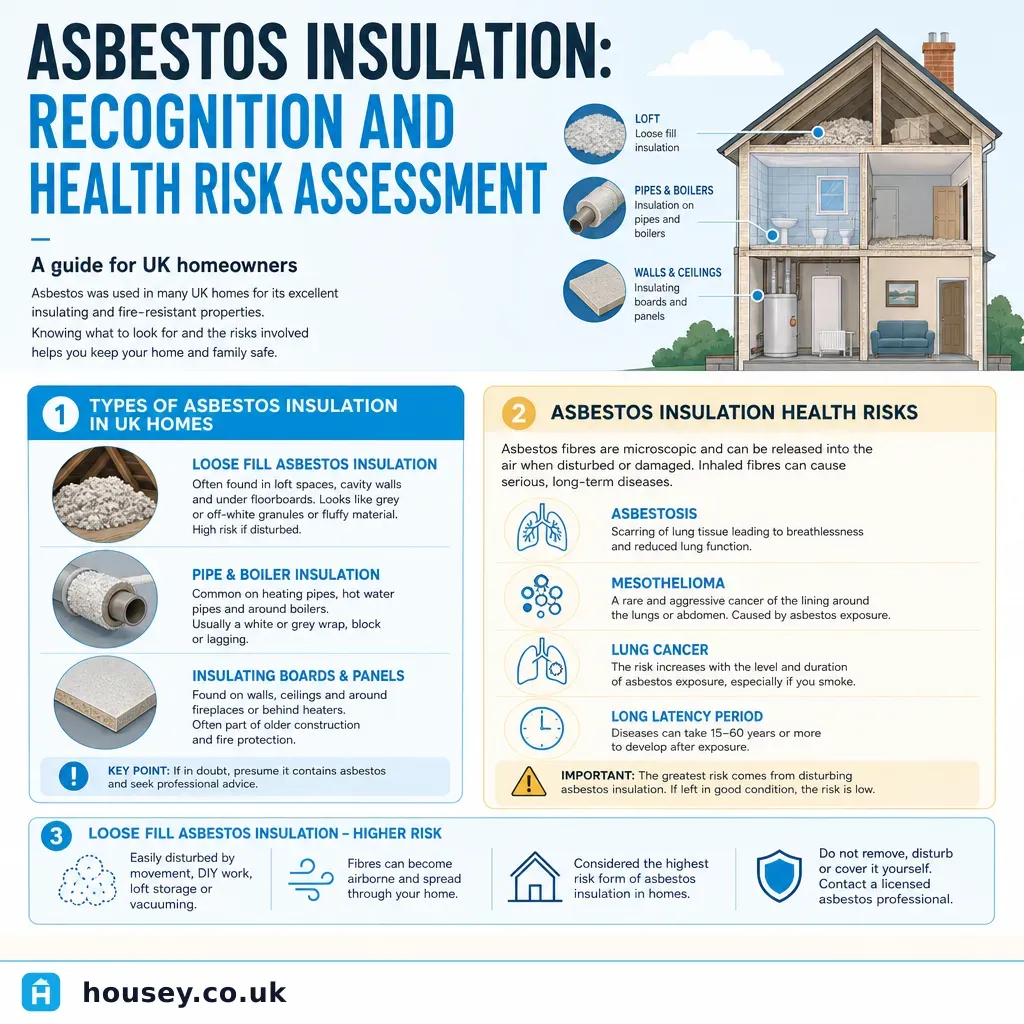
Asbestos Insulation: Recognition and Health Risk Assessment
Asbestos insulation in UK homes often appears as loose-fill loft insulation, pipe lagging, or sprayed coatings.
 Surveys & Inspections
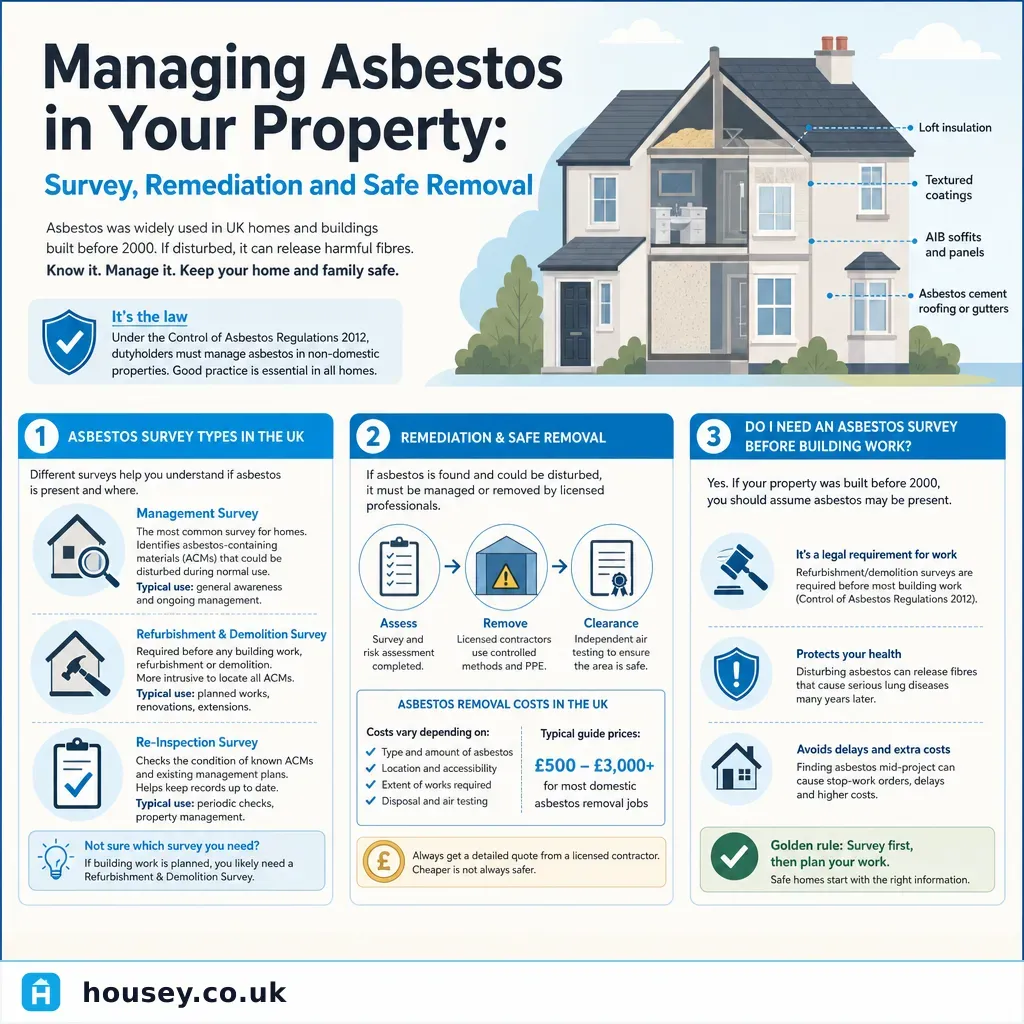
Managing Asbestos in Your Property: Survey, Remediation and Safe Removal
Asbestos was commonly used in UK buildings until its full ban in 1999.