New Roof Leaks: Investigation, Warranty Claims, and Remediation
By Housey · Last reviewed 31st of May 2026
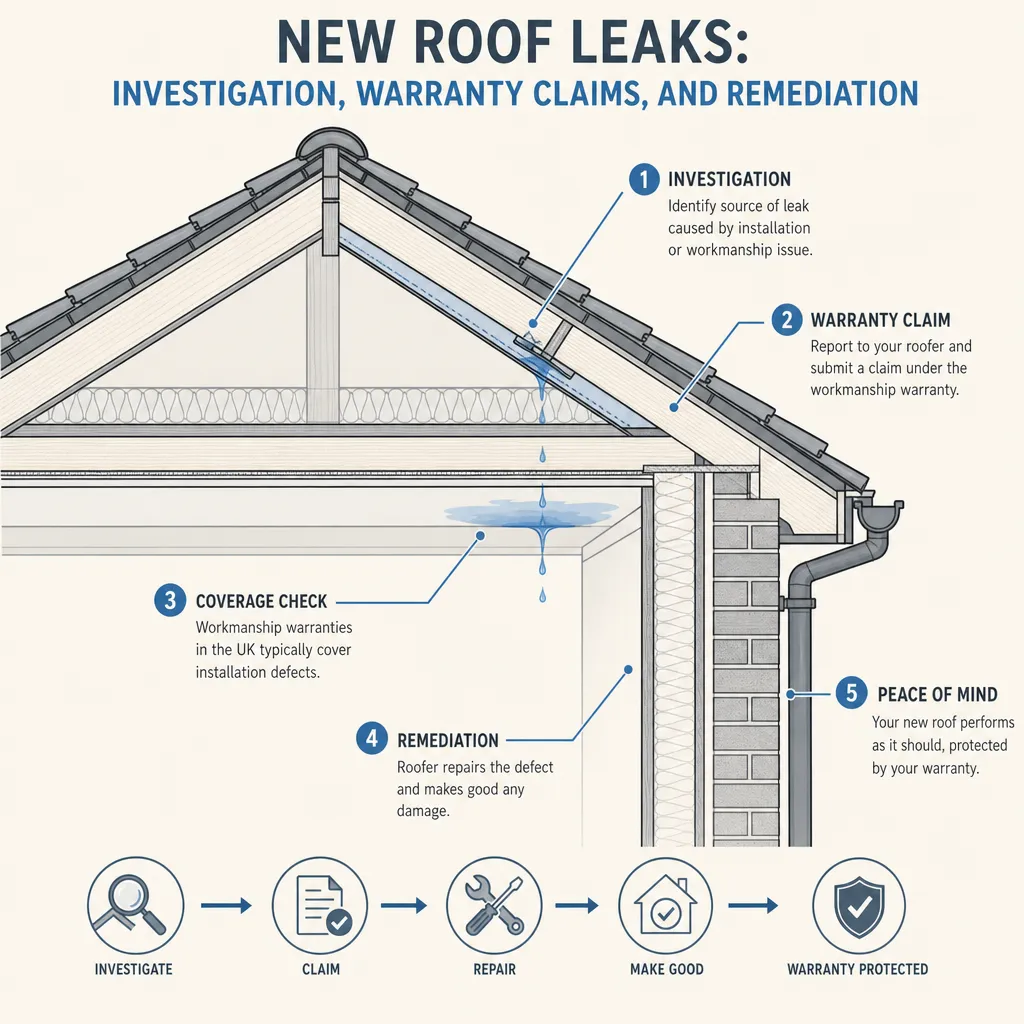
New Roof Leaks: Investigation, Warranty Claims, and Remediation
Discovering a leak in a recently installed roof is frustrating — especially when you have just paid for the work. Leaks on new roofs typically emerge within the first few years, often after the first hard winter or heavy rainfall, and can result from poor workmanship, sub-standard materials, or inadequate detailing around flashings, valleys, and penetrations. Understanding your legal rights and the correct steps to document and escalate the problem can make the difference between a swift repair at the contractor's cost and a prolonged dispute.
Key points
- Most reputable UK roofing contractors offer a workmanship guarantee of 10–20 years; check your contract and any separate manufacturer warranty documentation.
- Under the Consumer Rights Act 2015, services must be performed with reasonable care and skill — a leaking new roof may give you the right to demand a remedy at no additional cost.
- The Limitation Act 1980 allows up to six years (England and Wales) to bring a breach-of-contract claim; act promptly but you are not without time.
- NFRC (National Federation of Roofing Contractors) and TrustMark members are bound by codes of conduct and offer dispute-resolution routes.
- GRP (fibreglass) flat roofs and torch-on felt systems often carry separate manufacturer warranties of 20–25 years, independently of the installer's workmanship guarantee.
Common causes of leaks on new roofs
A new roof should not leak. When it does, the fault almost always falls into one of three categories.
Workmanship failures are the most common cause. These include incorrectly overlapping tiles or slates, poorly sealed or missing lead flashings around chimneys, skylights, and abutments, insufficient fixings, and inadequate valley detailing. Flat-roof systems are particularly prone to poor seam welding or adhesion at edges and upstands.
Materials defects occasionally arise where a manufacturer has supplied sub-standard or incorrectly specified product. In these cases, liability may rest with the manufacturer as well as the installer, depending on the supply chain.
Design errors occur when the roof pitch, drainage falls, or detailing has been incorrectly specified. If you engaged an architect or designer alongside the roofer, the professional indemnity chain becomes more complex.
Understanding which category applies affects both who you pursue and under what legal route.
How to investigate and document a new roof leak
Before contacting your contractor, build a clear evidence record. This protects you in any later dispute and is essential if you escalate to a trade association or court.
Homeowner checklist: documenting a roof leak
- Note the date and time the leak first appeared and every subsequent occurrence.
- Take photographs and video showing water ingress, staining, wet insulation, and any visible external defects such as broken tiles or lifted flashings.
- Record the weather conditions at the time — heavy rain, snow, or wind-driven rain can affect where a leak presents internally versus where it originates externally.
- Measure the affected rooms and extent of damage including damaged plaster, flooring, or ceilings.
- Locate the original contract, specification, and receipt including the scope of works, materials specified, and any warranty documents.
- Retain all correspondence with your contractor including emails, letters, and texts.
Once documented, notify the contractor in writing (email is sufficient; use recorded delivery for formal notices). State the date the leak was first observed, describe the location and symptoms, and request a site visit within a reasonable timeframe — five to ten working days is a reasonable starting position.
Which path should you take?
Use this decision tree to identify the right next step based on your situation.
- Choose direct negotiation if your contractor is responsive and agrees to inspect. Allow the site visit and request a written remediation plan with a clear timeline before any work starts.
- Commission an independent roof survey if the contractor is responsive but disputes liability. A written report from a RICS-qualified surveyor carries evidential weight in trade-association complaints and court proceedings.
- Send a formal written notice if the contractor is unresponsive after ten working days. Set a final deadline; after which escalate to the NFRC or TrustMark complaints process, or issue a claim via Money Claim Online (County Court, up to £10,000 in England and Wales).
- Contact a licensed contractor directly if the leak is causing structural damage or water is reaching electrical wiring — safety cannot wait for a warranty dispute to resolve.
- Check for insurance-backed guarantees if your contractor has ceased trading. Some NFRC-backed guarantees transfer with the property; contact the issuing insurer with your guarantee certificate number.
Making a warranty or workmanship claim
Contractor's workmanship guarantee
Most guarantees are separate documents issued alongside the invoice. Read the small print carefully: some exclude damage caused by subsequent trades, storm damage exceeding a given wind speed, or blocked gutters. If the guarantee was never provided, request it in writing.
Your first claim is against the contractor. The Consumer Rights Act 2015 requires that services be performed with reasonable care and skill. Where that standard is not met, the contractor must remedy the fault at no further charge, or provide a price reduction if a full remedy is no longer possible or reasonable.
Manufacturer product warranties
If your roof uses a proprietary system — GRP laminate, EPDM rubber, modified bitumen felt, or a named tile range — the manufacturer may offer an independent product warranty, sometimes registered at the point of installation. Contact the manufacturer directly with your installer's details and installation date. Some manufacturers will arrange their own inspection or appoint an independent assessor.
Comparison of warranty types
Warranty type | Issued by | Typical duration | What it covers | What it usually excludes |
|---|---|---|---|---|
Workmanship guarantee | Installing contractor | 10–20 years | Labour and installation quality | Storm damage, blocked drainage, subsequent trade damage |
Manufacturer product warranty | Roofing product manufacturer | 10–30 years | Material defects and system failures | Poor installation, unapproved overlapping products |
Trade association-backed guarantee | NFRC or equivalent | Varies, often 10 years | Workmanship, sometimes materials | Only valid if contractor was a member at time of installation |
Building control sign-off | Local authority | N/A (compliance only) | Confirms work met Building Regulations at inspection | Does not guarantee future watertightness |
What happens if the contractor disputes the claim?
A contractor may argue the leak results from storm damage, subsequent interference, or a defect predating their works. Independent expert evidence is usually decisive in such disputes.
A professional roof survey from a RICS-qualified building surveyor or an experienced roofing specialist can identify the likely cause of the leak, assess the quality of the installation, and determine whether the work meets industry standards — including BS 5534 for pitched roofs and BS 8217 for built-up felt roofing systems. This report can be used in trade-association complaints, small-claims proceedings, or pre-action correspondence.
Red flags that strengthen a warranty claim
- Visible gaps in tile or slate laps, observable from a ladder or drone survey.
- Lead flashings not fully dressed into mortar raking joints or secured with copper clips.
- Flat-roof upstands below the minimum 150mm height specified in BS 8217.
- No back-gutter behind a chimney stack.
- Incorrect or absent drip edge at the eaves.
- Sealant used where mechanical fixing or stepped flashing is the correct detail.
When to get professional help
Seek independent professional advice if:
- The leak is wetting structural timbers, insulation, or internal ceilings and the water cannot be stopped entering.
- Water is reaching electrical wiring, consumer units, or light fittings — isolate the affected circuit and call a qualified electrician before pursuing the warranty issue.
- The contractor has ceased trading and you have no guarantee-backed policy.
- More than six years have passed since installation — seek legal advice promptly as limitation periods may apply.
- You suspect the roof design itself was deficient and a building surveyor's independent assessment is needed.
How Housey can help
If you need an independent assessment of a new roof or want to build an evidence base for a warranty claim, Housey can connect you with specialists offering roof surveys who produce written condition reports. If you need remediation work carried out by a vetted contractor, you can also find qualified local roofers through the platform.
Frequently asked questions
How long does a roofing contractor have to fix a leaking new roof?
There is no statutory deadline, but 14–28 days is a reasonable expectation for non-urgent repairs once the contractor has been notified in writing. If the leak is causing ongoing damage, request an emergency visit within 48–72 hours. Document every request and response in writing to protect your evidence trail.
Can I get my money back if my new roof leaks?
Under the Consumer Rights Act 2015, your primary right is to a remedy — repair or replacement. A price reduction or refund becomes available if the contractor cannot or will not remedy the fault within a reasonable time. Small-claims court (up to £10,000 in England and Wales via Money Claim Online) is the usual route if the contractor refuses to engage.
Does building regulations approval mean my roof is guaranteed?
No. Building control sign-off confirms that the work complied with Building Regulations at the time of inspection. It is not a warranty against future leaks or workmanship failures, and the local authority has no obligation to re-inspect if a fault emerges later.
What if my roofer is no longer in business?
Check whether your contractor was a member of NFRC or a scheme offering insurance-backed guarantees. Some guarantees transfer to the property rather than the contractor, so cover may still apply. Contact the issuing insurer directly with your guarantee certificate number and installation date.
Sources and further reading
- Consumer Rights Act 2015 — legislation.gov.uk
- Limitation Act 1980 — legislation.gov.uk
- National Federation of Roofing Contractors — NFRC
- Money Claim Online — GOV.UK
- BS 5534: Code of practice for slating and tiling — BSI Group
Useful next reads
 Surveys & Inspections
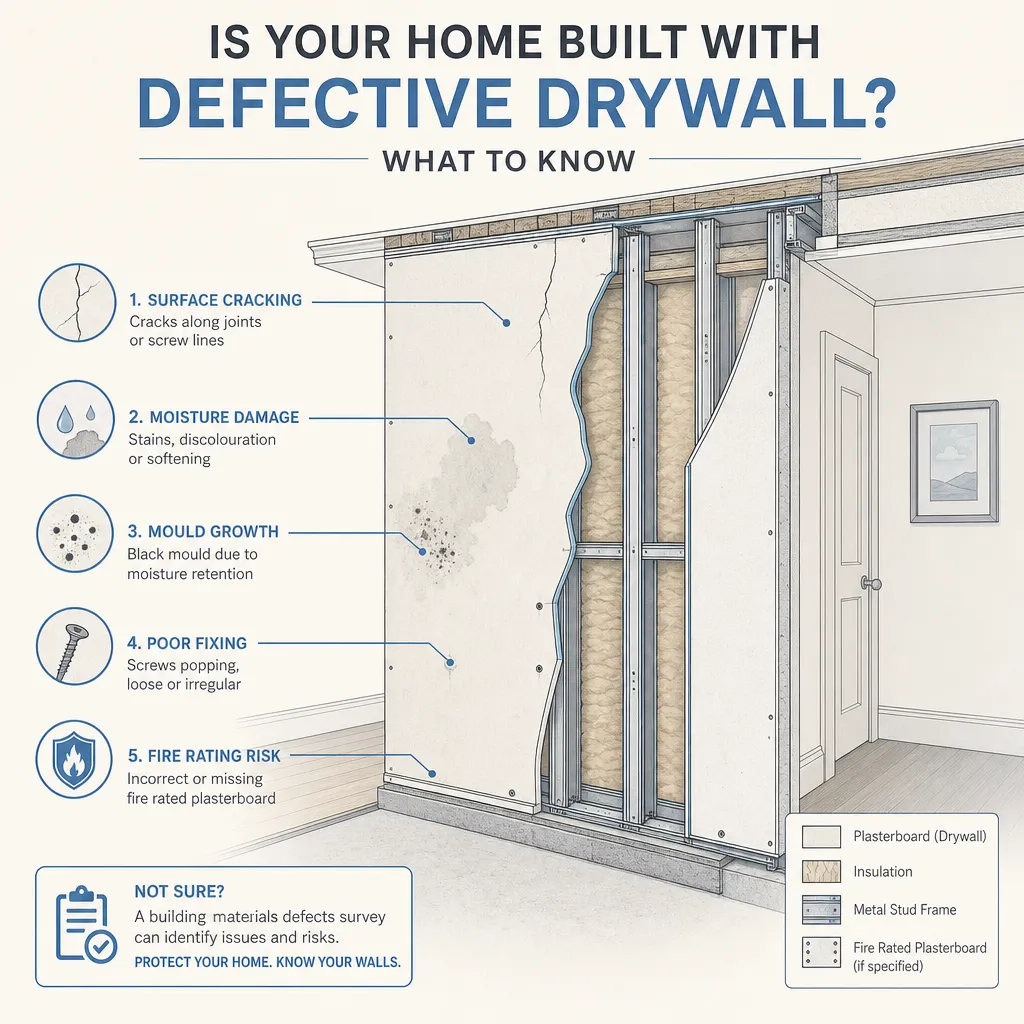
Is Your Home Built with Defective Drywall? What to Know
Contaminated Chinese drywall — as seen in US homes built 2001 to 2009 — is not a documented widespread problem in UK properties, where plasterboard is manufactured primarily to European standards.
 Surveys & Inspections
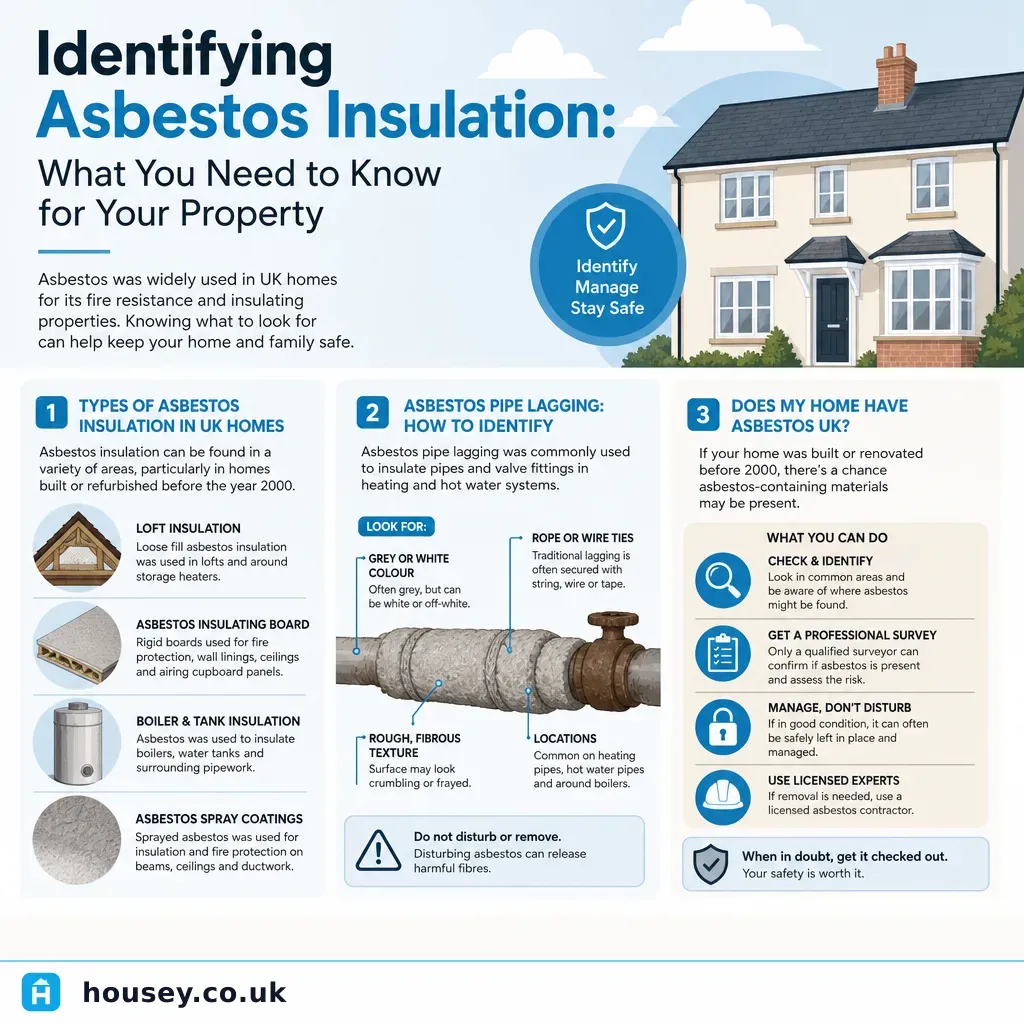
Identifying Asbestos Insulation: What You Need to Know for Your Property
Asbestos insulation was widely used in UK properties built before 2000, commonly found in pipe lagging, ceiling tiles, loose-fill loft insulation, and around boilers.
 Surveys & Inspections
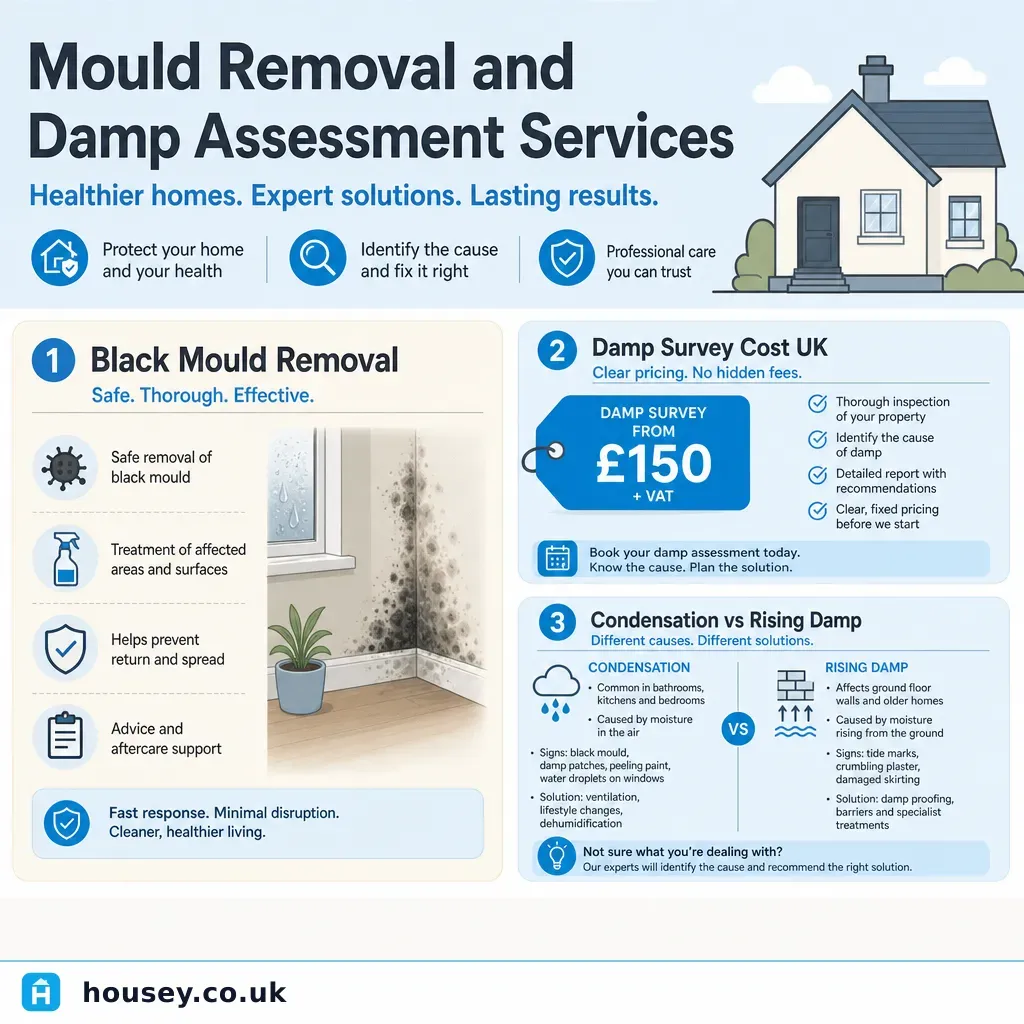
Mould Removal and Damp Assessment Services
Professional mould removal and damp assessment starts with identifying the moisture source—condensation, rising damp, or penetrating damp—before any treatment begins.
 Surveys & Inspections
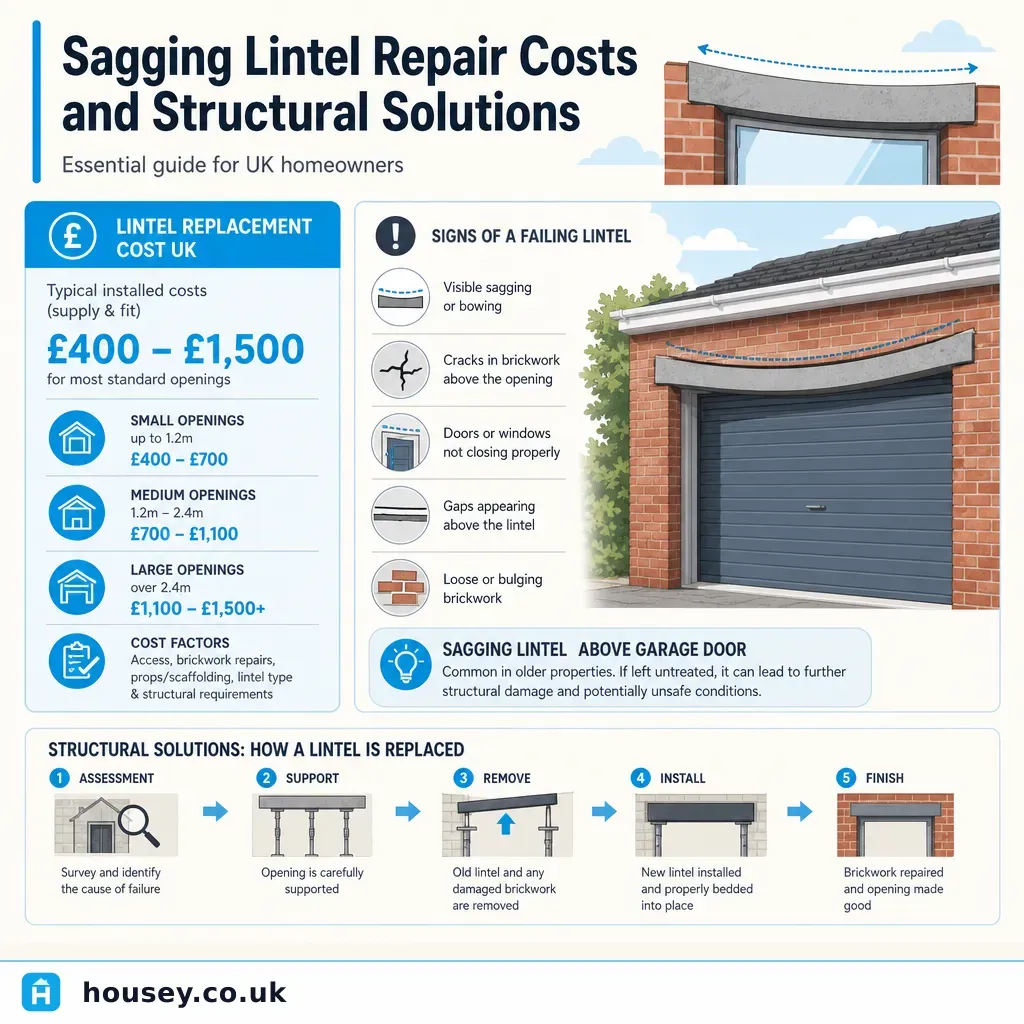
Sagging Lintel Repair Costs and Structural Solutions
A sagging lintel is a structural defect requiring prompt professional assessment.
 Surveys & Inspections
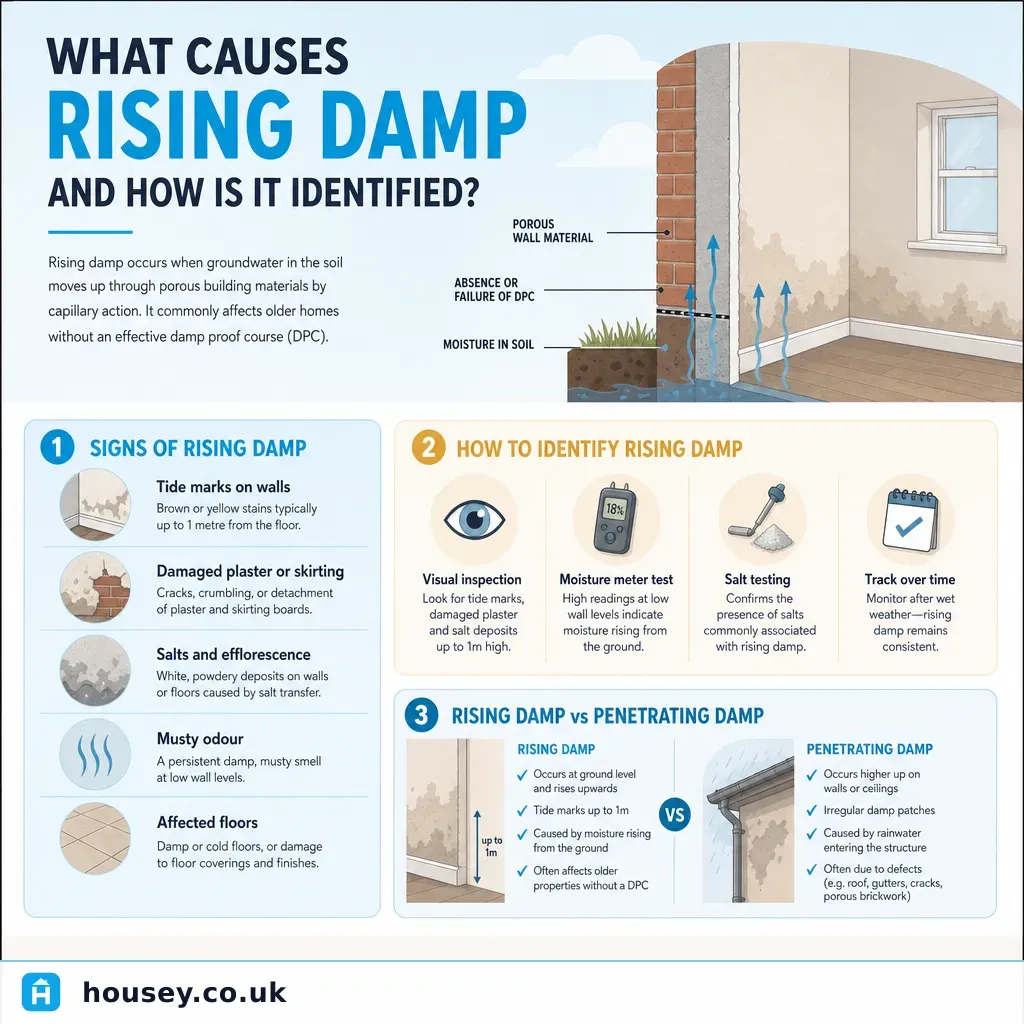
What Causes Rising Damp and How Is It Identified?
Rising damp occurs when groundwater travels upward through masonry via capillary action, usually because the damp-proof course (DPC) has failed, is absent, or has been bridged.