Identifying sources of unpleasant odours in residential properties
By Housey · Last reviewed 30th of May 2026
Identifying sources of unpleasant odours in residential properties
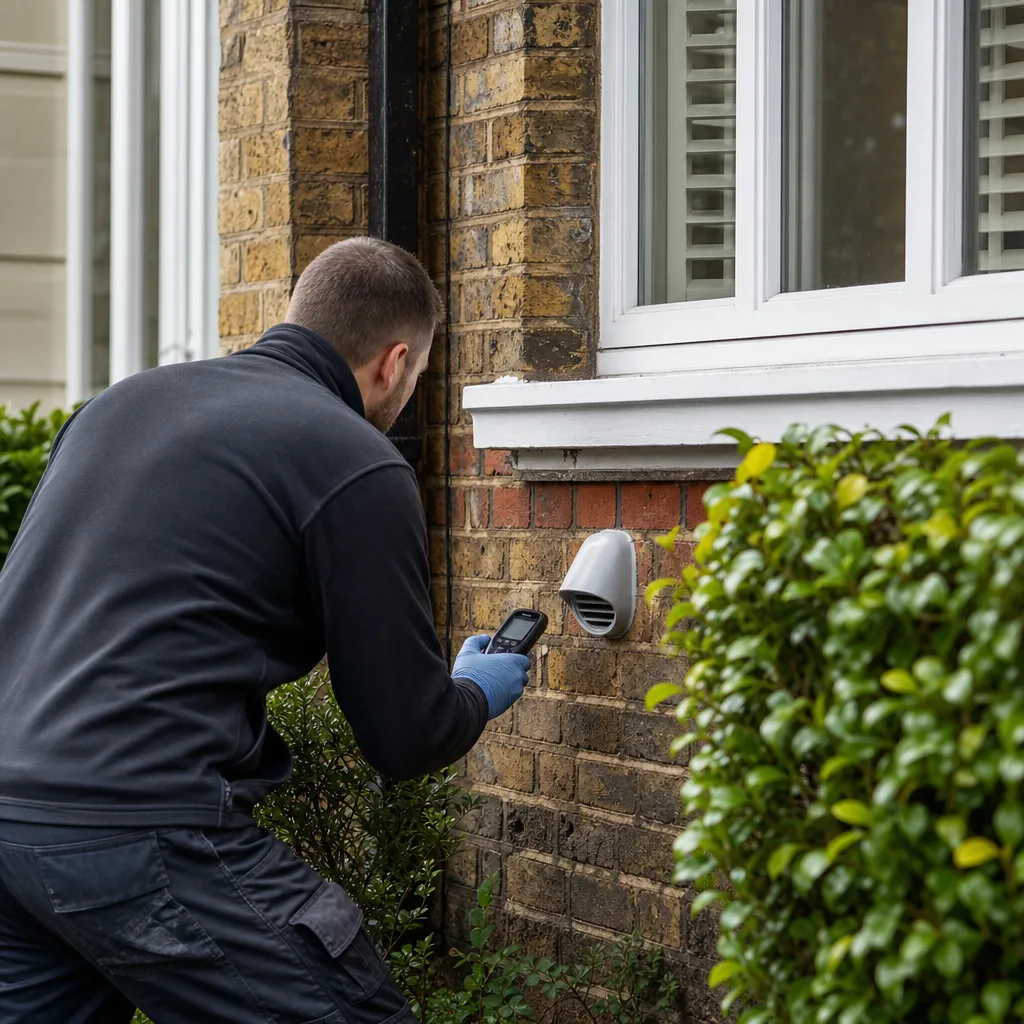
An unexpected smell in a property is easy to dismiss or mask with air fresheners, yet persistent or sudden odours are often the first detectable sign of a concealed defect, a drainage fault, or — in the most serious cases — a gas leak or combustion problem. Buyers who notice an unfamiliar smell during a viewing and owners who cannot identify a recurring odour are right to investigate methodically before assuming the cause is benign. This guide helps you categorise what you are smelling, understand the likely causes, and decide when professional investigation is essential.
Key points
- A smell of gas — often described as rotten eggs or sulphur — is a gas emergency: call the National Gas Emergency Service on 0800 111 999, leave the building immediately, and do not operate any electrical switches.
- Drainage smells including sewage or a rotten egg odour from below floor level are one of the most common odour complaints in UK properties and are frequently caused by dried trap seals, cracked drainage, or blocked gullies.
- Mould produces a distinctive musty smell that often persists even after surface cleaning; it typically indicates poor ventilation, cold bridging, rising damp, or penetrating damp rather than condensation alone.
- Some older properties contain materials that off-gas when disturbed — including certain floor adhesives, artex coatings, and older insulation products — and should not be sanded or broken up without professional assessment.
- New-build properties may have VOC (volatile organic compound) smells from adhesives, paints, and flooring for several months; thorough ventilation usually resolves this without professional intervention.
Common odours and their likely causes
Odour description | Most likely causes | Urgency | Likely professional |
|---|---|---|---|
Rotten egg / sulphur (strong, from indoors) | Gas leak (natural gas with odorant added) | Emergency — leave immediately | National Gas Emergency Service: 0800 111 999 |
Rotten egg / sulphur (from drain or below floor) | Dried trap seal, blocked drain, cracked soil pipe | Moderate | Drainage surveyor, plumber |
Sewage or foul smell | Blocked or cracked drain, failed inspection chamber, root intrusion | Moderate–high | Drainage surveyor |
Persistent musty / earthy smell | Mould growth, rising damp, sub-floor ventilation blockage | Moderate | RICS surveyor, damp specialist |
Chemical / solvent smell | VOCs from adhesives, paint, or flooring; possibly contaminated ground | Low–moderate | Ventilate first; if persistent, seek professional advice |
Burning / electrical smell | Overheating wiring, motor, or appliance | High | NICEIC- or NAPIT-registered electrician |
Damp / rotting wood | Wet rot, dry rot, roof or window leak | Moderate | RICS surveyor, timber specialist |
Smoke smell with no active fire | Blocked flue, cracked flue liner, chimney down-draught | High | HETAS or Gas Safe engineer (depending on fuel type) |
Animal / organic smell in loft or void | Pest infestation, dead animal, bird nest in flue | Low–moderate | Pest controller, chimney sweep |
Decision tree: which odour needs urgent attention?
- Smell gas? → Leave immediately. Do not use electrical switches, open flames, or phones inside. Call 0800 111 999 from outside the building.
- Smell burning from electrics? → Switch off the affected circuit at the consumer unit if safe to do so. Do not restore power until a registered electrician has inspected.
- Smell smoke in a room with a chimney or flue? → Open windows, extinguish any fire in use, and do not re-light until a chimney sweep or HETAS-registered engineer has inspected.
- Persistent sewage or drain smell from below floor level? → A CCTV drainage survey is usually the most efficient diagnosis. Do not ignore — cracked drainage can allow ground gases into the building in some areas.
- Musty, mouldy, or earthy smell throughout the property? → Investigate ventilation, cold bridges, and signs of water ingress before treating surfaces. Masking mould without addressing the moisture source will not resolve the problem.
- Chemical or solvent smell in a recently renovated or new-build property? → Ventilate thoroughly. If it persists beyond a few weeks in a new-build, contact the developer under your NHBC Buildmark warranty or consumer protection rights.
- No obvious cause after checking traps, electrics, and flues? → Commission a professional inspection — a RICS surveyor can assess structural and moisture issues; a drainage surveyor can inspect below-ground drainage.
Important limitations
This article provides general information only. Odour investigation in residential properties can involve gas safety, electrical safety, asbestos, structural defects, drainage infrastructure, and environmental contamination — all of which carry meaningful risks if misdiagnosed or disturbed without professional guidance. Causes vary significantly by property age, construction type, tenure, local geology, and site history. Nothing in this guide should be treated as a substitute for professional assessment of your specific property. Where a smell could indicate a gas leak, fire risk, or carbon monoxide hazard, act on the safety guidance immediately and do not attempt self-diagnosis.
When this becomes urgent
Treat any of the following as requiring immediate action:
- Any smell you believe could be gas — do not hesitate, call 0800 111 999 and leave the building.
- A burning electrical smell accompanied by sparking, heat, or an RCD that trips again immediately after being reset.
- Smoke entering a room from a flue or chimney void with no fire lit.
- Any smell accompanied by symptoms in occupants — headaches, nausea, or dizziness that resolve on leaving the building. This may indicate carbon monoxide or other gas ingress; seek medical advice immediately and contact a Gas Safe registered engineer.
What to ask a qualified professional
Before instructing a specialist to investigate an odour:
- What type of survey or inspection are you proposing, and what does it include?
- Will you produce a written report with findings, photographs, and recommended remediation?
- Are you accredited for this type of work (Gas Safe, NICEIC, RICS, CHAS, or equivalent)?
- If you identify an underlying defect, can you advise on remediation, or will a separate contractor be required?
- What access will you need, and will any opening up of floors, voids, or inspection chambers be required?
- How will you distinguish between the symptom (the smell) and its root cause?
When to get professional help
Beyond the emergencies described above, seek professional help when:
- An odour persists despite obvious causes being ruled out.
- You notice an unfamiliar or unexplained smell during a property viewing — raise it with your surveyor before exchange of contracts.
- A RICS Home Survey has flagged potential drainage or damp issues that may explain recurring smells.
- You are unsure whether materials you plan to disturb — adhesives, insulation, ceiling coatings — could contain asbestos. Do not assume they are safe based on appearance alone.
How Housey can help
If an unexplained odour is causing concern, Housey can connect you with the right professionals. Request a RICS Home Survey for a broad condition assessment including moisture and fabric defects, a structural survey if you suspect underlying building fabric issues, or a drainage survey if the smell appears to originate from below ground or the drainage system.
Frequently asked questions
What does a gas smell actually smell like?
Natural gas in the UK is odourless in its natural state, but a chemical odorant (usually tetrahydrothiophene) is added so leaks can be detected. The smell is commonly described as rotten eggs or sulphur. If you notice this smell indoors, treat it as a gas emergency regardless of whether you are certain of the source — call 0800 111 999 and leave the building immediately.
Can a damp smell mean there is mould I cannot see?
Yes. Mould can grow behind plasterboard, under vinyl flooring, inside cavity walls, and in sub-floor voids where it is not visible but still produces a musty odour. If you can smell mould but cannot see it, a professional damp and timber survey can identify concealed moisture and growth. Do not simply paint over surfaces without addressing the underlying moisture source.
Is a sewage smell from a drain always a drainage defect?
Not always. Dried trap seals — which occur in sinks, basins, baths, and floor gullies that have not been used for some time — allow sewer gases to enter without any structural defect in the drain. Pouring water into unused traps is a simple first step. If the smell persists, a CCTV drainage survey can rule out cracked or displaced pipework.
Could a musty smell in a loft indicate a structural problem?
A musty or earthy smell in a loft can indicate roof coverings allowing moisture ingress, insufficient cross-ventilation, condensation from inadequate insulation, or — less commonly — timber decay. These issues may or may not involve structural elements, but any loft smell accompanied by visible dampness, staining, or soft timber should be investigated by a RICS surveyor.
Sources and further reading
- Gas emergencies: what to do — Cadent Gas
- Carbon monoxide poisoning — NHS
- Damp and mould in the home — GOV.UK / DLUHC
- Find a Gas Safe registered engineer — Gas Safe Register
- RICS: find a surveyor — RICS
Useful next reads
 Surveys & Inspections
How Professional Home Surveys Deliver Real Value For Buyers
A professional home survey by a RICS-registered surveyor can identify defects, legal compliance gaps, and cost liabilities before exchange of contracts, giving buyers an evidence base for negotiation or withdrawal.
 Surveys & Inspections
Thermal Imaging Survey: Identifying Heat Loss and Building Performance Issues
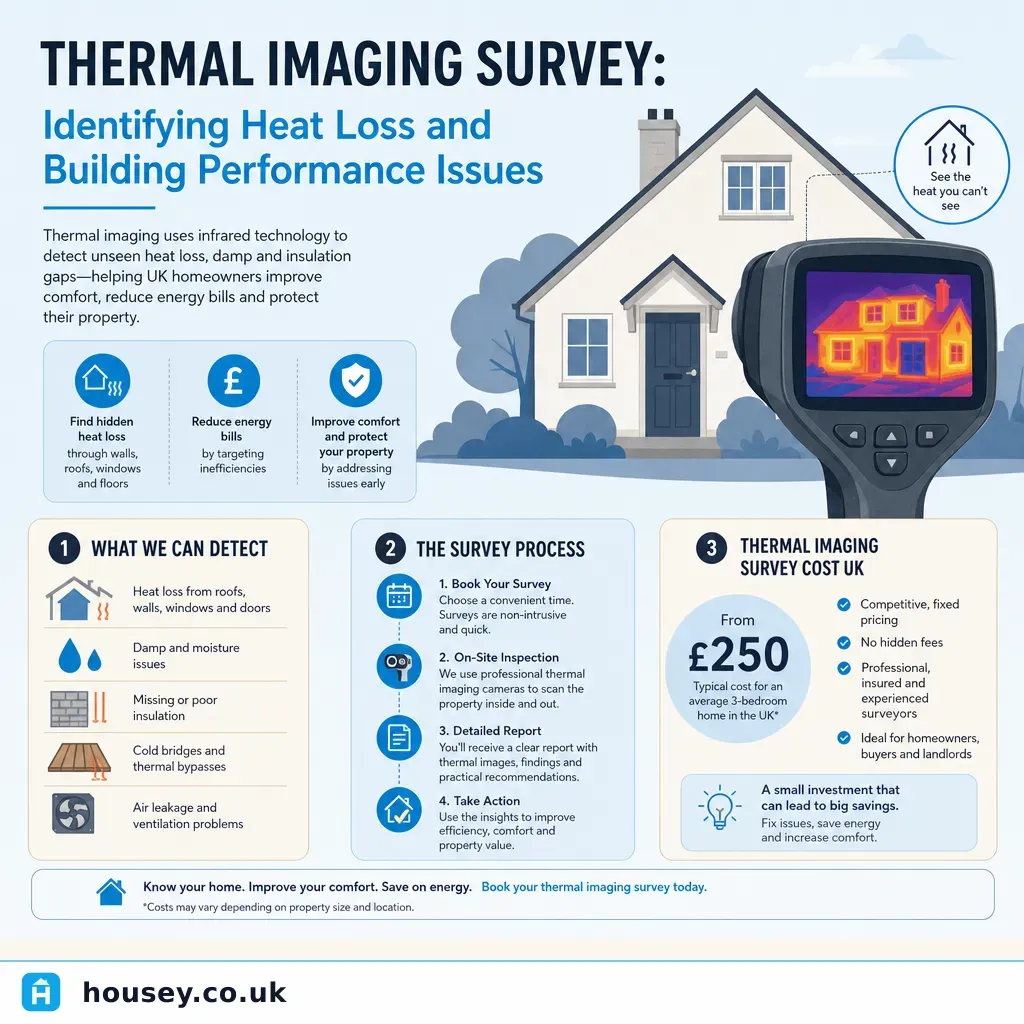
A thermal imaging survey uses an infrared camera to show temperature differences across walls, ceilings, and floors, revealing insulation gaps, cold bridges, and air leakage.
 Surveys & Inspections
The First-Time Homeowner's Essential Guide to Property Surveys and Inspections
First-time buyers in the UK need more than the mortgage valuation — that report protects the lender, not you.
 Surveys & Inspections
Understanding Property Surveys: Types and Services Available
UK property surveys follow three RICS-defined levels: Level 1 (Condition Report), Level 2 (Home Survey), and Level 3 (Building Survey).
 Surveys & Inspections
Getting a Valuation Survey Before Selling Your Property
Before selling, a free estate agent appraisal gives a market price guide, but only a RICS Red Book valuation carries formal professional standards and legal weight.