Thermal Imaging Survey: Identifying Heat Loss and Building Performance Issues
By Housey · Last reviewed 25th of May 2026
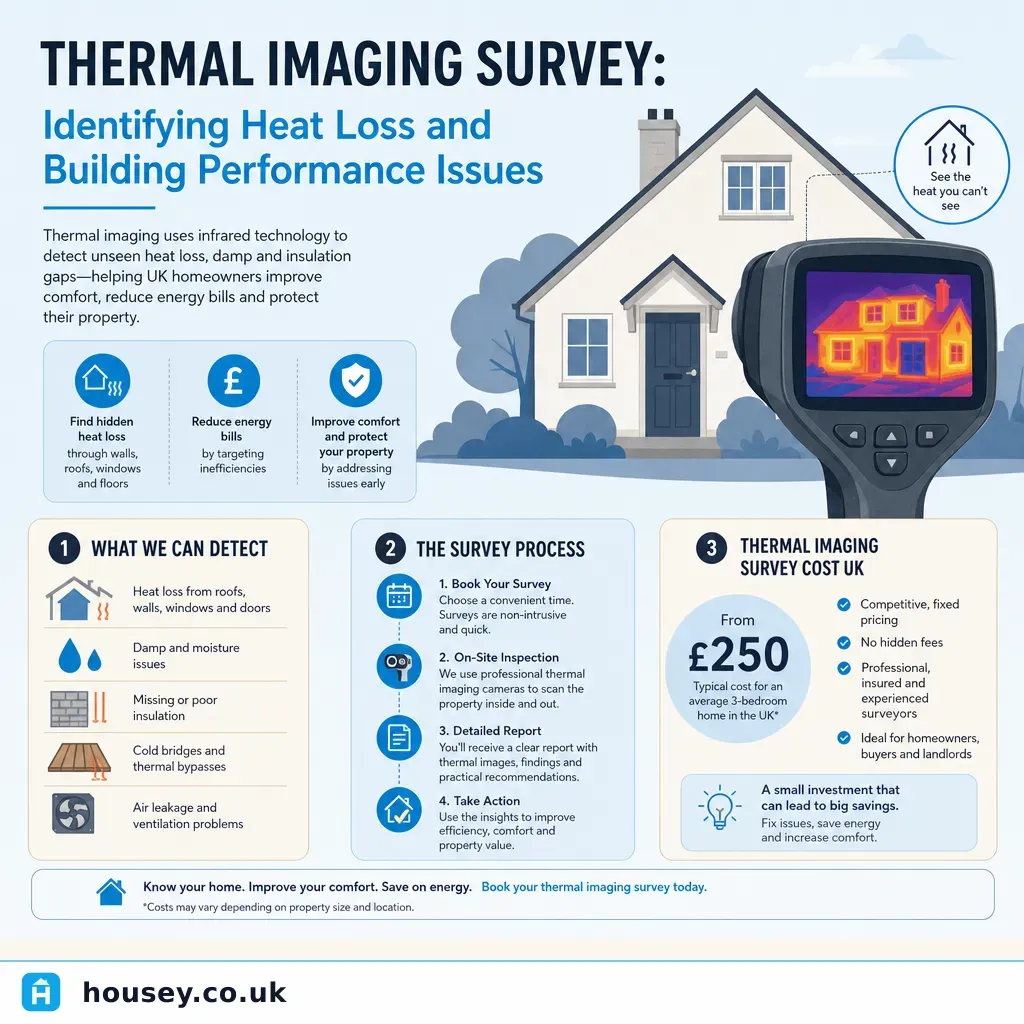
Thermal Imaging Survey: Identifying Heat Loss and Building Performance Issues
A thermal imaging survey (sometimes called a thermographic survey or infrared building survey) is typically commissioned when a homeowner suspects their property is losing heat faster than the EPC rating suggests, or when a planned retrofit requires evidence to prioritise insulation measures. Questions arise most often in older properties — pre-1919 solid-wall terraces, 1930s semis with potentially unfilled cavity walls, or 1960s system-built homes — where heating costs remain stubbornly high despite previous upgrades. The survey produces an infrared visual record that can inform grant applications under ECO4 or the Great British Insulation Scheme and support a PAS 2035 whole-house retrofit assessment.
Key points
- A minimum 10°C temperature differential between inside and outside is generally required for reliable results — winter surveys (November to March) are most effective.
- BS EN 13187:1999 is the applicable UK standard for qualitative infrared thermography in buildings.
- A domestic thermographic survey typically costs £250–£600 depending on property size and report depth (Indicative UK costs, last reviewed 2026-05-25).
- Thermal imaging identifies the location of heat-loss anomalies but does not calculate U-values — a heat flux meter is needed for quantification.
- PAS 2035 retrofit assessments recognise thermographic evidence as supporting data for specifying insulation measures under ECO4 and the Great British Insulation Scheme.
How a thermal imaging survey works
An infrared camera measures surface temperatures rather than the heat sources behind them. Areas of high heat loss — insulation gaps, uninsulated joist ends, air infiltration points, and cold bridges — appear in cooler colours on the thermal image because the surface radiates heat faster than well-insulated areas nearby. The surveyor captures images of walls, ceilings, floors, windows, and roof voids from both inside and outside the property.
For a valid survey, the following conditions generally need to be met:
- The building must have been occupied and heated to its normal temperature for at least 24 hours before the survey
- The survey should be conducted at night or in overcast conditions to avoid solar gain distorting surface temperatures
- External wind should be low and stable to ensure even surface cooling
Results are delivered as a written report with annotated thermal images, a description of each anomaly, and recommended remediation measures.
What thermal imaging can and cannot detect
Understanding the limits of the technique helps set realistic expectations before commissioning a survey.
Thermal imaging can identify:
- Missing or discontinuous cavity wall insulation
- Gaps or settlement in loft insulation
- Cold bridges at structural elements (lintels, joist ends, window frame edges)
- Air infiltration points around door and window frames, and at service penetrations
- Moisture anomalies within walls that present as surface temperature differences
- Uninsulated pipes in roof or floor voids
Thermal imaging cannot:
- Measure exact U-values of walls or ceilings — a heat flux meter is required for this
- Definitively confirm the cause of an anomaly — damp, absent insulation, and cold bridges can produce similar images
- Replace a full structural or condition survey
- Detect all moisture beneath surface finishes without further investigation
When to commission a thermal imaging survey
Use this decision guide to assess whether a thermographic survey is appropriate for your situation:
- Commission a survey if your heating bills seem disproportionately high relative to the property's EPC rating and you want to pinpoint specific heat loss before investing in insulation.
- Commission a survey if you are planning a major retrofit and need evidence to prioritise cavity fill, external wall insulation, or loft insulation.
- Commission a survey if your retrofit coordinator requires thermographic evidence to satisfy PAS 2035 assessment requirements for ECO4 or Great British Insulation Scheme funding.
- Commission a survey if you have recently had cavity wall insulation installed and want to verify there are no voids or installation defects.
- Consider an EPC assessment first if you mainly want to understand your property's energy rating and basic advisory recommendations — this is quicker and less expensive as a starting point.
- Consider a different approach if your property is less than 10 years old with no known insulation defects, as standard building control certification may adequately confirm compliance.
Comparing heat-loss assessment methods
Method | What it measures | Best for | Indicative cost | Limitations |
|---|---|---|---|---|
Thermographic survey | Location of heat-loss anomalies | Diagnosing insulation gaps, air leakage, cold bridges | £250–£600 | Cannot quantify U-values; requires suitable weather conditions |
Heat flux measurement | Actual U-value of a wall element | Confirming wall type before specifying insulation | £300–£800 per element | Time-intensive; requires stable conditions over hours |
SAP/RdSAP energy model | Whole-house energy performance score | EPC production; retrofit funding eligibility | Included in EPC assessment (£60–£120) | Based on defaults rather than measured data |
Air permeability (blower door) test | Air leakage rate in m³/h.m² | New builds (Part L compliance); airtightness retrofit | £250–£500 | Does not locate specific leakage points |
PAS 2035 whole-house assessment | Whole-house performance and retrofit plan | ECO4 and GBIS eligible works | £300–£700 | Requires TrustMark-registered retrofit assessor |
Indicative UK costs, last reviewed 2026-05-25. Actual costs vary by provider and property size.
What to look for in a thermographic surveyor
There is no statutory licensing for thermographic surveyors in the UK, so accreditation and qualifications carry particular weight.
Look for:
- Certification to Level 2 thermography or above under ISO 18436-7 or an equivalent scheme such as BINDT Level 2
- Membership of a professional body such as the Chartered Institution of Building Services Engineers (CIBSE) or the British Institute of Non-Destructive Testing (BINDT)
- Specific experience with domestic buildings — industrial thermographers use different methodology
- A sample report to review before instructing
What to ask before accepting a quote:
- What thermography qualification and level does the surveyor hold?
- What conditions are required, and who is responsible for meeting them (heating schedule, etc.)?
- Will the survey include internal and external imaging, or one direction only?
- What format will the report take, and will it include annotated thermal images?
- Will remediation options be identified, or is it a diagnostic record only?
- Is VAT included?
When to get professional help
A thermographic survey is itself a professional assessment, but consider further specialist input if:
- The survey identifies cold bridges that could relate to structural defects or movement — a RICS Level 3 survey or structural engineer's inspection may be warranted
- Significant moisture anomalies are detected — a separate damp investigation is advisable before any insulation works proceed
- You are uncertain whether the findings qualify your property for grant funding — a TrustMark-registered Retrofit Assessor can confirm eligibility under PAS 2035
- Results suggest very high air infiltration — an airtightness specialist may need to locate and address leakage paths before insulation is installed
How Housey can help
Housey connects UK homeowners with accredited thermographic survey professionals and energy-efficiency consultants who carry out surveys to BS EN 13187 standards and can advise on retrofit priorities and PAS 2035 requirements.
Frequently asked questions
When is the best time of year for a thermal imaging survey?
Winter, ideally between November and March, when outdoor temperatures are consistently low. Most surveyors recommend booking when there will be at least a 10°C temperature differential between inside (typically 18–21°C) and outside. Early morning surveys on still, overcast days give the clearest results, as direct sunlight causes surface heating that distorts thermal images.
Will a thermal imaging survey improve my EPC rating?
Not directly — EPC ratings are produced using RdSAP methodology based on property characteristics, not measured heat loss. However, thermographic evidence of insulation defects can inform a decision to install improvements that would raise the EPC rating once reassessed. Sharing survey findings with your energy assessor may also support more accurate modelling of specific building elements.
Can I use thermal imaging results to apply for insulation grants?
Thermographic evidence can support a PAS 2035 retrofit assessment, which determines eligibility for ECO4 and Great British Insulation Scheme funding. Survey results alone do not trigger grant funding — you also need a TrustMark-registered Retrofit Assessor to produce a compliant whole-house assessment before eligible works can be funded.
How long does a thermal imaging survey take?
A typical three-bedroom house takes around 1.5–3 hours to survey, depending on the level of detail required and whether both internal and external surveys are included. Reports are typically delivered within 2–5 working days of the survey date.
Sources and further reading
- BS EN 13187:1999 — Thermal performance of buildings — BSI Group
- PAS 2035:2023 — Retrofitting dwellings for improved energy efficiency — BSI / DESNZ
- ECO4 scheme overview — Ofgem
- TrustMark: find a retrofit assessor — TrustMark
- Home insulation guidance — Energy Saving Trust
Useful next reads
 Surveys & Inspections
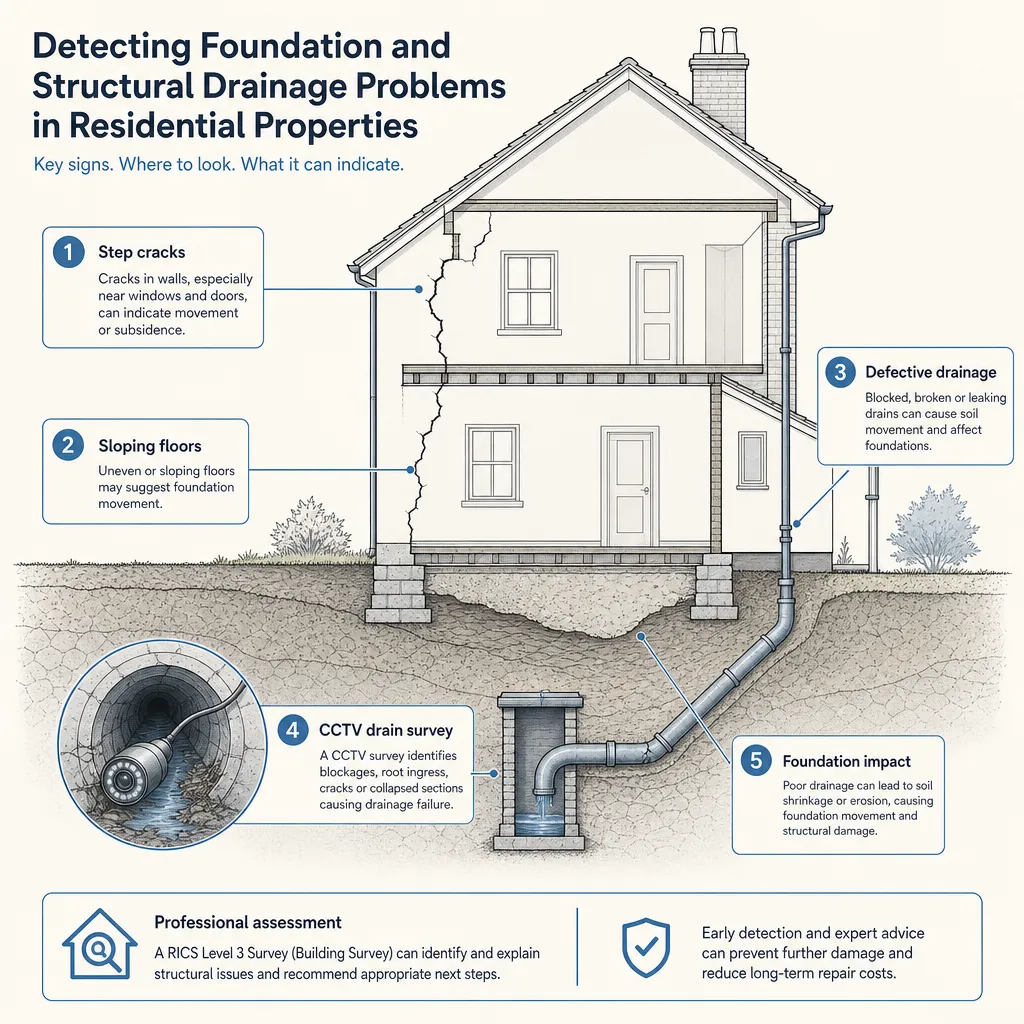
Detecting Foundation and Structural Drainage Problems in Residential Properties
Foundation and drainage problems in UK homes often appear as stepped cracks in brickwork, sticking doors, or slow-draining fixtures.
 Surveys & Inspections
Identifying sources of unpleasant odours in residential properties
Unpleasant smells in a UK home range from dried drain traps — easily fixed — to a gas leak, which requires immediate evacuation and calling 0800 111 999.
 Surveys & Inspections
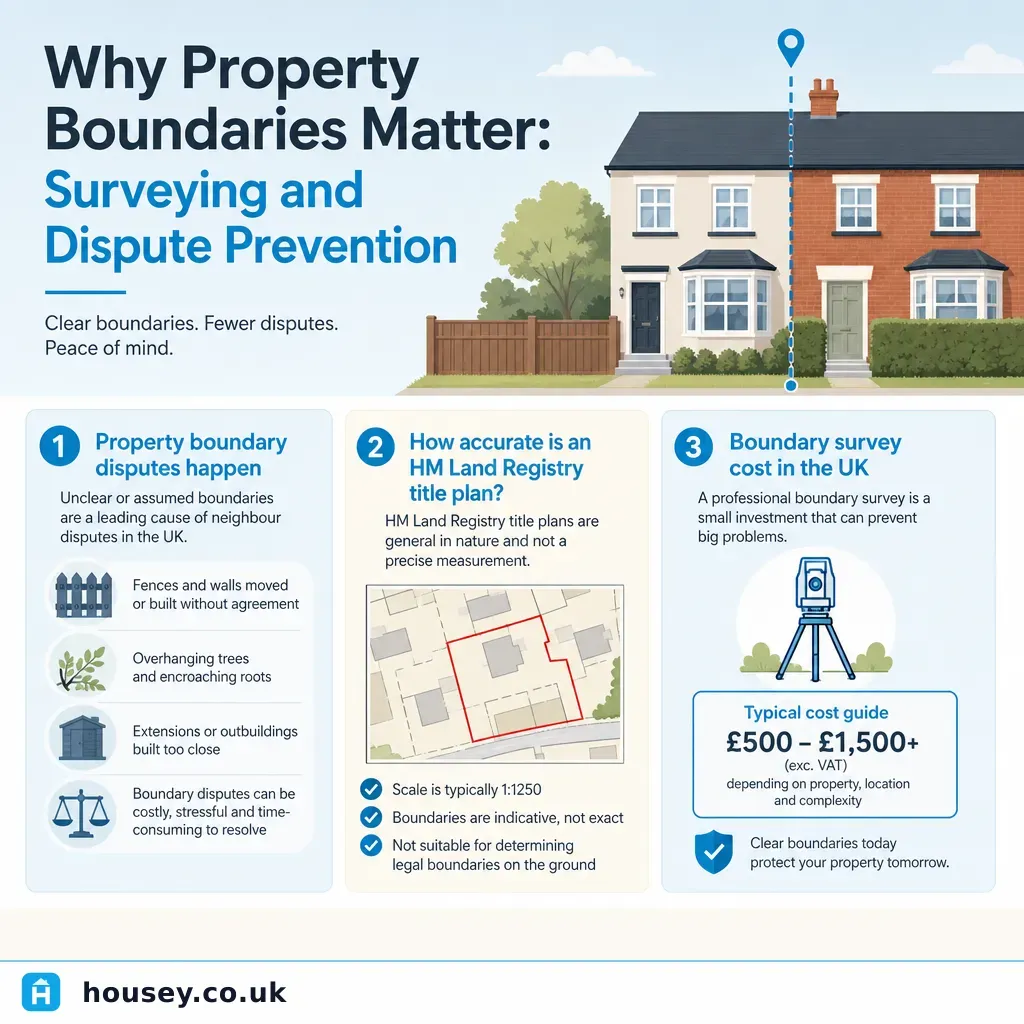
Why Property Boundaries Matter: Surveying and Dispute Prevention
Property boundaries in England and Wales are recorded as general boundaries by HM Land Registry — not precise measurements.
 Surveys & Inspections
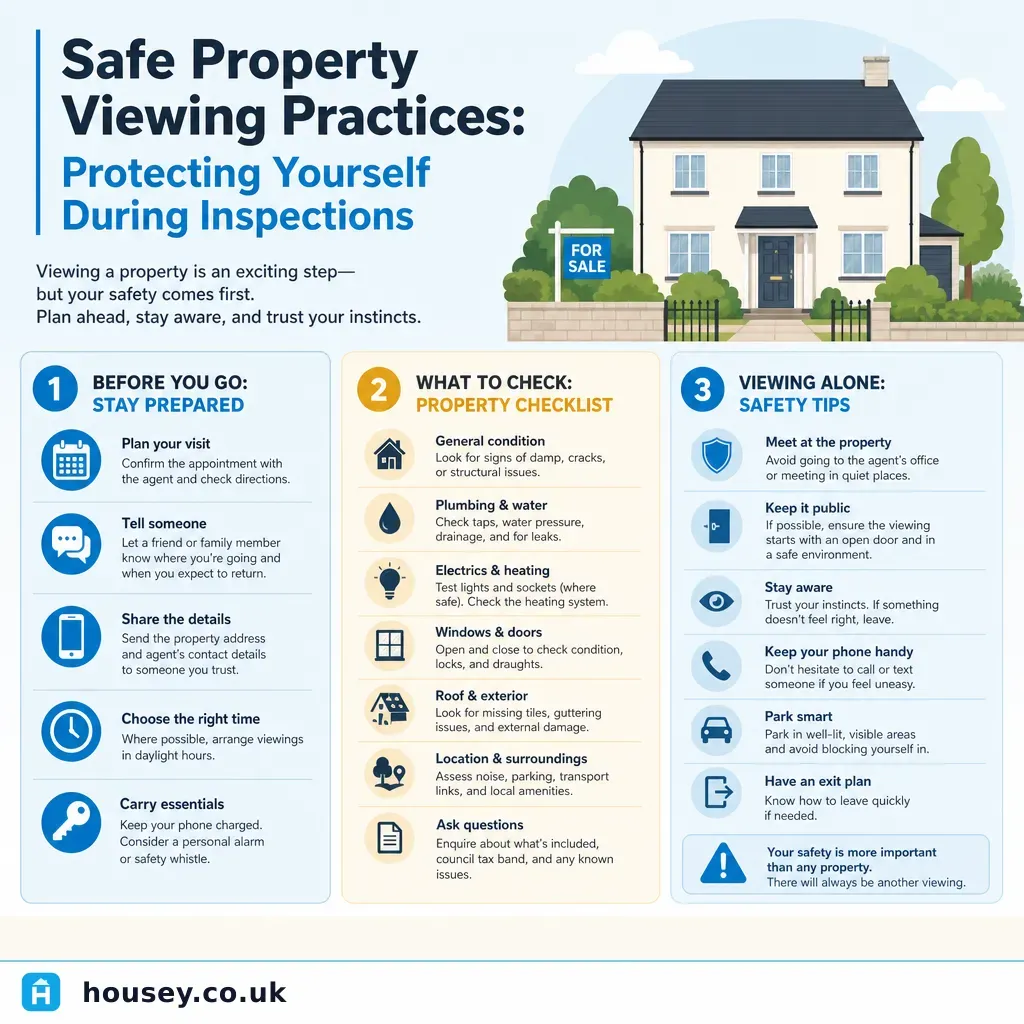
Safe Property Viewing Practices: Protecting Yourself During Inspections
When viewing a property in the UK, always tell someone where you are going and share the full address before you leave.
 Surveys & Inspections
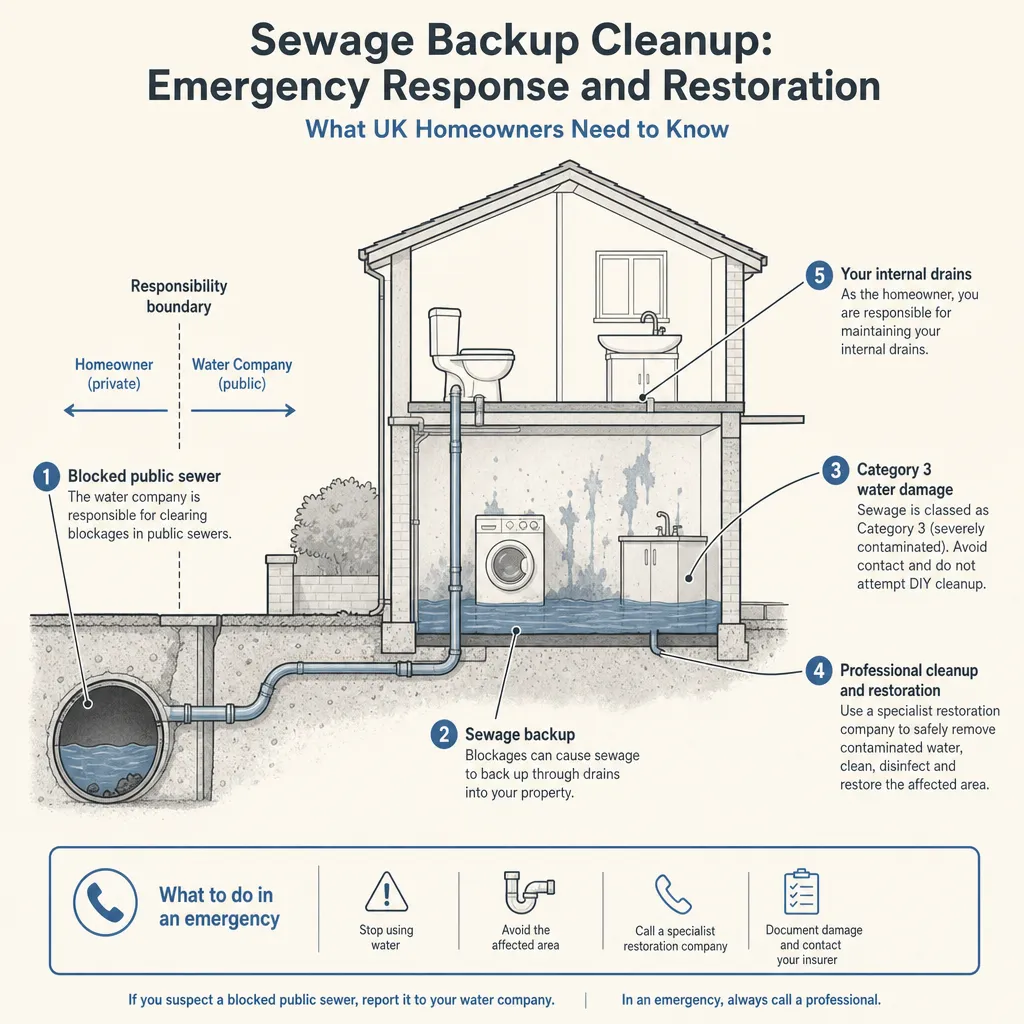
Sewage Backup Cleanup: Emergency Response and Restoration
A sewage backup should be treated as a Category 3 contamination event.