Plumbing Inspections: Assessment Procedures and Cost Guide
By Housey · Last reviewed 26th of May 2026
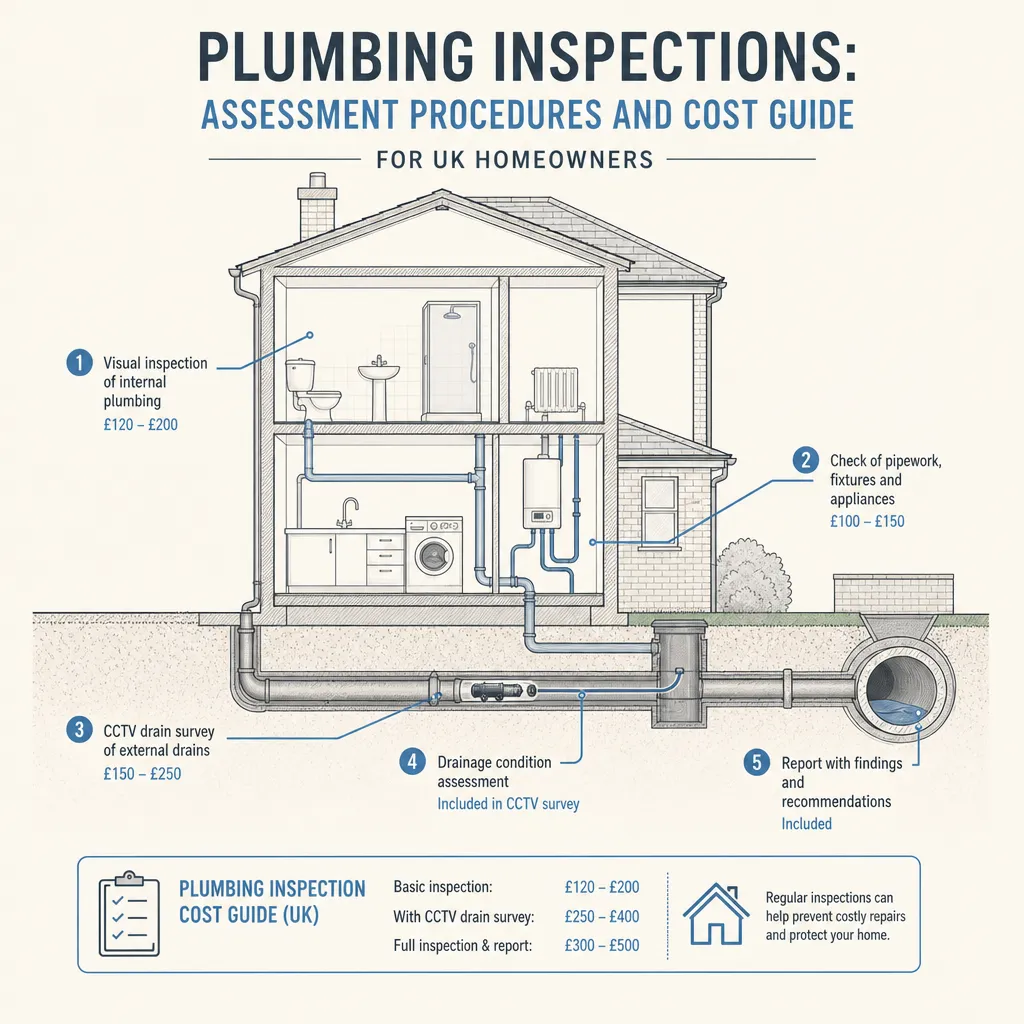
Plumbing Inspections: Assessment Procedures and Cost Guide
Plumbing problems — from cracked underground drains to failing hot water cylinders — rank among the most disruptive and costly defects a homeowner can face. Whether you are buying a property, planning renovation work, or investigating a recurring issue such as slow drainage or inconsistent water pressure, a professional plumbing inspection gives you an accurate picture of what is there, what is wrong, and what remediation will cost.
Key points
- A CCTV drain survey is the only reliable method for assessing underground drainage condition — visual inspection from ground level cannot identify root ingress, fractured pipes, or misaligned joints.
- Water Regulations Advisory Scheme (WRAS) approved fittings are required under the Water Supply (Water Fittings) Regulations 1999; non-compliant installations may be flagged by water companies and can affect insurance.
- Indicative costs for a residential CCTV drain survey range from £100–£300 for a standard property; a combined above-ground and below-ground plumbing assessment may cost £300–£600 (Indicative UK costs, last reviewed 2026-05-26; quotes vary by location and scope).
- Pre-renovation plumbing surveys are strongly recommended before any loft conversion, extension, or basement project where drainage routes may be affected.
- Legionella risk assessments for domestic properties are required for some landlords under the Health and Safety at Work Act 1974 and supporting HSE guidance L8.
What a professional plumbing inspection involves
A plumbing inspection is not a single standardised procedure — its scope depends on the reason for the inspection and the property type. The most common types are described below.
Pre-purchase plumbing inspection
Carried out alongside or shortly after a RICS survey, this involves a qualified plumber assessing:
- Visible supply pipework (material, condition, age, evidence of corrosion or past repair)
- Cold and hot water storage arrangements (tank-fed or mains-fed, cylinder condition)
- Boiler type, age, and visible condition
- Heating controls and visible radiator condition
- Visible waste and soil pipework (falls, joints, condition)
- Water pressure at multiple outlets (indicative test)
This inspection does not typically include opening up floors or walls, nor does it extend to a CCTV survey of underground drains.
CCTV drain survey
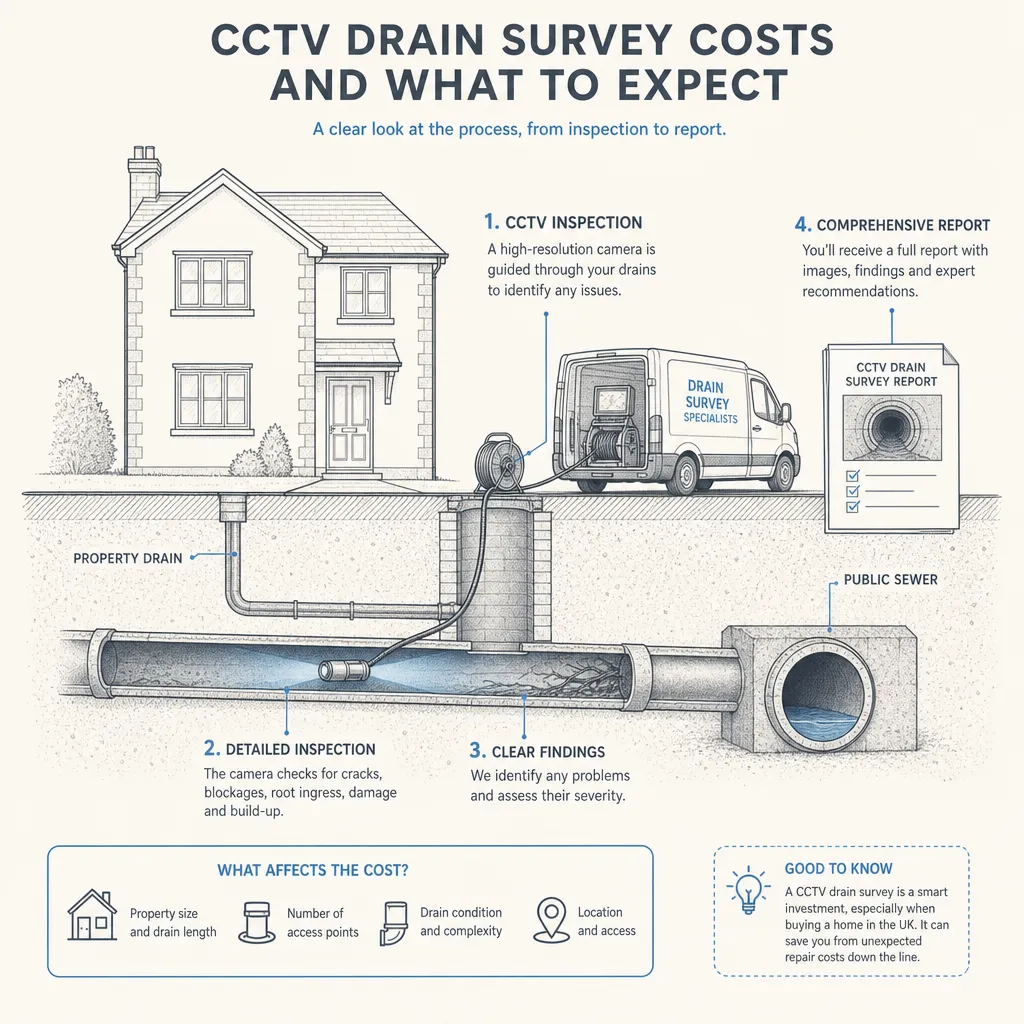
A CCTV drain survey is the standard method for assessing below-ground drainage. A camera is inserted into the network via an accessible inspection chamber and passed through the pipe runs while being recorded. The surveyor produces:
- A full video recording of all runs inspected
- A written condition report noting defects, their location (measured distance from the access point), and severity
- A schedule of recommended remedial works where defects are found
Common findings include root ingress, fractured or collapsed clay pipes (particularly in pre-1970 properties), build-up and blockage, misaligned joints, and substandard previous repair work.
Combined above- and below-ground assessment
Some specialist firms offer a combined inspection covering both above-ground plumbing systems and underground drainage in a single visit. This is particularly useful for pre-purchase assessments on older properties and before renovation work that may affect drainage.
Legionella risk assessment
For rented residential properties, HSE guidance L8 and HSG274 requires landlords to assess and manage legionella risk. A domestic legionella risk assessment typically covers water temperature settings, tank condition, pipework dead-legs, and maintenance records. Indicative costs range from £50–£150 for a standard residential property (Indicative UK costs, last reviewed 2026-05-26).
Comparison: plumbing inspection types
Inspection type | What it covers | Best for | Typical indicative cost |
|---|---|---|---|
Pre-purchase plumbing check | Visible above-ground systems, pressure test | Buyers wanting more detail than RICS survey | £100–£200 |
CCTV drain survey only | Underground drainage system | Pre-purchase, drainage problems | £100–£300 |
Combined plumbing and drain survey | Above- and below-ground systems | Full pre-purchase or pre-renovation assessment | £300–£600 |
Legionella risk assessment | Domestic hot and cold water systems | Landlords, long-vacant properties | £50–£150 |
Boiler service or condition report | Boiler and heating system | Pre-purchase or after breakdown | £70–£120 |
Indicative UK costs, last reviewed 2026-05-26. Costs vary by location, property size, and contractor.
Worked UK property scenario
A buyer in Bristol is purchasing a 1920s end-of-terrace. There is evidence of slow-draining outlets in the upstairs bathroom and cracked external render near the soil stack. Their RICS Level 3 survey recommends further drainage investigation.
Action | Indicative cost | Outcome |
|---|---|---|
CCTV drain survey | £200 | Fractured clay drain at 4 m from rear inspection chamber; root ingress at two points |
Plumber's pre-purchase inspection | £130 | Soil stack joint found leaking; cold water tank aged and uninsulated |
Remedial drain repair (patch lining) | £650–£900 | Negotiated as price reduction with seller pre-exchange |
Soil stack repair and tank replacement | £400–£800 | Budgeted and completed before occupation |
The combined inspection cost of approximately £330 enabled the buyer to negotiate a price reduction of around £1,200 and avoid a post-purchase emergency repair bill.
Indicative UK costs, last reviewed 2026-05-26.
What to ask before commissioning a plumbing inspection
Before instructing a drain surveyor or plumbing inspector, ask:
- What exactly is included and excluded from the inspection scope?
- What qualifications and accreditations do you hold? (Look for CCTV drain surveyors using WRc/MSCC5 surveying methods; above-ground plumbers should be registered with a recognised competent person scheme)
- What report format will I receive — full video footage plus a written schedule of condition?
- Does your report include a schedule of recommended remedial works with indicative costs?
- How soon will I receive the report after the inspection?
- Is VAT included in the quoted price?
- What happens if access to the drain is obstructed on the day?
- Are you covered by professional indemnity insurance?
Pre-renovation drainage assessment checklist
Before any extension, loft conversion, or basement project, commission a drainage assessment if:
Drains crossing an extension footprint may need to be moved, lined, or protected to meet Building Regulations Approved Document H requirements. Identifying these runs before construction begins avoids expensive mid-build delays.
When to get professional help
A recurring blockage that clears and returns, gurgling drains, or rising damp near a drain run are signs that a professional inspection is warranted rather than a DIY drain rod. A water pressure drop across the whole property — rather than a single outlet — warrants investigation by your water supplier or a qualified plumber, as the cause may lie outside the property boundary.
If the property connects to a septic tank or small sewage treatment plant rather than the public sewer, a specialist emptying and condition check is advisable before purchase and at regular intervals thereafter.
How Housey can help
Housey connects you with experienced providers for CCTV drain surveys, drainage surveys, and specific defect surveys, making it straightforward to commission the right inspection and compare quotes from vetted local specialists.
Frequently asked questions
How much does a CCTV drain survey cost in the UK?
A CCTV drain survey for a standard residential property typically costs £100–£300, depending on the number of drain runs, property location, and depth and accessibility of the drains. Combined above-ground and below-ground assessments may cost £300–£600 or more. Always request a fixed price based on the agreed scope rather than an hourly rate. Indicative UK costs, last reviewed 2026-05-26.
Do I need a plumbing inspection when buying a house?
A RICS survey will note visible plumbing defects but will not pressure-test pipes or inspect underground drainage. For older properties — particularly pre-1970 terraces with clay drainage — commissioning a CCTV drain survey alongside the RICS survey is advisable. The additional cost is modest compared with post-purchase remedial drainage works.
Who carries out CCTV drain surveys?
CCTV drain surveys are carried out by specialist drainage companies rather than general plumbers. Look for firms whose operators use WRc/MSCC5 classification methods, which produces a standardised defect schedule understood by contractors and Building Control. Some specialists combine CCTV drain surveys with above-ground plumbing inspections in a single visit.
What defects do plumbing inspections most commonly find?
In older UK residential properties, common findings include corroded or lead supply pipes, cold water tanks past their service life, single-stack drainage with inadequate venting, fractured or root-affected clay drains in pre-1970 properties, and boilers with no recent service record. Remedial costs range from a few hundred pounds for a boiler service to several thousand for drain relining or pipe replacement.
Sources and further reading
- Approved Document H: Drainage and Waste Disposal — GOV.UK
- Water Supply (Water Fittings) Regulations 1999 — legislation.gov.uk
- Legionella: control in hot and cold water systems (HSG274) — Health and Safety Executive
- Drains and sewers: who is responsible — GOV.UK
- MSCC5 Manual of Sewer Condition Classification — WRc Group
Useful next reads
 Surveys & Inspections
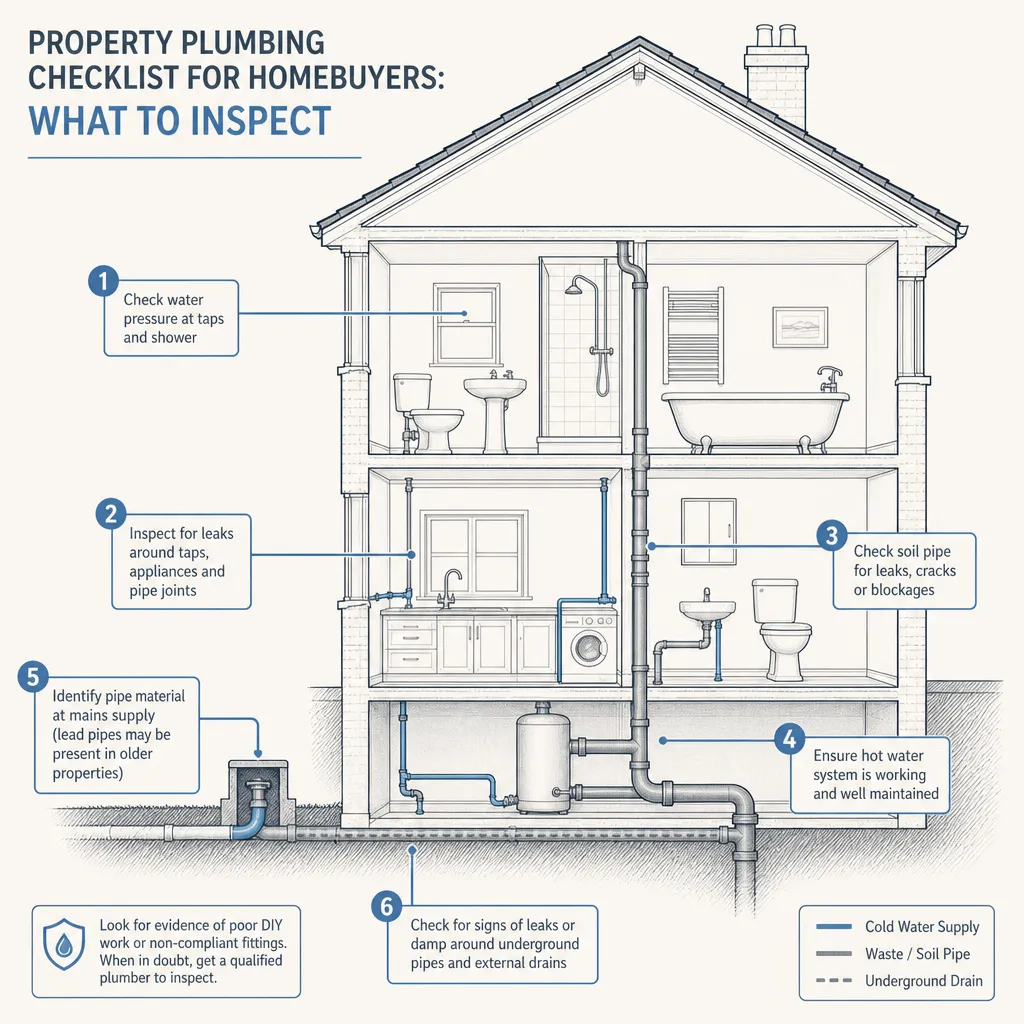
Property Plumbing Checklist for Homebuyers: What to Inspect
Before exchanging on a UK property, check water pressure at multiple outlets, look for signs of damp or staining around pipes, confirm whether any lead pipework remains, inspect the boiler age and service history, and ask your surveyor about drainage.
 Surveys & Inspections
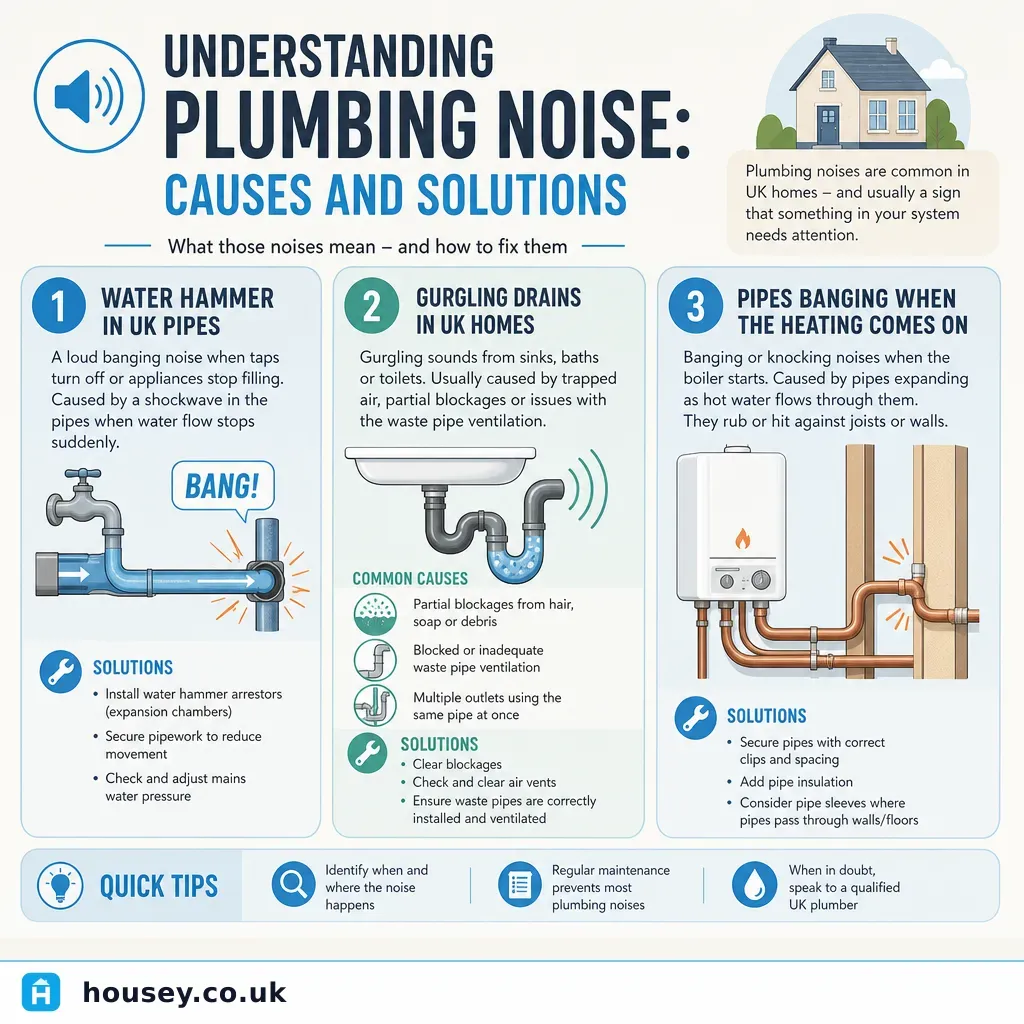
Understanding Plumbing Noise: Causes and Solutions
Most plumbing noises have a specific cause: banging usually means water hammer from high pressure or unsupported pipes; gurgling from drains points to a blockage or dry trap; ticking during heating is typically thermal expansion.
 Surveys & Inspections
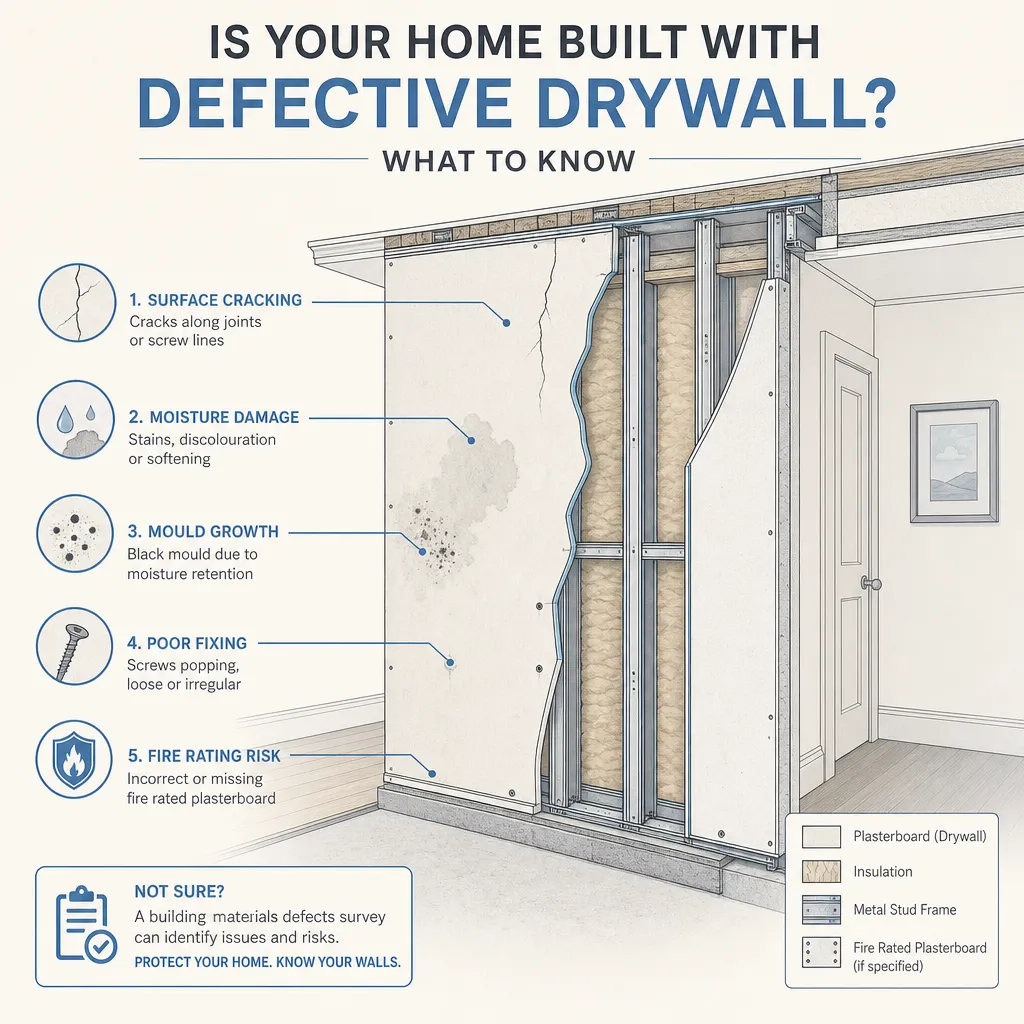
Is Your Home Built with Defective Drywall? What to Know
Contaminated Chinese drywall — as seen in US homes built 2001 to 2009 — is not a documented widespread problem in UK properties, where plasterboard is manufactured primarily to European standards.
 Surveys & Inspections
Sagging Lintel Repair Costs and Structural Solutions
A sagging lintel is a structural defect requiring prompt professional assessment.
 Surveys & Inspections
CCTV Drain Survey Costs and What to Expect
A CCTV drain survey in the UK typically costs between £150 and £400 for a standard residential survey covering one or two drainage runs.