Impact of Bedroom Conversion on Property Marketability
By Housey · Last reviewed 11th of May 2026
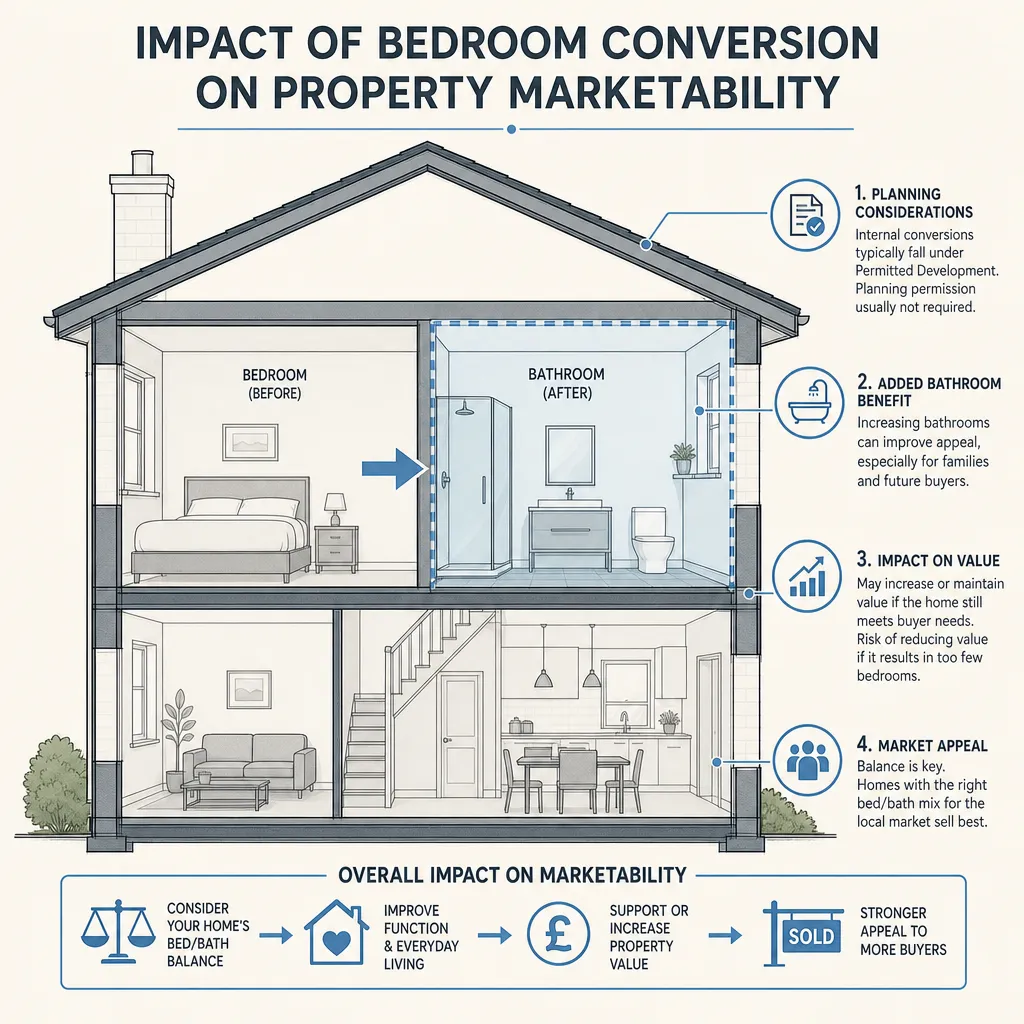
Impact of Bedroom Conversion on Property Marketability
Reconfiguring a bedroom — whether to create a larger living area, an additional bathroom, a walk-in wardrobe, or a home office — is one of the most common internal changes UK homeowners consider. The decision carries real market consequences when it reduces the official bedroom count, because estate agents, mortgage lenders, and buyers all use bedroom numbers as a primary pricing and search filter. Understanding those implications before instructing works can save significant expense and negotiating ground at the point of sale.
Key points
- UK mortgage lenders and estate agents classify residential property largely by bedroom count; dropping from three to two bedrooms typically places a home in a different market bracket with a lower price ceiling.
- Most internal bedroom conversions that do not alter the external appearance of the property fall under permitted development — no planning application is typically required in England.
- Where a load-bearing wall is removed as part of the conversion, Building Regulations Part A (Structure) approval is required before works begin.
- A RICS-registered mortgage valuer will record the revised bedroom count at the point of remortgage or sale, which can directly affect the lender's assessed security value.
- Conservation areas, Article 4 directions, and listed building status can restrict even internal works — always check with your local planning authority (LPA) before proceeding.
How bedroom count affects UK property value
In the UK, residential property is marketed and searched for primarily by bedroom count. Rightmove, Zoopla, and most estate agent portals use bedroom number as a primary filter, meaning a two-bedroom property competes in a different pool from a three-bedroom home, even when floor area is identical. The most meaningful threshold in most UK markets is the drop from three to two bedrooms: three-bedroom homes are the most frequently transacted property type in England and Wales, and the buyer pool for two-bedroom properties is substantially narrower in many areas outside city centres.
Conversion type | Likely effect on marketability | Likely effect on value |
|---|---|---|
3-bed → 2-bed (bedroom to en-suite or dressing room) | Reduced buyer pool; may appeal to downsizers | Typically lowers price ceiling; impact varies by local market |
3-bed → 2-bed (bedroom to home office) | Smaller buyer pool; harder to mortgage at 3-bed valuation | Measurable value reduction in family-oriented markets |
2-bed → 1-bed | Significant reduction in buyer pool; lenders may restrict LTV | Substantial value reduction; likely to affect saleability |
4-bed → 3-bed (smaller bedroom to dressing room) | Moderate buyer pool reduction | Value impact depends on local demand for 4-bed properties |
Adding en-suite without losing bedroom count | Broadens buyer appeal | Can add value, particularly in 3+ bed family homes |
Does a bedroom conversion require planning permission or building regulations?
Most internal bedroom conversions in England do not require a formal planning application. Under the Town and Country Planning (General Permitted Development) (England) Order 2015, internal works that do not materially alter the external appearance of the building are typically permitted development. Building regulations are a separate consideration and apply in a wider range of circumstances.
Decision tree — planning and building regulations
- No external works, no structural changes, not listed, not in a conservation area with an Article 4 direction: Usually no planning permission required. Building regulations are unlikely to apply if no structural, fire, or thermal elements are altered. Confirm with your LPA if uncertain.
- Removal of a load-bearing wall as part of the conversion: Building Regulations Part A (Structure) approval is required. Engage a structural engineer and notify your local building control body or an approved inspector before work starts.
- Property in a conservation area or subject to an Article 4 direction: Permitted development rights may be removed for certain works. Check with your LPA before proceeding.
- Listed building: Listed building consent may be required even for purely internal alterations — consult your LPA's conservation officer before instructing any works.
- Leasehold property: Most leases include clauses requiring landlord consent for structural or layout alterations — check your lease before instructing any works.
- Change of use or material change affecting the number of dwellings: A formal planning application is likely required.
What not to assume
A common misunderstanding is that internal works are entirely free from regulatory oversight. Several assumptions regularly lead to complications at the point of sale or remortgage.
Do not assume:
- That "no planning permission" means "no building regulations" — they are separate requirements covering different aspects of a project.
- That a non-load-bearing wall can be reliably identified without professional input — partition walls can conceal structural elements, particularly in Victorian terraces, 1930s semis, and previously altered properties.
- That reinstating a bedroom before sale will automatically restore the mortgage valuation — a RICS surveyor may still note the altered layout on inspection.
- That a home office conversion is low-cost to reverse — reinstating wall structure, joinery, and floor finishes to satisfy a future buyer may require material expenditure.
- That removing a bedroom in a leasehold property is straightforward — most leases require landlord consent for layout alterations, and failure to obtain it can complicate a sale or lease extension application.
Red flags before you proceed
- The wall you plan to remove runs perpendicular to floor joists, supports a chimney breast, or is an external wall — these are strong indicators of a load-bearing element requiring structural engineering input before any works begin.
- The property is already on the market or under mortgage valuation — altering the bedroom count mid-process can cause a mortgage offer to be revised or withdrawn.
- Your property is leasehold with fewer than 80 years unexpired — altering the layout without landlord consent adds complexity to any future lease extension or sale.
- A neighbouring owner shares a party wall — a Party Wall Agreement under the Party Wall etc. Act 1996 may be required before structural works begin.
- The conversion involves moving or removing a chimney breast — this requires structural engineering input and building control notification.
Important limitations
This article provides general information about property layout changes and their typical effects in the UK market. Rules and regulations vary significantly by property type, tenure, local planning authority, listed building status, and individual lease terms. Nothing here constitutes planning, legal, structural, or financial advice. A qualified professional should assess your specific property and circumstances before you proceed with any conversion.
What to ask a qualified professional
Before instructing works, consider asking the following:
- Is the wall I intend to remove load-bearing, and what structural support will be required if it is removed?
- Will this work trigger a Building Regulations application, and which building control body or approved inspector should I notify?
- Are there any permitted development restrictions on this property — Article 4 directions, conservation area designations, or listed building status?
- If the property is leasehold, does my lease require landlord consent for this alteration?
- What is the likely impact on a RICS mortgage valuation if bedroom count is reduced?
- Will I need a party wall notice before structural works begin?
When to get professional help
Engage a qualified professional before proceeding if any of the following apply:
- You cannot confirm whether a wall is load-bearing without specialist input.
- The property is listed, in a conservation area, or subject to any Article 4 restrictions.
- The proposed work involves a chimney breast, staircase alteration, or changes to fire compartmentation.
- You are approaching sale or remortgage and need certainty on how the change will affect a valuation.
- The property is leasehold and the lease terms are unclear regarding internal alterations.
How Housey can help
If you are planning a bedroom conversion and need to understand the structural and regulatory implications, Housey can connect you with a local architectural designer to assess feasibility and produce drawings, a structural engineer if load-bearing elements are involved, or a planning consultant to advise on permitted development restrictions, Article 4 directions, and listed building requirements.
Frequently asked questions
Will converting a bedroom to a home office reduce my property's value?
Reducing bedroom count typically lowers value because UK buyers and mortgage lenders use bedroom number as a primary pricing category. A three-bedroom property converted to two bedrooms will usually be valued at a lower price point, even if floor area is unchanged. The impact varies — family-oriented markets tend to penalise bedroom loss more than city-centre locations where a dedicated home office may be more attractive to buyers.
Do I need planning permission to convert a bedroom into a bathroom?
In most cases, no. Converting a bedroom to a bathroom without external alterations is generally permitted development in England. However, if the work involves removing a load-bearing wall, Building Regulations Part A approval is required. Properties in conservation areas or listed buildings may face additional restrictions. Confirm with your local planning authority before proceeding if you are uncertain about your property's status.
Can I reinstate a bedroom before selling to restore the property's value?
You can reinstate a bedroom before marketing, but this requires building work and may be costly. A RICS surveyor may still note evidence of the alteration on inspection. If building regulations were required but not obtained, a buyer's solicitor may raise this in searches, potentially delaying or complicating the sale. Obtaining proper approvals at the time of the original conversion avoids this problem.
Does a bedroom conversion affect my mortgage?
It can. Mortgage lenders instruct a valuer who records the current bedroom count and condition of the property. If the count has changed since the original mortgage was issued, the lender may reassess the security value, particularly at remortgage. Speak to your lender or a mortgage broker before proceeding with any change that reduces bedroom count, as this may affect your loan-to-value ratio.
Sources and further reading
- Permitted development rights for householders: technical guidance — GOV.UK
- Building Regulations Approved Document A: Structure — GOV.UK
- Town and Country Planning (General Permitted Development) (England) Order 2015 — legislation.gov.uk
- RICS Home Survey Standard — RICS
- Party Wall etc. Act 1996 — explanatory booklet — GOV.UK
Useful next reads
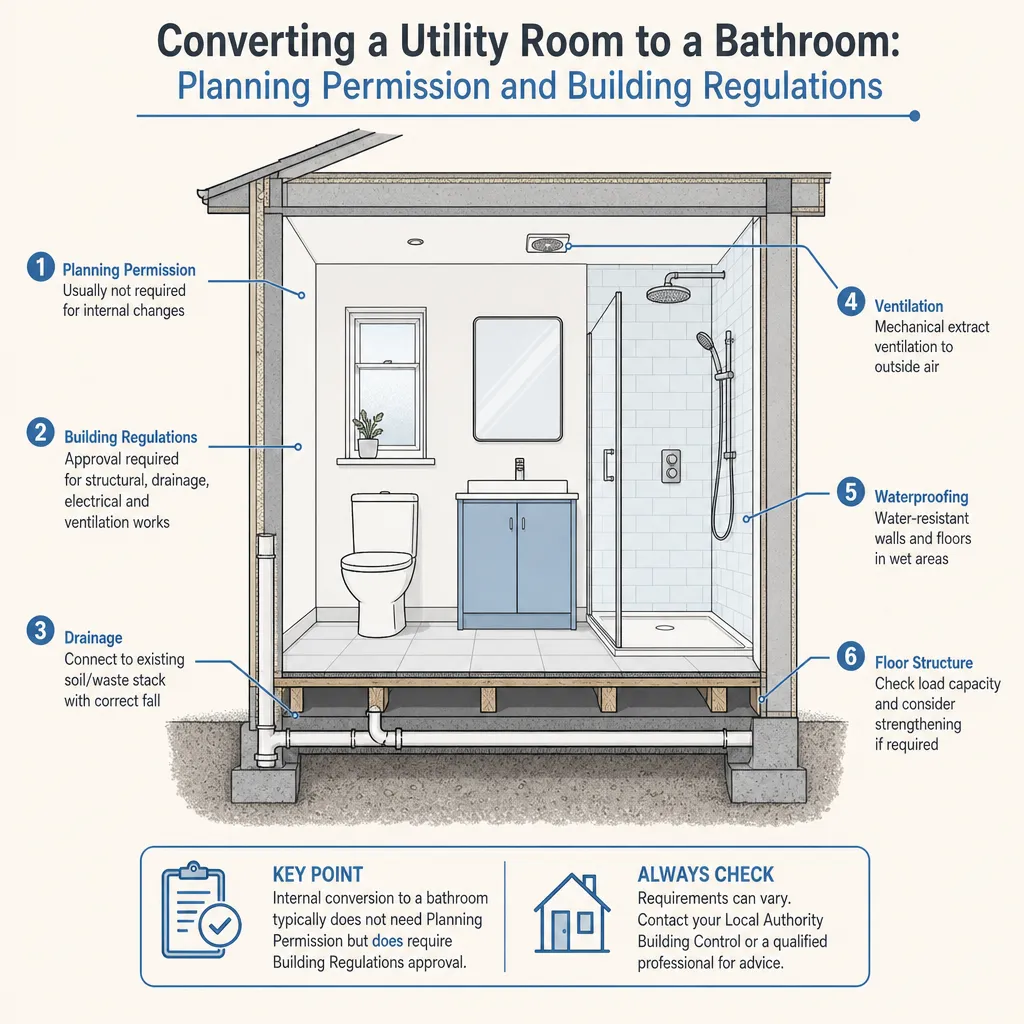 Planning & Pre-Build
Converting a Utility Room to a Bathroom: Planning Permission and Building Regulations
Converting a utility room to a bathroom in England usually does not require planning permission, as it is an internal alteration.
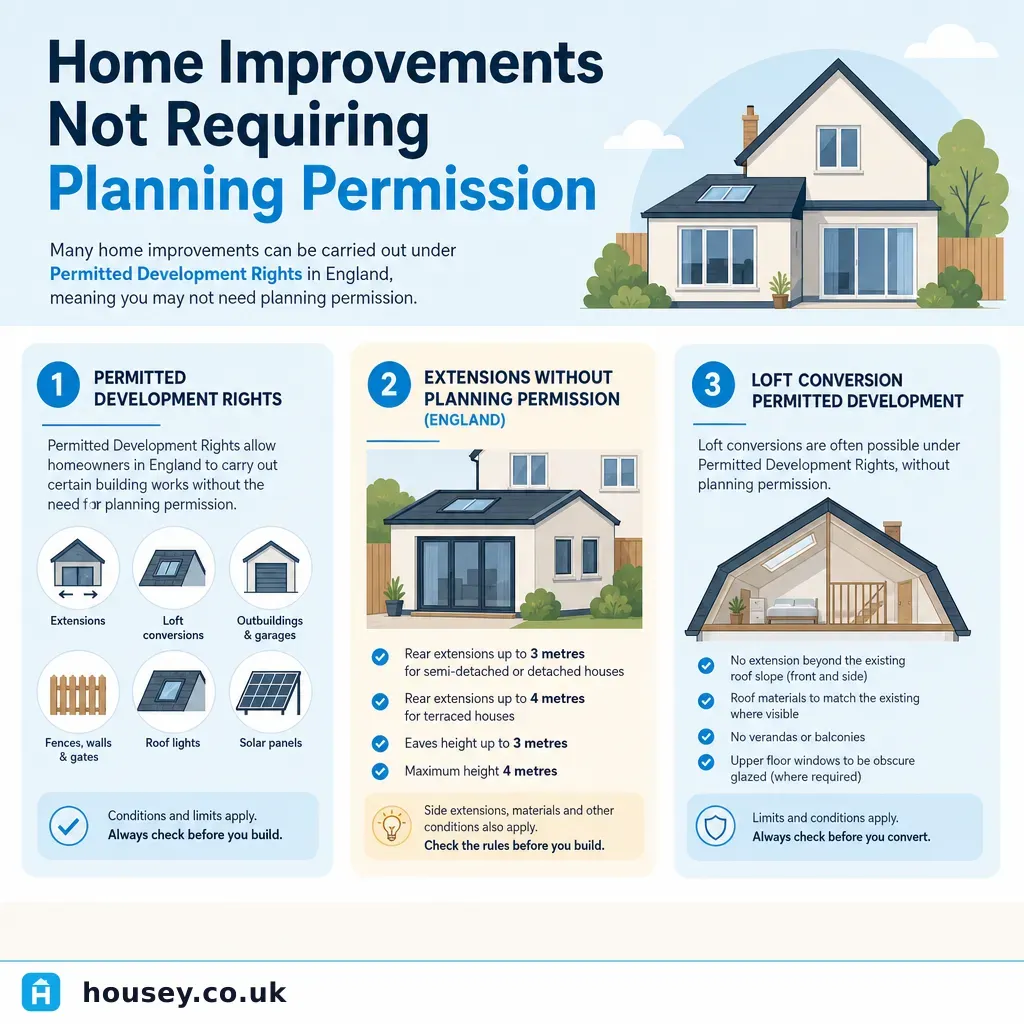 Planning & Pre-Build
Home Improvements Not Requiring Planning Permission
Many common home improvements in England fall under Permitted Development Rights and do not require a planning application.
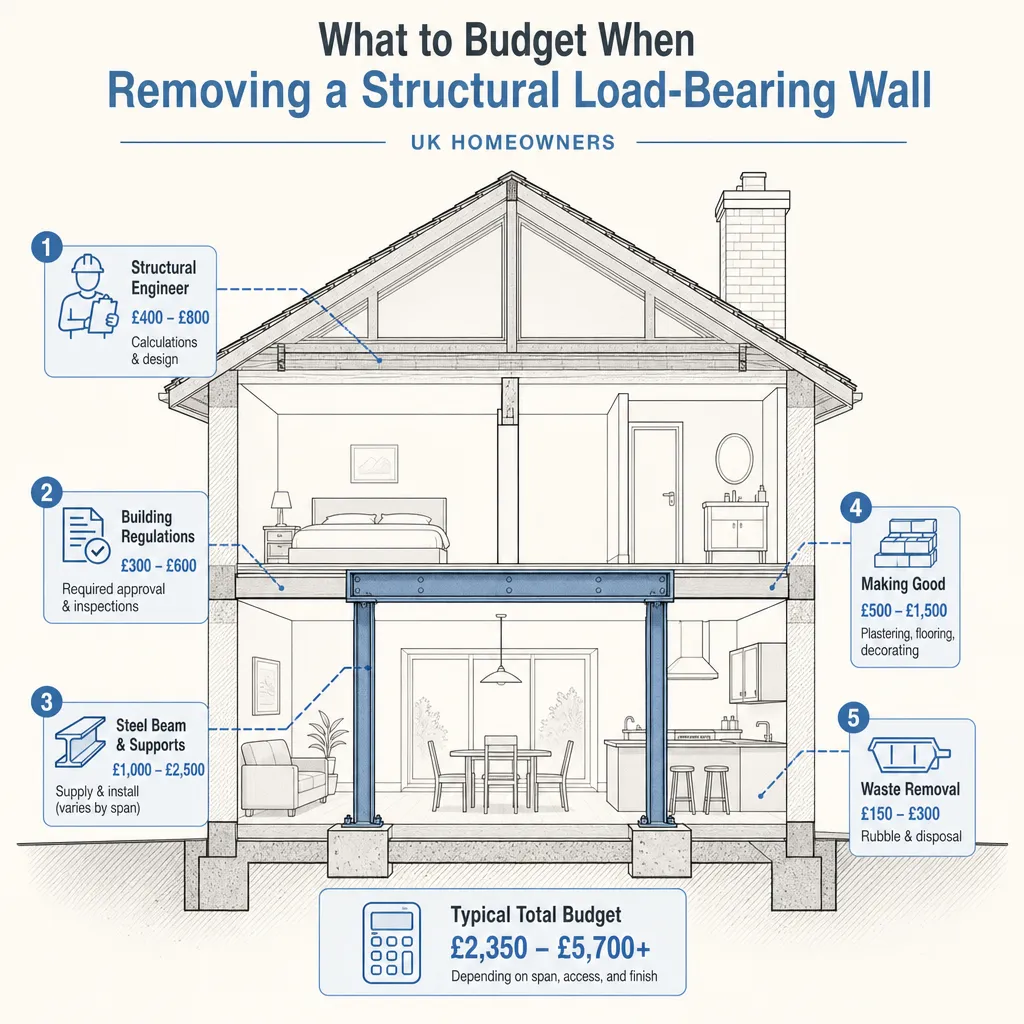 Planning & Pre-Build
What to Budget When Removing a Structural Load-Bearing Wall
Removing a load-bearing wall in a typical UK home costs £2,500–£8,000 or more in total, covering a structural engineer's calculations, Building Regulations approval, the steel beam, builder's labour, and replastering.
 Planning & Pre-Build
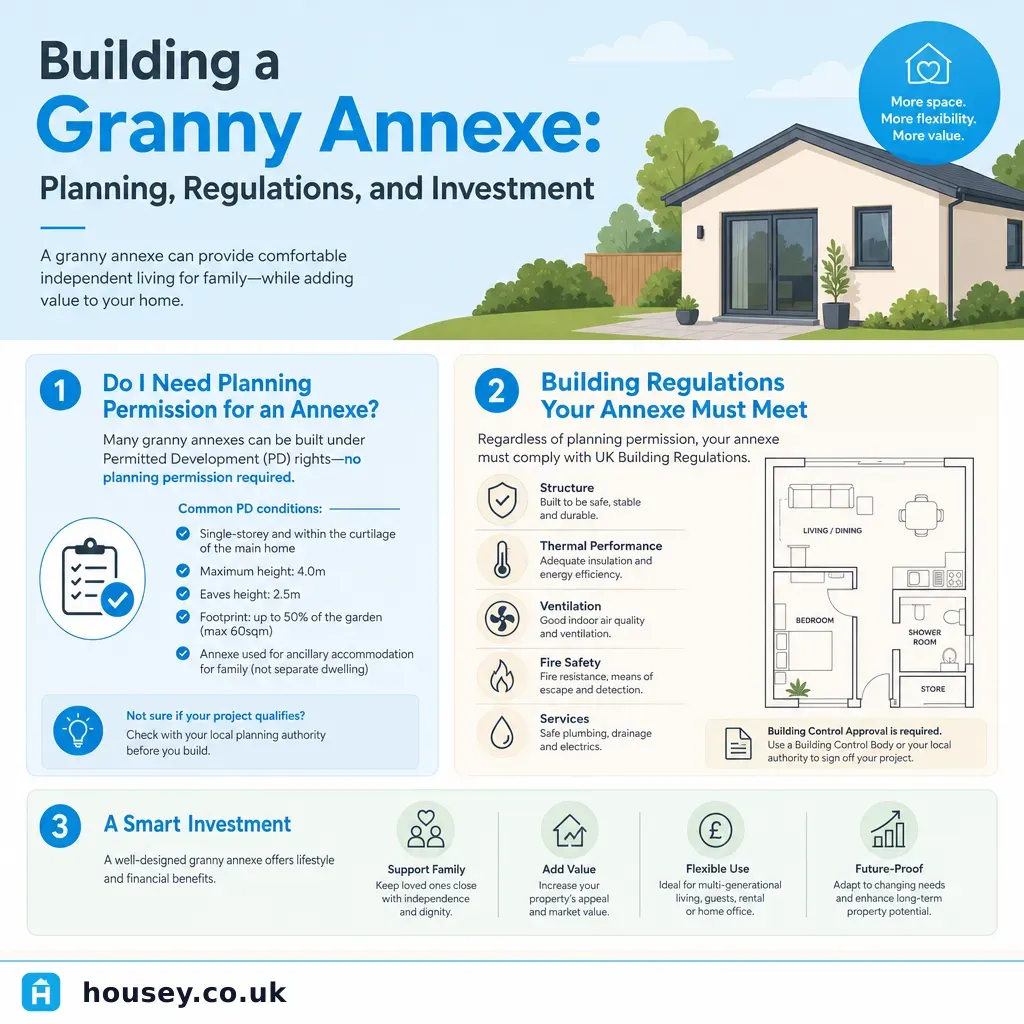
Building a Granny Annexe: Planning, Regulations, and Investment
A granny annexe in the UK may or may not need planning permission depending on whether it is classed as incidental to the main house or as a separate dwelling.
 Planning & Pre-Build
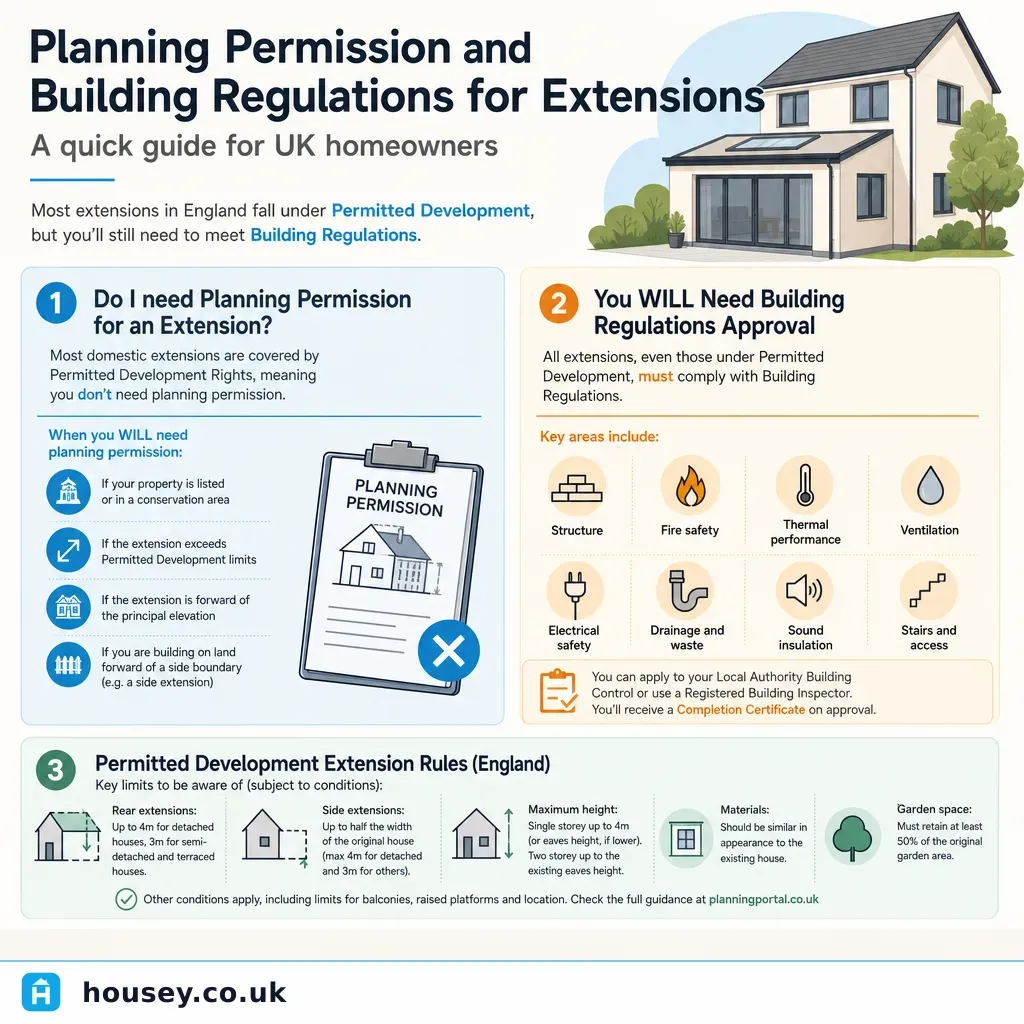
Planning Permission and Building Regulations for Extensions
UK home extensions usually require both planning permission and Building Regulations approval, though most smaller rear extensions qualify as Permitted Development under the GPDO 2015 and need no planning application.