Industrial-Style Windows: Affordable Alternatives and Costs
By Housey · Last reviewed 5th of May 2026
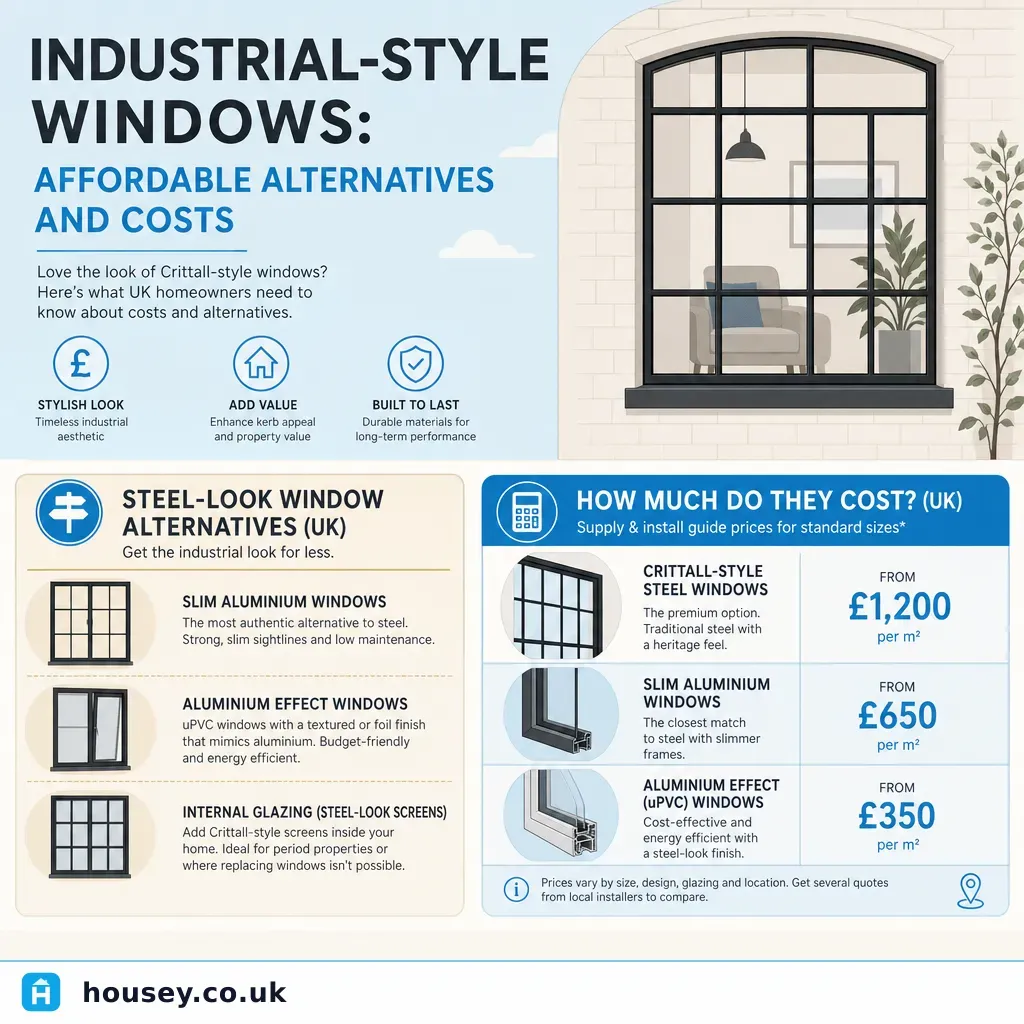
Industrial-Style Windows: Affordable Alternatives and Costs
Industrial-style windows — characterised by slim dark frames divided into multiple panes — have become one of the most requested design features in UK home renovations. Whether you're upgrading a Victorian terrace, fitting out a barn conversion, or adding a rear extension, the challenge is usually cost: authentic steel Crittal frames can stretch budgets quickly. Understanding the full range of materials helps you balance the aesthetic you want against what you can realistically spend and what your property's planning status permits.
Key points
- Authentic steel Crittal-style windows cost approximately £800–£2,000+ per frame installed; slim-profile thermally broken aluminium is the most popular lower-cost alternative at roughly £400–£900 per window.
- FENSA-registered or CERTASS-registered installers must fit replacement windows in England and Wales to self-certify compliance with Building Regulations Part L (thermal performance) and Part K (safety glazing).
- Conservation areas and listed buildings impose restrictions on frame profiles, glazing bar patterns, and finishes — always confirm with your Local Planning Authority (LPA) before ordering.
- The current Building Regulations minimum for replacement windows in England is a whole-window U-value of 1.6 W/m²K or better, per Approved Document L.
- uPVC in black or anthracite finishes is the lowest-cost option but typical frame widths of 60–90 mm cannot match the 25–38 mm sight lines of steel that define the authentic industrial look.
What makes a window "industrial style"?
Industrial-style windows draw on the steel-framed factory windows common in early 20th-century Britain — most associated with the Crittal Manufacturing Company, founded in Essex in 1884. The defining characteristics are slim dark frames (usually black or dark grey), grid patterns or T-bar divisions creating multiple smaller panes, and minimal hardware with lever handles and exposed hinges.
Not all black windows are industrial style. A wide uPVC frame with applied Georgian bars gives a very different result from a slim steel or aluminium frame with true structural divisions. The sight line — the visible width of the frame between panes — is the most reliable indicator of authenticity. For true steel, this is 25–32 mm; slim aluminium typically sits at 38–55 mm.
Comparing the main frame materials
The table below compares the four main options for achieving the industrial look at different price points.
Material | Approx. cost per window (supply and install) | Minimum sight line | Thermal performance | Best for | Not ideal for |
|---|---|---|---|---|---|
Original steel (Crittal or equivalent) | £800–£2,000+ | 25–32 mm | Requires thermal break; older single-glazed versions are poor | Purists, listed buildings, period conversions | Most budgets; thermally poor without thermal break |
Slim-profile aluminium | £400–£900 | 38–55 mm | Good; thermally broken as standard in most UK ranges | Extensions, barn conversions, most renovations | Very tight openings where 25 mm steel sight lines are essential |
Composite (steel-aluminium hybrid) | £600–£1,400 | 30–40 mm | Good; thermally broken | High-spec residential, commercial projects | Tight budgets |
uPVC (black/anthracite finish) | £200–£500 | 60–90 mm | Good; meets Part L with ease | Budget renovations, rental properties | Achieving the authentic slim-frame industrial look |
Indicative UK costs, last reviewed 2026-05-05. Prices vary by window size, configuration, and regional installer rates. Always obtain at least three itemised quotes.
Planning and building regulations
Replacing windows in most UK homes is permitted development and does not require planning permission, provided the dwelling is not listed and is not in a designated area. Several conditions affect this:
- Conservation areas: Replacement windows may require householder planning permission if they affect the character of the building. Many LPAs do not accept uPVC in conservation areas as a replacement for timber or steel frames.
- Listed buildings: Any alteration to a listed building's windows requires Listed Building Consent (LBC) in addition to any planning permission, under the Planning (Listed Buildings and Conservation Areas) Act 1990. Unapproved alterations are a criminal offence.
- Building Regulations Part L: All replacement windows in England must meet minimum energy performance standards — currently a whole-window U-value of 1.6 W/m²K or better. Refer to the current Approved Document L for any updates since this article was reviewed.
- Part K (safety glazing): Low-level glazing in critical locations must use toughened or laminated safety glass, regardless of frame style.
A FENSA or CERTASS registered installer can self-certify compliance with Building Regulations and issue a certificate on completion. If you use a non-registered installer, you must apply for building control approval separately and pay an inspection fee — factor this into your cost comparison.
Costs in more detail
Window costs vary considerably based on size and configuration, the number of opening lights, glazing specification (double versus triple), access difficulty, scaffolding requirements, and the condition of existing structural lintels. For a typical rear extension with three to five industrial-style aluminium windows, expect to pay £2,000–£5,500 installed as an indicative range — actual costs will vary and you should obtain itemised quotes from registered installers.
Triple glazing adds roughly 20–35% to double-glazed costs but is worth considering in north-facing or exposed locations. If existing lintels need repair or replacement, this is a separate structural cost that should be scoped before final quotes are accepted.
What to ask window installers before accepting a quote
- What is the minimum sight line (in mm) for the frames you're quoting?
- Are the frames thermally broken? What whole-window U-value do they achieve?
- Are you FENSA or CERTASS registered? Will you provide a compliance certificate on completion?
- Is double or triple glazing included? What glass specification — low-E coating, argon fill?
- Is the quote for supply and install, or supply only?
- How do you handle structural lintels if they need repair or replacement?
- What is the lead time from order to installation?
- Does the price include removal and disposal of existing windows?
- Is VAT included in the quoted price?
Red flags when choosing industrial-style windows
- Installers who cannot confirm FENSA or CERTASS registration — you may face a separate building control application and fee.
- Quotes that do not specify the U-value, sight line width, or glazing bar detail in writing.
- "Crittal-style" or "steel-look" descriptions applied to wide uPVC frames — always check the sight line measurement before ordering.
- No mention of planning compliance requirements for properties in conservation areas or listed buildings.
- Very low quotes that exclude scaffolding, disposal, or structural lintel work — these can add substantially to the final cost.
- Pressure to commit quickly without a written, itemised quote or specification.
When to get professional help
For straightforward replacement windows in a standard property, a FENSA-registered installer handles both the work and compliance certification. However, seek additional professional input if:
- The property is listed or in a conservation area — consult your LPA or a planning consultant before ordering any frames.
- The existing window openings show signs of structural movement, cracking, or lintel deterioration — a structural engineer should assess before installation proceeds.
- You are creating a new opening or significantly widening an existing one — this requires structural calculations and building control sign-off.
- The property has original Crittal windows of historic significance — a conservation officer can advise on repair-first options before replacement is considered.
How Housey can help
If you're ready to get quotes for industrial-style windows, Housey can connect you with experienced window and door installers who can advise on frame options, planning constraints, and provide itemised quotes for your project.
Frequently asked questions
Do I need planning permission for industrial-style windows?
In most cases, no — replacing windows is permitted development for standard dwellings in England and Wales. However, if the property is listed or in a conservation area, you may need Listed Building Consent or householder planning permission. Always check with your Local Planning Authority before ordering, as unapproved alterations to listed buildings are a criminal offence under the Planning (Listed Buildings and Conservation Areas) Act 1990.
What is the cheapest way to get the Crittal look?
uPVC windows in black or anthracite RAL 7016 finish are the lowest-cost option, typically £200–£500 per window installed. However, uPVC frames are noticeably wider than steel or aluminium equivalents — often 60–90 mm versus 25–38 mm for steel — which reduces authenticity. Slim-profile aluminium at £400–£900 per window gives a better approximation of the original industrial aesthetic at a moderate cost.
Are slim aluminium windows energy efficient?
Yes — modern thermally broken aluminium frames typically achieve whole-window U-values of 1.4–1.6 W/m²K or better with double glazing, meeting Building Regulations Part L requirements. Triple-glazed versions can reach below 1.0 W/m²K. Always confirm the thermal specification when comparing quotes; older non-thermally-broken aluminium frames perform poorly and are no longer compliant for replacement windows.
Can I use uPVC windows in a conservation area?
Many Local Planning Authorities do not permit uPVC as a replacement material in conservation areas, particularly where existing windows are timber or steel construction. Policies vary by council, so check directly with your planning department before ordering. Slim aluminium or thermally improved steel frames are more frequently accepted as replacements in conservation-sensitive areas.
How long does industrial-style window installation take?
A typical residential installation takes one to two days per property for five to eight windows. Bespoke aluminium or steel orders often have manufacturing lead times of six to twelve weeks from order to delivery, so factor this into your project programme well in advance of when you need them fitted.
Sources and further reading
- Planning portal: permitted development for windows — Planning Portal
- Approved Document L: Conservation of fuel and power — GOV.UK
- FENSA: window and door installation standards — FENSA
- Planning (Listed Buildings and Conservation Areas) Act 1990 — legislation.gov.uk
- Windows and glazing — Energy Saving Trust
Useful next reads
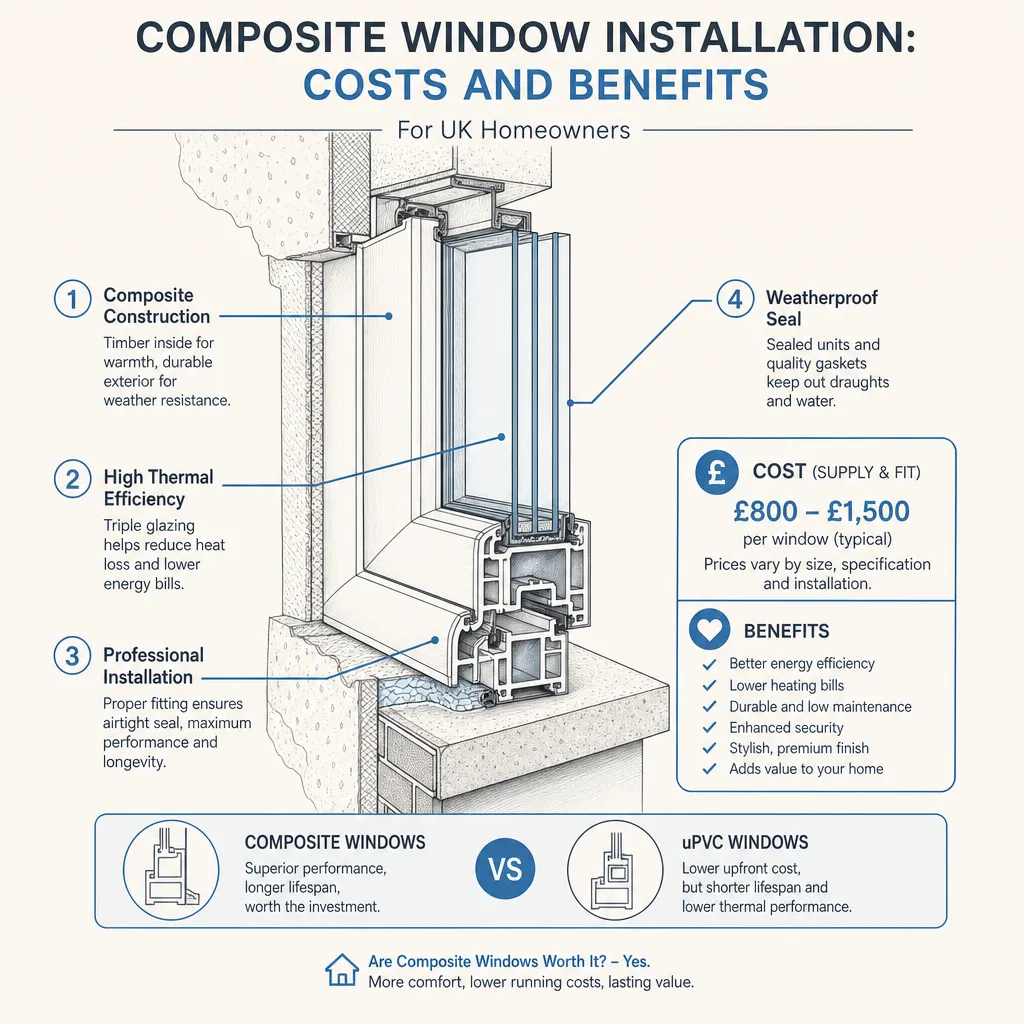 Improvement & Build
Composite Window Installation: Costs and Benefits
Composite windows combine two or more frame materials — typically a timber or aluminium core with a uPVC or aluminium outer casing — for better thermal performance and durability than standard uPVC.
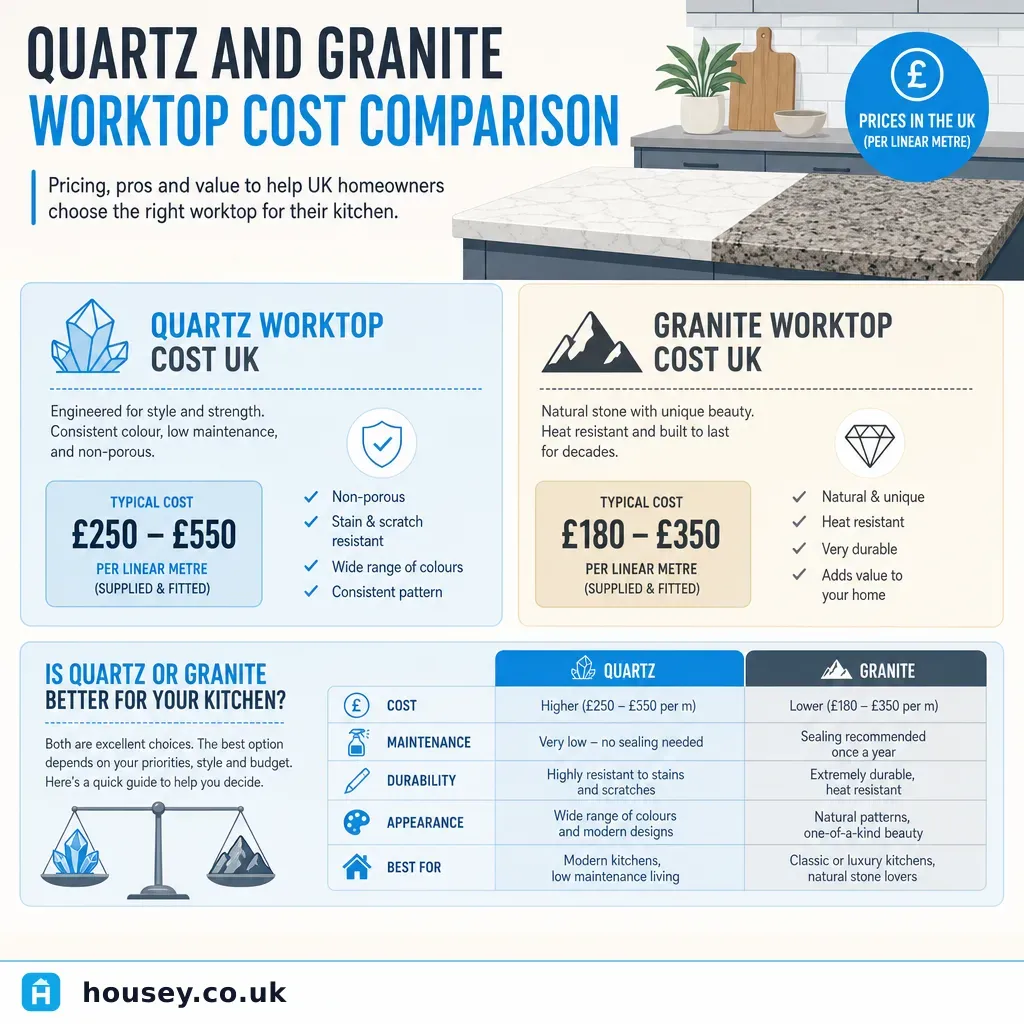 Improvement & Build
Quartz and Granite Worktop Cost Comparison
Quartz worktops in the UK cost £250–£650 per linear metre fitted; granite ranges from £200–£600 for standard slabs.
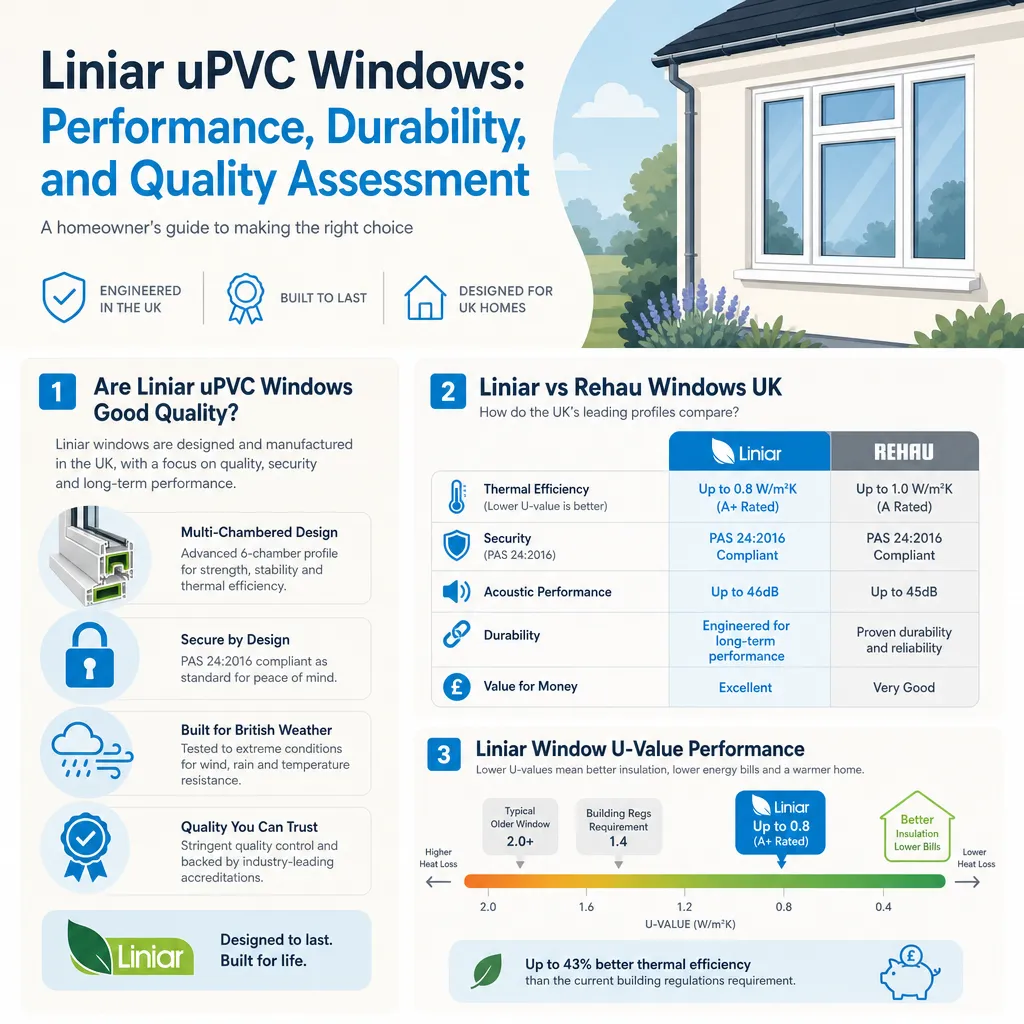 Improvement & Build
Liniar uPVC Windows: Performance, Durability, and Quality Assessment
Liniar uPVC window profiles are manufactured in the UK using multi-chambered, foamed frames.
 Improvement & Build
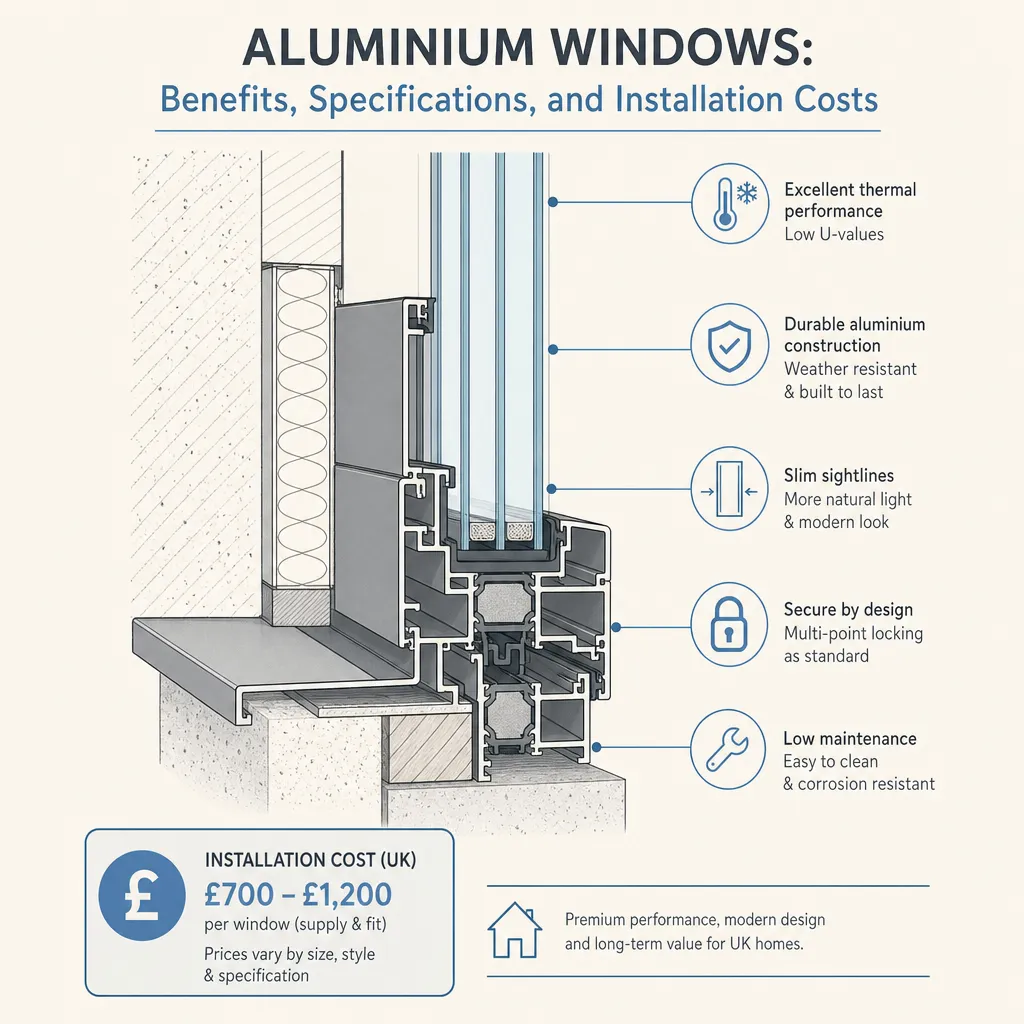
Aluminium Windows: Benefits, Specifications, and Installation Costs
Aluminium windows typically cost £600–£1,800 per window installed in the UK, depending on size and specification.
 Improvement & Build
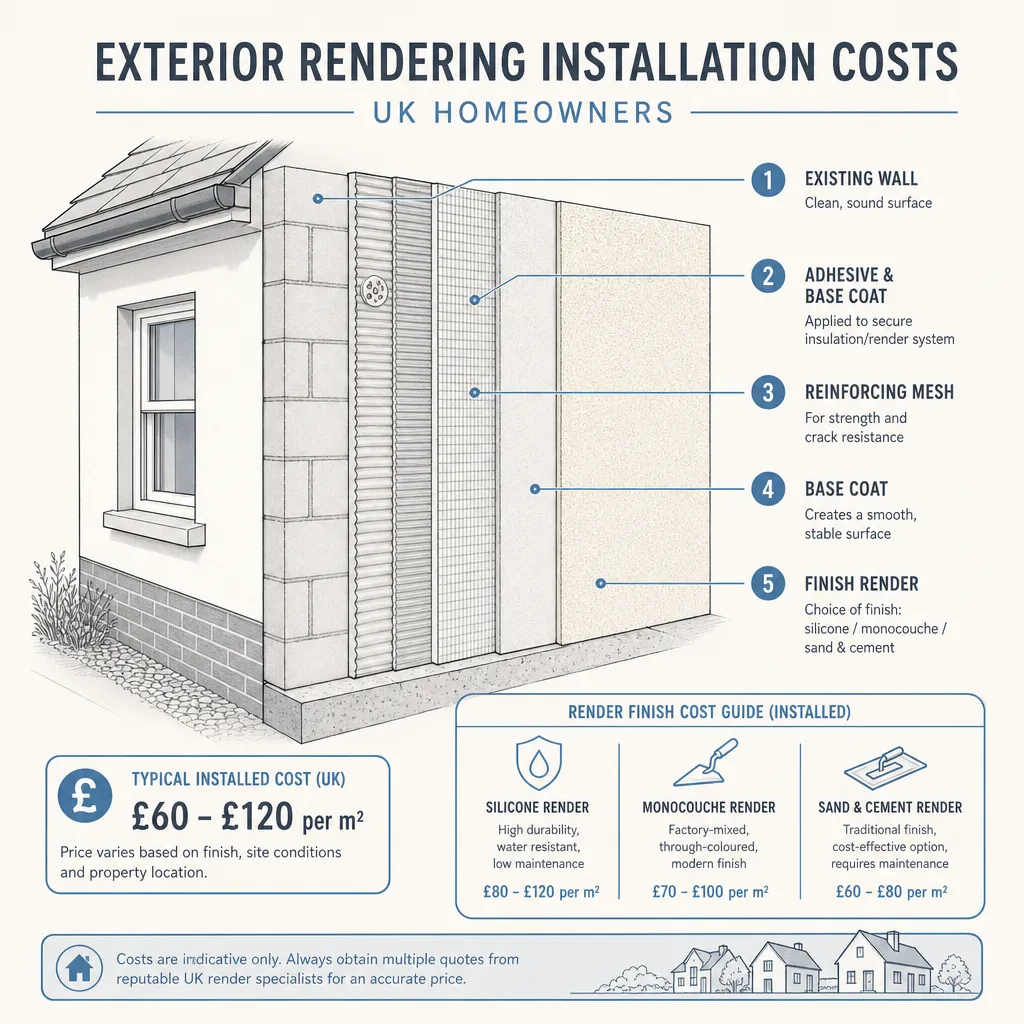
Exterior Rendering Installation Costs
Exterior rendering in the UK typically costs £20–£60 per square metre for standard render systems, or £80–£150 per square metre for External Wall Insulation with a render finish.