Positive Input Ventilation System Installation Costs
By Housey · Last reviewed 7th of May 2026
Positive Input Ventilation System Installation Costs
Persistent condensation on windows, mould in corners, and musty smells are common triggers for homeowners to investigate ventilation solutions — particularly in pre-2000 properties with solid walls, blocked trickle vents, or no mechanical extract. Positive input ventilation (PIV) is often the first system quoted, and knowing typical costs helps you compare proposals and decide whether a professional assessment should come first.
Key points
- A loft-mounted PIV unit with installation typically costs £400–£800 in the UK (indicative costs, last reviewed 2026-05-07; quotes vary by installer and region)
- Wall-mounted through-wall PIV for flats or homes without loft access typically costs £350–£650 installed
- Most units draw 10–25 watts continuously — roughly £20–£55 per year at 2025 UK tariff rates (Ofgem price cap, early 2026)
- BS 5250:2021 is the UK standard for condensation control in buildings; a professional assessment should reference it
- PIV treats symptoms of condensation; a ventilation and condensation assessment identifies root causes such as thermal bridging or missing insulation
How a PIV system works
A PIV unit draws air from the loft or directly from outside, filters it, and gently pressurises the dwelling at a low, continuous rate. This slight positive pressure dilutes moisture-laden indoor air and encourages it to escape through trickle vents, extractor fans, and existing gaps in the building fabric.
In a loft-mounted system, air passes through the warm loft space before entering living areas, which tempers it and reduces the heating penalty in winter. Wall-mounted units (through-wall PIV) bring outdoor air straight into the property and are the standard choice for flats, bungalows, or homes with cold or uninsulated lofts.
PIV is not mechanical ventilation with heat recovery (MVHR). It does not extract air from wet rooms, so it works best alongside functioning kitchen and bathroom extractor fans.
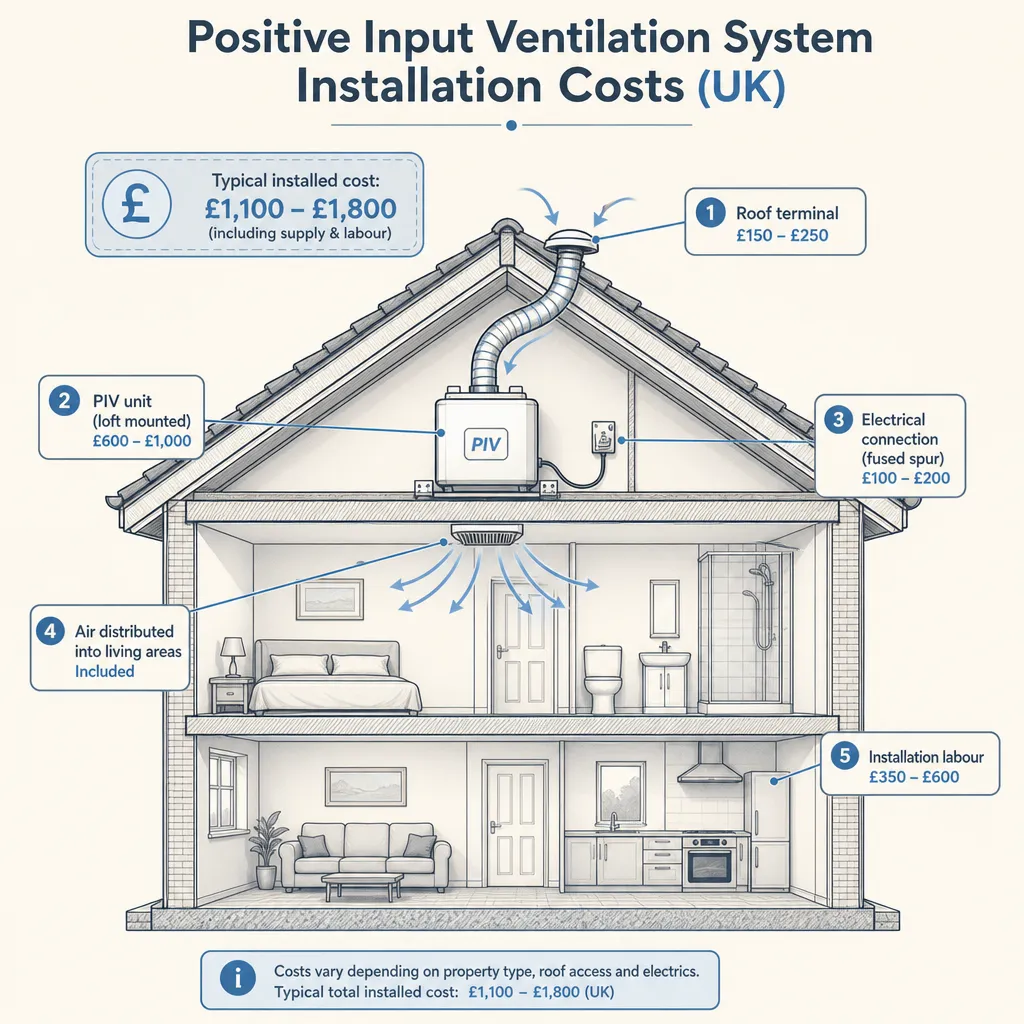
PIV installation cost breakdown
Cost element | Indicative range (UK, 2026) |
|---|---|
PIV unit — loft-mounted, standard | £150–£350 |
PIV unit — wall-mounted / through-wall | £120–£280 |
Installation labour — loft-mounted | £150–£350 |
Installation labour — wall-mounted | £100–£250 |
New electrical spur (if no nearby circuit) | £80–£150 additional |
Diffuser head(s) | Usually included in unit price |
Indicative UK costs, last reviewed 2026-05-07. Prices vary by installer, region, and property. Always request itemised quotes.
For a standard three-bedroom semi-detached house with reasonable loft access, all-in costs typically fall in the £400–£700 range. Properties needing electrical work or a larger-capacity unit should budget up to £1,000.
Loft-mounted vs wall-mounted PIV: comparison
Feature | Loft-mounted PIV | Wall-mounted (through-wall) PIV |
|---|---|---|
Best for | Houses with accessible, insulated lofts | Flats, bungalows, cold or inaccessible lofts |
Air source | Loft air — tempered by warmth | Direct outdoor air |
Installation disruption | Low — unit in loft, one ceiling diffuser | Moderate — core-drilled external wall |
Heating impact in winter | Lower | Slightly higher |
Typical unit cost | £150–£350 | £120–£280 |
Planning considerations | Usually none | Check conservation area or listed status |
If your loft is poorly insulated or very cold, a loft-mounted unit may deliver insufficiently tempered air. An installer should assess loft conditions before recommending a type.
What affects the cost?
- Property size: Larger homes may need a higher-capacity unit or a second diffuser head, adding £50–£150
- Electrical work: No nearby socket or spur adds £80–£150 to the total
- Location: London and South East labour rates are generally 10–20% above the national average
- Installer accreditation: BPEC, City & Guilds, or manufacturer-approved status can affect price and quality assurance
- Assessments: A ventilation and condensation assessment is a separate cost but often recommended before installation
Important limitations
This article provides general cost information only. PIV is not appropriate in every situation:
- PIV will not resolve penetrating damp, rising damp, or roof leaks — these require separate diagnosis and remediation
- In airtight or recently insulated homes, MVHR may be more appropriate; PAS 2035:2023 applies to properties undergoing whole-house retrofit
- Wall-mounted units can worsen cold bridging at the installation point in poorly insulated homes
- Landlords should note obligations under the Housing Health and Safety Rating System (HHSRS) regarding category 1 damp and mould hazards
A qualified professional should assess your property before installation if root causes are unclear.
When to get professional help
Consider a professional ventilation and condensation assessment before installing PIV if:
- Mould recurs despite cleaning and treatment
- Your home is solid-wall, listed, or has recently been heavily insulated
- Condensation appears on walls rather than just windows — suggesting thermal bridging
- You are planning a wider retrofit co-ordinated under PAS 2035:2023
- You are a landlord with HHSRS obligations
What to ask a qualified professional
Before accepting a PIV installation quote:
- Is PIV the right solution for the specific cause of condensation in my property?
- Have you checked loft insulation levels and confirmed a loft-mounted unit is appropriate?
- Is existing background ventilation — trickle vents and extract fans — adequate?
- What unit do you recommend, and what warranty does it carry?
- Will this installation require any building regulations notification?
- Is the workmanship covered by a guarantee?
- Can you carry out a post-installation check to confirm the system is performing correctly?
How Housey can help
If you are unsure whether PIV is the right solution, a ventilation and condensation assessment can identify root causes and recommend the most appropriate ventilation strategy — whether PIV, background ventilation improvements, MVHR, or a combination. Housey can connect you with qualified assessors in your area.
Frequently asked questions
Does PIV installation need planning permission?
In most cases, no. Loft-mounted PIV units involve no external changes and are unlikely to need permission. A wall-mounted through-wall unit is generally permitted development. However, if your property is listed or in a conservation area, check with your local planning authority before proceeding.
How long does PIV installation take?
A loft-mounted installation typically takes two to four hours. Wall-mounted installations may take slightly longer, particularly if a new electrical spur is needed. Most jobs are completed in a single visit by one or two engineers.
Will PIV significantly increase my energy bills?
Running costs are typically £20–£55 per year depending on unit wattage, which is modest. Some homeowners find loft-tempered air slightly reduces heating demand in winter, partially offsetting the electricity cost.
Is PIV funded under any government scheme?
PIV is not currently a funded measure under ECO4 or the Great British Insulation Scheme, which focus on fabric-first insulation. If recommended as part of a PAS 2035:2023 whole-house retrofit, it may be considered alongside funded measures. A TrustMark-registered retrofit coordinator can advise.
Can I install a PIV unit myself?
The mechanical installation is within the capability of a competent DIYer, but the electrical connection should be carried out by a qualified electrician. More importantly, fitting a unit without first diagnosing the cause of condensation risks addressing the wrong problem entirely.
Sources and further reading
- BS 5250:2021 — Code of practice for control of condensation in buildings — BSI
- Ventilation in new and existing homes — GOV.UK
- PAS 2035:2023 — Retrofitting dwellings for improved energy efficiency — BSI / TrustMark
- Housing Health and Safety Rating System (HHSRS) operating guidance — GOV.UK
- Ofgem energy price cap — Ofgem
Useful next reads
 Energy & Retrofit
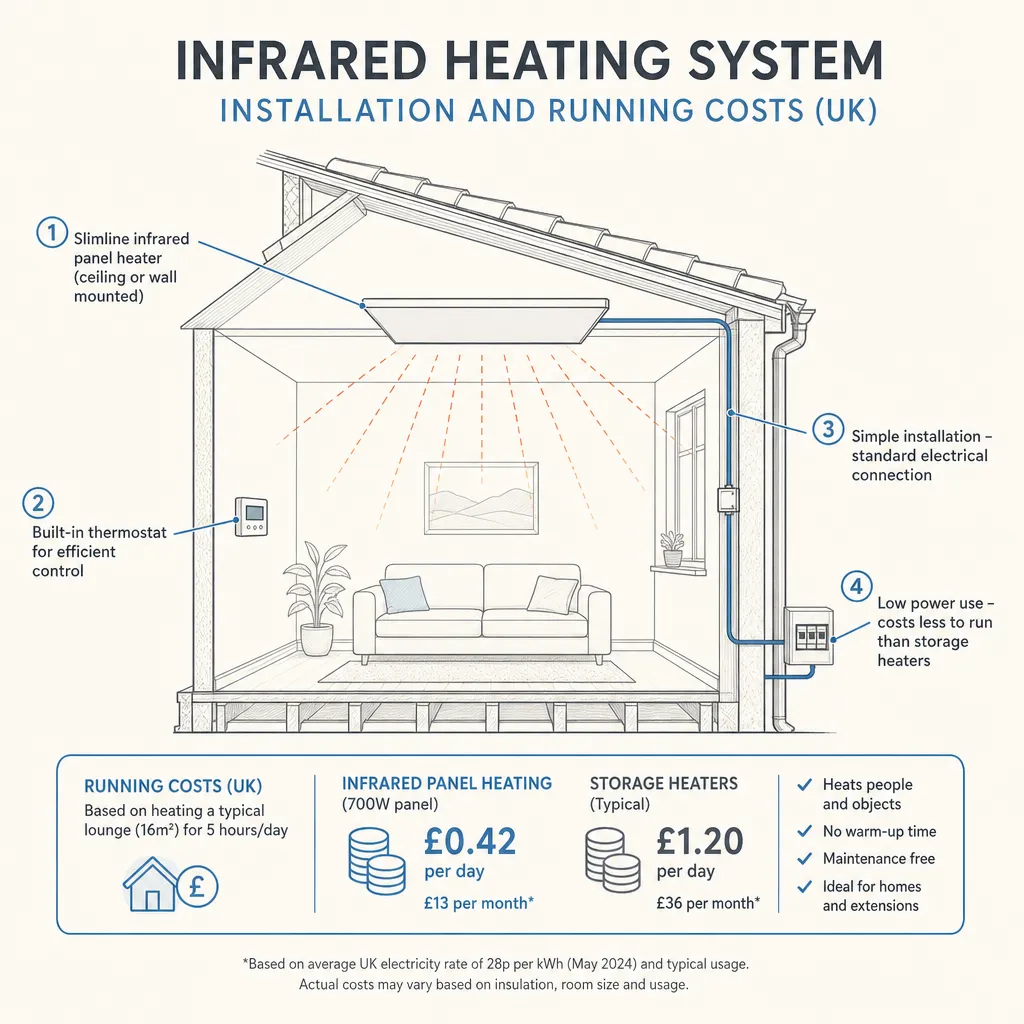
Infrared Heating System Installation and Running Costs
Infrared heating panels supply heat through radiant energy rather than warming air, making them efficient in well-insulated spaces.
 Energy & Retrofit
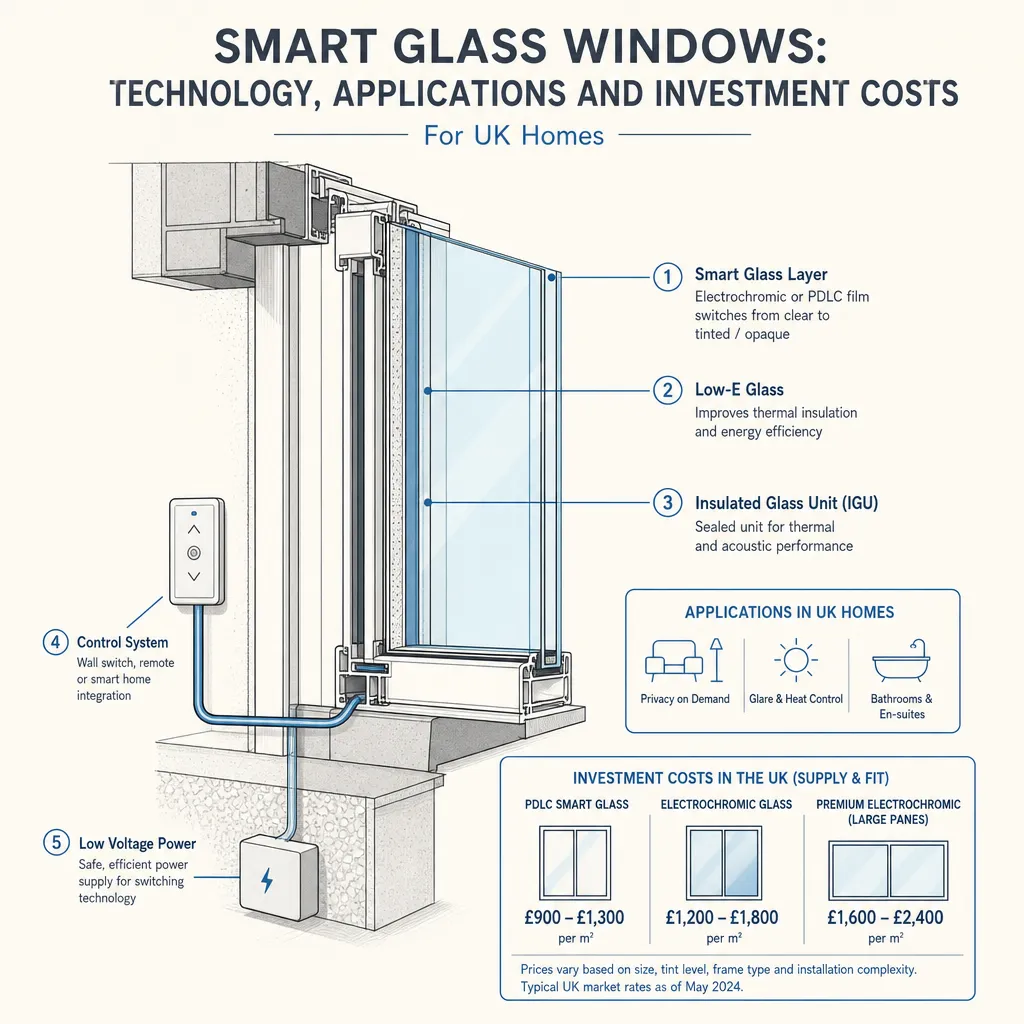
Smart Glass Windows: Technology, Applications and Investment Costs
Smart glass windows switch between transparent, tinted, or opaque states using electrical signals or heat.
 Energy & Retrofit
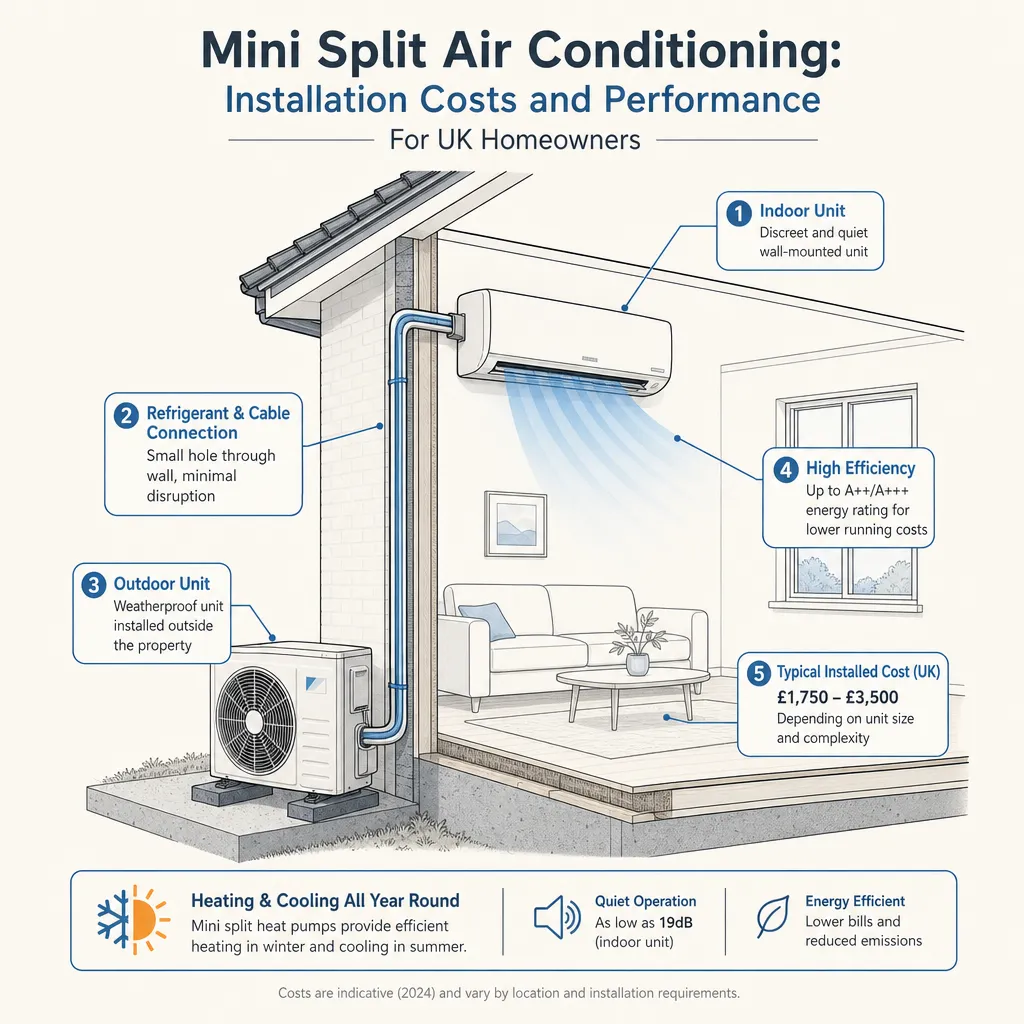
Mini Split Air Conditioning: Installation Costs and Performance
A mini-split (ductless) air conditioning unit costs roughly £1,500–£4,000 installed for a single room in the UK.
 Energy & Retrofit
Optimising Heating Systems for Energy Efficiency
Optimising a UK heating system usually involves improving controls such as smart thermostats and thermostatic radiator valves, ensuring the boiler or heat pump is correctly sized, and upgrading radiators or pipework where needed.
 Energy & Retrofit
Solar Panel Grants and Funding: Maximising Clean Energy Investment
Several UK solar funding schemes are currently open: the Smart Export Guarantee pays homeowners for surplus electricity exported to the grid, ECO4 can fund free or subsidised panels for eligible low-income households, and 0% VAT on installation applies until at least March 2027.