Innovation in Roofing: How Technology Is Transforming the Industry
By Housey · Last reviewed 31st of May 2026
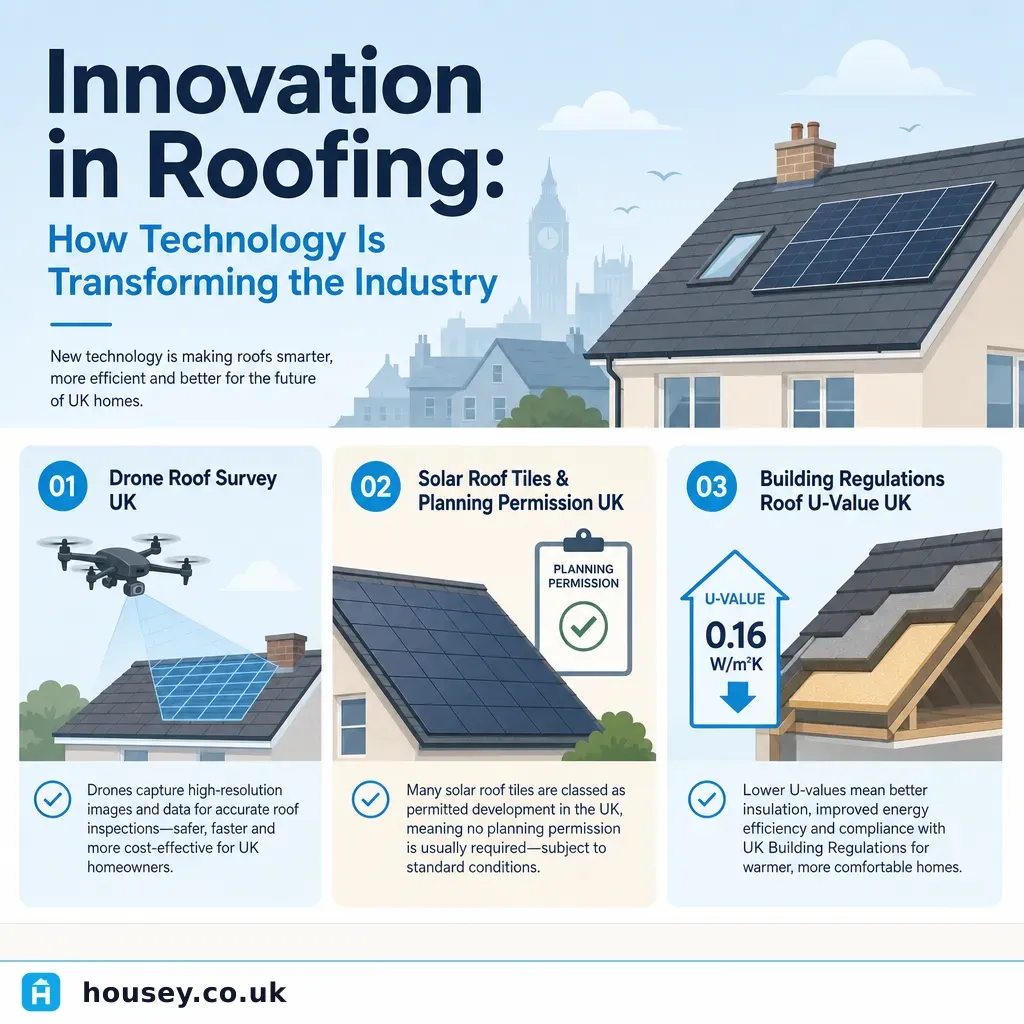
Innovation in Roofing: How Technology Is Transforming the Industry
Roofing is one of the least visible yet most consequential elements of any UK property — the point where the building envelope meets the weather, where poor decisions become expensive water ingress, and where outdated materials quietly accumulate heat loss. Over the past decade, the roofing sector has changed more rapidly than most homeowners realise, driven by tighter Building Regulations thermal standards, the rise of solar integration, and digital tools that make condition assessment and specification faster and more accurate than before.
Key points
- Building Regulations Approved Document L (2021 edition) sets minimum U-value requirements for new and replacement roofs: 0.16 W/m²K for new pitched roofs and 0.18 W/m²K for flat roofs, directly affecting product selection for any notifiable roofing work.
- Drone surveys are now widely used by UK roofing contractors and RICS surveyors to inspect ridge tiles, chimney stacks, flashings, and membrane conditions without scaffold — reducing survey cost and access risk.
- Solar-integrated roof tiles (Building-Integrated Photovoltaics, BIPV) are distinct from bolt-on solar panels and may be treated differently by local planning authorities, particularly in conservation areas and on listed buildings.
- The National Federation of Roofing Contractors (NFRC) maintains a contractor register; member firms must hold industry-standard insurance and comply with BS 5534 (slating and tiling code of practice) and BS 8747 (reinforced bitumen membranes).
- Green roofs and brown (biodiverse) roofs are increasingly specified in UK planning conditions under the biodiversity net gain requirements introduced by the Environment Act 2021.
How technology is changing what is possible in UK roofing
The shift in roofing technology is happening on several fronts simultaneously. Materials science has produced membranes, insulation boards, and tile systems that perform significantly better than their predecessors. Digital tools have improved how roofs are surveyed, specified, and project-managed. Energy policy has pushed solar integration and improved thermal performance into the mainstream for new builds and increasingly for retrofit.
For homeowners, this means more options — but also more complexity and more need to ask informed questions before accepting a quote. The roofing sector still includes contractors using older materials and methods, and some of these remain entirely appropriate for straightforward repairs. For any significant reroofing, flat roof renewal, or new roof covering, however, the gap between contractors who are current with modern systems and those who are not is meaningful.
Traditional versus modern roofing: what has changed
Aspect | Traditional approach | Modern or technology-enhanced approach | Practical consideration for homeowners |
|---|---|---|---|
Roof condition survey | Manual inspection via ladder or scaffold | Drone survey with high-resolution and thermal imaging | Drone survey is faster and lower cost for initial assessment; scaffold still needed for repair work |
Flat roof waterproofing | Felt systems (BS 8747 Class 3E or 5U) | Cold-applied liquid coatings, TPO or EPDM self-adhesive single-ply membranes | Modern single-ply membranes commonly carry 20–25-year manufacturer guarantees |
Pitched roof insulation | Mineral wool between rafters (cold roof) | PIR or PUR rigid insulation boards (warm or hybrid roof) | Rigid boards achieve lower U-values in shallower build-up — important for Part L compliance and loft conversions |
Tiles and slates | Natural clay, slate, plain concrete | Recycled composite tiles, concrete interlocking, BIPV solar tiles | Composite tiles are lighter and dimensionally consistent; BIPV combines weatherproofing with energy generation |
Project documentation | Paper specifications and verbal handoffs | Digital quote platforms, photographic condition reports | Digital records improve dispute resolution and are useful for future surveys or sales |
Drone surveys: what they can and cannot tell you
Drone roof surveys have become a practical option for most UK homeowners and are increasingly offered by NFRC-registered contractors alongside traditional scaffold-based inspection. A camera drone can capture the condition of ridge tiles, flashing junctions, chimney stacks, valley gutters, and visible membrane areas — safely and at lower cost than mobilising full scaffold for a preliminary assessment.
What drone surveys cannot do: they cannot assess the roof structure below the covering, detect damp within the ceiling below, or replace a hands-on inspection for detailed repair specification. Thermal imaging drones add another layer by identifying heat loss and moisture ingress from the thermal signature of the roof surface — particularly useful for flat roofs and for locating wet insulation beneath the covering.
If a contractor is quoting for reroofing or significant repair work, a drone or thermal survey at the assessment stage is a reasonable request and increasingly a sign of a well-organised, technically current firm.
Solar-integrated roofing and planning implications
Building-Integrated Photovoltaics (BIPV) — most commonly seen as solar roof tiles or solar slates — differ from conventional bolt-on panels in that the solar element forms part of the roof covering itself. This has implications for planning, installation, and ongoing maintenance.
Under the Town and Country Planning (General Permitted Development) Order 2015, solar panels on a dwelling are generally permitted development provided they do not protrude more than 200mm from the roof slope and the property is not in a conservation area or World Heritage Site. BIPV tiles may be assessed differently depending on whether they materially alter the appearance of the building, and some local planning authorities apply specific requirements. Always check with your local planning authority before installing on a listed building, in a conservation area, or in an Area of Outstanding Natural Beauty.
From a Building Regulations perspective, any roofing work that alters the thermal envelope requires compliance with Approved Document L. MCS-certified installers are required for solar products to be eligible for the Smart Export Guarantee (SEG), which pays homeowners for excess electricity exported to the grid.
Thermal performance and Building Regulations Part L
The 2021 edition of Approved Document L introduced tighter U-value targets that apply both to new dwellings and to notifiable works on existing buildings. For reroofing — which is notifiable under the Building Regulations in most circumstances — the requirement to upgrade insulation where technically feasible and cost-effective now applies in most cases.
PIR (polyisocyanurate) and PUR (polyurethane) rigid insulation boards can achieve the required U-values in thinner sections than mineral wool, which is important where rafter depth is limited or where the existing roof build-up cannot be substantially altered. The choice of insulation system also needs to account for condensation risk and ventilation: in cold roof designs, inadequate ventilation above the insulation can cause interstitial condensation and structural damage over time. A qualified roofer or building control officer can advise on the appropriate system for your roof type.
What to ask a roofer about modern technology and specification
- What U-value will this roof system achieve, and does it meet Building Regulations Part L for this type of work?
- Are you an NFRC member, and does your public liability insurance cover the full scope of this project?
- What product guarantees and workmanship warranties will you provide in writing?
- Will you carry out a drone or thermal survey before finalising the specification?
- If I am interested in solar-integrated tiles, can you confirm the planning status for my property type and location?
- What maintenance does this roof system require over the next 10–20 years?
- How will you manage weather risk during the installation period, and what is your bad-weather protocol?
- Is VAT included in your quote?
When to get professional help
Roofing work involves working at height and carries significant safety risk. Never attempt roof repairs above 2m yourself — appoint a qualified roofing contractor with documented risk assessments and appropriate insurance.
Seek professional help urgently if:
- You can see daylight through the roof from the loft space.
- There are signs of water ingress at ceiling level, particularly around chimney stacks, valleys, or skylights.
- Ridge tiles or coping stones are loose or have fallen — these are a safety hazard as well as a weatherproofing failure.
- A RICS Level 2 or Level 3 survey has flagged the roof as requiring specialist attention.
- A flat roof covering is more than 15–20 years old and has not been inspected recently.
How Housey can help
Housey connects homeowners with vetted, insured roofers across the UK who can carry out condition surveys, specify modern membrane and tile systems, and advise on solar integration options. Use Housey to compare quotes and check contractor credentials before committing to any significant roofing project.
Frequently asked questions
Is a drone roof survey as reliable as a manual inspection?
A drone survey provides an excellent preliminary visual assessment — faster, safer, and cheaper than scaffold for an initial look. It cannot, however, assess the roof structure below the covering, test materials for moisture saturation, or provide the hands-on specification detail needed for a full reroofing project. Treat drone surveys as a first-stage diagnostic that indicates whether scaffold access and a detailed inspection are warranted.
Do solar roof tiles require planning permission in the UK?
In most cases, solar roof tiles on a standard dwelling fall within permitted development rights under the Town and Country Planning (General Permitted Development) Order 2015, provided they meet specified conditions including the 200mm protrusion limit. Permitted development rights do not apply to listed buildings, properties in conservation areas, or World Heritage Sites. Always confirm with your local planning authority before installation in any restricted area.
What is the Building Regulations U-value requirement for a new roof?
Under Approved Document L (2021 edition), new pitched roofs should achieve a U-value of no more than 0.16 W/m²K, and new flat roofs no more than 0.18 W/m²K. For reroofing work that is notifiable, improvement toward these targets is required where technically and economically feasible. A qualified roofer or building control officer can confirm the specific requirements for your project type.
Sources and further reading
- NFRC contractor register and roofing standards — National Federation of Roofing Contractors
- Approved Document L: Conservation of Fuel and Power (2021) — GOV.UK
- Smart Export Guarantee and MCS certification — Energy Saving Trust
- Town and Country Planning (General Permitted Development) Order 2015 — legislation.gov.uk
- Environment Act 2021: biodiversity net gain — legislation.gov.uk
Useful next reads
 Improvement & Build
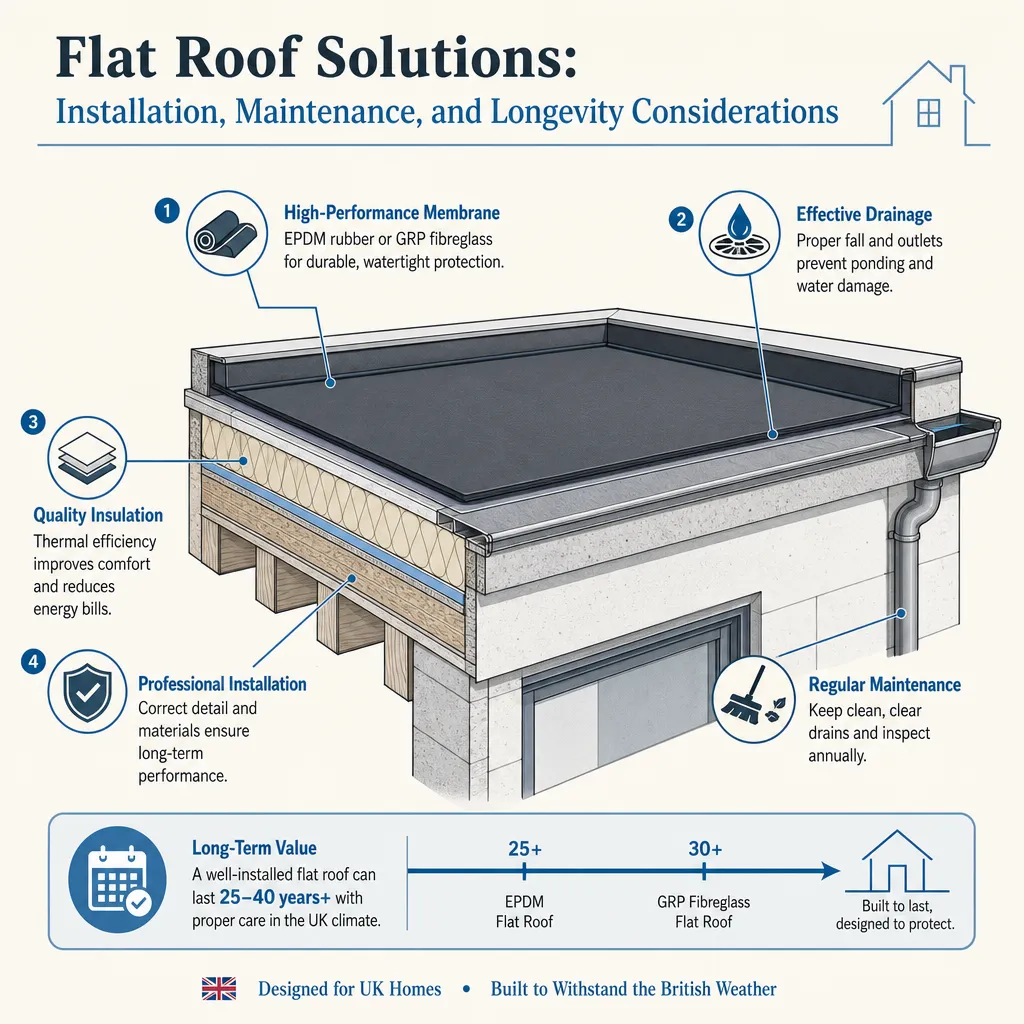
Flat Roof Solutions: Installation, Maintenance, and Longevity Considerations
Flat roofs use several waterproofing systems — EPDM rubber, GRP fibreglass, liquid-applied coatings, modified bitumen felt, lead, and zinc — each with different lifespans and installation requirements.
 Improvement & Build
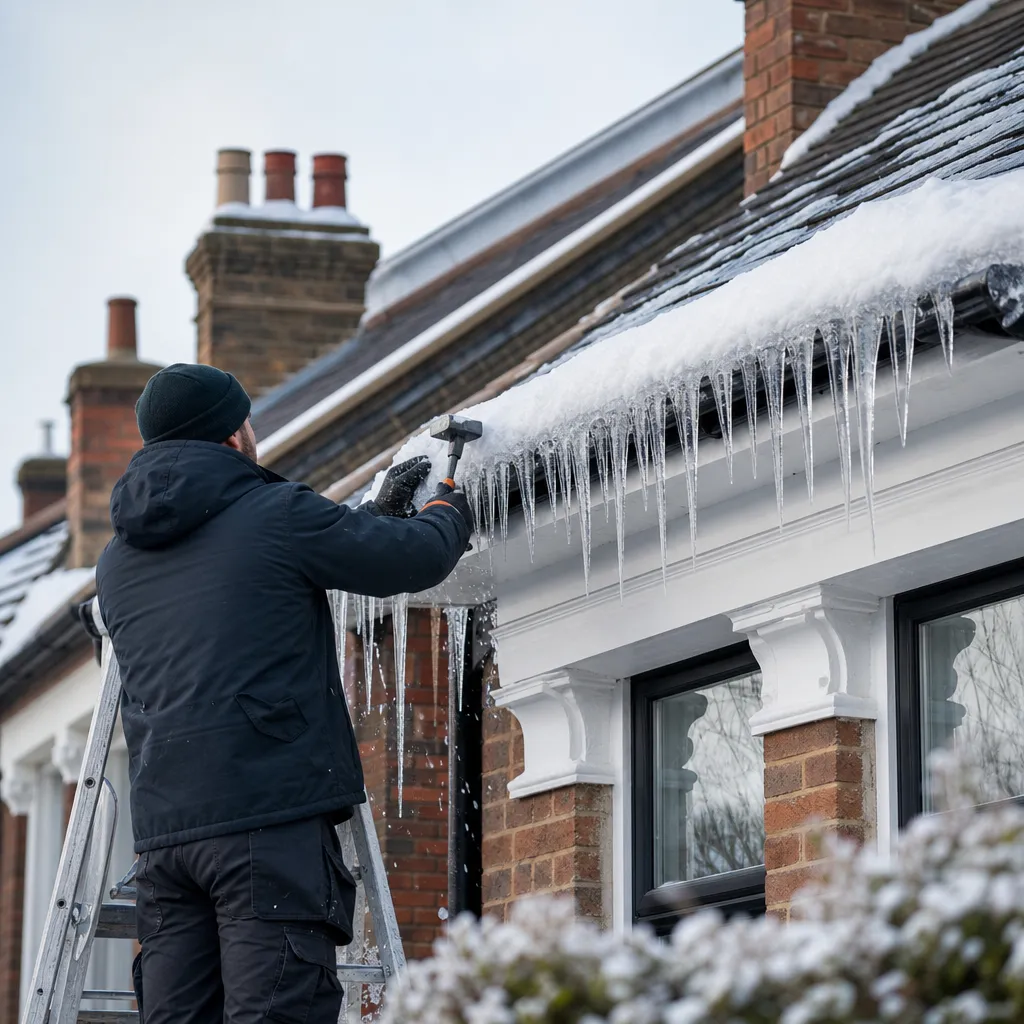
Ice Dam Removal and Roof Protection Services
Ice dams form when heat escaping through a poorly insulated roof melts snow, which refreezes at the colder eaves.
 Improvement & Build
How to Find and Vet Professional Roofing Contractors
Professional roofing contractors should carry public liability insurance of at least £2m, provide a written workmanship guarantee, and hold accreditation from a recognised body such as the NFRC or the Competent Roofer scheme.
 Improvement & Build
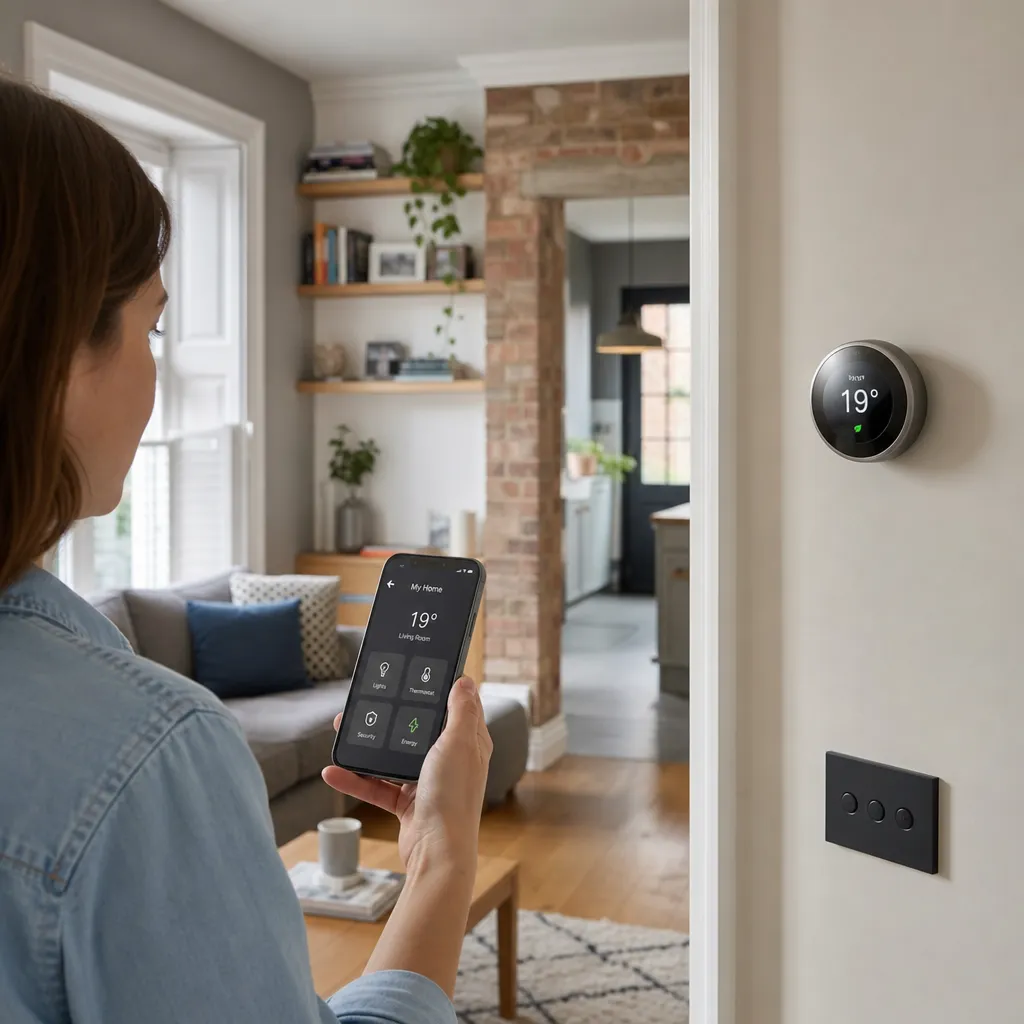
Smart Home Technology and Mobile Device Integration
Most smart home devices in the UK are controlled via dedicated smartphone apps or platforms such as Amazon Alexa, Google Home, or Apple Home.
 Improvement & Build
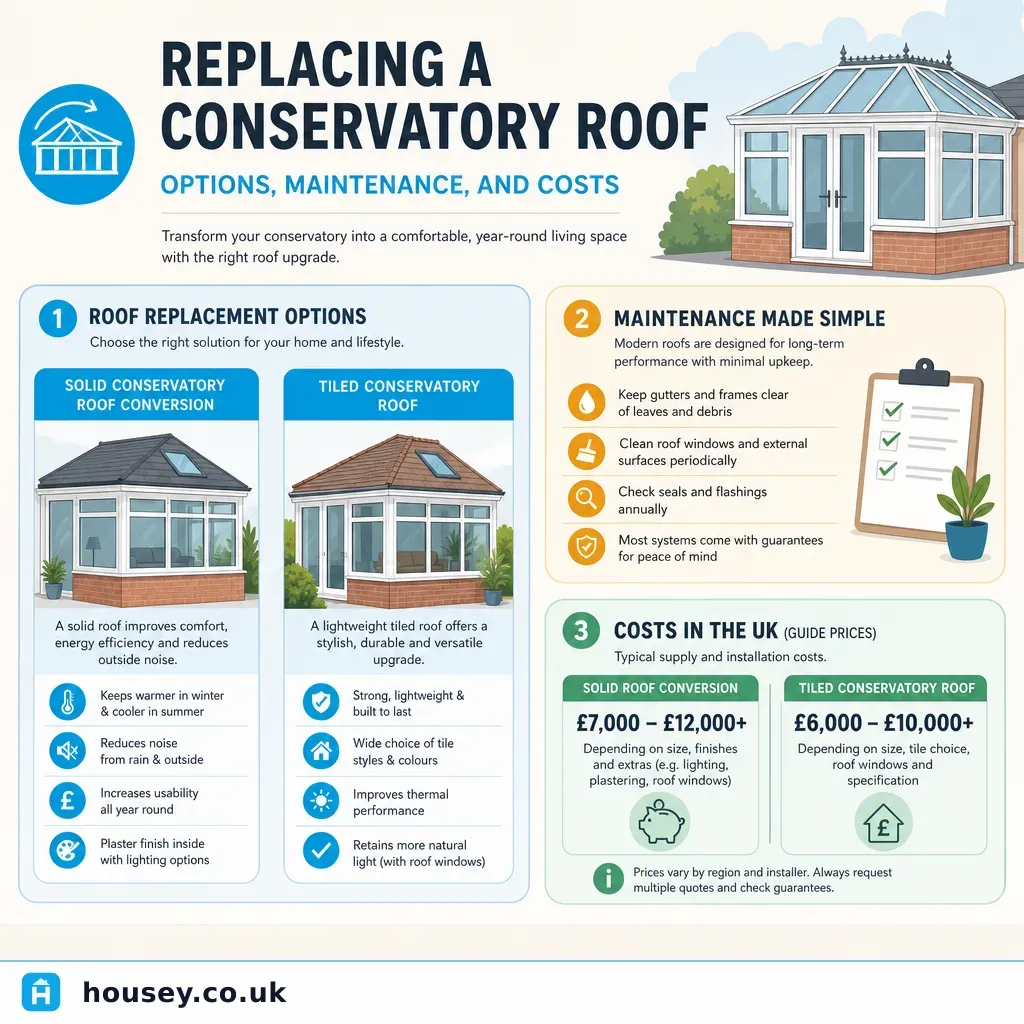
Replacing a Conservatory Roof: Options, Maintenance, and Costs
Conservatory roofs can be replaced with polycarbonate, glass, or solid tiled systems.