Installation Costs for Glass Shelving and Display Units
By Housey · Last reviewed 6th of May 2026
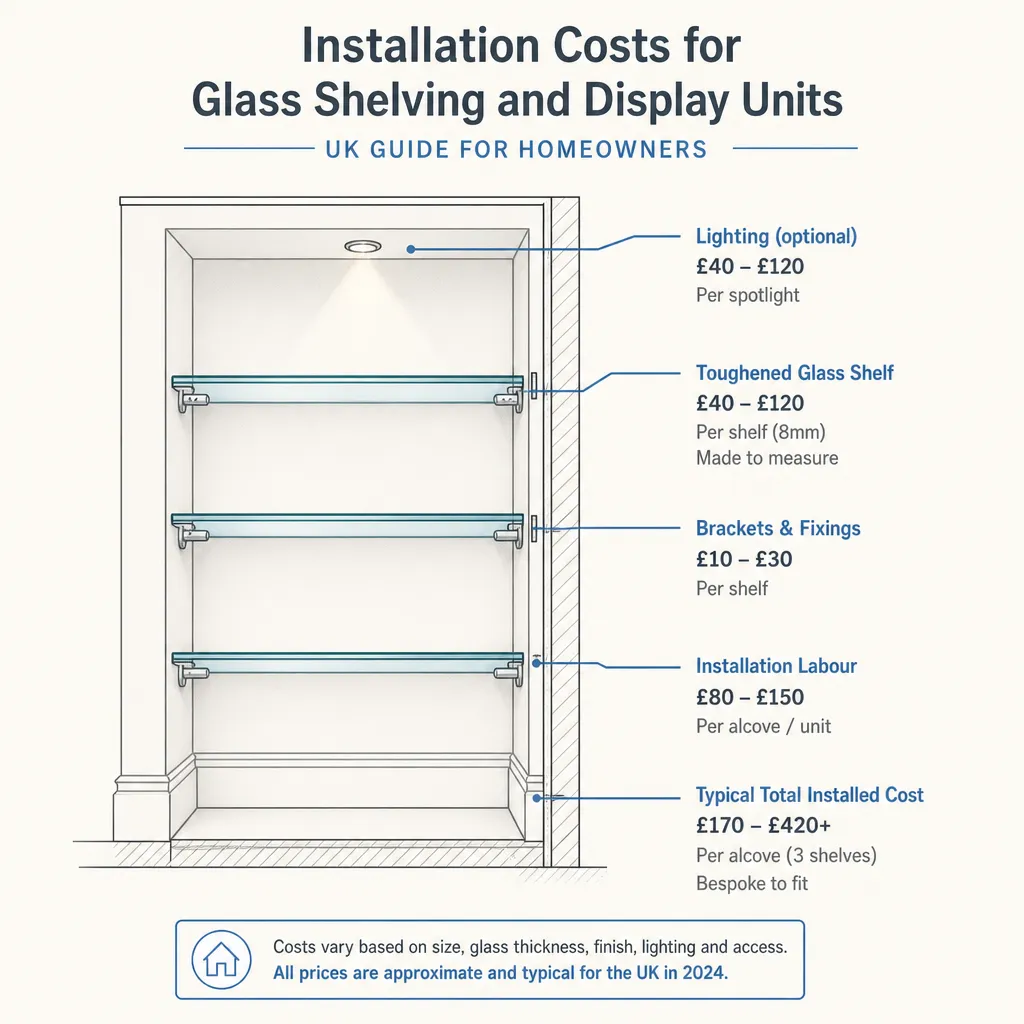
Installation Costs for Glass Shelving and Display Units
Fitting glass shelves or a display unit is one of the more popular home decorating projects, yet costs vary considerably depending on glass specification, shelf dimensions, fixing type, and whether the job involves a simple bracket-mounted shelf or a fully fitted alcove unit. Homeowners most often encounter this decision when redecorating a living room, bathroom, or hallway — and the price spread is wide enough to make proper budgeting worthwhile before requesting quotes.
Key points
- Toughened (tempered) safety glass, conforming to BS EN 12150, is the appropriate standard for load-bearing domestic shelving.
- A single glass shelf professionally fitted with brackets typically costs £80–£200 all-in, including materials and labour (indicative UK costs, last reviewed 2026-05-06).
- Bespoke alcove display units with glass shelves typically range from £300 to £1,200 or more, depending on size, glass type, and whether LED lighting is included.
- Installers — usually a carpenter or handyperson — charge £30–£60 per hour; glass, brackets, and fixings are generally costed separately.
- Listed buildings may require listed building consent before internal shelving is fitted if the works affect the building's character.
Glass types and what they cost
The glass specification is often the biggest single cost variable. Toughened glass must be cut to size before the toughening process, so bespoke dimensions add both cost and lead time compared with standard off-the-shelf sizes.
Glass type | Typical cost per shelf (uncut) | Best for | Notes |
|---|---|---|---|
Toughened (tempered) | £20–£80 | Most domestic shelving | Minimum appropriate standard; shatters into blunt pieces if broken |
Laminated | £35–£120 | Child-friendly areas or high-traffic rooms | Holds together on breakage; slightly heavier |
Low-iron (ultra-clear) | £30–£100 | Display units and artwork | Reduces the greenish tint of standard glass |
Frosted / sandblasted | £25–£90 | Bathrooms and privacy shelving | Hides dust and fingerprints |
Coloured or tinted | £40–£150+ | Feature or decorative pieces | Usually custom-cut to order |
Indicative UK prices for a standard 600 mm × 200 mm shelf, last reviewed 2026-05-06. Prices vary by supplier and region.
Standard toughened glass is the default for most domestic shelving. Laminated glass is the better choice where breakage risk is higher — for instance near children or in a busy utility room.
Labour rates and installation time
Most glass shelf installations are carried out by a carpenter, handyperson, or glazing specialist. Typical UK hourly rates in 2026:
- Handyperson: £30–£50 per hour
- Carpenter: £35–£60 per hour
- Glazing specialist: £40–£70 per hour (usually for larger panes or bespoke units)
A single shelf with two brackets on a solid masonry wall takes approximately one to two hours, including drilling, plugging, levelling, and securing the glass. Hollow partition or dot-and-dab plasterboard walls may need specialist cavity anchors, adding time and a small materials cost. For three to four shelves in an alcove, allow three to five hours of labour.
Alcove display units: what to budget
Fitted alcove units with glass shelves are a popular feature in living rooms and dining rooms. The main cost variables are:
- Alcove dimensions — width and height determine glass area and the number of shelves.
- Glass thickness — 8 mm or 10 mm is typical for domestic display shelving.
- Bracket system — concealed channel brackets look cleaner than visible L-brackets but cost more to supply and fit.
- Integrated lighting — LED strip or puck lights add £50–£200 to the project.
Alcove unit type | Approximate total cost |
|---|---|
Off-the-shelf unit with glass shelves, self-fitted | £80–£200 |
Off-the-shelf unit, professionally fitted | £180–£450 |
Bespoke glass shelves on concealed channel brackets, no lighting | £300–£700 |
Bespoke unit with LED lighting and concealed brackets | £600–£1,200+ |
Indicative UK costs including materials and labour, last reviewed 2026-05-06. Obtain at least two or three quotes for bespoke work.
What to ask before accepting a quote
- Is toughened or laminated glass specified, and does it conform to BS EN 12150?
- Are brackets, fixings, and wall plugs included in the price, or costed separately?
- Who supplies the glass — you or the installer — and is it pre-cut or cut on site?
- What lead time applies if the glass needs to be ordered to size?
- Is the quote fixed price, or may it change if the wall type differs from expectations?
- Is VAT included?
- What fixing method suits your wall type — solid masonry, timber stud, or plasterboard?
Homeowner checklist before installation
When to get professional help
Single-shelf installations are generally within the scope of a competent handyperson. Consider engaging a specialist for:
- Large glass panes — typically over 1 m in width or weighing more than 10 kg.
- Shelving at height, particularly any work above 2 m where safe access equipment is needed.
- Installations near electrical sockets, circuits, or known pipework runs.
- Bespoke display units involving heavy or structurally demanding glazing.
- Any property subject to listed building consent requirements, where unauthorised works carry a legal risk.
A glazing specialist or registered joiner is usually the more appropriate choice for complex or high-value installations.
How Housey can help
Housey helps UK homeowners find and compare quotes from local carpenters, handypersons, and glazing specialists. If you need glass shelving fitted — from a single bathroom shelf to a full alcove display unit — you can describe your project and receive quotes from relevant tradespeople in your area.
Frequently asked questions
Do glass shelves need to be toughened?
For most domestic settings, toughened (tempered) glass conforming to BS EN 12150 is the appropriate standard. It is significantly stronger than ordinary annealed glass and breaks into blunt fragments rather than sharp shards. In higher-risk locations — near baths, showers, or at low level in rooms used by young children — toughened or laminated glass is strongly advisable. Confirm the glass specification with your installer before work begins.
How much weight can a glass shelf hold?
Load capacity depends on glass thickness, shelf span, and the fixing method. As a general guide, 6 mm toughened glass over a 600 mm span can typically support 30–50 kg; 10 mm glass over the same span may support 60–80 kg or more. Longer spans reduce load capacity significantly. Your glazier or installer should advise on the appropriate thickness for your intended load and shelf dimensions.
Can I install glass shelving myself?
Straightforward shelving with pre-cut toughened glass and standard brackets is achievable for a competent DIYer with the right tools. Note that toughened glass cannot be cut on site — it must be cut before the toughening process, so bespoke sizes need ordering in advance. If the wall type is uncertain or the installation is at height, professional fitting reduces the risk of cracked glass, loose fixings, or injury.
What thickness of glass is right for shelves?
For spans up to 600 mm, 6 mm or 8 mm toughened glass is typical for domestic shelving. For wider spans, heavier loads, or a more substantial appearance, 10 mm is common. Bathroom shelves for toiletries are often 6 mm; living room display shelves for books or ceramics suit 8–10 mm. Confirm the specification with your glass supplier, particularly if the intended load is substantial.
Does fitting glass shelves need planning permission?
For most domestic properties, internal shelving does not require planning permission. If you live in a listed building, listed building consent may be needed for internal alterations that affect the building's character or fabric. If in doubt, check with your local planning authority before proceeding — rules vary between local authorities and individual property designations.
Sources and further reading
- BS EN 12150 — Toughened soda lime silicate safety glass — BSI (British Standards Institution)
- GOV.UK guidance on listed buildings — Planning Portal / GOV.UK
- Health and Safety Executive: Safe use of ladders and stepladders — HSE
Useful next reads
 General property advice
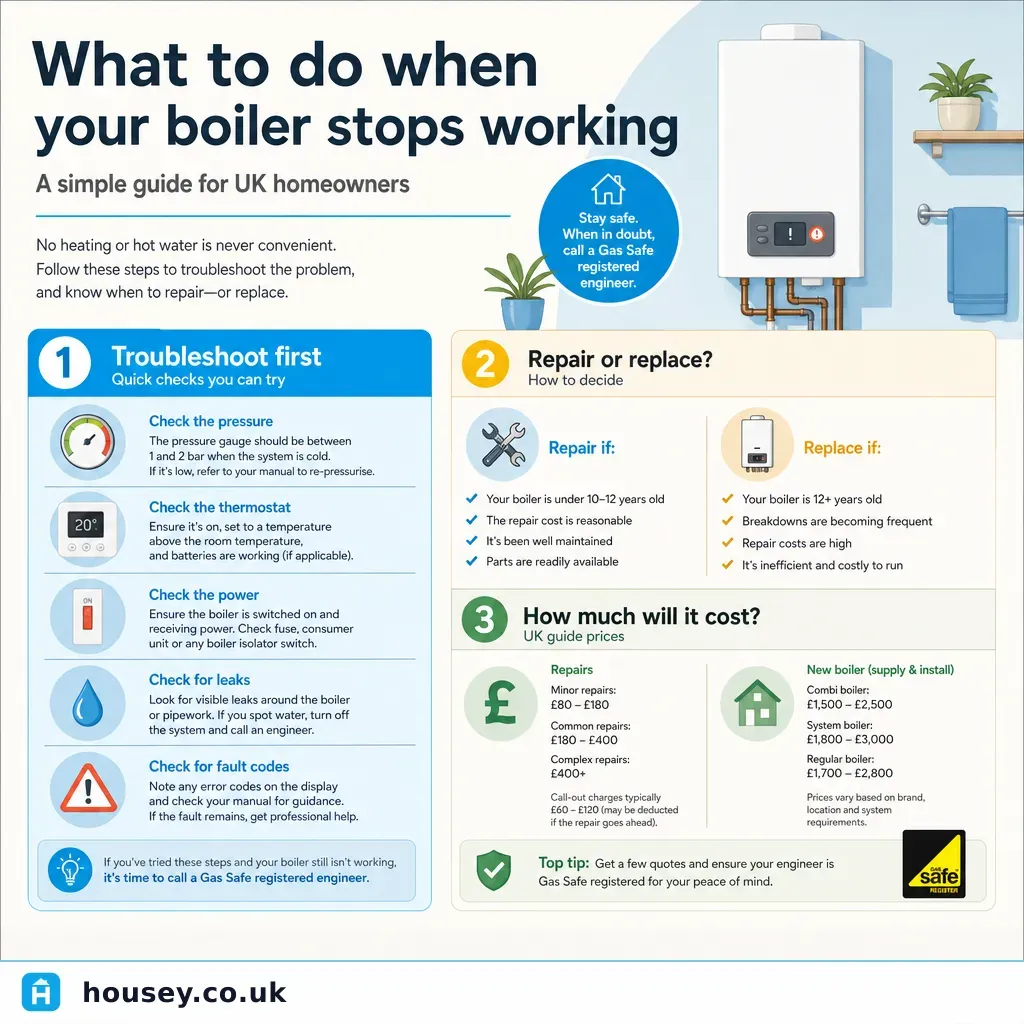
What to do when your boiler stops working
When your boiler stops working, check the pressure gauge (should read 1–1.
 General property advice
Property Market Trends: Activity Growth and Price Movements
UK property market activity is measured through completed sale registrations (HM Land Registry), lender mortgage data, and transaction volumes from HMRC.
 General property advice
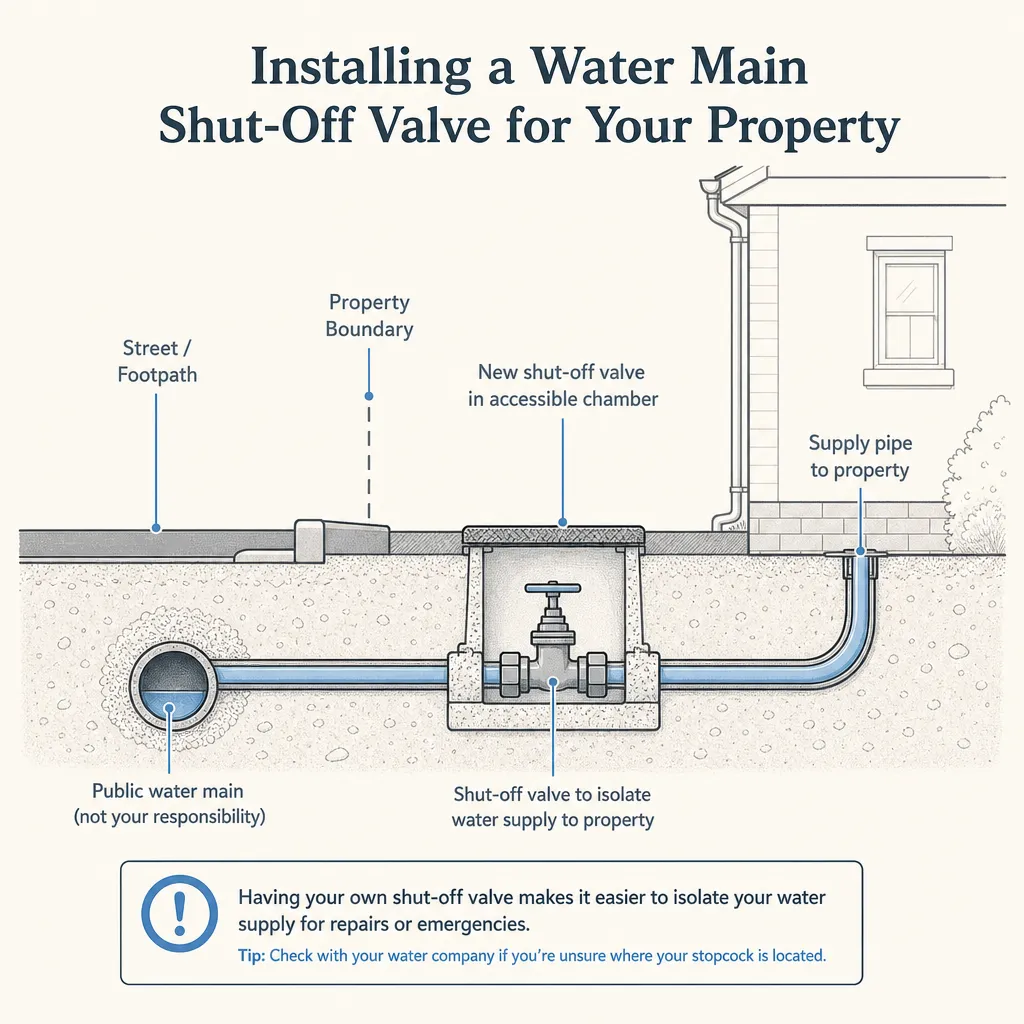
Installing a water main shut-off valve for your property
A water main shut-off valve — commonly called a stopcock — controls all water entering your home from the mains.
 General property advice
Monthly House Price Index: August Market Report and Analysis
The UK House Price Index is published monthly using completed Land Registry transaction data, meaning August figures typically reflect sales agreed months earlier.
 General property advice
Scottish Property Market: Activity and Regional Trends
Scotland's property market operates under distinct legal rules: sellers must provide a Home Report before marketing, transactions become legally binding at conclusion of missives rather than exchange of contracts, and Land and Buildings Transaction Tax replaces Stamp Duty.