Installing Roof Lanterns in Your Property
By Housey · Last reviewed 19th of May 2026

Installing Roof Lanterns in Your Property
Roof lanterns are among the most effective ways to bring natural light into a ground-floor extension or flat-roofed kitchen or dining space. They are particularly popular in Victorian and Edwardian terrace extensions, where side and rear rooms can feel dark even in summer. Understanding the planning and building control rules before ordering a unit will prevent costly delays and failed inspections.
Key points
- Roof lanterns on extensions generally fall under permitted development, but must not project more than 150 mm above the existing roof plane on principal elevations visible from the highway.
- Building Regulations Approved Document L requires all new roof glazing to achieve a centre-pane U-value of no worse than 1.6 W/m²K (whole-unit U-value typically ≤ 2.2 W/m²K).
- Listed buildings and properties in designated conservation areas require specific consent before installing a roof lantern — permitted development rights do not apply.
- Most professionally installed roof lanterns weigh between 50 kg and 200 kg; the structural capacity of the existing roof and supporting walls should be confirmed before ordering a large unit.
- FENSA-registered installers can self-certify compliance with Building Regulations for replacement glazing units, but new openings cut into a roof structure typically require a separate building control application.
Do you need planning permission?
Most roof lanterns on rear or side extensions fall within permitted development rights under the Town and Country Planning (General Permitted Development) (England) Order 2015. However, several conditions can remove those rights.
Which planning route applies?
- Permitted development likely applies if the lantern is on a flat-roofed extension, does not front a highway, does not add more than 150 mm to the existing roof height, and the property is not in a restricted zone.
- Contact your local planning authority first if the property is in a conservation area, national park, Area of Outstanding Natural Beauty (AONB), or World Heritage Site.
- Full planning permission required for listed buildings (any grade), or if the lantern would project above a principal roof slope visible from the highway.
- Check the title deeds and any Article 4 directions — some estates and urban regeneration zones have had permitted development rights removed by the local authority.
Wales and Scotland operate under their own planning regimes; verify with your local planning authority if outside England.
Building Regulations requirements
Even when planning permission is not needed, Building Regulations approval almost always is. Key areas:
Thermal performance (Part L): New roof glazing must achieve a centre-pane U-value of no worse than 1.6 W/m²K. Most modern aluminium or thermally broken steel roof lanterns with double or triple glazing will meet this standard. Ask manufacturers for certified U-value data before purchasing.
Structural loading (Part A): If installing a roof lantern into an existing flat roof, a structural engineer or suitably experienced roofer should confirm that the existing joists, kerb frame, and supporting walls can carry the additional weight and wind load.
Ventilation (Part F): Depending on room use, you may need to incorporate openable sections in the lantern or supplementary mechanical ventilation.
Drainage (Part H): The lantern kerb and flashings must direct rainwater away efficiently. A poorly detailed kerb is the most common cause of roof lantern leaks.
Use a Full Plans application for new structural openings, or a Building Notice for straightforward replacements. Check with your building control body which route is appropriate.
Roof lantern vs skylight vs flat roof window
Feature | Roof lantern | Rooflight / skylight | Flat roof window |
|---|---|---|---|
Best for | Flat or near-flat extension roofs; central ceiling feature | Pitched roofs; loft conversions | Flat roofs; walk-on access required |
Light output | Very high — glazing on multiple sides | Moderate to high | Moderate |
Opening sections | Often available; ridge vents common | Yes (manual or electric) | Usually fixed |
Typical installed cost | £1,500–£6,000 | £600–£2,500 | £900–£3,000 |
Planning risk | Low on rear extensions; higher on principal elevations | Low on most pitched roofs | Low on flat roofs |
Structural impact | Needs solid kerb and adequate head height | Needs rafter trimming | Minimal if deck is sound |
Indicative UK costs, last reviewed 2026-05-19. Prices vary by size, glazing specification, and installer. Obtain at least three quotes.
What to check before buying a roof lantern
Installation process
A typical roof lantern installation on an existing flat-roof extension follows these stages:
- Site survey — a roofer or glazing specialist checks the roof structure, pitch, and condition of the existing waterproofing membrane.
- Structural opening — the deck is cut to the required dimensions; trimmer joists are fitted if existing joists need to be cut.
- Kerb construction — a timber or aluminium upstand is built to the manufacturer's minimum height (typically 150 mm above the finished roof surface).
- Waterproofing — flashings and upstand membranes are applied and integrated with the existing flat-roof system (EPDM, GRP, or liquid membrane).
- Lantern fitting — the glazed frame is lifted into position and anchored to the kerb.
- Internal finishing — reveals and plasterboard boxing are made good.
- Building control sign-off — the inspector checks thermal performance, structural integrity, and drainage details.
Important limitations
This article provides general information about roof lantern installation in England. Planning rules, building control requirements, and structural considerations vary by property, location, and existing construction. This guide does not constitute planning, legal, or structural advice. A qualified professional should assess your specific property before work is commissioned.
When this becomes urgent
Seek professional help without delay if:
- Work has already been carried out without planning permission or building control sign-off — retrospective applications are possible but time-sensitive
- You suspect the flashings or kerb are leaking following a recent installation
- You are about to exchange contracts on a property with a recently installed roof lantern that lacks a building control completion certificate
What to ask a qualified professional
Before instructing a roofer or glazing installer:
- Does this installation fall within permitted development for my property, or should I apply for planning permission?
- Will you submit the building control application, or should I use an approved inspector?
- What U-value certificate or thermal performance data comes with the unit?
- What structural assessment has been carried out on the existing roof and supporting walls?
- What waterproofing specification will be used for the flashings and kerb, and what warranty is provided?
When to get professional help
Roof lantern installation involves working at height, cutting into structural roof elements, and creating weathertight junctions — none of which are suitable for DIY. Instruct a professional if:
- The existing flat-roof membrane is cracked, blistered, or more than 15 years old — renewal before or during the installation is advisable
- There are signs of previous water ingress around the proposed opening area
- The property is listed or in a conservation area, where specialist joinery or heritage glazing may be required
- The span between supporting walls may exceed the existing joist capacity — a structural engineer's assessment is needed before cutting
How Housey can help
Finding a reliable installer is often the hardest part of a roof lantern project. Housey connects you with vetted roofers and window and door installers who can survey your roof, advise on the right unit, and manage the Building Regulations process from start to finish.
Frequently asked questions
Do I need planning permission for a roof lantern?
Most roof lanterns on rear or side flat-roof extensions fall within permitted development rights. Exceptions include listed buildings, conservation areas, national parks, and AONBs, or if the lantern would project above a principal roof elevation visible from a highway. Always check with your local planning authority if in doubt.
What U-value does a roof lantern need to meet?
Building Regulations Approved Document L requires new roof glazing to achieve a centre-pane U-value of no worse than 1.6 W/m²K. Reputable manufacturers provide certified thermal data — ask for this before purchasing and confirm it is acceptable with your building control body.
How much does a roof lantern installation cost?
A standard 1 m × 1.5 m aluminium double-glazed roof lantern typically costs £1,500–£3,500 supplied and installed. Larger bespoke units, triple glazing, or complex structural openings can push costs to £6,000 or more. Scaffolding is usually additional. Indicative UK costs, last reviewed 2026-05-19. Always obtain at least three quotes.
Can I install a roof lantern on an existing flat roof?
Flat roofs are the most common location for roof lanterns. The existing deck and joists must be in good condition and capable of carrying the additional load. The kerb must be at least 150 mm above the finished roof surface and the flashings must integrate with the existing waterproofing system.
How long does roof lantern installation take?
A straightforward installation on an existing flat-roof extension usually takes one to two days for the glazing team. More complex jobs involving structural alterations, new kerb construction, additional timber repairs, or simultaneous renewal of the flat-roof covering can take three to five days in total.
Sources and further reading
Useful next reads
 Improvement & Build
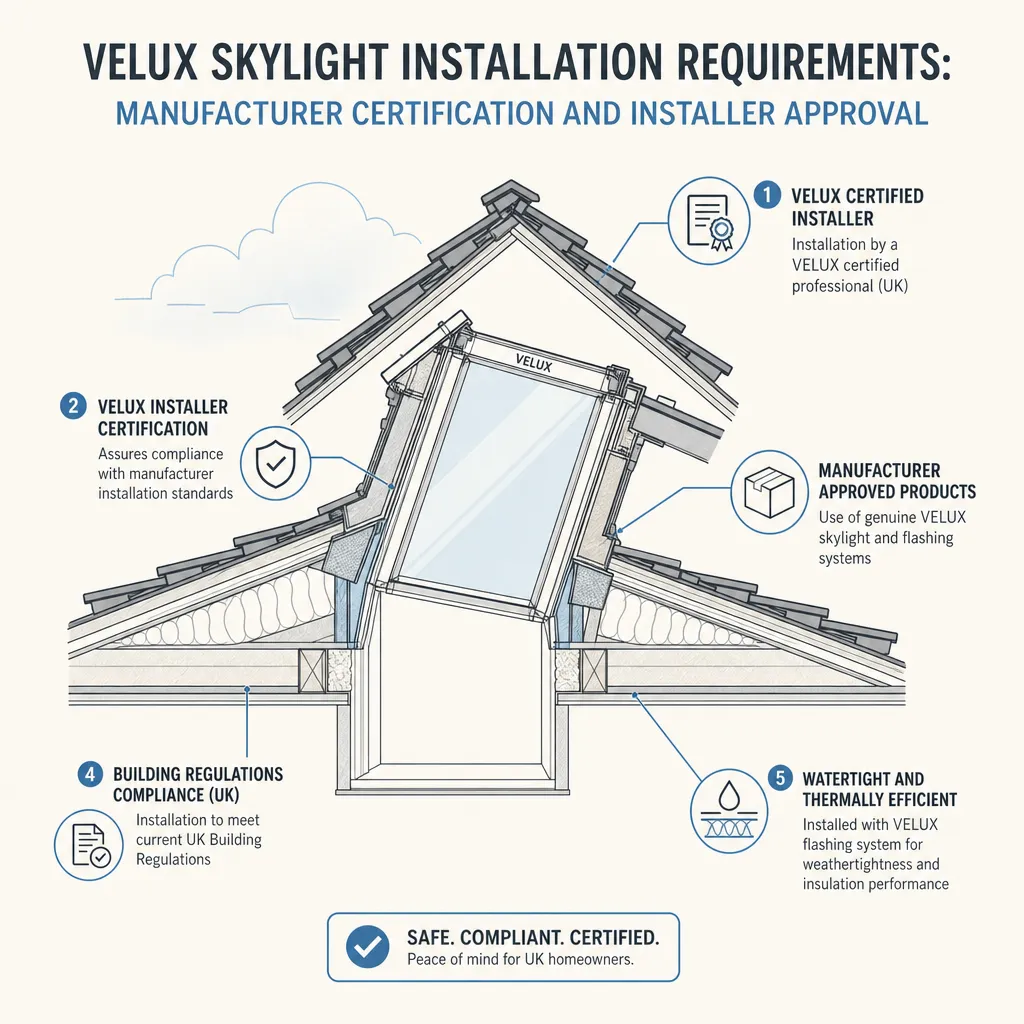
Velux Skylight Installation Requirements: Manufacturer Certification and Installer Approval
Velux recommends using their registered installer network to protect warranty coverage and ensure compliance with building regulations.
 Improvement & Build
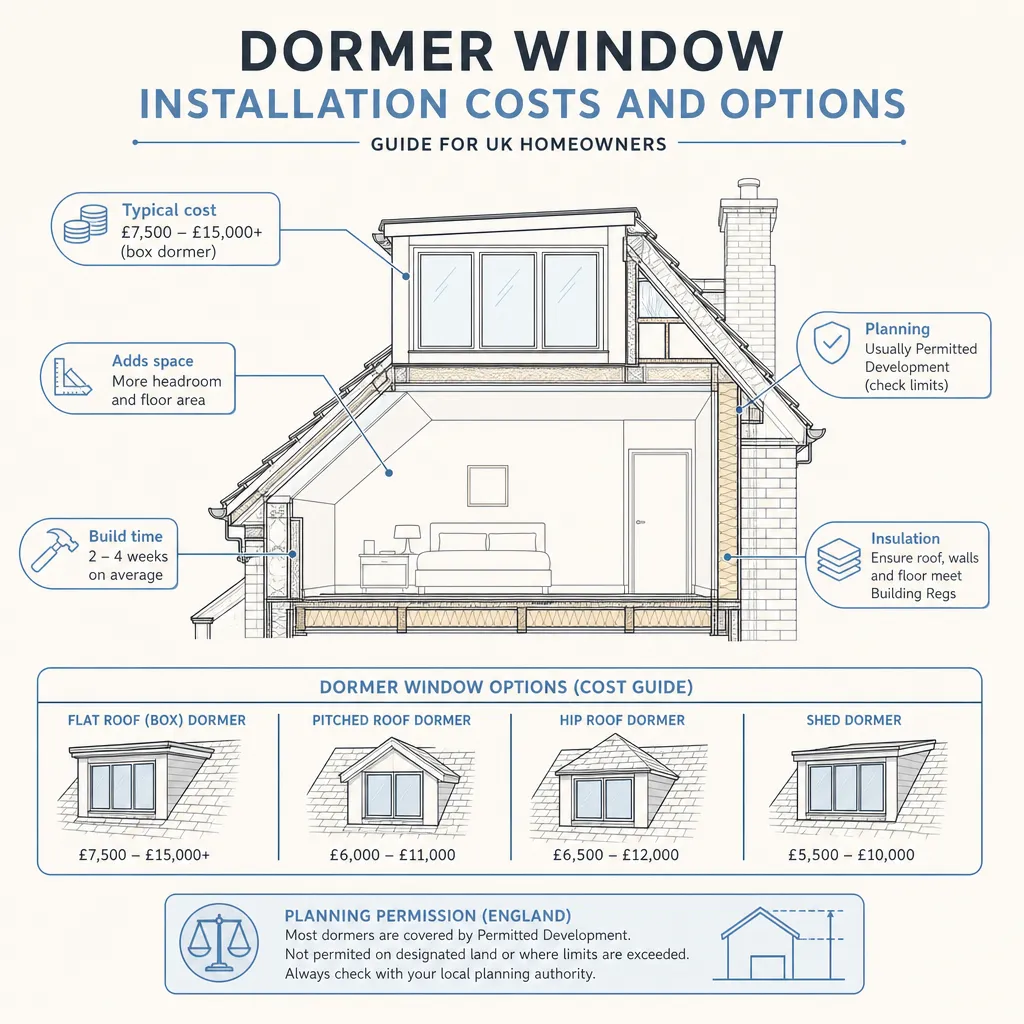
Dormer Window Installation Costs and Options
A dormer window typically costs £10,000–£40,000 installed in the UK, depending on type, size, and specification.
 Improvement & Build
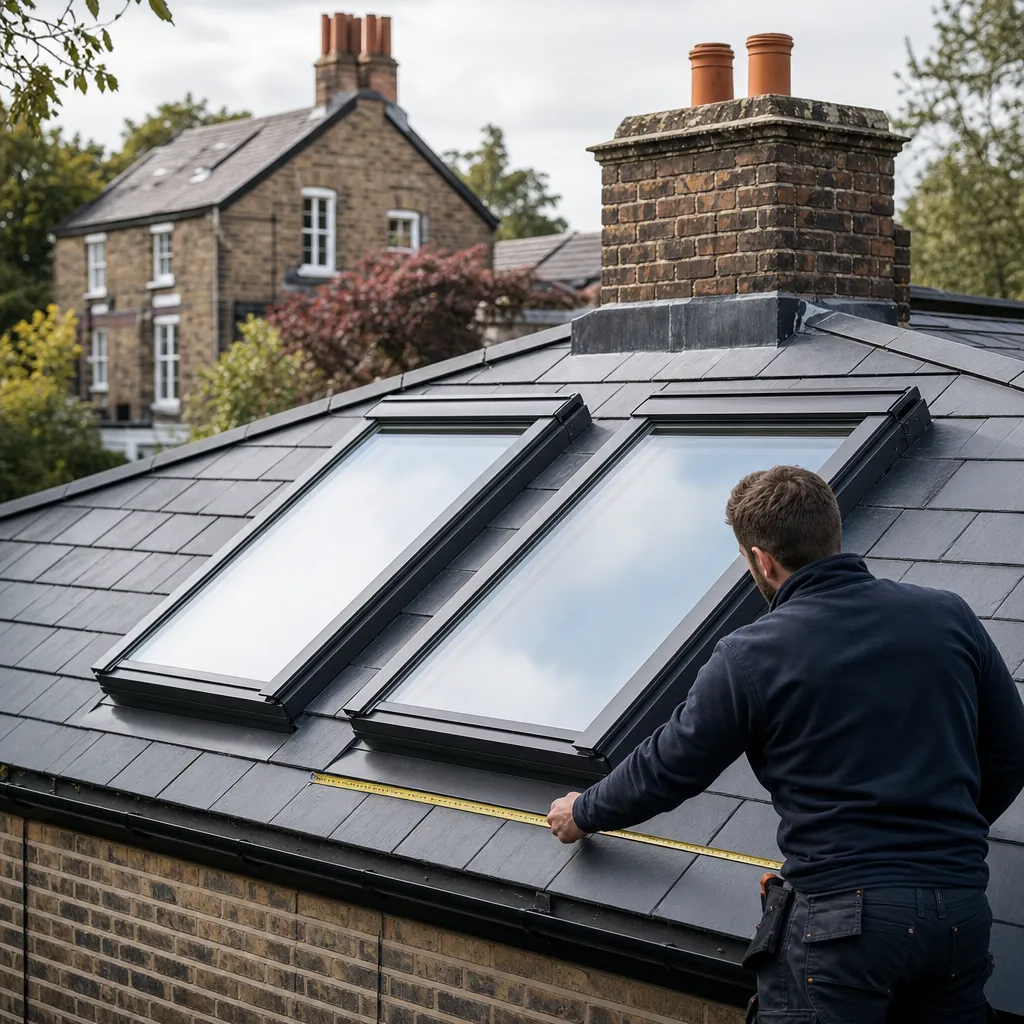
Velux Window Dimensions and Size Selection Guide
Velux windows use an alphanumeric size code — such as MK04 or FK06 — where the letters indicate frame width and the digits indicate frame height.
 Improvement & Build
Standard Window Dimensions for UK Properties
UK windows have no mandatory size standard, but common off-the-shelf casement frames measure 600–1200 mm wide by 900–1200 mm tall.
 Improvement & Build
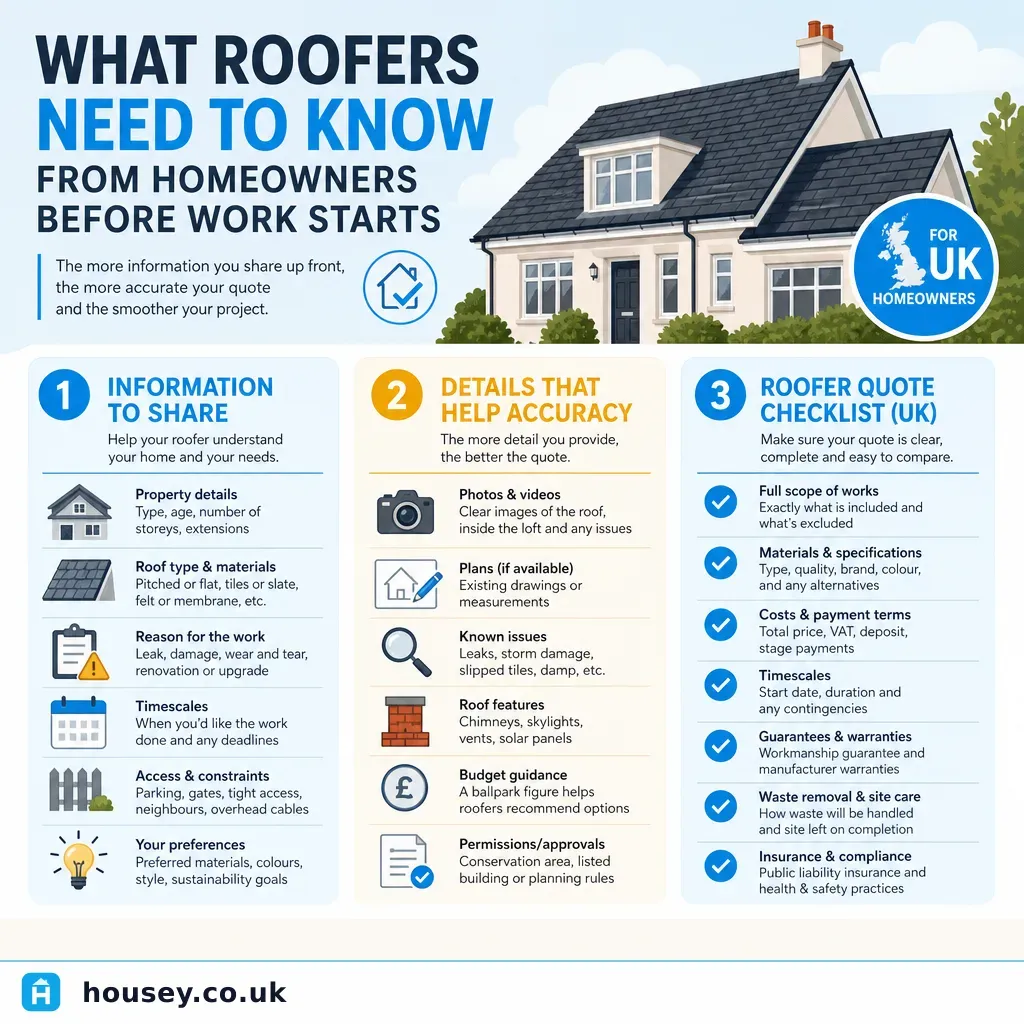
What Roofers Need to Know From Homeowners Before Work Starts
Before a roofer starts work, they need to know the property's age and roof construction, the full scope of damage or works required, whether the property is listed or in a conservation area, and access arrangements including scaffolding.