Standard Window Dimensions for UK Properties
By Housey · Last reviewed 11th of May 2026
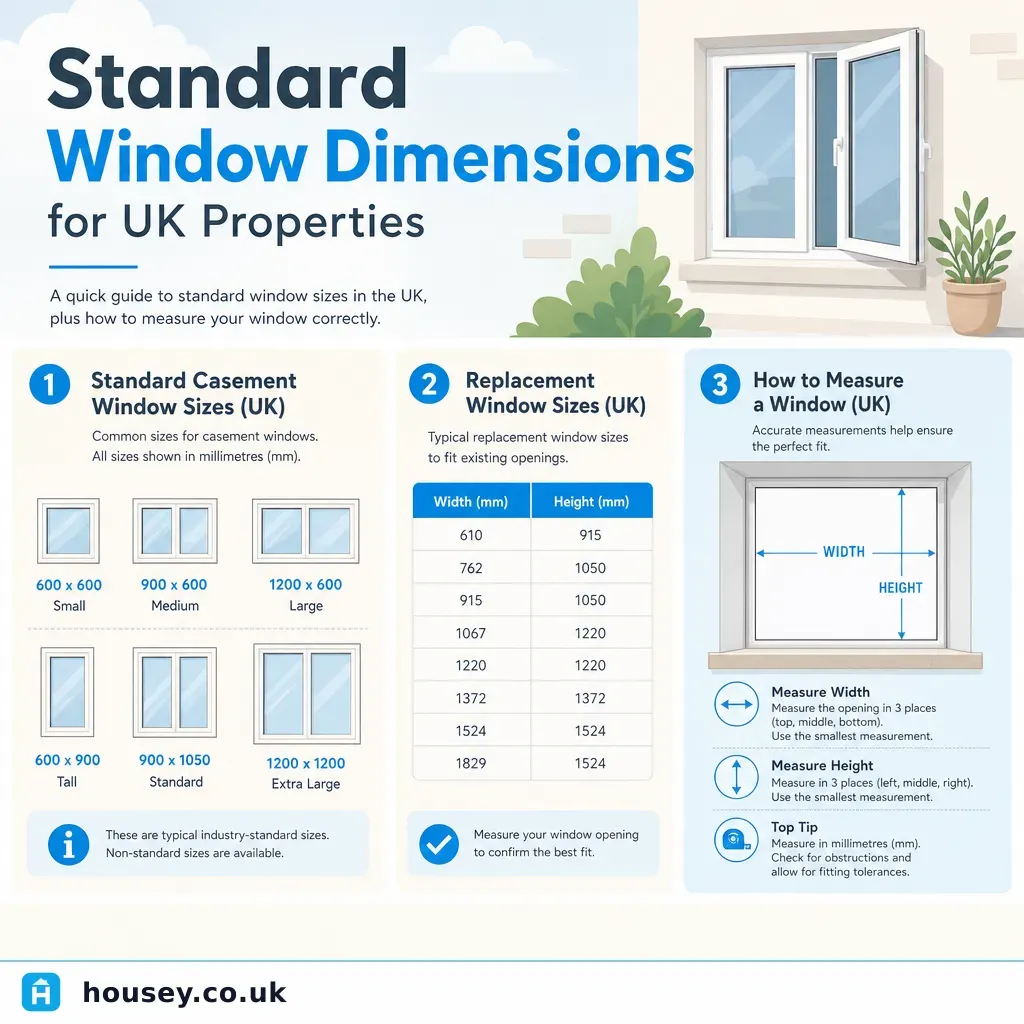
Standard Window Dimensions for UK Properties
Replacing windows or adding new openings is one of the most common home improvement projects in the UK — and one of the most specification-sensitive. Whether you are ordering off-the-shelf casement units for a 1990s semi or sourcing sash replacements for a Victorian terrace, getting the dimensions right before you order avoids costly returns and installation delays. Building Regulations also impose requirements on certain openings that affect how windows must perform and how they open safely.
Key points
- BS 6375 sets performance requirements for UK windows (weather resistance, security, and operation) but does not specify fixed sizes — the frame opening determines dimensions.
- Common off-the-shelf casement widths are 600 mm, 900 mm, and 1200 mm; heights are typically 900 mm, 1050 mm, and 1200 mm, but bespoke sizes are widely available from most manufacturers.
- Building Regulations Approved Document K requires windows where the internal floor-to-sill drop exceeds 600 mm to have restricted opening of no more than 100 mm, typically achieved with a restrictor fitting.
- Replacement windows in England and Wales must be installed under FENSA, CERTASS, or a local authority building notice to self-certify compliance with Approved Document L (energy efficiency).
- In Scotland, window energy standards fall under Section 6 of the Technical Handbooks; in Northern Ireland, Technical Booklet F1 applies.
Why window sizes are not truly standardised
Unlike some European markets, the UK has no mandatory residential window sizing grid. Dimensions evolved builder by builder, estate by estate, and era by era. A 1960s local authority house may have very different opening dimensions from a 1990s developer-built property, even in the same postcode.
Off-the-shelf windows from major manufacturers use broadly accepted commercial sizes, which makes sourcing quick for standard openings. However, a significant proportion of UK homes — particularly pre-war and interwar stock — require measurement-to-order or bespoke manufacture.
Standard sizes by window type
The table below shows commonly manufactured sizes. Actual installed dimensions depend on your frame opening — always measure before ordering.
Window type | Common widths | Common heights | Notes |
|---|---|---|---|
Casement (side-hung) | 600, 900, 1050, 1200 mm | 900, 1050, 1200 mm | Most widely available off-the-shelf |
Tilt-and-turn | 600, 900, 1200 mm | 900, 1200, 1500 mm | Often specified for flats; restrictor usually not required |
Vertical sliding sash | 610–760 mm per sash | 1200–1500 mm full frame | Victorian and Edwardian proportions vary considerably |
Fixed light | Made to measure | Made to measure | Usually ordered to exact opening dimensions |
Top-hung (awning) | 600–1200 mm | 450–600 mm | Common in bathrooms and kitchens |
Bay/bow (individual pane) | Varies by angle and projection | 900–1200 mm per unit | Requires careful survey of bay geometry |
Indicative UK sizes, last reviewed 2026-05-11. Verify with your chosen manufacturer before ordering.
How to measure your window correctly
The critical dimension is the frame opening — the masonry or structural opening — not the existing frame itself, as old frames may have been packed, shimmed, or are themselves the wrong size.
Homeowner measurement checklist
Take measurements twice and record them before contacting a supplier.
Sizing by property era
- New-build (post-2000): Standard commercial casement sizes usually apply. Most developers used 600 × 900, 900 × 900, or 900 × 1050 mm units. Measure to confirm before ordering.
- 1960s–1990s: Sizes vary significantly by developer and construction type. Off-the-shelf units may fit, but verification is essential.
- 1930s–1950s semi-detached: Original steel Crittall or later uPVC replacements may be in situ. Units may need to match existing reveals; bespoke sizing is often required.
- Victorian and Edwardian (pre-1920): Sash proportions are often taller than modern standard. Expect to order bespoke or specialist heritage sizes.
- Listed buildings and conservation areas: Sizes, profiles, and glazing bar patterns may be controlled. Check with your local planning authority before ordering.
Building Regulations to be aware of
Approved Document L (Conservation of Fuel and Power): As of the 2021 edition in England, replacement windows must achieve at least a whole-window U-value of 1.4 W/m²K, or a Window Energy Rating of Band C as an alternative route. Scotland, Wales, and Northern Ireland have comparable but separately published requirements.
Approved Document K (Protection from Collision and Falling): Where the internal floor is 800 mm or more below the window sill and the drop beyond the opening exceeds 600 mm, the opening must be restricted to 100 mm unless too small for a person to pass through. Restrictors achieve this without affecting overall frame dimensions.
Approved Document Q (Security): Applies to ground-floor and easily accessible windows. Requires resistance to manual attack, typically tested to PAS 24.
When to get professional help
Most like-for-like replacements are straightforward. Seek professional assessment when:
- The existing opening is noticeably out of square or shows signs of lintel movement.
- The property is listed or in a conservation area — planning advice is required before ordering.
- You are enlarging or creating a new opening — structural work and building control involvement are necessary.
- Sash replacement in a timber box frame reveals rot or structural deterioration.
- You want written confirmation of Part Q security compliance for accessible ground-floor windows.
How Housey can help
Housey connects you with vetted window and door installers who can survey your openings, advise on sizing, and supply and fit compliant replacement windows — handling FENSA or CERTASS self-certification on your behalf.
Frequently asked questions
Is there a UK standard for window sizes?
There is no mandatory residential window sizing standard in the UK. BS 6375 covers performance requirements rather than dimensions. Manufacturers offer common commercial sizes, but many UK homes — particularly pre-war stock — require measurement-to-order or bespoke units due to the wide variation between property eras and construction types.
What is the most common casement window size in the UK?
Off-the-shelf casement windows most commonly measure 900 mm wide by 1050 mm high, or 900 × 900 mm, though availability varies by manufacturer. Always measure your frame opening first — these are guide sizes and there is no guarantee your opening will match a standard unit without checking.
Do I need planning permission to replace windows with the same size?
In most cases, like-for-like window replacement is permitted development in England and Wales and does not require planning permission. Exceptions apply in conservation areas, for listed buildings, and in some Article 4 Direction areas. Always check with your local planning authority if you are unsure of your property's designation.
What is the minimum window size for a habitable room under Building Regulations?
There is no single minimum dimension rule, but Approved Document F requires habitable rooms to have openable ventilation of at least 1/20th of the floor area plus background ventilation. Approved Document L sets minimum thermal performance requirements. Both must be satisfied when replacing or specifying windows in habitable rooms.
Sources and further reading
Useful next reads
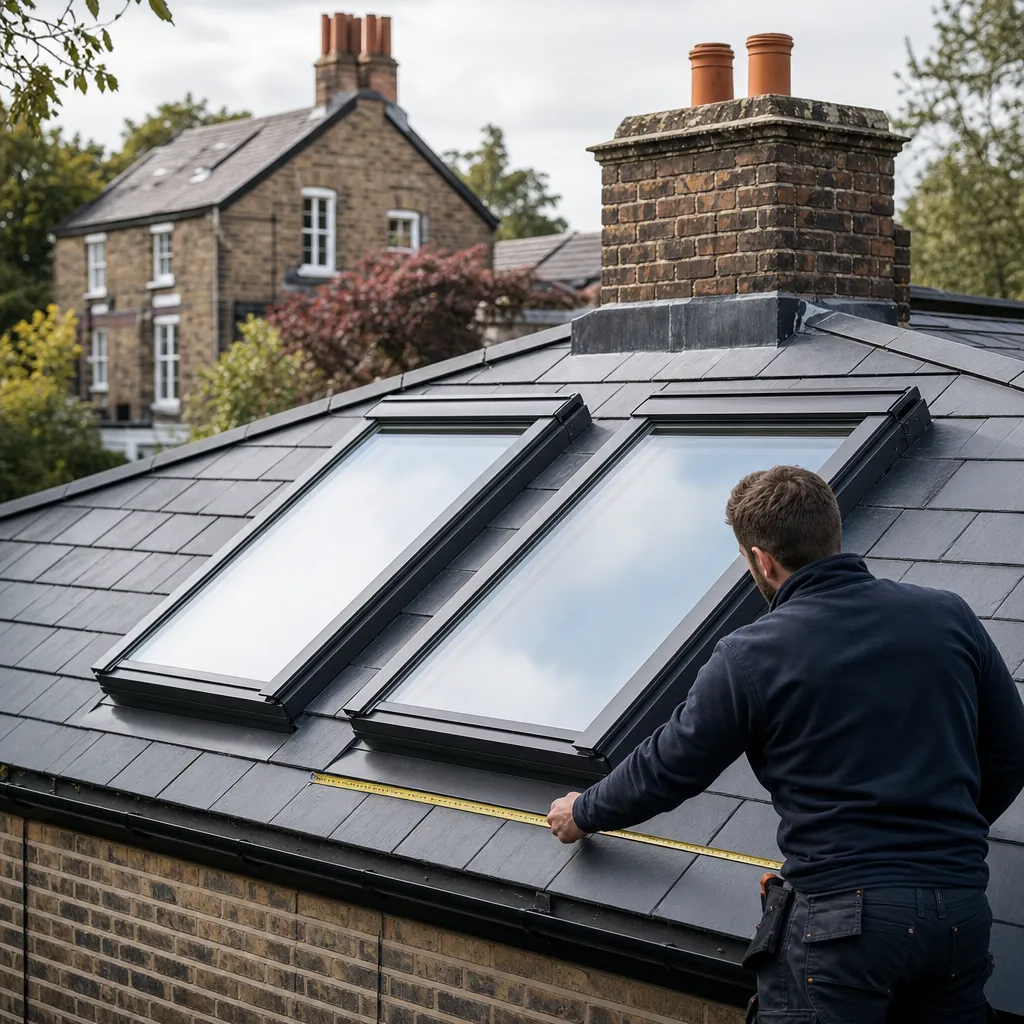 Improvement & Build
Velux Window Dimensions and Size Selection Guide
Velux windows use an alphanumeric size code — such as MK04 or FK06 — where the letters indicate frame width and the digits indicate frame height.
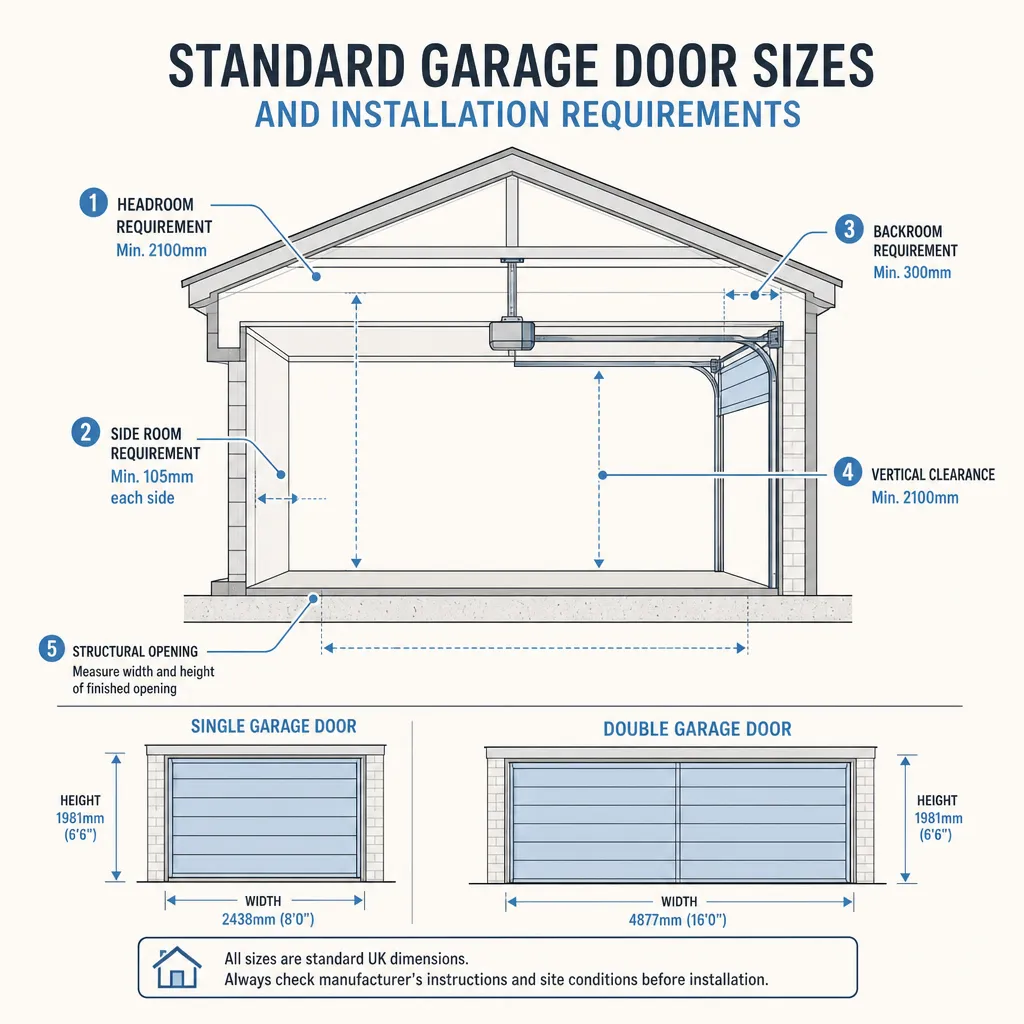 Improvement & Build
Standard Garage Door Sizes and Installation Requirements
Standard UK single garage doors fit a structural opening of 2134mm (7 ft) wide by 1981mm (6 ft 6 in) high; double doors typically span 4267mm (14 ft) wide.
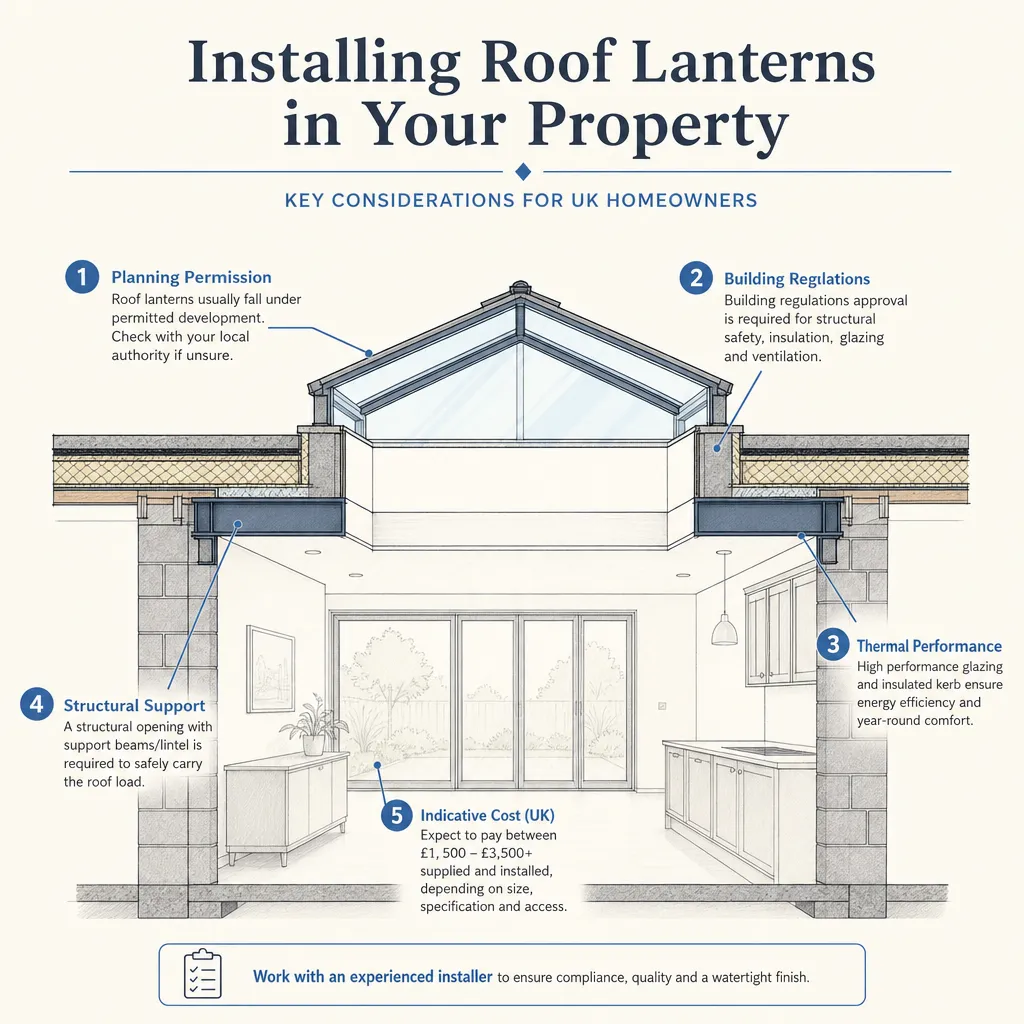 Improvement & Build
Installing Roof Lanterns in Your Property
A roof lantern can be installed under permitted development in most cases, though Building Regulations Part L applies and requires a minimum glazing U-value of 1.
 Improvement & Build
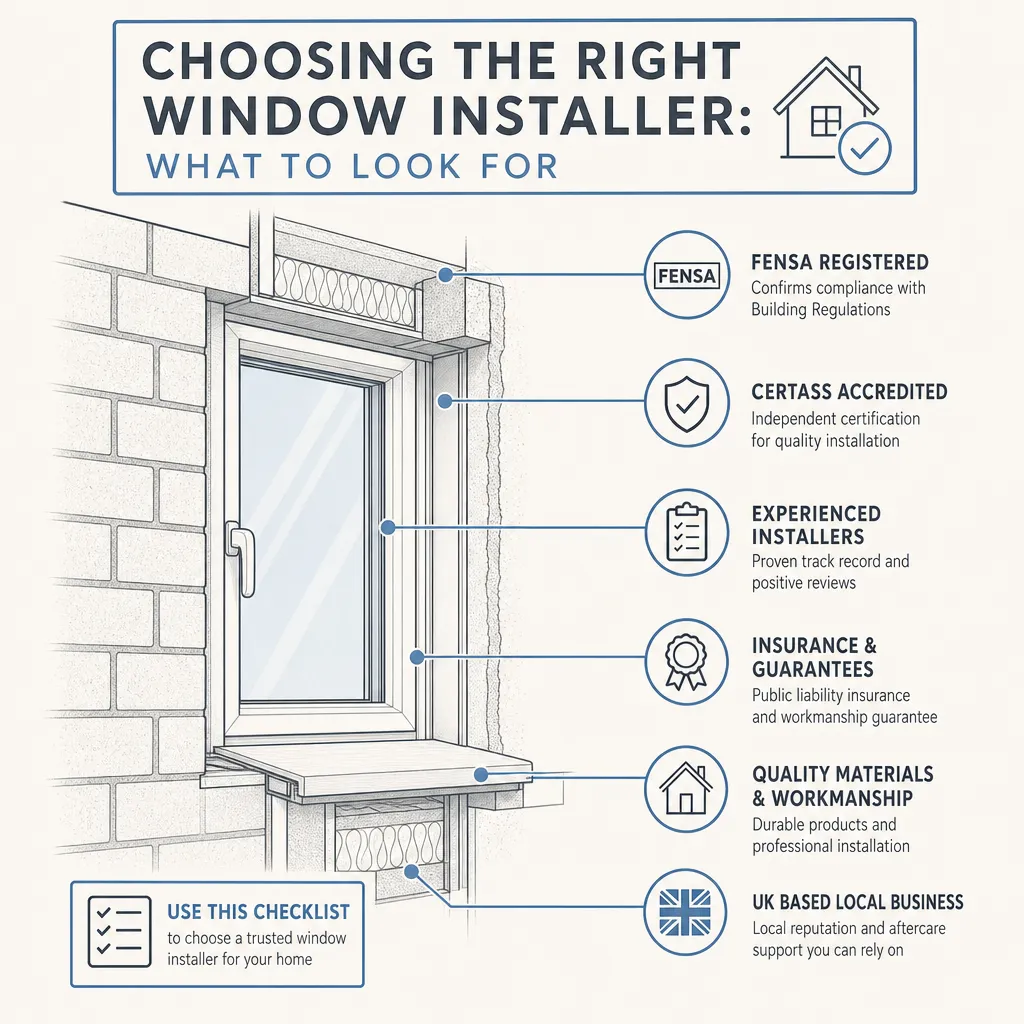
Choosing the Right Window Installer: What to Look For
When choosing a window installer in the UK, verify FENSA or CERTASS registration first — these schemes allow installers to self-certify Building Regulations compliance and issue the completion certificate you will need at resale.
 Improvement & Build
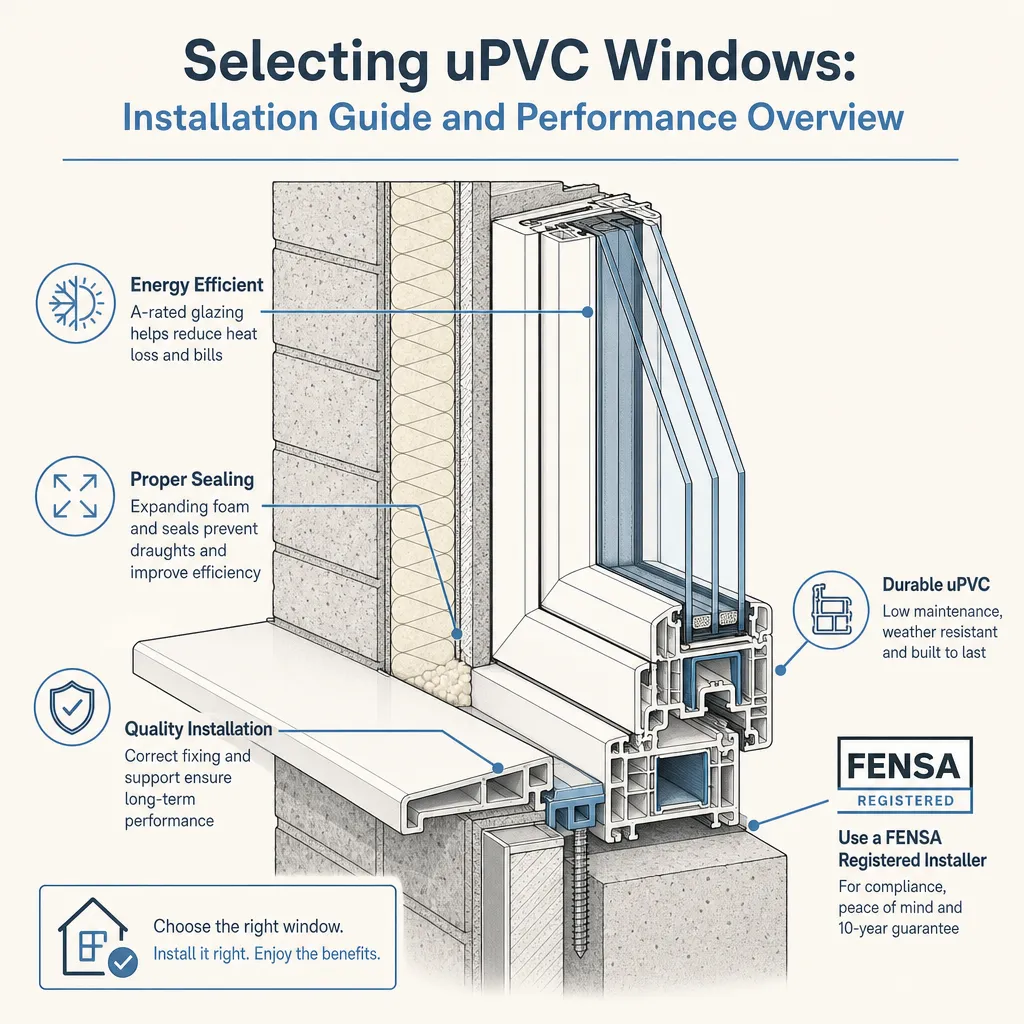
Selecting uPVC Windows: Installation Guide and Performance Overview
uPVC windows are a practical, low-maintenance choice for most UK homes.