What Roofers Need to Know From Homeowners Before Work Starts
By Housey · Last reviewed 18th of May 2026
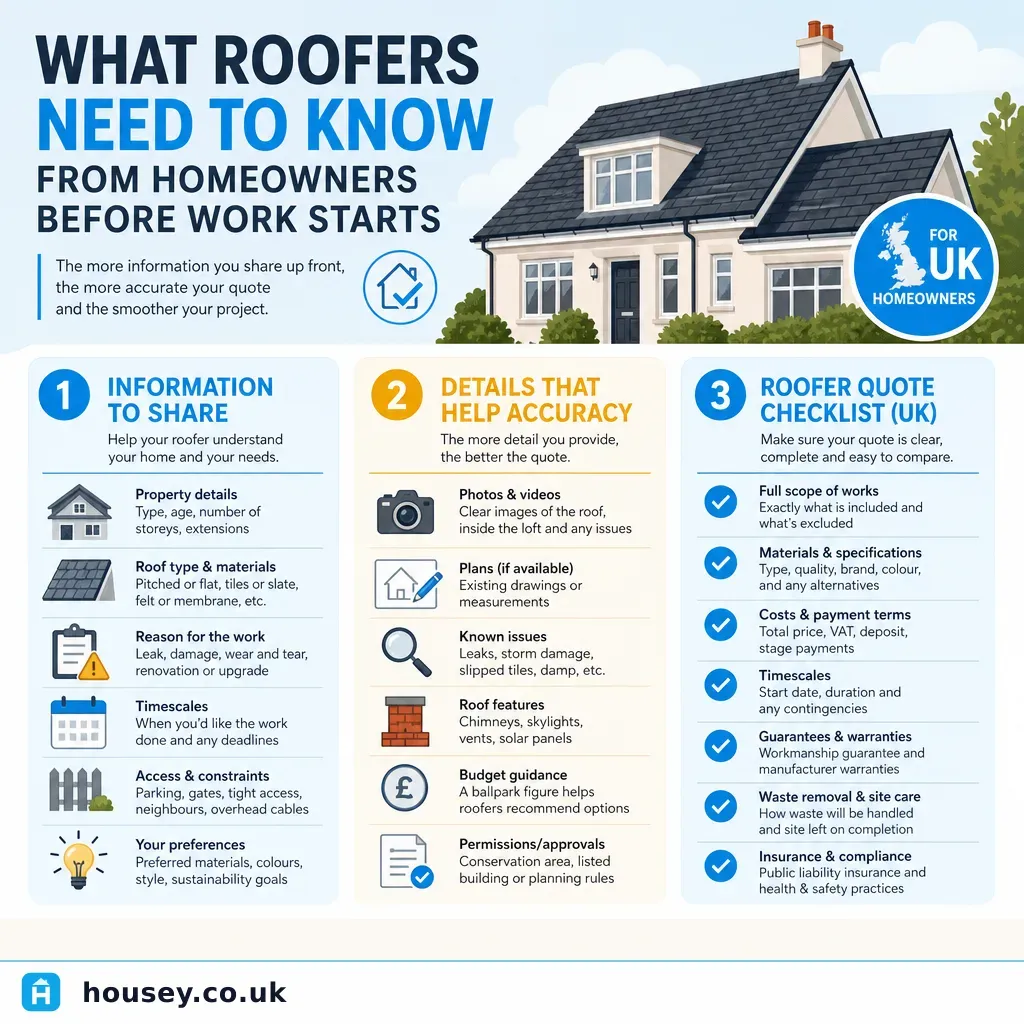
What Roofers Need to Know From Homeowners Before Work Starts
When a roofing contractor visits to assess or quote for work, the accuracy and speed of their assessment depends heavily on the information you can provide. Homeowners who arrive prepared with the property's history, any known issues, and the relevant documentation help their contractor scope the job accurately, price it reliably, and avoid costly mid-project surprises. Coming well-prepared also puts you in a better position to compare quotes meaningfully and to spot any gaps in a contractor's approach before work begins.
Key points
- The age and construction type of your roof determines which materials can legally and practically be used; mixing materials in a listed or conservation-area property may require listed building consent or planning permission.
- Any roofing work above 2 m must comply with the Work at Height Regulations 2005; scaffolding or a mobile elevated work platform (MEWP) is required for most work beyond minor repairs accessible from a ladder.
- Building Regulations Part A (structure) and Part C (moisture resistance) apply to re-roofing work; flat-to-pitched conversions and structural changes will require building control approval.
- Properties built before 2000 may contain asbestos in roof sheets, ridge tiles, or associated soffits and fascias; if present, the material must not be disturbed without appropriate controls and a licensed contractor.
- The National Federation of Roofing Contractors (NFRC) and the Confederation of Roofing Contractors (CORC) are the principal UK trade bodies; membership indicates a minimum standard of vetting and provides access to dispute resolution schemes.
What property information should you give your roofer?
Providing complete information before the quote means the contractor can assess the full scope of work without assumptions that later cause the price to change.
Essential information to share:
- Property age and construction type: A Victorian terrace with natural slate and traditional timber rafters needs different materials and methods than a 1960s bungalow with concrete interlocking tiles or a 1990s estate house with a factory-cut truss roof. If you are unsure, tell the contractor — they can usually assess during the site visit.
- Number of storeys and access constraints: Is there sufficient space for scaffolding? Are there boundary walls, neighbouring properties, or narrow passageways that complicate access? Is there a shared driveway that neighbours use?
- Any known history of leaks, repairs, or past work: Mention even minor repairs; patterns of recurrence help the contractor diagnose root causes rather than treat symptoms repeatedly.
- Loft conversion or spray foam insulation: A converted loft changes the structural and ventilation context significantly. Spray foam insulation is a particular concern: it can complicate or prevent mortgage lending on the property, and a roofer needs to know before disturbing it.
- Listed status or conservation area designation: Tell the contractor upfront. Working within these constraints often requires different or matched materials and may need consent before work can begin.
- Existing roofing guarantees or warranties: If previous work was carried out under a contractor's workmanship guarantee or a manufacturer product warranty, the contractor needs to know to avoid inadvertently invalidating it.
Documents to prepare before the contractor visits
Gathering relevant documents before the survey visit helps the roofer give a more accurate quote and reduces the risk of price revisions after work starts.
- Previous roof surveys or inspection reports: Any report from a RICS surveyor, an independent roofing inspector, or a specialist roof survey already carried out. Sharing these avoids duplication and gives the contractor a useful baseline.
- Building control completion certificates: If an extension, loft conversion, or past re-roofing was carried out with building control approval, provide the completion certificate. Without it, the contractor may need to allow time to assess whether the existing work meets current standards.
- Planning permission or listed building consent: For any past roofing alterations, particularly in conservation areas or on listed properties.
- Buildings insurance documents: Your current schedule, particularly any claim history for storm or water damage. Some insurers specify materials or repair methods, which may affect what the contractor can propose.
- FENSA or CERTASS certificates: For any roof lights, skylights, or dormer windows installed under Building Regulations; these confirm compliance and may affect how adjacent roof areas are approached.
- Asbestos survey report: If you have had the property surveyed for asbestos-containing materials, share the report. If not, and the property was built before 2000, tell the contractor — they must not disturb potential asbestos-containing materials without appropriate risk assessment and controls in place.
What roofers need to know about the scope of works
Beyond property context, the contractor needs to understand clearly what you want done — and you need to understand what you are asking for.
Be specific about:
- The problem or objective: Is this an emergency repair addressing an active leak, a proactive replacement before the roof deteriorates further, a partial repair, or a full re-roof?
- Materials preference: Are you happy for the contractor to specify the most appropriate materials, or do you have a specific requirement — matching original Welsh slate, a particular tile profile, lead flashing specification, or a living roof system?
- Timescale and deadlines: Is there a deadline — an insurance claim window, a property sale completion date, a planned loft conversion starting shortly after?
- Budget range: Sharing an approximate range helps a contractor propose the most appropriate solution rather than defaulting to the most expensive option.
What to ask before accepting a quote
- What is included in the quoted price, and what work is explicitly excluded?
- Who will carry out the work — the quoting contractor directly, or subcontractors? What qualifications or trade body memberships do they hold?
- Is scaffolding included in the price, or is it costed separately?
- What materials are specified, and can you provide the product specifications or manufacturer data sheets?
- What deliverable will I receive — a completion record, a workmanship guarantee, a manufacturer warranty registration?
- Is VAT included in the quoted figure?
- What assumptions is this quote based on, and what could change the price if additional defects are found once work starts?
- How will you communicate with me if unexpected issues arise during the job?
- What level of public liability insurance do you carry, and can I see the current certificate?
Red flags when getting roofing quotes
Be cautious if a contractor:
- Requests a large cash payment upfront before any work begins. A deposit of 10–25% is normal for larger projects; payment in full before work starts is not.
- Cannot or will not provide evidence of trade body membership (NFRC or CORC) or a current public liability insurance certificate.
- Quotes without a site visit or without gaining access to inspect the roof directly.
- Suggests the work can be done without scaffolding when the roof pitch, height, or extent clearly requires it under the Work at Height Regulations 2005.
- Recommends full roof replacement without explaining why repair would not be sufficient.
- Is unable to advise on whether the property is in a conservation area, or whether the proposed materials would require any form of consent.
- Approaches you unsolicited following work on a neighbouring property; always obtain independent quotes from contractors you have selected yourself.
When to get professional help
Consider consulting a specialist or instructing an independent survey if:
- You are unsure whether the damage is cosmetic or structural — an independent roof survey provides an impartial assessment before you commit to any contractor.
- A previous repair has failed more than once and the underlying cause remains unclear.
- You suspect asbestos-containing materials are present — do not disturb any suspected material; consult the HSE guidance and a licensed asbestos contractor before proceeding.
- The roof structure appears damaged, with visible sagging or deflection — this may require a structural engineer's assessment as well as a roofing contractor.
- You are in a dispute with a previous contractor over workmanship — both NFRC and CORC operate dispute resolution schemes for registered members.
How Housey can help
Housey connects homeowners with trusted local roofers for everything from emergency leak repairs to full re-roofing projects. If you want an impartial assessment of your roof's condition before commissioning work or comparing quotes, you can also arrange an independent roof survey to understand exactly what is needed.
Frequently asked questions
Does re-roofing a house need building regulations approval?
Most like-for-like re-roofing does not require building regulations approval in England and Wales, provided the work does not change the structure or affect the thermal envelope in a way that triggers compliance. However, if you are changing the roof structure, adding insulation within the thermal envelope, or converting a flat roof to pitched, building control approval is likely needed. Check with your local authority building control or an Approved Inspector.
How many quotes should I get for roofing work?
Getting at least three quotes from separate contractors is recommended for any significant roofing project. This gives you a basis for comparison and helps identify outliers — a very low quote may omit necessary work or scaffolding, while a high quote may not reflect the actual scope. Ensure all quotes are based on the same specification, including the same materials and access provision, before comparing prices directly.
What is a roofing guarantee and how long should it last?
Reputable roofing contractors typically offer a workmanship guarantee of 10–20 years on a full re-roofing job, alongside any manufacturer warranty on materials — which may be 15–50 years for quality tiles or slates. Check the terms carefully: guarantees are only as reliable as the company behind them. NFRC membership and deposit protection schemes offer some reassurance, but always verify the contractor's credentials and insurance independently.
My roofer found asbestos during work — what should happen next?
Work must stop immediately on the affected area. The contractor should hold an HSE licence for notifiable asbestos work or must call in a licensed specialist. Disturbing asbestos without appropriate controls is illegal and dangerous under the Control of Asbestos Regulations 2012. The Health and Safety Executive publishes guidance on asbestos in roofing and maintains a register of licensed asbestos contractors that can be checked online.
Sources and further reading
- Work at Height Regulations 2005 — legislation.gov.uk
- Working at height: a brief guide — Health and Safety Executive
- National Federation of Roofing Contractors — NFRC
- Asbestos: licensed contractors register — Health and Safety Executive
- Building Regulations Approved Documents — GOV.UK
Useful next reads
 Improvement & Build
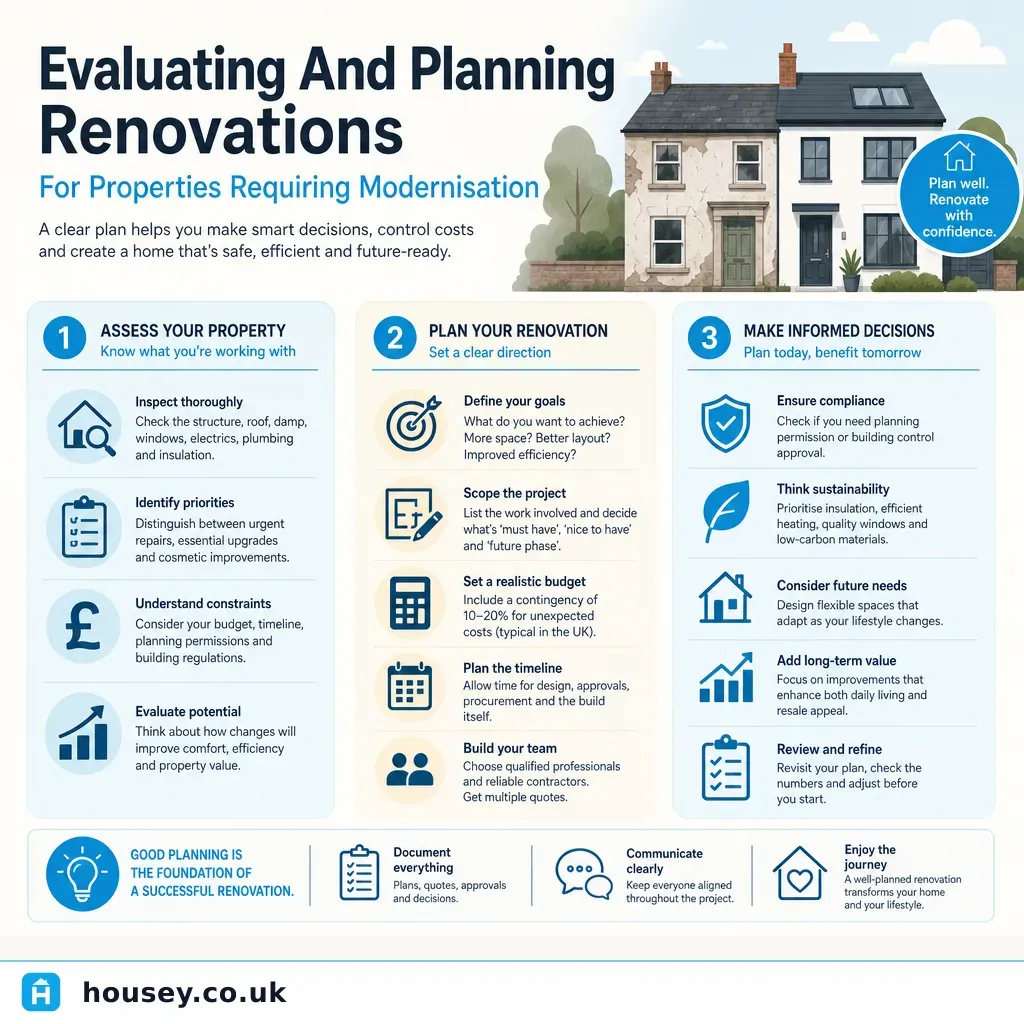
Evaluating And Planning Renovations For Properties Requiring Modernisation
Start by commissioning a condition survey — RICS Level 3 for pre-1919 properties — to identify structural defects, damp, and services issues before finalising a budget.
 Improvement & Build
Installing Roof Lanterns in Your Property
A roof lantern can be installed under permitted development in most cases, though Building Regulations Part L applies and requires a minimum glazing U-value of 1.
 Improvement & Build
Selecting and Hiring a Remodelling Contractor
Hiring a remodelling contractor starts with a written scope of works and a shortlist of at least three companies registered with TrustMark or the Federation of Master Builders.
 Improvement & Build
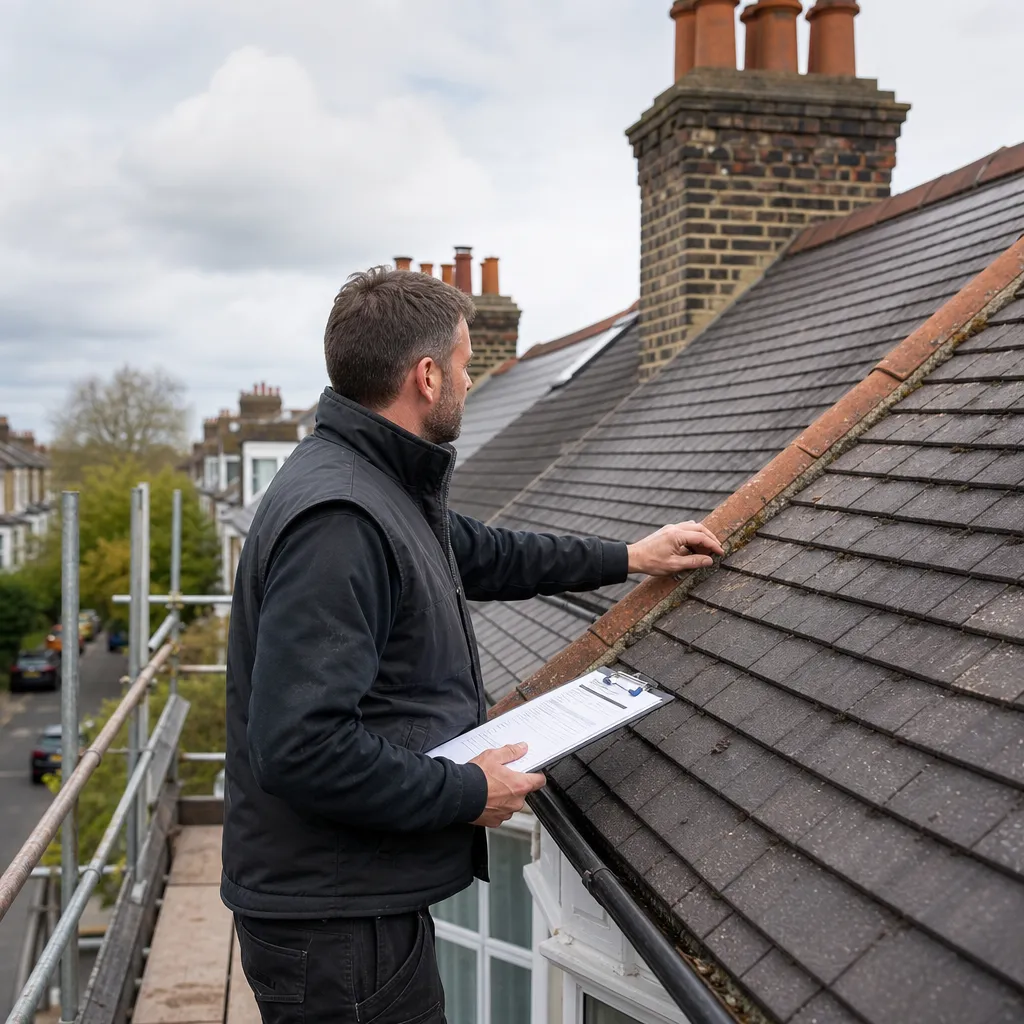
Roofing Contractors Explained: Expertise, Qualifications and What to Expect
A roofing contractor plans, sources materials, and carries out roof repairs, replacements, and new installations.
 Improvement & Build
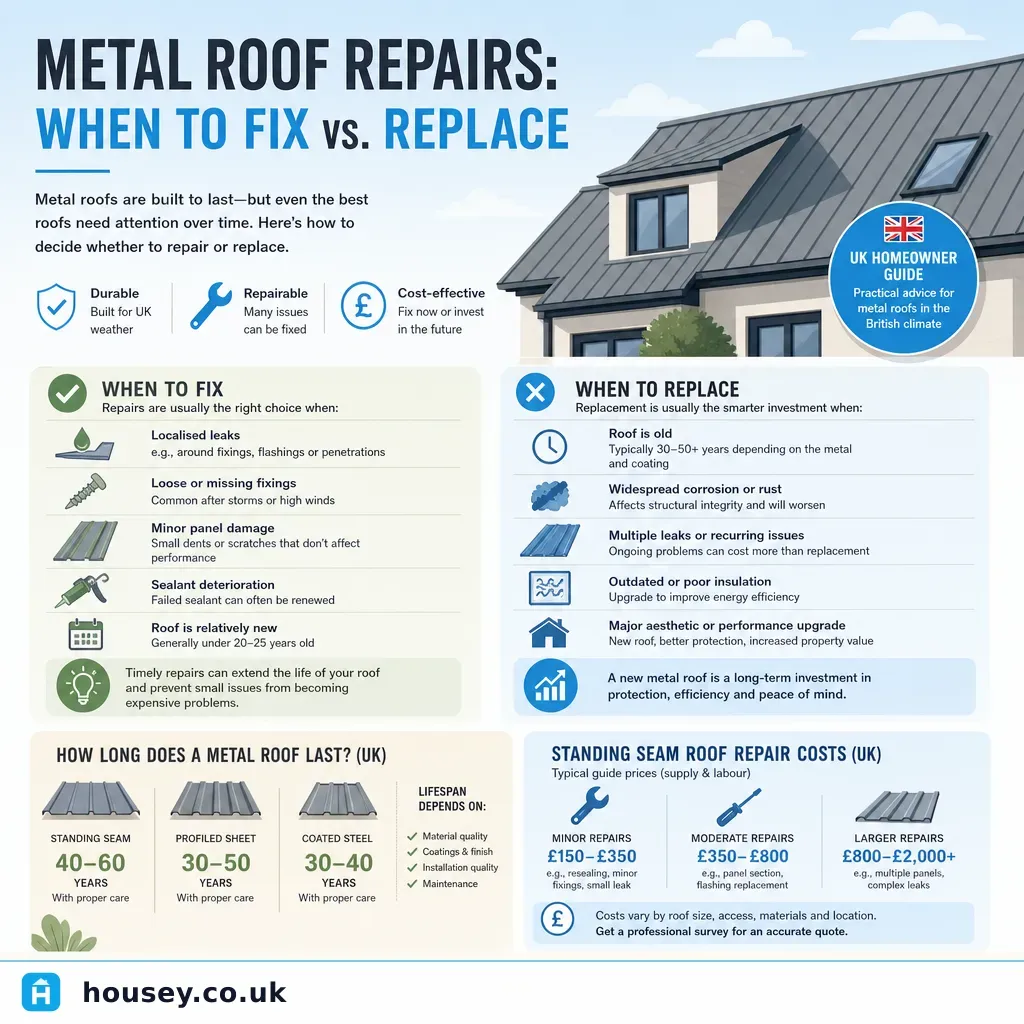
Metal Roof Repairs: When to Fix vs. Replace
For a metal roof, repair is usually right when damage is localised — a failed flashing, isolated corrosion, or one or two damaged panels.