Installing Windows in Bathrooms: Design, Privacy and Ventilation Considerations
By Housey · Last reviewed 8th of May 2026
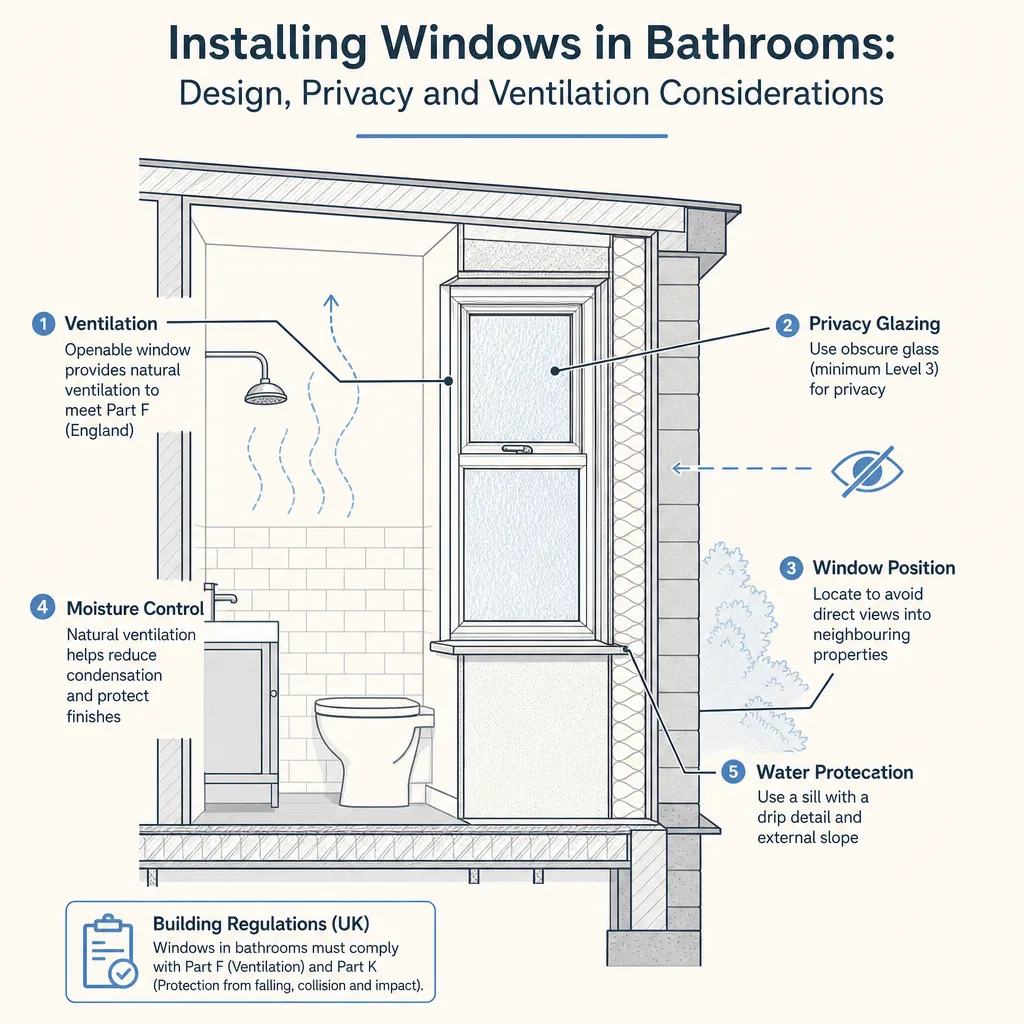
Installing Windows in Bathrooms: Design, Privacy and Ventilation Considerations
Bathroom window decisions arise at several points in a UK homeowner's journey: replacing failed sealed units, specifying glazing for a new bathroom in a loft conversion, adding a bathroom in a rear extension, or simply upgrading a dated installation. The choices involved — glazing type, opening configuration, trickle ventilation provision, and frame specification — intersect with Building Regulations compliance on ventilation, safety glazing, and thermal performance. Understanding the requirements before instructing a contractor avoids costly amendments and ensures you receive the correct compliance certificate for future property sales.
Key points
- Approved Document F (2021 edition) requires bathrooms to have rapid ventilation equivalent to 1/20th of the floor area via an openable window, or mechanical extract ventilation at a minimum of 15 l/s continuous or 30 l/s intermittent with a 15-minute overrun timer.
- Safety glazing complying with BS EN 12600 Class 2 or better is required under Approved Document K where glazing is adjacent to a bath or shower enclosure, and for windows below 800 mm from floor level in certain configurations.
- Replacement windows in most homes must be installed by a FENSA- or CERTASS-registered contractor, who notifies building control on your behalf and provides a compliance certificate required for future property sales.
- Building Regulations Approved Document L (2021) sets a maximum whole-window U-value of 1.4 W/m²K for replacement units — check your installer's product specification confirms compliance with this standard.
- Obscure or frosted glazing is standard practice for bathroom privacy but is not a Building Regulations requirement; local planning conditions or building covenants may specify glazing type for certain elevations.
What Building Regulations require for bathroom windows
Three Approved Documents are relevant to bathroom windows in England:
Approved Document F (Ventilation, 2021) sets minimum ventilation requirements. For bathrooms in existing dwellings, the key provisions are:
- Rapid ventilation: an openable area equivalent to at least 1/20th of the floor area — for a typical 4 m² bathroom, approximately 2,000 cm² of openable window area.
- Background ventilation: trickle ventilators providing at least 8,000 mm² equivalent area (some guidance cites 15,000 mm² for bathrooms — confirm with your building control body).
- Mechanical alternative: 15 l/s continuous or 30 l/s intermittent with a 15-minute post-occupancy overrun, where a window is not present or adequate.
Approved Document K (Protection from Falling, Collision and Impact) requires safety glazing in critical locations, including glazing adjacent to a bath or shower enclosure and windows below 800 mm from floor level in certain configurations.
Approved Document L (Conservation of Fuel and Power, 2021) requires replacement window units to achieve a whole-window U-value of no more than 1.4 W/m²K.
Privacy glazing options for bathroom windows
Privacy is the most common design concern when specifying bathroom glazing. The main options compared:
Glazing type | Privacy level | Light transmission | Notes |
|---|---|---|---|
Obscure / frosted (Level 3–5) | High | Moderate | Industry-standard choice; widely available in all frame types |
Acid-etched glass | High | Good | Smoother, more refined appearance than sand-blasted; premium cost |
Textured / reeded glass | High | Moderate–high | Popular in period properties and conservation area contexts |
One-way / mirror glass | Moderate (daytime only) | Good | Loses privacy effect after dark when internal lighting is on |
Opaque glass | Total | Low | For maximum privacy where natural light is a lower priority |
Clear double glazing | None | Excellent | Suitable only for high-level or roof windows above any overlooking risk |
For most UK bathrooms, a standard Level 4 obscure frosted glass balances privacy and natural light effectively. If the window is positioned high enough that overlooking is not a realistic concern — typically above 1.7 m from external ground level, or a rooflight — clear glazing may be appropriate.
Window types for bathrooms: what works best
Not all opening configurations suit bathrooms equally. Condensation management, ease of ventilation, and safety glazing requirements for the installation position all affect the right choice.
Casement windows (side-hung): the most common choice for UK bathrooms; easy to open, good rapid ventilation area, and suited to most installation positions.
Top-hung (awning) windows: open at the top and shed rain well, allowing ventilation even in light rain without weather ingress. A practical choice when you need reliable ventilation regardless of weather.
Tilt-and-turn windows: tilt mode provides secure background ventilation; full-turn opening allows cleaning from inside. Useful where a large openable area is required or where the external face is difficult to access.
Pivot windows: the sash rotates 180°, enabling full access to the external face from inside — particularly useful in loft bathrooms where external cleaning is impractical.
Frosted rooflights: deliver excellent natural light to internal or loft bathrooms with no external wall. Some types open for ventilation; confirm with your building control body whether the rooflight meets Approved Document F requirements if it is the primary ventilation source.
Decision tree: choosing the right bathroom window
- Replacing an existing window like-for-like (same opening size, same frame type): appoint a FENSA-registered installer; confirm the new unit meets the Part L U-value requirement and includes an adequate trickle vent.
- Adding a new opening in an existing wall: check whether this falls within permitted development and whether the wall is load-bearing — structural advice may be required before instructing a window installer.
- Upgrading ventilation at the same time as replacement: consider a window frame with an integrated trickle vent, and assess whether a mechanical extract fan with overrun timer is also needed to meet Part F fully.
- Bathroom with no outside wall: a window is not possible; mechanical extract ventilation meeting Approved Document F is required and is fully compliant — no special dispensation is needed.
- Property in a conservation area or listed building: consult the LPA before ordering — frame material, glazing bar style, and opening configuration may all be subject to planning consent or Listed Building Consent requirements.
Condensation control: beyond the window alone
A bathroom window is one component of a condensation management strategy, not a complete solution. Common mistakes that lead to persistent condensation and mould despite having a window fitted:
- Keeping trickle vents closed: trickle vents should remain open year-round to provide continuous background ventilation, even in winter — closing them defeats their purpose.
- No extract fan, or a fan without an overrun timer: an extract fan should continue running for at least 15 minutes after the bathroom is vacated to remove residual moisture.
- Blocked undercut gap under the bathroom door: replacement air must enter the room when the extract fan is running; a tight door seal without an undercut will reduce extract effectiveness.
- Relying on an openable window in cold weather: occupants often keep windows closed in winter, leaving moisture trapped — mechanical ventilation provides consistent, weather-independent performance.
If condensation and mould persist despite a functioning window and extract fan, a ventilation and condensation assessment can identify whether the problem lies in the building fabric, the ventilation system specification, or another factor that a window replacement alone will not address.
What to ask a window installer before accepting a quote
- What whole-window U-value does the unit achieve, and is it documented as compliant with Approved Document L (2021)?
- Are you FENSA or CERTASS registered, and will you notify building control and provide a compliance certificate on completion?
- Does the frame specification include a trickle vent, and is the equivalent area sufficient for the room's floor area under Approved Document F?
- Is safety glazing included as standard for this installation position, and which BS EN 12600 class does it meet?
- What obscuration level do you recommend for this elevation and window height?
- Is the frame material appropriate for a high-humidity environment — particularly relevant for timber frames, which require good maintenance in permanently wet conditions?
When to get professional help
Bathroom window replacement by a FENSA-registered installer is a routine home improvement for most properties. Seek additional professional advice or building control guidance when:
- You are creating a new window opening in an existing wall — structural implications must be assessed, particularly in load-bearing masonry where a lintel will be required.
- The property is listed or in a conservation area — glazing specification and frame material may require Listed Building Consent or planning permission, and non-compliant installations may need to be removed.
- Persistent condensation or mould suggests an underlying ventilation or fabric issue that window replacement alone will not resolve.
- The bathroom is in a loft conversion or extension — ventilation strategy should have been designed into the original building regulations submission, and any alteration should be checked for continued compliance.
How Housey can help
For bathroom window installation, replacement, or privacy glazing specification, window and door installers on the Housey platform can provide FENSA-registered quotes covering supply, installation, and building control notification. If condensation, mould, or poor air quality suggests a wider ventilation issue in your home, Housey can also connect you with specialists offering a ventilation and condensation assessment to identify and address the root cause.
Frequently asked questions
Does a bathroom window have to be obscure glass?
No. There is no Building Regulations requirement for obscure glass in a bathroom — it is a privacy and design choice. Standard practice is to use obscure or frosted glazing on any window visible to neighbours or the public at bathroom height. Some planning conditions or restrictive covenants may specify obscure glazing on certain elevations, so check these before ordering clear glass for a window that could overlook an adjacent property.
Do I need a certificate for a replacement bathroom window?
Yes. Replacement windows are notifiable under Building Regulations in England. If your installer is FENSA or CERTASS registered, they notify building control and provide a compliance certificate on completion. If the installer is not registered, you must submit a building regulations application yourself and arrange an inspection. The certificate is important evidence for future property sales and mortgage applications and should be kept with your property documents.
Can a bathroom have no window at all?
Yes. Building Regulations do not require a window in a bathroom provided mechanical extract ventilation meets Approved Document F requirements — typically 15 l/s continuous or 30 l/s intermittent with a 15-minute overrun. Internal bathrooms with no external wall are common in flats, newer houses, and converted commercial properties. Natural light is desirable but is not a regulatory requirement in England.
What is the minimum openable area for bathroom ventilation?
Approved Document F (2021 edition) specifies rapid ventilation equivalent to at least 1/20th of the bathroom floor area. For a typical 4 m² bathroom this equates to approximately 2,000 cm² of openable area, achievable with most standard casement windows. Background ventilation via trickle ventilators should provide at least 8,000 mm² equivalent area — confirm the precise figure with your building control body as interpretations can vary slightly.
Sources and further reading
- Approved Document F: Ventilation (2021 edition) — GOV.UK
- Approved Document K: Protection from falling, collision and impact — GOV.UK
- Approved Document L: Conservation of fuel and power (2021) — GOV.UK
- FENSA: homeowner guidance on replacement windows — FENSA
- Building Regulations: approved documents index — GOV.UK
Useful next reads
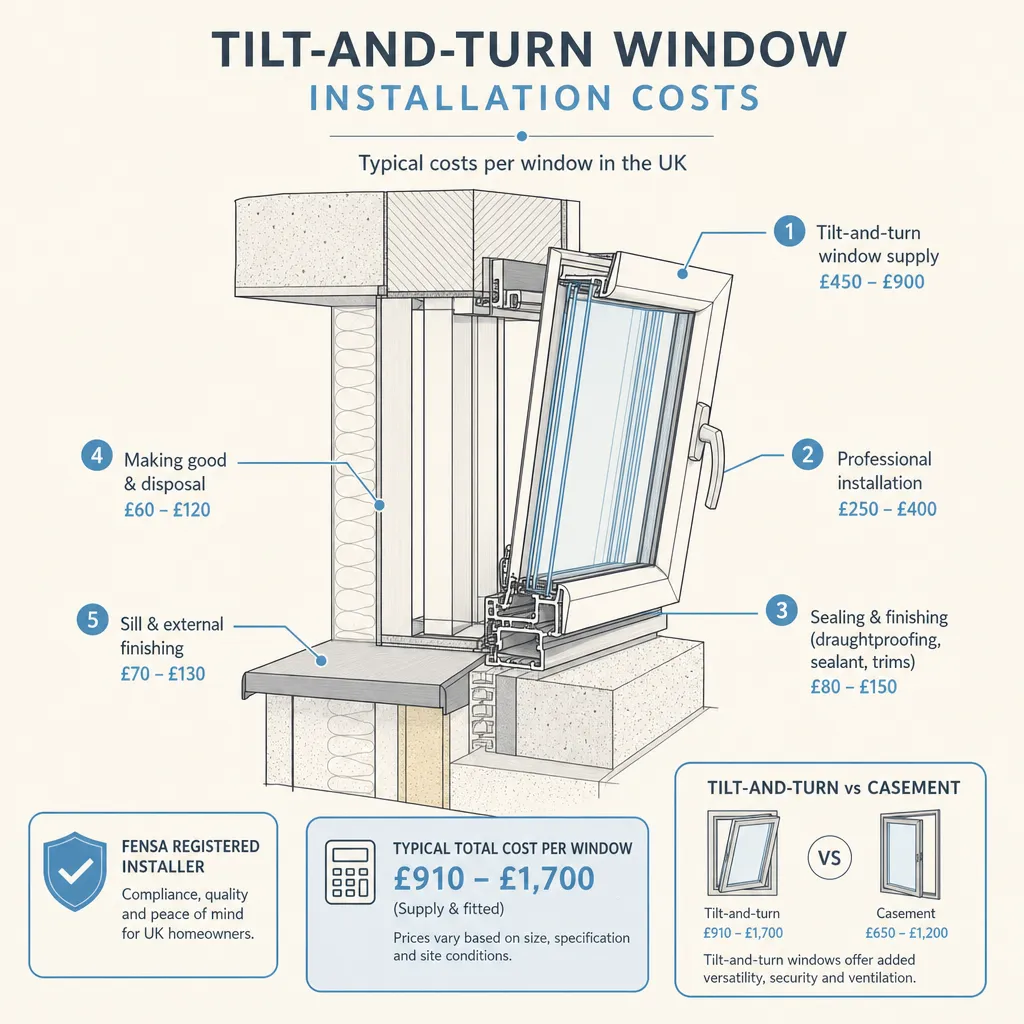 Improvement & Build
Tilt-and-Turn Window Installation Costs
Tilt-and-turn windows typically cost £400–£900 per window supply and fit in uPVC, rising to £600–£1,300 in aluminium and £700–£1,400 in timber.
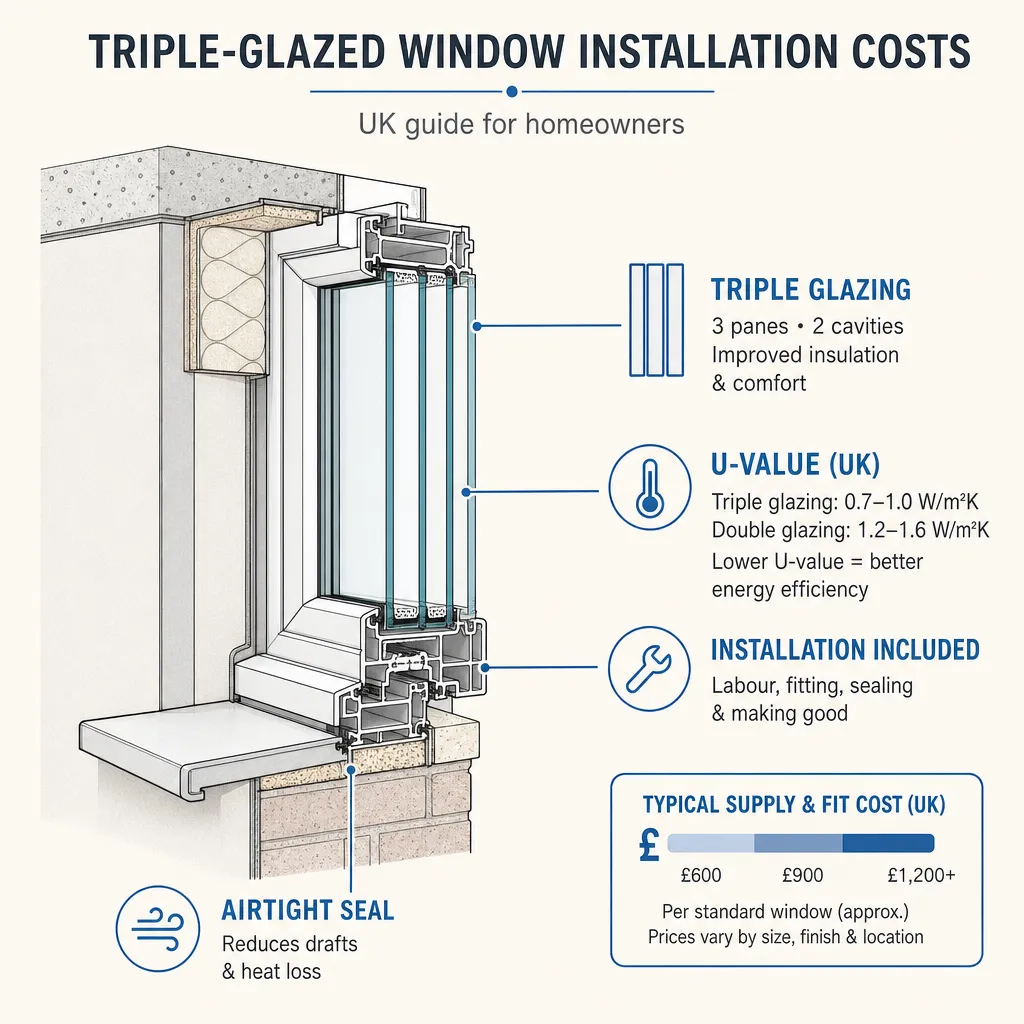 Improvement & Build
Triple-Glazed Window Installation Costs
Triple-glazed window installation in the UK typically costs £800–£1,800 per window, depending on size, frame material, and glazing specification.
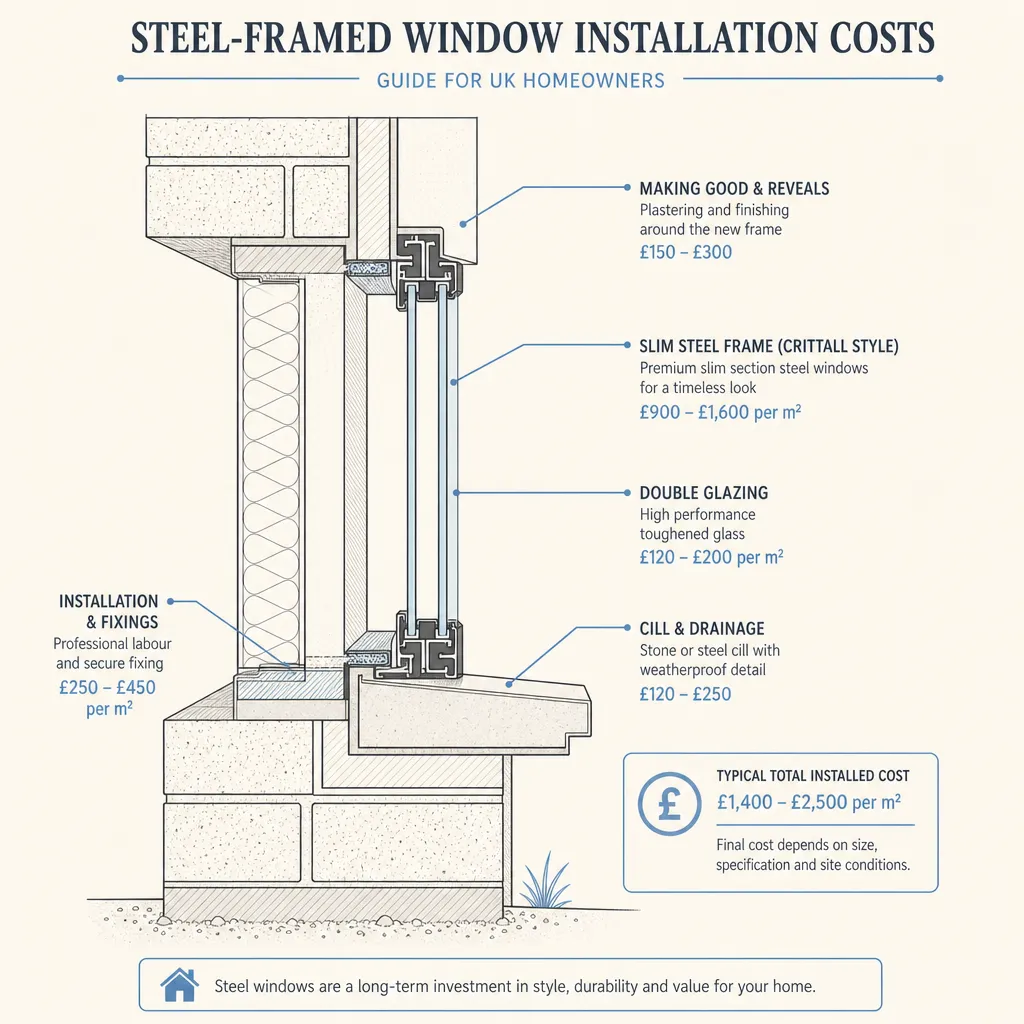 Improvement & Build
Steel-Framed Window Installation Costs
Steel-framed windows cost between £800 and £3,500 or more per window installed in the UK, depending on size, profile type, glazing specification, and whether old frames need removing.
 Improvement & Build
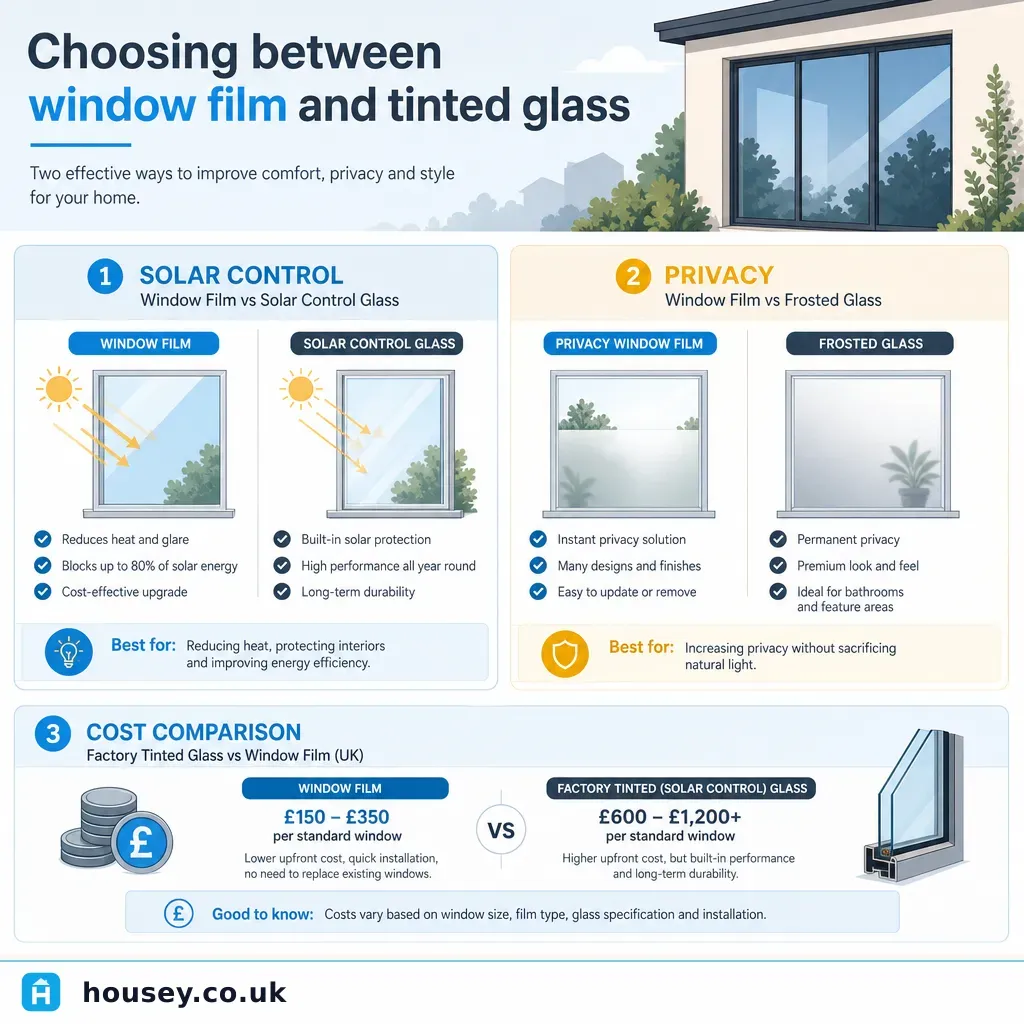
Choosing between window film and tinted glass
Window film is a retrofittable adhesive layer applied to existing glass — cheaper and reversible; factory-tinted or solar-control glass is manufactured with the tint integral to the pane, offering better durability and consistent performance.
 Improvement & Build
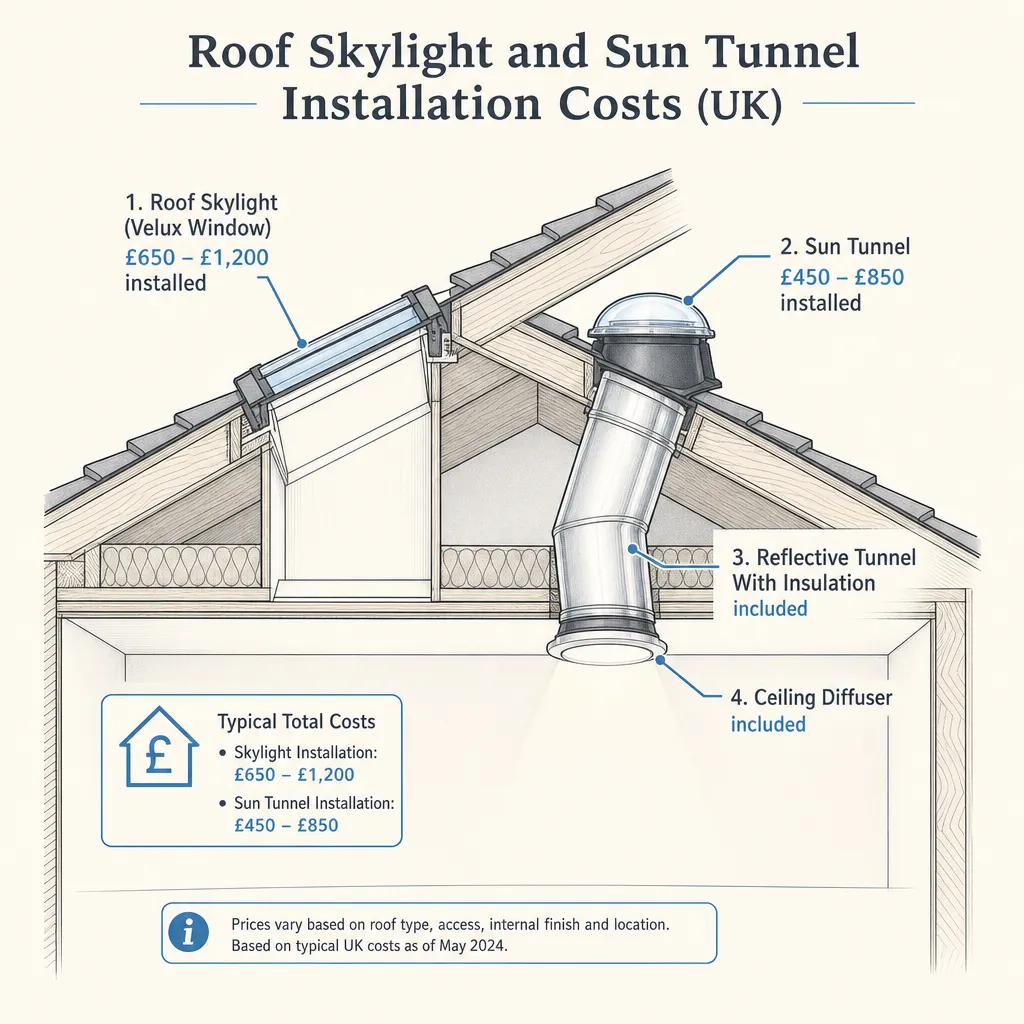
Roof Skylight and Sun Tunnel Installation Costs
A standard pitched-roof skylight costs £800–£3,000 installed in the UK, including flashings and basic making good.