Insulated Concrete Formwork Building System Costs
By Housey · Last reviewed 7th of May 2026
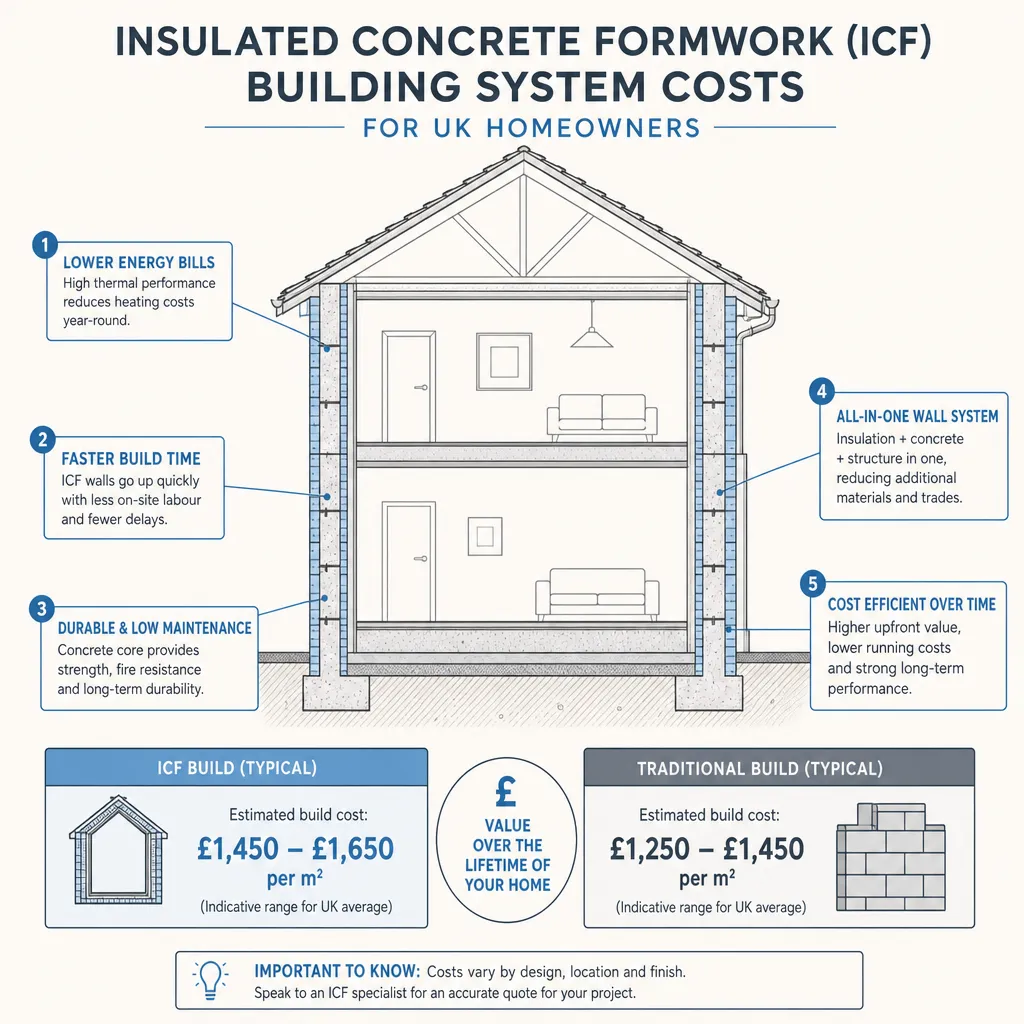
Insulated Concrete Formwork Building System Costs
Insulated Concrete Formwork (ICF) attracts UK self-builders and developers seeking airtight, thermally efficient construction without layering separate insulation products onto a masonry or frame shell. Because the system bundles structural and thermal performance into a single trade, its cost profile differs significantly from traditional cavity masonry — and understanding those differences matters before approaching specialist contractors.
Key points
- ICF formwork materials (expanded polystyrene blocks or panels with ties) typically cost £25–£50 per m² of wall area, exclusive of concrete pour and pump hire.
- A completed ICF shell wall (formwork, rebar, pour, and pump) commonly runs £80–£130 per m² of wall area in the UK; indicative figures, last reviewed 2026-05-07.
- Total build cost to practical completion typically falls within £2,000–£3,500 per m² of gross internal floor area (GIFA), broadly comparable with traditional masonry at whole-project level.
- ICF walls achieve U-values of 0.17–0.25 W/m²K without additional insulation, meeting Building Regulations Part L 2021 elemental targets.
- Building control requires a chartered structural engineer's specification — covering rebar grade, concrete mix, and pour sequence — before approving an ICF wall design.
ICF versus traditional masonry: cost breakdown
ICF stacks hollow polystyrene blocks or panels, reinforces them with steel rebar, and fills the core with ready-mixed concrete. The polystyrene remains permanently as built-in insulation on both wall faces. This front-loads material and pour costs in a way traditional masonry does not.
Cost element | ICF | Traditional cavity masonry |
|---|---|---|
Formwork / blockwork | £25–£50/m² wall | £20–£40/m² wall |
Insulation | Integrated (nil extra) | Cavity batts: £5–£15/m² wall |
Structural fill | Concrete pour + pump: £30–£55/m² wall | Mortar: £5–£10/m² wall |
Typical U-value | 0.17–0.25 W/m²K | 0.18–0.28 W/m²K |
Airtightness membranes | Often reduced or eliminated | Usually required |
Contractor needed | Specialist ICF contractor | General bricklayers |
Main risk if wrong | Voids in pour, inadequate rebar cover | Thermal bridging, damp ingress |
Indicative UK costs, last reviewed 2026-05-07. Obtain project-specific quotes before budgeting.
ICF versus timber frame
Timber frame is the main alternative to traditional masonry for UK self-builds and warrants a direct comparison.
Factor | ICF | Timber frame (open panel) |
|---|---|---|
Shell cost (per m² GIFA) | £1,400–£2,200 | £1,200–£2,000 |
Thermal mass | High (concrete core) | Low |
Airtightness | Inherent, excellent | Good — requires careful detailing |
Acoustic performance | Very good | Moderate (acoustic spec needed) |
Build speed | Moderate | Faster (panels pre-fabricated) |
UK contractor availability | Limited specialists | Wider contractor base |
Indicative UK costs, last reviewed 2026-05-07.
What drives ICF costs up or down?
Increases cost: complex geometry (curves, multiple corners); multi-storey pours requiring scaffold at height; remote or constrained sites with poor lorry access; wider concrete cores (200mm+); design changes after the pour sequence begins.
May reduce cost: self-builders can place formwork under supervision (pour still needs a specialist); ICF surfaces can accept plasterboard direct, removing a separate insulation-fix stage; no separate external wall insulation purchase; lower heating demand may allow a smaller mechanical system.
Planning permission and building regulations
ICF is a structural system, not a planning category — planning permission depends on site, design, and local planning authority, not wall construction method. Permitted development rules apply to ICF builds in the same way as masonry.
Building Regulations approval is mandatory for any new dwelling or structural extension. ICF projects must satisfy:
- Part A (Structure): Structural engineer's calculations covering rebar specification, concrete grade, and pour sequence.
- Part L (Conservation of fuel and power): SAP calculations using the manufacturer's BBA-certified U-value data.
- Part E (Resistance to sound): Relevant where ICF forms a party wall or separating floor between dwellings.
Building control will typically require the structural engineer's drawings and the system's third-party technical approval (British Board of Agrément certificate or equivalent) before consenting the wall specification.
Which professionals do you need for an ICF project?
Stage | Professional needed | Why |
|---|---|---|
Design | Architect or architectural technologist | Planning drawings and design development |
Structural specification | Chartered structural engineer | Rebar, concrete grade, pour sequence for building control |
Budget planning | Quantity surveyor / build cost estimator | Independent benchmark before tendering |
Construction | Specialist ICF contractor | Formwork, rebar placing, concrete pour |
Building control | Local authority or approved inspector | Statutory sign-off at each stage |
Decision guide: is ICF right for your project?
- Choose ICF if you want high thermal mass, inherent airtightness, and durable fabric with low maintenance on a new-build home.
- Choose timber frame if programme speed is the priority or your contractor base lacks ICF experience.
- Choose traditional masonry for modest extensions where ICF's thermal premium cannot be justified by projected energy savings.
- Consult a structural engineer before committing if the site has complex ground conditions or the design includes significant cantilevers or large openings.
- Get an independent cost estimate before approaching specialist contractors so you have a benchmark against which to compare quotes.
When to get professional help
A chartered structural engineer must specify rebar, concrete grade, and pour sequence before building control will approve the wall design. An independent quantity surveyor or build cost estimator should benchmark costs before you commit to contractor quotes. If ground conditions are atypical — made ground, high water table, expansive soils — a civil or geotechnical engineer should assess the foundation design before structural drawings are finalised.
How Housey can help
Housey connects you with independent professionals at every stage of an ICF project. Use our build cost estimating service to obtain independent quantity surveying advice before approaching contractors. For structural specification and building control sign-off, find a qualified structural engineering specialist through Housey. Where your project involves complex ground conditions or foundation design, our civil engineers can help match you with the right geotechnical expertise.
Frequently asked questions
Is ICF cheaper than traditional masonry construction in the UK?
At shell-and-core stage, ICF typically costs 5–15% more than traditional cavity masonry, mainly due to specialist concrete pour costs. Savings on separate insulation, airtightness membranes, and potentially a smaller heating system can narrow this gap. At whole-project level, total costs to practical completion are broadly comparable with masonry.
Can a self-builder lay ICF blocks themselves?
Yes — formwork stacking is within reach of a competent self-builder following manufacturer guidance. The rebar placement and concrete pour should be carried out or directly supervised by an experienced ICF contractor. Building control will require the structural specification to be signed off by a chartered structural engineer regardless of who places the blocks.
Does ICF meet Building Regulations Part L 2021?
Most ICF systems with a 150–200mm concrete core achieve wall U-values of 0.17–0.22 W/m²K, comfortably meeting Part L 2021 elemental targets. Always use the manufacturer's BBA-certified or independently assessed U-value data in your SAP calculation rather than generic estimates.
How long does an ICF house take to build?
A typical three-bedroom ICF house takes 9–18 months from groundworks to practical completion, similar to traditional masonry. The wall phase can proceed faster once the pour sequence begins, but overall programme depends on groundworks, design complexity, and fit-out specification.
What certifications should I ask an ICF system supplier about?
Ask for a British Board of Agrément (BBA) certificate or equivalent third-party technical assessment covering structural performance, U-values, fire resistance, and durability. Building control inspectors will usually require this documentation before approving the wall specification for a new dwelling or structural extension.
Sources and further reading
- Building Regulations Approved Documents — HM Government
- RICS Building Cost Information Service — RICS
- British Board of Agrément certificate search — British Board of Agrément
- Energy Saving Trust: Insulation guidance — Energy Saving Trust
- Planning permission in England and Wales — HM Government
Useful next reads
 Planning & Pre-Build
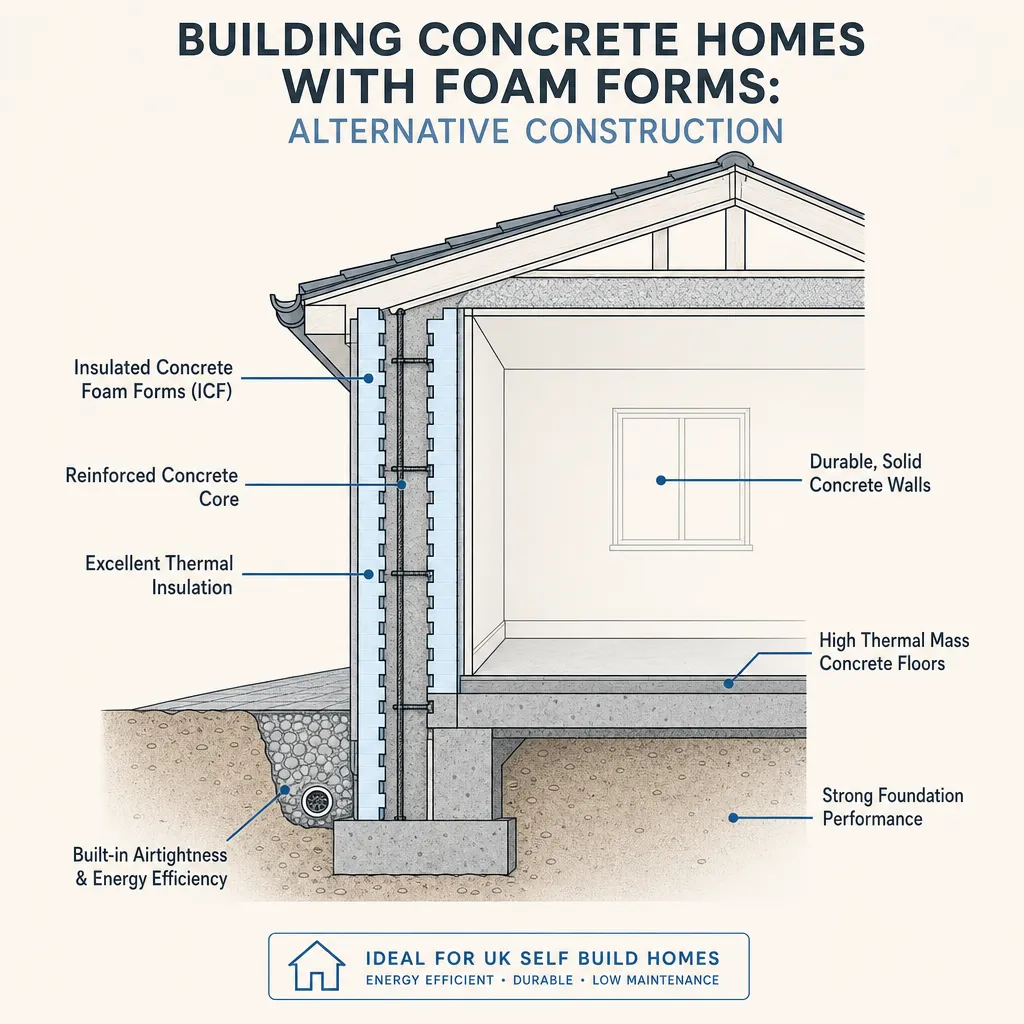
Building Concrete Homes with Foam Forms: Alternative Construction
Insulated concrete formwork (ICF) uses lightweight EPS foam blocks as permanent shuttering filled with reinforced concrete to form walls.
 Planning & Pre-Build
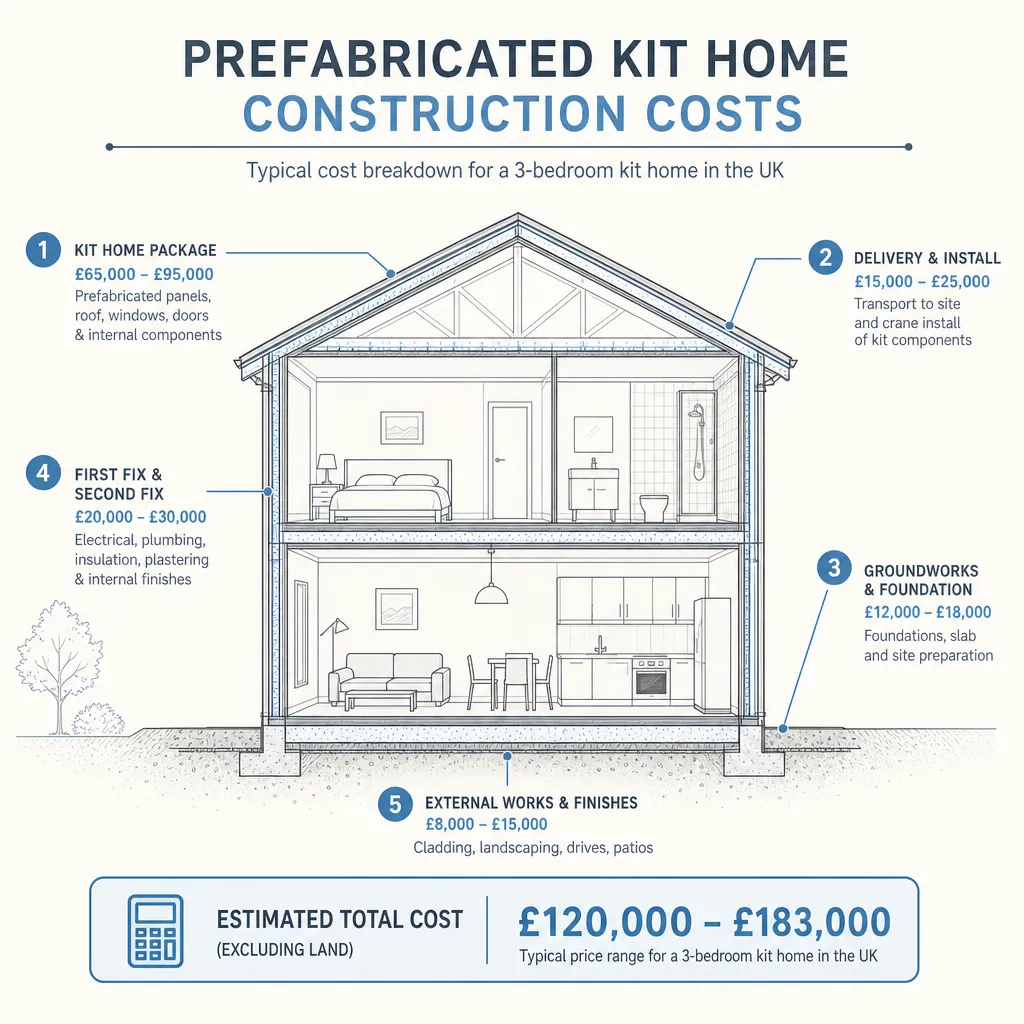
Prefabricated Kit Home Construction Costs
UK kit home construction costs range from around £1,000 to £2,500 per m² for a completed home, depending on the system — timber frame, SIPs, or volumetric modular — and the specification.
 Planning & Pre-Build
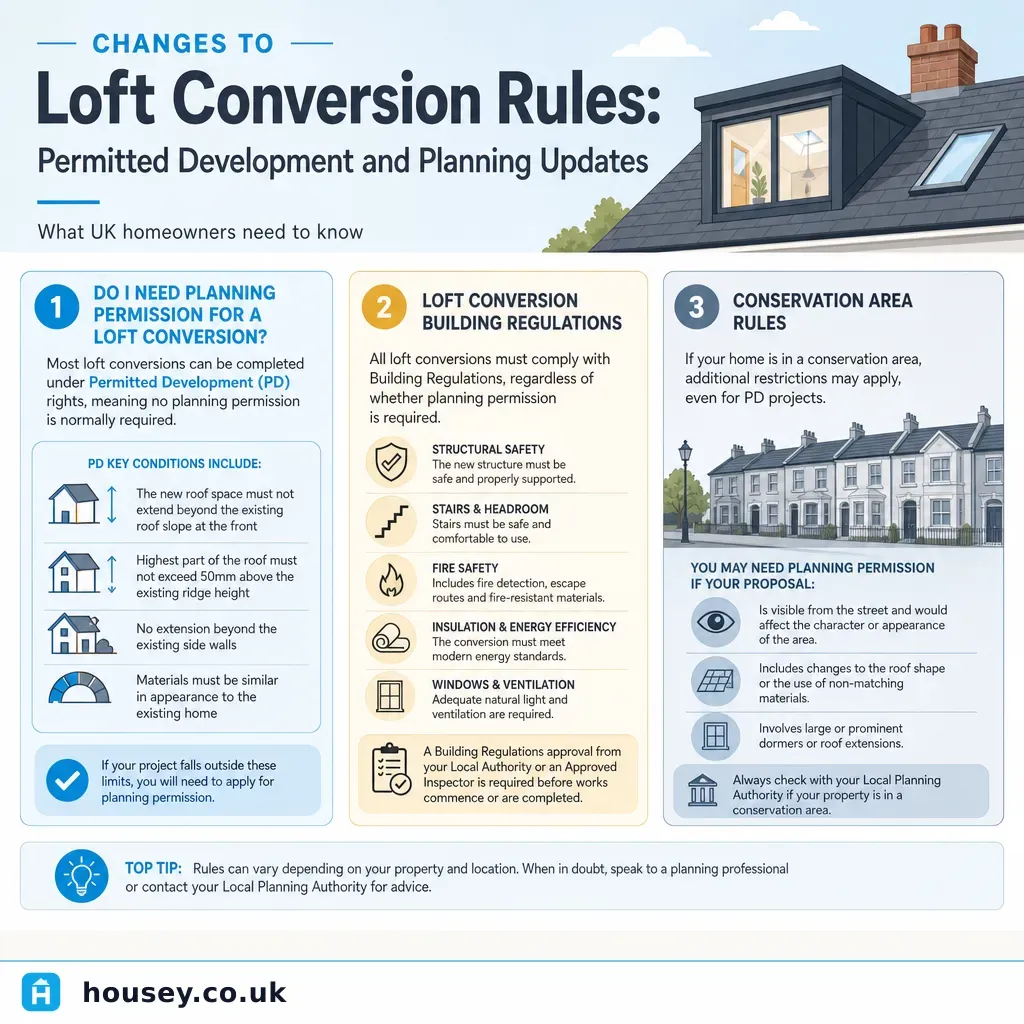
Changes to Loft Conversion Rules: Permitted Development and Planning Updates
In England, most loft conversions on standard houses qualify as Permitted Development under Class B of the GPDO 2015, allowing up to 40 cubic metres (terraced) or 50 cubic metres (detached or semi-detached) without a planning application — if conditions are met.
 Planning & Pre-Build
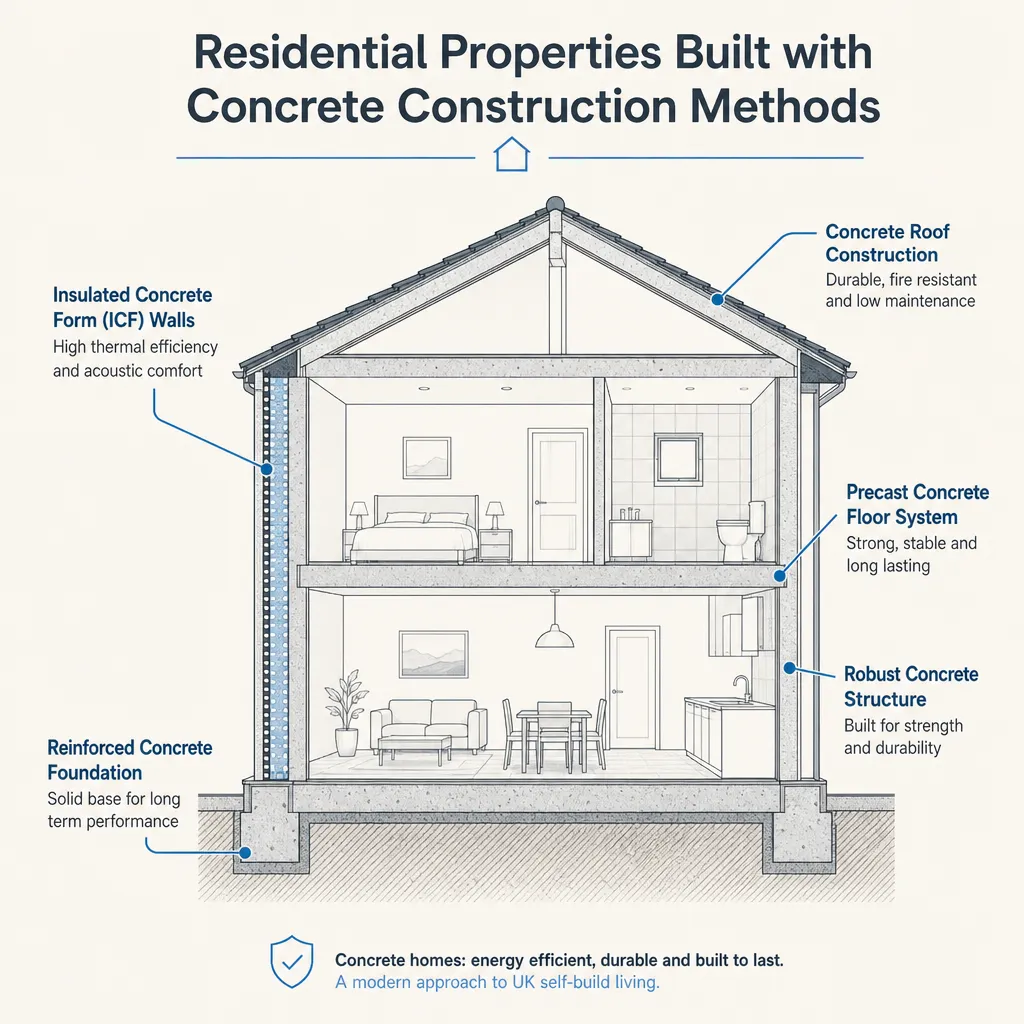
Residential Properties Built with Concrete Construction Methods
UK homes are built using several concrete methods: in-situ cast concrete, precast panel systems, insulating concrete formwork (ICF), and older non-traditional types such as Wimpey No-Fines and Laing Easiform.
 Planning & Pre-Build
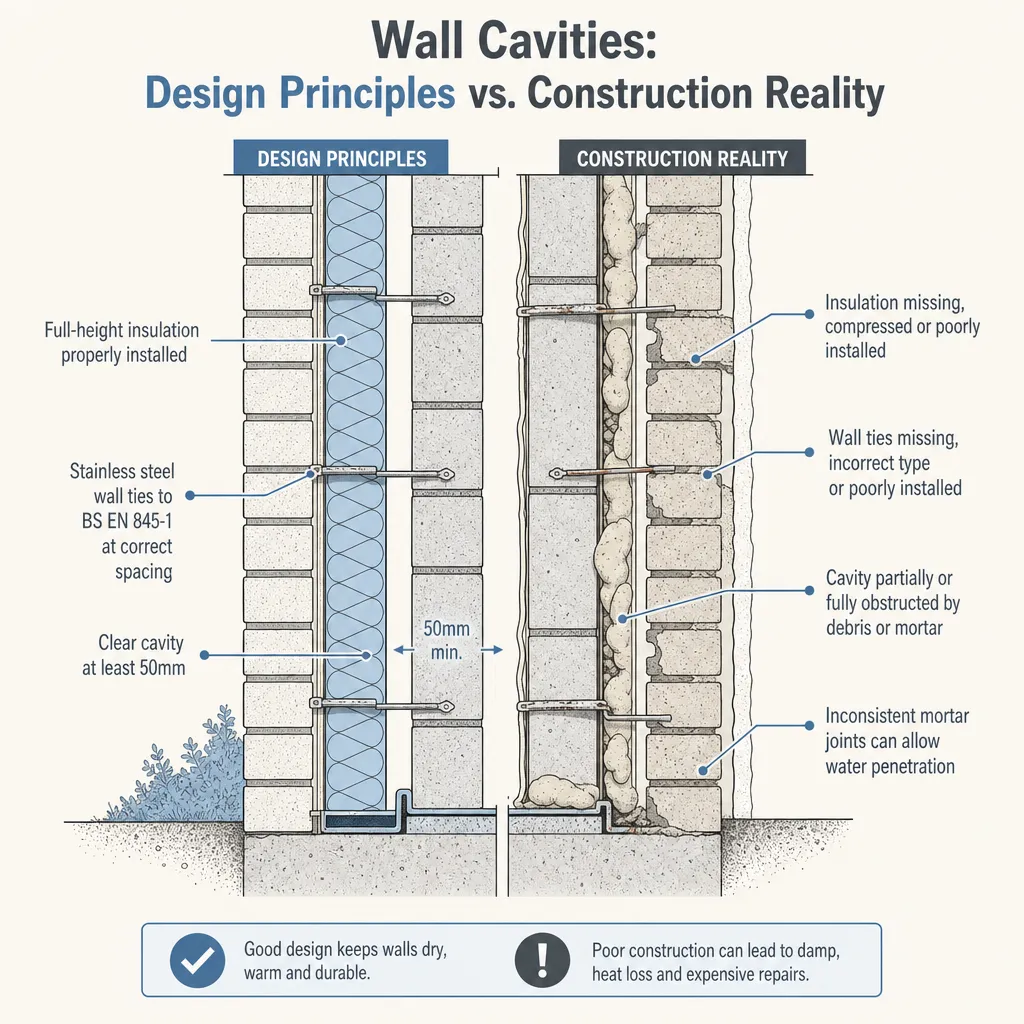
Wall Cavities: Design Principles vs. Construction Reality
A UK cavity wall is designed to resist weather, control heat loss, and structurally link two masonry leaves.