Insulating Original Plaster Walls: Methods and Considerations
By Housey · Last reviewed 1st of June 2026
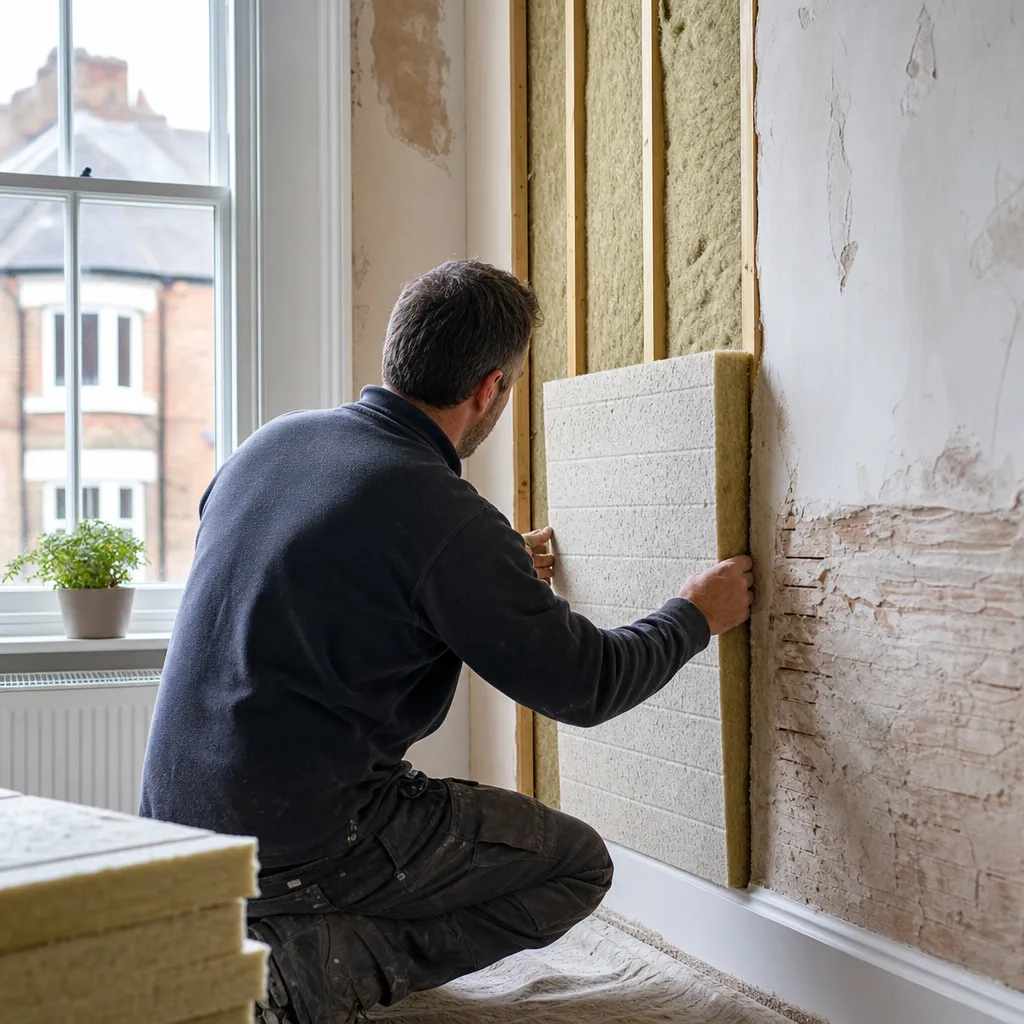
Insulating Original Plaster Walls: Methods and Considerations
Original plaster walls — whether lime-rendered solid masonry in a Victorian terrace or lath-and-plaster partitions in an Edwardian semi — present specific challenges when homeowners want to improve thermal performance. Deciding how to insulate them is rarely straightforward: the construction type, the condition of existing plasterwork, moisture behaviour, and whether the property carries heritage protections all shape what is and is not appropriate. Getting this decision wrong can cause interstitial condensation, mould, or damage to historic fabric that is expensive and slow to reverse.
Key points
- Solid walls (typical in pre-1920s homes) have no cavity; their U-value is usually around 1.7–2.1 W/m²K — installing 90–100 mm of internal wall insulation can bring this below 0.30 W/m²K as required by Building Regulations Part L for major refurbishment.
- Lime plaster and lime render are breathable (vapour-permeable); using non-breathable closed-cell foam insulation directly against them can trap moisture, leading to interstitial condensation and structural damage.
- PAS 2035:2023 — the UK standard for domestic retrofit — requires a Retrofit Coordinator for any publicly funded project (ECO4, HUG2, LADS) involving wall insulation, and mandates a whole-house assessment before work starts.
- External Wall Insulation (EWI) on a listed building, or within a conservation area, almost always requires planning permission — check with your Local Planning Authority before proceeding.
- Internal Wall Insulation reduces usable floor area: a 75 mm system on four walls of a 4 m × 5 m room loses roughly 0.6 m² of floor space and requires moving sockets, radiators, and window boards.
Why original plaster matters to the insulation decision
Original plasterwork — particularly lime-based finishes common in buildings constructed before around 1919 — is both a historic asset and a functional part of the building's moisture management. Lime is vapour-permeable, meaning it allows the wall to breathe and release moisture to the outside. When an insulation system disrupts that vapour path — for example, by installing a vapour-impermeable membrane or a rigid foam board directly against lime plaster — moisture can accumulate within the wall structure, causing timber lintels and wall plates to decay, plaster to delaminate, and in severe cases, masonry to deteriorate.
The choice of insulation system must therefore account for the wall's construction and existing finishes, not only the thermal target. A PAS 2035-compliant Retrofit Assessor will characterise the wall's moisture behaviour as part of their assessment — this step should not be skipped, particularly in homes built before 1945.
Comparing the main insulation approaches for original plaster walls
Method | Best for | Not ideal for | Typical U-value improvement | Main risk if wrong |
|---|---|---|---|---|
IWI — rigid board (PIR, phenolic, mineral wool) | Solid masonry; appearance constraints; conservation areas | Rooms where space loss is unacceptable; unresolved damp present | ~2.0 → 0.28–0.35 W/m²K | Condensation at cold bridge; moisture trapped behind board |
IWI — breathable board or insulated lime plaster | Listed buildings; lime plaster construction; slim-line applications | High thermal ambition (smaller gain per mm) | ~2.0 → 0.8–1.2 W/m²K | Lower performance; requires specialist applicator |
External Wall Insulation (EWI) | Solid masonry; no heritage constraints; external renovation planned | Listed buildings; conservation areas (usually); terraced mid-sections | ~2.0 → 0.28–0.30 W/m²K | Planning refusal; altered kerb appeal; cold bridging at junctions |
Cavity wall fill (where applicable) | Post-1920s cavity-wall homes with original plaster on internal leaf | True solid-wall properties with no cavity | ~1.5 → 0.5 W/m²K | Cavity bridging; damp penetration if cavity is already wet |
Aerogel render or insulating plaster | Historic properties; breathability critical; slim application required | Large U-value reductions needed | Incremental (20–50 mm adds ~0.3–0.5 W/m²K improvement) | Overstated performance expectations; specialist application required |
Internal wall insulation: how it works and what to preserve
Internal Wall Insulation (IWI) involves fixing an insulating layer to the internal face of an external wall. Common systems include:
- Rigid insulation boards (PIR, phenolic, or mineral wool) with a plasterboard facing — mechanically fixed or adhesively bonded and then plastered or decorated over.
- Breathable board systems — wood fibre boards or mineral wool combined with a vapour-open membrane, appropriate where the existing construction is moisture-sensitive or historically significant.
- Insulating plaster systems — aerogel-enhanced renders or insulated lime plasters applied at 20–50 mm thickness. These deliver more modest thermal improvement but preserve the character of original rooms and are often accepted in listed buildings, subject to listed building consent.
Original plaster does not necessarily need to be removed before IWI is installed. However, the condition of existing plasterwork must be assessed — loose or hollow areas behind an insulated board create cold bridging and moisture voids. A specialist will normally decide whether to retain, repair, or remove sections of existing plaster before the new system is applied.
External wall insulation: when it is the right route
EWI wraps the outside of the building in an insulating layer, with a render or cladding finish applied over it. For homes with original internal plasterwork, EWI leaves internal finishes largely undisturbed and avoids reducing room dimensions. However, several constraints apply:
- Listed buildings require listed building consent; many Local Planning Authorities will not grant consent for EWI because it alters the external character and appearance of the building.
- Conservation areas may require prior approval or planning permission depending on the Local Planning Authority's supplementary planning documents — check before instructing any contractor.
- Terraced and semi-detached properties must achieve continuity of the insulation layer at junctions with adjoining properties to avoid thermal bridging, which often requires discussion with neighbours and careful junction detailing.
- Roof verges and window reveals must be carefully designed to prevent cold bridges that would significantly reduce the system's overall thermal benefit.
Which insulation approach should you choose?
- Choose IWI with a breathable system if the building is listed, in a conservation area, or has significant original lime plaster you want to retain.
- Choose standard rigid-board IWI if external appearance must be preserved, no heritage constraints apply, damp has been fully resolved, and some reduction in room dimensions is acceptable.
- Choose EWI if no planning constraints apply, the external finish is due for renewal, and junctions with neighbours and adjoining elements can be properly managed and detailed.
- Choose aerogel render or insulating plaster if space is very limited, breathability is essential, or the thermal gain will necessarily be incremental — for example, a solid-wall pre-1919 cottage with lime render throughout.
- Ask a PAS 2035 Retrofit Assessor before starting if works are publicly funded, or if the building is pre-1919, listed, or showing any signs of damp or moisture ingress.
- Check with your Local Planning Authority if the property is listed or in a conservation area — do not rely on a contractor's assurance that consent is not required.
Moisture, condensation, and vapour control
Interstitial condensation — where moisture within the wall structure reaches its dew point and condenses — is the most common failure mode in wall insulation retrofits on original plaster buildings. It is more likely when:
- A vapour-impermeable layer (foil-backed board, closed-cell foam) is installed on the cold side of the insulation in a wall that was originally breathable.
- An unresolved moisture source — rising damp, penetrating damp, or a plumbing leak — is present before insulation is installed over it.
- Ventilation is insufficient for the more airtight internal environment that insulation work creates.
PAS 2035:2023 addresses this through a mandatory moisture risk assessment, which must be carried out before measures are specified on any funded scheme. Where risk is identified, the standard requires mitigating measures including breathable systems, appropriate ventilation strategies (often Mechanical Extract Ventilation), and post-installation monitoring in higher-risk properties.
Important limitations
This article provides general information about wall insulation options for homes with original plaster walls. The appropriate approach depends on the specific construction of your property, its condition, moisture behaviour, heritage status, and local planning requirements. Performance outcomes vary considerably between properties, and rules around planning consent and grant eligibility change over time. A qualified professional — particularly a PAS 2035-accredited Retrofit Assessor — should assess your property before any wall insulation work is commissioned. Nothing in this article constitutes structural, planning, or regulatory advice.
When this becomes urgent
Seek professional advice before proceeding if:
- The property was built before 1919, or has confirmed lime plaster or lime render on external walls.
- The building is listed (any grade) or is in a designated conservation area.
- There are visible signs of damp, staining, efflorescence, or mould on internal walls.
- You are applying for ECO4, HUG2, or any publicly funded scheme — PAS 2035 compliance is mandatory and the process begins with a whole-house assessment before any measure is installed.
- A contractor has recommended rigid foam boards directly against original lime plaster without first carrying out a moisture risk assessment.
- The building has complex junctions — original timber-framed elements, embedded beams, or large areas of uneven masonry — adjacent to the proposed insulation zone.
What to ask a qualified professional
- Is the wall construction solid masonry, cavity, or timber-framed, and has this been confirmed by physical inspection rather than assumption from the property's age?
- Is a moisture risk assessment required under PAS 2035, and will you carry one out before specifying a system?
- Is the proposed insulation system vapour-permeable or vapour-impermeable, and is that appropriate for this specific wall construction and its existing plaster finish?
- Does this property require listed building consent or planning permission before EWI or IWI can be installed?
- How will cold bridges at floor, ceiling, reveals, and party wall junctions be addressed in the system design?
- What certifications, warranties, and guarantees will the completed system carry, and under what conditions might they be voided?
- Are you registered with TrustMark, and will the completed work be lodged on the TrustMark Data Warehouse as required for funded schemes?
How Housey can help
Housey connects homeowners with qualified specialists for insulation assessments and retrofit assessments — including PAS 2035-compliant whole-house assessments before publicly funded work begins. When you are ready to proceed, you can also compare quotes from vetted insulation installers with relevant experience in older and historic properties.
Frequently asked questions
Can I insulate original lime plaster walls without removing the plaster?
In many cases, yes — a breathable insulated board or insulating plaster system can be installed over sound lime plaster without full removal. The existing plaster must first be checked for soundness; loose or hollow sections may need to be cut out and repaired to prevent cold bridging and moisture voids forming behind the new system. Always have the condition assessed by a specialist before installation.
Does internal wall insulation always reduce room size?
Yes. Any IWI system adds depth to internal walls, reducing floor area. A 75 mm system on all four external walls of a small room removes approximately 0.6–0.8 m² of floor space and typically requires moving electrical sockets, radiators, and window boards. Slim-line aerogel-based systems reduce this to 20–30 mm depth, though with proportionally lower thermal improvement.
Do I need planning permission to insulate my walls?
Not usually for internal insulation, which rarely requires planning consent. External Wall Insulation may require planning permission if the property is in a conservation area, or listed building consent if it is a listed building. Always check with your Local Planning Authority before proceeding — do not rely solely on a contractor's assurance that consent is unnecessary.
What is PAS 2035 and when does it apply?
PAS 2035:2023 is the UK specification for domestic energy retrofit. It applies to all publicly funded retrofit projects — including ECO4, HUG2, and LADS — and requires a Retrofit Coordinator to oversee work and a whole-house Retrofit Assessment before any measures are installed. Some contractors also apply PAS 2035 principles to privately funded projects as best practice.
Can I use cavity wall insulation if my walls have original plaster?
If the property has a cavity — usually post-1920s construction — cavity wall insulation may be appropriate, as the cavity sits between the two leaves independently of the internal plaster finish. The cavity must be assessed for condition, moisture, and bridging potential first. Solid-wall homes, typical of pre-1920s construction, have no cavity and require internal or external insulation instead.
Sources and further reading
- PAS 2035:2023 Retrofitting dwellings for improved energy efficiency — BSI / Retrofit Academy
- Energy Efficiency and Historic Buildings: Insulating Solid Walls — Historic England
- Solid wall insulation — Energy Saving Trust
- TrustMark: Retrofit installer registration and standards — TrustMark
Useful next reads
 Energy & Retrofit
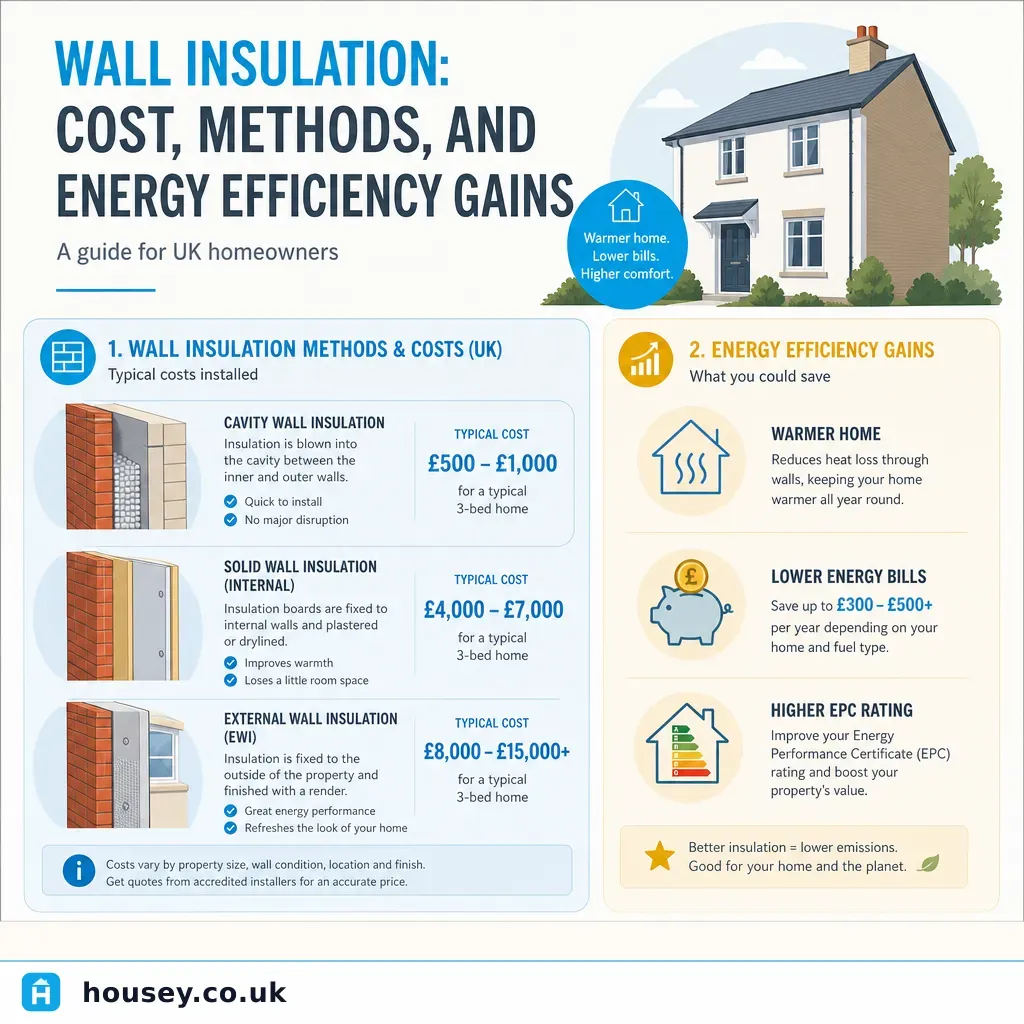
Wall Insulation: Cost, Methods, and Energy Efficiency Gains
Wall insulation in UK homes uses one of three main methods: cavity wall insulation for post-1920 homes with an unfilled cavity, external wall insulation for solid-walled properties, and internal wall insulation where external changes are not permitted.
 Energy & Retrofit
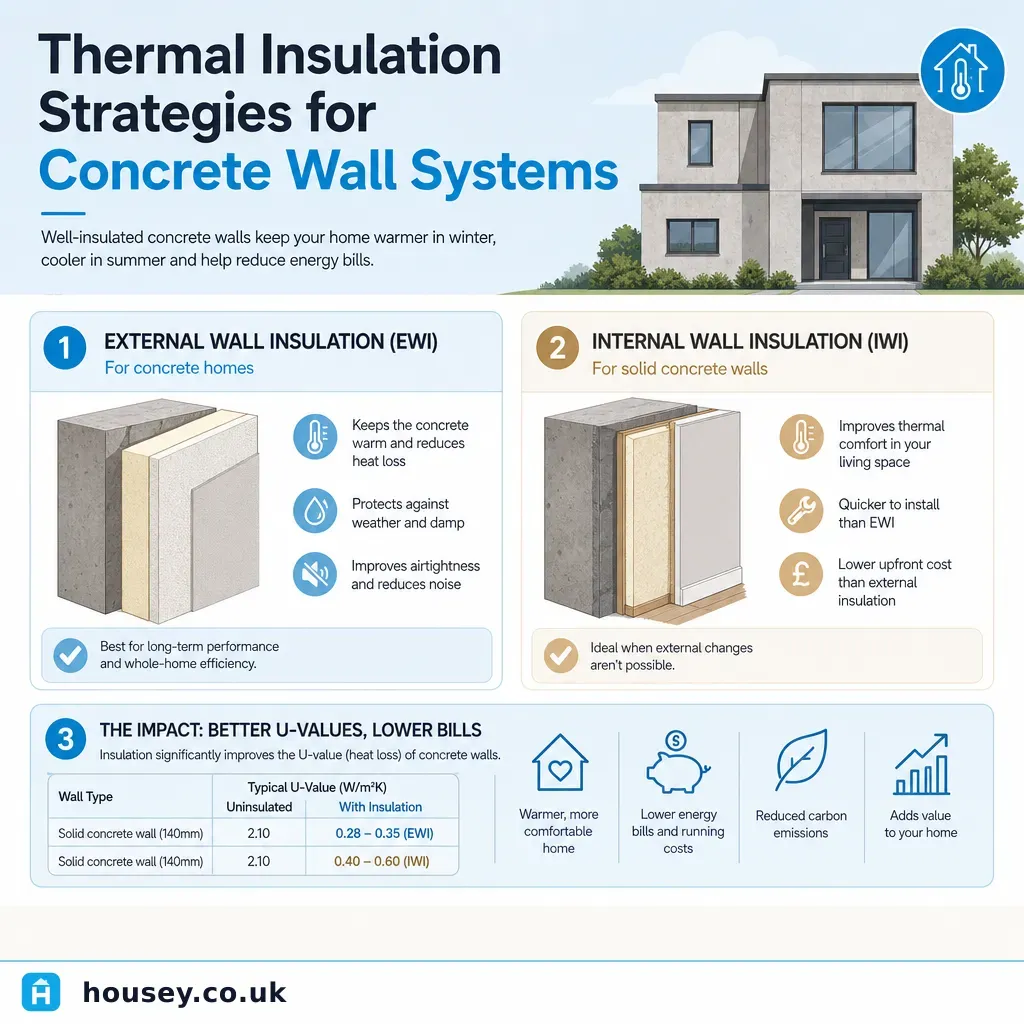
Thermal Insulation Strategies for Concrete Wall Systems
Concrete walls can be insulated using three main approaches: external wall insulation (EWI), internal wall insulation (IWI), or — where a cavity exists — cavity fill.
 Energy & Retrofit
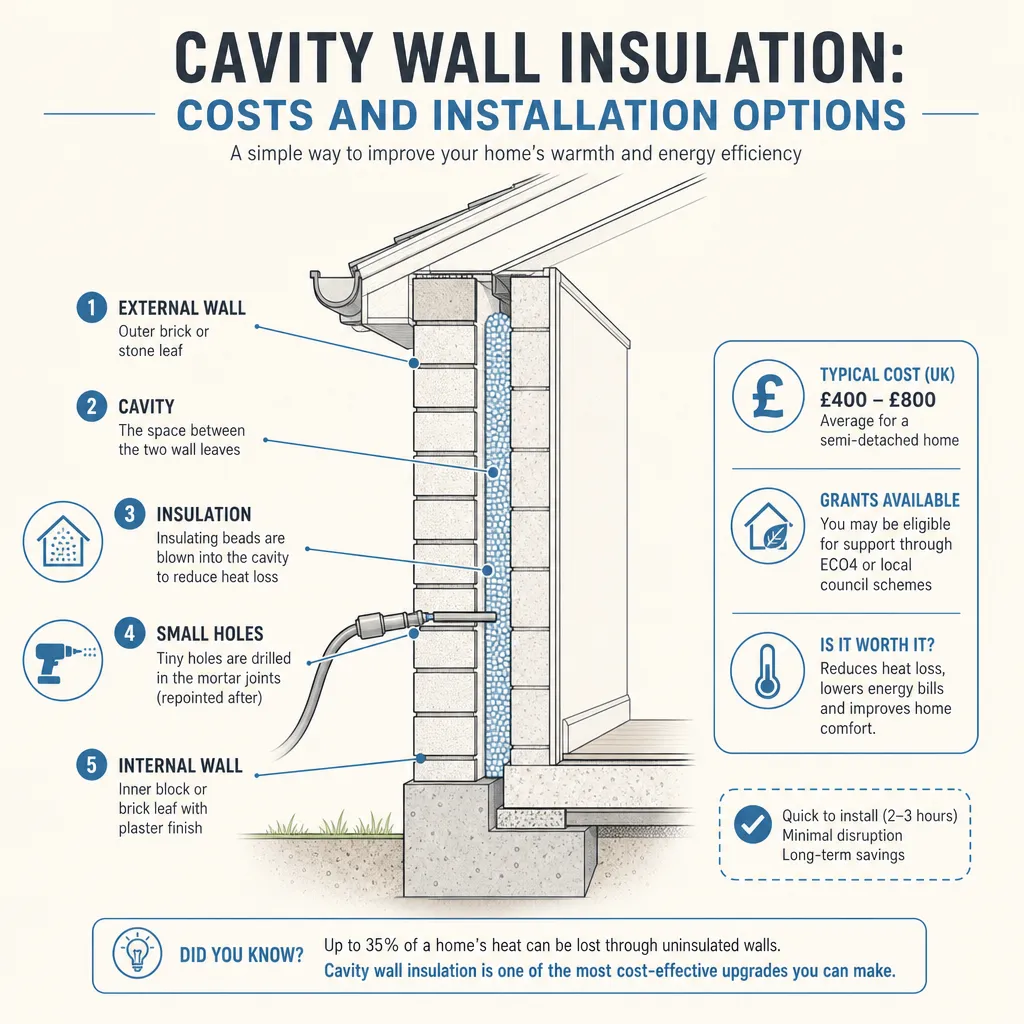
Cavity Wall Insulation: Costs and Installation Options
Cavity wall insulation typically costs £400–£1,200 for a standard UK semi-detached home, though eligible households may pay nothing under ECO4.
 Energy & Retrofit
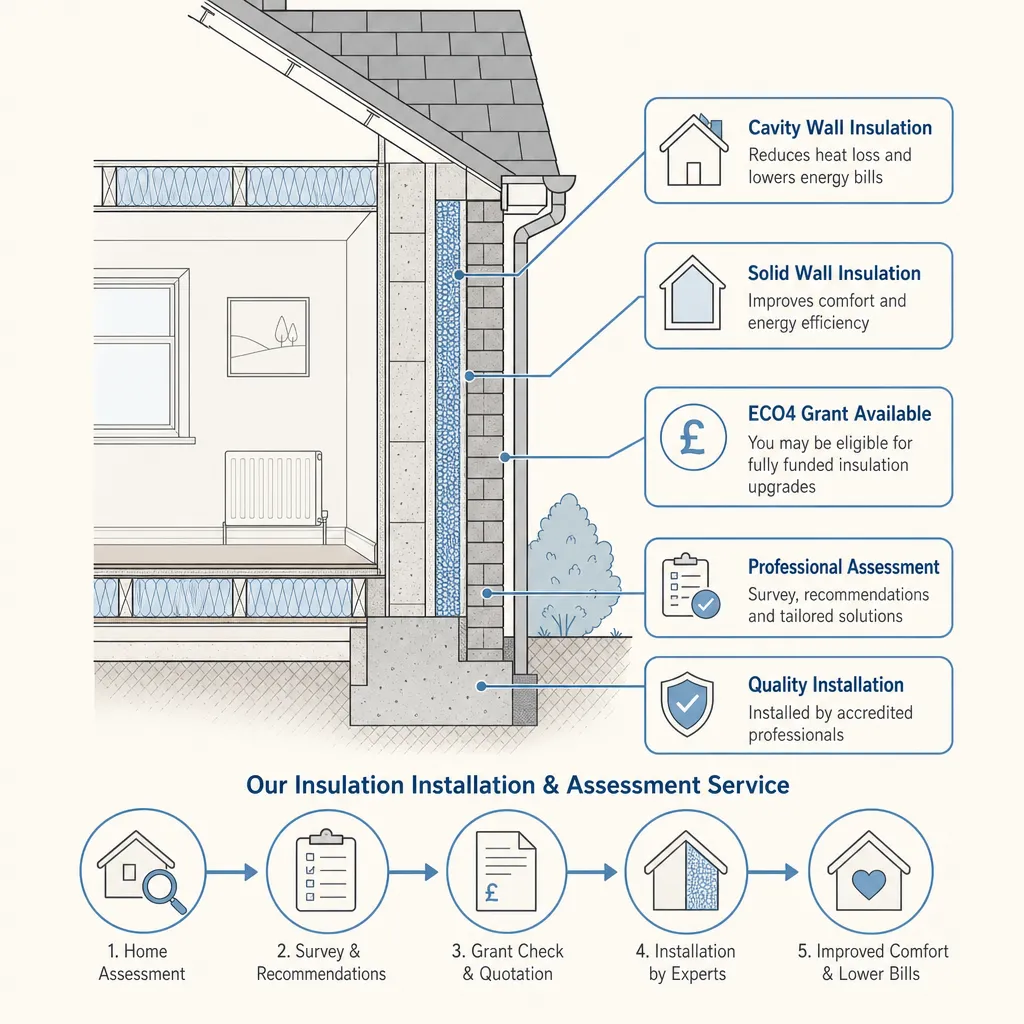
Insulation Installation and Assessment Services
A home insulation assessment identifies the most appropriate insulation type for your property and checks for moisture risk before work begins.
 Energy & Retrofit
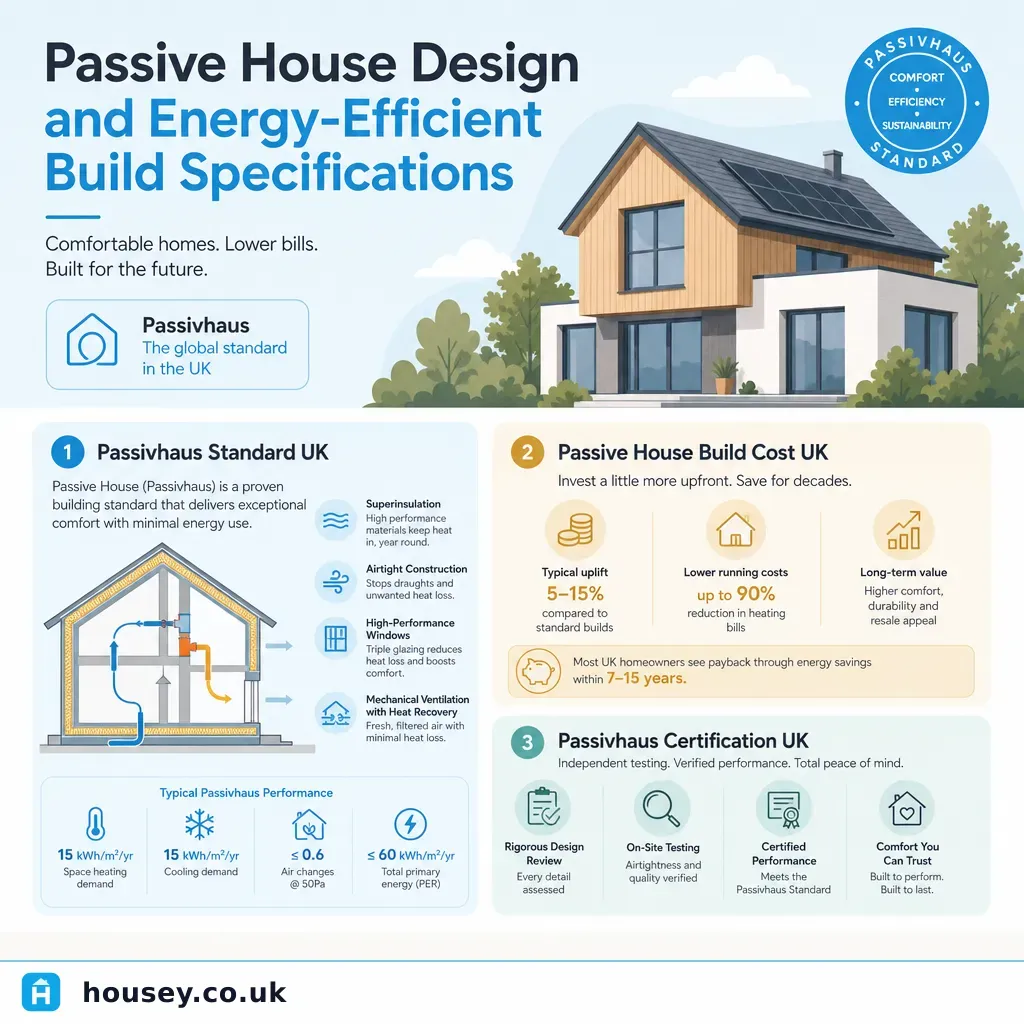
Passive House Design and Energy-Efficient Build Specifications
Passive house (Passivhaus) design limits a building's space heating demand to a maximum of 15 kWh/m² per year through super-insulation, airtight construction, triple-glazed windows, and mechanical heat-recovery ventilation.