Professional Standards: Insurance Requirements for Tree Services
By Housey · Last reviewed 31st of May 2026
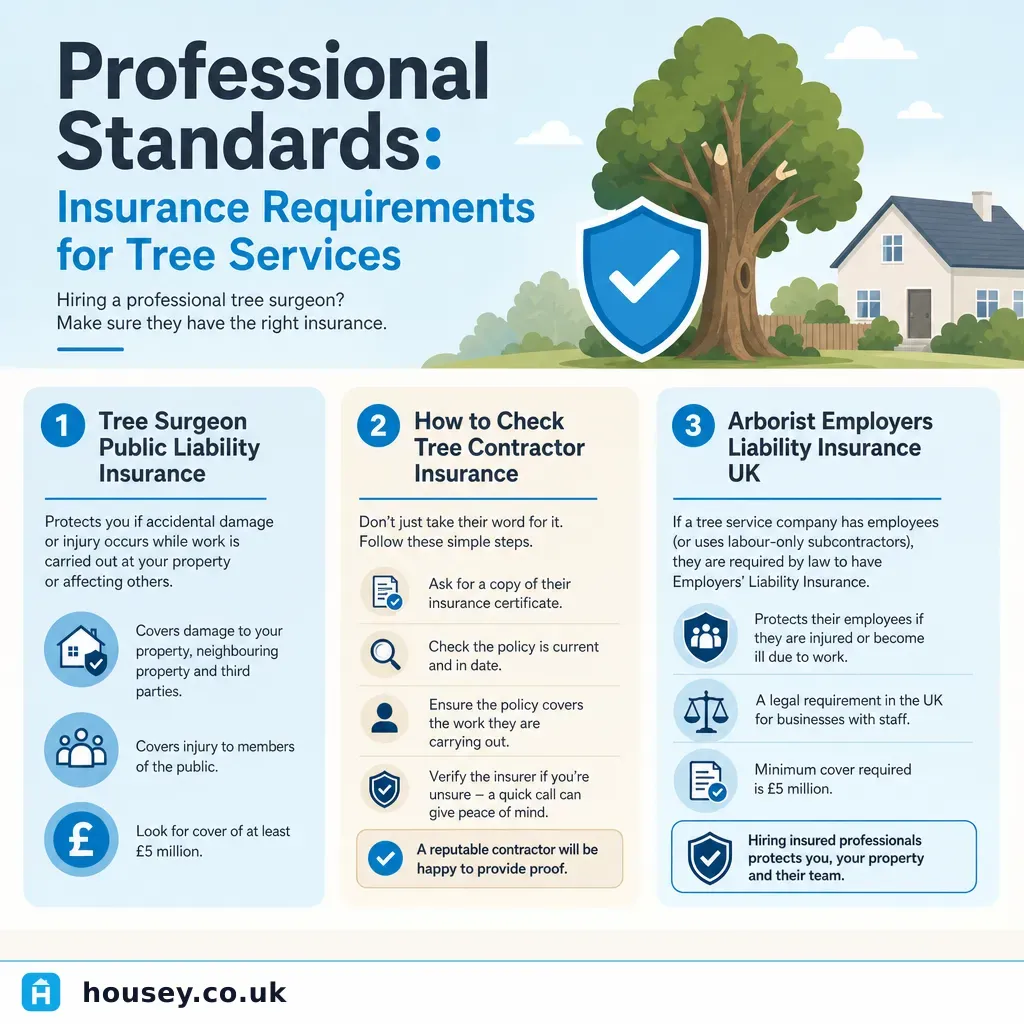
Professional Standards: Insurance Requirements for Tree Services
Tree surgery is one of the higher-risk trades in the residential sector, involving chainsaws, heavy loads, and regular work at height. When a contractor arrives at your property, the question of whether they carry adequate insurance is not a formality — it directly determines who is liable if something goes wrong, from a branch falling through a conservatory roof to an operative sustaining a serious injury on your land. Knowing which insurance types to look for, and what to verify before work begins, is a straightforward but important step in hiring responsibly.
Key points
- Public liability insurance is not a legal requirement for tree surgeons, but most reputable contractors carry a minimum of £5 million cover — many hold £10 million for larger or more complex jobs.
- Employers' liability insurance of at least £5 million is a legal requirement under the Employers' Liability (Compulsory Insurance) Act 1969 for any contractor who employs staff, including subcontractors in certain circumstances.
- LOLER (Lifting Operations and Lifting Equipment Regulations 1998) places duties on contractors using ropes and harnesses in tree surgery operations, which affects how equipment must be inspected and maintained.
- The Arboricultural Association (AA) Approved Contractor scheme requires member firms to demonstrate adequate public liability insurance as part of their site-based audit.
- If work involves trees near overhead power lines, confirm the contractor has completed specific proximity training and check whether your Distribution Network Operator (DNO) needs to be notified before work begins.
What insurance should a tree surgeon carry?
Different types of cover protect against different risks. Understanding the purpose of each helps you ask the right questions before instructing a contractor.
Insurance type | What it covers | Legal requirement? | Minimum to look for |
|---|---|---|---|
Public liability | Third-party property damage and personal injury | No | £5 million (£10 million recommended for significant jobs) |
Employers' liability | Injury or illness to the contractor's employees | Yes, if they employ staff | £5 million (statutory minimum) |
Professional indemnity | Claims arising from professional advice or written arboricultural reports | No | Relevant if the contractor provides written assessments |
Personal accident | Injury to self-employed sole traders (covers the individual, not third parties) | No | Sole trader's own decision |
Contractors' all-risks | Damage to the contractor's own plant, tools, and equipment | No | Good practice for larger operations |
Checking a contractor's insurance before work starts
Always request to see insurance certificates before authorising any work. A reputable contractor will produce current documents without hesitation. Requesting them in advance is normal practice and raises no offence with legitimate firms.
Homeowner insurance checklist
Before work begins, confirm:
What the Arboricultural Association and TrustMark require
The Arboricultural Association (AA) Approved Contractor scheme is the most widely recognised professional standard for UK arborists. To achieve and maintain Approved Contractor status, firms must:
- Hold adequate public liability insurance, assessed at the point of audit.
- Demonstrate that operatives hold appropriate NPTC/City & Guilds qualifications for the work carried out.
- Pass a site-based technical audit conducted by an AA assessor.
- Comply with relevant health and safety legislation, including the Working at Height Regulations 2005.
TrustMark, the government-endorsed quality scheme, also requires registered contractors to hold appropriate insurance as a condition of registration. Both schemes offer searchable directories, which are useful starting points when seeking quotes from vetted firms.
Red flags: when to question a contractor's insurance
- Refusal to show insurance certificates — a legitimate contractor has no reason to decline; reluctance is a significant warning sign.
- Certificates in a different company name — policies must be in the trading name actually carrying out the work, not a related or parent company.
- Coverage levels significantly below £5 million for substantial tree work — inadequate cover may leave you exposed if a claim arises.
- No employers' liability certificate when a team is present on your property — if operatives are working as employees, this is a legal requirement and its absence may indicate wider compliance issues.
- Cash-in-hand pricing with no written quote or paperwork — often associated with uninsured or underinsured working.
- An unusually low quote compared with other tenders — may reflect reduced overheads including missing or inadequate insurance, rather than genuine efficiency.
When to get professional help
For straightforward domestic tree work, checking insurance certificates and selecting a contractor from the Arboricultural Association or TrustMark directory is usually sufficient. Seek additional advice in the following situations:
- Trees on your property have Tree Preservation Orders (TPOs) or are within a Conservation Area — consent from the local planning authority may be required before any work begins, regardless of the contractor's insurance status.
- Trees overhang a boundary — your neighbour's rights and your liability can be complex; Citizens Advice or a solicitor can clarify the position.
- The site involves overhead power lines, underground services, or proximity to listed structures — these raise both safety and liability questions that should be confirmed with the contractor in writing before work starts.
- A contractor has caused damage to your property and is disputing whether they are insured or liable — seek legal advice promptly.
How Housey can help
Housey connects homeowners with vetted tree surgeons who meet professional insurance and qualification standards — so you can compare quotes confidently, knowing contractors have been assessed before they appear on the platform.
Frequently asked questions
Is public liability insurance a legal requirement for tree surgeons?
No — public liability insurance is not legally mandated for tree surgeons in the UK. However, reputable contractors carry it as standard, typically at £5–10 million cover. Working without it creates significant risk: if damage occurs and the contractor is uninsured, claiming compensation can be complex, time-consuming, and expensive for the homeowner.
What happens if an uninsured tree surgeon damages my property?
If the contractor holds no public liability insurance, you may need to pursue compensation through the courts, which can be lengthy and expensive. Your own home insurance may cover some damage depending on your policy wording, but you should notify your insurer promptly. This is why verifying certificates before work starts is so important.
Do I need to tell my home insurer before having tree work done?
Some home insurance policies include clauses about significant works on a property. It is worth reviewing your policy wording or calling your insurer before instructing a contractor for large-scale tree removal, particularly if work is close to the house, boundary structures, or neighbouring property, where the risk of incidental damage is higher.
How do I find an Arboricultural Association Approved Contractor?
Visit the Arboricultural Association website and use the Find a Contractor search tool, filtering by location and type of work. The AA publishes a code of practice to which Approved Contractors must adhere, covering qualifications, equipment, insurance, and health and safety standards. TrustMark also maintains a searchable directory of registered arboriculture businesses.
Sources and further reading
- Employers' Liability (Compulsory Insurance) Act 1969 — legislation.gov.uk
- Employers' liability insurance: an employer's guide (HSE40) — Health and Safety Executive
- Find an Arboricultural Association Approved Contractor — Arboricultural Association
- LOLER: Lifting Operations and Lifting Equipment Regulations 1998 — Health and Safety Executive
- TrustMark: find a registered business — TrustMark
Useful next reads
 Improvement & Build
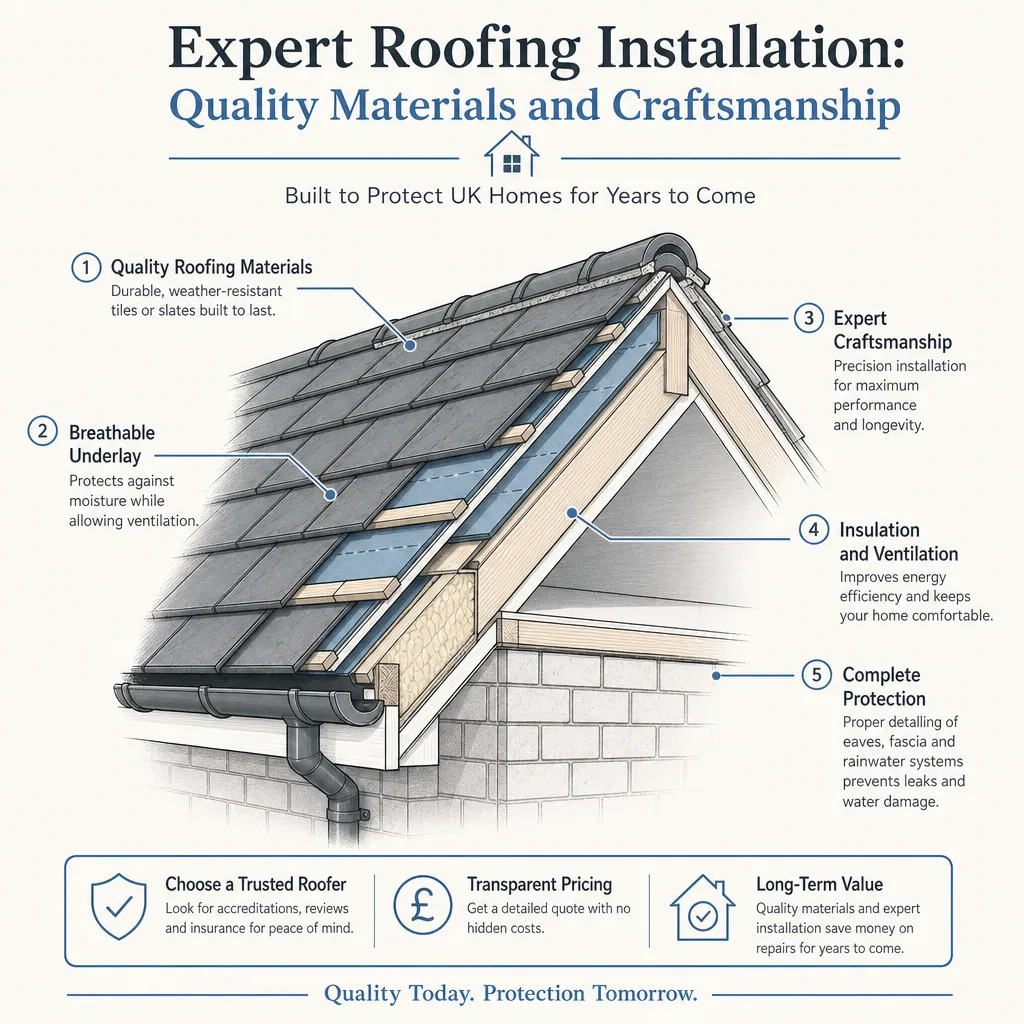
Expert Roofing Installation: Quality Materials and Craftsmanship
A quality roof installation depends on matching materials to your property type, hiring a suitably qualified roofer, and ensuring building regulations are met where required.
 Improvement & Build
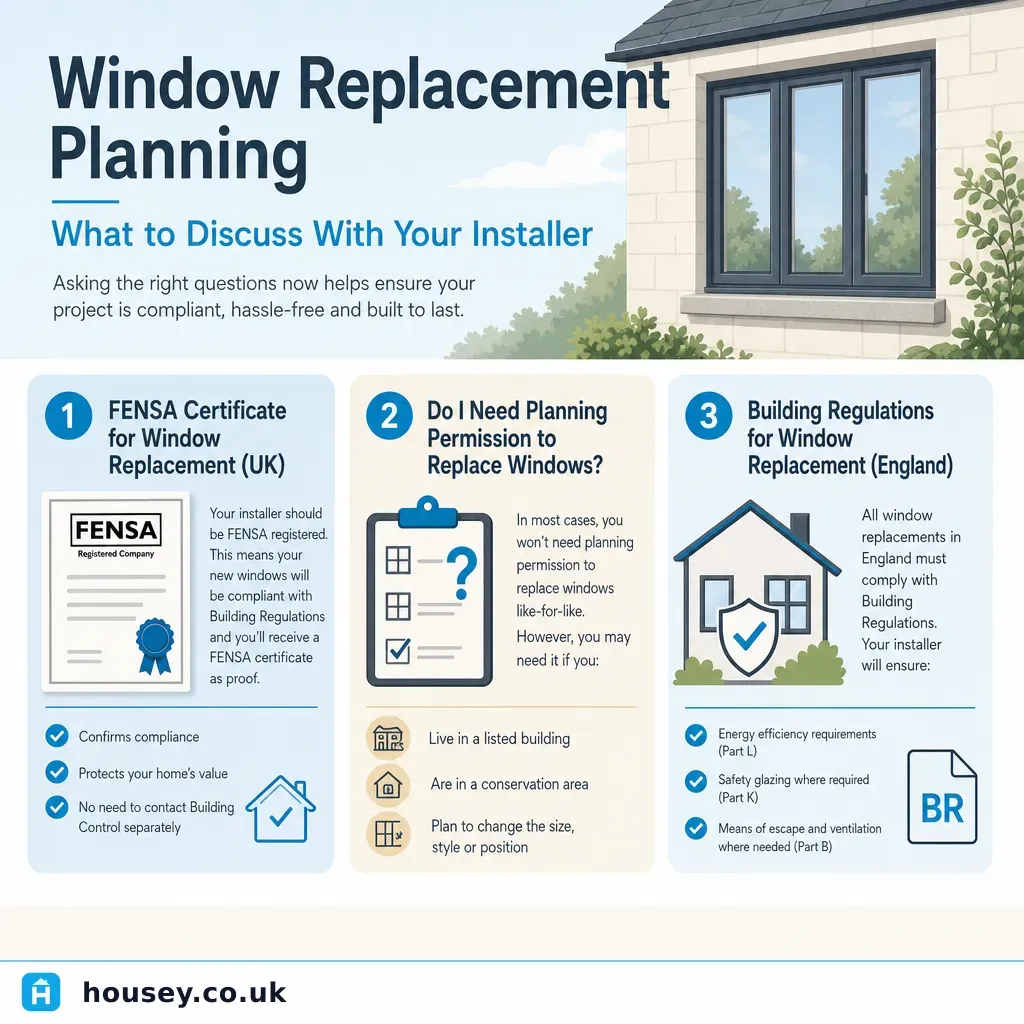
Window Replacement Planning: What to Discuss With Your Installer
Most window replacements in England fall under permitted development rights and do not require planning permission, but they must comply with Building Regulations Part L and Part K.
 Improvement & Build
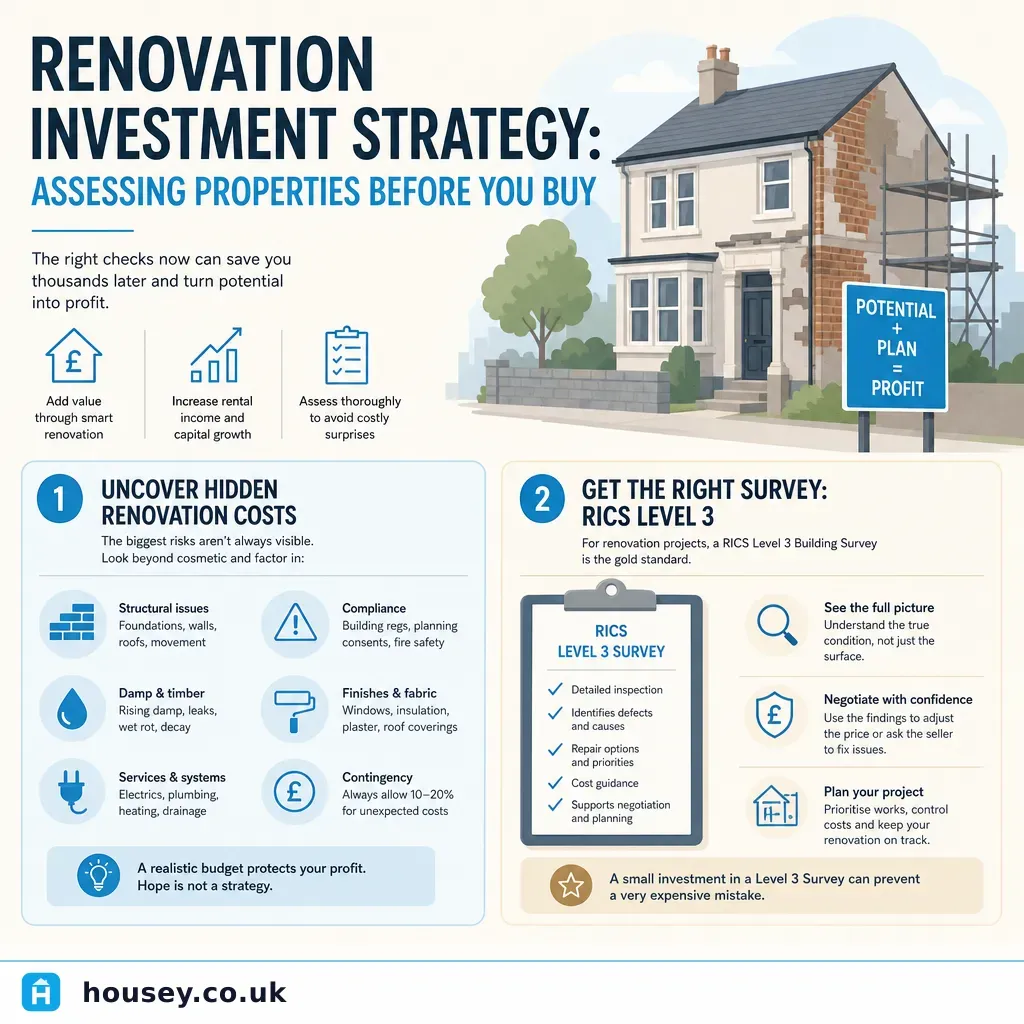
Renovation Investment Strategy: Assessing Properties Before You Buy
Renovation investment properties require more due diligence than a standard home purchase.
 Improvement & Build
Professional Licensing Requirements for Tree Removal Specialists
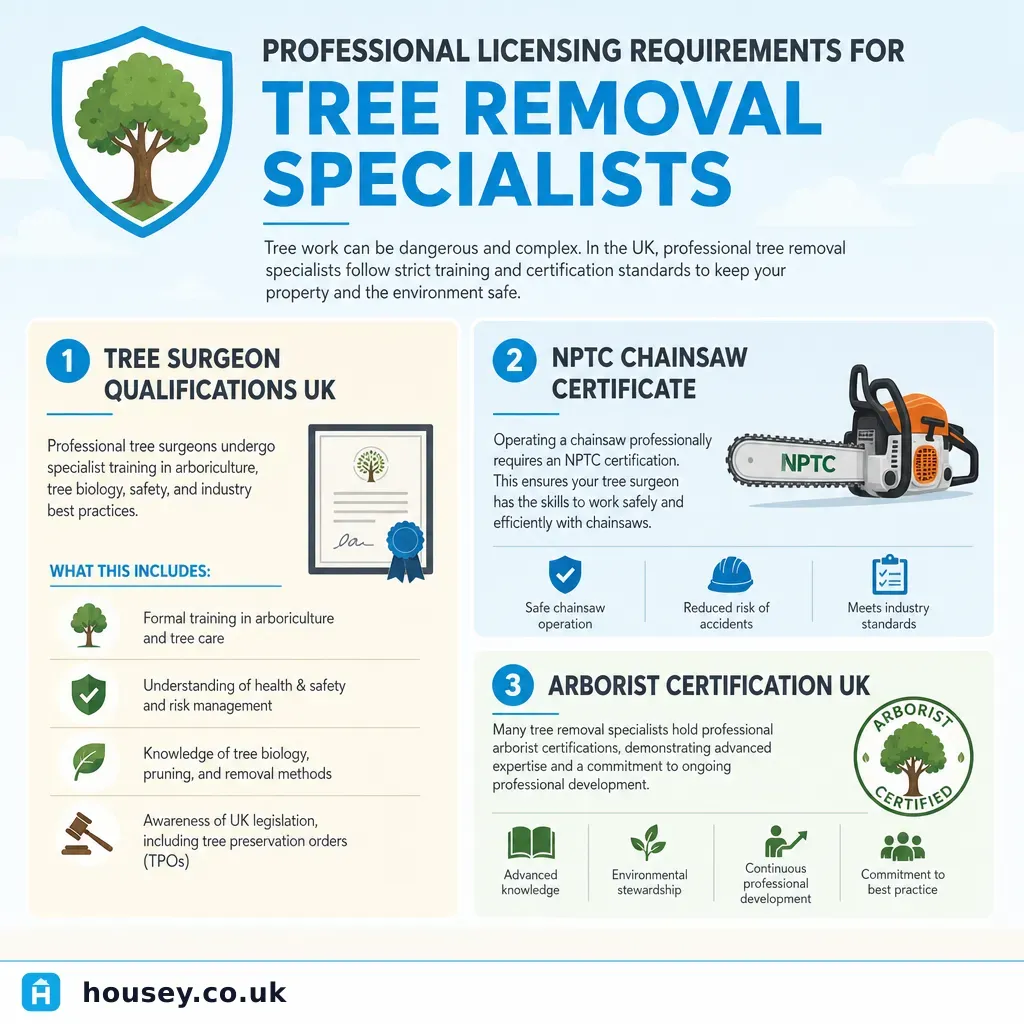
Tree surgery in the UK has no single statutory licence, but chainsaw operators must hold recognised NPTC/City & Guilds certificates, and work near overhead lines requires specialist training.
 Improvement & Build
Vetting a Contractor: Essential Questions Before Committing
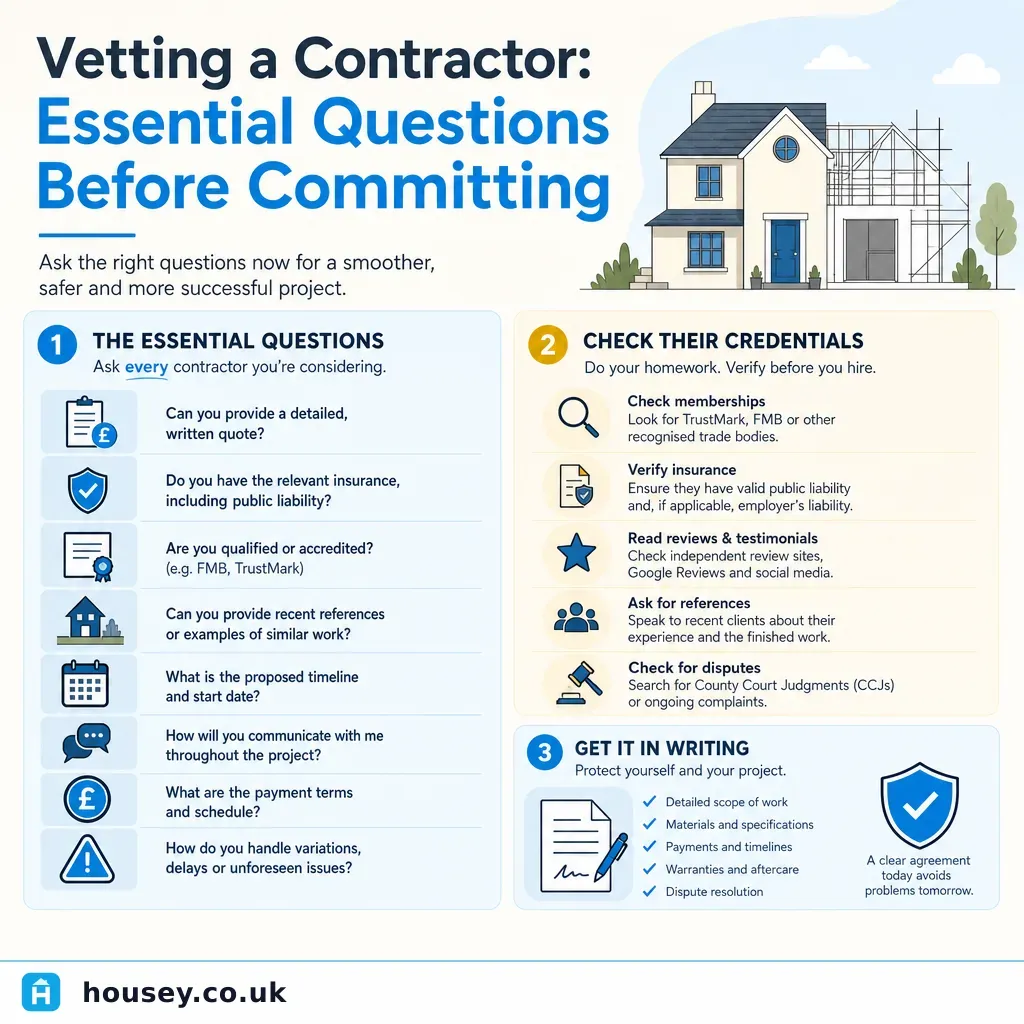
Vet a contractor by checking their full business name on Companies House, requesting current insurance certificates, verifying trade body membership directly with the association, and speaking to references from comparable recent jobs.