Interior Design Consultation and Project Fees
By Housey · Last reviewed 7th of May 2026
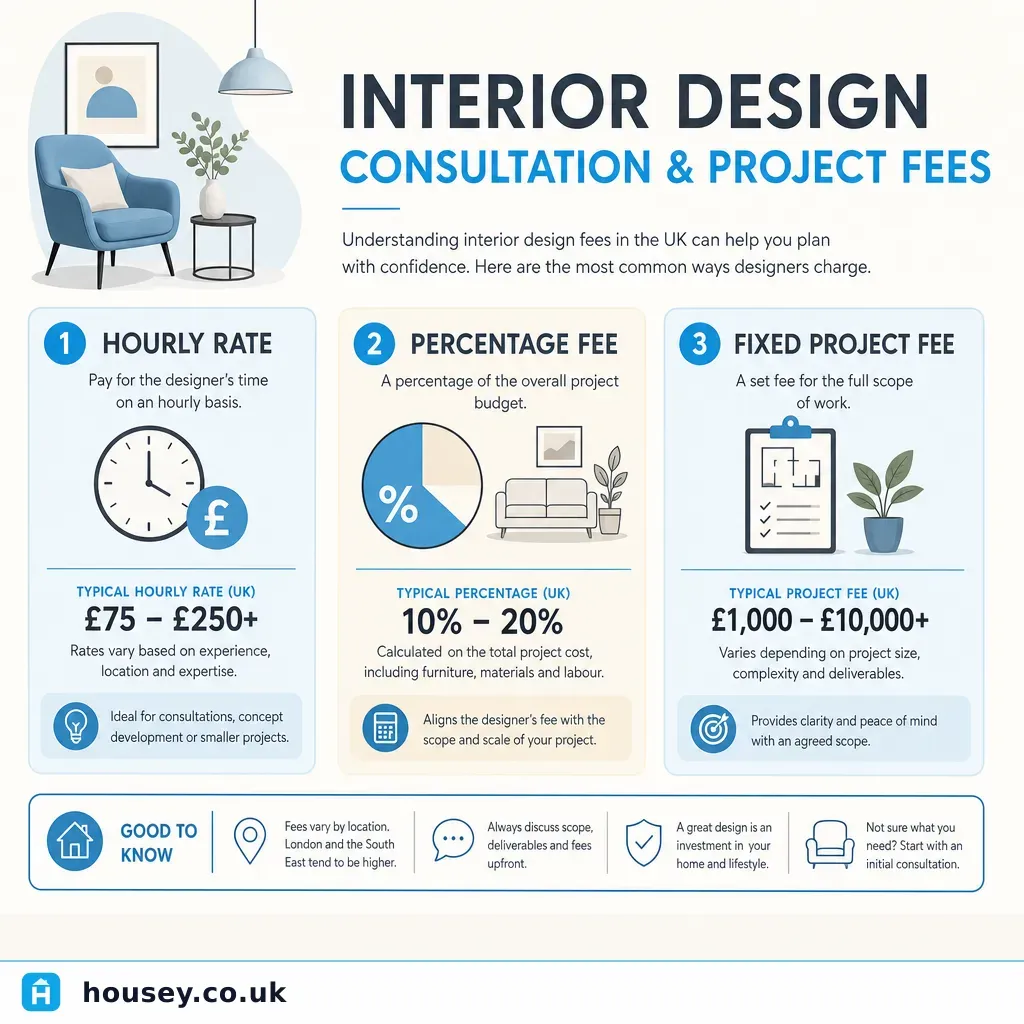
Interior Design Consultation and Project Fees
Hiring an interior designer is most common during a major renovation, extension project, or full property refurbishment — moments when homeowners want coherent decisions about layout, materials, and finishes without making costly mistakes that are expensive to reverse. Fee structures vary considerably across the UK design industry, from one-off consultation charges to percentage-based full-project arrangements, and understanding exactly what you are paying for makes it far easier to compare proposals fairly.
Key points
- Interior designers in the UK typically charge hourly rates of £75–£200, day rates of £300–£800, or a percentage of total project spend of 10–20% (indicative UK costs, last reviewed 2026-05-07).
- The British Institute of Interior Design (BIID) is the principal UK professional body; BIID-accredited designers have met documented training and continuing professional development standards.
- An initial design consultation at your property usually costs £150–£400 for one to two hours, though some designers offer a free introductory call before charging a site visit fee.
- Full project management — where the designer procures materials, coordinates trades, and manages the programme — costs more than a design-only or concept-only service; always clarify scope before agreeing fees.
- Designers may earn trade discounts of 10–40% on furniture and materials; establish upfront whether these are passed on in full, retained as part of the fee, or shared.
What does an interior design consultation include?
An initial design consultation typically takes place at your property and lasts one to two hours. The designer assesses the space, discusses your brief, takes measurements or reviews existing drawings, and establishes your budget and timeline. A well-structured first meeting usually covers:
- Your preferred style and any visual references such as mood boards or saved images.
- How the space is currently used and how you want it to function after the works.
- Your overall renovation budget, including build costs where trades are involved.
- Any constraints such as listed building restrictions, planning conditions, or structural elements that cannot be altered.
After the consultation, many designers provide a short written summary of their observations and a proposed scope of services with associated fees. This document is what you should compare across multiple designers — scrutinise what is included at each stage, and what is excluded, before signing anything.
How much does an interior designer charge in the UK?
Indicative UK costs, last reviewed 2026-05-07.
Fee models vary significantly between designers and project types. The table below outlines the main structures used across the UK market.
Fee model | Typical range | Best for | Watch out for |
|---|---|---|---|
Hourly rate | £75–£200/hour | Small projects; single-room schemes; ad hoc advice | Hours can escalate without a cap — ask for an estimated total at the outset |
Day rate | £300–£800/day | Medium projects with regular site presence | Confirm what constitutes a full day and how travel time is handled |
Fixed project fee | £1,500–£15,000+ (scope-dependent) | Defined projects with a clear brief and deliverable list | Tie the fee schedule to milestones, not only to timescales |
Percentage of project spend | 10–20% of total spend | Large full-service projects including procurement | Clarify how cost savings are treated if the designer controls procurement |
Consultation only | £150–£400 per visit | Getting design direction without a full service commitment | Output is often verbal or informal — confirm whether a written report is included |
Fees at the higher end of each range typically reflect London or South-East location, greater project complexity, or designers with a strong specialist track record.
What does a full interior design service cover?
A full-service engagement — as opposed to a consultation-only or concept-design package — typically involves the following stages.
- Brief development and space planning — understanding how rooms flow, drawing up layout options, identifying structural or planning constraints.
- Concept design — mood boards, material palettes, furniture schedules, and colour schemes presented for client approval.
- Detailed specification — drawings, finish schedules, and written specifications for use by contractors and trades.
- Procurement — ordering furniture, fabrics, fixtures, and fittings, usually at trade prices, with delivery coordinated to the build programme.
- Project coordination — liaising with builders, joiners, electricians, and decorators on-site throughout the works.
- Styling and handover — final dressing, snagging, and sign-off once the works are complete.
Not every project requires all stages. Many homeowners commission concept design only and manage procurement themselves; others want full project management from start to finish. Be explicit in your brief about which stages you need before any fee is agreed in writing.
How interior design overlaps with architectural services
For renovation and extension projects, interior design often intersects with architectural work. An architect or architectural technologist produces the structural drawings, building regulations submissions, and technical specifications that define the building fabric. An interior designer works within that framework to specify finishes, furniture, joinery details, and decorative elements.
On smaller projects, a skilled architectural technologist may also advise on internal layout and specification, reducing the need for a separate interior designer. On larger or more design-led projects, both disciplines typically work together — the architectural technologist handling compliance and technical output, and the interior designer leading on aesthetics and procurement. Establishing clearly where one role ends and the other begins at the briefing stage avoids duplication of fees.
What to ask before hiring an interior designer
Use this list when meeting or briefing prospective designers.
- What professional accreditation or qualifications do you hold? (Look for BIID membership or a relevant degree or postgraduate design qualification)
- Can you provide examples of completed projects at a similar scale and budget to mine?
- What fee model do you use, and can you provide a written estimate of your likely total fees for this project?
- How do you handle trade discounts — do these come back to me, or do they offset your fee?
- Who will carry out the work — you directly, or a junior in your studio?
- What deliverables will I receive at each stage? (Drawings, material schedules, mood boards, written specifications)
- How do you handle changes of scope or client changes of mind mid-project — are these charged as extras?
- Are you covered by professional indemnity insurance, and can I see a copy of the certificate?
- What is your current availability and typical lead time from appointment to project start?
- Do you have preferred contractors or trades, and how do you manage potential conflicts of interest with them?
When to get professional help
An interior designer adds most value when:
- You are undertaking a significant renovation or extension and want design decisions to be coherent across multiple rooms and materials.
- You are unfamiliar with construction materials, finish specifications, or supplier lead times, and errors would be costly to reverse once trades have completed the work.
- The project involves complex bespoke joinery, fitted furniture, or specialist finishes that require detailed drawings for trades to work from.
- Your overall budget is tight and you want structured design guidance to avoid expensive mistakes on layout, fixtures, or finishes.
For a single-room refresh or a modest furniture update, a one-off consultation or a design-concept-only package may deliver sufficient value without committing to a full-service fee.
How Housey can help
If your renovation or refurbishment also requires technical drawings, building regulations support, or layout planning alongside interior design input, Housey can help you find and compare quotes from architectural technologists who can work alongside — or in some cases instead of — a separate interior designer, depending on your project's scope and budget.
Frequently asked questions
Do I need a qualified interior designer, or can I use an interior stylist?
The terms are not legally protected in the UK, so anyone can use them. A BIID-accredited interior designer has met professional development standards and typically holds a formal design qualification. Interior stylists usually focus on decorating and accessorising rather than spatial planning or technical specification. For projects involving trades, a designer with professional indemnity insurance is the more prudent choice.
How do interior designers handle trade discounts?
Trade discounts are standard in the industry — designers typically access furniture and materials at 10–40% below retail. Some pass the full discount on to clients; others retain it as part of their fee. Either approach is legitimate but should be declared upfront. Ask any designer to confirm their trade discount policy in writing before agreeing terms, and clarify whether procurement is charged at trade or retail price.
Is VAT charged on interior design fees?
Interior design services from a VAT-registered business are subject to standard-rate VAT at 20%. Most established designers will be VAT-registered if their turnover exceeds the current threshold (£90,000 from April 2024 per GOV.UK). Always clarify whether quoted fees are inclusive or exclusive of VAT — on larger projects the difference is material to your overall budget.
How long does a full interior design project take?
A single-room scheme may take 4–8 weeks from concept to installation. A whole-house renovation with full design involvement typically runs alongside the build programme over 6–18 months. Design stages — concept, specification, and procurement — usually require 2–4 months before site work begins. Confirm lead times for any bespoke or imported items with your designer at the outset.
Can an interior designer help with planning permission or building regulations?
An interior designer does not typically prepare planning drawings or building regulations submissions. For work requiring planning approval or building control sign-off, you will need an architect, architectural technologist, or planning consultant. Interior designers can coordinate with these professionals to ensure design intent aligns with technical drawings, but the two roles are distinct and require separate appointments.
Sources and further reading
- British Institute of Interior Design — membership and standards — British Institute of Interior Design (BIID)
- VAT registration thresholds — GOV.UK
- Using a trader — your rights when hiring a professional — Citizens Advice
Useful next reads
 Planning & Pre-Build
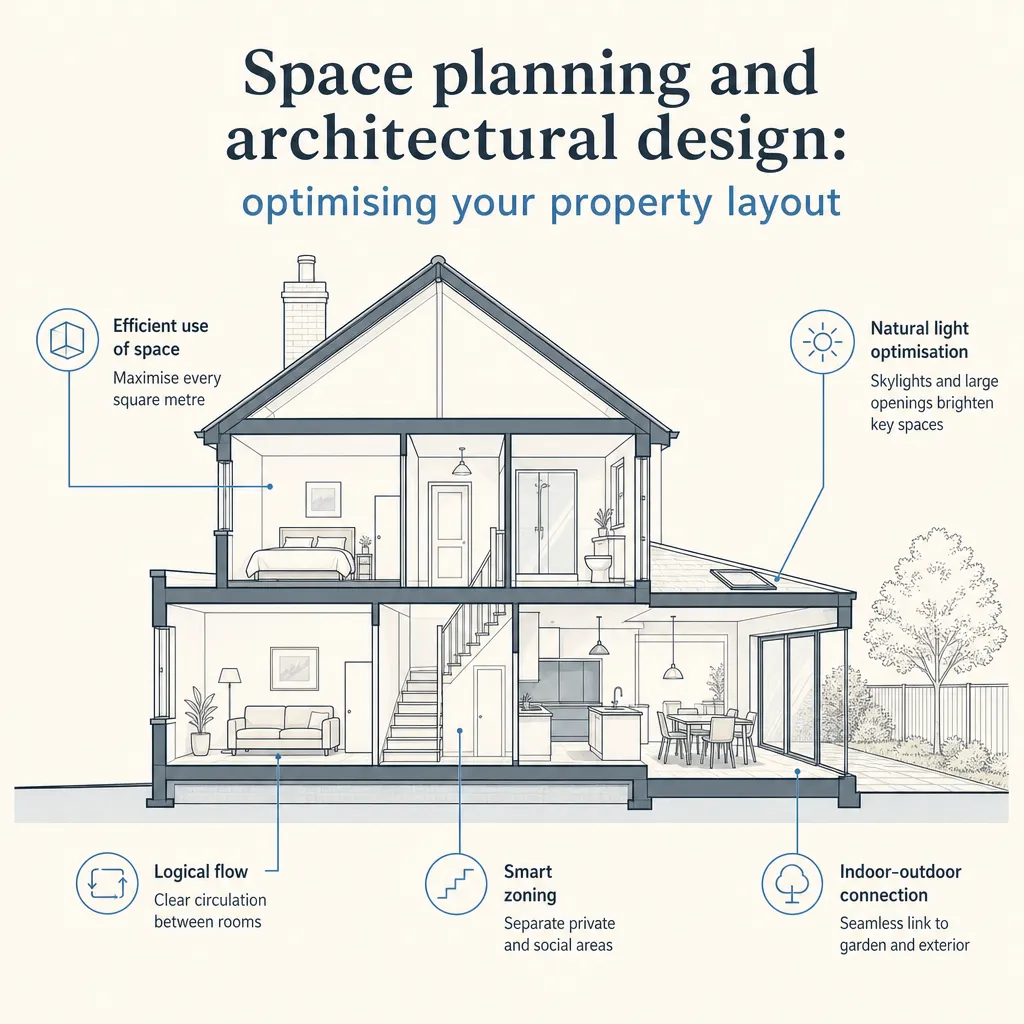
Space planning and architectural design: optimising your property layout
Space planning defines how rooms, circulation routes, and services are arranged within a property to make the best use of available area.
 Planning & Pre-Build
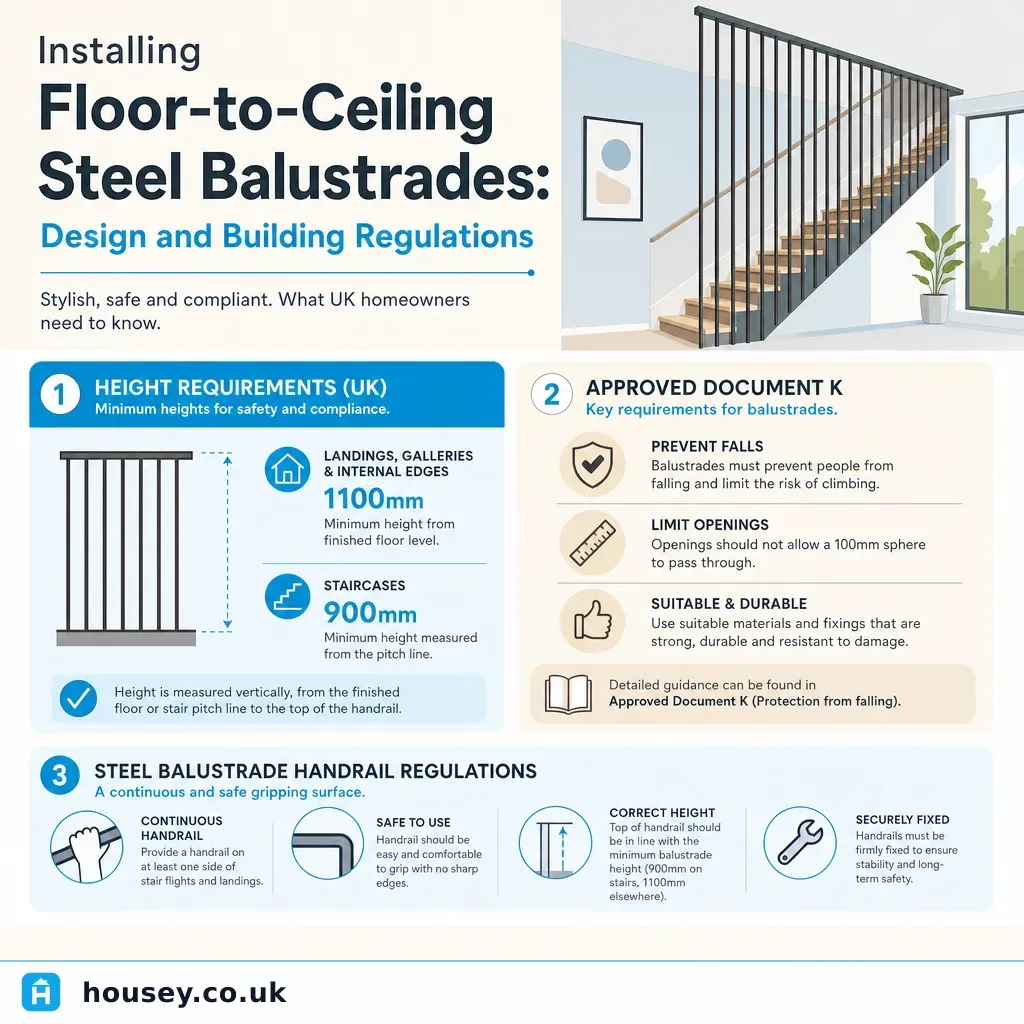
Installing Floor-to-Ceiling Steel Balustrades: Design and Building Regulations
Floor-to-ceiling steel balustrades must comply with Approved Document K, requiring a minimum height of 900mm alongside stairs and 1,100mm at floors and balconies.
 Planning & Pre-Build
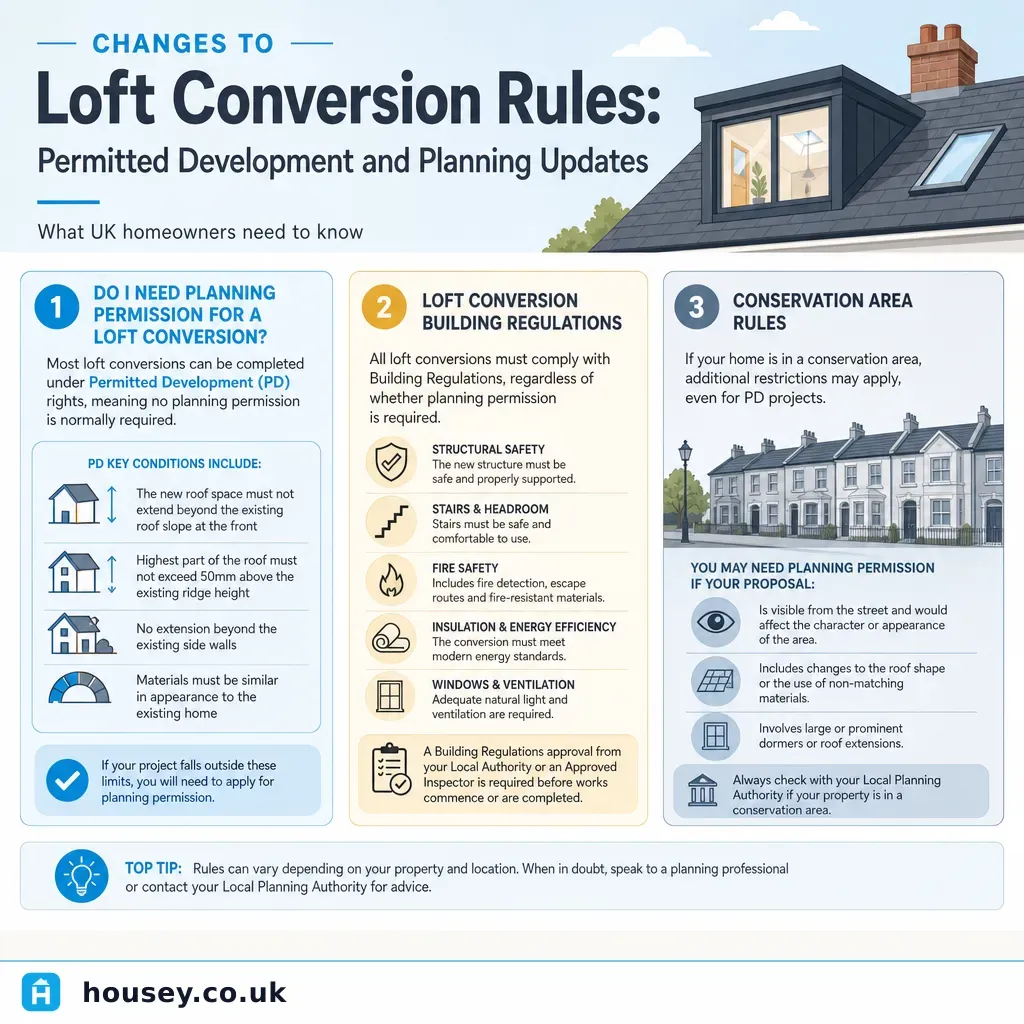
Changes to Loft Conversion Rules: Permitted Development and Planning Updates
In England, most loft conversions on standard houses qualify as Permitted Development under Class B of the GPDO 2015, allowing up to 40 cubic metres (terraced) or 50 cubic metres (detached or semi-detached) without a planning application — if conditions are met.
 Planning & Pre-Build
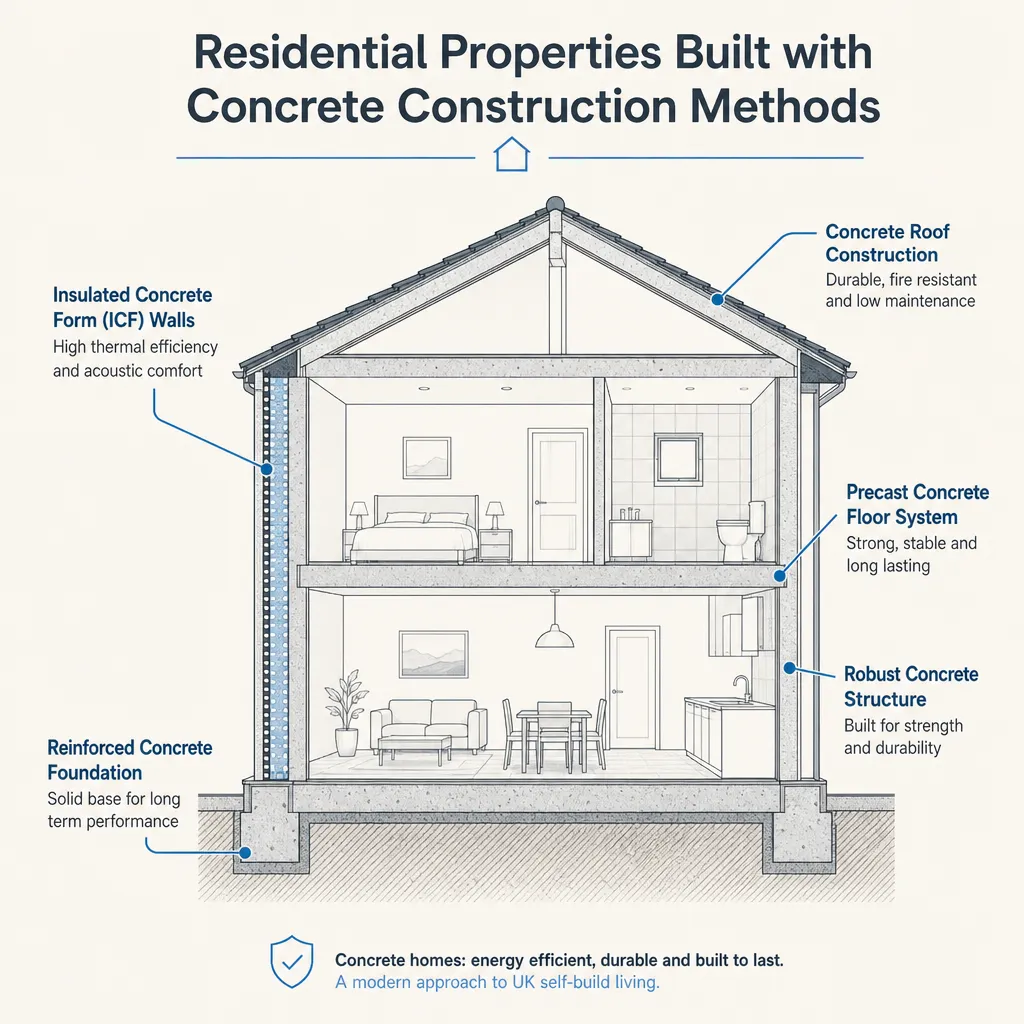
Residential Properties Built with Concrete Construction Methods
UK homes are built using several concrete methods: in-situ cast concrete, precast panel systems, insulating concrete formwork (ICF), and older non-traditional types such as Wimpey No-Fines and Laing Easiform.
 Planning & Pre-Build
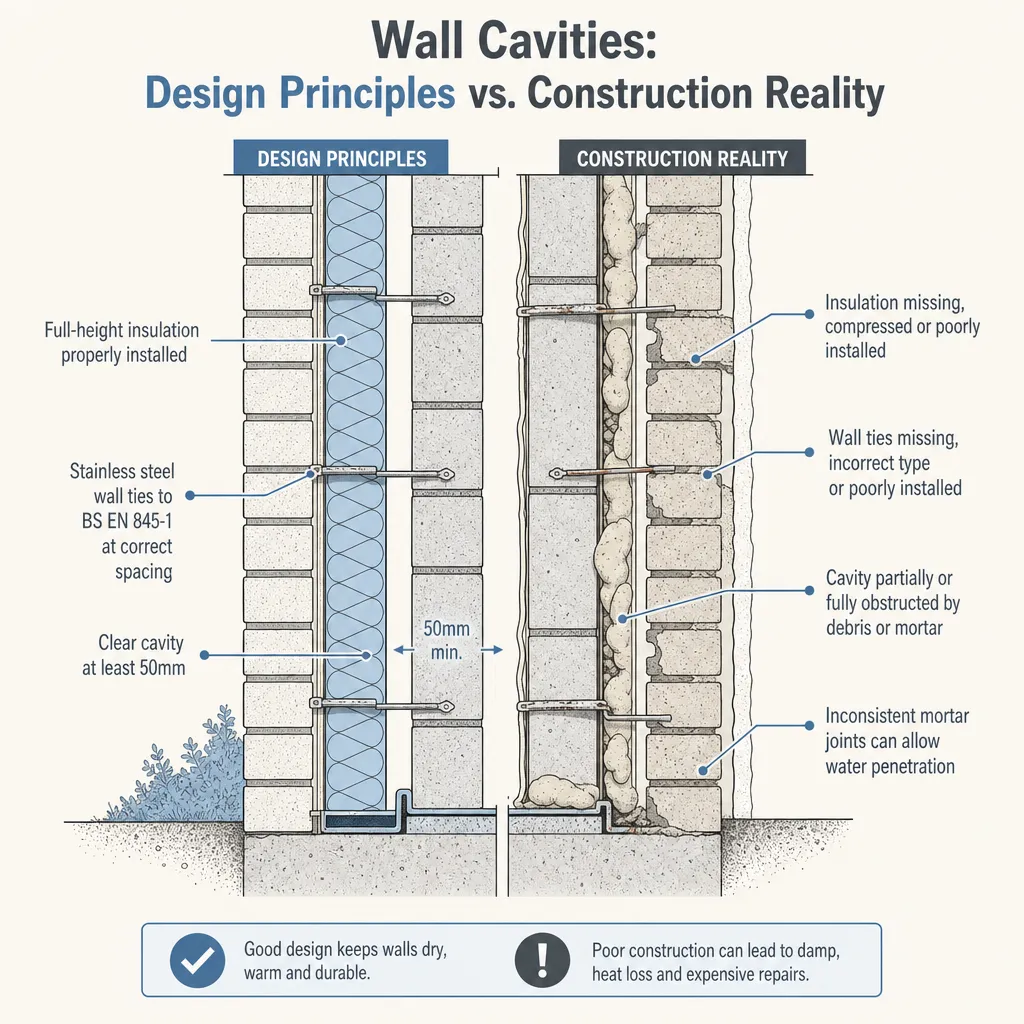
Wall Cavities: Design Principles vs. Construction Reality
A UK cavity wall is designed to resist weather, control heat loss, and structurally link two masonry leaves.