Interior Door Selection: Styles, Materials and Function
By Housey · Last reviewed 26th of May 2026
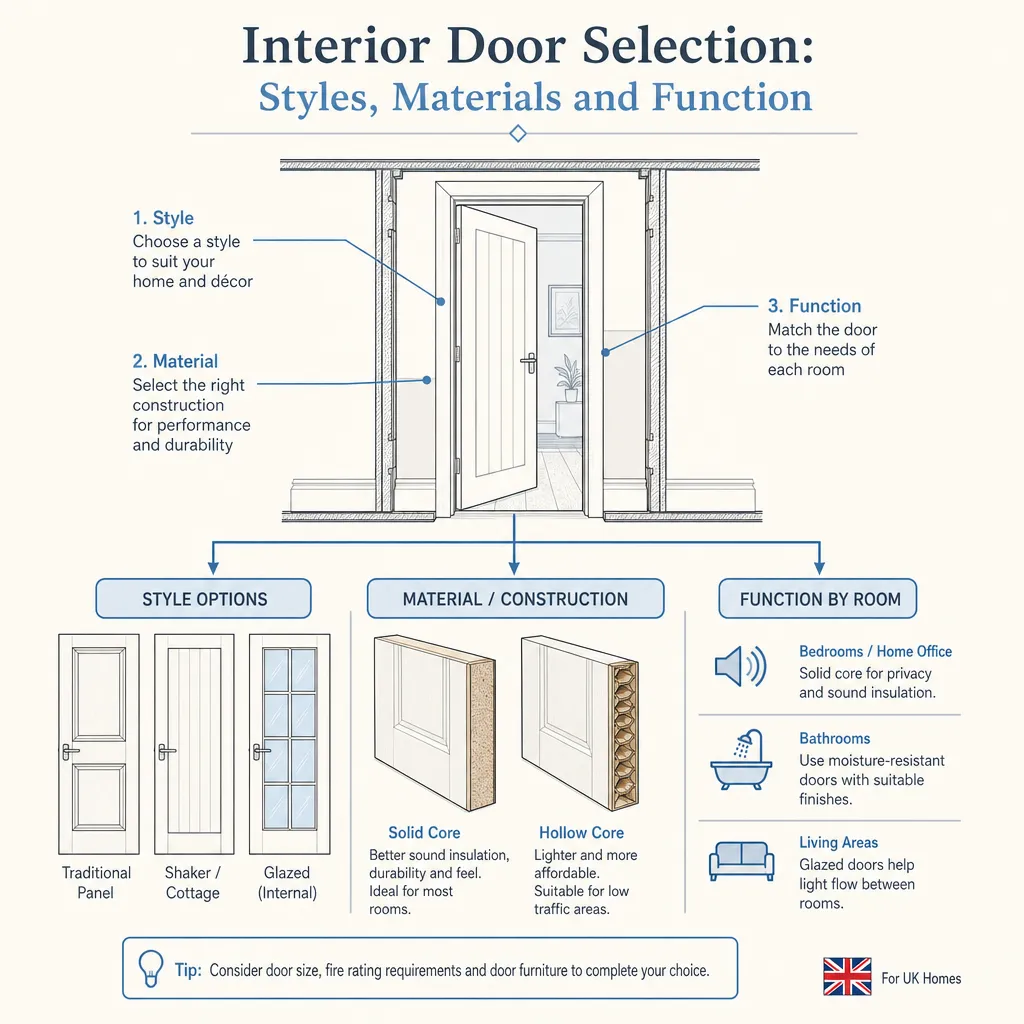
Interior Door Selection: Styles, Materials and Function
Choosing interior doors is one of those decisions that shapes daily life more than most homeowners anticipate. Whether you're renovating a 1930s semi, fitting out a new-build flat, or reconfiguring a Victorian terrace, the doors you choose affect acoustics, airflow, privacy, and the character of every room. Get it right during a refurbishment and you save considerable cost and disruption down the line.
Key points
- UK Building Regulations Part B (Fire Safety) require FD30-rated fire doors on any room opening onto an escape route in a house with a loft conversion or integral garage.
- Solid core doors (typically 35–44 mm thick) provide significantly better sound attenuation than hollow core equivalents — important for home offices and bedrooms.
- Standard UK interior door height is 1981 mm (6'6"); non-standard heights in period homes can require bespoke sizing or specialist suppliers.
- Glazed internal doors must use safety glass (toughened or laminated) in critical locations as defined under BS 6262 and Building Regulations Approved Document N.
- Door linings, frames, and architrave should be ordered to match wall thickness — typically 90 mm, 100 mm, or 115 mm for UK stud walls.
What type of interior door construction should you choose?
The core construction of an internal door determines its weight, acoustic performance, and how well it takes paint or stain.
Hollow core (cellular or honeycomb fill)
Hollow core doors have a timber frame infilled with a cardboard or lightweight cellular core. They are lighter, less expensive, and easier to handle during installation. Their main limitation is sound transmission — they provide limited acoustic separation. Suitable for cupboards, low-traffic hallways, or budget-conscious projects where noise control is not a priority.
Solid core
Solid core doors use a continuous timber or engineered wood fill. They are heavier and provide measurably better sound insulation — typically 28–34 dB Rw versus around 20 dB for hollow core — and feel more substantial to operate. Usually the right choice for bedrooms, home offices, and rooms adjoining a kitchen or living space.
Solid timber
Fully solid timber doors — often seen in period-appropriate panelled styles — offer good acoustic performance and durability, but can be prone to expansion and movement in homes with fluctuating humidity. Engineered alternatives use a solid timber veneer over a stable core, balancing aesthetics with dimensional stability.
Door styles and finishes
Style | Best for | Not ideal for | Typical core |
|---|---|---|---|
Flush (flat panel) | Modern interiors, rental properties | Period homes where character matters | Hollow or solid core |
Panelled (2, 4, or 6 panel) | Victorian, Edwardian, traditional homes | Very contemporary schemes | Solid core or solid timber |
Glazed (full or part) | Rooms needing borrowed light | Privacy-sensitive rooms (bathrooms, bedrooms) | Solid core with glass panel |
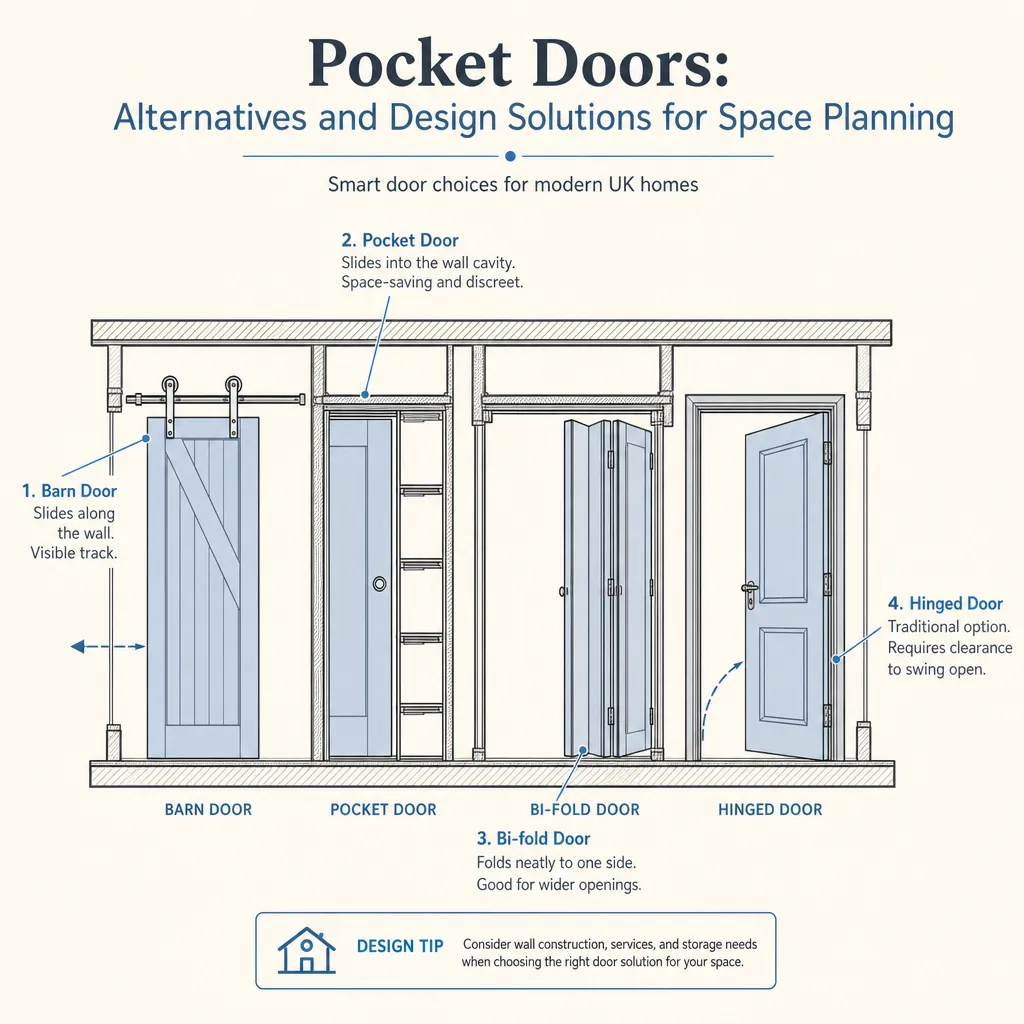
Bifold | Larger openings, connecting rooms, wide wardrobes | Narrow openings, rooms needing acoustic separation | Hollow core usually |
Pocket (sliding into wall) | Space-saving in small rooms | Walls with pipes or cables inside | Hollow core |
Barn track (surface-mounted sliding) | Contemporary feature, utility rooms | Where acoustic separation is required | Hollow or solid core |
Finishes: most interior doors are supplied primed, pre-finished white, or as bare timber ready for staining. Primed doors require a topcoat on site; pre-finished options save painting time but limit on-site colour customisation.
Fire door requirements in UK homes
Fire doors are not optional in certain domestic situations. Under Building Regulations Approved Document B (Volume 1: Dwellings), FD30 fire doors — providing 30-minute fire resistance — are required:
- Between an integral garage and the rest of the dwelling.
- On rooms opening onto a protected escape route in properties with a loft conversion that creates a habitable floor.
- Between a new extension and the original building in some configurations — check with your building control officer.
FD30 fire doors must carry a recognised certification mark (BM TRADA Q-Mark, Certifire, or similar). Fitting a certified door with incorrect hardware — wrong hinges, absent intumescent strips, or a non-fire-rated latch — can invalidate compliance. A competent joiner or specialist installer should confirm requirements before and during fitment.
Acoustic performance
For rooms where noise matters — bedrooms, home offices, media rooms — consider these factors alongside core construction:
- Door seals: acoustic threshold seals (drop seals) and perimeter compression seals significantly reduce flanking noise at the base and perimeter of the door.
- Frame fit: gaps between door, lining, and frame reduce acoustic performance sharply. Good installation quality is as important as the door specification itself.
- Glazed elements: glass panels in a door reduce sound separation; double-glazed acoustic units are available for glazed doors where noise separation matters.
Homeowner checklist: before ordering interior doors
When to get professional help
Most interior door replacement is straightforward, but professional advice is worth seeking when:
- FD30 fire doors are required — incorrect installation can invalidate the fire rating and breach Building Regulations.
- Structural openings are being widened or repositioned, which may require a structural engineer's input.
- A period home has non-standard door sizes, unusual wall constructions, or decorative architrave that needs careful matching.
- You are installing pocket or bifold doors into existing walls where services (pipes, cables) are unknown.
An experienced joiner or door installer will carry out a site survey, confirm compliance requirements, and source doors suited to your openings.
How Housey can help
If you need doors professionally supplied and fitted, Housey can connect you with vetted window and door installers in your area. Submit a brief describing your door count, any fire-door requirements, preferred style, and wall construction, and receive quotes to compare.
Frequently asked questions
Do I need fire doors inside my home?
You need FD30 fire doors if your home has an integral garage opening into the dwelling, or if you have a loft conversion where rooms open onto the only escape route. Standard like-for-like door replacements elsewhere do not generally require fire doors, but check with your building control officer if you are unsure about your specific property configuration.
What is the difference between solid core and hollow core interior doors?
A solid core door has a continuous engineered fill throughout, making it heavier and significantly better at blocking sound — typically 28–34 dB Rw versus around 20 dB for hollow core. Hollow core doors use a lightweight cellular infill and cost less, making them suitable for cupboards and low-traffic areas where acoustic separation is not needed.
How much do interior doors cost in the UK?
Indicative UK costs, last reviewed 2026-05-26. Hollow core doors start at around £30–£80 each; solid core from £80–£200; solid oak panelled from £150–£400+. FD30 fire doors typically cost £150–£350 before fitting. Allow £50–£120 per door for professional installation as a guide. Bespoke sizes carry a significant premium. Always obtain itemised quotes before ordering.
Sources and further reading
Useful next reads
 Improvement & Build
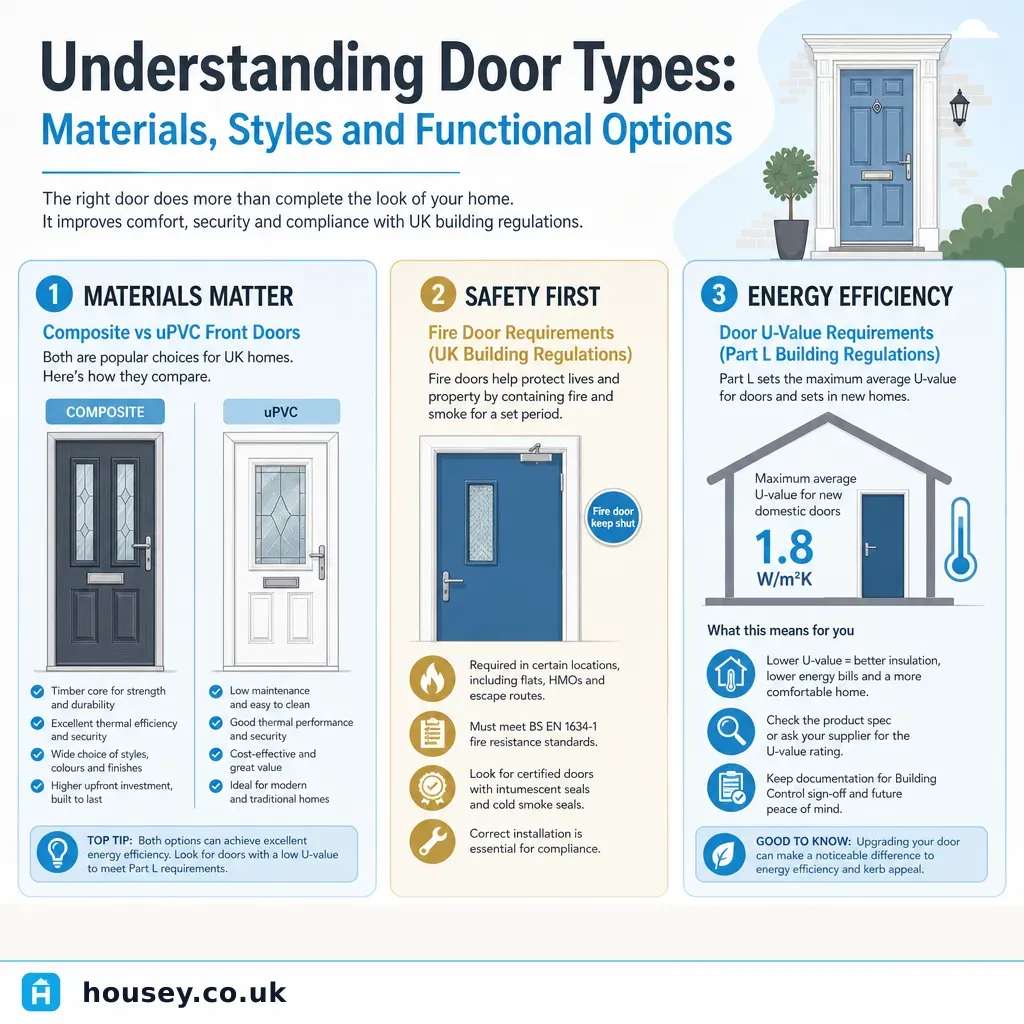
Understanding Door Types: Materials, Styles and Functional Options
Doors are available in timber, uPVC, aluminium, steel, and composite materials, each suited to different budgets, locations, and performance requirements.
 Improvement & Build
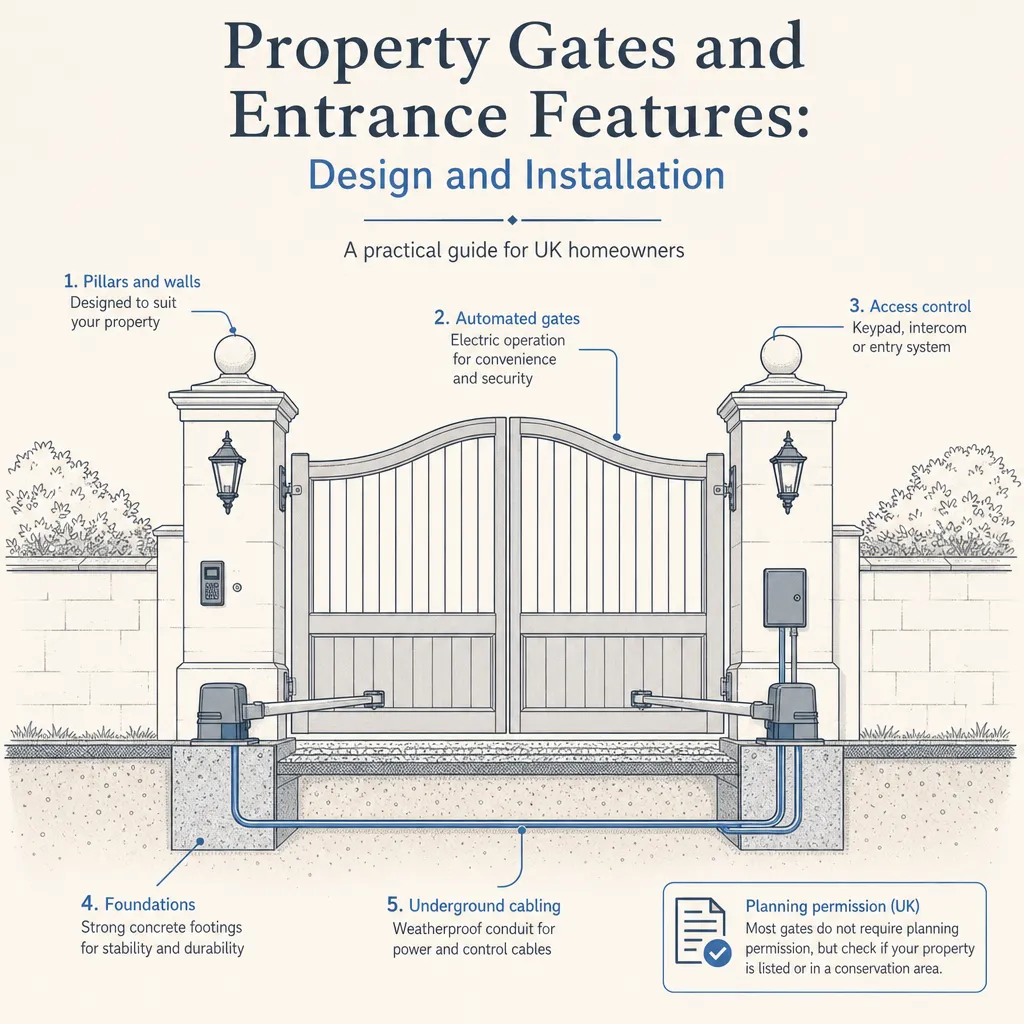
Property Gates and Entrance Features: Design and Installation
Gates on a boundary adjacent to a highway are limited to 1 m in height without planning permission; gates elsewhere on the boundary may be up to 2 m.
 Improvement & Build
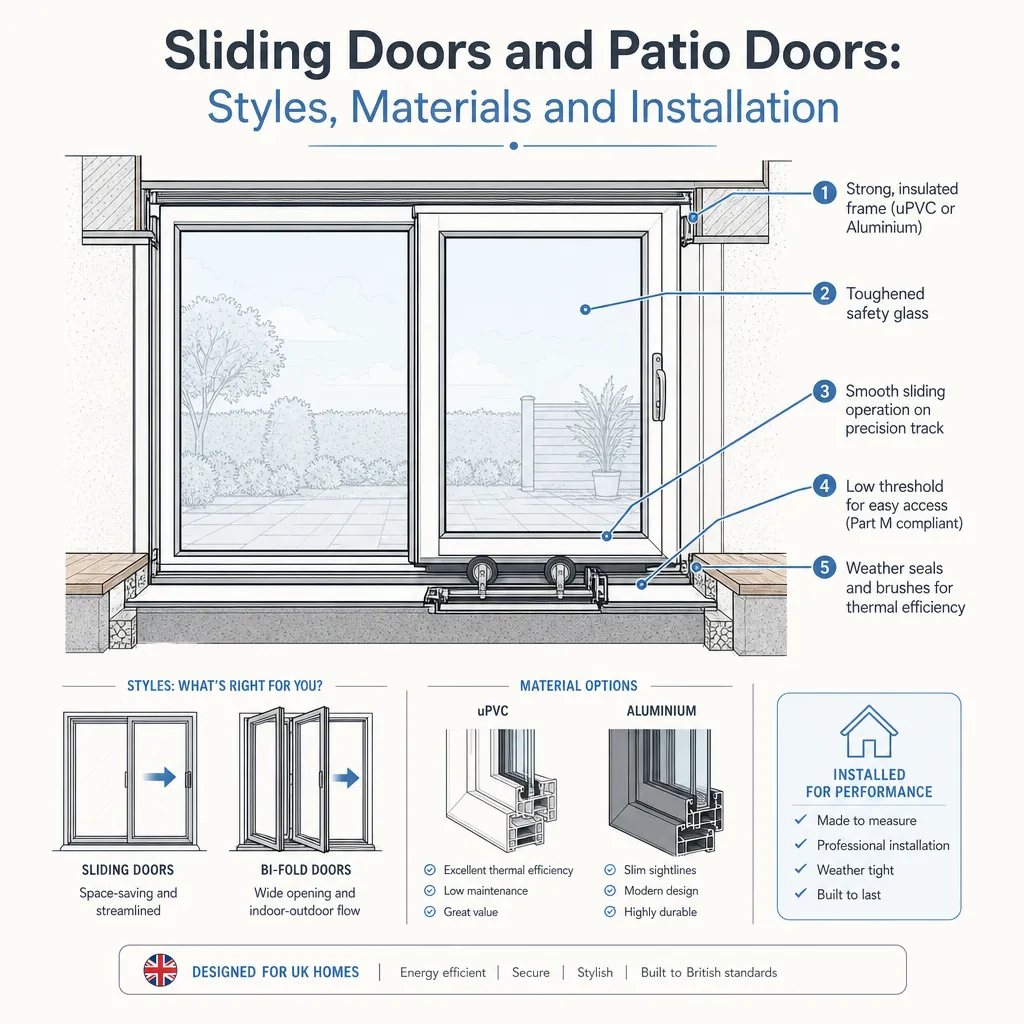
Sliding Doors and Patio Doors: Styles, Materials and Installation
Sliding patio doors move horizontally on a track, keeping outside space clear compared to a swinging door.
 Improvement & Build
Pocket Doors: Alternatives and Design Solutions for Space Planning
Pocket doors slide into a wall cavity and free floor space where a hinged door would swing, but require a clear, service-free wall section to work.
 Improvement & Build
Window Screens and Insect Mesh: Options and Installation
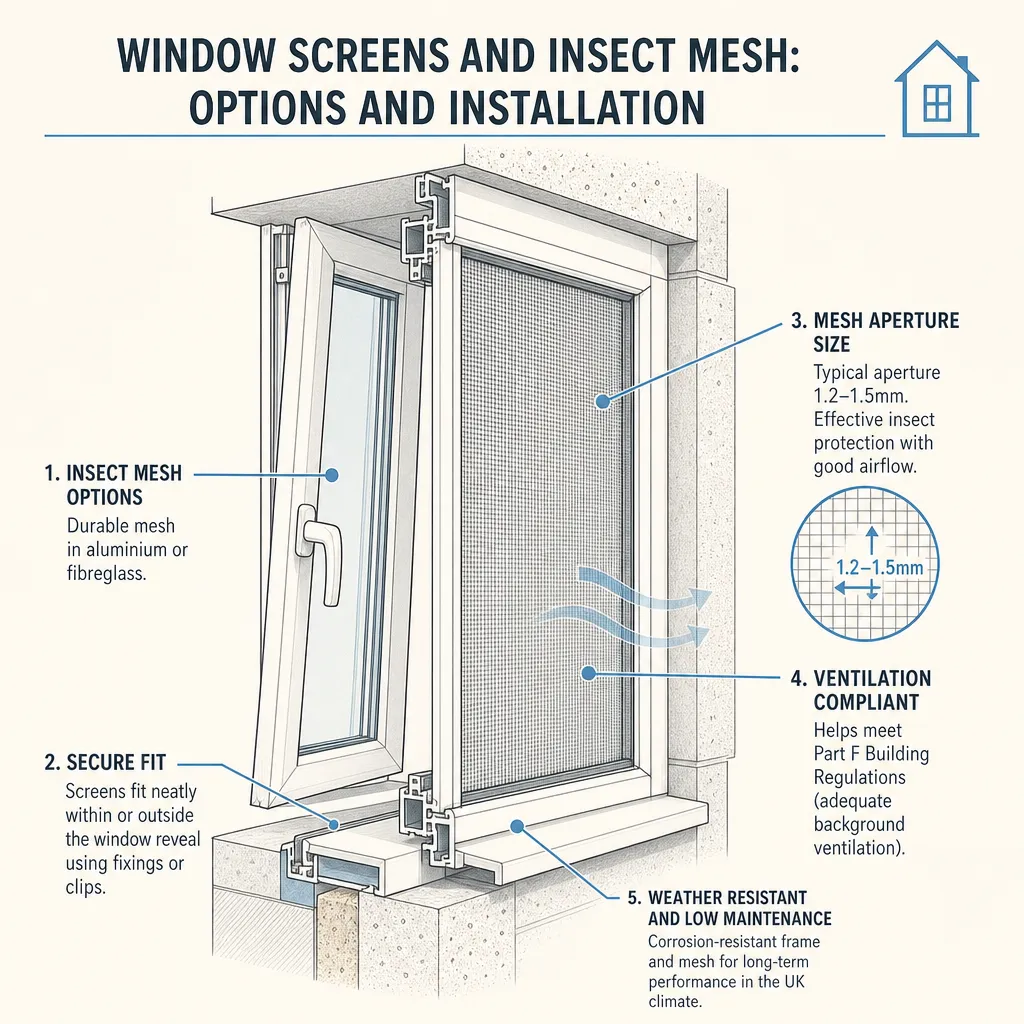
UK window screens fall into four main types: fixed frame, roller retractable, pleated folding, and magnetic snap-fit.