Property Gates and Entrance Features: Design and Installation
By Housey · Last reviewed 26th of May 2026
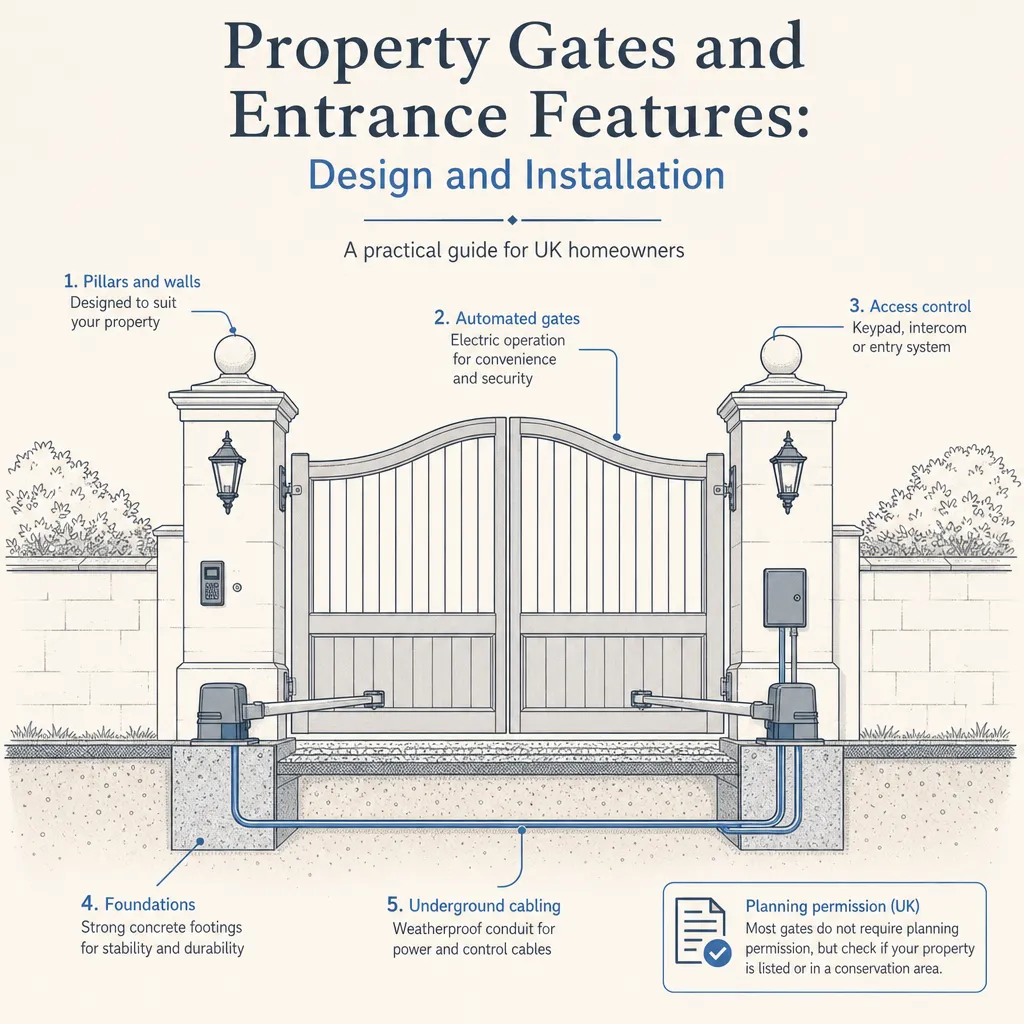
Property Gates and Entrance Features: Design and Installation
Installing gates and entrance features is one of the most visible improvements a homeowner can make to the kerb appeal and security of their property. The decision involves more than choosing a material and style: height restrictions, planning rules — including the relationship of the gate to the highway boundary — and the safety requirements for automated systems all affect what you can install without additional consent. Whether you are replacing a tired timber side gate on a Victorian terrace or specifying an automated double-leaf metal gate for a rural driveway, getting the specification right from the outset avoids costly revisions later.
Key points
- Under Schedule 2, Part 2, Class A of the Town and Country Planning (General Permitted Development) (England) Order 2015, gates adjacent to a highway are restricted to 1 m in height without planning permission; gates elsewhere on the boundary may be up to 2 m.
- Automated driveway gates must comply with BS EN 12453:2017, which requires force-limiting devices, automatic reversal on obstruction, safety edges, and a means of manual release in the event of power failure.
- Timber gates require a durable hardwood species (oak, iroko) or pressure-treated softwood with regular treatment; untreated softwood gates in exposed positions commonly fail within 5–8 years.
- The electrical installation for an automated gate operator is notifiable work under Part P of the Building Regulations and must be carried out or certified by an NICEIC or NAPIT-registered electrician.
- Listed buildings and conservation area properties almost always require planning permission for new gates visible from the highway, regardless of height.
Gate types and their applications
Swing gates Two leaves hung from posts on either side of the opening, swinging inward (standard for driveways) or outward. Suitable for openings from 1 m to around 6 m. Automation is straightforward using underground ram operators or surface-mounted arm actuators. Swing gates require clear space equal to the leaf width behind the gate line — check for slopes, drainage channels, or ground irregularities that would prevent full travel.
Sliding gates A single leaf that slides laterally along a track. Preferred where there is insufficient clearance for swing gates, or on sloped driveways where a swinging gate would drag or bind. Require a run of approximately 1.5 times the gate width to one side of the opening. Track-and-cantilever systems (no ground track) reduce debris accumulation but need robust posts.
Bi-fold gates Two shorter leaves that fold as they open, requiring less clearance than a full-swing gate. Suited to narrower driveways where space is limited and fast opening cycles are important.
Pedestrian side gates Separate, smaller gates for foot access alongside a driveway gate, usually 0.9 m–1.2 m wide. The 1 m height restriction applies on a highway boundary, which affects the common situation of a front garden pedestrian gate.
Comparison of gate materials
Material | Typical lifespan | Maintenance requirement | Security rating | Best suited to |
|---|---|---|---|---|
Hardwood timber (oak, iroko) | 25–40 years | Annual oiling or staining | Medium | Period properties, rural settings, traditional styles |
Softwood (pressure-treated) | 10–20 years | Biennial treatment | Medium | Budget rear-access gates, secondary pedestrian gates |
Mild steel (painted) | 20–30 years | Biennial repainting to prevent rust | High | Contemporary and traditional properties |
Galvanised steel | 30–40 years | Periodic inspection only | High | Rural, coastal, and exposed locations |
Aluminium (powder-coated) | 30+ years | Very low | Medium to high | Modern properties, low-maintenance preference |
Wrought iron (heritage) | 50+ years if maintained | Regular painting | High | Listed properties, Victorian and Georgian frontages |
GRP (fibreglass) | 25+ years | Very low | Medium | Larger spans where lightweight material reduces post loading |
Indicative lifespans and suitability, last reviewed 2026-05-26. Obtain itemised quotes from specialist gate installers for cost guidance specific to your opening size and specification.
Do you need planning permission for your gate?
The 1 m and 2 m rules
Permitted development under Schedule 2, Part 2, Class A of the GPDO 2015 (England) allows:
- Gates, walls, and fences up to 1 m in height adjacent to a highway used by vehicles, including a public footpath or bridleway.
- Gates, walls, and fences up to 2 m in height elsewhere on the property boundary.
A gate adjacent to a driveway that crosses a public pavement before reaching the road generally counts as adjacent to a highway — the 1 m limit applies to the opening even where the gate is set back slightly from the pavement edge.
When you need planning permission
- Gate height exceeds 1 m on a highway boundary, or 2 m elsewhere.
- The property is a listed building (listed building consent is also required).
- The property is in a conservation area and the gate would be adjacent to or visible from the highway.
- The local authority has issued an Article 4 Direction affecting boundary treatments.
- In Scotland, Wales, and Northern Ireland, the devolved planning regimes have differing permitted development rules — check with the relevant authority.
Decision tree: do I need planning permission for my gate?
- Gate is on a highway boundary and under 1 m high: Likely permitted development — confirm with local authority if uncertain.
- Gate is not on a highway boundary and under 2 m high: Likely permitted development.
- Gate exceeds these height limits: Planning permission required — apply before ordering or installing.
- Property is listed: Assume both planning permission and listed building consent are required.
- Property is in a conservation area: Contact the local planning authority — consent is very likely required for any gate visible from the highway.
- Unsure whether your boundary counts as adjacent to a highway: Request a pre-application enquiry from your local planning authority before proceeding.
Automated gate safety requirements
Automated gates impose a legal duty of care on the property owner. Key requirements include:
- BS EN 12453:2017: specifies maximum closing forces, requirement for automatic reversal on obstruction detection, and mandatory safety edges on the leading and trailing faces. Compliance is required for any commercially installed automated gate.
- UK product safety legislation: automated gate operators must carry CE or UKCA marking and be installed in accordance with manufacturer instructions.
- Part P Building Regulations: the electrical installation for an automated gate is notifiable work. It must be carried out by an NICEIC or NAPIT-registered electrician, or inspected and certified by a registered third party.
- Annual safety inspection: the Health and Safety Executive recommends — and insurers increasingly require — an annual inspection of automated gates, particularly where children or members of the public have access to the area.
Never allow children to play near automated gates. An unguarded or poorly maintained automated gate poses a serious risk of crushing injury.
What to ask before accepting an installation quote
- What standard will the gate be manufactured to, and can you provide a specification sheet?
- Is this price for supply and installation, or supply only?
- Who carries out the electrical works, and are they NICEIC or NAPIT registered?
- Does the automation system comply with BS EN 12453:2017, and will I receive a declaration of conformity?
- What is the ongoing maintenance schedule, and is an annual safety inspection included or available as an add-on?
- Are foundations, gate posts, and ground anchors included in the price, or costed separately?
- How will the gate be powered — mains, solar, or battery backup — and what is the fail-safe position if power is lost?
- Is VAT included in the quoted price?
Homeowner checklist before gate installation
When to get professional help
Most gate installations are well within the capability of a specialist gate company working alongside a groundworker and NICEIC-registered electrician. Seek additional professional input when the gate is for a listed building or conservation area setting, where a planning consultant or heritage officer can advise on appropriate materials and detailing. Also seek specialist advice when the gate post excavation is in an area of known ground instability, close to a retaining wall, or adjacent to a tree with a protected root zone.
For gates controlling access to a commercial or shared-ownership property, a formal risk assessment under the Provision and Use of Work Equipment Regulations 1998 (PUWER) may apply — take specialist health and safety advice in that case.
How Housey can help
Housey connects you with experienced driveway installers who can specify and install gate posts and foundation works alongside a new or resurfaced driveway, as well as landscapers who can integrate entrance gate features with boundary walling, planting, and wider garden design.
Frequently asked questions
Can I install a gate across my driveway without planning permission?
In most cases yes, provided the gate does not exceed 1 m in height on a boundary adjacent to a highway, or 2 m elsewhere on the boundary. However, if the property is listed, in a conservation area, or subject to an Article 4 Direction, you should confirm with your local planning authority before installation. These rules apply in England; Scotland, Wales, and Northern Ireland have separate devolved planning regimes.
How much do driveway gates cost in the UK?
Costs vary significantly by material, opening width, and whether automation is included. As a broad guide (indicative UK costs, last reviewed 2026-05-26), a pair of painted mild steel swing gates for a standard 3 m opening might cost £1,500–£4,000 supplied and installed without automation; adding a quality automated operator, safety edges, and electrical connection typically adds £1,000–£2,500. Bespoke hardwood or wrought iron gates command a premium. Always obtain at least three itemised quotes.
Are electric driveway gates dangerous?
Automated gates can cause serious injury if not properly installed and maintained. BS EN 12453:2017 requires force-limiting devices, safety edges, and automatic reversal on obstruction. Property owners should arrange an annual safety inspection, ensure young children cannot access the gate mechanism, and test the safety reversal function regularly. The HSE publishes guidance on automated gate safety for both domestic and commercial settings.
Do I need to tell my insurer about new gates?
You should notify your buildings insurer before significant work affecting the boundary or driveway, particularly if it involves structural post excavation or an automated gate with a mains electrical connection. Some insurers require that automated gates are professionally installed and annually inspected as a condition of cover. Check your policy wording or contact your insurer directly before works begin.
Sources and further reading
- Town and Country Planning (General Permitted Development) (England) Order 2015, Schedule 2 Part 2 — legislation.gov.uk
- Planning Portal: Fences, gates and garden walls — Planning Portal
- HSE: Automated gates and barriers — workplace transport — Health and Safety Executive
- Approved Document P: Electrical safety — dwellings — GOV.UK
- BS EN 12453:2017 Safety in use of power-operated pedestrian doors — BSI
Useful next reads
 Improvement & Build
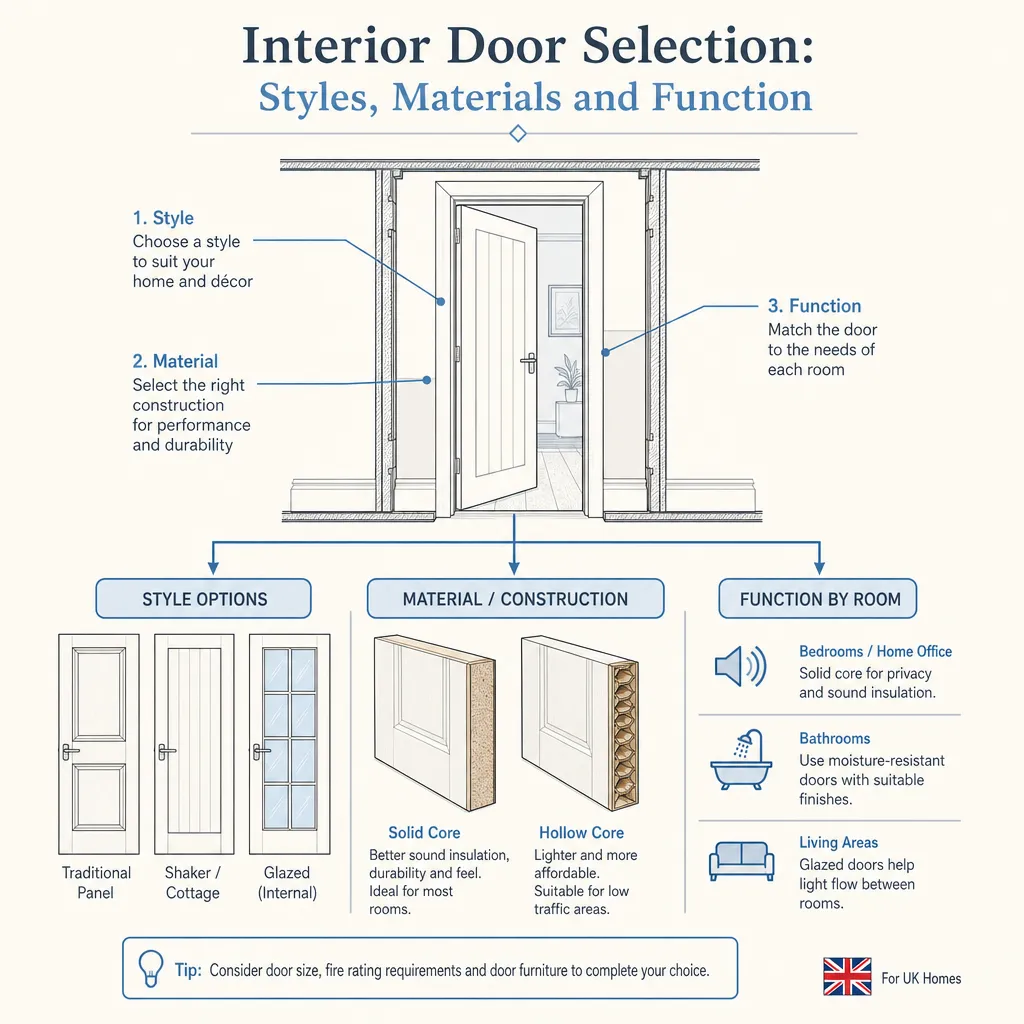
Interior Door Selection: Styles, Materials and Function
Interior doors in UK homes come in solid core, hollow core, and glazed varieties, with styles from flush and panelled to bifold and pocket.
 Improvement & Build
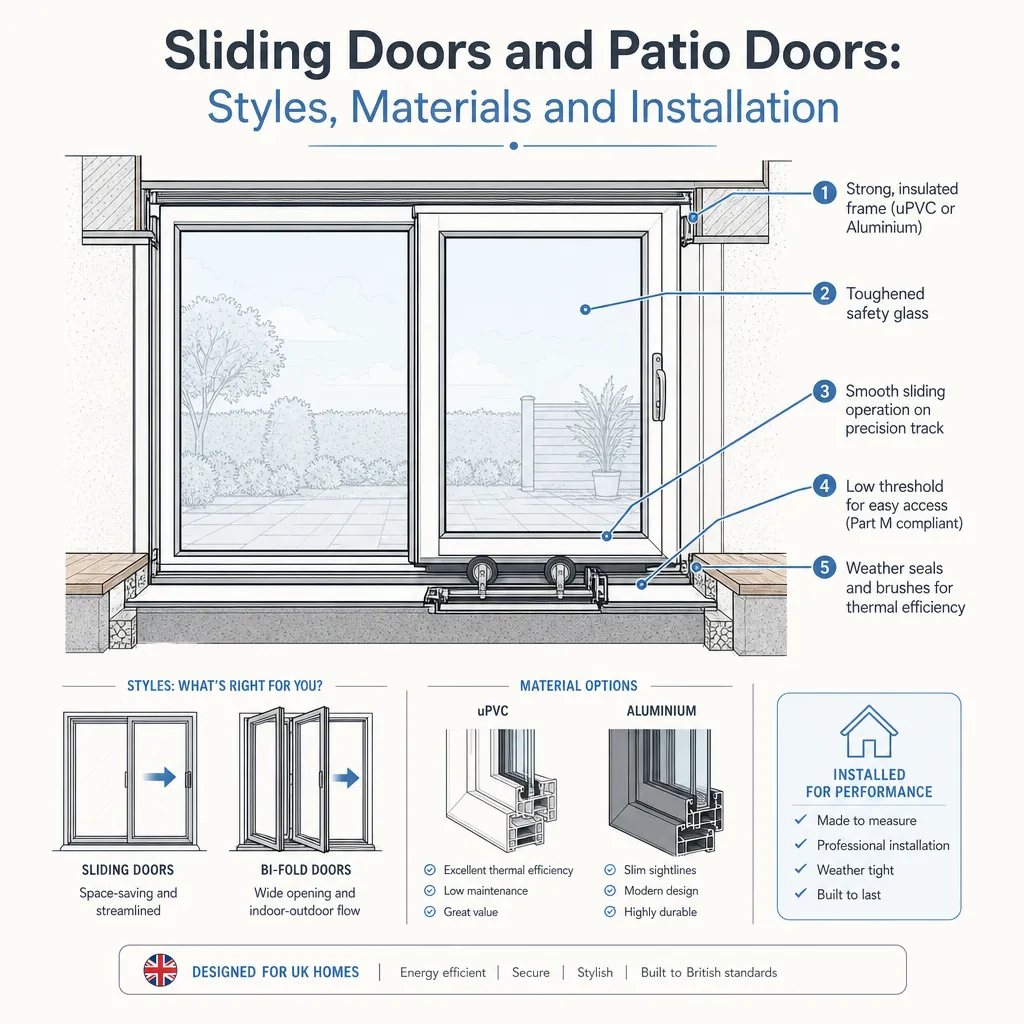
Sliding Doors and Patio Doors: Styles, Materials and Installation
Sliding patio doors move horizontally on a track, keeping outside space clear compared to a swinging door.
 Improvement & Build
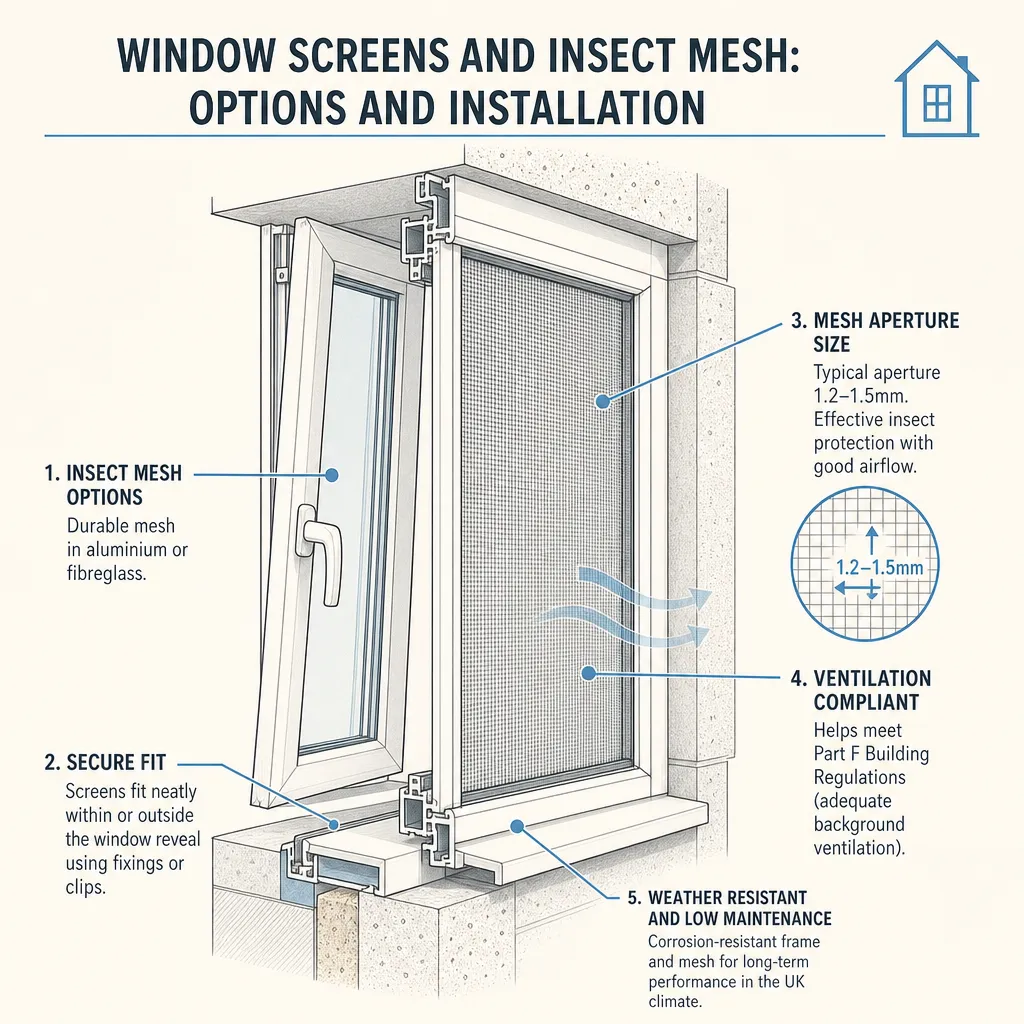
Window Screens and Insect Mesh: Options and Installation
UK window screens fall into four main types: fixed frame, roller retractable, pleated folding, and magnetic snap-fit.
 Improvement & Build
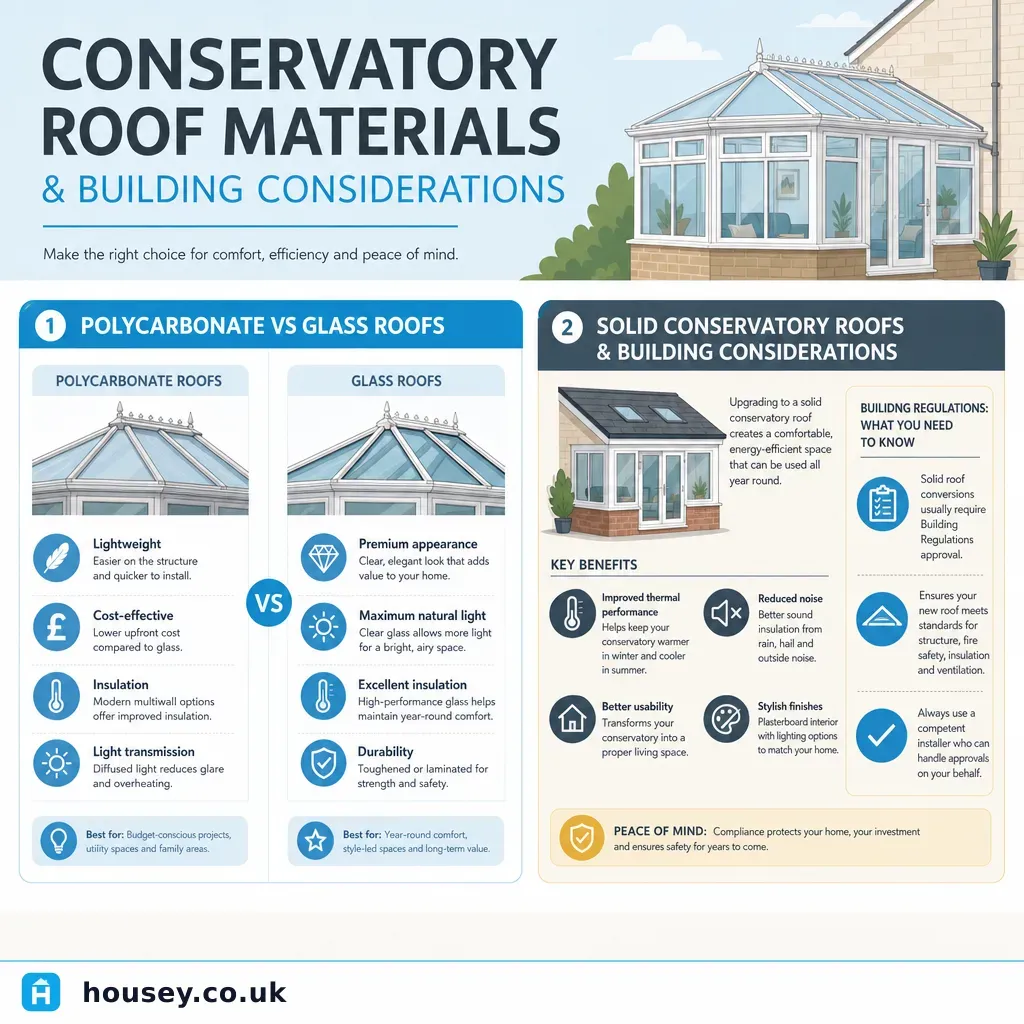
Conservatory Roof Materials and Building Considerations
The main conservatory roof materials are polycarbonate, glass, and solid insulated panels.
 Improvement & Build
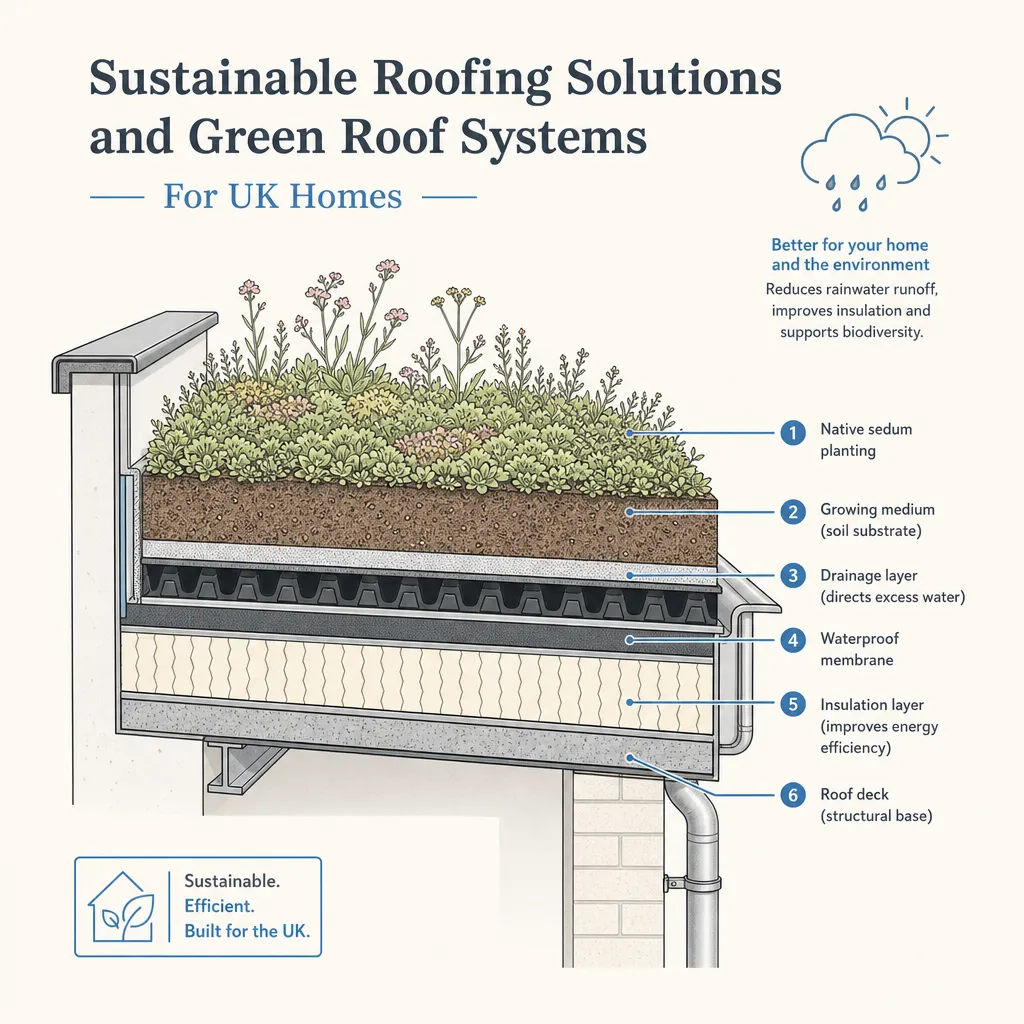
Sustainable Roofing Solutions and Green Roof Systems
Sustainable roofing in the UK covers several options: sedum or living roofs, recycled-content tiles, reclaimed slate, and solar-integrated roofing.