Interior Trim and Door Frame Replacement Costs
By Housey · Last reviewed 6th of May 2026
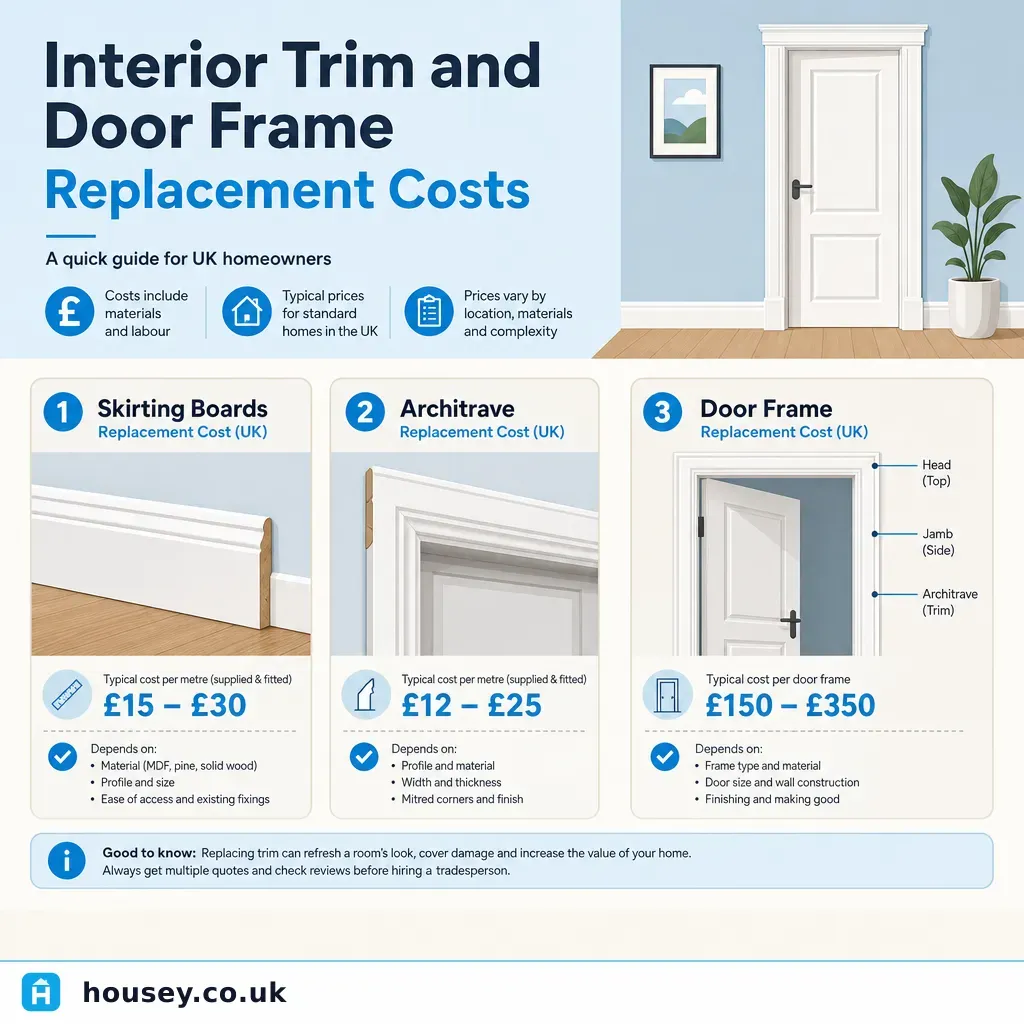
Interior Trim and Door Frame Replacement Costs
Interior trim replacement is one of the most common carpentry jobs in UK renovation projects, typically arising when original boards are damaged, rotted, or need updating to suit a refreshed aesthetic. In properties that have passed through multiple owners, it is common to find a patchwork of mismatched profiles across rooms, making a complete update both practical and visually coherent. The scope of work can range from a single door opening to every room in the house, and costs vary accordingly.
Key points
- Door linings (the structural casing fixed to the masonry or stud) and architrave (the decorative moulding covering the gap between lining and wall) are distinct components and may be quoted separately by a carpenter.
- Moisture-resistant (MR) grade MDF must be specified for trim in bathrooms, utility rooms, and kitchens — standard MDF swells and fails when exposed to prolonged moisture.
- Matching period moulding profiles in pre-1919 properties often requires specialist timber suppliers or custom routing, which can add 30–60% to standard material costs.
- FENSA certification applies to glazed window units, not interior door frames; it is not required when replacing door linings or architrave.
- Removing skirting boards bonded with construction adhesive as well as nails can damage the plaster beneath, potentially adding £50–150 per room in plastering costs before new boards are fitted.
What does interior trim replacement include?
Interior trim covers the timber or composite elements that finish wall junctions and door openings throughout a home. The main components are:
- Skirting boards: horizontal boards running along the base of walls, typically 75–150mm tall in modern properties and taller in period homes.
- Architrave: the decorative moulded trim applied around door openings on each side of the wall.
- Door linings (or door frames): the structural casing fitted to the rough opening in the wall into which a door is hung.
- Door stop: the thin rebate strip within the lining against which a closed door rests.
- Window boards: the sill board across the bottom of a window opening, sometimes included in a trim quote.
A standard renovation quote may bundle skirting, architrave, and lining replacement together per room or per door opening. Clarifying exactly what each quote covers before accepting is worth doing, particularly for period properties where like-for-like profile matching may be required.
Indicative costs for interior trim and door frames in the UK
The following figures are indicative UK costs, last reviewed 2026-05-06. Quotes vary by region, material choice, access conditions, and the extent of existing plaster damage.
Element | Indicative supply and fit cost |
|---|---|
Skirting board replacement | £12–28 per linear metre |
Architrave replacement (per door opening, both sides) | £80–200 |
Door lining replacement (per opening, no door) | £150–400 |
Door lining replacement (including fitting a new door) | £300–700 |
Window board replacement | £60–150 |
Indicative UK costs, last reviewed 2026-05-06. Prices vary significantly by region, material grade, profile complexity, and access. Always request itemised quotes from at least two carpenters.
What affects the price?
Several factors can push a quote up or down from the indicative ranges above.
Material choice: MDF is the most common and economical option for painted trim. Hardwood (oak, tulipwood) costs more but suits high-traffic areas or properties where the finish will be stained. Softwood (pine or redwood) sits between the two in price.
Profile complexity: Ogee, torus, and chamfered skirting profiles are widely stocked, but unusual or deeply detailed mouldings found in Victorian or Edwardian houses may need to be custom-profiled from solid timber, adding both material cost and lead time.
Existing damage: Old adhesive residue, crumbling lime plaster, and uneven walls all take additional preparation time and increase the labour component of a quote.
Number of openings: Carpenters typically offer a better per-unit rate when replacing trim across an entire property rather than a single room.
Access: Staircases and hallways with high ceilings may require specialist access equipment, which adds to the day rate.
Material comparison: MDF, hardwood, and softwood
Material | Best for | Not ideal for | Typical supply cost (per linear metre) | Key consideration |
|---|---|---|---|---|
MDF (standard) | Most rooms, painted finish | Bathrooms, kitchens, areas with moisture | £3–8 | Upgrade to MR MDF near any water source |
MR MDF | Bathrooms, utility rooms, kitchens | Stained or natural wood finish | £4–10 | Moisture-resistant but not fully waterproof |
Softwood (pine/redwood) | General use, painted or stained | High-wear areas with no protective coating | £4–10 | Prone to denting; good budget choice |
Hardwood (oak, tulipwood) | Period properties, high-traffic, stained finish | Tight budgets | £10–22 | More durable; must be primed before painting |
Supply costs only; fitting is additional. Indicative UK costs, last reviewed 2026-05-06.
A worked example: 1930s semi-detached renovation in the Midlands
Consider a three-bedroom 1930s semi-detached property undergoing a full internal refresh. The property has:
- Eight door openings, each requiring architrave on both sides of the wall
- Approximately 65 linear metres of skirting across all rooms
- A mix of original 1930s ovolo-profile skirting and plain 1980s boards fitted during a previous renovation
- One bathroom requiring moisture-resistant materials throughout
A carpenter quoting for the full property might break the estimate down roughly as follows:
- Skirting replacement (65m at approximately £18/m): approximately £1,170
- Architrave replacement (8 openings, both sides, at £130 per opening): approximately £1,040
- Door lining replacement (4 openings needing new linings at £220 each): approximately £880
- MR MDF upcharge for bathroom trim: approximately £60 additional
- Plastering patches in two rooms with adhesive damage: approximately £200
Estimated total: £3,200–£3,600 before decoration.
This is a worked illustration based on indicative rates only. Actual quotes for this property may differ. Soliciting two or three quotes from local carpenters will give a clearer market rate for your area and specification.
What to check before getting quotes
Use this checklist to prepare before inviting carpenters to quote:
When to get professional help
Most interior trim work is straightforward for an experienced carpenter, but certain situations warrant additional caution.
If a door opening has visible cracking above the lintel or a sagging head, seek a structural assessment before any trim work begins — the cause may be lintel failure rather than a cosmetic problem. If the property is listed, alterations to original period joinery may require listed building consent from your local planning authority before any removal or replacement. Lead paint is commonly found in older paint layers on pre-1960s properties; if you suspect it is present, have the paint tested before any sanding or mechanical removal. The HSE publishes guidance on lead paint safety for those carrying out renovation work.
How Housey can help
Housey helps UK homeowners compare quotes from local carpenters and interior joinery specialists. Whether you are refreshing a single room or updating trim throughout a period property, you can use Housey to describe your project and receive quotes from relevant tradespeople in your area.
Frequently asked questions
How long does it take to replace skirting boards in a three-bedroom house?
A carpenter typically takes two to four days to replace skirting boards throughout a three-bedroom property, depending on the number of rooms, the condition of existing plaster, and whether door frames are being replaced at the same time. Complex period profiles or significant plastering repairs can extend the timeline. Materials usually need a day to acclimatise before fitting.
What is the difference between a door lining and a door frame?
A door lining is the full casing fitted to the rough opening in the wall, including the head and two jambs, and is the element into which a door is hung. Architrave is the separate decorative moulding applied over the joint between the lining and the wall plaster. The term door frame is often used interchangeably with door lining in domestic contexts.
Do I need planning permission to replace interior door frames?
In most cases, no. Replacing like-for-like interior door frames is classed as routine maintenance and does not require planning permission. The exception is if the property is listed, in which case listed building consent may be needed for any alteration to historic joinery. Always check with your local planning authority if you are unsure.
Can I replace skirting boards without replastering?
Sometimes. If the existing plaster behind the skirting is sound, new boards can usually be fitted directly. Where old boards were bonded with adhesive, their removal can pull away the plaster face, requiring patching. A carpenter should inspect behind a sample section before quoting to give a realistic assessment of any plastering work needed.
Is MDF or hardwood better for skirting boards?
MDF is the most cost-effective choice for painted skirting in most rooms and holds a painted finish well. Hardwood is better suited to high-traffic areas or where a stained natural finish is wanted, and it is more durable under knocks and scrapes. In bathrooms and utility rooms, moisture-resistant MDF or PVC trim should be used instead of standard MDF, which swells when exposed to moisture.
Sources and further reading
- Lead paint safety for homeowners — Health and Safety Executive
- Listed buildings: making changes — GOV.UK
- Timber and woodwork in buildings — TRADA (Timber Research and Development Association)
Useful next reads
 Improvement & Build
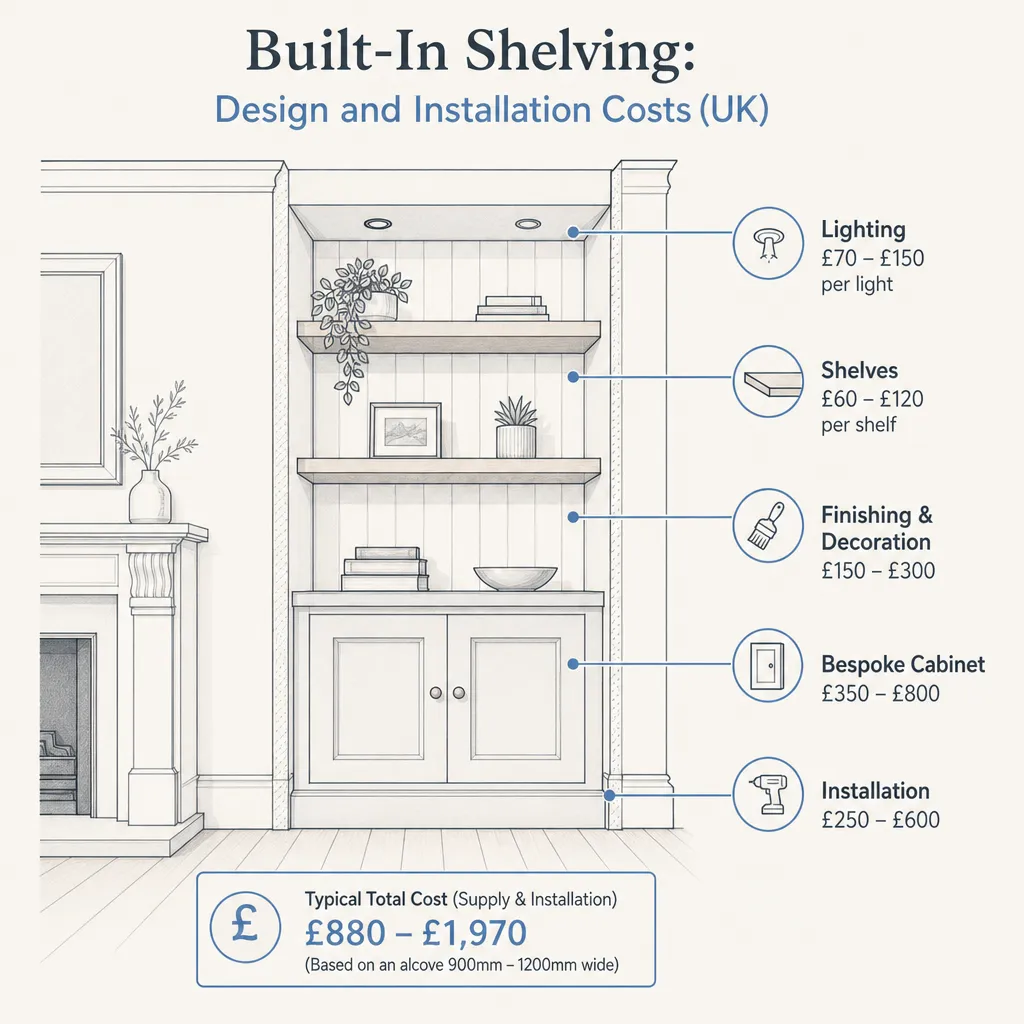
Built-In Shelving: Design and Installation Costs
Built-in shelving typically costs £400–£900 for a simple single-alcove MDF unit, rising to £1,400–£3,000 for a pair of painted alcoves with base cupboards.
 Improvement & Build
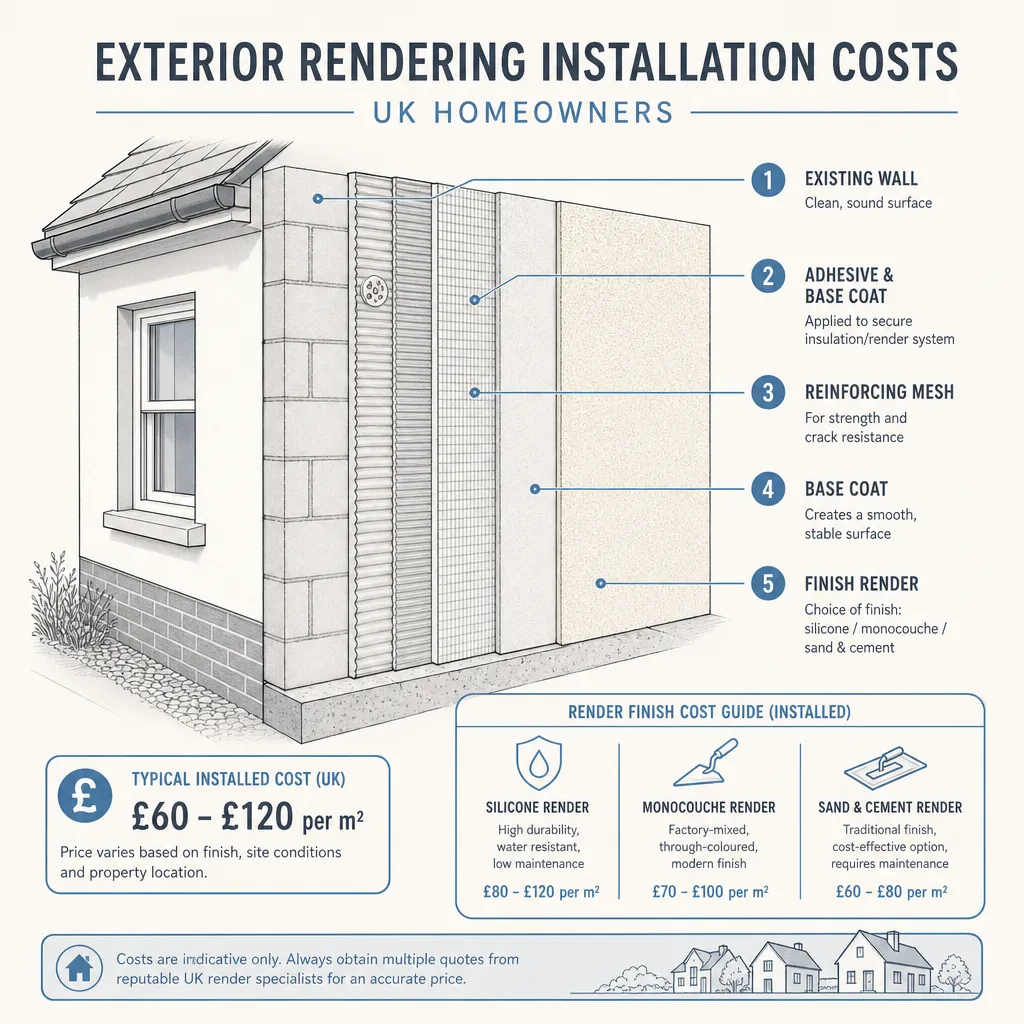
Exterior Rendering Installation Costs
Exterior rendering in the UK typically costs £20–£60 per square metre for standard render systems, or £80–£150 per square metre for External Wall Insulation with a render finish.
 Improvement & Build
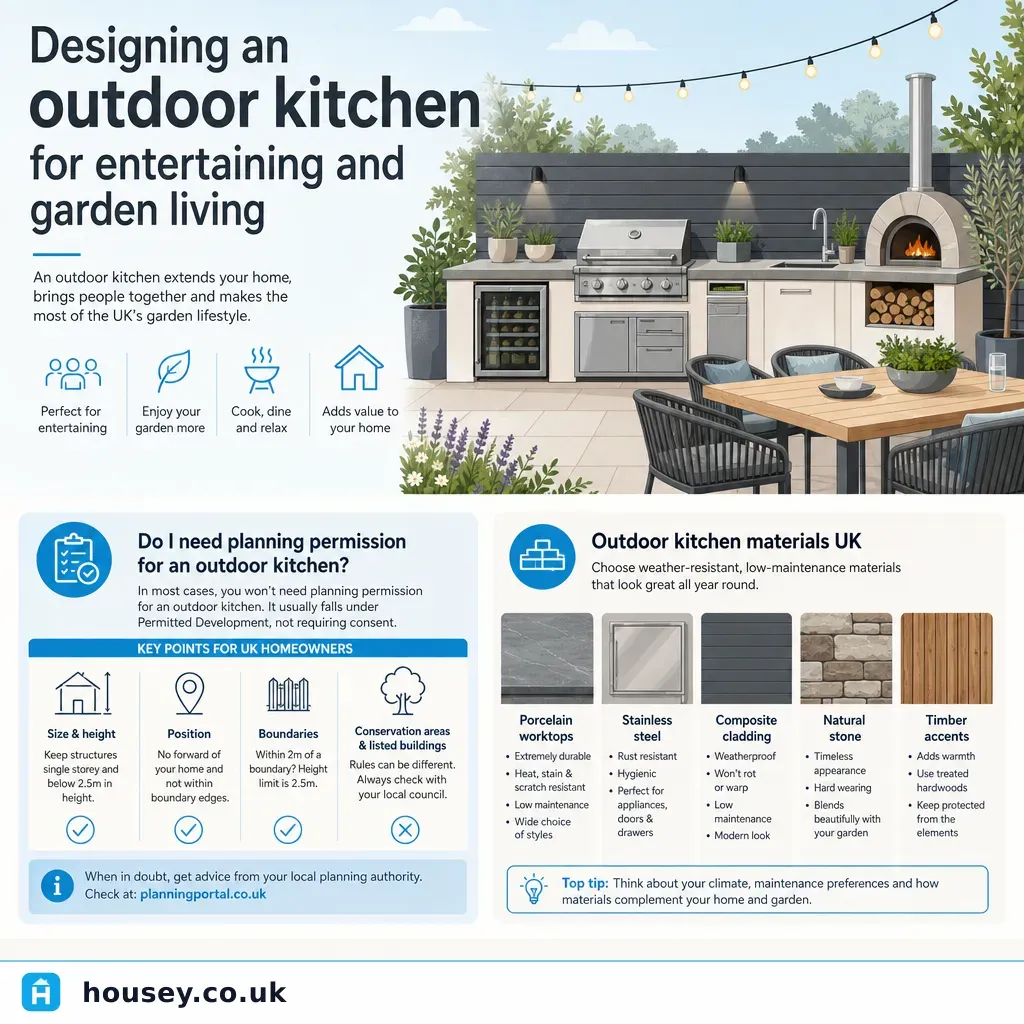
Designing an outdoor kitchen for entertaining and garden living
An outdoor kitchen in a UK garden needs a stable, level base — typically a concrete slab or quality paving — with weather-rated materials such as stainless steel grade 316 or frost-rated porcelain.
 Improvement & Build
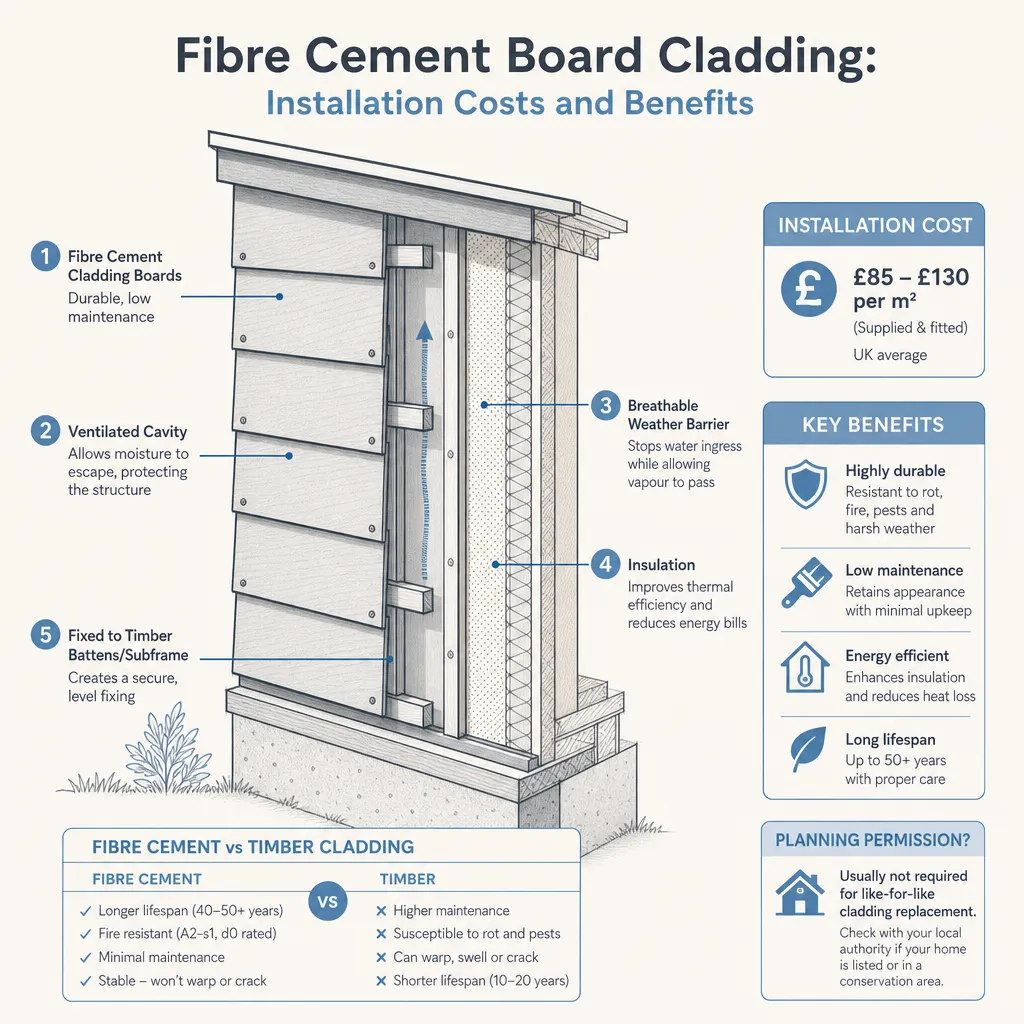
Fibre Cement Board Cladding: Installation Costs and Benefits
Fibre cement board cladding typically costs £80–£180 per m² installed in the UK, including boards, battens, breather membrane, and labour.
 Improvement & Build
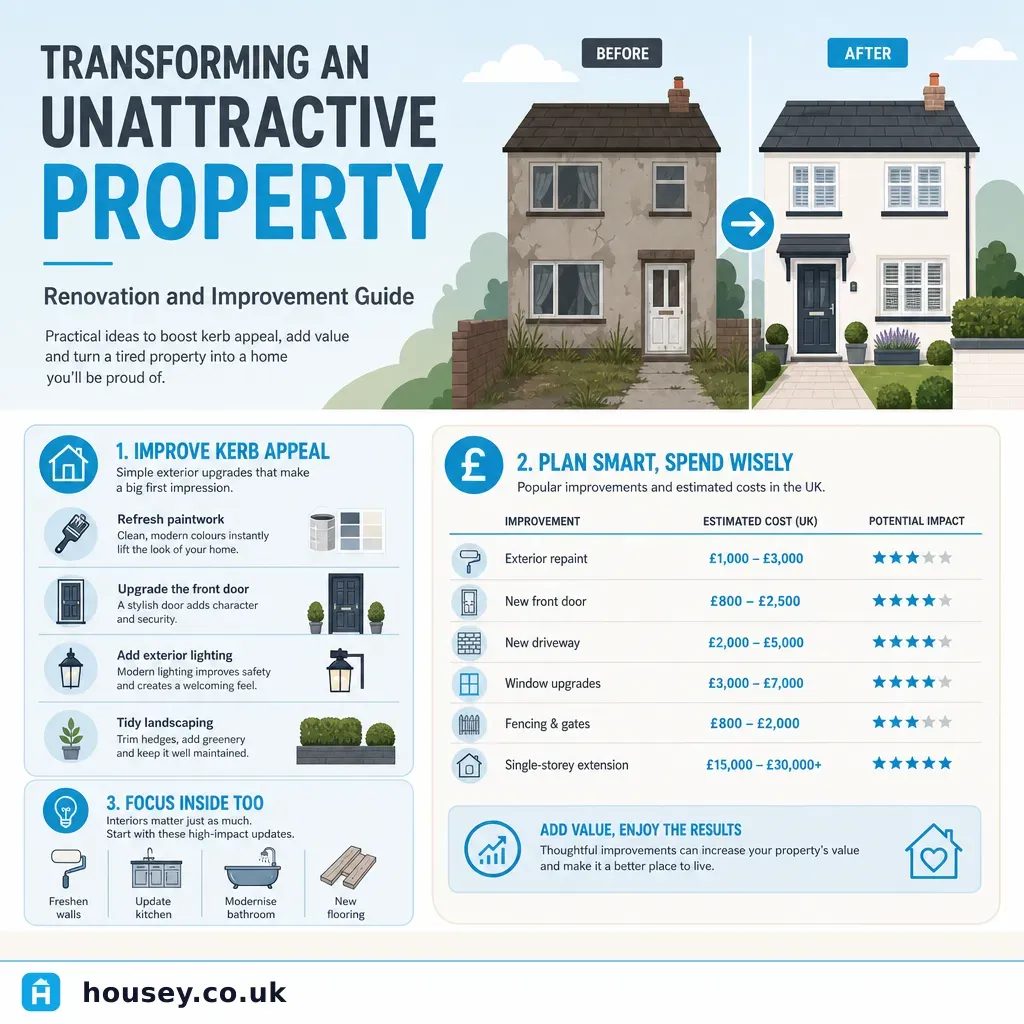
Transforming an Unattractive Property: Renovation and Improvement Guide
Transforming an unattractive UK property usually starts with surface-level improvements — render, windows, doors, and front landscaping — before tackling structural changes like extensions.