Investigating and Diagnosing Unexpected Odours in Your Property
By Housey · Last reviewed 1st of June 2026
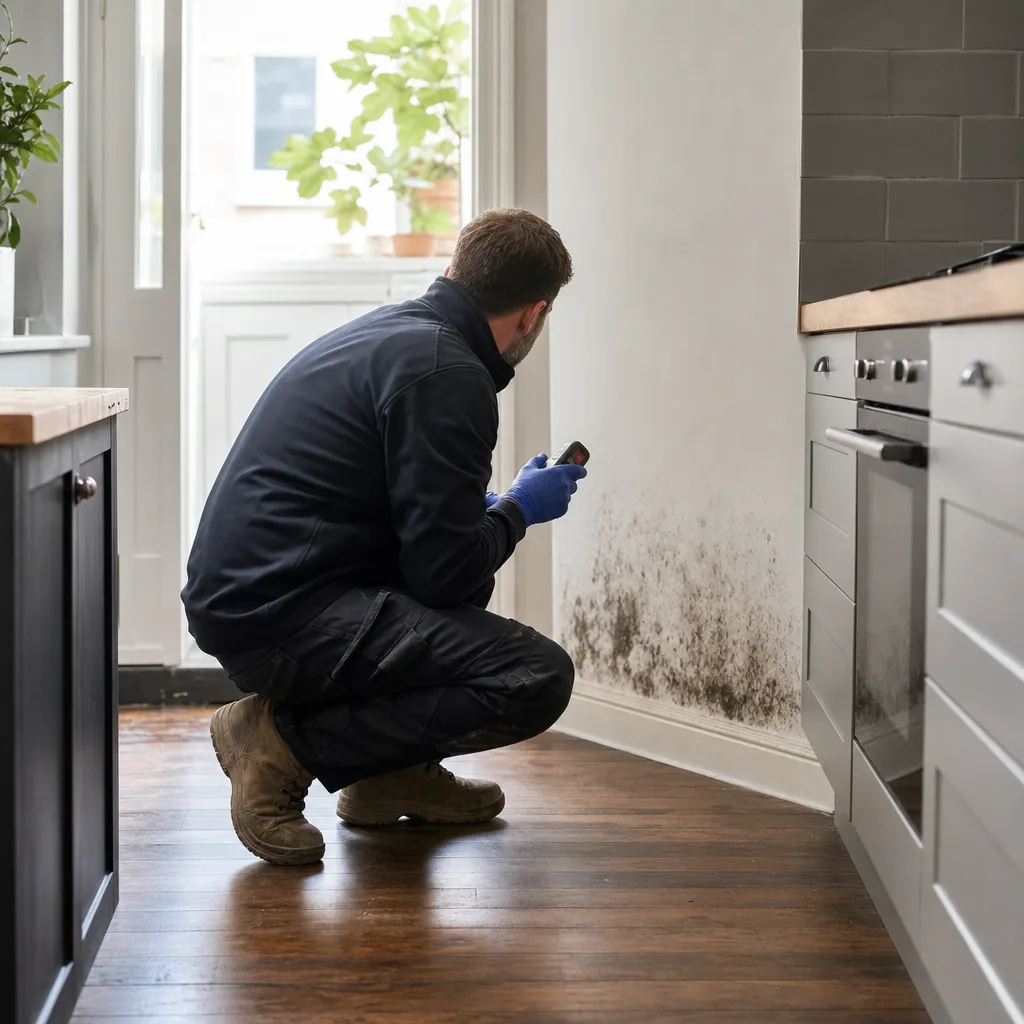
Investigating and Diagnosing Unexpected Odours in Your Property
An unexpected smell in a UK home often causes immediate alarm — and rightly so. Odours can signal anything from a slow drainage fault in a Victorian terrace to structural damp in a 1930s semi, or, in the most urgent cases, a gas leak requiring immediate evacuation. Understanding what a smell is telling you — and who to call — can prevent a minor problem from becoming an expensive defect or a dangerous situation.
Key points
- A smell of gas or rotten eggs is a gas safety emergency: call the National Gas Emergency Service on 0800 111 999 immediately, do not operate any switches or open flames, and leave the building.
- Sewage or sulphurous smells not caused by gas typically indicate a drainage fault, dry or damaged trap seal, or a broken drain run — a CCTV drainage survey is often the most efficient diagnostic tool.
- Musty or earthy smells are commonly associated with rising damp, penetrating damp, or condensation-related mould, particularly in pre-1919 solid-wall properties.
- Timber decay fungi (wet rot and dry rot) produce a distinctive mushroom-like or musty smell and require a damp and timber survey to assess the full extent of affected material.
- Some persistent odours — including those from certain moulds and decaying organic material — may indicate poor indoor air quality warranting specialist environmental assessment.
Identifying the smell type: a diagnostic starting point
The nature, location, and persistence of an odour provide the first clues as to its source. The following decision tree can help narrow down possibilities before instructing a professional.
Decision tree: which direction should you go?
- Rotten eggs, sulphur, or any gas-like smell → Treat as a gas emergency. Leave the building immediately and call 0800 111 999. Do not operate switches, lighters, or open flames.
- Sewage or drain smell, strongest near sinks, toilets, or floor gullies → Likely a drainage fault, broken trap, or cracked drain run. Arrange a drainage survey.
- Sewage smell from outside or beneath a suspended timber floor → Possible broken external drain or blocked inspection chamber. A drainage specialist should investigate.
- Musty, damp, or earthy smell, stronger in winter or after rain → Rising or penetrating damp, or condensation mould. Arrange a damp and timber survey.
- Mushroom-like, sweet, or "rotting wood" smell near skirting boards, under floors, or in wall cavities → Possible dry rot (Serpula lacrymans) or wet rot; requires specialist inspection before any works.
- Chemical or solvent-type smell → May indicate off-gassing from new materials or historic ground contamination. Seek environmental assessment if persistent.
- Burning or electrical smell → Stop using affected appliances and contact an NICEIC- or NAPIT-registered electrician promptly.
Drainage-related odours
Drainage faults are one of the most common causes of persistent indoor smells in UK properties, particularly in older terraced housing where Victorian-era clay drainage systems are prevalent.
Dry traps occur when a trap under a sink, bath, or floor gully dries out through infrequent use, allowing sewer gases to enter the building. Running water through the fitting often resolves this immediately. If the smell returns, the trap may be cracked or the venting inadequate.
Cracked or displaced drain runs allow sewer gases and leakage into surrounding soil, which can then permeate through subfloor voids. A CCTV drainage survey can identify cracks, root ingress, displaced joints, or blockages far more efficiently than trial-and-error or excavation.
Blocked inspection chambers and partially blocked soil stacks can also cause odours, typically strongest near WCs, bathrooms, or external drain inspection covers.
Damp and mould-related smells
A musty or earthy smell frequently indicates moisture ingress, and it is one of the most common complaints in UK pre-war housing stock, which makes up a substantial proportion of the country's 29 million homes.
Rising damp occurs when groundwater migrates upward through porous masonry where a damp-proof course (DPC) is absent, failed, or bridged. It typically produces a persistent salt-stained, musty smell at low level in walls.
Penetrating damp from defective guttering, failed pointing, or poor flashings introduces moisture higher up walls, often producing mould growth on internal surfaces and a distinct damp smell.
Condensation and mould is the most widespread moisture problem in UK homes and is frequently misdiagnosed as rising damp. Black mould on cold walls or in poorly ventilated corners produces a musty, earthy smell. NHS guidance notes that living with damp and mould can exacerbate respiratory conditions, particularly in children and older people.
A professional damp and timber survey can distinguish between these causes — which matters, because the remediation for each differs significantly.
Timber decay: wet rot and dry rot
Decaying structural or joinery timber often produces distinctive odours before visible signs become obvious.
- Wet rot has a damp, earthy, or mushroom-like smell and typically occurs where timber is persistently wet — window sills, external door frames, flat roof joists. It is generally localised to the wet area.
- Dry rot (Serpula lacrymans) produces a sweetish, mushroom-like smell and is more serious. It can spread through masonry and behind plaster, meaning the affected area is often much larger than visible signs suggest.
If dry rot is suspected, a specialist damp and timber survey should be arranged before any remediation begins. A specific defect survey may be appropriate where the issue is suspected in a particular location.
Environmental and other sources
Not all property odours relate to drainage or moisture. Less common but significant causes include:
- Contaminated land: Properties on brownfield sites or former industrial land may have residual ground contamination producing chemical or hydrocarbon odours. A Phase 1 Environmental Site Assessment may be warranted.
- Building materials off-gassing: Certain insulation materials, adhesives, and flooring products can release volatile organic compounds (VOCs), particularly in newly renovated or new-build properties.
- Pest infestation: Rodents, birds, or insects in roof voids, wall cavities, or subfloor spaces can leave organic material that generates persistent odour.
Which professional do you need?
Odour type | Likely cause | Professional to instruct | Typical assessment |
|---|---|---|---|
Gas or rotten eggs | Gas leak | National Gas Emergency Service — 0800 111 999 | Emergency response — do not delay |
Sewage (indoors) | Dry trap, blocked drain | Drainage contractor or CCTV specialist | CCTV drainage survey |
Sewage (under floor or outside) | Cracked or broken drain run | Drainage specialist | CCTV survey with drain mapping |
Musty / damp (low-level walls) | Rising damp, failed DPC | PCA- or CSRT-qualified damp surveyor | Damp and timber survey |
Musty / damp (upper walls or ceiling) | Penetrating damp, roof fault | Building surveyor or damp specialist | |
Mushroom-like (floors, skirting) | Wet rot or dry rot | Specialist timber and damp surveyor | Damp and timber survey |
Chemical / solvent | Contamination, off-gassing | Environmental consultant | Environmental assessment |
Electrical burning | Electrical fault | NICEIC- or NAPIT-registered electrician | Electrical Installation Condition Report (EICR) |
Important limitations
This article provides general information only. The causes of property odours can overlap and may not be identifiable without professional investigation. In particular:
- Gas odours must always be treated as an emergency, regardless of your own assessment of the situation.
- Dry rot can be significantly more extensive than visible signs suggest; a general survey may not capture the full scope.
- Environmental contamination requires specialist investigation beyond the scope of standard building surveys.
- Rules on remediation standards, required certificates, and professional qualifications vary. A qualified professional should assess your specific property.
When this becomes urgent
Seek professional help promptly — and for gas, immediately — if:
- Any gas-like or rotten-egg smell is present. Do not investigate; leave the building and call 0800 111 999.
- A sewage smell has persisted for more than a few days and clearing traps has not resolved it.
- Visible mould covers an area larger than 1 m², or recurs rapidly after cleaning.
- There is a mushroom-like smell accompanied by discolouration of skirting boards, floorboards, or wall plaster.
- You are purchasing a property and an unexplained odour is present during a viewing — request professional investigation before exchange of contracts.
- Structural timbers in subfloor or roof void areas smell damp or organic and visual access is limited.
What to ask a qualified professional
Before instructing a surveyor or specialist:
- What type of survey or investigation do you recommend, and precisely what will it cover?
- Will your report distinguish between condensation, rising damp, and penetrating damp?
- For drainage investigations, will the CCTV survey include a mapped plan of the drain run?
- If dry rot is suspected, how will you assess areas behind plaster and within wall cavities?
- What are the limitations of your report — what cannot be assessed without opening-up works?
- Are you a member of a recognised professional body (RICS, PCA, or equivalent)?
- What is the typical timeline from inspection to written report?
How Housey can help
If you have identified or suspect the source of an odour in your property, Housey can connect you with qualified specialists. For drainage-related smells, find a specialist through a drainage survey. Where damp, mould, or timber decay is suspected, a damp and timber survey is usually the most efficient starting point. For a broader assessment of a property's condition, a RICS Level 3 survey covers structural and significant defects in detail, or a specific defect survey if the issue is more localised.
Frequently asked questions
Why does my house smell of drains but the drains seem clear?
A drain-like smell with no visible blockage often comes from a dry or cracked trap under a sink, bath, or floor gully. Running water through seldom-used fittings can sometimes resolve it. If the smell persists, a CCTV drainage survey can check whether underground drain joints are displaced or broken — a common cause in older clay drainage systems found in many Victorian and Edwardian properties.
Can damp and mould cause health problems?
Yes. NHS guidance notes that damp and mould can exacerbate respiratory conditions, including asthma, particularly in children and older people. The cause of damp should be identified and treated by a qualified professional; painting over mould without addressing the moisture source is ineffective and the problem will recur.
Is a musty smell always rising damp?
No. Musty smells are more often caused by condensation mould or penetrating damp than by rising damp, which is frequently over-diagnosed in the UK. A qualified damp surveyor can distinguish between these causes — which matters because the remediation differs significantly for each one.
What should I do if I smell something electrical or burning?
Stop using the appliance or circuit involved and switch off at the consumer unit if safe to do so. Contact an NICEIC- or NAPIT-registered electrician promptly. Do not ignore an unexplained electrical smell — it can indicate insulation breakdown, overheating wiring, or a fault at a connection point.
Sources and further reading
- What to do if you smell gas — Cadent / National Gas Emergency Service
- Damp and mould in the home — NHS
- Recognising and treating timber decay — Property Care Association (PCA)
- Electrical safety standards in the private rented sector — GOV.UK
- RICS Home Survey Standard — RICS
Useful next reads
 Surveys & Inspections
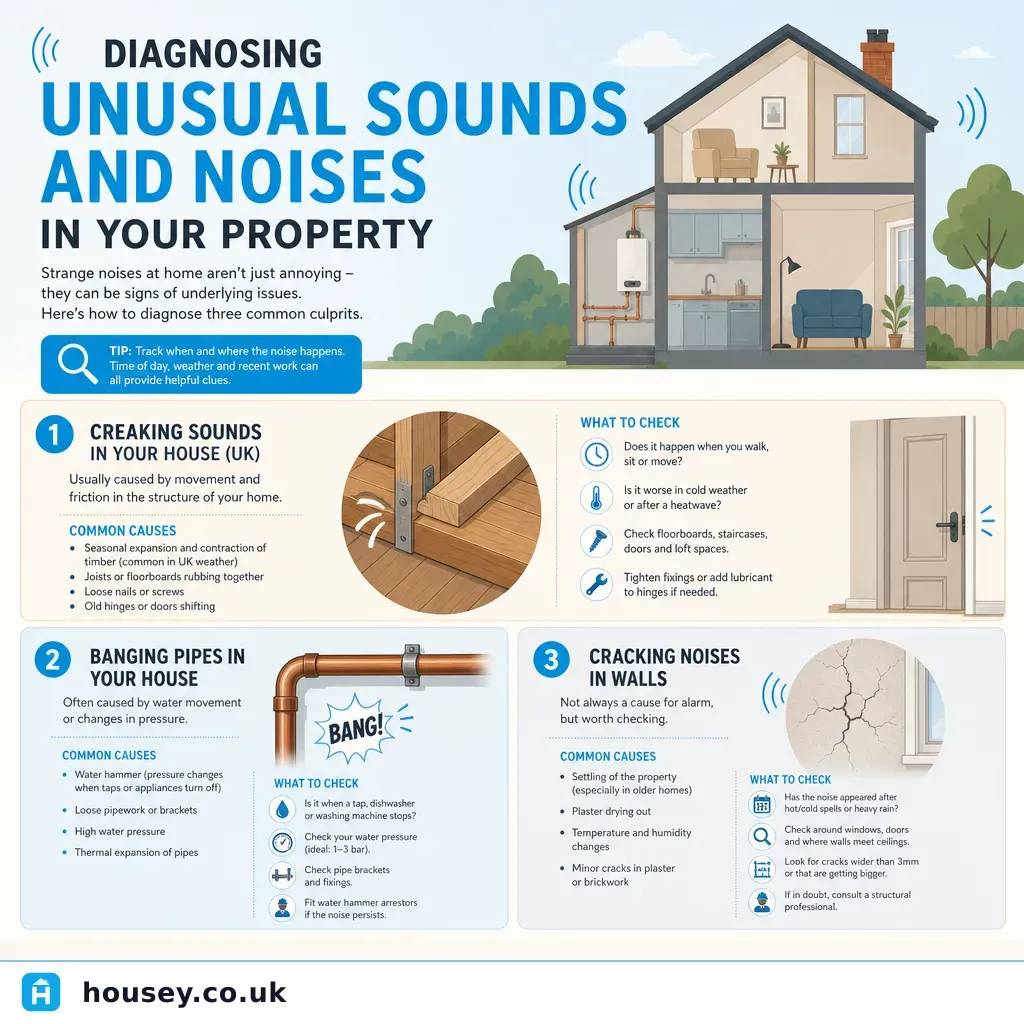
Diagnosing Unusual Sounds and Noises in Your Property
Most unusual sounds in a UK home have benign causes — thermal movement in roof timbers, water hammer in heating pipes, or normal settlement in new builds.
 Surveys & Inspections
House Survey Guide: Types and What to Expect
UK house surveys come in three RICS-standardised levels: Level 1 (Condition Report) for new or near-new homes, Level 2 (Home Survey) for conventional post-war properties, and Level 3 (Building Survey) for older, altered, or defective properties.
 Surveys & Inspections
Asbestos Testing: Finding a Qualified Surveyor
Finding a qualified asbestos surveyor means choosing a company accredited by UKAS to ISO/IEC 17020, with analysts holding BOHS P402 or equivalent qualifications.
 Surveys & Inspections
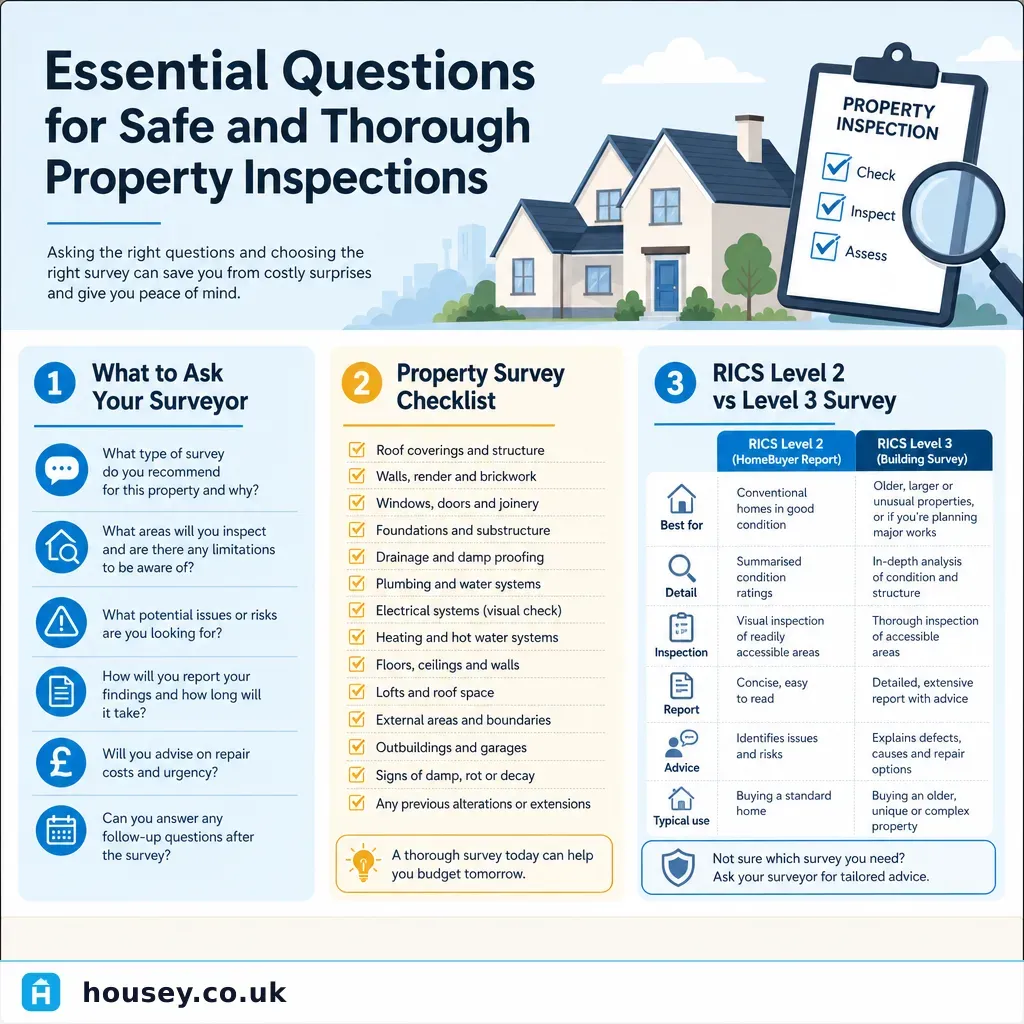
Essential Questions for Safe and Thorough Property Inspections
Before commissioning a property survey, confirm what type of inspection suits your property's age and condition, ask the surveyor what defects they will and will not assess, and understand what the report will recommend.
 Surveys & Inspections
Drone Technology in Building Surveys and Roof Inspections
Drone surveys use unmanned aerial vehicles (UAVs) to capture high-resolution images of roofs, chimneys, gutters, and other inaccessible areas without scaffolding.