Japanese Knotweed and Property Purchase: Impact on Mortgages and Valuations
By Housey · Last reviewed 18th of May 2026
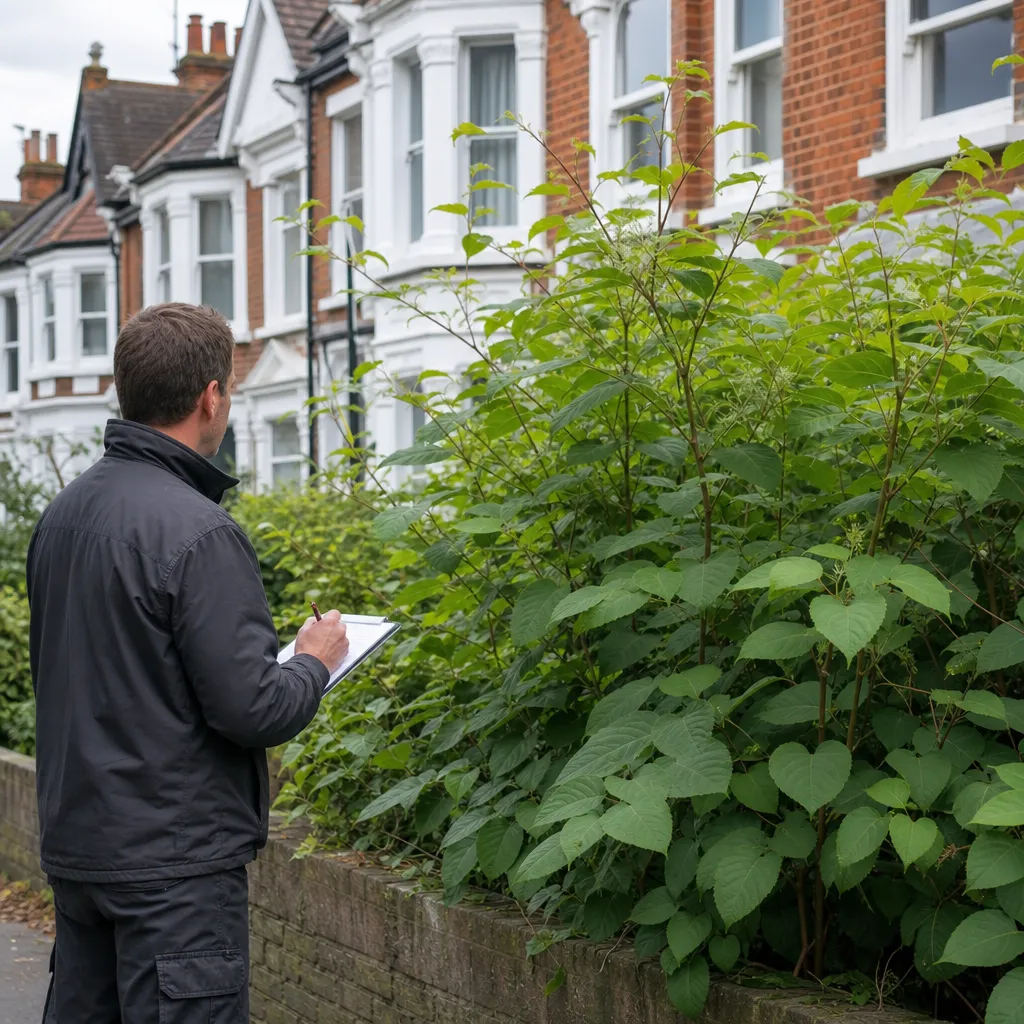
Japanese Knotweed and Property Purchase: Impact on Mortgages and Valuations
Japanese knotweed (Reynoutria japonica) is one of the most disruptive invasive plants a UK buyer or seller can encounter. Whether you are mid-offer or preparing a property for sale, its presence can delay or collapse a transaction, restrict mortgage lending, and affect the surveyor's valuation — often before any visible structural damage has occurred. Understanding how lenders, surveyors, and solicitors approach the risk is essential before reaching exchange.
Key points
- RICS categorises Japanese knotweed risk into four categories (1 to 4); Category 1 indicates the highest risk where knotweed is within 7 metres of a habitable space or causing structural damage, while Category 4 indicates low risk with minimal impact on the subject property.
- Most mortgage lenders will decline or impose special conditions when knotweed is present within 7 metres of a habitable space, outbuilding, or boundary structure.
- Sellers are required to disclose knotweed presence on the Law Society's TA6 Property Information Form; knowingly concealing it can amount to misrepresentation.
- An insurance-backed management plan (IBMP) from a Property Care Association (PCA) or Invasive Non-Native Specialists Association (INNSA) accredited contractor can satisfy many lenders and allow a transaction to proceed.
- Japanese knotweed is classified as controlled waste under the Environmental Protection Act 1990 — incorrect disposal, including fly-tipping, is a criminal offence.
What is Japanese knotweed and why does it matter for property?
Japanese knotweed grows aggressively through underground rhizomes that can extend 3 metres deep and 7 metres horizontally from the visible stems. It can emerge through cracks in concrete, drainage channels, and paving, and it regrows readily from small rhizome fragments. The plant is listed under Schedule 9 of the Wildlife and Countryside Act 1981 — causing it to spread to neighbouring land is an offence — and its waste is classified as controlled waste under the Environmental Protection Act 1990, meaning disposal by a licensed contractor is required.
For property transactions, the primary problem is lender confidence rather than confirmed structural damage. Even where foundations and drainage are intact, proximity to a habitable space is sufficient for many high-street lenders to decline or condition a mortgage application.
How RICS categorises Japanese knotweed risk
The RICS guidance on Japanese knotweed and residential property (2022) sets out four risk categories used by surveyors assessing affected properties:
Category | Description | Typical lender response |
|---|---|---|
1 | Knotweed within 7 m of a habitable space or associated structure, or actively causing damage | Likely decline or requires specialist IBMP with insurer-backed guarantee before lending |
2 | Knotweed within the property boundary but more than 7 m from habitable spaces | Many lenders cautious; management plan often required before proceeding |
3 | Knotweed on an adjoining property but within 7 m of the shared boundary | Some lenders proceed; monitoring or confirmation of neighbour's plan may be requested |
4 | Knotweed on an adjoining property and more than 7 m from the boundary | Most lenders proceed; surveyor notes on record |
A chartered surveyor completing a RICS Level 2 or Level 3 survey will assign a category. However, a general survey may not always include a detailed invasive plant assessment — a specific knotweed or ecological survey may be recommended for properties where the risk is unclear.
Impact on mortgage approval
There is no single national lender policy, but the following patterns are common:
- Category 1 or 2 knotweed on the subject property: most high-street lenders decline or impose conditions, typically requiring an IBMP before funds are released.
- Category 3 or 4: many lenders proceed with a note on file; some request confirmation that a management plan is in place on the neighbouring property.
- Existing IBMP in place: where an insurance-backed management plan from a PCA-accredited contractor is already operative, lenders are significantly more likely to proceed.
- Specialist lenders: a small number of lenders have experience with knotweed-affected properties and may apply more flexible criteria, particularly where treatment is already underway.
If a mortgage application is declined solely because of knotweed, a whole-of-market broker is usually better placed to identify appropriate lenders than approaching individual banks directly.
How knotweed affects a surveyor's valuation
A valuer must reflect all material risks in their assessment. Knotweed in Categories 1 or 2 typically results in:
- A reduction in open market value (the extent varies by location, category, and whether a treatment plan is in place).
- A specific caveat in the valuation report restricting lending until the issue is addressed.
- In some cases, a request for a specialist report before a valuation figure is confirmed at all.
Where an IBMP is already in place and operative, the downward impact on value is generally smaller, as the risk to the buyer is measurably reduced. Properties with a knotweed history — even where treatment is complete — may still carry a residual stigma value effect; this is a subjective element that varies by local market conditions and buyer profile.
Seller disclosure obligations
The Law Society's TA6 Property Information Form (used in most residential conveyancing in England and Wales) includes a direct question about Japanese knotweed. Answering "No" when knotweed is present — or has been treated in the past — can amount to misrepresentation and expose the seller to claims for damages after completion.
Sellers should:
- Disclose knotweed honestly and provide any management plan, treatment history, or survey report.
- Not attempt to conceal it through hard-standing, landscaping, or informal removal.
- Ensure knotweed waste is disposed of only by a licensed waste contractor — it is classified as controlled waste under Schedule 2B of the Environmental Protection Act 1990.
Treatment options and management plans
Herbicide treatment is the most widely used approach for residential properties. A PCA-accredited contractor will:
- Survey and map the extent of the infestation.
- Prepare a site-specific management plan.
- Apply herbicide treatment across three to five growing seasons.
- Provide an insurance-backed guarantee (usually 5 to 10 years) that transfers to new owners on sale.
Excavation and off-site disposal is sometimes used where transaction timescales are critical, but it costs significantly more and carries a higher risk of residual rhizome growth if fragments are missed.
Indicative UK costs, last reviewed 2026-05-18. Herbicide treatment plans for small residential infestations typically start from around £1,500; excavation can run to £5,000–£20,000 or more depending on the extent of rhizome spread. Always obtain at least two or three quotes from PCA-accredited contractors and confirm exactly what the insurance-backed guarantee covers and for how long.
Red flags when buying a property with knotweed
- A seller or agent downplays visible knotweed or describes it as "already sorted" without providing a management plan or guarantee document.
- Fresh tarmac, concrete, or decking laid over ground where knotweed has been identified — hard-covering does not eliminate the plant.
- Neighbouring properties with visible knotweed within 7 metres of the shared boundary.
- A management plan that has lapsed, is not insurance-backed, or was carried out by a non-accredited contractor.
- A mortgage valuation report that contains a retention or caveat linked to invasive plant risk.
- No reference to knotweed in the TA6 form despite a visible infestation during the survey.
Important limitations
This article provides general information about Japanese knotweed and its typical impact on UK property transactions. Lender policies, RICS survey outcomes, legal obligations, and treatment requirements vary significantly by property, location, lender, and individual circumstance. Nothing here constitutes legal, structural, or valuation advice. You should instruct a qualified surveyor, a specialist knotweed contractor accredited by the Property Care Association, and a solicitor before making decisions based on a knotweed assessment.
What to ask a qualified professional
Before instructing a surveyor or knotweed specialist, ask:
- What RICS category is the knotweed likely to fall into, based on what you have observed?
- Does your survey cover invasive plant identification in sufficient detail, or should I commission a separate specialist report?
- Is your management plan insurance-backed, and which insurer underwrites the guarantee?
- Does the guarantee transfer automatically to the buyer on sale, and is there a transfer fee?
- Which lenders have you worked with in similar cases — can you provide a confirmation letter suitable for the lender's solicitor?
- What is the realistic treatment timeline, and what site access will be required?
- Are you accredited with the Property Care Association or INNSA?
When to get professional help
Seek professional advice immediately if:
- Your mortgage application has been declined or conditioned on a knotweed management plan.
- A surveyor has identified knotweed during a Level 2 or Level 3 survey.
- Knotweed is visible in the garden of a property you are about to exchange on.
- You are a seller uncertain whether past treatment history needs to be disclosed on the TA6 form.
- You can see vigorous, bamboo-like growth with distinctive shovel-shaped leaves and red-flecked stems on or near your boundary.
Do not attempt to remove or dispose of knotweed yourself without specialist guidance — incorrect disposal is an offence under the Environmental Protection Act 1990.
How Housey can help
If a survey has flagged Japanese knotweed or you want certainty before exchange, Housey can connect you with qualified professionals. Use our specific defect surveys service to find surveyors experienced in invasive plant assessments, or arrange a structural survey where you need independent assessment of any impact on foundations or drainage.
Frequently asked questions
Can you get a mortgage on a property with Japanese knotweed?
Yes, in many cases — but it depends on the RICS risk category and your lender's policy. Most lenders require a RICS-categorised survey and, for Category 1 or 2 infestations, an insurance-backed management plan from a Property Care Association-accredited contractor. Category 3 and 4 cases are often more straightforward, with many lenders proceeding subject to noting the risk on file.
How much does Japanese knotweed reduce property value?
There is no fixed figure. In Category 1 cases — where knotweed is within 7 metres of a habitable space — value reductions of 5–15% are sometimes cited, though the actual impact depends on local demand, the extent of the infestation, and whether a treatment plan is already in place. Once an insurance-backed management plan is operational, the residual reduction is generally smaller.
Do sellers have to declare Japanese knotweed?
Yes. The Law Society TA6 Property Information Form asks sellers directly about knotweed. Failing to disclose a known infestation — or a history of knotweed that has been treated — can amount to misrepresentation and expose the seller to legal claims after completion. Sellers should provide any management plan, survey report, or treatment history alongside the disclosure.
What is an insurance-backed management plan?
It is a formal herbicide treatment programme produced by a specialist contractor and backed by an independent insurer. The guarantee — typically 5 to 10 years — covers the effectiveness of the treatment and usually transfers to a new owner on sale. Most mortgage lenders accept insurance-backed management plans from Property Care Association-accredited contractors as sufficient to proceed with lending.
How long does Japanese knotweed treatment take?
Herbicide treatment typically runs across three to five growing seasons, with applications each spring through autumn. Excavation and off-site disposal is faster but significantly more expensive and does not always eliminate residual rhizome risk as reliably. The management plan will specify the expected timeline and any site conditions that could extend it.
Sources and further reading
- RICS guidance on Japanese knotweed and residential property — RICS
- Wildlife and Countryside Act 1981 — legislation.gov.uk
- Environmental Protection Act 1990 — legislation.gov.uk
- Property Care Association — Japanese knotweed guidance — Property Care Association
- TA6 Property Information Form guidance — The Law Society
Useful next reads
 Surveys & Inspections
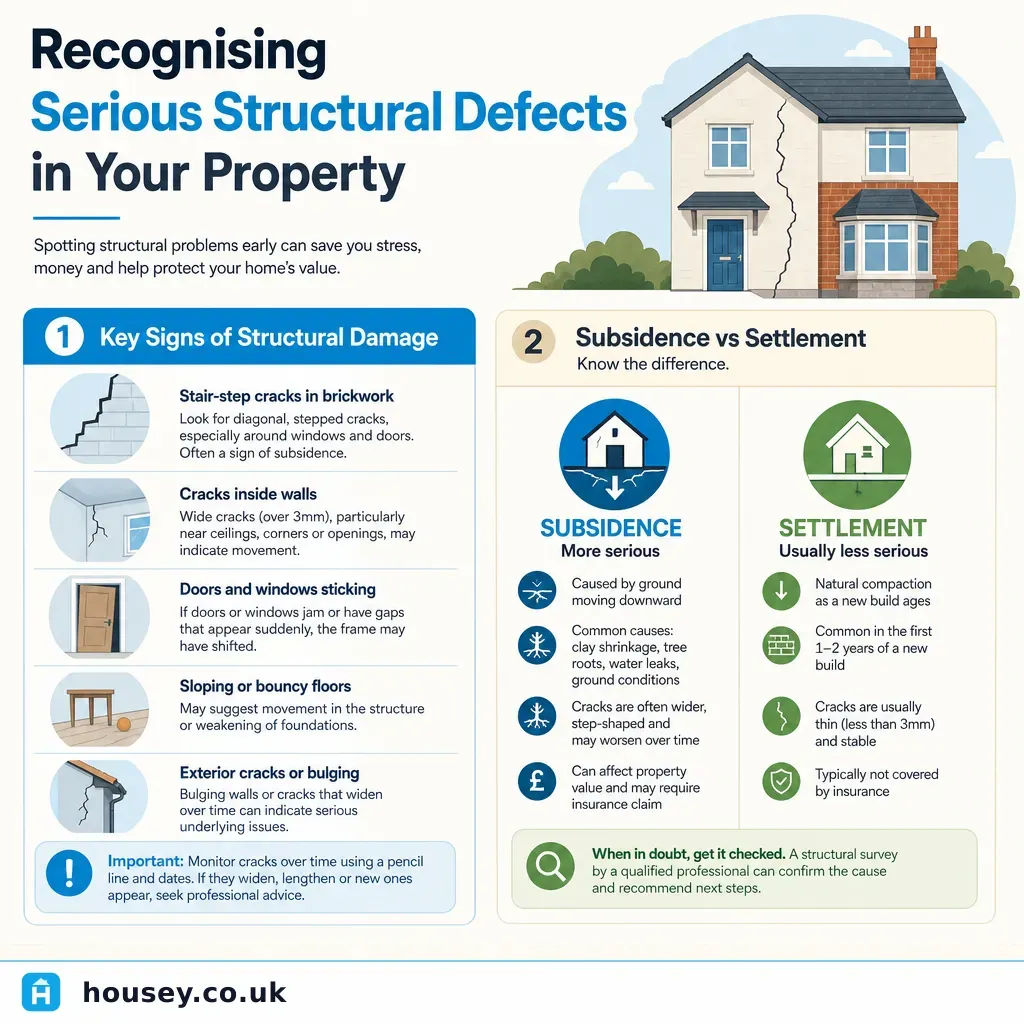
Recognising Serious Structural Defects in Your Property
Serious structural defects in UK homes include wide or diagonal cracks through brickwork, bowing or leaning walls, a sagging roof ridge, and floors or door frames notably out of level.
 Surveys & Inspections
Structural Building Survey Costs
A RICS Level 3 Building Survey typically costs £500–£1,500 in the UK, depending on property size, age, and location.
 Surveys & Inspections
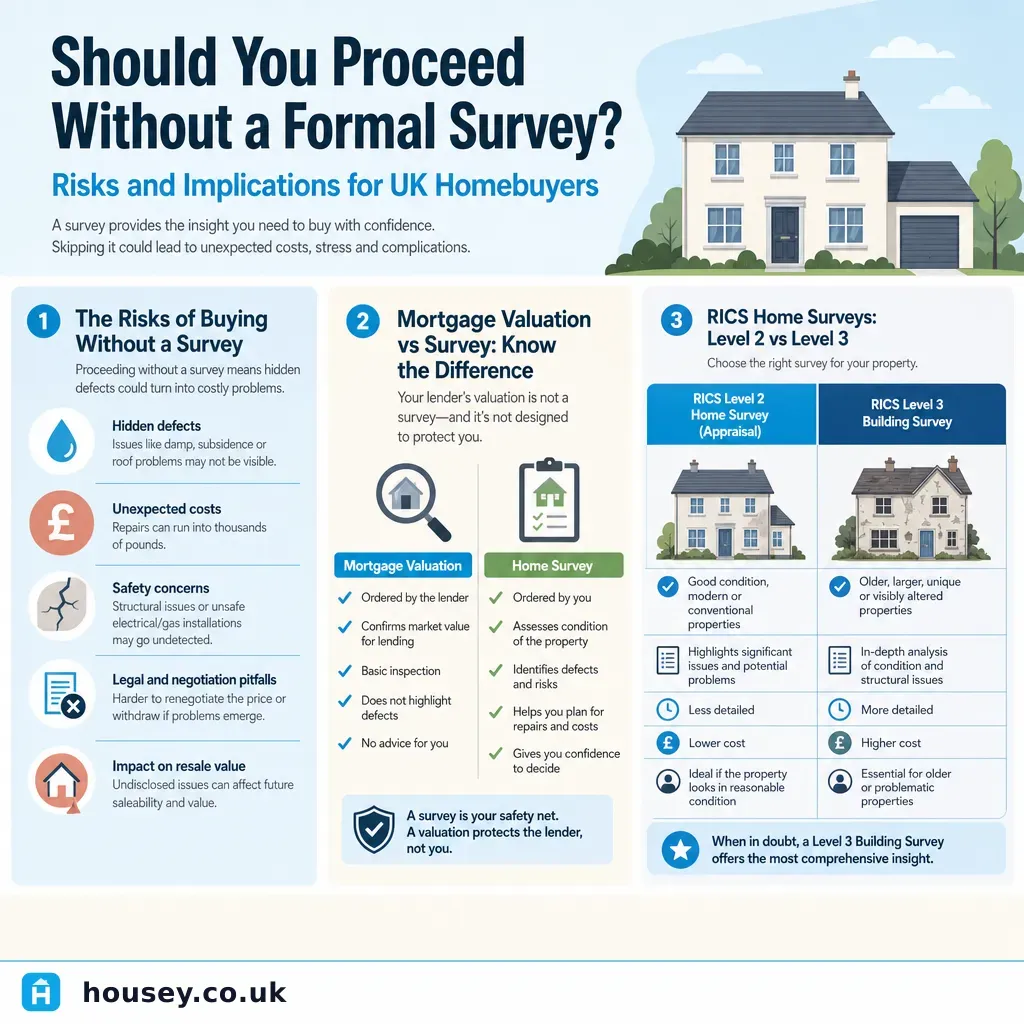
Should You Proceed Without a Formal Survey? Risks and Implications
In England and Wales there is no legal requirement to obtain a survey before exchange, but caveat emptor means any undisclosed defects become your problem the moment contracts are exchanged.
 Surveys & Inspections
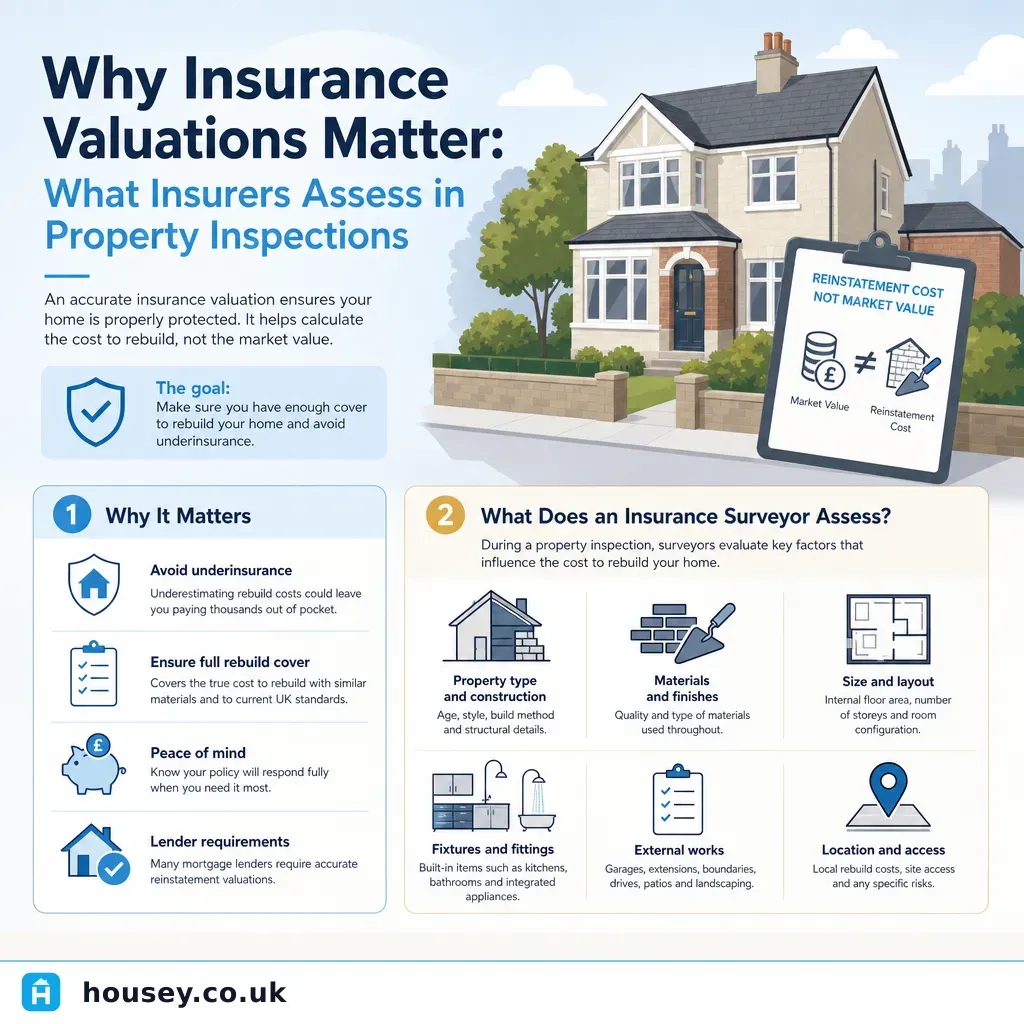
Why Insurance Valuations Matter: What Insurers Assess in Property Inspections
An insurance valuation establishes the reinstatement cost of your property — what it would cost to demolish and rebuild it — not its market value.
 Surveys & Inspections
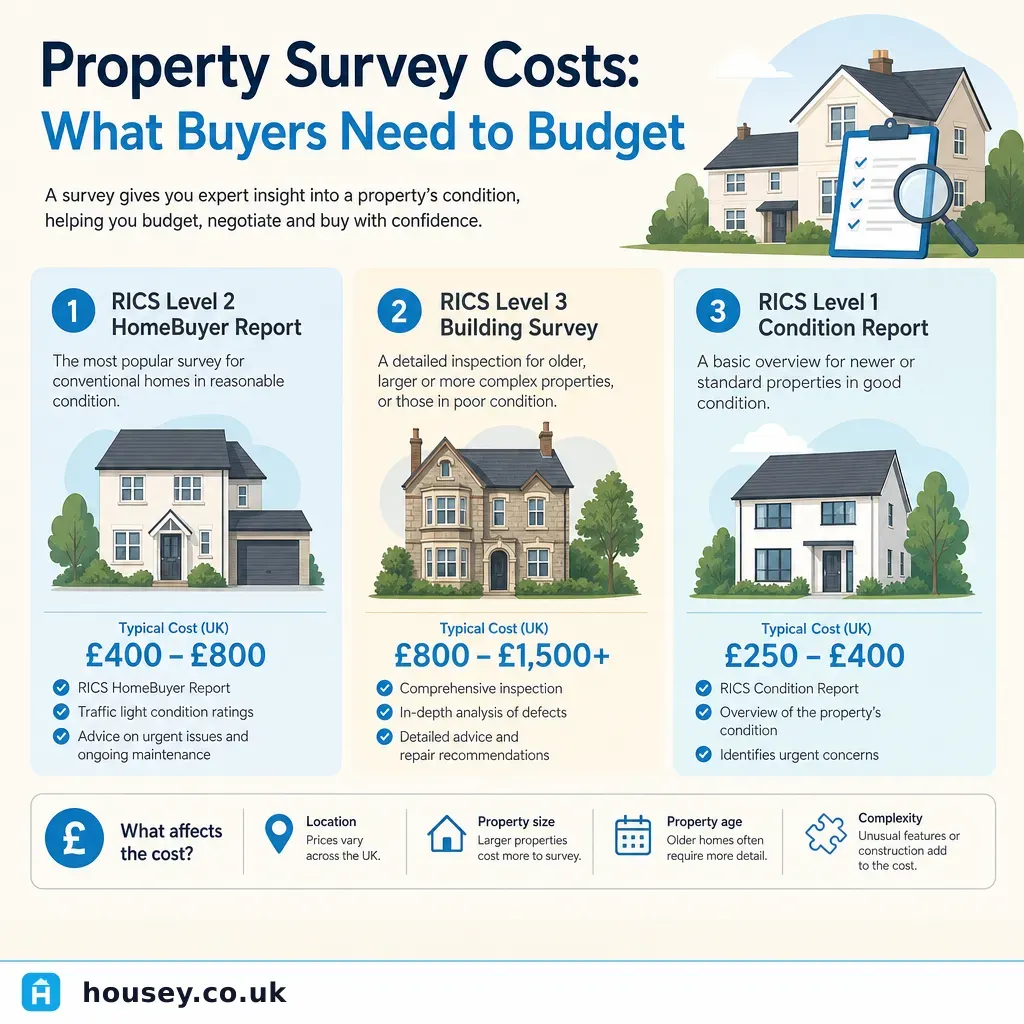
Property Survey Costs: What Buyers Need to Budget
A RICS Level 1 survey typically costs £300–£500, a Level 2 Home Survey £400–£900, and a Level 3 Building Survey £600–£1,500 or more.