Karndean Luxury Vinyl Flooring Installation Costs
By Housey · Last reviewed 7th of May 2026
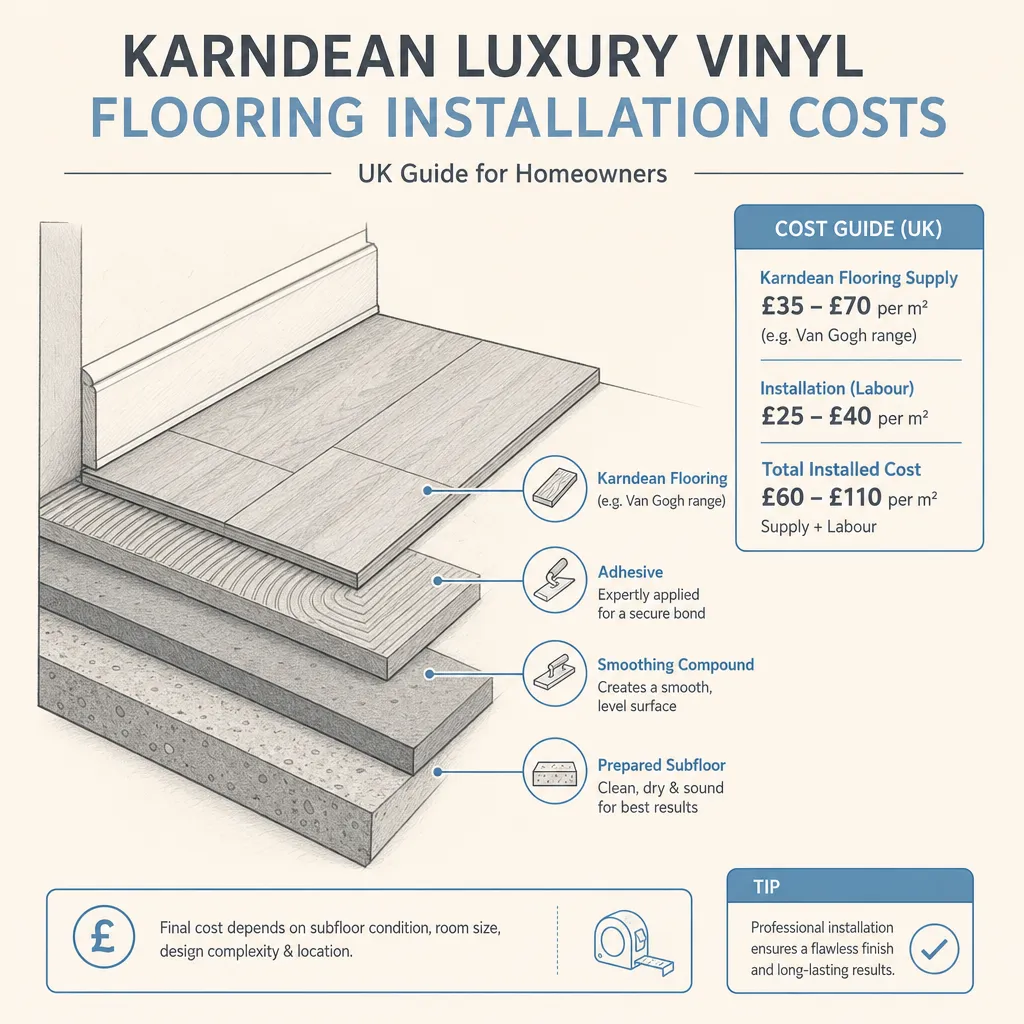
Karndean Luxury Vinyl Flooring Installation Costs
Karndean is one of the UK's best-known luxury vinyl tile (LVT) brands, and homeowners regularly encounter it when choosing flooring for kitchens, hallways, bathrooms, and open-plan living areas. The brand sits firmly in the premium segment, and costs reflect that — but so does the product specification, warranty length, and breadth of design options. Understanding the cost breakdown before requesting quotes helps you assess whether a quote is competitive and which variables will push the total up or down in your specific property.
Key points
- Karndean material costs typically range from around £30 to £75+ per m² depending on the product range, with premium Korlok and Opus ranges at the upper end (indicative UK costs, last reviewed 2026-05-07).
- Professional installation adds roughly £15–£35 per m² on top of material costs; rates vary by region, project size, subfloor condition, and pattern complexity.
- Subfloor preparation — including levelling compound, plywood overlay, or a damp-proof membrane — is a major cost variable and is not always included in a base installation quote.
- Most Karndean ranges are compatible with underfloor heating (UFH), but product-specific surface temperature limits must not be exceeded; doing so can void the manufacturer warranty.
- Residential warranties range from 15 to 25 years depending on the range, which is a meaningful differentiator against budget LVT products that commonly carry 5–10 year warranties.
Which Karndean range is right for your project?
Karndean produces several product lines with different specifications, price points, and installation methods. The right range depends on your subfloor type, whether you have underfloor heating, expected foot traffic, and the aesthetic you are after.
Range | Approx. material cost per m² | Wear layer | Installation method | Best for |
|---|---|---|---|---|
Knight Tile | £30–£45 | 0.3 mm | Glue-down | High-traffic areas; hallways, kitchens |
Van Gogh | £35–£55 | 0.55 mm | Glue-down | Realistic wood-effect; living rooms, open-plan |
Da Vinci | £40–£55 | 0.55 mm | Glue-down | Stone-effect tiles; bathrooms, kitchens |
Korlok | £50–£70 | 0.55 mm | Click-lock (floating) | Easy future access; UFH compatibility; commercial crossover |
Opus | £55–£75+ | 0.55 mm | Glue-down | Large-format premium; open-plan spaces |
Indicative material costs only, last reviewed 2026-05-07. Retail and trade prices vary — verify current pricing with suppliers before budgeting.
What does professional installation cost?
Installation is typically priced in one of two ways:
- Per m² rate: most UK fitters charge £15–£35 per m² for labour, depending on region, project size, and complexity of the layout
- Day rate: some fitters quote £200–£400 per day; this may work out cheaper for smaller rooms with straightforward subfloors
- Minimum call-out: many fitters apply a minimum charge equivalent to approximately 15–20 m², making small or single-room jobs proportionally more expensive
- London and South East premium: typically 20–35% above national average rates
For a typical kitchen of around 15 m² using Van Gogh materials and standard installation, combined material and labour costs might range from £800 to £1,400 — though actual quotes will vary by fitter, region, and subfloor condition.
What subfloor preparation adds to the total
Subfloor preparation is where costs often escalate beyond initial estimates. Karndean's installation guidelines require a flat, dry, and fully adhered subfloor; most glue-down ranges require flatness to within 3 mm over a 1.8 m span.
Common additional costs:
- Plywood overlay (6–18 mm): £8–£18 per m² for ply plus labour — typically required over suspended timber floors
- Levelling compound: £5–£15 per m² depending on depth and area
- Damp-proof membrane (DPM) or additive: £5–£12 per m² if damp is detected in a concrete slab
- Existing floor covering removal: £3–£10 per m² depending on type and thickness
Always ask contractors to inspect the subfloor before providing a final quote, not after work has started. Discovering a wet slab or uneven surface mid-installation is a common cause of cost overruns and delays.
Homeowner checklist: preparing for installation quotes
Use this checklist before inviting fitters to quote:
What to ask before accepting a quote
- Is subfloor preparation included, and what assumptions does this quote make about the current subfloor condition?
- Who supplies the Karndean material — you or the fitter — and is this price based on trade or retail pricing?
- Is the wastage allowance factored into the quoted m² cost?
- What experience do you have fitting this specific Karndean range?
- How will doorway thresholds, trims, and skirting boards be handled, and are these included in the price?
- Is VAT included in this quote?
- What is your process if subfloor issues are identified once work begins — and how are additional costs agreed?
- Do you handle Karndean installer warranty registration, or does the homeowner register directly with Karndean?
Is Karndean worth the premium over budget LVT?
Karndean occupies the upper-mid to premium segment of the UK LVT market. The practical differentiators over budget alternatives include:
- Thicker wear layers (0.3–0.55 mm versus 0.1–0.2 mm on many budget products) — meaningful in high-traffic hallways and kitchens where surface scratching is a concern
- Residential warranties of 15–25 years versus 5–10 years on many budget alternatives
- Dimensional stability — Karndean glue-down products are engineered to minimise expansion and gapping in centrally heated UK homes where temperature fluctuates seasonally
- UK trade network — products are available through UK trade suppliers with a local fitter accreditation programme
Whether the premium is justified depends on the room's expected traffic, your tenure in the property, and whether quality flooring is a selling point for a future buyer. For kitchens and hallways in a home you plan to occupy for ten or more years, the cost difference over budget LVT may represent reasonable long-term value.
If you are fitting flooring as part of a wider build — such as a new extension — coordinate with your extension builders early to ensure the subfloor is laid to the correct specification and given sufficient time to cure before the flooring contractor arrives. If recent roofing work has been completed by roofers, confirm there is no residual moisture ingress through the roof or walls before committing to a premium floor finish over any affected subfloor area.
When to get professional help
Karndean installation — particularly glue-down products — should always be carried out by a qualified fitter. Errors in adhesive application, insufficient subfloor preparation, or failure to follow the product's acclimation requirements can cause lifting, bubbling, or gapping that may not be covered under warranty if installation was not carried out correctly.
If your subfloor has active damp, significant unevenness of more than 5 mm, or signs of structural movement, address those problems before committing to any premium floor finish. Look for fitters with demonstrable LVT experience or accreditation through Karndean's trade programme.
How Housey can help
Housey connects you with experienced local flooring contractors and extension builders who can ensure structural groundwork and subfloor preparation meet the specification required for premium LVT products like Karndean. Request quotes, compare contractor profiles, and review responses before committing to any fitter.
Frequently asked questions
How much does it cost to fit Karndean in an average kitchen?
For a typical kitchen of around 15 m², combined material and labour costs commonly fall in the range of £750–£1,500, depending on the range chosen, subfloor preparation required, and location. Subfloor issues — particularly on older properties with suspended timber floors or damp concrete slabs — can push costs higher. Always obtain at least three itemised quotes and check whether subfloor preparation is included.
Can Karndean be fitted over underfloor heating?
Most Karndean ranges are compatible with both wet (pipe) and electric (mat) underfloor heating systems. However, maximum surface temperature limits apply — generally 27°C for most glue-down ranges. Always check the specific product technical data sheet before installation, and ensure your UFH installer and flooring fitter communicate clearly on heat-up and cool-down schedules.
How long does Karndean installation take?
A standard room of 15–25 m² typically takes one to two days including subfloor preparation. Larger open-plan areas or complex layouts with multiple tile orientations may take two to three days. Materials should be left to acclimatise in the installation room for 24–48 hours before fitting begins.
Do I need to remove existing floor coverings before Karndean installation?
Existing coverings must generally be fully removed before glue-down Karndean installation — the subfloor must be sound, clean, and flat. Some Korlok click-lock products can be installed over certain existing hard floors if they are flat and stable, but this should be confirmed with your fitter and checked against Karndean's current installation guidelines.
Is Karndean suitable for bathrooms and wet rooms?
Yes. Most Karndean products are 100% waterproof. However, the subfloor must be dry, and appropriate silicone sealing around baths, shower trays, and cisterns is still required to prevent water ingress beneath the floor. The Da Vinci range is a popular choice for stone-effect bathroom floors in UK homes.
Sources and further reading
- Karndean product ranges and technical data — Karndean Designflooring
- Luxury vinyl tiles (LVT) flooring guide — Which?
- Underfloor heating advice — Energy Saving Trust
Useful next reads
 Improvement & Build
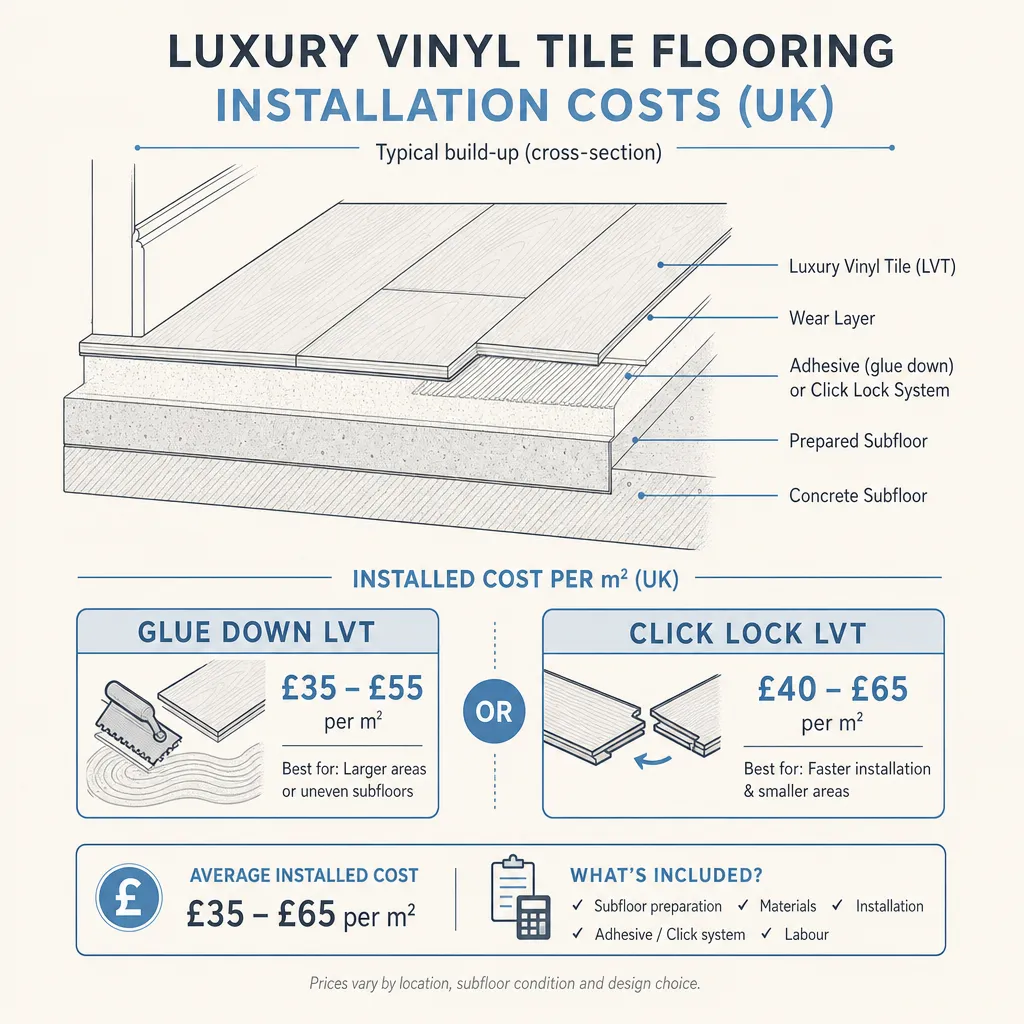
Luxury Vinyl Tile Flooring Installation Costs
Luxury vinyl tile (LVT) flooring typically costs £20–£60 per m² for materials and £10–£25 per m² for professional installation in the UK, giving a total supply-and-fit price of roughly £30–£85 per m².
 Improvement & Build
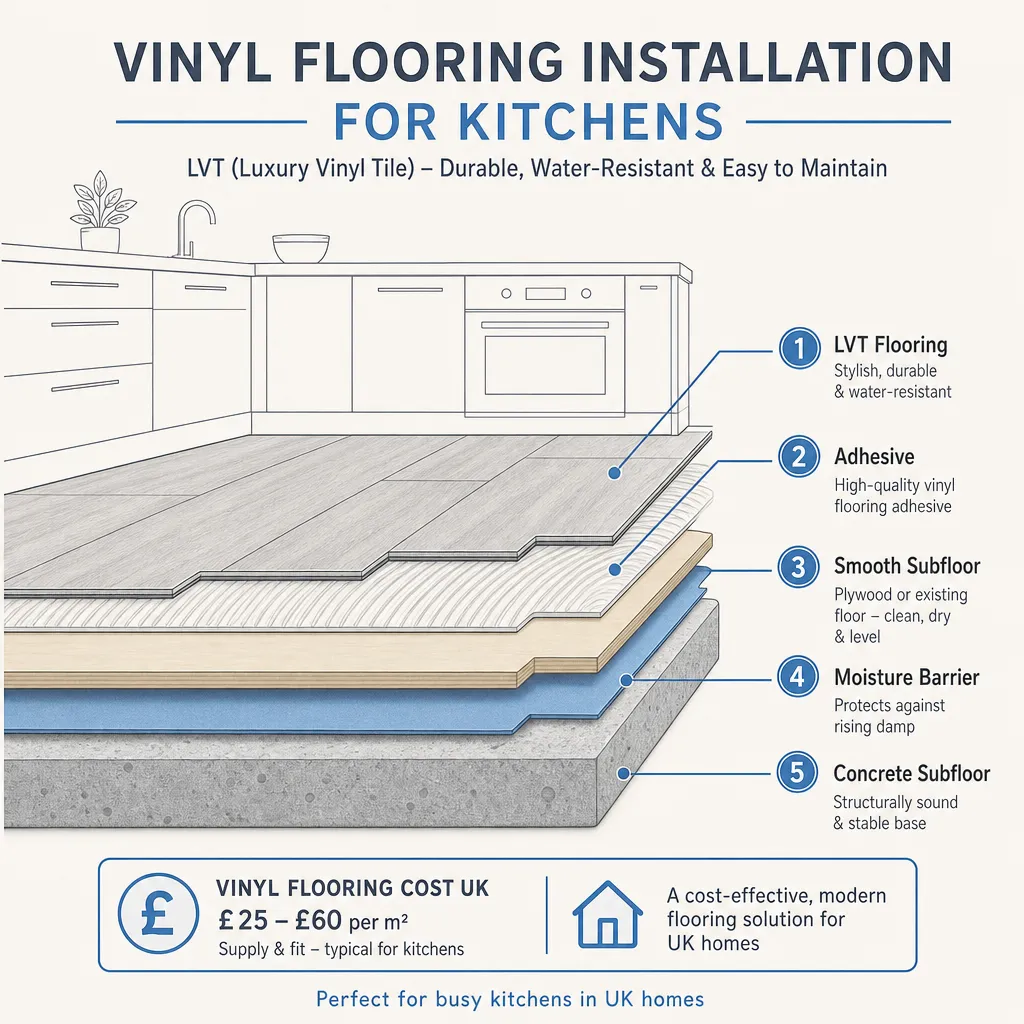
Vinyl Flooring Installation for Kitchens
Luxury vinyl tile (LVT) and sheet vinyl are the most popular choices for UK kitchen floors, offering waterproof performance and competitive costs.
 Improvement & Build
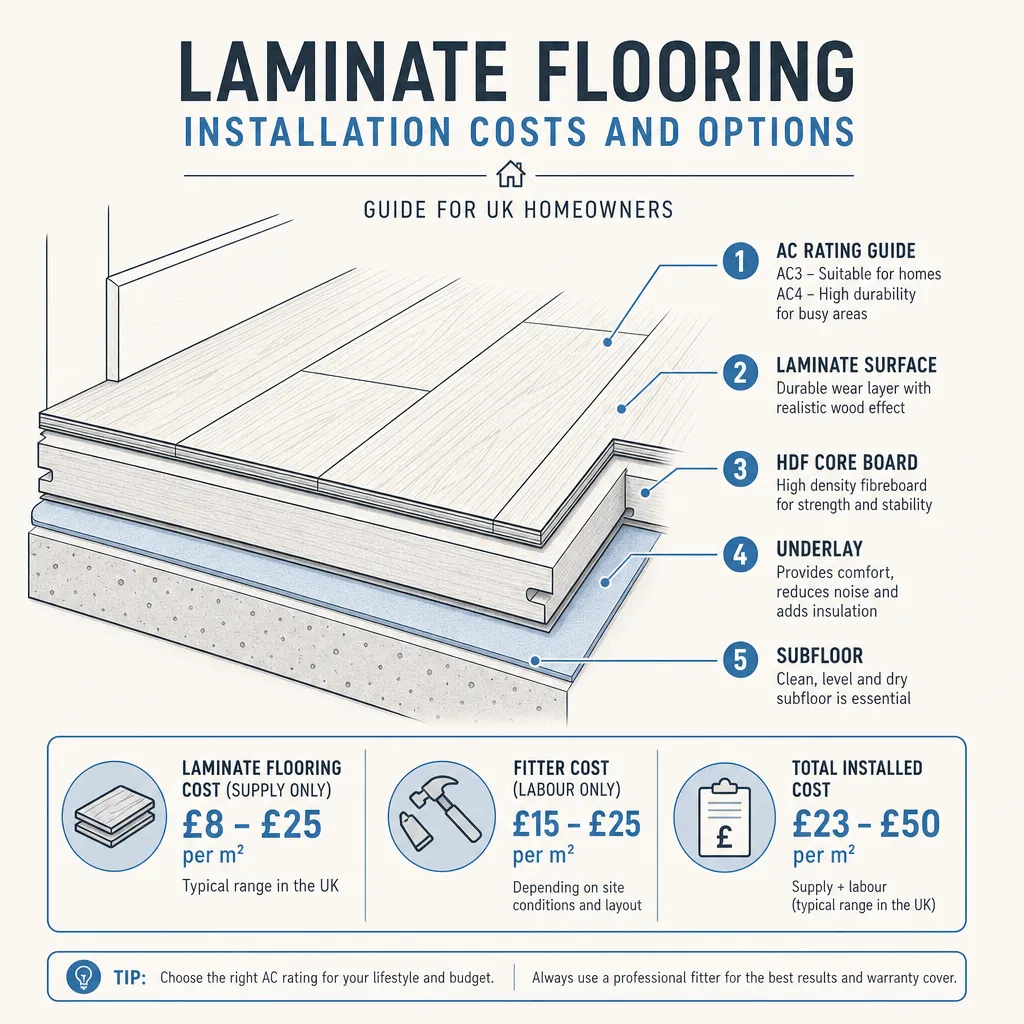
Laminate Flooring Installation Costs and Options
Laminate flooring typically costs £20–55 per square metre fully installed in the UK, including materials, underlay, and professional fitting.
 Improvement & Build
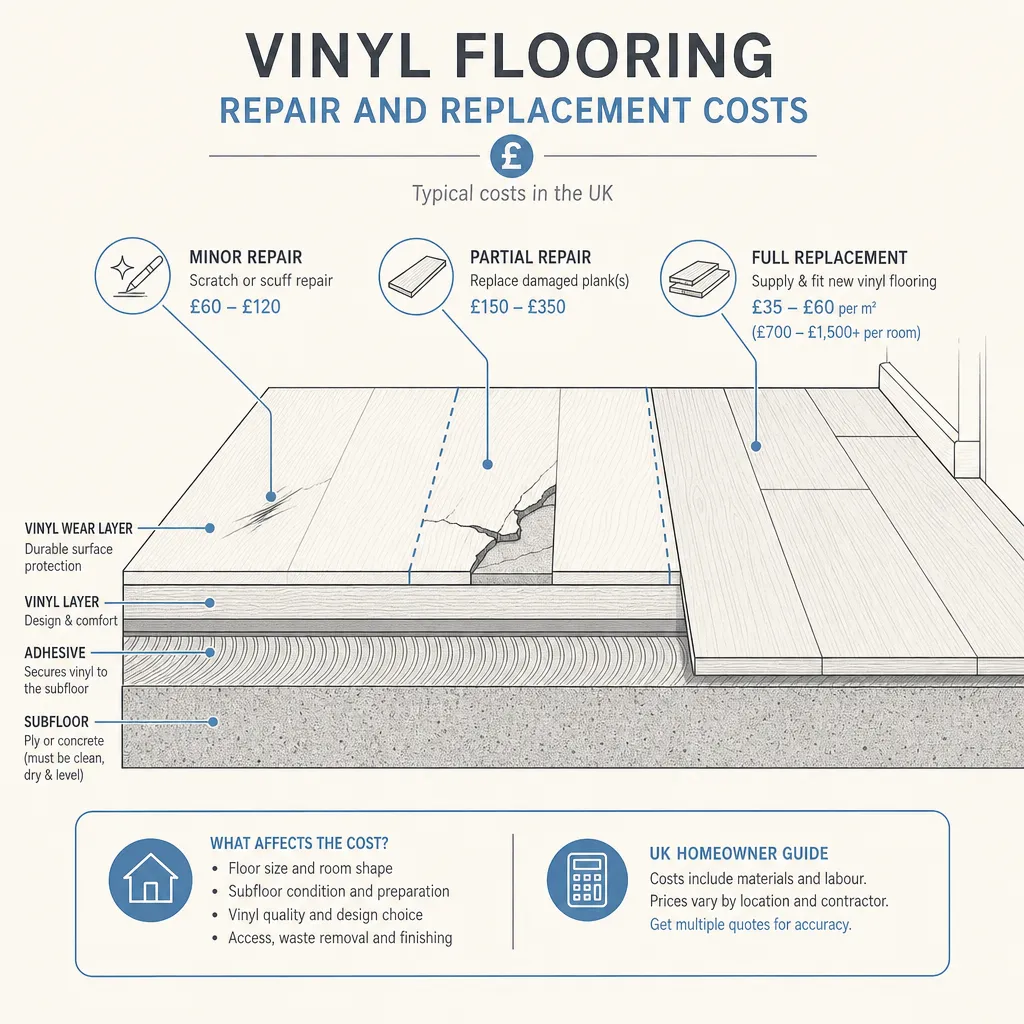
Vinyl Flooring Repair and Replacement Costs
Repairing a small area of vinyl flooring typically costs £50–£200 in the UK, while full replacement runs from £15–£35 per m² for luxury vinyl tile (LVT) plus labour of £10–£25 per m².
 Improvement & Build
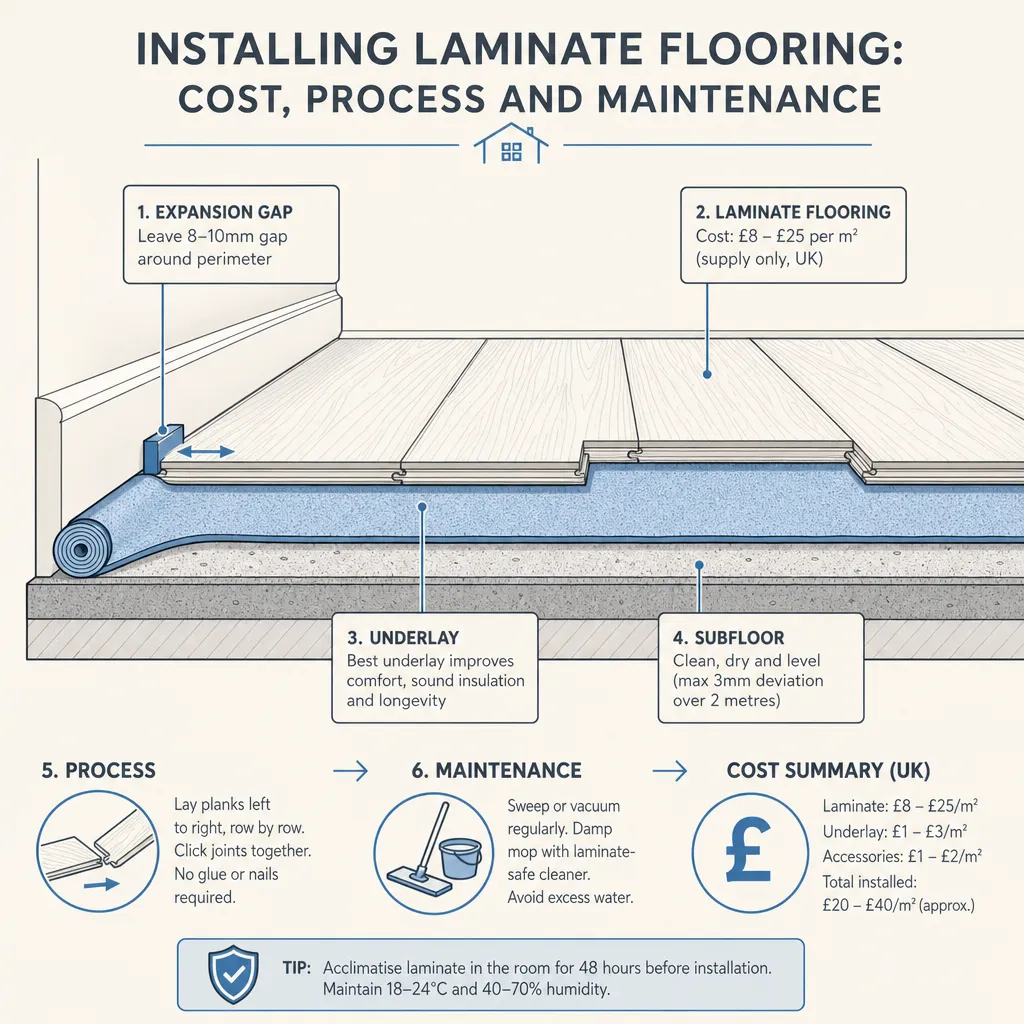
Installing Laminate Flooring: Cost, Process and Maintenance
Laminate flooring in the UK typically costs £15–40 per square metre for materials, plus £8–15 per square metre for professional fitting.