Kitchen Cabinet Selection and Installation Costs
By Housey · Last reviewed 30th of May 2026
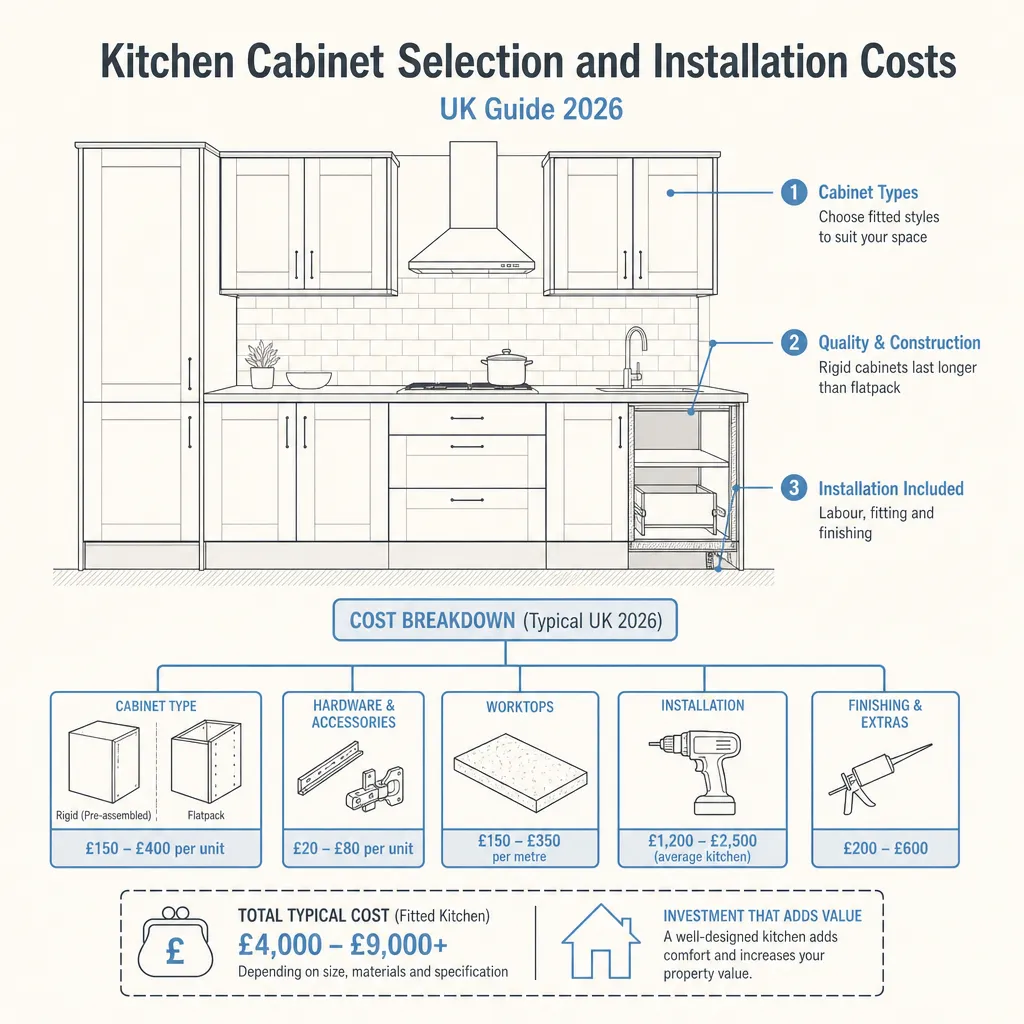
Kitchen Cabinet Selection and Installation Costs
A kitchen cabinet project sits at the intersection of design preference, structural practicality, and budget — and it is one of the UK's most commonly undertaken home improvements. The cost question arises at several stages: when comparing showroom quotes, when separating supply from fitting, and when weighing up how much customisation is actually worth against the total outlay. Getting this right requires understanding how cabinet type, worktop choice, fitting complexity, and the involvement of additional trades each contribute to the final bill.
Key points
- Flatpack kitchens from major UK retailers typically start from £1,000–£3,000 for cabinet units alone; professional fitting adds approximately £800–£2,500 for a standard single-run layout.
- Rigid-built (pre-assembled) kitchens are stronger and faster to fit than flatpack equivalents and typically cost £4,000–£10,000 supplied for an average UK kitchen.
- Bespoke kitchens — made to measure by a specialist joiner — commonly range from £15,000 to £50,000 or more, depending on materials, door style, and project complexity.
- Electrical work in a kitchen is classified as a "special location" under Part P of the Building Regulations and must be carried out by a registered competent person (such as NICEIC or NAPIT) or notified to building control.
- Moving gas supply pipes to accommodate a new layout requires a Gas Safe registered engineer — this should be scoped and costed separately from cabinet fitting.
Types of kitchen cabinets
Flatpack
Assembled on site from flat-packed panels, these are the most widely available and affordable option in the UK. Major retailers — including IKEA, Wickes, B&Q, and Howdens — all offer flatpack ranges at different price points. Quality varies considerably: carcase board thickness (18 mm versus 15 mm), hinge quality, and drawer runner grade all affect long-term durability.
Rigid (pre-assembled)
Rigid cabinets arrive factory-built and are generally more dimensionally precise and structurally robust than flatpack equivalents. They are heavier to transport but faster to install once on site. Many trade kitchen suppliers — including Howdens, Magnet, and Second Nature — primarily supply rigid units to professional fitters.
Semi-bespoke
Some manufacturers offer semi-bespoke ranges: standard carcase sizes with custom door and drawer fronts, painted to a chosen colour such as RAL, Farrow & Ball, or Little Greene. This combines more predictable lead times with a bespoke-looking result — a popular middle ground in the £5,000–£15,000 total project range.
Bespoke (handmade to order)
Made to exact measurements by a specialist kitchen joiner, bespoke kitchens suit irregular room shapes, period properties with non-standard dimensions, or projects where design precision and material quality are the priority. Lead times are typically 8–16 weeks. Cost depends on door style, timber species, internal fittings, and paint or lacquer specification.
Kitchen cabinet cost comparison
Cabinet type | Typical supply cost (avg. UK kitchen) | Typical fitting cost | Best for | Main risk |
|---|---|---|---|---|
Flatpack (budget) | £1,000–£3,000 | £800–£1,800 | Rental properties; price-led buyers | Variable quality; longer fitting time |
Flatpack (mid-range) | £3,000–£6,000 | £1,200–£2,500 | Owner-occupiers on a moderate budget | Assembly quality depends on fitter care |
Rigid (trade supply) | £4,000–£10,000 | £1,000–£2,000 | Most owner-occupiers wanting durability | Higher supply cost than flatpack |
Semi-bespoke | £6,000–£15,000 | £1,500–£3,000 | Design-conscious buyers; unusual layouts | Longer lead times than rigid stock |
Bespoke (handmade) | £15,000–£50,000+ | Often included in contract | Period properties; luxury renovations | High cost; lead times of 8–16 weeks |
Indicative UK costs, last reviewed 2026-05-30. Costs vary significantly by region, kitchen size, specification, and installer. Always obtain at least three quotes.
What drives the total project cost?
Beyond cabinet type, several other elements materially affect the final bill:
- Worktop material: laminate (£100–£400 for a typical kitchen), solid timber (£500–£1,500), quartz or engineered stone (£1,000–£4,000+), granite (£1,200–£4,500+), and marble or dekton (£2,000–£6,000+).
- Appliance integration: built-in ovens, integrated dishwashers, and under-counter appliances each add £300–£2,000+ and require careful spatial and electrical planning.
- Sink and tap specification: an undermount composite or ceramic sink with a quality mixer tap can add £200–£1,500 depending on brand.
- Plumbing alterations: relocating a sink or dishwasher connection typically costs £300–£800 for a plumber.
- Electrical additions: new sockets, under-cabinet lighting circuits, or a dedicated cooker circuit require a Part P-registered electrician — budget £300–£1,200 for typical additions.
- Flooring and decoration: often replaced as part of a kitchen renovation, adding £500–£3,000 depending on material, area, and finish.
A pre-purchase checklist for kitchen cabinets
Before placing an order or accepting a fitting quote:
Quote comparison template
When comparing quotes from kitchen suppliers or fitters, ask each to itemise the following before you accept:
- Units and carcases (number, dimensions, manufacturer, board thickness)
- Doors, drawers, and handle hardware (finish, grade, soft-close specification)
- Worktops (supplier, material, thickness, edge profile finish)
- Fitting labour (fixed price or day rate; what is explicitly in and out of scope)
- Plumbing works (if applicable — name and registration of the plumber)
- Electrical works (if applicable — confirm Part P registration of the electrician)
- Appliance supply and installation (if applicable — brand, model, specification)
- Waste removal and disposal of the existing kitchen
- Any separate design or survey fee
- VAT at the current rate (20%)
- Payment schedule: deposit, stage payments, and retention terms
A quote that bundles all items into a single figure is difficult to compare accurately — always ask for a full breakdown before accepting.
When to get professional help
If your project involves moving walls, reconfiguring drainage, or installing structural support for a kitchen island or peninsula, a design-and-build firm with kitchen experience is worth engaging early in the process. For kitchens connected to a wider extension or structural alteration, an extension builder should be involved in the planning phase so that structural and kitchen trades are correctly sequenced and no work is duplicated or undone.
How Housey can help
Housey connects UK homeowners with experienced design-and-build firms who can manage kitchen projects from initial design through to supply, fitting, and sign-off. If your kitchen renovation is part of a wider structural or extension project, Housey also works with extension builders who can coordinate the full scope of works and ensure all trades are correctly sequenced.
Frequently asked questions
How long does kitchen cabinet installation take?
A straightforward like-for-like cabinet replacement in a standard kitchen typically takes 2–4 days for an experienced fitter. A full renovation involving new plumbing, electrics, tiling, and flooring may take 1–3 weeks, depending on the scope of work and how many separate trades are involved. Ask your fitter for a written programme before work starts.
Do kitchen cabinets add value to my property?
A well-designed, professionally fitted kitchen is widely regarded as one of the most impactful home improvements for UK property resale value. However, specification should match the property type and local market — an over-specified kitchen in a modest terrace may not recover its full cost at sale. Seeking an estate agent's view on local buyer expectations before setting your budget is worthwhile.
Do I need building regulations approval for a new kitchen?
Fitting kitchen cabinets does not usually require building regulations approval. However, electrical work in a kitchen — classified as a special location under Part P of the Building Regulations — must be carried out by a registered competent person or notified to building control. Any gas pipe alterations require a Gas Safe registered engineer. Structural changes will also require building control notification.
What is the difference between flatpack and rigid kitchen cabinets?
Flatpack cabinets are supplied in components and assembled on site — more affordable, but assembly quality affects durability. Rigid (pre-assembled) cabinets arrive fully built, are generally stronger and more dimensionally precise, and are faster to install. Bespoke cabinets are made to exact dimensions by a specialist joiner, offering the highest quality and customisation at considerably greater cost and longer lead times.
Sources and further reading
- Building Regulations Approved Document P — Electrical Safety — GOV.UK
- Gas Safe Register — find a registered engineer — Gas Safe Register
- NICEIC registered electricians — NICEIC
- Which? fitted kitchens guide — Which?
Useful next reads
 Improvement & Build
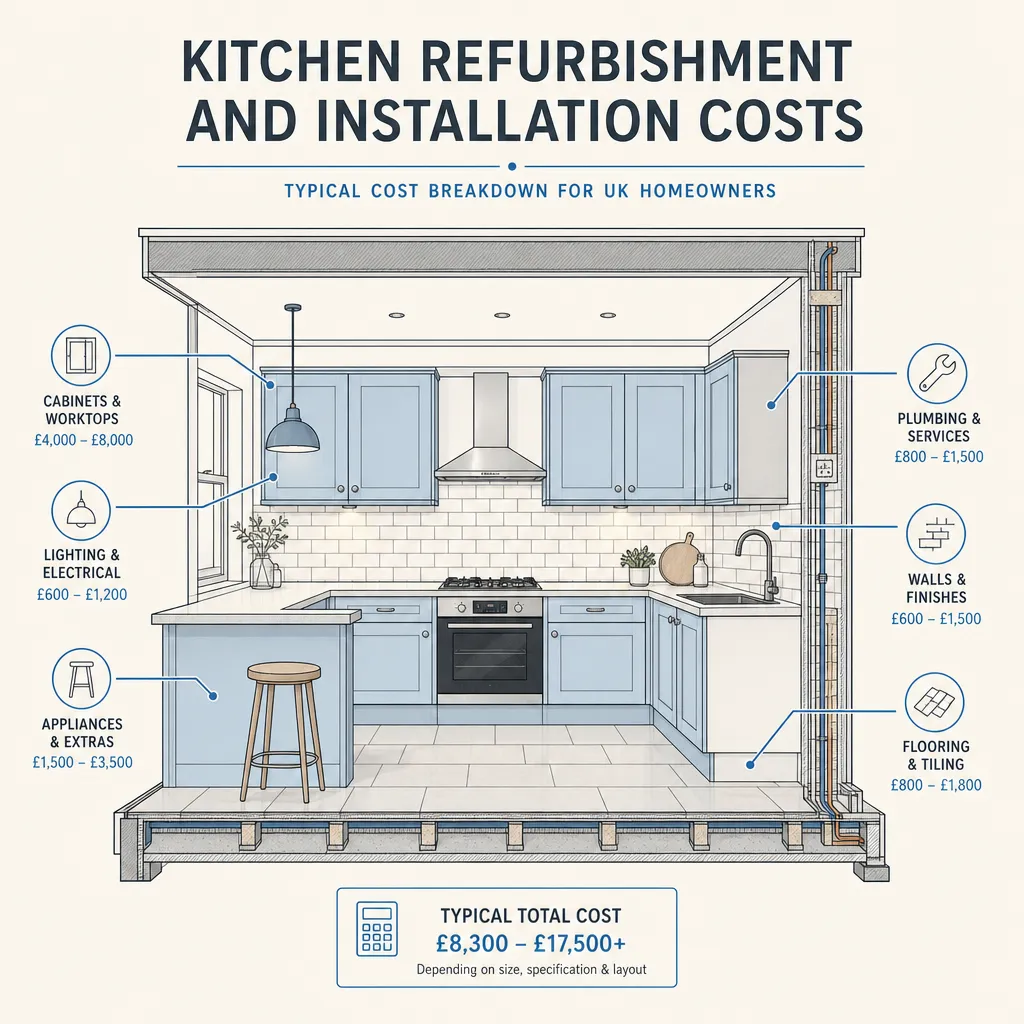
Kitchen Refurbishment and Installation Costs
A kitchen refurbishment in the UK typically costs between £3,000 and £40,000 or more, depending on whether you are replacing units only or carrying out a full design-and-build project.
 Improvement & Build
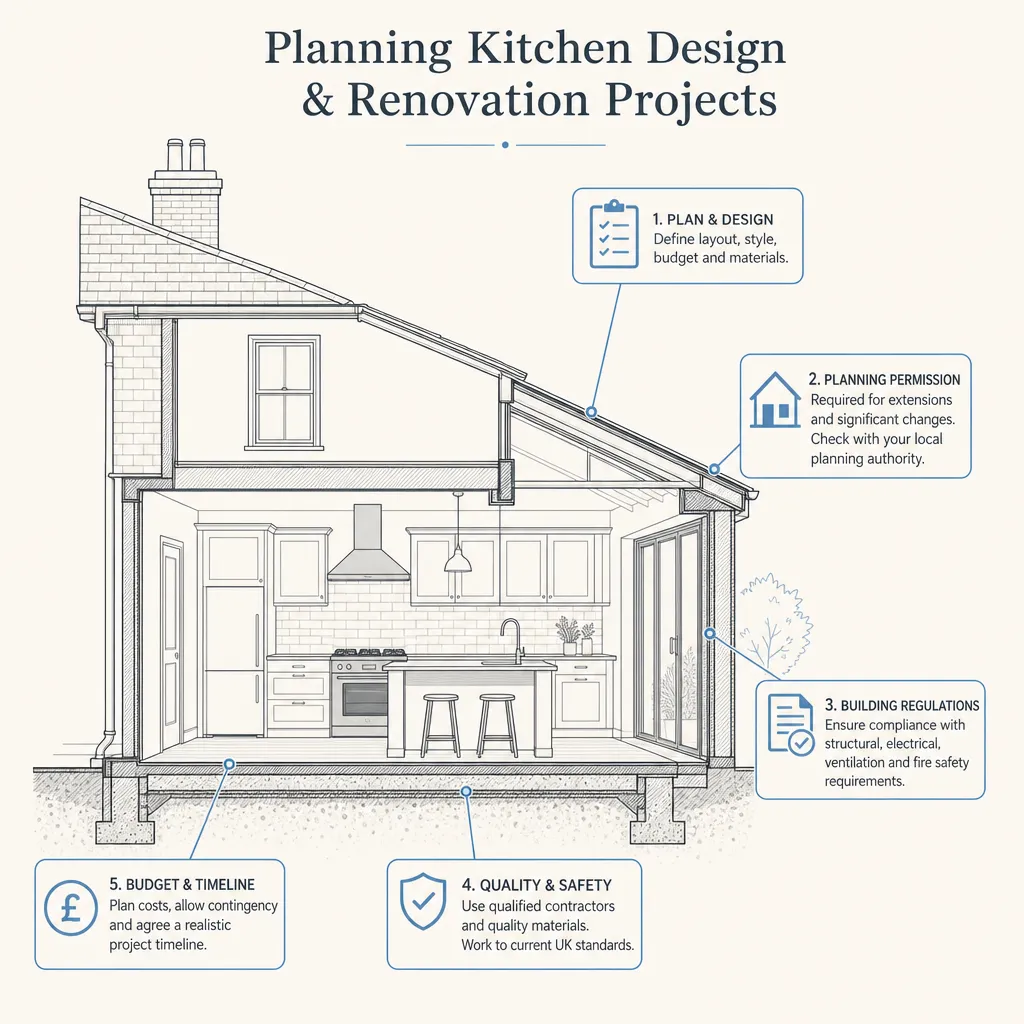
Planning kitchen design and renovation projects
Planning a kitchen renovation in the UK typically involves choosing a layout, setting a budget, deciding which contractors you need, and understanding which regulations apply.
 Improvement & Build
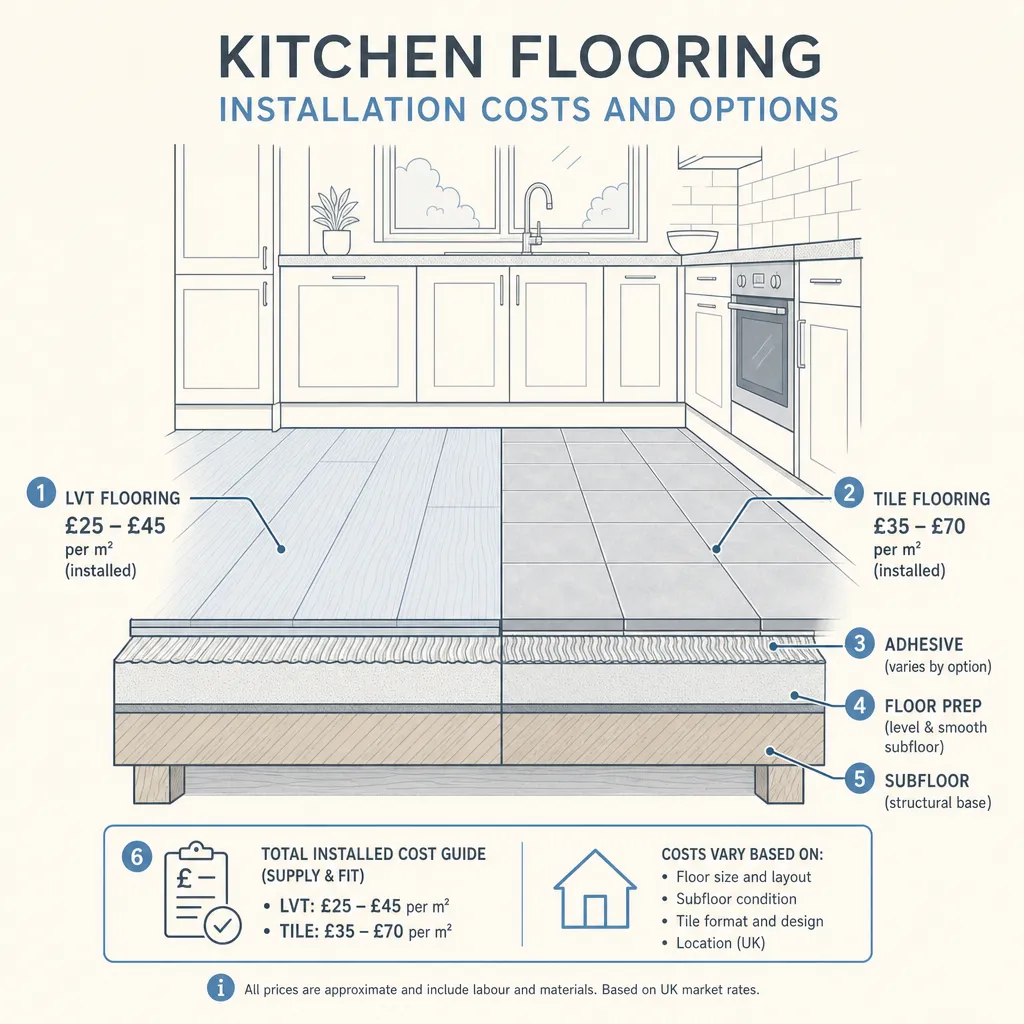
Kitchen Flooring Installation Costs and Options
Kitchen flooring in the UK typically costs £15–£100+ per m² installed, depending on material and subfloor condition.
 Improvement & Build
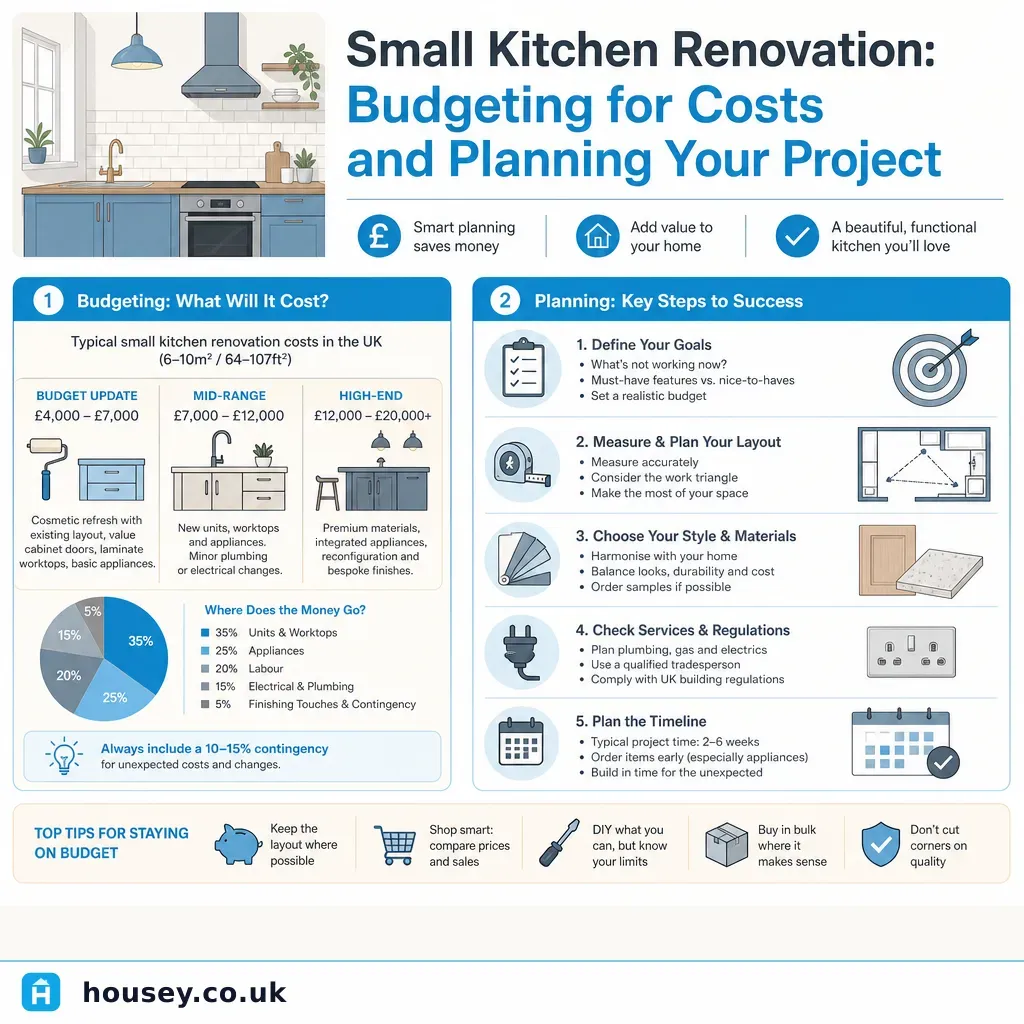
Small kitchen renovation: budgeting for costs and planning your project
A small kitchen renovation in the UK typically costs £5,000–£15,000 for a full refresh including new units, worktops, tiling, and appliances, though costs vary widely by specification, region, and whether structural changes or rewiring are involved.
 Improvement & Build
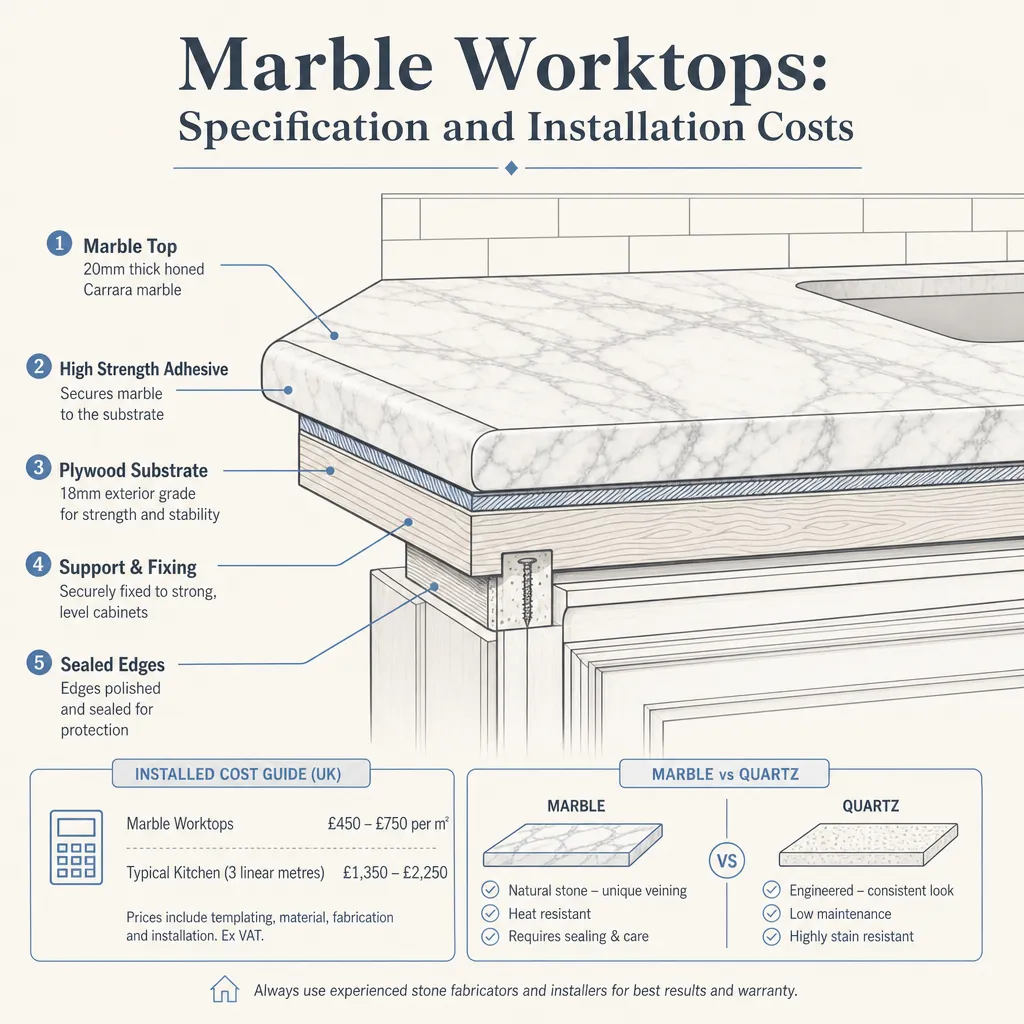
Marble Worktops: Specification and Installation Costs
Marble worktops in the UK typically cost £300–£800 per linear metre installed, depending on marble grade, slab thickness, finish, and edge profile.