Kitchen Flooring Installation Costs and Options
By Housey · Last reviewed 7th of May 2026
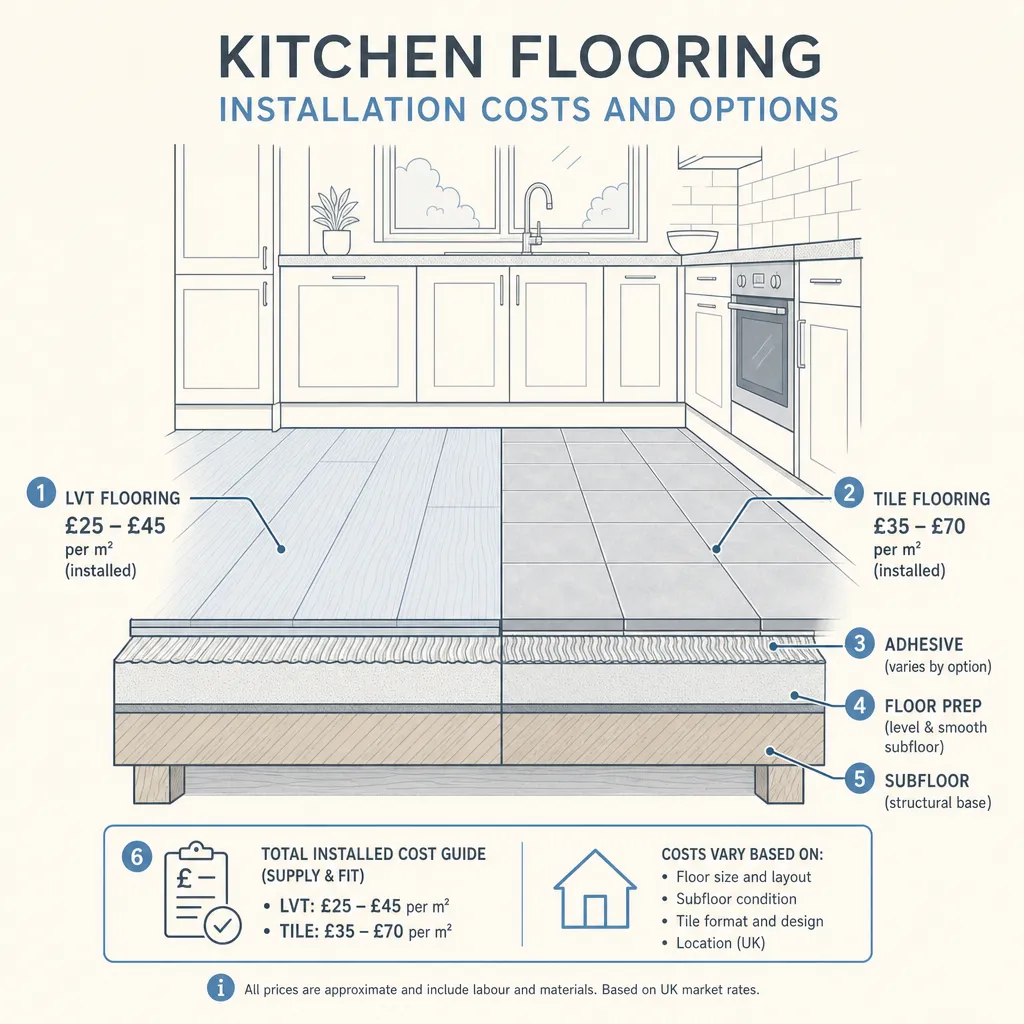
Kitchen Flooring Installation Costs and Options
Choosing the right flooring for a kitchen is one of the more consequential decisions in a renovation: the wrong material in the wrong property can mean premature wear, subfloor problems, or a floor incompatible with underfloor heating fitted later. Whether you are replacing ageing vinyl in a 1930s semi or specifying porcelain tile for a new kitchen extension, understanding material trade-offs and costs before engaging a fitter avoids expensive re-work and failed installations.
Key points
- Installed kitchen flooring typically costs between £15 and £100+ per m² in the UK, depending on material, room size, and subfloor condition (Indicative UK costs, last reviewed 2026-05-07).
- Luxury vinyl tile (LVT) is the most popular choice in UK kitchen refurbishments, offering full water resistance, warmth underfoot, and lower installed costs than porcelain tile or natural stone.
- Subfloor preparation — levelling, damp-proofing, or replacing damaged boards — is a common hidden cost that can add £5–£20+ per m² to the overall bill.
- Not all flooring types are compatible with underfloor heating: stone and tile conduct heat efficiently, solid timber can warp, and LVT products carry manufacturer-specific temperature restrictions.
- No planning permission is required for internal flooring changes; building regulations may apply where a new underfloor heating system is installed as part of a wider extension or renovation.
What does kitchen flooring installation cost in the UK?
Costs vary considerably depending on material, room size, subfloor condition, and regional labour rates. The figures below are indicative; always obtain at least two or three written quotes before committing.
Material | Supply (per m²) | Installation (per m²) | Indicative total (per m²) |
|---|---|---|---|
Sheet vinyl | £5–£20 | £10–£20 | £15–£40 |
Luxury vinyl tile (LVT) | £15–£40 | £10–£20 | £25–£60 |
Ceramic or porcelain tile | £10–£60 | £20–£40 | £30–£100 |
Engineered timber | £20–£60 | £15–£30 | £35–£90 |
Natural stone (slate, limestone) | £30–£100+ | £25–£45 | £55–£145+ |
Solid timber (oak strip) | £30–£80 | £20–£35 | £50–£115 |
Indicative UK costs, last reviewed 2026-05-07. Prices exclude VAT and subfloor preparation unless otherwise stated. Costs vary by region, supplier, and specification.
For a typical UK kitchen of 12–15 m², total costs (materials and labour) might range from around £400 for budget sheet vinyl to £1,500+ for mid-range LVT or ceramic tile, and £2,000–£3,500+ for natural stone or high-specification engineered timber, before any subfloor remediation work.
Flooring material options compared
Luxury vinyl tile (LVT) has become the dominant choice in UK kitchen refurbishments. It is fully waterproof, softer underfoot than tile, available in realistic wood and stone effects, and easier to cut around awkward kitchen layouts with many cabinets. Most LVT products are compatible with underfloor heating up to around 27°C surface temperature — check the manufacturer's specification before specifying. Click-lock LVT can often be floated over existing floors, reducing subfloor preparation costs significantly.
Ceramic and porcelain tile is extremely durable, fully waterproof, and standard for high-end kitchen projects and new extension builds. It conducts underfloor heat efficiently. Drawbacks include higher labour costs due to adhesive and grouting, hardness underfoot, and a risk of cracking in older properties with timber suspended floors that flex under load. In such cases, a structural engineer or experienced builder should advise on suitability before you commit to tile.
Engineered timber — a hardwood veneer over a plywood core — is more dimensionally stable than solid timber and better suited to kitchen environments where some humidity variation is expected. It can be sanded and refinished, extending its service life. Most engineered boards carry manufacturer approval for use with underfloor heating. It is not fully waterproof: standing water must be wiped promptly.
Sheet vinyl and vinyl composite remain the lowest-cost option and suit rental properties, starter homes, or kitchens in a phased renovation. Modern designs have improved considerably. The main limitation is that sheet vinyl cannot be sanded or refinished; replacement is the only option when it reaches the end of its life.
Natural stone — slate, limestone, travertine — offers a distinctive look popular in older or listed properties where period character matters. Supply costs vary widely, installation is specialist and labour-intensive, and most natural stones require sealing and periodic maintenance. Weight may be a concern on upper floors where loading capacity is uncertain.
What affects the final price?
Several factors commonly push kitchen flooring costs above initial estimates:
- Subfloor condition. Uneven concrete screeds need grinding or self-levelling compound. Damaged or springy timber boards may need replacing before any new floor can be safely laid.
- Room shape. Kitchens with many cabinets, island units, or irregular layouts require more cuts, more waste material, and more fitter time.
- Underfloor heating. Installing or adapting a wet or electric underfloor heating system beneath a new floor adds cost and requires a qualified heating engineer to size and specify it correctly.
- Removal and disposal. Stripping existing ceramic tile bonded with adhesive adds time and skip-hire costs that are not always included in an initial quote.
- Access and damp-proofing. Ground-floor kitchens on solid concrete may require a damp-proof membrane (DPM) beneath the screed if one is absent, adding cost if discovered after work begins.
Decision guide — which flooring suits your kitchen?
- Choose LVT if you want water resistance, underfloor-heating compatibility, warmth underfoot, and a mid-range budget.
- Choose porcelain tile if you prioritise durability, a premium finish, or are building a new extension where the screed can be properly prepared before the floor is laid.
- Choose engineered timber if you want a natural wood appearance and your kitchen has normal humidity levels — not a utility-room or open-to-outside context.
- Choose sheet vinyl if budget is the primary concern or the property is being prepared for rental.
- Choose natural stone if period authenticity and character are priorities and your budget allows for specialist supply and installation.
- Consult design-and-build firms if the kitchen is part of a wider renovation where material specification, trades coordination, and subfloor decisions need to be managed together.
- Speak to extension builders if the kitchen floor is part of a new addition — coordinating the screed, underfloor heating, and flooring specification from the outset avoids costly changes later.
Worked UK property scenario
A homeowner in a 1960s semi-detached in South Yorkshire wants to replace worn sheet vinyl in a 14 m² kitchen with LVT ahead of selling. The concrete subfloor has a minor hollow near the back door. A fitter quotes £38 per m² installed (£532 total), plus £80 to apply self-levelling compound to the affected area — total £612 including VAT. The homeowner obtains two further quotes: £510 and £695. They choose the middle quote after confirming the fitter's installation method and the product warranty. The click-lock LVT chosen carries a 20-year residential wear warranty from the manufacturer and is rated compatible with electric underfloor heating up to 27°C surface temperature.
What to ask before accepting a quote
- What is included in the price — supply, labour, subfloor preparation, adhesive, and threshold strips?
- Will you assess the subfloor condition before finalising the price, or is this a provisional figure?
- Is the chosen material compatible with my existing or planned underfloor heating, and what is the manufacturer's maximum surface temperature?
- What qualifications or accreditations do you hold? (Look for NICF — National Institute of Carpet and Floorlay — membership as a relevant indicator of competence.)
- What is the manufacturer's warranty on the product, and what installation method does it require to remain valid?
- Is VAT included in the quoted price?
- What happens if additional subfloor defects are discovered once existing flooring is lifted?
When to get professional help
Most kitchen flooring installation is low-risk and can be carried out by a competent fitter without specialist input. Seek additional professional advice in the following situations:
- The kitchen is on an upper floor and you are specifying heavy tile or natural stone — a structural engineer should assess load capacity before you commit to the material.
- The existing floor has signs of damp (tiles lifting, efflorescence, or a persistent musty smell) — investigate the cause before laying new flooring over it, as covering active damp will create further problems.
- The property is listed or in a conservation area and original floor coverings may be of heritage significance — check with your local planning authority or Historic England guidance before disturbing them.
- Underfloor heating is being installed as part of a wider energy retrofit — a qualified heating engineer should size and specify the system before the floor covering is decided.
How Housey can help
If you are planning a kitchen renovation or new extension and want to coordinate flooring with the wider build, Housey can connect you with design-and-build firms who manage material specification and trades, or with extension builders if the kitchen is part of a new addition. Request quotes to compare your options.
Frequently asked questions
Do I need planning permission to change my kitchen floor?
No. Internal flooring changes do not require planning permission in England, Wales, or Scotland. Building regulations may apply if you are installing a new underfloor heating system, particularly in a new extension, but the flooring material itself is not a regulated item. If the property is listed, check with your local planning authority before disturbing original finishes.
How long does kitchen floor installation take?
A standard 12–15 m² kitchen typically takes one to two days, including subfloor preparation. Tile installation takes longer than LVT due to adhesive and grout curing time — allow two to three days before placing heavy appliances or replacing kickboards.
Can I lay new flooring over old tiles?
Sometimes. If existing tiles are firmly adhered, level, and not excessively thick, some LVT products can be laid directly over them. Porcelain on ceramic tile is generally not recommended due to added height and load. An experienced fitter should check height at thresholds and appliance kickboards before deciding.
Is engineered wood suitable for kitchens?
Yes, in most UK kitchens, provided spills are wiped promptly and the room does not experience significant humidity swings. Most engineered boards carry appropriate moisture tolerance ratings and are compatible with underfloor heating up to the manufacturer's specified surface temperature. Check individual product specifications before purchasing.
How do I compare flooring quotes accurately?
Ask each fitter to quote on the same product specification, or supply your own materials for a labour-only comparison. Ensure all quotes include subfloor assessment, removal of existing flooring, threshold strips, adhesive, and VAT. Price differences often reflect differing subfloor preparation assumptions rather than the flooring material itself.
Sources and further reading
- Planning permission: when you need it — GOV.UK
- Underfloor heating — Energy Saving Trust
- Advice for homeowners: listed buildings and conservation areas — Historic England
- National Institute of Carpet and Floorlay (NICF) — NICF
Useful next reads
 Improvement & Build
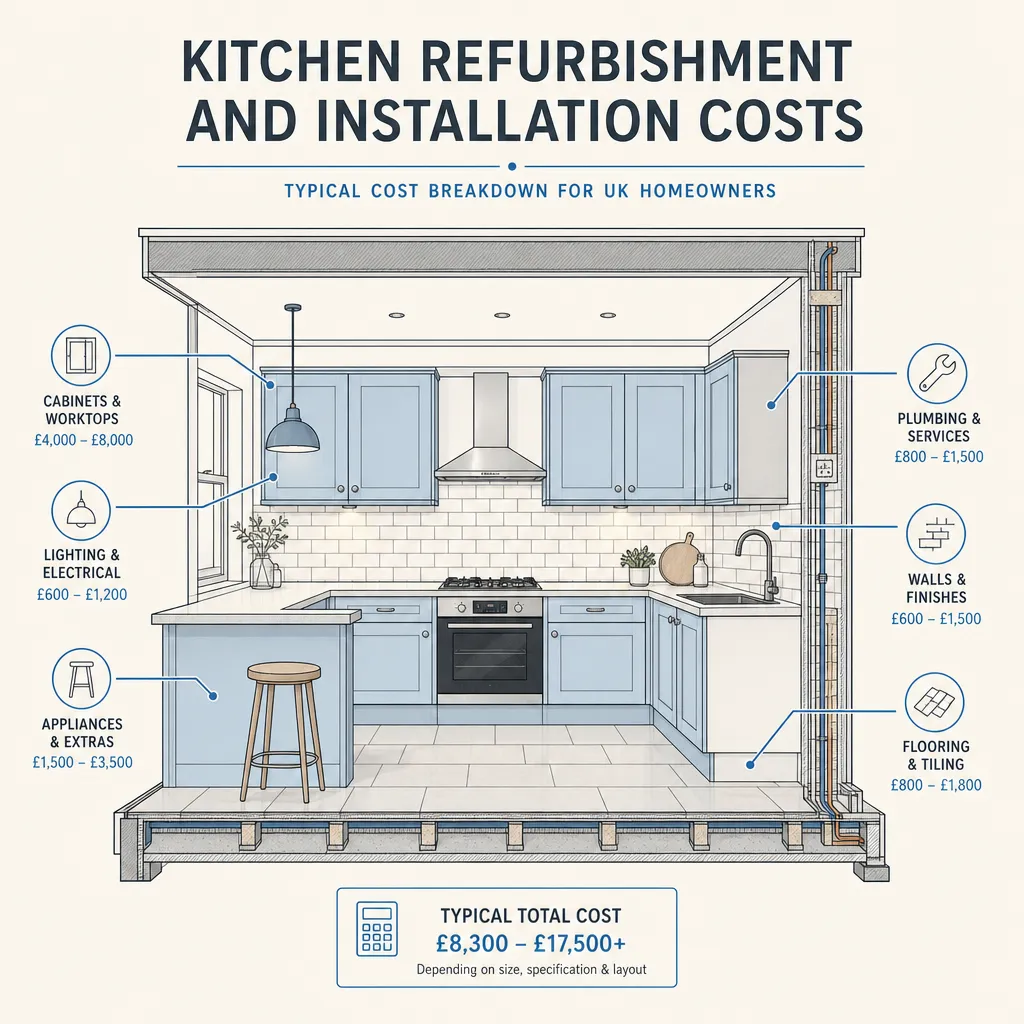
Kitchen Refurbishment and Installation Costs
A kitchen refurbishment in the UK typically costs between £3,000 and £40,000 or more, depending on whether you are replacing units only or carrying out a full design-and-build project.
 Improvement & Build
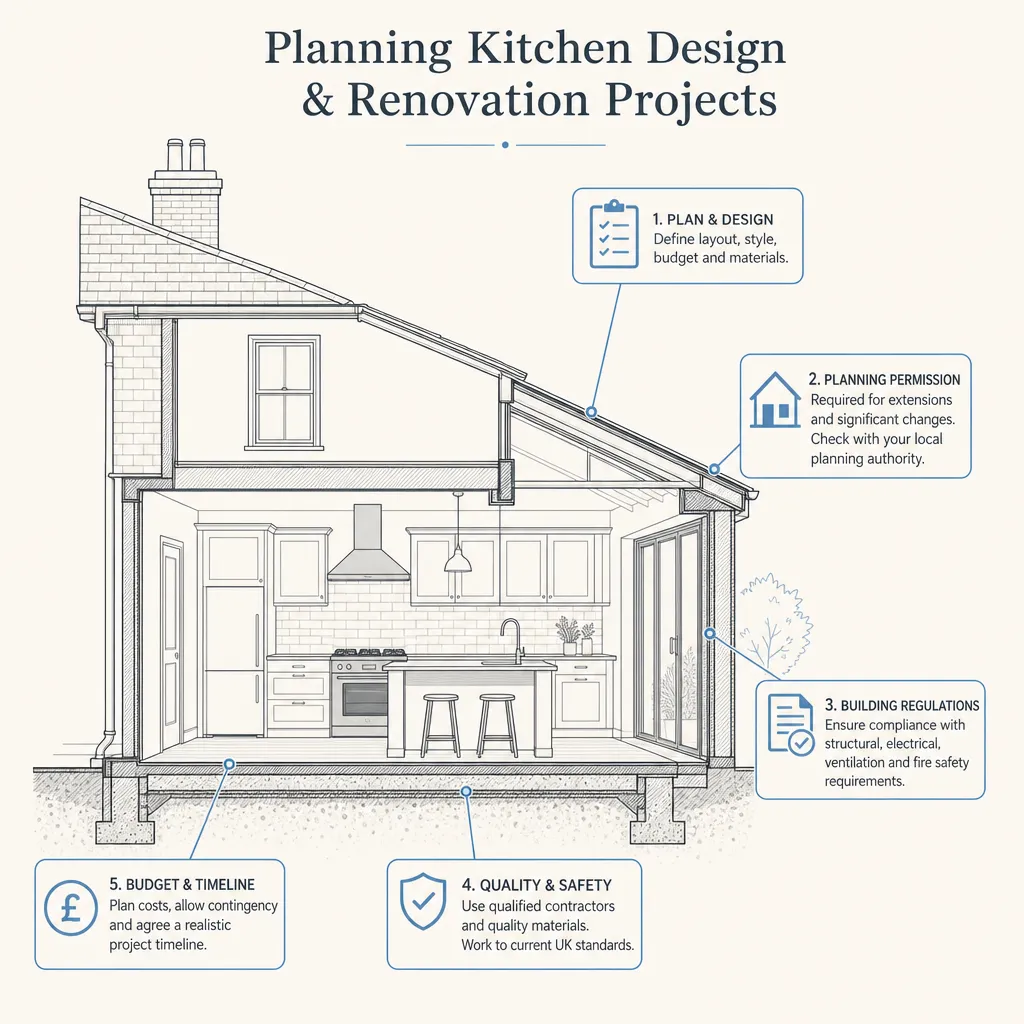
Planning kitchen design and renovation projects
Planning a kitchen renovation in the UK typically involves choosing a layout, setting a budget, deciding which contractors you need, and understanding which regulations apply.
 Improvement & Build
Small kitchen renovation: budgeting for costs and planning your project
A small kitchen renovation in the UK typically costs £5,000–£15,000 for a full refresh including new units, worktops, tiling, and appliances, though costs vary widely by specification, region, and whether structural changes or rewiring are involved.
 Improvement & Build
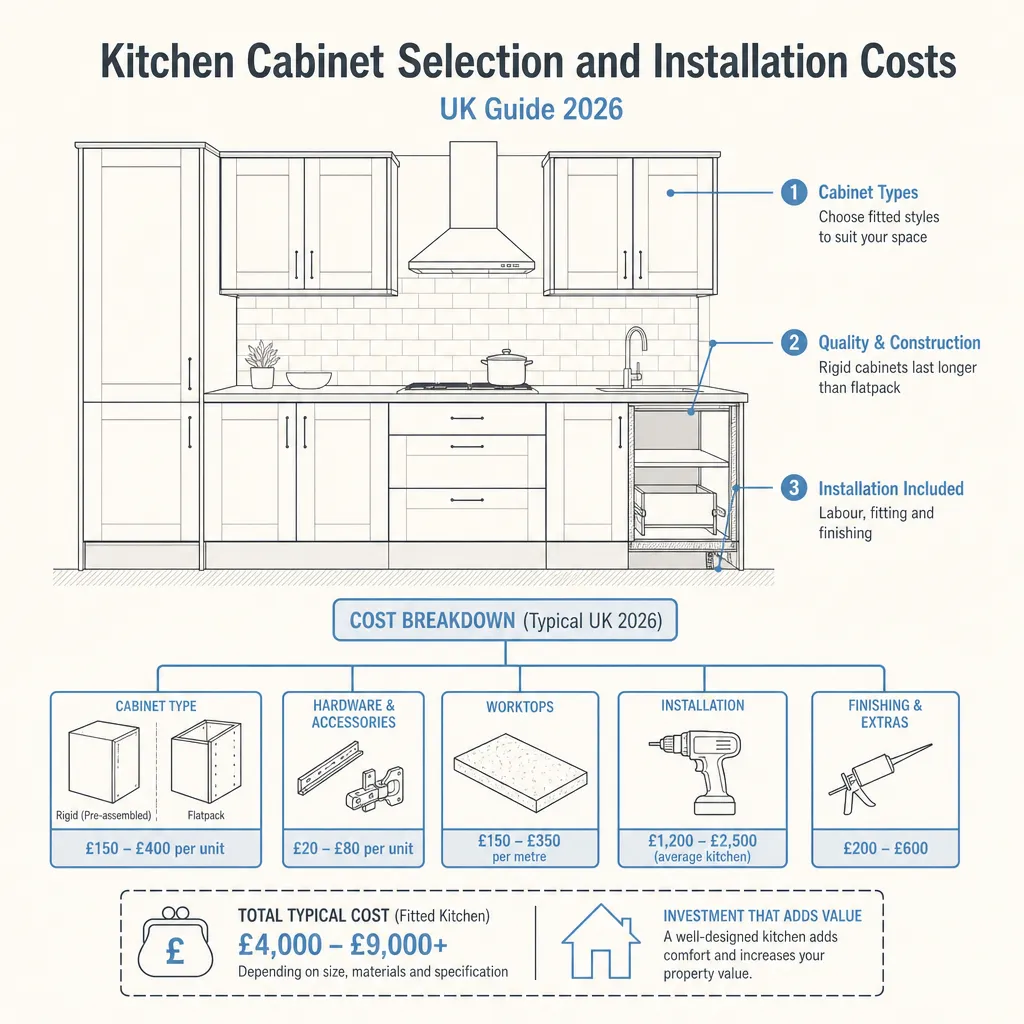
Kitchen Cabinet Selection and Installation Costs
Kitchen cabinet costs in the UK range from around £1,500 for flatpack units with self-installation to £15,000 or more for fully bespoke, professionally fitted kitchens.
 Improvement & Build
Conservatories and Garden Extensions: Design and Building Guide
Most conservatories qualify as permitted development in England if they are single-storey, within 50% of original curtilage, and meet dimensional limits.