Kitchen Cabinet Wrapping and Refacing Costs
By Housey · Last reviewed 7th of May 2026
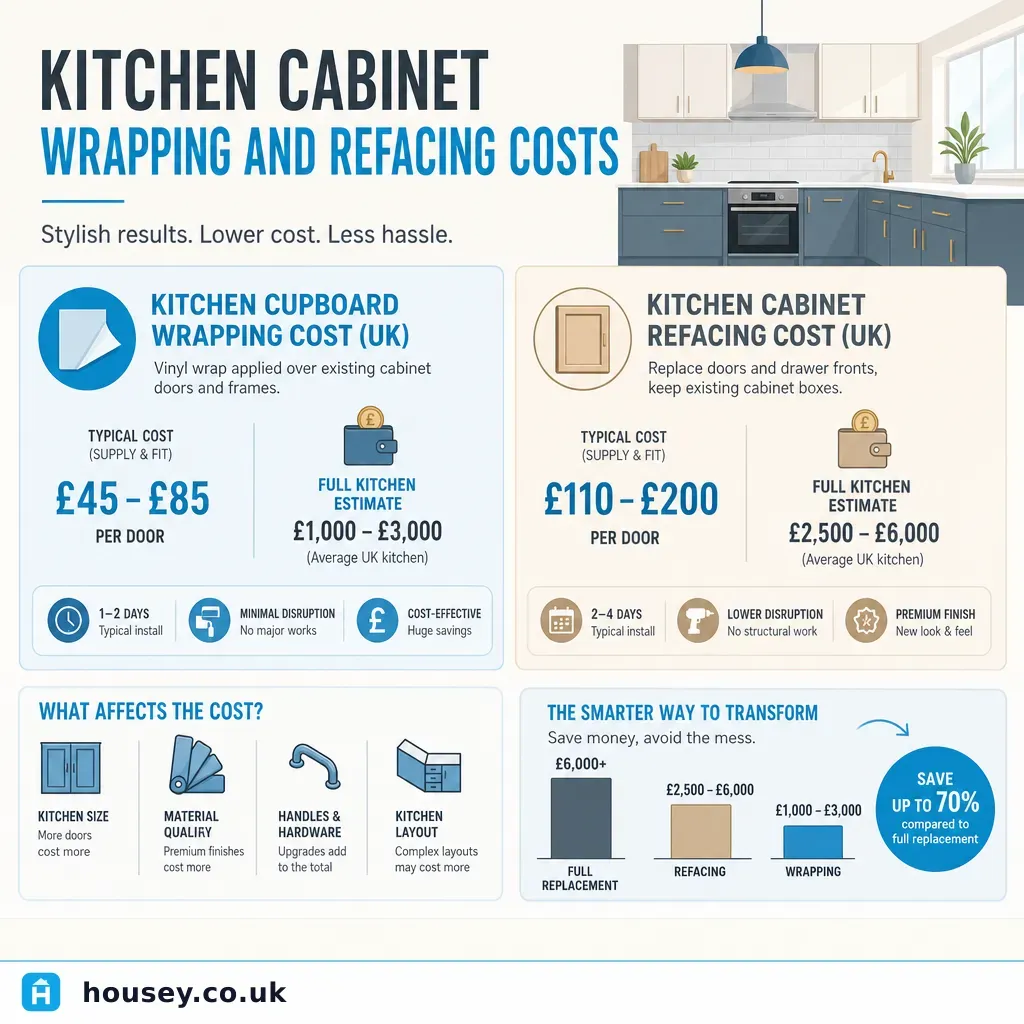
Kitchen Cabinet Wrapping and Refacing Costs
The decision to wrap or reface kitchen cabinets typically arises when existing carcasses are structurally sound but doors, drawer fronts, and surfaces look tired or dated. It is a popular route in UK homes where a full kitchen replacement would be disruptive or disproportionately expensive — particularly in leasehold flats, rented properties, or homes being prepared for sale on a limited budget. Understanding exactly what wrapping and refacing can and cannot achieve helps avoid disappointment and wasted spend.
Key points
- Cabinet wrapping applies self-adhesive vinyl film over existing door surfaces; it does not address carcass condition, damaged hinges, poor door alignment, or water damage beneath base units.
- Indicative UK costs for a full kitchen vinyl wrap range from £800 to £3,000 for an average 10–20 unit kitchen, depending on door count, profile complexity, and film quality (Indicative UK costs, last reviewed 2026-05-07).
- Cabinet refacing — replacing doors, drawer fronts, and end panels while keeping existing carcasses — typically costs £1,500–£5,000 and delivers a more durable result than wrapping alone.
- No planning permission or building regulations approval is required for wrapping or refacing; these are purely cosmetic works outside the scope of permitted development and building control.
- Premium vinyl films such as 3M Di-Noc or Avery Dennison products typically last 5–10 years in a kitchen environment; budget films or poor application may show lifting within 2–3 years.
What is the difference between wrapping and refacing?
These terms are used interchangeably in the trade but refer to different processes with different cost and durability profiles.
Process | What changes | What stays the same | Typical lifespan | Best for |
|---|---|---|---|---|
Vinyl wrapping | Door surfaces covered with adhesive film | Existing doors, hinges, carcasses | 5–10 years with quality film | Renters, pre-sale refresh, tight budgets |
Door replacement (refacing) | Doors and drawer fronts replaced with new units | Existing carcasses; hinges may be upgraded | 10–20 years | Owners wanting a durable, permanent-looking result |
Full refacing | Doors, drawer fronts, end panels replaced; carcass ends veneered | Internal shelf structure | 10–20 years | Mid-budget renovations where carcasses are fully sound |
Vinyl wrapping is the most budget-conscious option. A specialist applies adhesive-backed film — available in hundreds of finishes including matt, gloss, wood grain, and textured concrete — directly to the existing door surface. Quality depends heavily on the application technique and condition of the substrate.
Door replacement swaps out doors and drawer fronts for entirely new units fitted to the existing carcasses. This is more durable than wrapping and gives a cleaner, more consistent finish across the kitchen.
Full refacing adds new veneers or laminates to exposed carcass ends and plinths for a more cohesive result across the entire kitchen, including visible side panels and islands.
How much does cabinet wrapping and refacing cost in the UK?
Indicative UK costs (last reviewed 2026-05-07):
Kitchen size | Vinyl wrap (materials and labour) | Door replacement (refacing) |
|---|---|---|
Small (10–14 units) | £800–£1,800 | £1,200–£2,500 |
Medium (15–20 units) | £1,500–£2,800 | £2,000–£4,000 |
Large (21–30 units) | £2,500–£4,000 | £3,500–£6,000 |
Indicative UK costs only. Prices vary by region, specialist, and finish choice. Always obtain at least three quotes.
Key cost drivers:
- Door count — the primary driver; more doors and drawers mean higher total cost
- Profile complexity — flat-slab doors are significantly cheaper to wrap than shaker or routed profiles, where joins at recessed edges require more labour and skill
- Film quality — premium 3M or Avery Dennison vinyls cost more than budget alternatives but offer better heat and moisture resistance and a longer service life
- Surface preparation — chipped, swollen, or uneven MDF surfaces require filling and sanding before application, adding labour time and cost
- Specialist finishes — metallic, textured, or custom-colour films attract a premium over standard catalogue colours
- Islands and peninsulas — visible curved ends or open sides add complexity and cost regardless of whether you choose wrap or replacement doors
What not to assume
Common misunderstandings about kitchen cabinet wrapping and refacing:
- "Wrapping fixes damaged carcasses." It does not. Water damage under the sink, swollen MDF shelves, or carcasses that are out of square are not addressed by wrapping or door replacement. In these cases, partial or full unit replacement is the right solution.
- "Any decorator can wrap kitchen cabinets." Vinyl wrapping is a specialist skill. Poor installation leads to lifting edges, air bubbles, misaligned joins at corners, and premature peeling. Use a specialist with a demonstrated portfolio of completed kitchen wraps.
- "The result looks identical to a new kitchen." On flat-slab doors a high-quality wrap is convincing. On shaker or routed profiles, joins at recessed edges are visible on close inspection. Manage expectations before committing.
- "Wrapping is always fully reversible." In theory vinyl can be removed. In practice, removal can lift or damage MDF surfaces, particularly where the original foil or lacquer is already degrading. Test removal on a small, inconspicuous area before assuming reversibility.
- "Refacing adds the same value as a full new kitchen." For a pre-sale renovation, refacing improves visual appeal and may support an asking price, but a local estate agent should advise whether full replacement would offer a better return at your specific price point.
How to compare quotes for wrapping or refacing
When requesting quotes, ask each specialist:
- How many doors, drawer fronts, and panels are included in the price?
- What brand and grade of vinyl or door material is being used?
- How are profiled or routed door edges handled at joins?
- What surface preparation — filling, sanding, and cleaning — is included?
- Is the worktop, kickboard, cornice, or splashback included or excluded?
- What warranty is offered on materials and workmanship?
- Will hinges be adjusted or replaced as part of the job?
- How are integrated appliance doors or housing panels handled?
Homeowner checklist: before work starts
When to get professional help
Cabinet wrapping and refacing are low-risk cosmetic projects for most homeowners, but pause and take advice if:
- Carcasses show water damage, swelling, or structural failure — a kitchen fitter or builder should assess whether partial replacement is more cost-effective than cosmetic treatment
- You discover mould or damp behind base units during preparation — the moisture source must be identified and resolved before any cosmetic work proceeds
- Your kitchen has a gas hob or gas supply connections and you are considering relocating appliances — any gas works require a Gas Safe registered engineer
- You are in a rented property — obtain written landlord consent before making any alteration to existing fixtures
How Housey can help
If your kitchen needs more than a cosmetic refresh — a new layout, an extended footprint, or structural alterations — Housey can connect you with extension builders and kitchen specialists who can advise on whether wrapping, refacing, or a more substantial project is the right approach for your home.
Frequently asked questions
How long does a vinyl kitchen wrap last?
A professionally applied vinyl wrap using quality film such as 3M Di-Noc or Avery Dennison typically lasts 5–10 years in a normal kitchen environment. Longevity decreases near unshielded hobs or persistent steam sources, or where original surface preparation was inadequate. Budget vinyls applied to degrading MDF surfaces may show lifting within 2–3 years.
Can you wrap kitchen cabinets as a DIY project?
Wrapping flat-slab panels is feasible as a DIY project using widely available adhesive vinyl roll. Achieving a professional finish at corners, edges, and around handles requires practice. Profiled shaker-style doors are significantly more difficult. Many homeowners who attempt DIY wrapping report visible joins and edge lifting within the first year. For a lasting result, a specialist installer is recommended.
Does refacing a kitchen add value to your home?
Refacing can improve visual appeal and support a sale, particularly where the layout and appliances are already functional. Whether it adds more value than its cost depends on the local market and buyer expectations. A local estate agent can advise whether refacing or full replacement is the better investment for your property and price point.
What is the cheapest way to refresh kitchen cabinets in the UK?
Painting kitchen doors using a specialist furniture paint is typically the cheapest option, often achievable for £200–£600 in materials for a DIY project. Vinyl wrapping by a specialist is the next step up, followed by door replacement refacing. Each option involves a different trade-off of upfront cost, time, skill level, and long-term durability.
Is vinyl wrapping suitable for high-humidity kitchens?
Quality vinyl films are moisture-resistant and rated for kitchen use. Sustained steam from an uncovered hob or kettle positioned directly below a unit, or heat from an adjacent oven, can weaken adhesive over time. Ensure adequate extraction ventilation and use a film explicitly specified for kitchen environments by the manufacturer.
Sources and further reading
- Which? kitchen buying and fitting guide — Which?
- Citizens Advice: your rights when hiring a tradesperson — Citizens Advice
- Energy Saving Trust: home improvement guidance — Energy Saving Trust
Useful next reads
 Improvement & Build
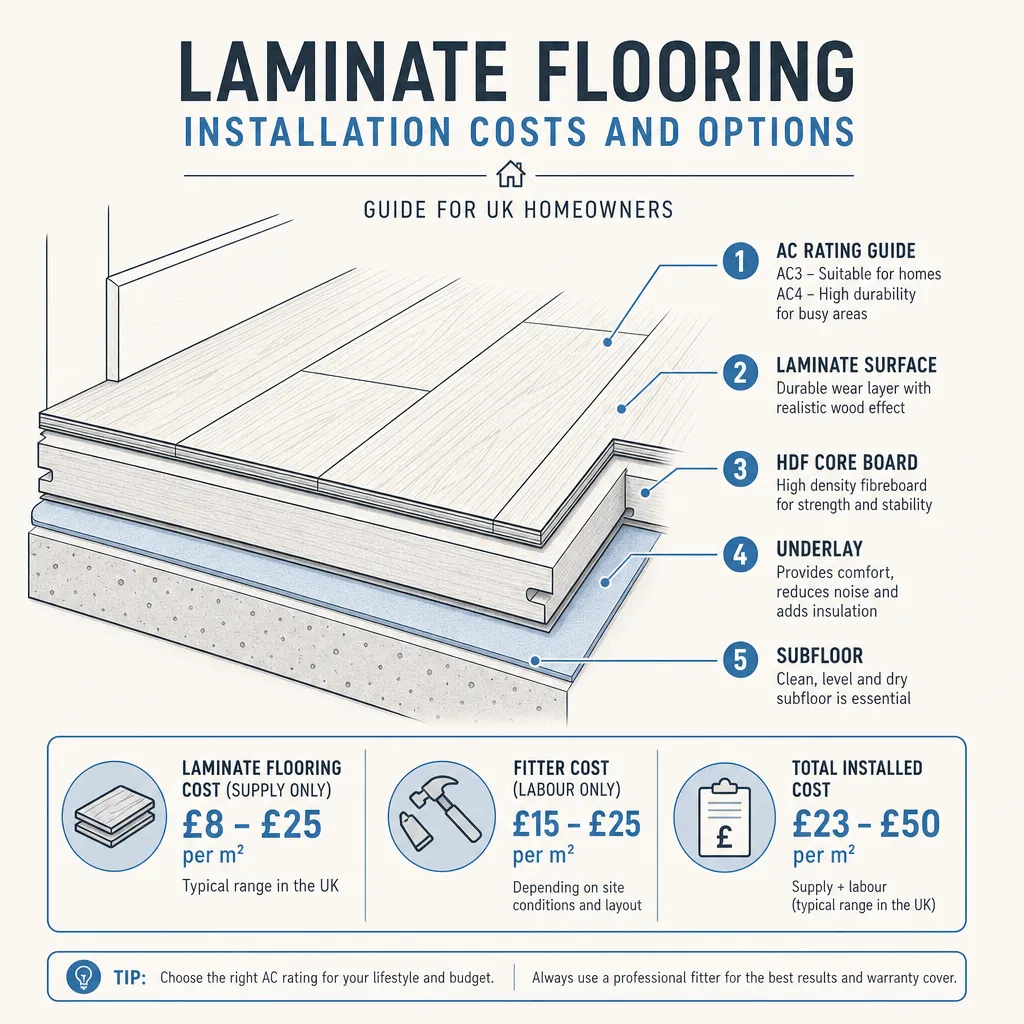
Laminate Flooring Installation Costs and Options
Laminate flooring typically costs £20–55 per square metre fully installed in the UK, including materials, underlay, and professional fitting.
 Improvement & Build
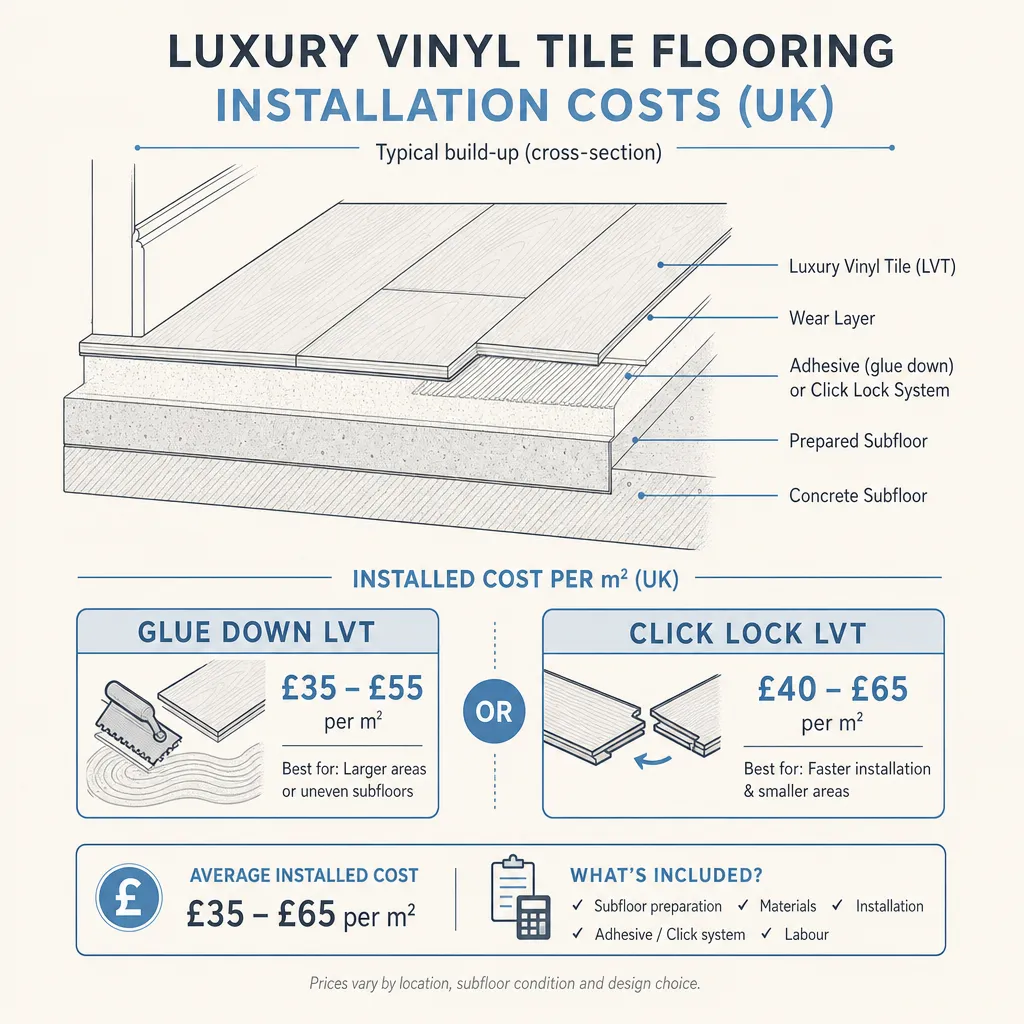
Luxury Vinyl Tile Flooring Installation Costs
Luxury vinyl tile (LVT) flooring typically costs £20–£60 per m² for materials and £10–£25 per m² for professional installation in the UK, giving a total supply-and-fit price of roughly £30–£85 per m².
 Improvement & Build
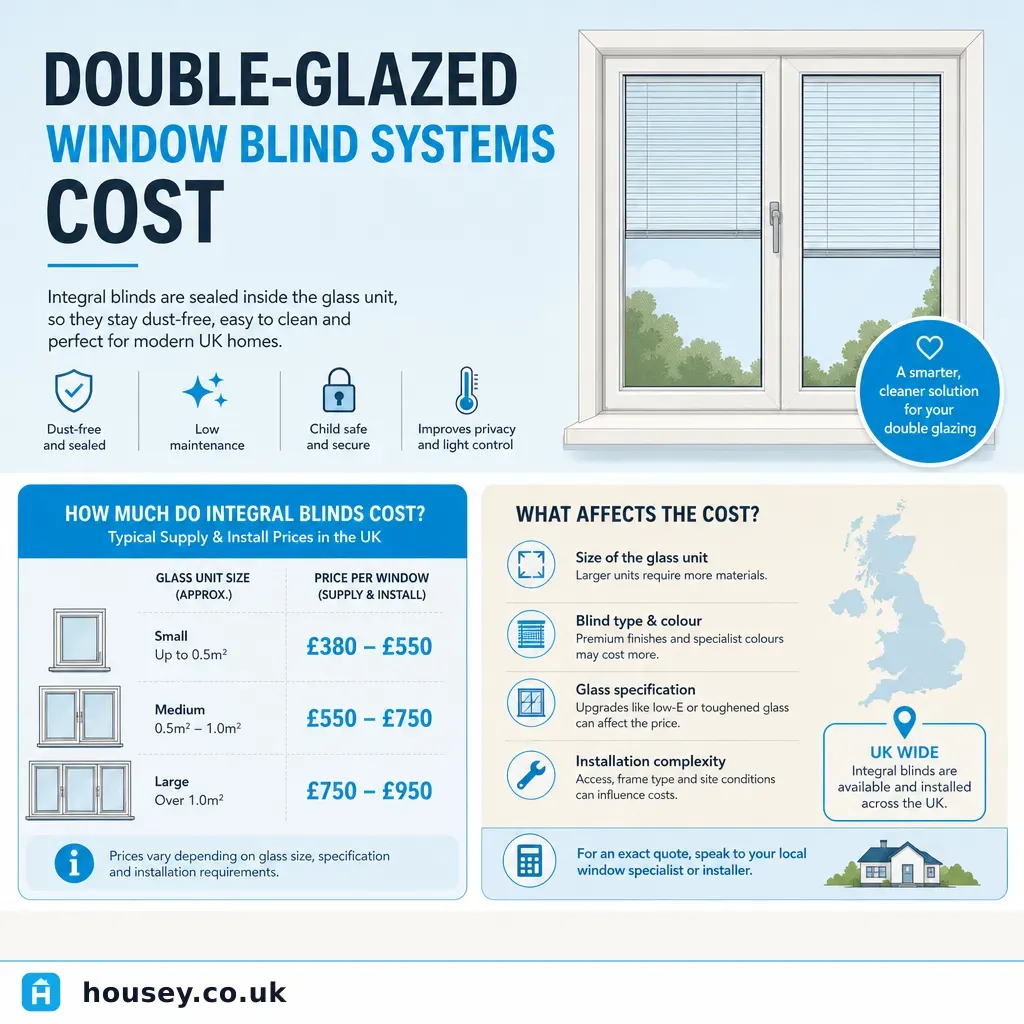
Double-Glazed Window Blind Systems Cost
Integral blinds factory-sealed inside double-glazed units cost £150–£400 per unit in the UK.
 Improvement & Build
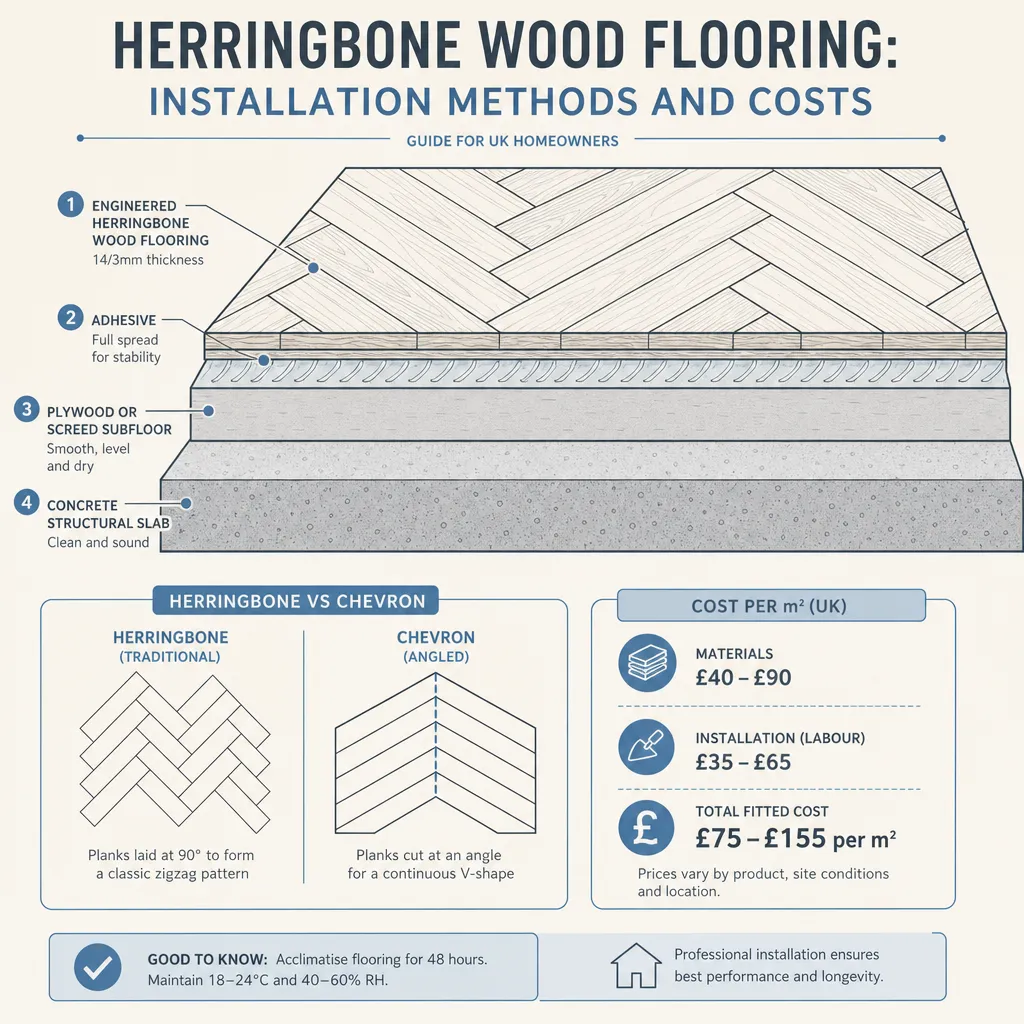
Herringbone Wood Flooring: Installation Methods and Costs
Herringbone wood flooring typically costs £60–£140 per square metre installed in UK homes, using engineered boards for most projects.
 Improvement & Build
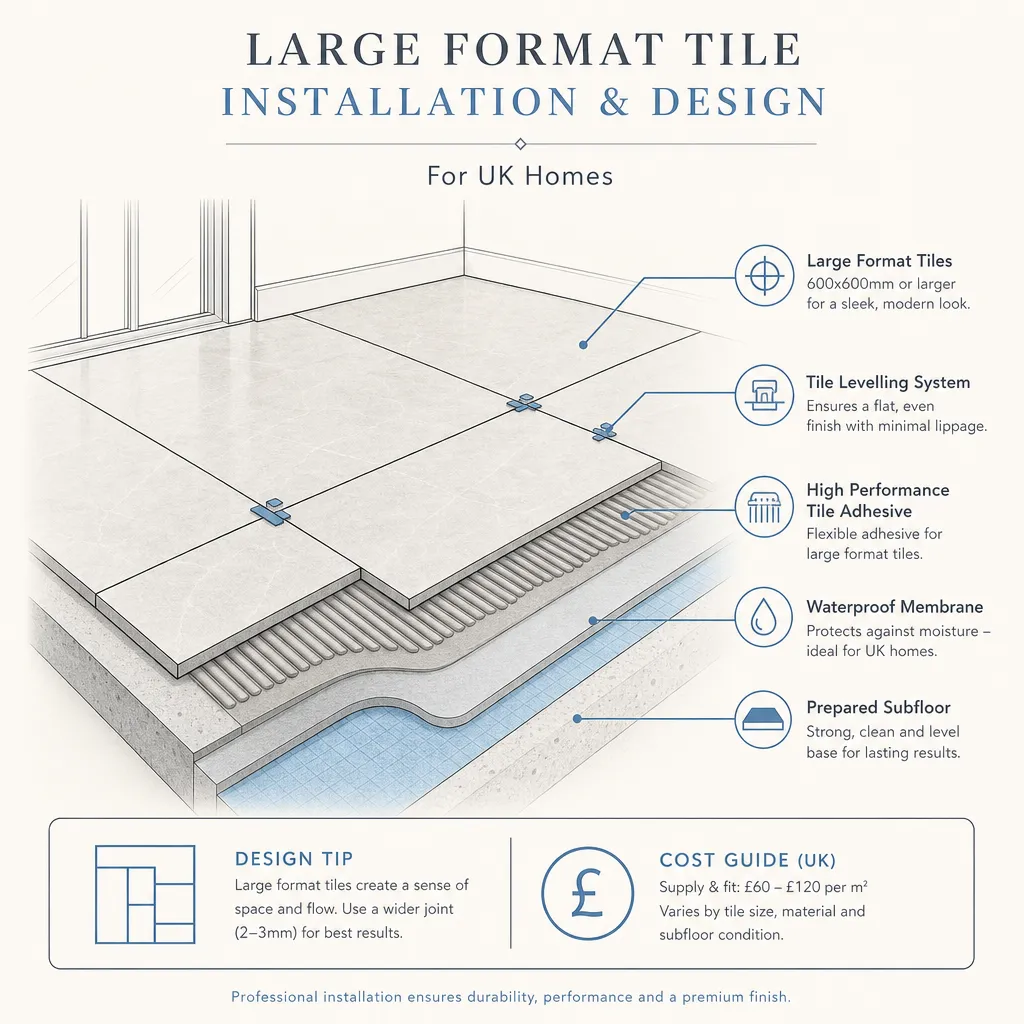
Large Format Tile Installation and Design
Large format tiles (600mm × 600mm or larger) need a substrate flat to within 3mm under a 2m straightedge, a C2-rated flexible adhesive, and a minimum 2mm grout joint.