Kitchen Demolition and Removal: Step-by-Step Process for Renovation Projects
By Housey · Last reviewed 24th of May 2026
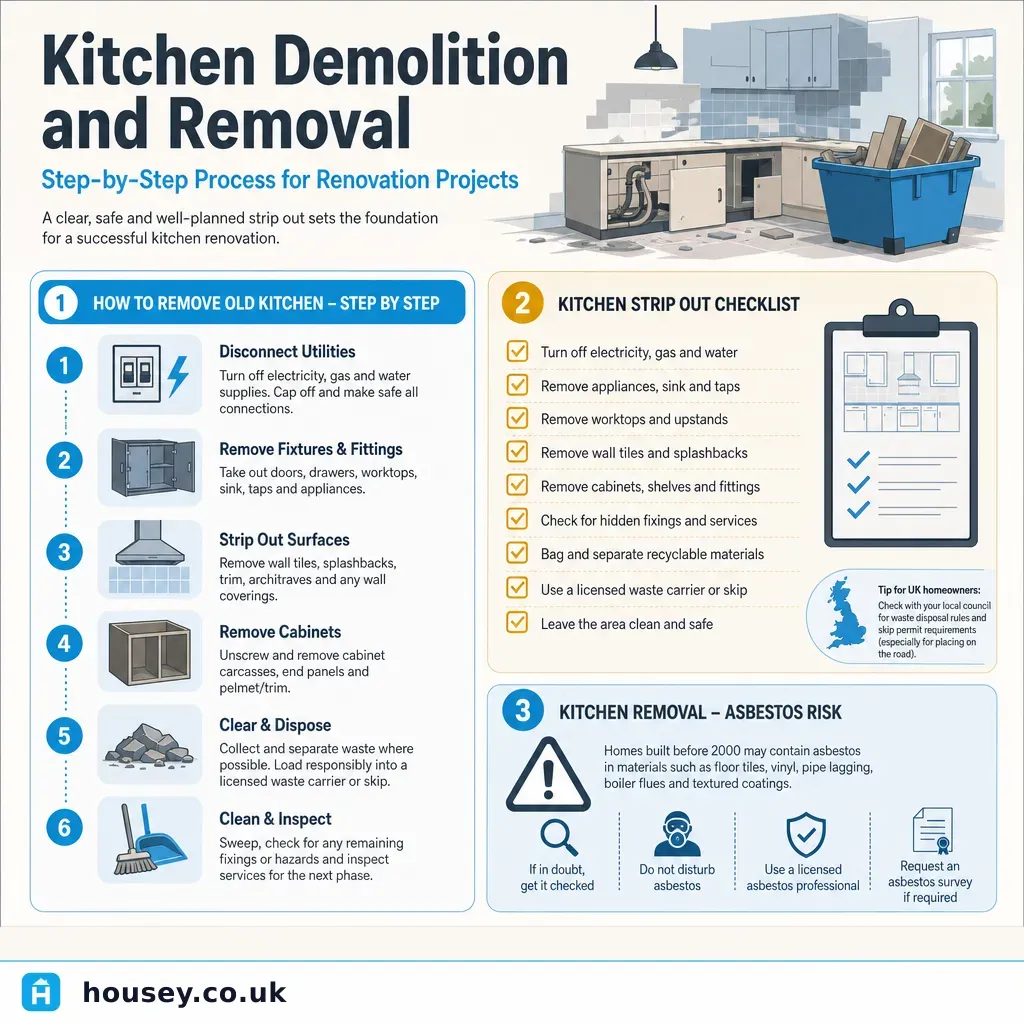
Kitchen Demolition and Removal: Step-by-Step Process for Renovation Projects
Stripping out an old kitchen is rarely as straightforward as it appears. What looks like a weekend task often involves disconnecting regulated services, managing hazardous materials in older properties, and meeting legal waste disposal obligations. Most homeowners encounter at least one unexpected complication — a suspected asbestos tile, a hidden gas connection, or uncertainty about whether a wall is load-bearing. Understanding the correct sequence before work starts protects both the project budget and the people carrying out the work.
Key points
- Homes built or refurbished before the year 2000 may contain asbestos in vinyl floor tiles, textured coatings (Artex), ceiling tiles, or behind units; the Control of Asbestos Regulations 2012 (SI 2012/632) requires a refurbishment survey before demolition work begins.
- Gas supply isolation must be carried out by a Gas Safe registered engineer; self-isolation of a gas supply is unsafe and may contravene the Gas Safety (Installation and Use) Regulations 1998.
- Kitchen waste must be removed by a registered waste carrier or taken to a licensed household waste recycling centre — fly-tipping carries fines of up to £50,000 under the Environmental Protection Act 1990.
- Removing a load-bearing wall as part of a kitchen reconfiguration requires structural engineer input and Building Regulations approval before any physical work begins.
- Placing a skip on a public highway requires a permit from the local highway authority, typically costing £50–£150 depending on the council.
Before you start: essential checks
Service isolation checklist
Work through each item before any physical demolition begins:
Approvals and notifications
Scope of work | Approval typically needed? |
|---|---|
Remove and replace kitchen, same layout | Usually not, unless service work is notifiable |
Remove non-load-bearing internal wall | Usually not — confirm with a structural engineer |
Remove load-bearing wall | Yes — Building Regulations approval and structural engineer specification |
New or relocated gas appliance | Gas Safe engineer must carry out and certify under Part J |
New electrical circuits or altered consumer unit | Part P notifiable — qualified electrician required |
Extension to create open-plan kitchen | Likely yes — planning permission and Building Regulations |
Step-by-step kitchen strip-out process
- Protect adjacent areas. Lay dust sheets in hallways and adjoining rooms. Seal the doorway with heavy-duty polythene sheeting to contain dust and debris.
- Remove freestanding appliances. Disconnect and move the fridge, washing machine, and dishwasher first, before any carcasses are disturbed.
- Remove cabinet doors and drawers. These reduce the weight of carcasses and make them easier to carry out in batches.
- Disconnect the sink. Close isolation valves and disconnect the trap and waste pipe. A plumber should disconnect supply pipes if isolation valves are not fitted.
- Remove worktops. Most are screwed up from inside the cabinet. Cut silicone sealant at the wall and lift carefully. Stone or tiled worktops may require two people and a suction lifter.
- Remove base unit carcasses. Unscrew wall fixings and check for hidden pipes or cables before making any cuts.
- Remove wall units. Keep the floor below clear. Support each unit from below before removing the final fixing screws — wall units can be heavier than expected.
- Strip the splashback. Tiles bonded directly to plasterboard often cause substrate damage on removal. Be prepared to patch plaster or replace the plasterboard before the new kitchen is installed.
- Remove flooring (if planned). If replacing the floor, lift tiles or sheet flooring at this stage — but read the asbestos guidance below before cutting or lifting any pre-2000 tiles.
- Clear and inspect. Remove all debris. Inspect walls, ceiling, and floor for damp, mould, or structural concerns before the new kitchen installation is booked in.
Asbestos and hazardous materials
Pre-2000 UK properties frequently contain asbestos-containing materials (ACMs) in kitchens, including:
- Vinyl floor tiles — often 9-inch or 12-inch square, common in 1960s to 1980s homes
- Textured ceiling coatings — Artex or similar applied to plasterboard or plaster
- Insulating board — behind cooker panels, under baths, or in airing cupboards
- Pipe lagging — in older service runs passing through kitchen walls or floor voids
Do not disturb any material you suspect may contain asbestos. Inhalation of asbestos fibres causes mesothelioma and other serious diseases; there is no safe exposure level. Under the Control of Asbestos Regulations 2012, a refurbishment or demolition survey must be carried out before significant work begins in buildings that may contain ACMs. Use a UKAS-accredited surveyor. If ACMs are found, removal must be carried out by a licensed contractor.
Red flags — stop all work and seek professional advice immediately if:
- Any material crumbles or produces unexpected fibres when disturbed
- The kitchen contains 9-inch or 12-inch square floor tiles in a pre-1990 property
- A textured ceiling coating has not been previously tested for asbestos
- Insulating board or pipe lagging of unknown age is discovered behind units or in service voids
Waste disposal: legal obligations
Kitchen waste is typically classed as bulky household waste. Legal disposal routes include:
- A registered waste carrier — check the Environment Agency's public register before booking
- A licensed household waste recycling centre (HWRC) operated by your local authority
- Commercial recyclers for sorted materials (timber carcasses, metal, glass)
If hiring a skip, confirm the company holds a waste carrier licence. A skip placed on a public highway requires a permit from the local highway authority — your skip provider should arrange this, but confirm before booking. Do not overfill a skip beyond the load line.
Fly-tipping kitchen units is illegal. The Environmental Protection Act 1990 provides for fines of up to £50,000 on summary conviction for unlawful disposal of controlled waste.
Important limitations
This article provides general process guidance for residential kitchen strip-out work. Regulations governing asbestos, gas safety, electrical installations, and waste disposal are set by statute and carry civil and criminal consequences if breached. This is general information only and does not constitute professional advice for your specific property or circumstances. A competent professional should assess your project before physical work begins.
When this becomes urgent
Stop all work and obtain professional advice immediately if you:
- Disturb a material you suspect may contain asbestos during demolition
- Smell gas at any point during or after service isolation
- Discover apparent structural movement — new cracks in adjacent walls, sagging ceilings, or doors that no longer close after a wall has been touched
- Find persistent damp, mould, or unexplained staining behind units or beneath the floor that was not previously visible
What to ask a qualified professional
Before instructing an asbestos surveyor:
- Are you accredited by UKAS for asbestos surveys and laboratory analysis?
- What type of survey is required — management or refurbishment and demolition?
- If ACMs are found, can you arrange licensed removal, and what does the air clearance certificate process involve?
Before instructing a Gas Safe engineer for isolation:
- What is your Gas Safe registration number?
- What isolation procedure will you follow, and will you provide a certificate of isolation?
- Are there any downstream implications for the broader gas supply I should be aware of?
Before instructing a structural engineer (if walls are being removed):
- Are you a member of IStructE or ICE?
- Will you provide a written structural assessment and specification for any replacement beam and padstones?
- Who is responsible for Building Regulations notification and inspection sign-off?
When to get professional help
Instruct a professional rather than proceeding yourself when:
- You are unsure whether any wall is load-bearing
- The property was built or refurbished before 2000 and you have not arranged an asbestos refurbishment survey
- Any gas supply work of any kind is required
- You plan to add, move, or significantly alter electrical circuits
- The property is leasehold — check your lease obligations before any structural or service alterations, as freeholder consent may be required
How Housey can help
Housey connects homeowners with vetted demolition contractors experienced in residential kitchen strip-out, including projects requiring asbestos coordination and legal waste management. Describe your project requirements and receive comparable quotes from local professionals.
Frequently asked questions
Can I remove my own kitchen?
You can legally carry out much of the physical strip-out — removing carcasses, worktops, and tiles. However, gas isolation must be done by a Gas Safe registered engineer, electrical work at consumer-unit level by a Part P electrician, and any work in a pre-2000 property must be preceded by a professional asbestos survey. Undertaking regulated work yourself can invalidate your home insurance and create personal legal liability.
How long does kitchen demolition take?
A standard kitchen strip-out in a typical semi-detached or terraced house takes one to two days for an experienced team. Complications — unexpected asbestos requiring specialist removal, difficult skip access, or plumbing that needs re-routing — can add a day or more. Build contingency time into the programme before the new kitchen installation is scheduled to avoid knock-on delays.
Do I need building regulations for a kitchen replacement?
Replacing a kitchen in the same layout generally does not require Building Regulations approval for the cabinetry and worktops themselves. However, new or altered electrical circuits are notifiable under Part P, gas appliances must be certified by a Gas Safe engineer under Part J, and any structural wall removal requires full Building Regulations approval before work begins. Confirm the full scope with your contractor before starting.
What can I do with old kitchen units?
Usable units can be sold via online marketplace platforms or donated to organisations such as Emmaus or Habitat for Humanity ReStores. Components can be taken to a household waste recycling centre. Alternatively, hire a registered waste carrier for collection from site. Do not place units on the pavement — this constitutes fly-tipping and is illegal under the Environmental Protection Act 1990.
Sources and further reading
- Asbestos: the basics — Health and Safety Executive
- Control of Asbestos Regulations 2012 (SI 2012/632) — legislation.gov.uk
- Gas Safe Register: consumer guidance — Gas Safe Register
- Building regulations approval — GOV.UK
- Waste carrier registration public register — Environment Agency
- Environmental Protection Act 1990 — legislation.gov.uk
Useful next reads
 Improvement & Build
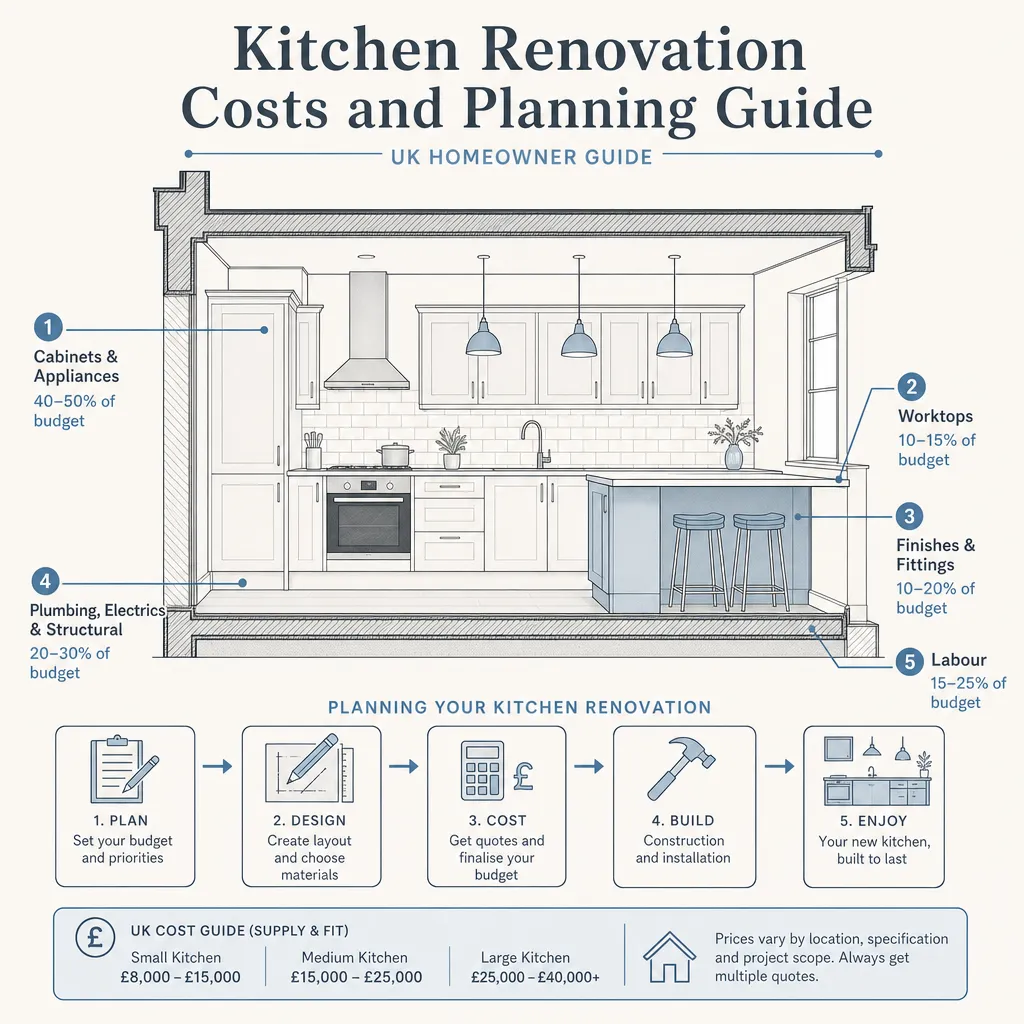
Kitchen Renovation Costs and Planning Guide
A UK kitchen renovation typically costs between £5,000 and £40,000 or more, depending on size, specification, and whether structural work is involved.
 Improvement & Build
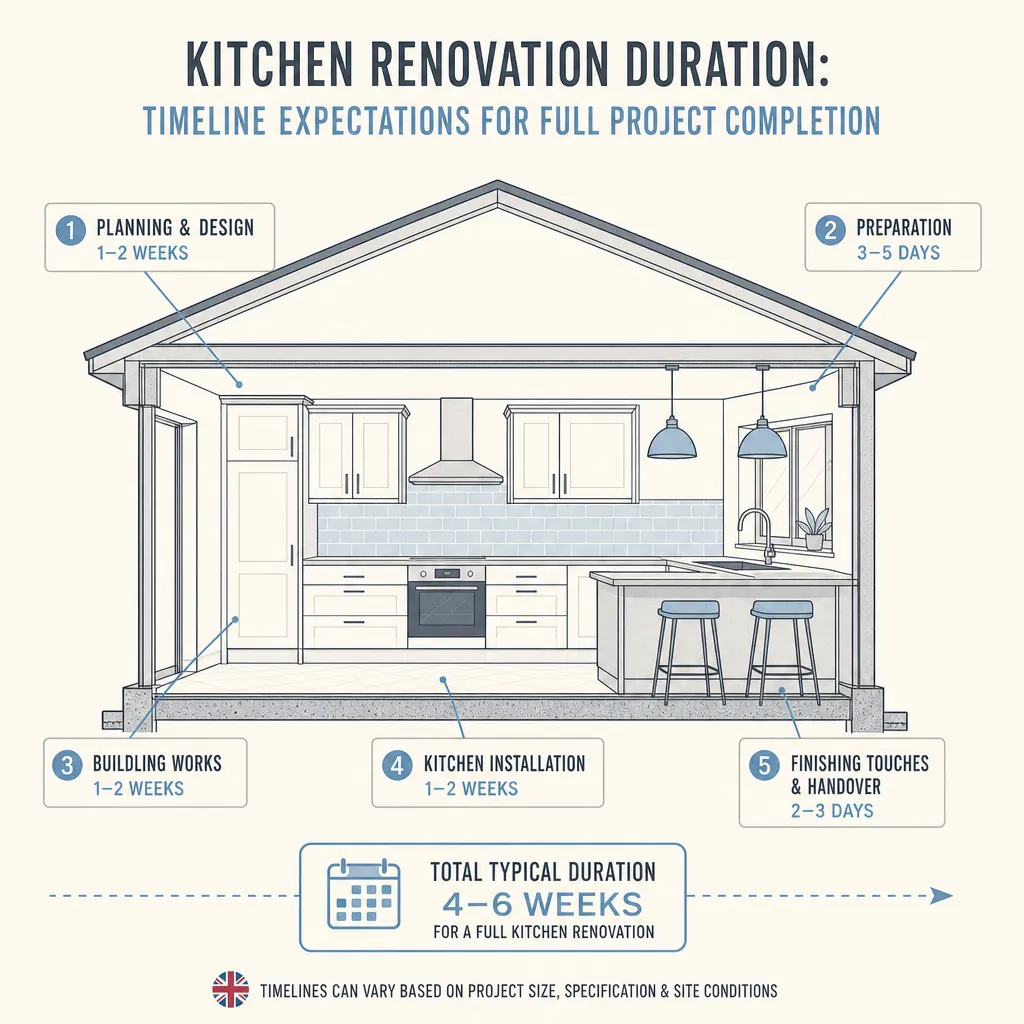
Kitchen Renovation Duration: Timeline Expectations for Full Project Completion
A full kitchen renovation in the UK typically takes 3–10 weeks from start to finish, depending on the scope of work.
 Improvement & Build
Who Provides House Demolition Services
House demolition in the UK is carried out by specialist demolition contractors, often members of the National Federation of Demolition Contractors (NFDC).
 Improvement & Build
How to Find and Hire an Extension Builder
To hire a reliable extension builder, get at least three detailed written quotes from contractors with documented experience of similar projects.
 Improvement & Build
Open Plan Living Space Conversion Costs
Opening up a living space in the UK typically costs £3,000–£15,000+ depending on whether walls are load-bearing, the beam specification required, and the extent of remodelling.