Kitchen Renovation Duration: Timeline Expectations for Full Project Completion
By Housey · Last reviewed 4th of May 2026
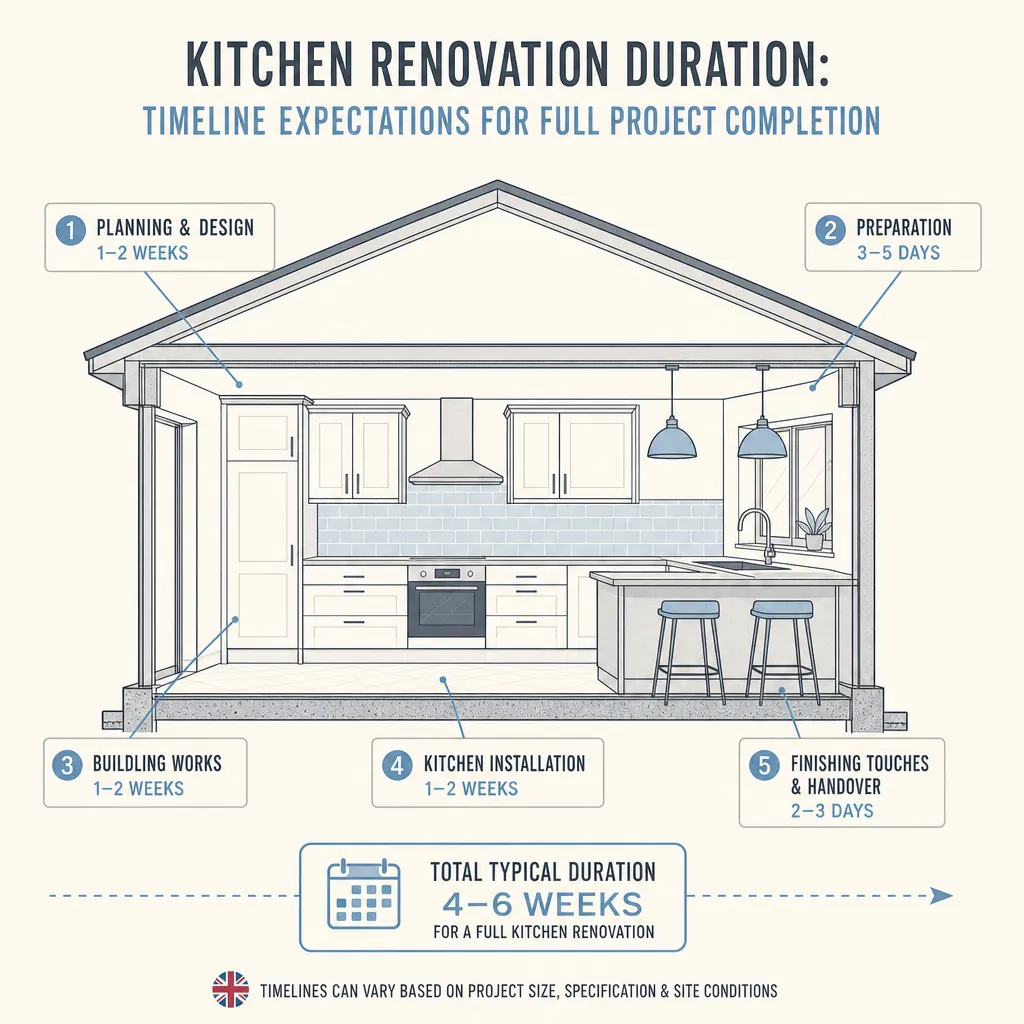
Kitchen Renovation Duration: Timeline Expectations for Full Project Completion
Kitchen renovations are among the most disruptive home improvement projects — touching plumbing, electrics, joinery, and often structural elements simultaneously. Whether you're replacing units in a Victorian terrace or extending into a side return in a 1930s semi, understanding the realistic timeline before work begins is essential for managing your household, your budget, and the sequence of contractors you'll need to co-ordinate.
Key points
- A basic kitchen swap-out — same layout, new units, worktops, and appliances — typically takes 1–2 weeks on site, but 6–10 weeks in total once procurement lead times are included.
- A full structural kitchen renovation involving moving walls, rerouting drains, or adding an extension can take 8–16 weeks on site, with a total project duration of six months or more.
- Kitchen units from major UK suppliers carry lead times of 4–12 weeks; ordering late is the single most common cause of project overruns.
- Electrical work in kitchens must comply with Part P of the Building Regulations and be carried out or certified by a competent person registered with NICEIC, NAPIT, or an equivalent scheme.
- Gas appliance connections must be completed by a Gas Safe registered engineer — this is a legal requirement under the Gas Safety (Installation and Use) Regulations 1998.
How long does a kitchen renovation take?
The overall duration depends almost entirely on the scope of work. There is no single answer, but the table below gives realistic ranges for the most common project types in UK homes.
Project scope | On-site duration | Total project time (inc. design and procurement) |
|---|---|---|
Cosmetic refresh (paint, new handles, worktop replacement) | 2–5 days | 1–3 weeks |
Like-for-like unit replacement, same layout | 1–2 weeks | 6–10 weeks |
Full kitchen refit, same footprint | 2–4 weeks | 8–14 weeks |
Full refit with minor structural changes (e.g. removing a wall) | 4–8 weeks | 12–20 weeks |
Kitchen extension or open-plan remodel | 8–16 weeks on site | 6–12 months (inc. planning and design) |
Indicative UK timescales, last reviewed 2026-05-04. Actual duration varies by contractor availability, supply chain, and project complexity.
The phases of a kitchen project
Understanding each phase helps you spot delays before they compound across the programme.
1. Design and specification (2–8 weeks)
This covers measuring the space, agreeing a layout, selecting units and appliances, and collecting quotes. If you're working with an architect or design-and-build firm, they may also prepare detailed drawings. Allow more time if structural changes are planned — you may need planning permission or a structural engineer's calculations before work can legally begin.
2. Procurement (4–12 weeks lead time)
UK kitchen manufacturers — including bespoke and hand-painted ranges — typically quote 4–12 weeks from order to delivery. Appliances ordered separately can take 2–6 weeks. This phase can run in parallel with finalising the build programme, but any delay here will push back the site start date. The rule is simple: order as early as possible after confirming the layout.
3. Enabling and structural works (1–3 weeks)
Before installation, the space must be stripped out and services rerouted if the layout is changing. This phase typically includes:
- Isolating and capping existing gas, water, and electrical supplies.
- Moving drain waste upstands or soil stacks if the sink position is changing.
- First-fix electrical work: new consumer unit circuits, socket positions, extractor ducting routes.
- Structural alterations: removing walls, installing steel beams, forming new openings.
Structural alterations require Building Regulations approval and sign-off from a building control body before the structure is covered over.
4. Installation (1–4 weeks)
Unit installation is the most visible phase but rarely the longest. A two-person team can typically fit 15–20 carcasses in three to five days. The broader installation phase also covers:
- Hanging doors and fitting handles.
- Worktop installation — stone surfaces (quartz, granite) require templating after units are in, then a separate fabrication and return visit, adding 10–14 days.
- Second-fix plumbing: sink, dishwasher, waste connections.
- Second-fix electrics: wiring sockets, appliance connections, circuit testing.
- Gas connections by a Gas Safe registered engineer.
5. Finishing and snagging (3–7 days)
Snagging covers all items not completed to specification: misaligned doors, grouting gaps, unsatisfactory tile cuts, and appliance commissioning. Allow several days for this, and do not release the final payment until you have agreed and signed off a snag list in writing.
Worked UK property scenario
Situation: A homeowner in a 1960s semi-detached in Leeds wants to open the kitchen into the dining room, relocate the sink, and install a new kitchen with a central island.
Week | Activity |
|---|---|
1–2 | Architect prepares internal alteration drawings; structural engineer sizes the steel beam |
3–5 | Building Regulations application submitted and approved |
6–8 | Kitchen designed and ordered (10-week supplier lead time begins) |
10 | Builders strip out the old kitchen, remove the wall, and install the steel |
11–12 | First-fix electrics (cooker circuit, island socket ring), plumbing (relocated sink), plastering |
14 | Kitchen units delivered; installation team begins (5 days on site) |
15 | Worktop templated; quartz top fabricated and fitted 10 days later |
16 | Second-fix plumbing and electrics; Gas Safe engineer connects range cooker |
17 | Tiling, decoration, snagging sign-off |
Total: approximately 17 weeks — a realistic result for a structural kitchen project in a standard UK property.
Pre-project checklist
Work through this before your kitchen project starts to avoid the most common causes of delay and cost overrun:
Common causes of kitchen renovation delays
- Late unit orders placed after the contractor start date is confirmed, creating a gap between demolition and fit-out.
- Stone worktop delays — quartz and granite fabricators visit only after units are fitted and often have a two-week return booking slot.
- Structural surprises during strip-out, such as unknown pipes in partition walls or inadequate lintels above window openings.
- Trade availability gaps — electricians and gas engineers frequently work across multiple sites and cannot always attend the next day.
- Late Building Regulations submissions when applications are not made until the contractor is already mobilised.
When to get professional help
For a purely cosmetic refresh, a competent homeowner can manage some elements. Any project involving new electrical circuits, gas connections, or structural alterations requires qualified professionals by law.
Engage a professional if:
- You are removing or altering any loadbearing wall — a structural engineer's assessment and Building Regulations approval are required.
- You are installing or relocating a gas supply or connecting any gas appliance — a Gas Safe registered engineer is required by law.
- You are adding new electrical circuits or modifying the consumer unit — a Part P-registered electrician is required.
- You are changing the position of a soil stack or foul drain — Building Regulations approval may apply.
- You cannot realistically manage procurement, multiple trades, and a delivery programme simultaneously.
How Housey can help
If you want a single point of contact from design through to handover, design-and-build firms manage the full process including procurement and trade co-ordination. For structurally complex projects, architecture services can deliver drawings, structural co-ordination, and planning applications. If you prefer to appoint trades separately but need oversight of the programme, a project manager can co-ordinate contractors, track deliveries, and manage snagging on your behalf.
Frequently asked questions
How long does kitchen unit installation take once units are delivered?
A two-person fitting team can usually install the carcasses, doors, and appliances for a medium kitchen (12–20 units) in three to five working days. The full installation phase — including worktop templating, plumbing second-fix, and electrical connection — typically takes one to three weeks in total, depending on layout complexity and the availability of specialist trades.
Does a kitchen renovation need Building Regulations approval?
Structural changes such as removing walls or installing steel beams, new electrical circuits, and drainage alterations all require Building Regulations compliance. Electrical work in kitchens falls under Part P and must be carried out or certified by a competent person registered with NICEIC or NAPIT, or notified to your local building control body. A straightforward like-for-like unit replacement with no layout changes usually does not require a formal application.
How far in advance should I order kitchen units?
Place your order as soon as the layout is confirmed — ideally 10–14 weeks before your planned installation date. Major UK kitchen manufacturers quote 6–12 weeks from order to delivery for standard ranges; bespoke or hand-painted kitchens often take longer. Ordering late is the single most common cause of kitchen project overruns.
Can I live at home during a kitchen renovation?
Most homeowners do stay at home during a kitchen renovation, though it requires planning. Set up a temporary kitchen with a microwave, table-top hob, and kettle before work begins. The most disruptive period is the strip-out and first-fix phase in the first few days, when dust and noise are at their worst. Access to hot water may also be interrupted during plumbing work.
What causes kitchen renovations to overrun their schedule?
The most common causes are: kitchen units ordered after the contractor start date is set; stone worktop templating delays; structural surprises during strip-out; trade availability gaps between first-fix and second-fix; and late Building Regulations decisions. A contingency of 10–15% on both budget and time is advisable for any project involving structural or service alterations.
Sources and further reading
- Approved Document P: Electrical Safety in Dwellings — GOV.UK
- Gas Safety (Installation and Use) Regulations 1998 — legislation.gov.uk
- Find a Gas Safe Registered Engineer — Gas Safe Register
- Federation of Master Builders: Find a Builder — Federation of Master Builders
- Planning permission: when you need it — GOV.UK
Useful next reads
 Improvement & Build
Kitchen Demolition and Removal: Step-by-Step Process for Renovation Projects
Kitchen demolition involves regulated services, potential asbestos in pre-2000 properties, and legal waste disposal obligations.
 Improvement & Build
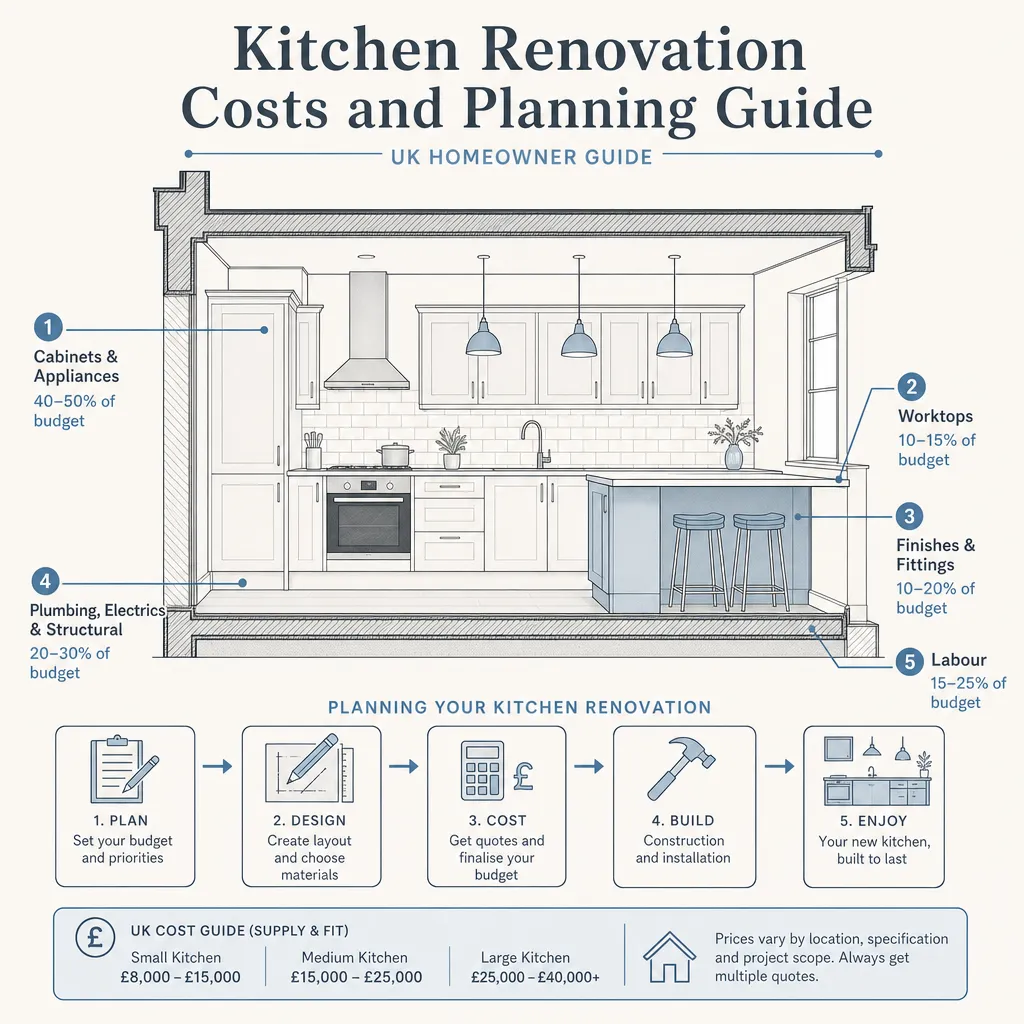
Kitchen Renovation Costs and Planning Guide
A UK kitchen renovation typically costs between £5,000 and £40,000 or more, depending on size, specification, and whether structural work is involved.
 Improvement & Build
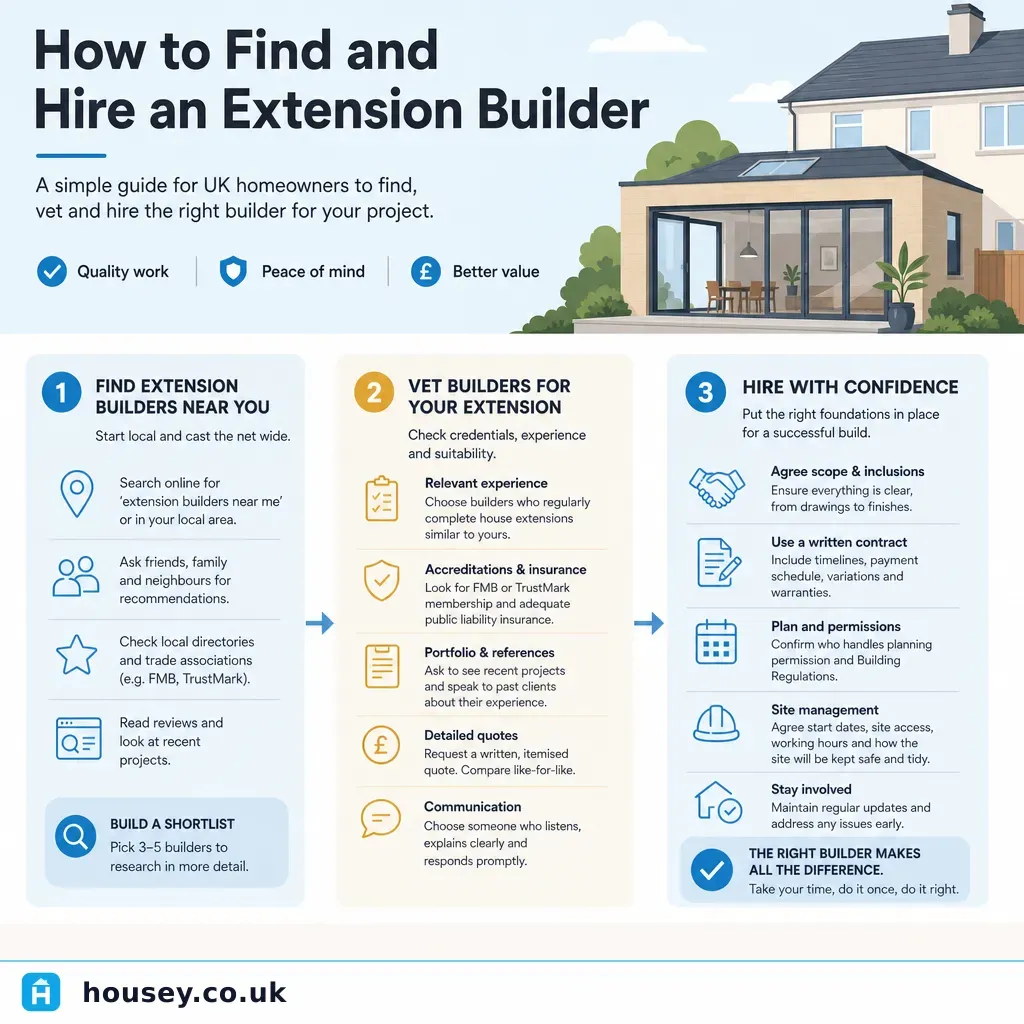
How to Find and Hire an Extension Builder
To hire a reliable extension builder, get at least three detailed written quotes from contractors with documented experience of similar projects.
 Improvement & Build
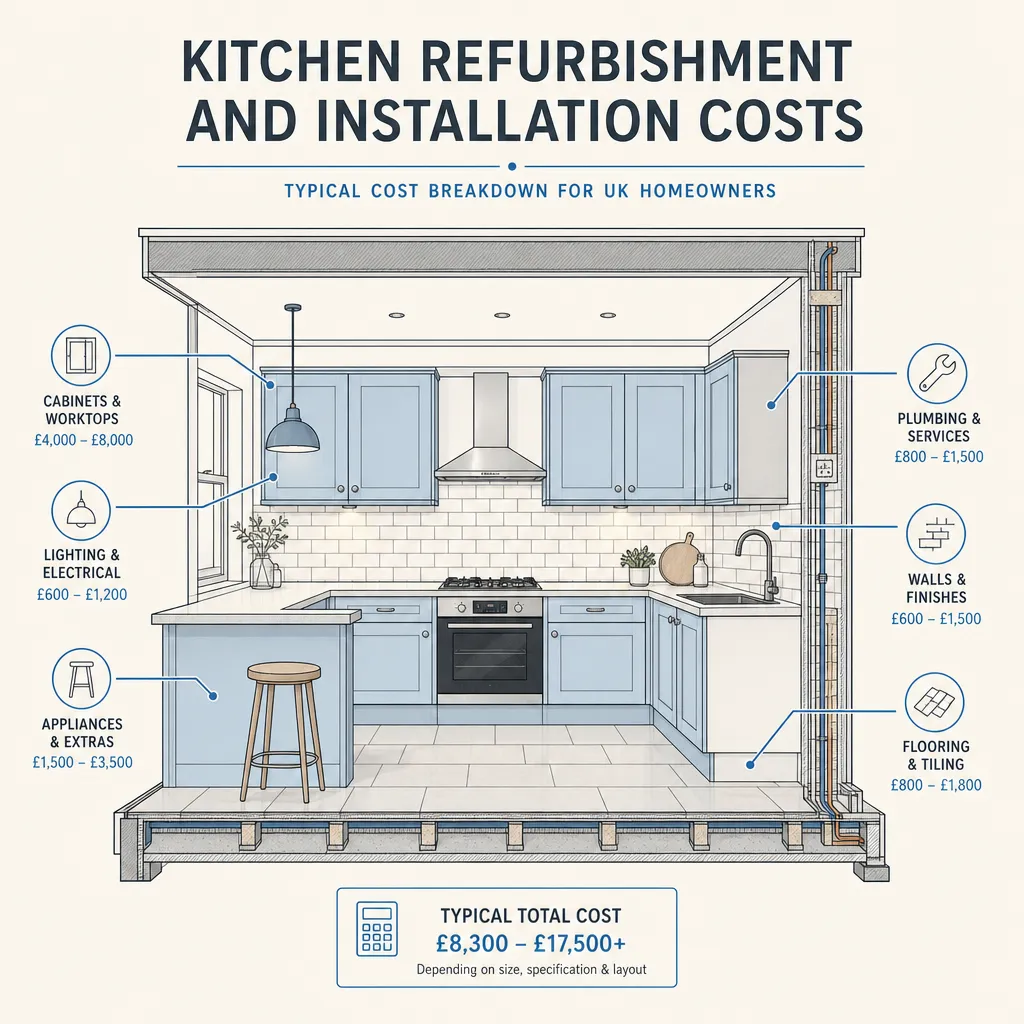
Kitchen Refurbishment and Installation Costs
A kitchen refurbishment in the UK typically costs between £3,000 and £40,000 or more, depending on whether you are replacing units only or carrying out a full design-and-build project.
 Improvement & Build
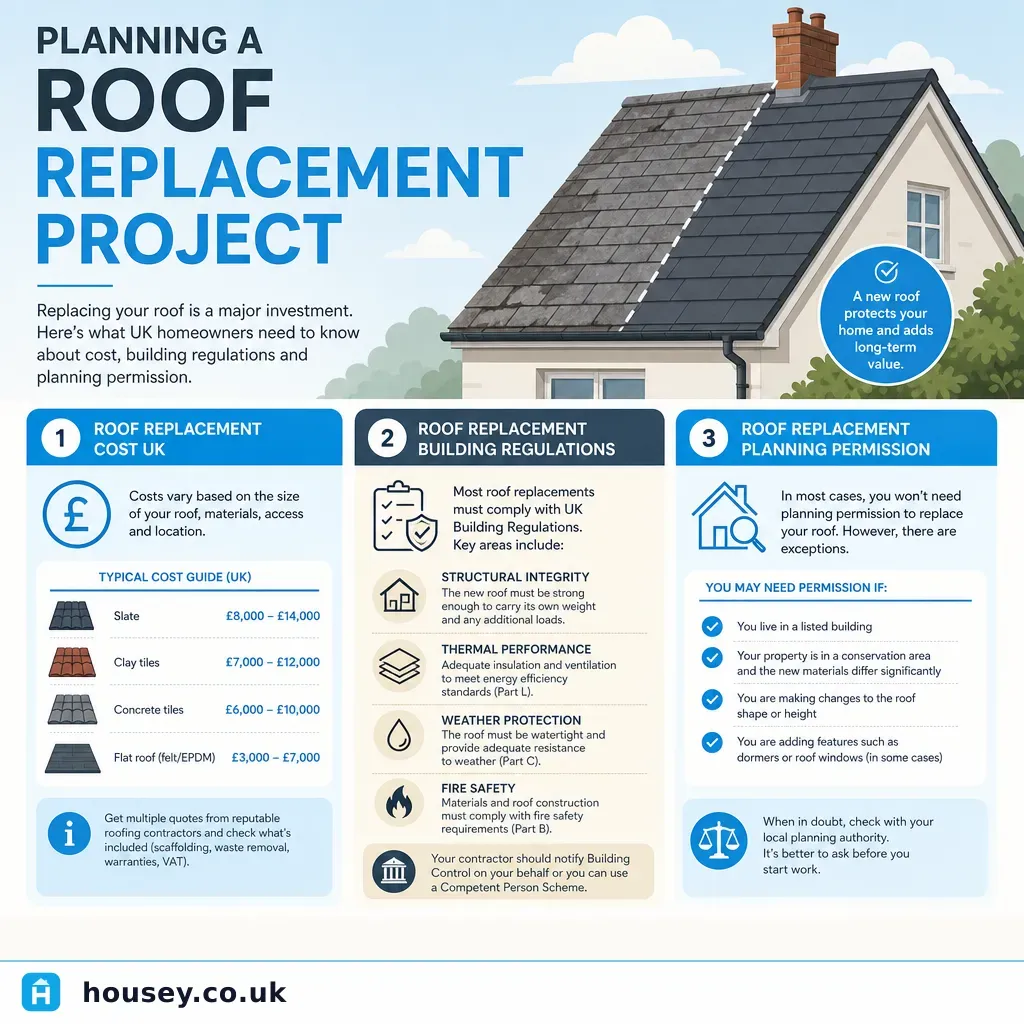
Planning a Roof Replacement Project
A roof replacement project involves stripping the existing covering, renewing the sarking felt and battens, and laying new tiles, slates, or a flat-roof membrane.