Kitchen Renovation Costs and Planning Guide
By Housey · Last reviewed 10th of May 2026
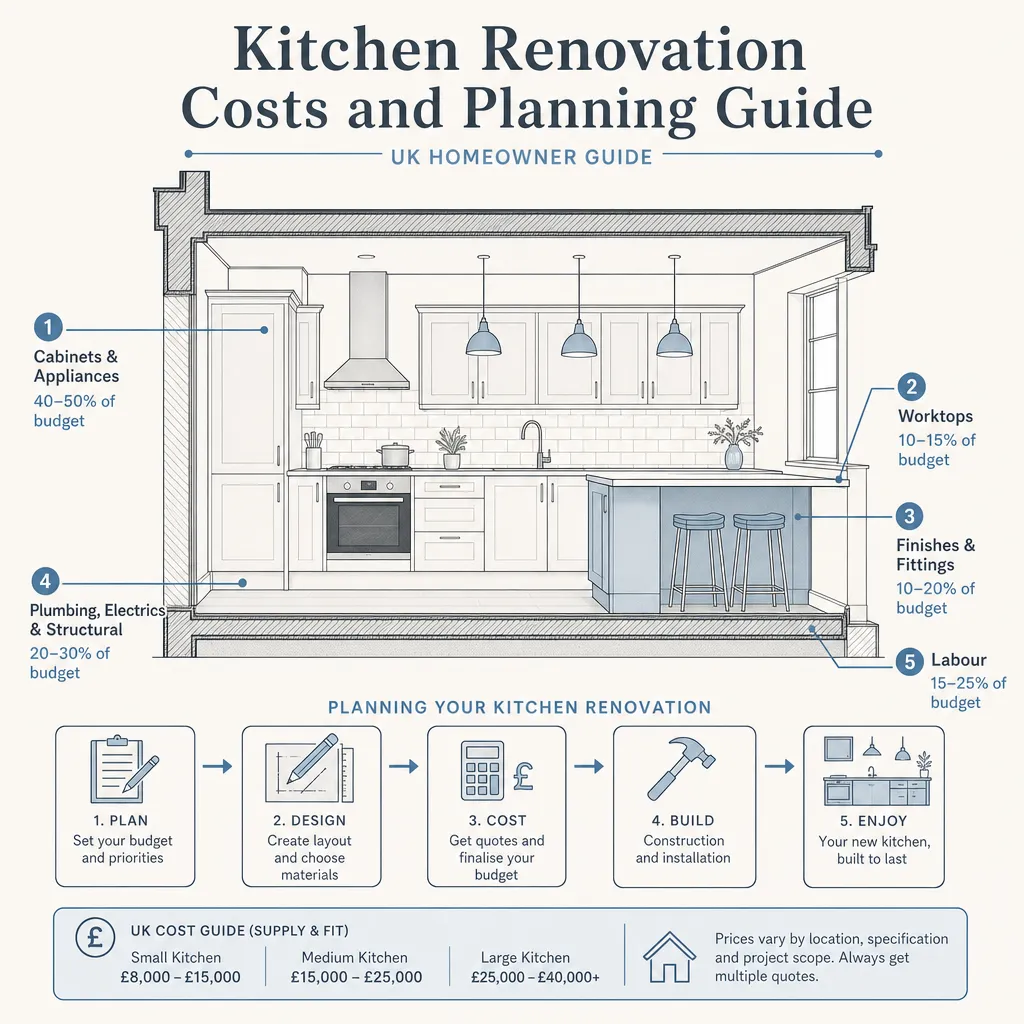
Kitchen Renovation Costs and Planning Guide
Kitchen renovations are one of the most common and significant home improvement projects in the UK, typically arising when a property is purchased, when a kitchen has become worn beyond reasonable maintenance, or when a family's needs change. The stakes are high: a poorly planned project can overshoot its budget by 30–50%, while a well-executed one can add measurable value to a property and transform daily living. Understanding cost structures, procurement routes, and compliance requirements before instructing anyone will make a material difference to outcomes.
Key points
- A mid-range kitchen renovation — including units, worktops, appliances, and fitting — typically costs between £10,000 and £20,000 for an average-sized kitchen; a high-specification or structural project can exceed £40,000 (Indicative UK costs, last reviewed 2026-05-10).
- Kitchen work involving new gas connections or modifications to gas appliances must be carried out by a Gas Safe registered engineer — a legal requirement under the Gas Safety (Installation and Use) Regulations 1998.
- Electrical work in a kitchen (a special location under BS 7671) requires either a Part P-registered electrician or a Building Control notification; failure to comply can create problems when selling.
- Moving load-bearing walls or altering structural elements requires Building Regulations approval under Part A (structure), regardless of planning permission status.
- Planning permission is not usually required for an internal kitchen renovation, but a single-storey rear extension may fall under Permitted Development — subject to size limits and local restrictions.
What drives kitchen renovation costs?
Four main factors determine the final bill: kitchen size, specification of units and worktops, whether structural or building work is included, and the procurement route chosen.
Size is the most significant variable. A small galley kitchen of 8–10 m² costs considerably less than an open-plan kitchen-diner of 25 m². Specification spans an enormous range — flat-pack laminate-worktop kitchens at one end, bespoke hand-painted cabinetry with stone worktops at the other. Structural work such as removing a wall or adding an extension can easily double the headline kitchen budget once design fees, building control, and structural engineering are included. Procurement route also affects cost: self-managing separate trades is usually cheaper but more demanding, while a design-and-build firm provides a single point of responsibility.
Indicative cost ranges (last reviewed 2026-05-10)
Kitchen tier | Units and worktops | Appliances | Fitting and plumbing | Typical total range |
|---|---|---|---|---|
Budget (flat-pack, laminate worktops) | £2,000–£5,000 | £1,000–£2,500 | £2,000–£4,000 | £5,000–£12,000 |
Mid-range (semi-rigid units, stone worktops) | £5,000–£12,000 | £2,500–£6,000 | £3,000–£6,000 | £10,000–£24,000 |
High specification (rigid or bespoke, premium worktops) | £12,000–£35,000+ | £5,000–£15,000+ | £4,000–£8,000 | £20,000–£60,000+ |
Indicative ranges for an average UK kitchen of 12–18 m². Structural or extension work excluded. Ranges vary by region, complexity, and market conditions. Always obtain at least three itemised quotes.
Planning your project: key steps
- Write a brief covering storage needs, appliances, layout preferences, and accessibility requirements.
- Fix the budget first, then choose finishes. Ring-fence a 10–15% contingency for surprises.
- Decide the scope — like-for-like replacement or reconfiguration. Layout changes involve plumbers and electricians and materially increase cost and programme.
- Check Building Regulations for any electrical, gas, or structural work before starting. Speak to your local authority building control or an Approved Inspector.
- Get accurate measurements before approaching any supplier or contractor.
- Obtain at least three itemised quotes, each covering the same scope, materials, programme, and VAT position.
- Verify credentials: Gas Safe registration, Part P or NICEIC registration for electrical work, and KBSA membership are relevant checks.
Homeowner kitchen renovation checklist
How long does a kitchen renovation take?
A like-for-like replacement in an average semi-detached home typically takes 1–2 weeks to install. Add 4–12 weeks lead time for retailer kitchens (longer for bespoke joinery), and the total elapsed time from order to completion is commonly 8–16 weeks. Structural projects involving wall removal or an extension typically require 3–6 months from building control approval to practical completion.
Common mistakes and red flags
- Comparing quotes that cover different scopes. A lower price often excludes appliance installation, waste removal, or making good plasterwork.
- Underestimating disruption. Plan a temporary cooking and eating arrangement from day one.
- Not confirming compliance routes early. A mid-project discovery that new circuits require building control notification adds cost and delay.
- Assuming pre-1985 properties are asbestos-free. Older floor tiles, textured coatings, and pipe insulation may contain asbestos. Do not disturb any suspect material — arrange a survey by a competent asbestos professional before strip-out begins.
When to get professional help
For a straightforward replacement in a modern home with no structural changes, many homeowners coordinate the project themselves. Engage appropriate professionals when:
- A load-bearing wall is being removed (structural engineer and Building Regulations required)
- Gas appliances are being relocated or new gas supplies installed (Gas Safe registered engineer — mandatory)
- New electrical circuits or consumer unit changes are needed (Part P-registered electrician or building control notification)
- Any external alteration may require planning permission
- The kitchen is in a listed building, where consent may be required even for internal works
How Housey can help
If your kitchen renovation involves structural work, an extension, or coordinating multiple trades across several weeks, Housey can help you request quotes from qualified design-and-build firms and experienced project managers who can take the project from brief to completion.
Frequently asked questions
Does a kitchen renovation add value to my home?
A well-executed kitchen renovation is widely regarded by estate agents and RICS-registered valuers as one of the improvements most likely to add value, particularly when the existing kitchen is dated or poorly configured. The actual uplift depends on the property's price bracket, local market conditions, and the quality of the renovation relative to comparable homes nearby.
Do I need planning permission for a new kitchen?
Internal kitchen replacement or reconfiguration does not require planning permission. Adding a rear extension may fall under Permitted Development — usually up to 3m for an attached house or 4m for a detached house — subject to conditions. Always check with your local planning authority before starting any external work.
Is VAT charged on kitchen installations?
Standard rate VAT at 20% applies to most kitchen installation work carried out by a contractor. Some situations, such as work for qualifying disabled persons or certain conversions, attract a reduced rate. If you buy units separately and self-manage trades, VAT is charged on each supply. Check GOV.UK for current rules applicable to your situation.
How do I find a reputable kitchen installer?
Look for KBSA or Federation of Master Builders membership. Verify that gas work is carried out by a Gas Safe registered engineer (searchable at gassaferegister.co.uk) and that electrical work is done by a Part P-registered operative or notified to building control. Ask for references from recent comparable jobs.
What is usually excluded from kitchen renovation quotes?
Common exclusions include structural or wall removal work, making good after trades such as plastering and decorating, replacement flooring, disposal of old appliances, removal of hazardous materials, and VAT. Always ask each contractor to confirm in writing exactly what is and is not included before accepting a quote.
Sources and further reading
- Building Regulations: when you need approval — GOV.UK
- Gas Safety (Installation and Use) Regulations 1998 — legislation.gov.uk
- Gas Safe Register: find a registered engineer — Gas Safe Register
- Approved Document P: electrical safety in dwellings — GOV.UK
- KBSA — Kitchen Bedroom and Bathroom Specialists Association — KBSA
- Federation of Master Builders: find a builder — Federation of Master Builders
Useful next reads
 Improvement & Build
Kitchen Demolition and Removal: Step-by-Step Process for Renovation Projects
Kitchen demolition involves regulated services, potential asbestos in pre-2000 properties, and legal waste disposal obligations.
 Improvement & Build
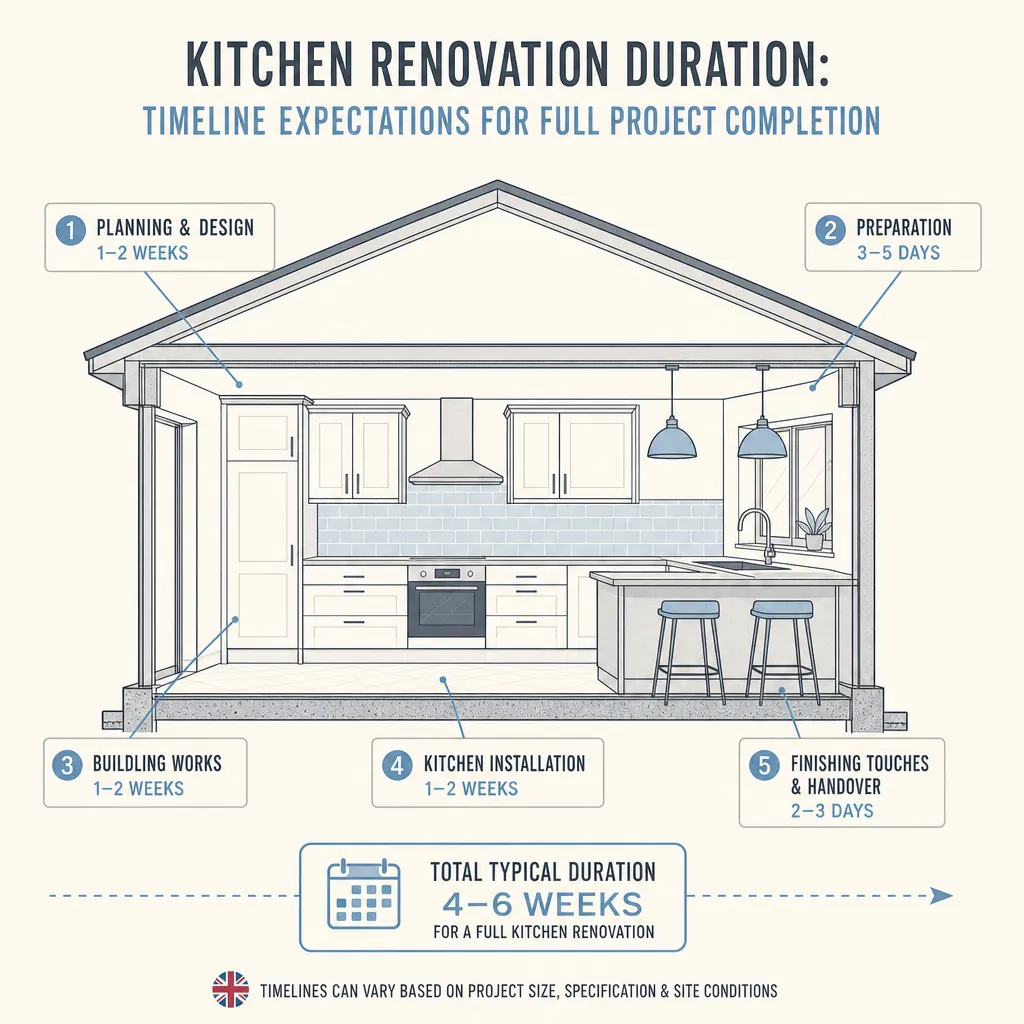
Kitchen Renovation Duration: Timeline Expectations for Full Project Completion
A full kitchen renovation in the UK typically takes 3–10 weeks from start to finish, depending on the scope of work.
 Improvement & Build
Small kitchen renovation: budgeting for costs and planning your project
A small kitchen renovation in the UK typically costs £5,000–£15,000 for a full refresh including new units, worktops, tiling, and appliances, though costs vary widely by specification, region, and whether structural changes or rewiring are involved.
 Improvement & Build
How to Find and Hire an Extension Builder
To hire a reliable extension builder, get at least three detailed written quotes from contractors with documented experience of similar projects.
 Improvement & Build
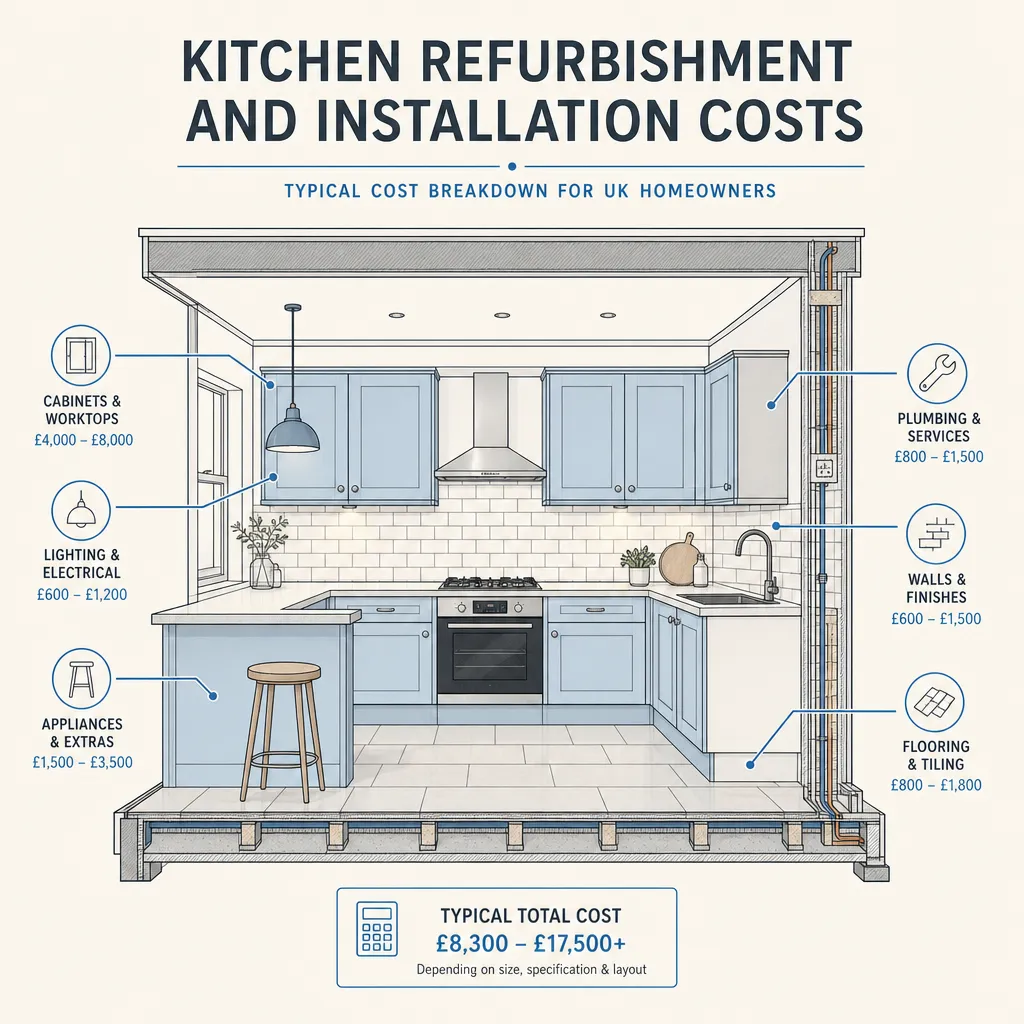
Kitchen Refurbishment and Installation Costs
A kitchen refurbishment in the UK typically costs between £3,000 and £40,000 or more, depending on whether you are replacing units only or carrying out a full design-and-build project.