Kitchen Extension Construction Costs and Budget
By Housey · Last reviewed 7th of May 2026
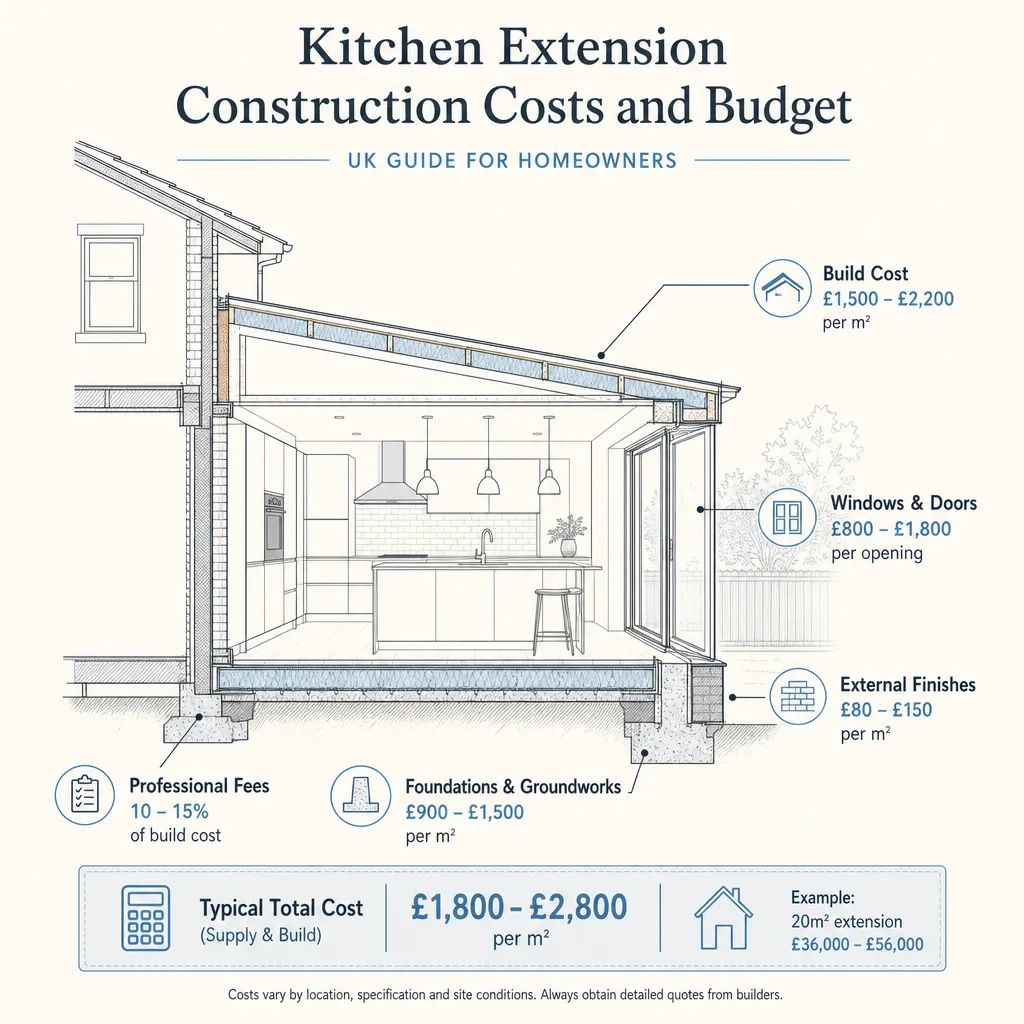
Kitchen Extension Construction Costs and Budget
A kitchen extension is one of the most common improvement projects UK homeowners undertake, typically prompted by a growing family, the desire for an open-plan layout connecting to the garden, or a kitchen that no longer fits the way the household works. The financial commitment is significant, and costs vary considerably by size, specification, location, and how many professional disciplines are involved from design through to completion.
Key points
- Single-storey rear kitchen extensions typically cost £25,000–£60,000 for build work in the UK; London and the South East commonly run 20–30% higher. Indicative figures, last reviewed 2026-05-07.
- Build cost alone (structure, labour, and basic finishes, excluding kitchen units and appliances) commonly ranges from £1,500–£2,500 per m² of new floor area.
- Most single-storey rear extensions under 4m deep (detached) or 3m deep (semi-detached or terraced) qualify as permitted development under the Town and Country Planning (General Permitted Development) (England) Order 2015, subject to conditions.
- Building Regulations approval is required for all kitchen extensions regardless of planning status, covering structure (Part A), energy performance (Part L), and electrical safety (Part P).
- Professional fees — architect, structural engineer, building control, and project management — typically add 10–20% to build cost and must be budgeted from the outset.
How much does a kitchen extension cost in the UK?
Total cost depends on floor area, specification, location, and whether you are building single or double storey. The table below gives indicative ranges for England; costs in Scotland, Wales, and Northern Ireland may differ.
Extension type | Typical size | Indicative build cost | Notes |
|---|---|---|---|
Small single-storey rear | 10–15 m² | £25,000–£40,000 | Basic spec, standard roof |
Medium single-storey rear | 15–25 m² | £40,000–£70,000 | Mid spec, bifold or sliding doors |
Large single-storey rear | 25–40 m² | £70,000–£110,000+ | High spec, roof lantern |
Wrap-around (side and rear) | 20–35 m² | £50,000–£90,000+ | More complex steelwork |
Double-storey rear | 20–30 m² per floor | £80,000–£140,000+ | Adds bedroom or bathroom above |
Indicative UK costs, last reviewed 2026-05-07. Costs vary by region, specification, and ground conditions. Obtain itemised quotes from at least three contractors.
These figures cover the build envelope: foundations, structural walls and steelwork, roof structure and covering, external brickwork or cladding, windows and external doors, first-fix electrics and plumbing, floor screed, and basic plasterwork. They exclude:
- Kitchen units and appliances (commonly £5,000–£30,000+ depending on specification)
- Professional fees (architect, structural engineer, building control)
- Planning application fee (currently £258 for a householder application in England)
- VAT at 20% on work carried out by a VAT-registered contractor
What drives kitchen extension costs up or down?
Upward cost pressures:
- Extensive glazing — roof lanterns, aluminium bifold or sliding doors, or structural glass walls each add £3,000–£15,000+ to the build cost.
- Poor ground conditions requiring deeper or reinforced foundations raise costs substantially.
- Drainage diversions — extensions within 3m of a public sewer require a build-over agreement with your water company under the Water Industry Act 1991.
- Party Wall etc. Act 1996 surveyor fees of £1,500–£3,000+ are common where a neighbour dissents on a side return or boundary-close extension.
- Conservation area or listed building designation may require matching materials and full planning permission for otherwise-permitted works.
Potential savings:
- A simple pitched or mono-pitch roof is typically cheaper than a flat roof with a lantern or structural glazing.
- Combining the extension with another scheduled project (rewire, loft conversion) under one contractor can reduce mobilisation costs.
- A rectangular footprint avoids the steelwork premium of a wrap-around or irregular geometry.
- Locally established builders with recent comparable references often provide better value than premium-branded firms.
Does a kitchen extension need planning permission?
Under the Town and Country Planning (General Permitted Development) (England) Order 2015, most single-storey rear extensions qualify as permitted development if they meet all of the following:
- No more than 4m deep from the original rear wall (detached house) or 3m deep (any other house).
- No more than 4m high at the ridge or 3m at the eaves.
- No extension beyond a side elevation that fronts a highway.
- Materials similar in appearance to the existing dwelling.
- No Article 4 direction has removed permitted development rights, and the property is not in a National Park, Area of Outstanding Natural Beauty, or World Heritage Site.
The prior approval neighbour consultation scheme allows extensions up to 8m deep (detached) or 6m deep (other houses) subject to notification and local authority review. Full planning permission is required where these limits are exceeded, for listed buildings, and where permitted development rights have been withdrawn. Always check with your local planning authority before starting.
Do you need building regulations approval?
Yes — all kitchen extensions require Building Regulations approval whether or not planning permission is needed. A building control inspector will check compliance with:
- Part A (Structure): Foundations, loadbearing walls, lintels, and structural steelwork.
- Part B (Fire safety): Means of escape, particularly where the extension affects the route to a final exit.
- Part L (Conservation of fuel and power): New walls, roof, and windows must meet current U-value standards.
- Part P (Electrical safety): New circuits must be notified to building control or certified by a Part P-registered electrician.
Building regulations drawings and building control fees should be explicitly included in any builder's or architect's proposal. If not mentioned, ask — omitting building control creates problems when you come to sell the property.
Kitchen extension budget checklist
Before appointing a builder, confirm each of the following:
Red flags when comparing kitchen extension quotes
Watch for these warning signs before accepting a quote:
- No line-item breakdown of prelims, materials, and labour — makes accurate comparison impossible.
- Building regulations and building control fees not mentioned — these are mandatory; ask whether they are included or explicitly excluded and why.
- A price significantly below all other quotes — may reflect omissions in foundations, drainage, or structural specification rather than genuine efficiency.
- No public liability insurance certificate or unwillingness to provide references for recent comparable work.
- A request for more than 10–15% upfront deposit before work begins — a caution sign for residential building work.
- No written contract, specification document, or programme of works offered before starting.
When to get professional help
Most kitchen extensions benefit from professional involvement at design stage. Seek qualified help in these circumstances:
- Architect or architectural technologist: for design, planning drawings, and specification — essential for extensions over 15m² or requiring planning permission.
- Structural engineer: for any open-plan extension involving removal of loadbearing walls, structural steelwork, or unusual ground conditions.
- Project manager: if you are coordinating multiple contractors or living away from the property during works.
- Party Wall surveyor: where the Party Wall etc. Act 1996 applies and an adjoining owner dissents — formal awards are legally required in this situation.
How Housey can help
Housey connects UK homeowners with qualified professionals at every stage of a kitchen extension project. Find trusted extension builders to request itemised quotes, commission accurate building regulations drawings through an architectural professional, or appoint an experienced project manager to oversee your build from groundworks to completion.
Frequently asked questions
Do I need planning permission for a kitchen extension?
Most single-storey rear extensions in England qualify as permitted development provided they are no more than 4m deep (detached) or 3m deep (other houses) and meet the conditions of the GPDO 2015. Always check with your local planning authority before starting, particularly in conservation areas, Areas of Outstanding Natural Beauty, or where Article 4 directions may have removed permitted development rights.
How much does a kitchen extension add to house value?
A well-specified kitchen extension can add 5–15% to a home's asking price on a typical family property, according to estimates commonly cited by estate agents, though this varies significantly by local market conditions, specification quality, and whether the extension creates genuinely functional additional space. Return on investment is not guaranteed and differs by region.
How long does a single-storey kitchen extension take to build?
Most single-storey rear kitchen extensions take 10–16 weeks from groundworks starting to practical completion. Planning and building regulations approval add 6–12 weeks before construction can begin. Budget 5–9 months from initial design commission to moving back into your kitchen as a realistic end-to-end timescale.
What is typically included in a build cost per m²?
Build cost per m² generally includes foundations, structural walls and steelwork, roof structure and covering, external brickwork or cladding, windows and external doors, first-fix carpentry, first-fix electrics and plumbing, floor screed, and basic plasterwork. It usually excludes kitchen units and appliances, tiling, flooring finishes, professional fees, planning fees, and VAT.
Do I need building regulations approval even if planning permission is not required?
Yes. Building regulations approval is required for all kitchen extensions regardless of planning status. Your builder or architect should submit a building notice or full plans application before work starts. Failure to obtain approval can create significant problems when you come to sell the property.
Sources and further reading
- Planning permission in England and Wales — HM Government
- Building Regulations Approved Documents — HM Government
- Party Wall etc. Act 1996 explanatory booklet — HM Government
- RICS Building Cost Information Service — RICS
- Citizens Advice: Getting building work done on your home — Citizens Advice
Useful next reads
 Improvement & Build
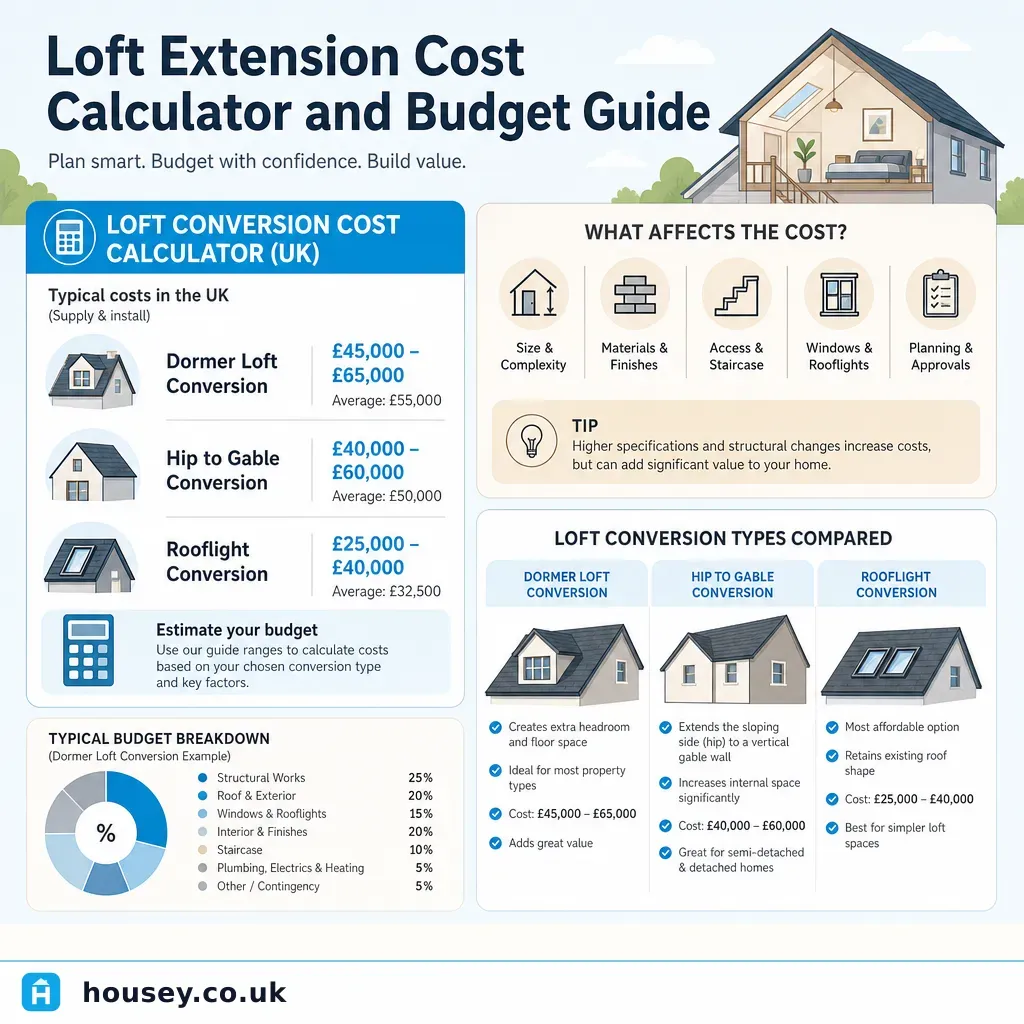
Loft Extension Cost Calculator and Budget Guide
Loft extension costs in the UK typically range from £15,000 for a basic Velux conversion to £75,000 or more for a mansard or L-shaped dormer.
 Improvement & Build
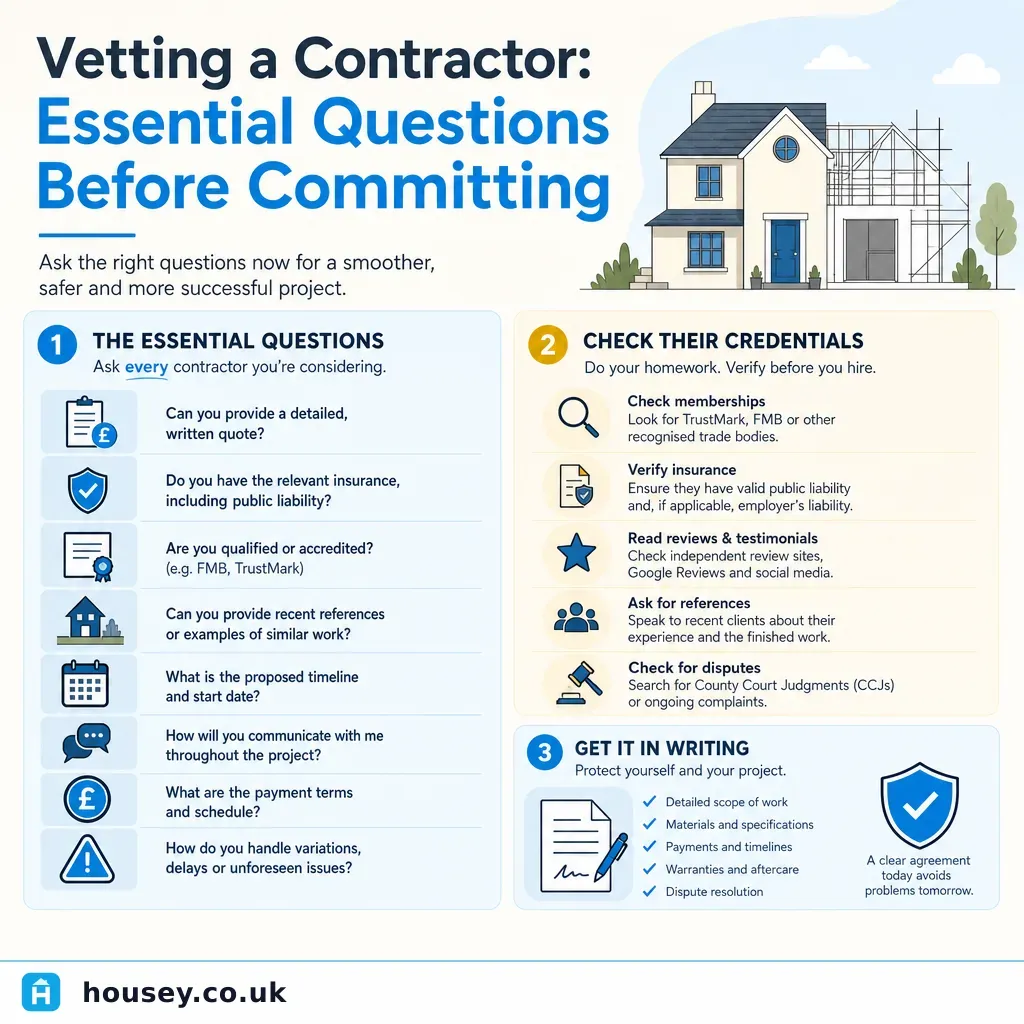
Vetting a Contractor: Essential Questions Before Committing
Vet a contractor by checking their full business name on Companies House, requesting current insurance certificates, verifying trade body membership directly with the association, and speaking to references from comparable recent jobs.
 Improvement & Build
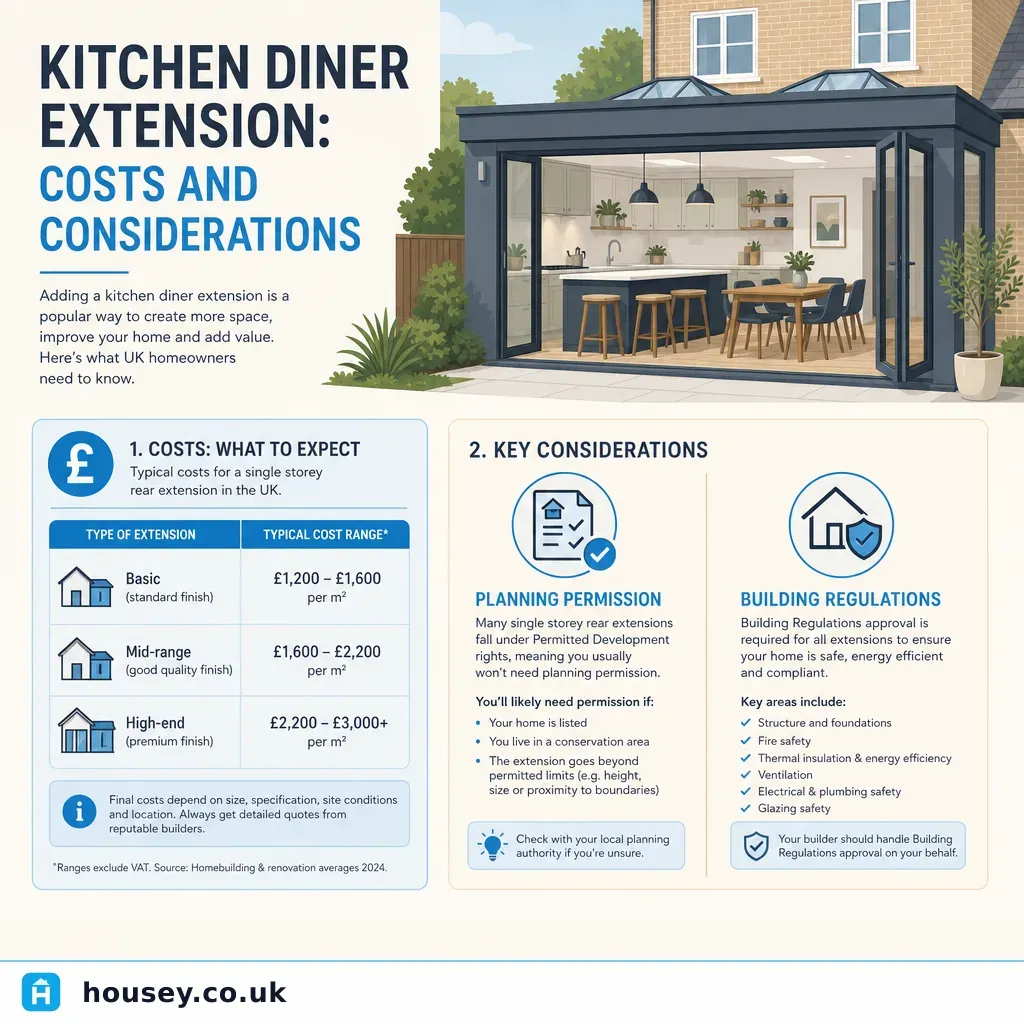
Kitchen Diner Extension: Costs and Considerations
A kitchen diner extension in the UK typically costs £20,000–£80,000+ depending on size, specification, and location.
 Improvement & Build
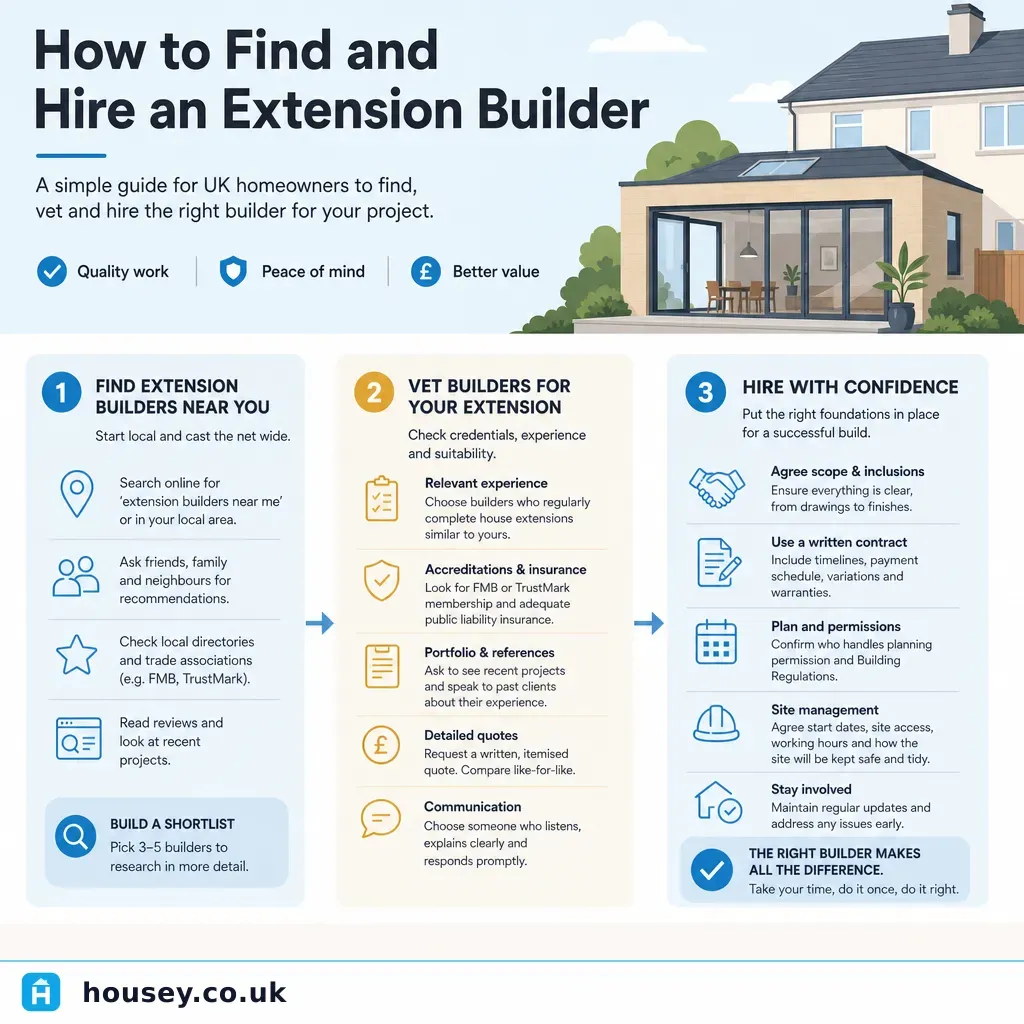
How to Find and Hire an Extension Builder
To hire a reliable extension builder, get at least three detailed written quotes from contractors with documented experience of similar projects.
 Improvement & Build
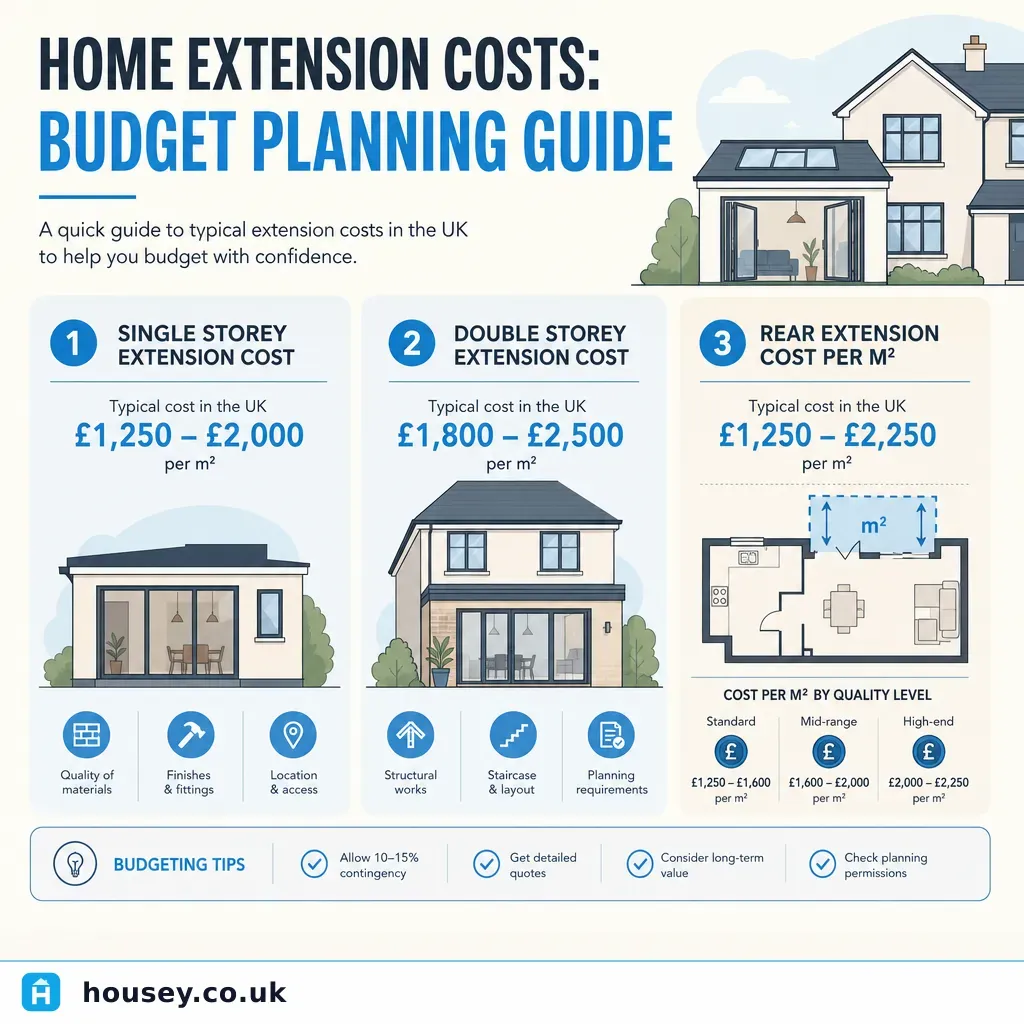
Home Extension Costs: Budget Planning Guide
A single-storey rear extension in the UK typically costs £1,500–£2,500 per square metre to build.