Kitchen Fitting Service Costs and Installation
By Housey · Last reviewed 7th of May 2026
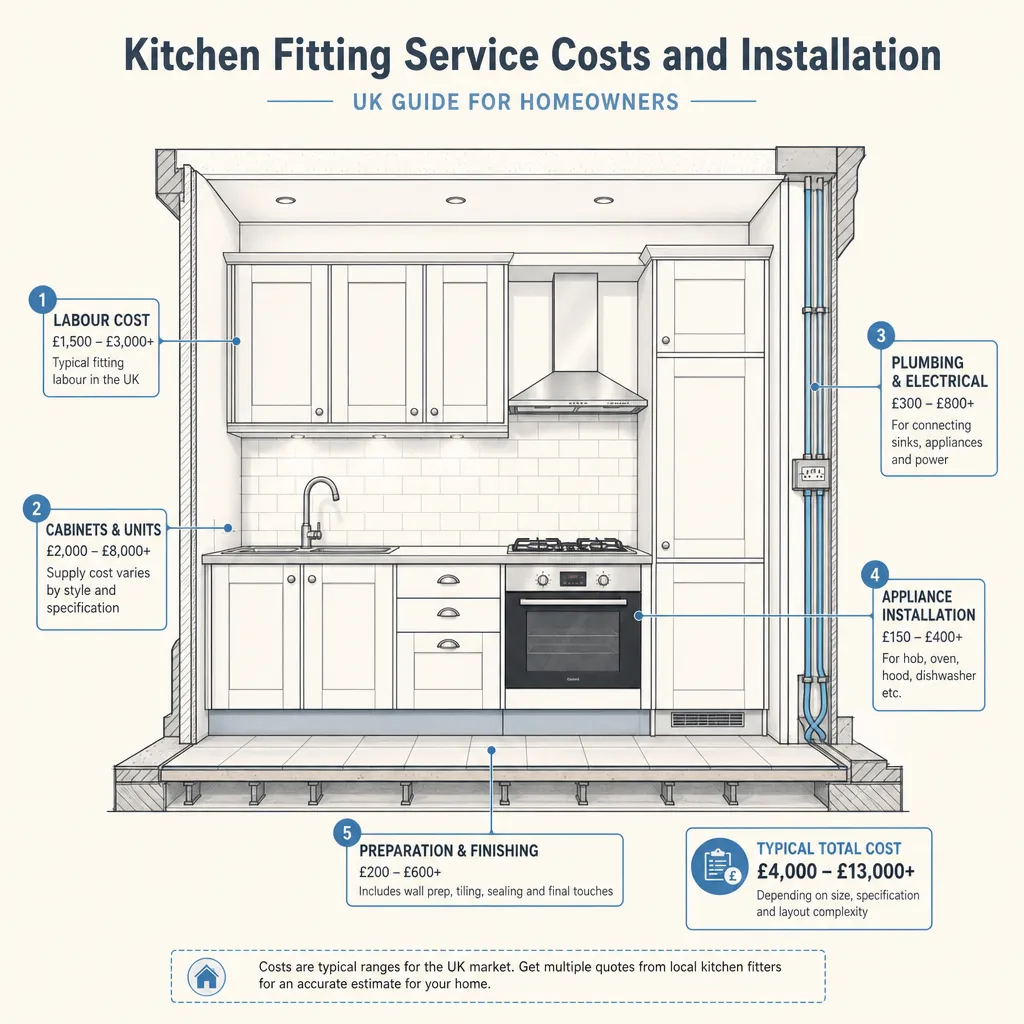
Kitchen Fitting Service Costs and Installation
Once a new kitchen has been chosen, the fitting stage determines whether the result looks and functions as intended — yet it is consistently the part of the budget most underestimated. Kitchen fitting is rarely a single tradesperson and a day's work: a complete installation typically requires a fitter co-ordinating with a plumber and an electrician, often a tiler, and sometimes a specialist for stone worktops. Understanding what fitting actually involves — and what realistic labour costs look like — helps you budget accurately and compare quotes fairly before any work begins.
Key points
- Kitchen fitters in the UK typically charge day rates of £200–£350, with a standard family kitchen installation taking 3–7 days depending on size and complexity (Indicative UK costs, last reviewed 2026-05-07).
- Electrical work — new circuits, a dedicated cooker supply, or additional sockets — must be carried out or certified by a Part P registered electrician under Building Regulations Approved Document P (England and Wales).
- Gas connections to a hob, range cooker, or gas supply point must be completed by a Gas Safe registered engineer — a legal requirement under the Gas Safety (Installation and Use) Regulations 1998.
- Stone worktops (granite, quartz, marble) require a templating visit after units are installed, followed by fabrication and a second fitting visit — this adds several days and a separate cost to the programme.
- The BiKBBI (British Institute of Kitchen, Bedroom & Bathroom Installation) is the principal trade body for kitchen fitters; membership is a useful quality indicator, though not a legal requirement to trade.
What does kitchen fitting involve?
Kitchen fitting covers considerably more than assembling flat-pack units. A complete installation typically includes the following stages.
Strip-out. The existing kitchen — units, worktops, appliances, and sometimes flooring — is removed and disposed of. Confirm whether this is included in the fitter's quote before signing anything.
First-fix trades. Before any unit is installed, a plumber moves or extends pipework to suit the new layout, and an electrician reroutes or adds circuits, sockets, and switched spurs. Both trades must visit before units go in.
Unit installation. Base units, wall units, tall larder units, and specialist storage are fitted level and plumb to walls and floor.
Worktop fitting. Laminate worktops are cut and fitted by the fitter on the same visit. Stone worktops require a separate templating appointment once units are in position, then fabrication (typically 1–2 weeks), then a return visit to install.
Appliance connection. Integrated appliances are built in and doors aligned. A plumber connects the sink, dishwasher, and any washing machine. An electrician connects and certifies appliances that require it.
Second-fix trades. Final plumbing connections are made live, sockets and switches are energised and tested, and extractor fan ducting is completed to outside.
Tiling and finishing. Splashback and floor tiling may be carried out by the fitter for straightforward jobs, or by a specialist tiler for larger or more complex areas. Plinths, cornices, and light pelmet strips are fitted last.
Typical kitchen fitting costs
The following are indicative UK labour costs, last reviewed 2026-05-07. They cover the kitchen fitter's time only and exclude units, appliances, worktops, and additional trades.
Kitchen size | Estimated fitting time | Indicative fitter labour cost (excl. VAT) |
|---|---|---|
Small galley or studio (up to 8 units) | 2–3 days | £600–£1,050 |
Standard family kitchen (10–15 units) | 3–5 days | £900–£1,750 |
Large kitchen with island (15–20+ units) | 5–8 days | £1,500–£2,800 |
Full supply-and-fit package | Variable | £5,000–£20,000+ (units, worktops, and labour combined) |
Additional trades to budget for separately (indicative, excl. VAT):
- Plumber, first and second fix: £400–£1,000
- Part P electrician, first and second fix: £400–£900
- Tiler: £30–£60 per m² plus materials
- Stone worktop fabrication and fitting: £200–£600+ per linear metre depending on material
What to ask before accepting a kitchen fitting quote
Not all kitchen fitting quotes cover the same scope. Use these questions when comparing fitters:
- What is specifically included — strip-out, first-fix trades, appliance connection, tiling, or just unit installation?
- Will you co-ordinate the plumber and electrician, or do I arrange these separately?
- Are you a member of the BiKBBI or another recognised trade body, and do you carry a CSCS card?
- What certifications will I receive for electrical and gas work on completion?
- What happens if units arrive damaged or parts are missing on the day fitting is due to start?
- Is VAT included in the quoted figure?
- What is the payment schedule, and what deposit is required to secure the booking date?
- Do you carry public liability insurance, and can I see the certificate before work starts?
- What preparation is required from me before fitting begins — clearing the space, confirming delivery access?
- What is your process if existing walls prove damp, severely out of plumb, or structurally compromised once units go up?
Supply-and-fit versus labour-only: which approach suits you?
Approach | Best for | Points to consider |
|---|---|---|
Labour only (you supply all units and appliances) | Buyers who have sourced a kitchen from a retailer or manufacturer | You manage delivery, damage claims, and warranty independently |
Supply and fit (one company supplies and fits) | Homeowners who want a single point of accountability | Usually higher per-unit cost; fewer range choices with some companies |
Part-assembled with fitter finishing | Budget-conscious homeowners who assemble base carcasses themselves | Some fitters charge a premium or decline to work on part-built units |
Full turnkey (kitchen, all trades, project managed) | Those who want one company to manage everything | Most expensive option; verify all trades hold proper accreditation |
When to get professional help
Gas and electrical work connected to kitchen installation is strictly regulated. Be alert to these situations:
- New electrical circuits or a dedicated cooker supply: A Part P registered electrician must carry out or certify this work and issue an Installation Certificate. This is a legal requirement under Building Regulations, not optional.
- Gas connections: Any new gas pipe run, hob connection, or gas supply capping must be completed by a Gas Safe registered engineer. Ask to see the engineer's Gas Safe ID card before any gas work is carried out.
- Structural alterations: Opening a wall to connect the kitchen to an adjacent room, or removing a chimney breast, requires structural engineering input and may require building regulations approval.
- Damp or mould behind existing units: Fitting new kitchen units over an untreated damp wall will cause premature deterioration. A damp surveyor should assess and remediate the underlying cause before any new fitting begins.
Do not allow gas or high-voltage electrical work to be carried out by anyone who cannot demonstrate current, verifiable accreditation.
How Housey can help
If your kitchen fitting is part of a larger project — a rear extension, structural alteration, or whole-house renovation — Housey can help you find a qualified extension builder who can co-ordinate all trades, manage the fit-out programme, and ensure building regulations requirements are met from groundwork through to final sign-off.
Frequently asked questions
How long does it take to fit a new kitchen?
Most standard kitchens take 3–5 working days to fit, though larger kitchens with stone worktops, complex tiling, or significant replumbing may take 7–10 days in total. Stone worktops require a separate templating visit after units are in position, followed by fabrication and a return fitting visit, which adds a few days to the overall programme.
Do I need building regulations approval for a new kitchen?
Fitting a like-for-like kitchen in the same position does not usually require building regulations approval. However, moving drainage, altering load-bearing walls, or installing a new electrical circuit will engage specific parts of the Building Regulations, particularly Part P and Part L. Your electrician must provide an Installation Certificate for any notifiable electrical work regardless of scale.
What qualifications should a kitchen fitter have?
There is no single mandatory qualification for kitchen fitting. Reputable fitters often hold membership of the BiKBBI (British Institute of Kitchen, Bedroom & Bathroom Installation) or carry a CSCS card. For any gas or electrical work involved in the installation, verify Gas Safe registration and Part P electrician registration independently — never rely on the fitter's word alone.
Should I pay a deposit to a kitchen fitter?
A deposit to secure your booking is normal — typically 10–25% of the labour quote. Be cautious about any fitter requesting more than 50% of the total cost before work begins. Retain a meaningful final payment until practical completion and snagging are signed off, so you retain financial leverage if issues need to be resolved.
Can a kitchen fitter move a gas or electric cooker point?
Moving a gas supply point must be done by a Gas Safe registered engineer — never by an uncertified tradesperson. Moving or adding an electrical cooker circuit must be carried out or certified by a Part P registered electrician and an Installation Certificate issued. A kitchen fitter who offers to do either without appropriate registration is working outside the law.
Sources and further reading
- Approved Document P: electrical safety in dwellings — GOV.UK
- Gas Safe Register: find a registered engineer — Gas Safe Register
- BiKBBI: British Institute of Kitchen, Bedroom & Bathroom Installation — BiKBBI
- Getting work done on your home — Citizens Advice
- Gas Safety (Installation and Use) Regulations 1998 — legislation.gov.uk
Useful next reads
 Improvement & Build
Small kitchen renovation: budgeting for costs and planning your project
A small kitchen renovation in the UK typically costs £5,000–£15,000 for a full refresh including new units, worktops, tiling, and appliances, though costs vary widely by specification, region, and whether structural changes or rewiring are involved.
 Improvement & Build
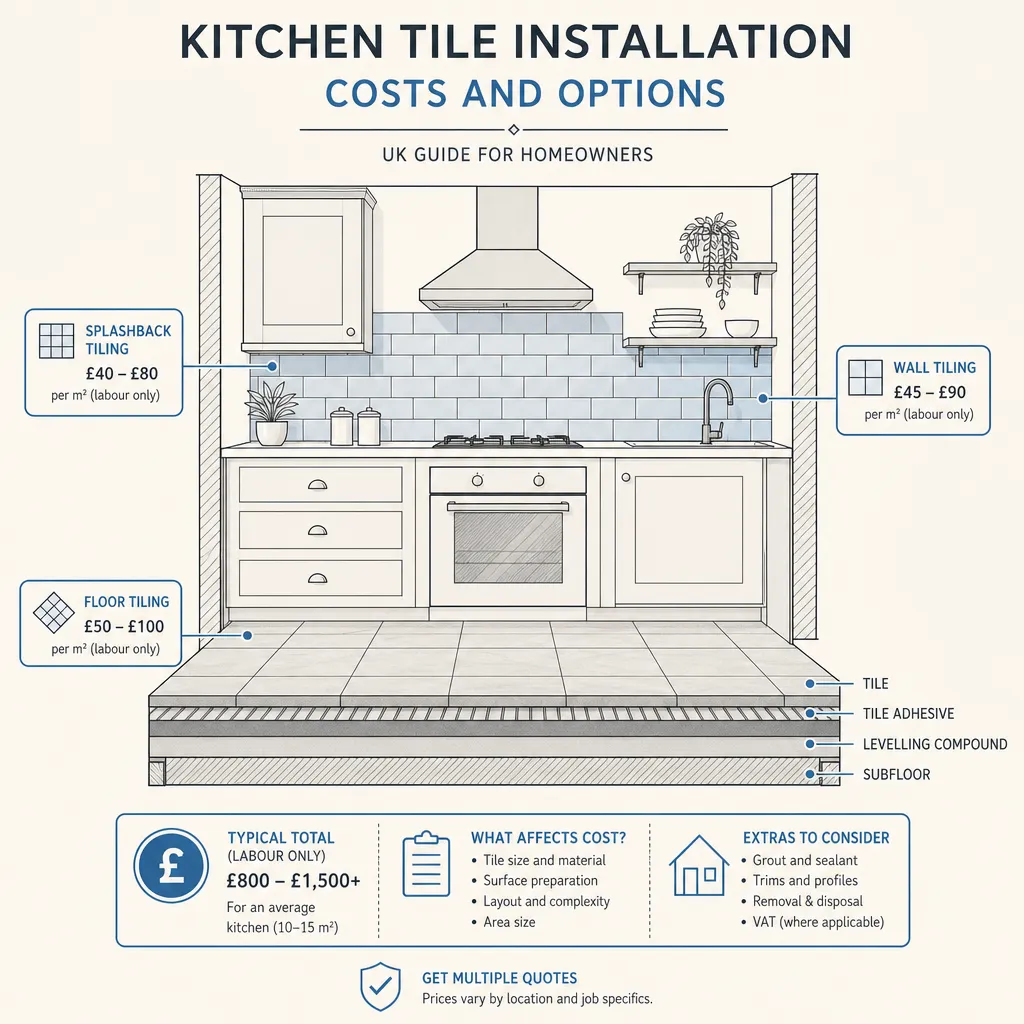
Kitchen Tile Installation Costs and Options
Kitchen tiling in the UK costs roughly £20–£40 per square metre for labour, plus £15–£80 per square metre for materials depending on tile type.
 Improvement & Build
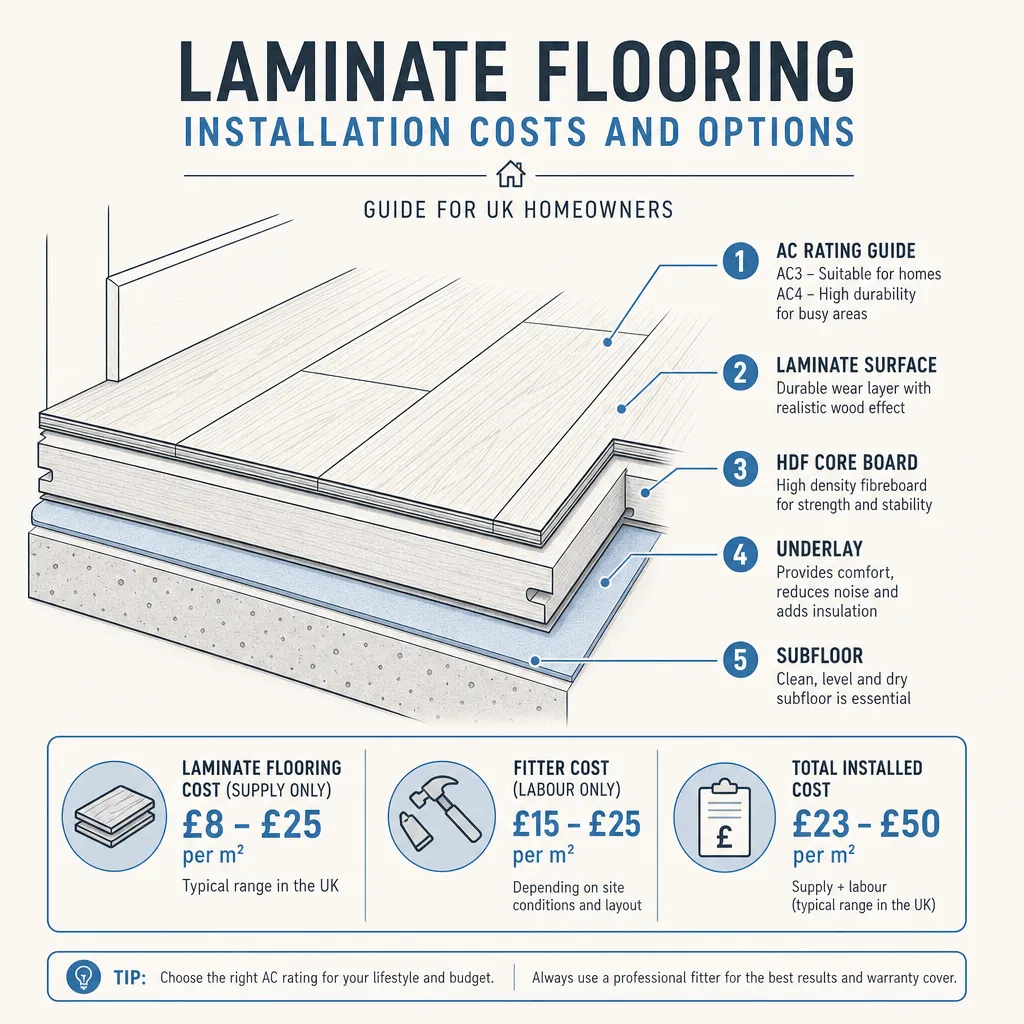
Laminate Flooring Installation Costs and Options
Laminate flooring typically costs £20–55 per square metre fully installed in the UK, including materials, underlay, and professional fitting.
 Improvement & Build
Designing and Installing a Television-Inspired Kitchen
A television-inspired kitchen draws on the design principles of TV cooking shows and renovation programmes: clear functional layouts, professional-grade appliances, statement cabinetry, and quality worktops.
 Improvement & Build
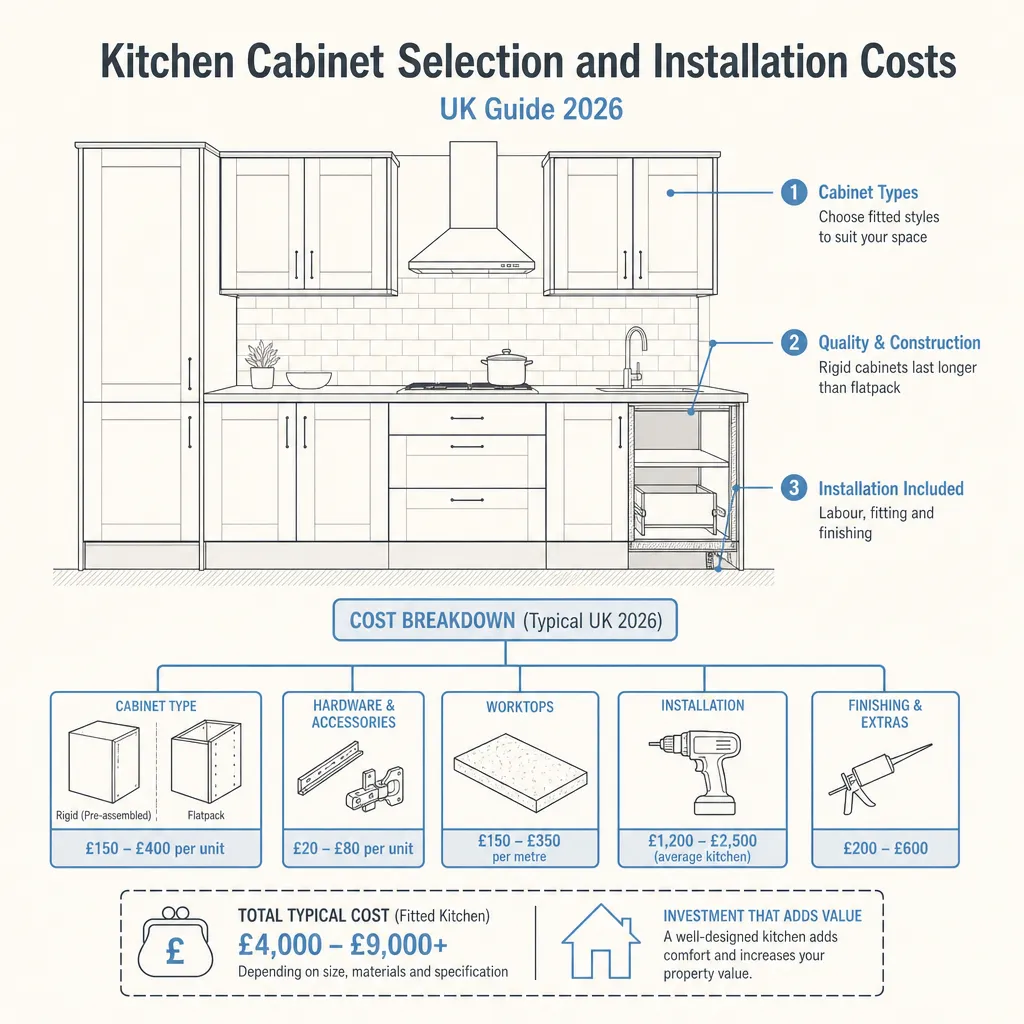
Kitchen Cabinet Selection and Installation Costs
Kitchen cabinet costs in the UK range from around £1,500 for flatpack units with self-installation to £15,000 or more for fully bespoke, professionally fitted kitchens.