Kitchen Tile Installation Costs and Options
By Housey · Last reviewed 7th of May 2026
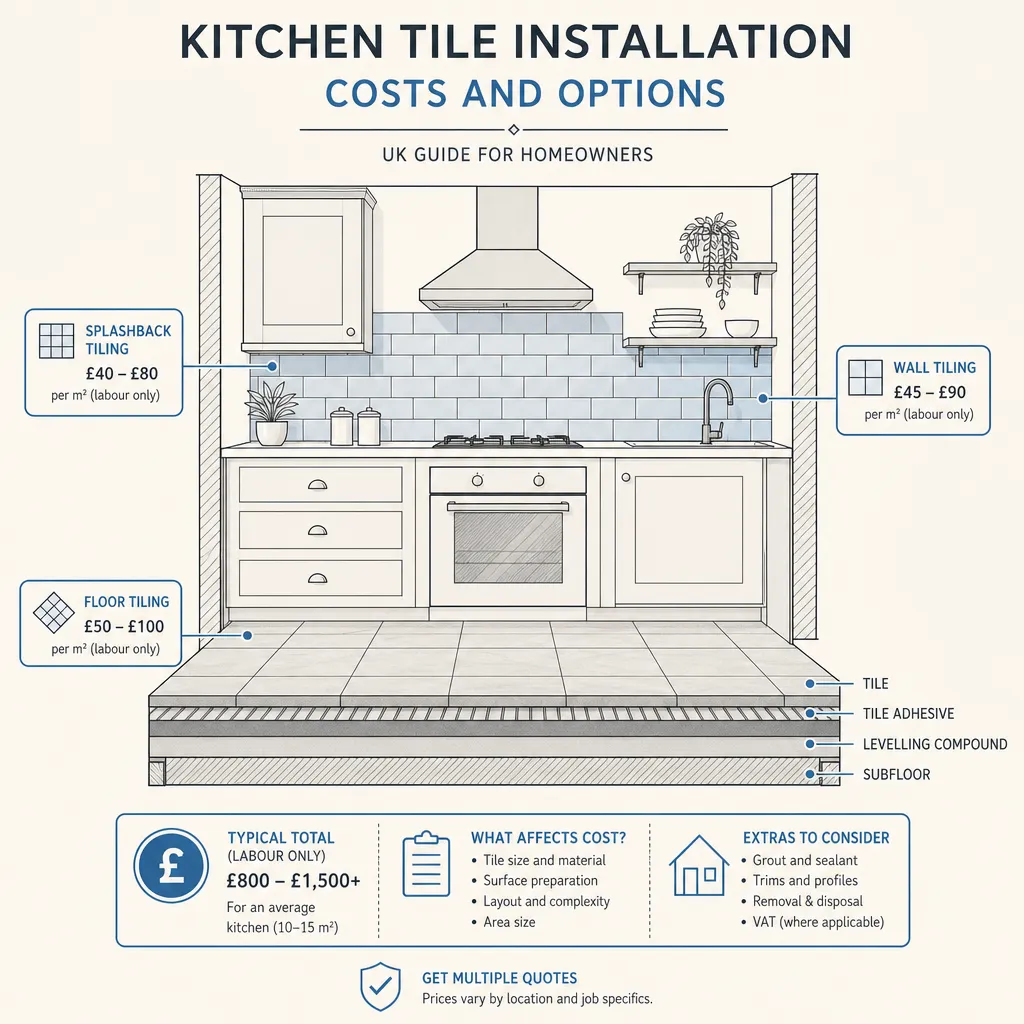
Kitchen Tile Installation Costs and Options
Kitchen tiling decisions arise at several points in a home's life: fitting a brand-new kitchen, refreshing a tired splashback in a 1970s semi, or replacing cracked floor tiles in an older Victorian terrace. The range of materials, formats, and labour rates across the UK means costs vary considerably — understanding what drives the price helps you budget accurately, compare quotes on a like-for-like basis, and avoid being caught out by unexpected extras once work is under way.
Key points
- Labour for floor tiling in the UK typically ranges from £20 to £40 per square metre, and wall tiling from £15 to £30 per square metre, depending on tile format and installation complexity (indicative UK costs, last reviewed 2026-05-07).
- Larger-format tiles (600 mm × 600 mm and above) cost more to lay than standard formats because they demand more precise subfloor preparation and generate more waste from cutting.
- VAT at 20% applies to most domestic tiling work; a reduced rate of 5% may apply in specific circumstances — for example, where a property has been empty for more than two years — see GOV.UK VAT Notice 708 for current rules.
- Natural stone tiles such as slate, travertine, and marble require sealing and specific adhesives, adding to both material and labour costs compared with ceramic or porcelain.
- Most tilers charge separately for removing existing tiles; always confirm in writing whether tile removal, subfloor repair, and waste disposal are included in the quoted price.
What does kitchen tiling typically cost in the UK?
Kitchen tiling costs divide into two components: materials (tiles, adhesive, grout, primer, and trim) and labour. The figures below are indicative ranges for a standard UK domestic kitchen; actual quotes will vary by region, tile specification, and site conditions.
Indicative UK costs, last reviewed 2026-05-07. Source: Checkatrade cost data and trade price information.
Area | Typical material cost (supply only) | Typical labour cost | Indicative total (supply + fit) |
|---|---|---|---|
Kitchen floor (15–20 m²), ceramic | £15–£40/m² | £20–£35/m² | £600–£1,500 |
Kitchen floor (15–20 m²), porcelain | £20–£80/m² | £25–£40/m² | £900–£2,400 |
Kitchen floor (15–20 m²), natural stone | £40–£150/m² | £30–£55/m² | £1,400–£4,100 |
Splashback / wall tiles (3–5 m²) | £10–£50/m² | £15–£30/m² | £150–£400 |
Full kitchen wall and floor package | varies | varies | £1,500–£5,000+ |
These figures exclude tile removal, subfloor levelling, plumbing disconnection, or remedial plastering. Always request an itemised quote.
Tile material options: how do they compare?
Choosing the right tile type balances durability, appearance, maintenance requirements, and budget. The table below covers the most common options in UK kitchens.
Tile type | Best for | Not ideal for | Typical supply price | Key consideration |
|---|---|---|---|---|
Ceramic | Wall tiles, splashbacks, low-traffic areas | Heavy-use kitchen floors | £10–£40/m² | Widely available; chips more easily than porcelain |
Porcelain | Kitchen floors, wet areas | Budget installs (higher unit cost) | £20–£80/m² | Denser and harder-wearing; requires a diamond blade to cut |
Natural stone (slate, travertine, marble) | Character kitchens, period properties | High-maintenance-averse households | £40–£150/m² | Must be sealed; porous types stain if left unsealed |
Glass / mosaic | Splashbacks, feature walls | Floors (slip risk without anti-slip rating) | £30–£100/m² | Easy to clean; requires specialist adhesive |
Encaustic / cement | Characterful floor features, Victorian-style kitchens | High-moisture environments without sealing | £40–£120/m² | Highly porous; needs regular sealing and careful cleaning |
What affects the final price?
Tile format and laying pattern. Large-format tiles — for example, 1,200 mm × 600 mm slabs — require flatter substrates and more precise cutting, increasing preparation time and waste. Herringbone, chevron, or brick-bond patterns typically add 10–25% to labour time compared with a standard grid layout.
Subfloor or wall background condition. A tiler working on a level, solid concrete subfloor is considerably faster than one tackling a bouncy chipboard floor that first needs a cement backer board (such as Hardiebacker) overlay. Ask whether levelling compound or backer board is included in the price or charged separately.
Removing existing tiles. Hacking off wall or floor tiles is labour-intensive and generates substantial dust and debris. Expect an additional £5–£15 per square metre for removal and disposal, depending on the type of tile and how firmly it is bonded.
Region. Labour rates in London and the South East are typically 20–40% higher than in the North of England, Wales, or Scotland. Obtaining multiple local quotes is the most reliable way to establish the going rate for your area.
Adhesive and grout specification. Large-format tiles and installations over underfloor heating require a more flexible adhesive — classified S1 or S2 under BS EN 12002 — which costs more than standard tile adhesive. Confirm with your tiler if underfloor heating is present before agreeing a specification.
A worked UK property example
A 1930s semi-detached kitchen in the Midlands, with a 16 m² floor and a 4 m² splashback.
The homeowners choose mid-range porcelain floor tiles at £35/m² and ceramic wall tiles at £18/m² for the splashback. The solid concrete subfloor is in reasonable condition but needs a 3 mm self-levelling compound application. Removal of the old vinyl floor covering is included in the tiler's quote.
Item | Calculation | Cost |
|---|---|---|
Porcelain floor tiles (+ 10% waste allowance) | 17.6 m² × £35 | £616 |
Ceramic splashback tiles (+ 10% waste allowance) | 4.4 m² × £18 | £79 |
Adhesive, grout, primers, and trim | Estimate | £150 |
Self-levelling compound application | 16 m² | £80 |
Floor tiling labour | 16 m² × £28 | £448 |
Splashback labour | 4 m² × £22 | £88 |
Vinyl removal and disposal | — | £120 |
Total (ex-VAT) |
| £1,581 |
VAT at 20% |
| £316 |
Total (inc. VAT) |
| £1,897 |
Indicative only. Actual costs will vary by region, specification, and site conditions. Obtain at least three written quotes before committing.
Homeowner checklist: before tiling starts
Use this checklist when preparing for quotes and before a tiler arrives on site.
What to ask before accepting a quote
Before you sign off on any tiling quote, ask the contractor the following:
- What is included: tiles, adhesive, grout, trim, sealant, and tile removal?
- What subfloor preparation is assumed — is levelling compound or backer board extra?
- Who will carry out the work, and what trade memberships or references can you provide?
- Is VAT included in the quoted price?
- What warranty do you offer on workmanship?
- What happens if additional preparation is required once existing tiles or floor coverings are removed?
- What is your process for protecting kitchen units and worktops during the installation?
When to get professional help
For most kitchen tiling projects, a competent self-employed tiler or small tiling contractor is suitable. However, seek specialist input in these situations:
- The kitchen floor shows signs of movement, damp, or subsidence. Recurring tile or grout cracks after previous re-tiling point to a substrate or structural issue worth investigating before spending on new tiles.
- You are tiling over an existing timber subfloor without adding a suitable decoupling or backer board layer. Flexing causes adhesive failure and grout cracking within months.
- Underfloor heating is installed and you are unsure whether the tile and adhesive specification is compatible — check with the heating manufacturer before proceeding.
- The property is listed or sits within a conservation area, where certain adhesives used on historic floors may require consent or must remain reversible.
How Housey can help
If your tiling project is part of a wider kitchen renovation or home extension, Housey can help you find and compare quotes from local professionals. Explore extension builders who can manage the full scope of works — including structural changes and interior finishing such as tiling — under a single coordinated project.
Frequently asked questions
How much does it cost to tile a kitchen floor in the UK?
For a typical kitchen floor of 15–20 m², total supply and fit costs range from around £600 for basic ceramic to £2,500 or more for large-format porcelain or natural stone. Labour alone usually costs £20–£40 per square metre. Indicative UK costs, last reviewed 2026-05-07; always obtain written quotes before committing.
Can I tile over existing kitchen tiles?
In some cases, yes — if the existing tiles are firmly bonded, flat, and the added height will not cause problems at doorways or floor transitions. Tiling over loose or damaged tiles risks adhesive failure. A qualified tiler should assess the existing surface before recommending this approach, as the decision depends on site conditions.
Do I need to seal kitchen floor tiles?
Porcelain tiles generally do not require sealing due to their low porosity. Natural stone tiles such as slate, travertine, and marble must be sealed before grouting and periodically thereafter. Some unglazed ceramic tiles also benefit from sealing. Check the manufacturer's data sheet or ask your tiler for guidance specific to the tile you have chosen.
How long does kitchen tiling take?
A typical kitchen floor of 15–20 m² takes one to two days for an experienced tiler, depending on tile format, pattern, and subfloor condition. Allow 24–48 hours before walking on the floor and up to seven days before exposing grout in high-moisture wall areas to regular water contact.
Is VAT charged on kitchen tiling work?
Standard-rate VAT at 20% applies to most domestic tiling work. A 5% reduced rate may apply in certain circumstances — for example, where a property has been empty for more than two years. See GOV.UK VAT Notice 708 for current rules and confirm the VAT treatment with your contractor before work starts.
Sources and further reading
- VAT Notice 708: buildings and construction — HM Revenue & Customs
- Tiling costs guide — Checkatrade
- Manual handling in construction — Health and Safety Executive
- Getting building or decorating work done — Citizens Advice
Useful next reads
 Improvement & Build
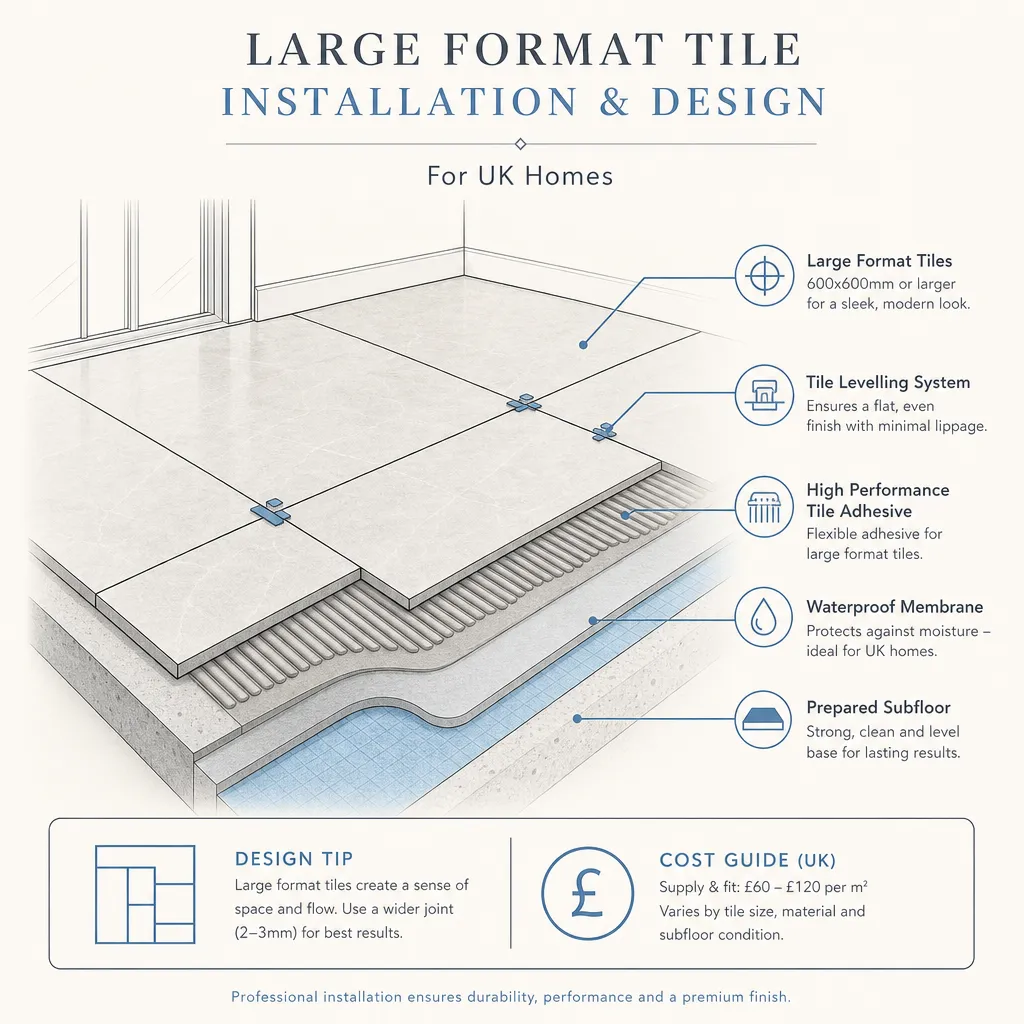
Large Format Tile Installation and Design
Large format tiles (600mm × 600mm or larger) need a substrate flat to within 3mm under a 2m straightedge, a C2-rated flexible adhesive, and a minimum 2mm grout joint.
 Improvement & Build
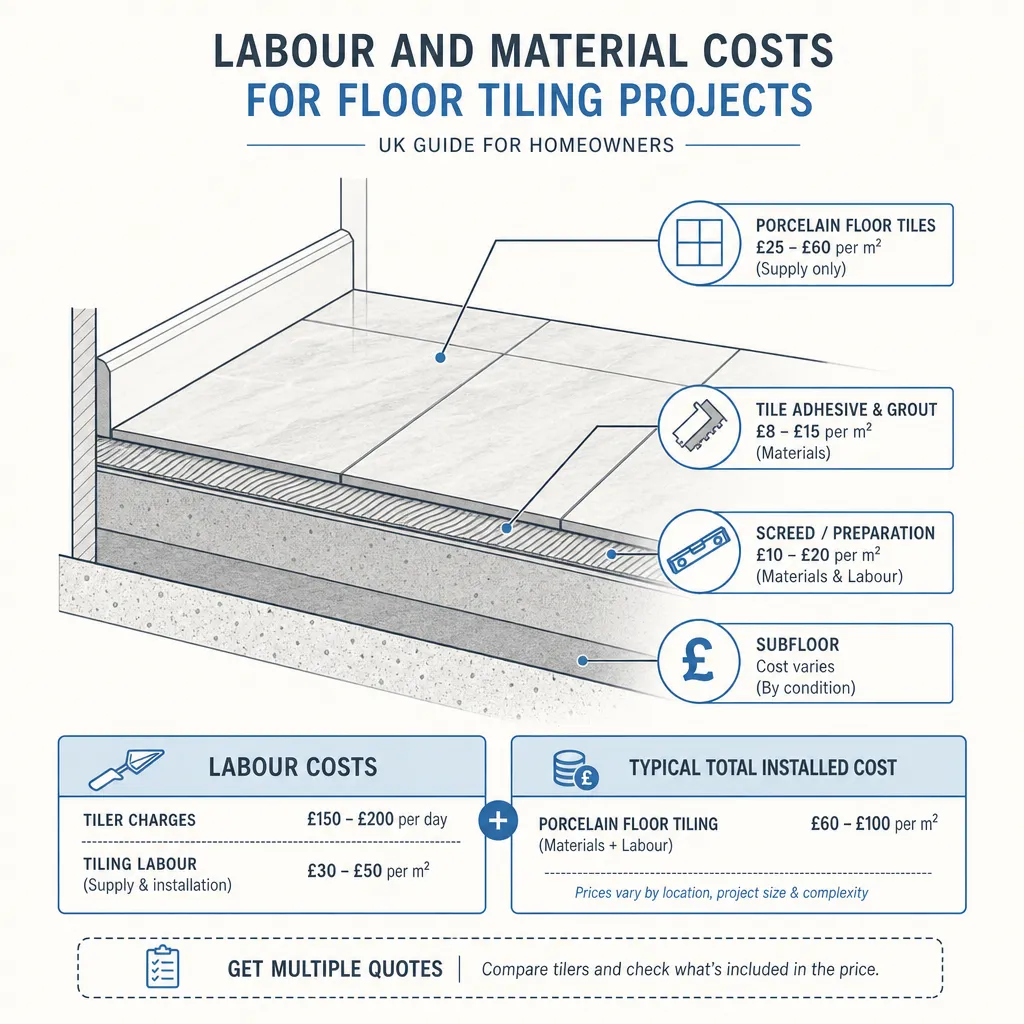
Labour and material costs for floor tiling projects
Floor tiling in the UK typically costs £30–£60 per m² in labour, plus materials ranging from £10–£40/m² for ceramic to £50–£150+/m² for natural stone.
 Improvement & Build
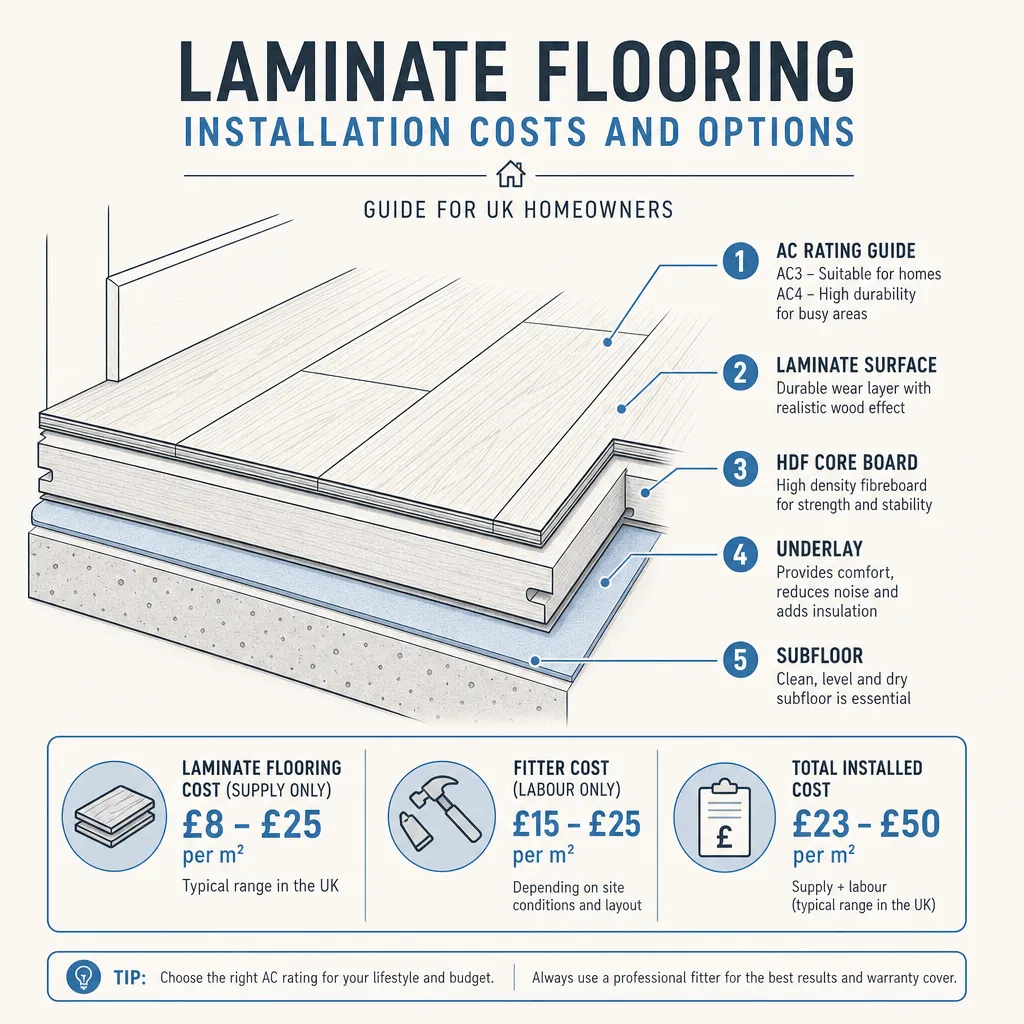
Laminate Flooring Installation Costs and Options
Laminate flooring typically costs £20–55 per square metre fully installed in the UK, including materials, underlay, and professional fitting.
 Improvement & Build
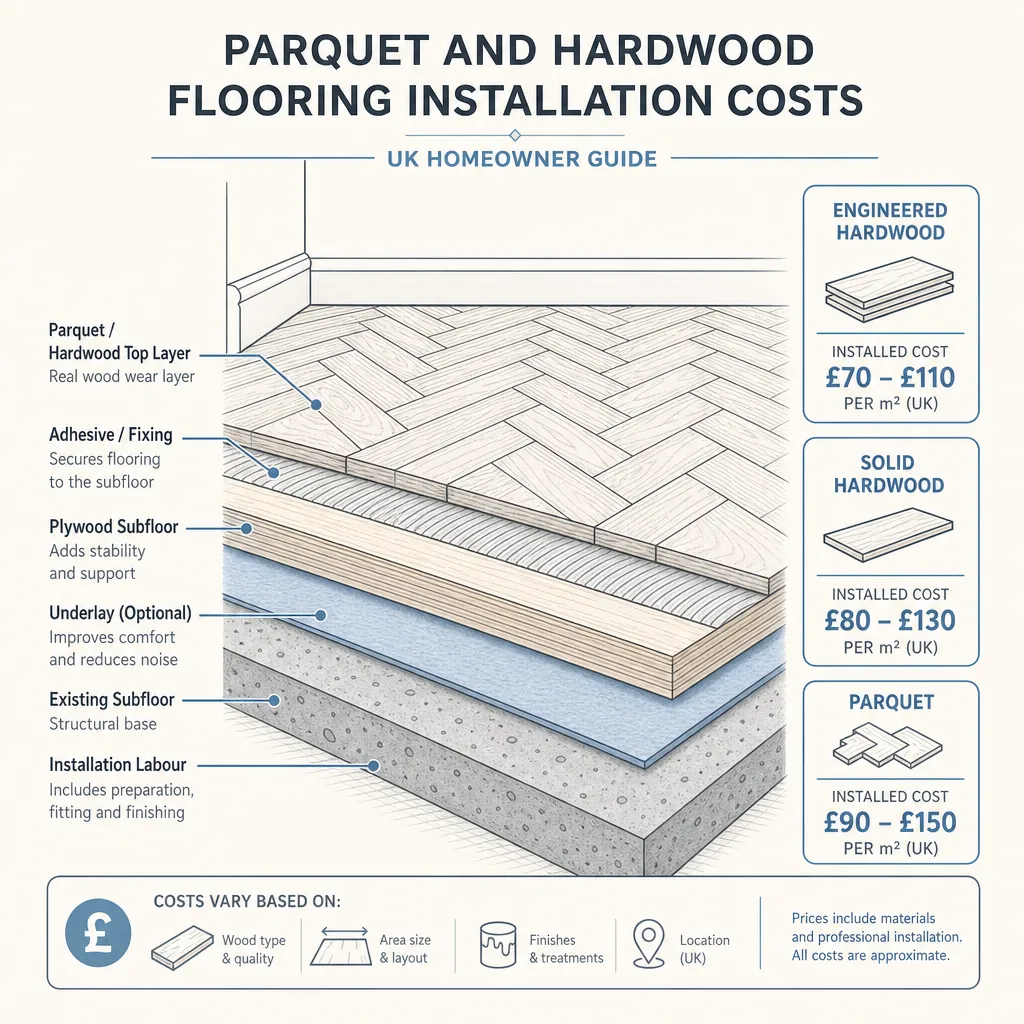
Parquet and Hardwood Flooring Installation Costs
Parquet and hardwood flooring typically costs £50–£160 per m² installed in the UK, depending on wood species, board format, and subfloor condition.
 Improvement & Build
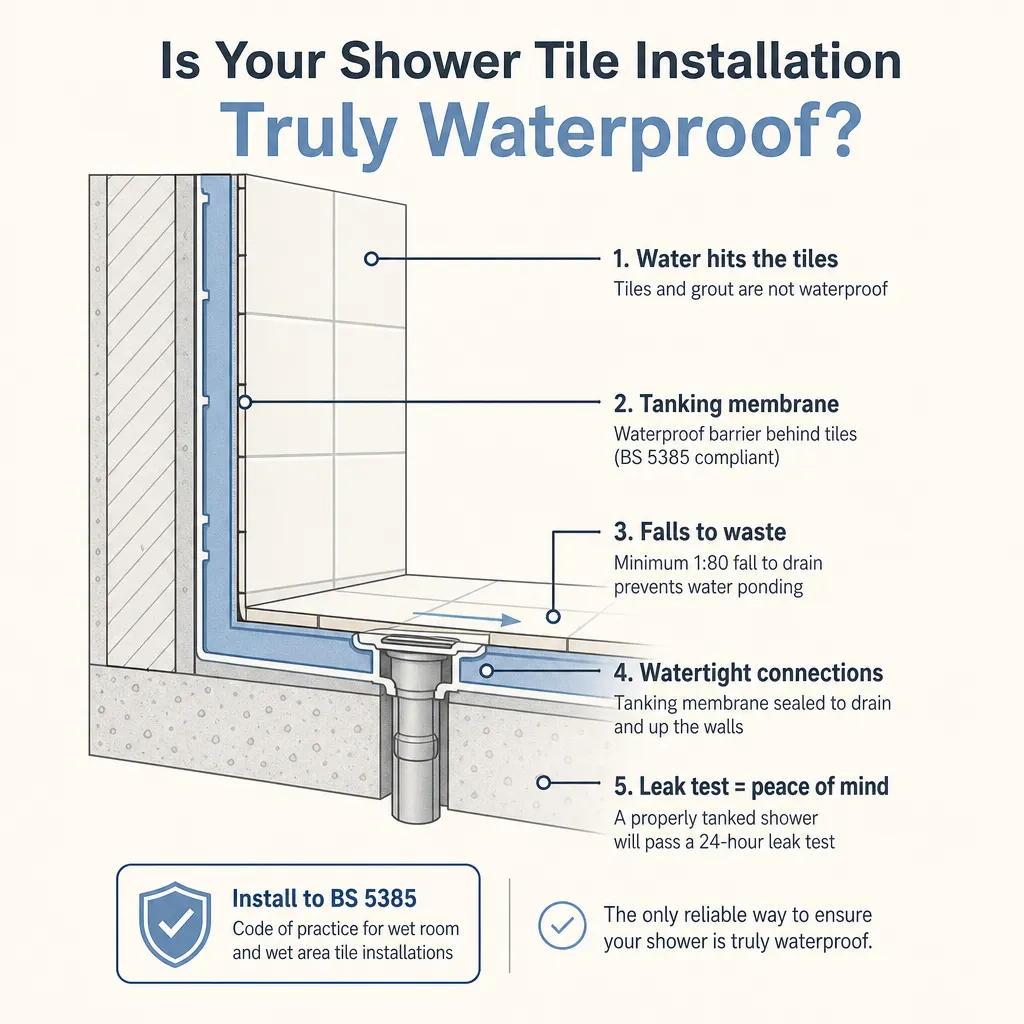
Is Your Shower Tile Installation Truly Waterproof?
Tile and grout alone do not make a shower waterproof.