Quartz Worktop Cost Calculator and Pricing
By Housey · Last reviewed 9th of May 2026
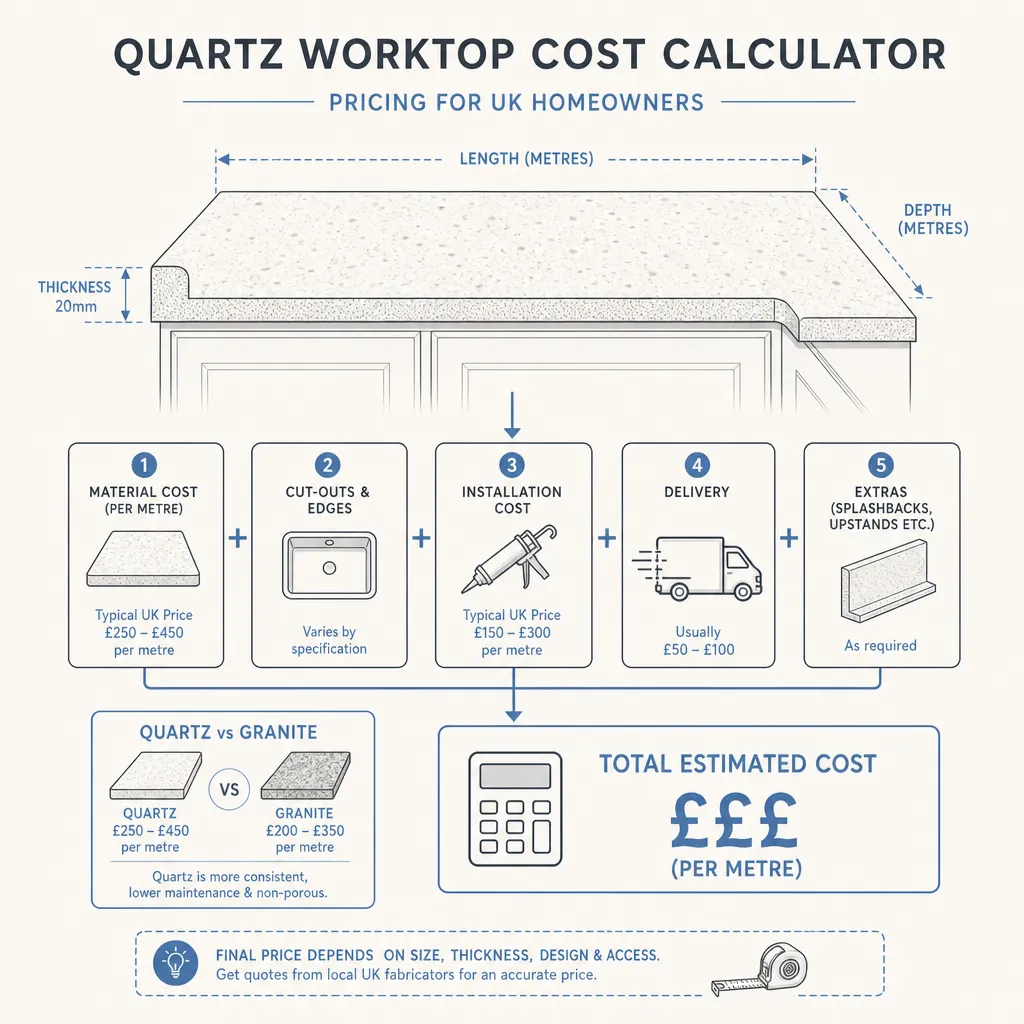
Quartz Worktop Cost Calculator and Pricing
Kitchen renovations are one of the most common home improvement projects in the UK, and choosing a worktop material is one of the bigger spending decisions within that project. Quartz worktops occupy the middle ground between budget laminate and premium natural stone, but their final installed cost can vary considerably depending on thickness, colour, edge profile, and the complexity of your kitchen layout. Understanding what drives the price is essential if you want to compare quotes on a like-for-like basis.
Key points
- Quartz worktops are engineered stone — typically around 93% crushed quartz bonded with polymer resin — not to be confused with natural quartzite, which is a distinct material with different properties and a different price profile.
- Supply-and-fit costs typically run £250–£600 per linear metre in the UK, putting a standard 4–5 metre kitchen at £1,000–£3,000 installed — Indicative UK costs, last reviewed 2026-05-09.
- Standard slab thickness is 20 mm or 30 mm; 30 mm is more common in kitchen applications and generally costs more per metre.
- Each cutout — undermount sink, hob, tap hole — typically adds £80–£200 to the fabrication price.
- Quartz is non-porous and does not require annual sealing, unlike granite or most natural stone worktops.
What is quartz and how is it priced?
Quartz worktops are manufactured by compressing crushed quartz aggregate with polyester or epoxy resins under heat and vacuum. This makes the surface non-porous, highly consistent in appearance, and durable under normal kitchen conditions. Well-known brands include Silestone, Caesarstone, Compac, and Technistone, alongside many own-label ranges sold through kitchen retailers.
Pricing is driven by three main elements:
- Material cost — the manufacturer's trade price for the slab, which varies by brand, colour range, and pattern complexity.
- Fabrication — the cost of cutting, edge profiling, polishing, and drilling cutouts to match your specific kitchen template.
- Installation — the templating visit, delivery of the fabricated slab, and fitting with appropriate adhesive and support.
Fabricators typically visit to template after your base units are installed but before appliances are positioned. This sequencing matters: worktops cannot be ordered or cut until the template has been taken, so booking the templating visit at the right point in your kitchen fit-out programme avoids delays.
How to estimate your cost
A rough calculation approach:
- Measure the total linear metres of worktop you need (include all runs, returns, and any island or breakfast bar).
- Multiply by £250 per metre for an entry-level budget estimate, or £400–£600 per metre for mid-range to premium.
- Add £80–£200 per cutout (undermount sink, hob, tap holes).
- Add £300–£600 if you want a full quartz upstand or splashback.
- Check whether VAT is included in any quote you receive — 20% VAT applies to supply-and-fit work.
Cost breakdown: what drives the price
Cost factor | Lower end | Higher end |
|---|---|---|
Slab thickness | 20 mm | 30 mm |
Colour and pattern | Plain white or grey | Heavily veined or complex colourways |
Edge profile | Flat or pencil edge | Ogee, waterfall, or mitred upstand |
Cutouts | One standard sink | Multiple cutouts (sink, hob, taps, pop-up sockets) |
Layout complexity | Single straight run | Island, peninsula, and multiple returns |
Brand | Entry-level or unbranded | Premium brand (Silestone, Caesarstone) |
Splashback | None | Full-height quartz upstand or splashback |
A full-height quartz splashback behind the hob or sink can add £300–£600 to the job, depending on the area and the thickness specified.
Comparison: quartz vs other worktop materials
Material | Typical supply-and-fit (per linear metre) | Sealing required? | Heat resistance | Durability | Best for |
|---|---|---|---|---|---|
Quartz (engineered) | £250–£600 | No | Moderate — trivets essential | High | Low-maintenance, consistent look |
Granite (natural) | £300–£700 | Yes, annually | High | High | Natural variation, heat tolerance |
Laminate | £80–£200 | No | Low | Moderate | Budget kitchens and rentals |
Solid wood | £150–£400 | Yes, periodic oiling | Low | Moderate with upkeep | Traditional and rustic kitchens |
Porcelain or sintered stone | £400–£900 | No | Very high | Very high | Contemporary, high-heat zones |
Corian (solid surface) | £200–£500 | No | Low | Moderate | Seamless integrated sinks |
Indicative UK supply-and-fit costs, last reviewed 2026-05-09. Costs vary by region, fabricator, and specification.
Worked UK kitchen scenario
A homeowner renovating a 1970s semi-detached in Leeds wanted quartz worktops for a kitchen with a 3.2-metre main run, a 1.2-metre return, and a 1.5-metre breakfast bar — approximately 5.9 linear metres in total.
Specification: 30 mm mid-grey quartz, flat pencil edge, one undermount sink cutout, one hob cutout.
Three quotes received:
- Quote A — £2,100 supply and fit (entry-level brand, basic pencil edge, no upstand)
- Quote B — £2,550 supply and fit (mid-range brand, templating included, full jointing kit, pencil edge)
- Quote C — £3,100 supply and fit (premium brand, matching quartz upstand included behind hob)
The homeowner chose Quote B. The templating visit was arranged once the base units were installed, and the fabricated worktops were fitted five working days later. Total installed cost: £2,550.
The gap between entry-level and mid-range was modest in absolute terms (£450). The jump to premium brand with upstand included was more significant (an additional £550). Comparing what each quote actually covered — particularly whether upstands, edge profiles, and cutouts were part of the price — was essential to making a fair comparison.
What to ask before accepting a quote
Before comparing quotes, confirm each covers the same specification. Ask:
- What is the total linear metres quoted, and does it match your measured template?
- What slab thickness is included — 20 mm or 30 mm?
- Which brand and product range or grade?
- Which edge profile is included in the price?
- How many cutouts are included, and what is the cost per additional cutout?
- Are upstands or splashbacks included, or priced separately?
- Is the templating visit included?
- Are delivery and fitting included, or charged additionally?
- Is removal and disposal of the existing worktop included?
- Is VAT included in the total, or added on top?
- What are the payment terms, and how much deposit is required before templating?
Red flags when getting quartz worktop quotes
Be cautious if you encounter any of the following:
- A quote is provided without a site visit or templating — worktops cannot be accurately priced without a physical template of your kitchen.
- The quote does not specify the brand or product grade — you may receive an unbranded slab of unknown composition.
- There is no written quote or contract before work is due to start.
- You are asked to pay in full upfront before templating has taken place.
- The installer cannot explain what happens if a slab cracks during cutting or fitting — reputable fabricators carry appropriate trade insurance for this scenario.
- The price per metre seems unusually low without a clear explanation of what is excluded.
When to get professional help
Quartz fabrication and installation is specialist work. Slabs are heavy — a 30 mm quartz slab weighs approximately 80 kg per square metre — and cuts must be precise and polished. Do not attempt to cut or modify quartz yourself. Cutting engineered stone produces fine silica dust, which is a serious respiratory hazard regulated under the Control of Substances Hazardous to Health (COSHH) Regulations 2002. Only specialist fabricators with dust extraction equipment and appropriate PPE should carry out fabrication work.
If your kitchen forms part of a broader extension or refurbishment, confirm your worktop specification early. The templating visit must be scheduled at a precise point in the build sequence — after units are in, before appliances — and missing this window can add weeks to your programme.
How Housey can help
If your kitchen forms part of a larger project — a new extension, a full refurbishment, or a new-build addition — design-and-build firms on Housey can help coordinate the complete programme, including kitchen fit-out sequencing and worktop specification. For kitchens within new extensions, extension builders often work closely with specialist kitchen installers and can advise on the right point in the build schedule to book your templating visit.
Frequently asked questions
How long do quartz worktops last?
Quartz worktops are highly durable and, with normal kitchen use, should last 20 years or more. The resin binders can be damaged by sustained direct heat — always use trivets under hot pans — prolonged UV exposure in very sunny kitchens, and harsh chemical cleaners. Unlike solid wood, the surface cannot be sanded, resealed, or refinished.
Is quartz cheaper than granite?
Quartz and granite overlap considerably in price. Entry-level quartz can be cheaper than mid-range granite; premium branded quartz often costs similarly to or more than standard granite. Granite requires annual sealing to remain non-porous; quartz does not — factor in the ongoing maintenance difference when comparing whole-life costs.
Can I fit quartz worktops myself?
No. Quartz slabs require precision cutting with specialist wet diamond saws, and the silica dust produced is a serious health hazard under COSHH regulations. Fitting is also physically demanding due to slab weight — a 30 mm slab weighs approximately 80 kg per square metre. Always use a specialist fabricator and installer.
How long does installation take after templating?
Templating typically takes one to two hours. Fabrication after templating usually takes five to ten working days. Fitting the fabricated worktops normally takes half a day to a full day for a standard kitchen, depending on the number of joints, cutouts, and access conditions on site.
Do quartz worktops add value to my home?
Quartz worktops are generally viewed positively by buyers relative to laminate and contribute to a kitchen that presents well. Their financial impact on property value depends on overall kitchen quality and local market conditions. They should not be installed primarily as a speculative investment — fit them if they suit your usage and budget.
Sources and further reading
- Worktops: buying guide — Which?: independent guidance on kitchen worktop materials and costs
- Silica dust: construction — Health and Safety Executive: silica dust hazards from cutting stone and engineered stone
- Control of Substances Hazardous to Health Regulations 2002 — legislation.gov.uk
- Consumer Rights Act 2015 — GOV.UK: your rights when goods are faulty or not as described
Useful next reads
 Improvement & Build
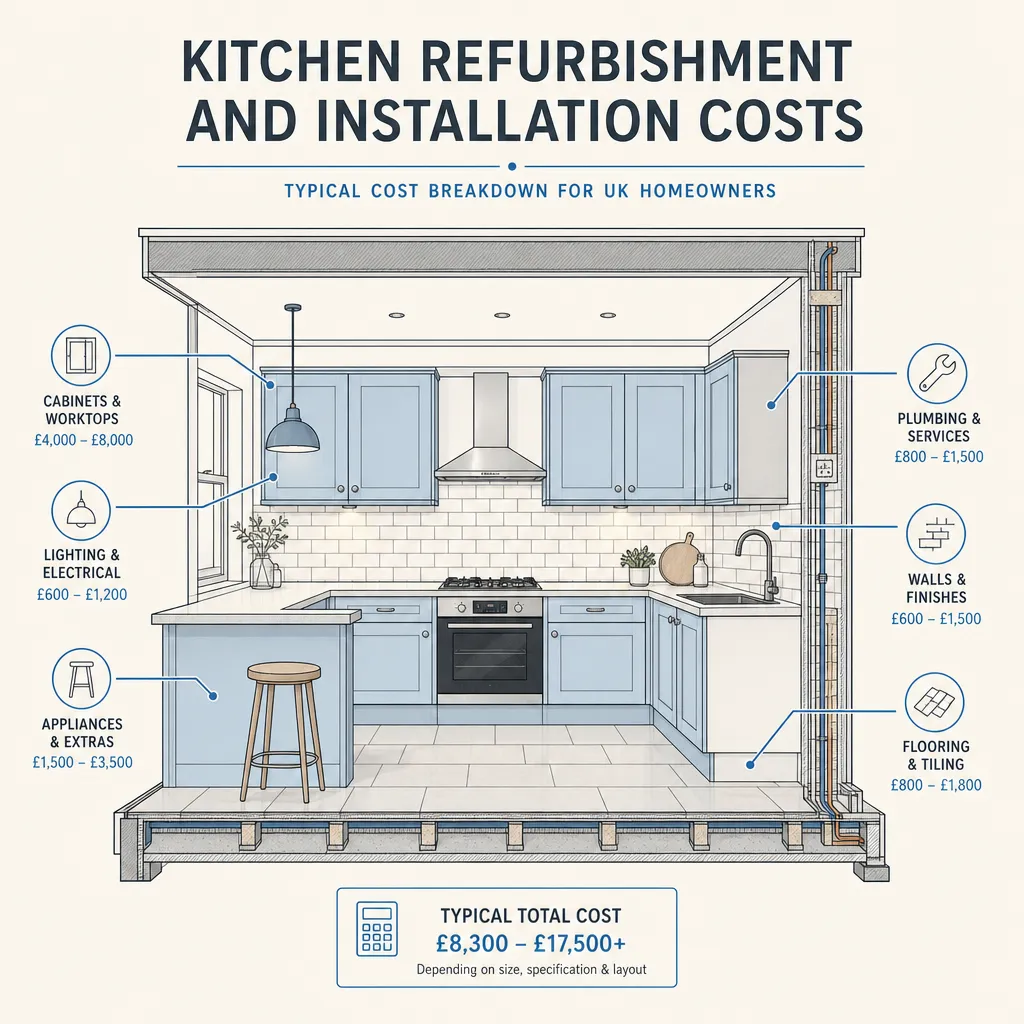
Kitchen Refurbishment and Installation Costs
A kitchen refurbishment in the UK typically costs between £3,000 and £40,000 or more, depending on whether you are replacing units only or carrying out a full design-and-build project.
 Improvement & Build
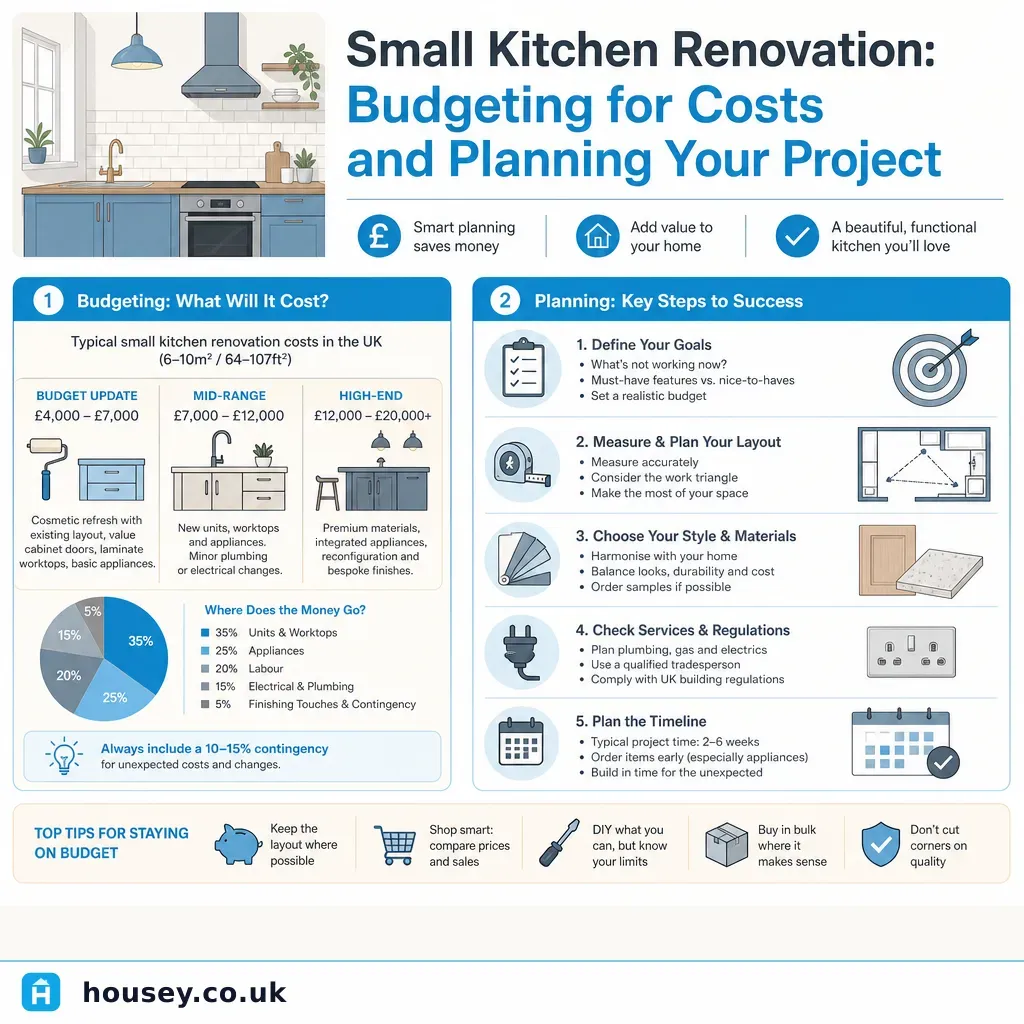
Small kitchen renovation: budgeting for costs and planning your project
A small kitchen renovation in the UK typically costs £5,000–£15,000 for a full refresh including new units, worktops, tiling, and appliances, though costs vary widely by specification, region, and whether structural changes or rewiring are involved.
 Improvement & Build
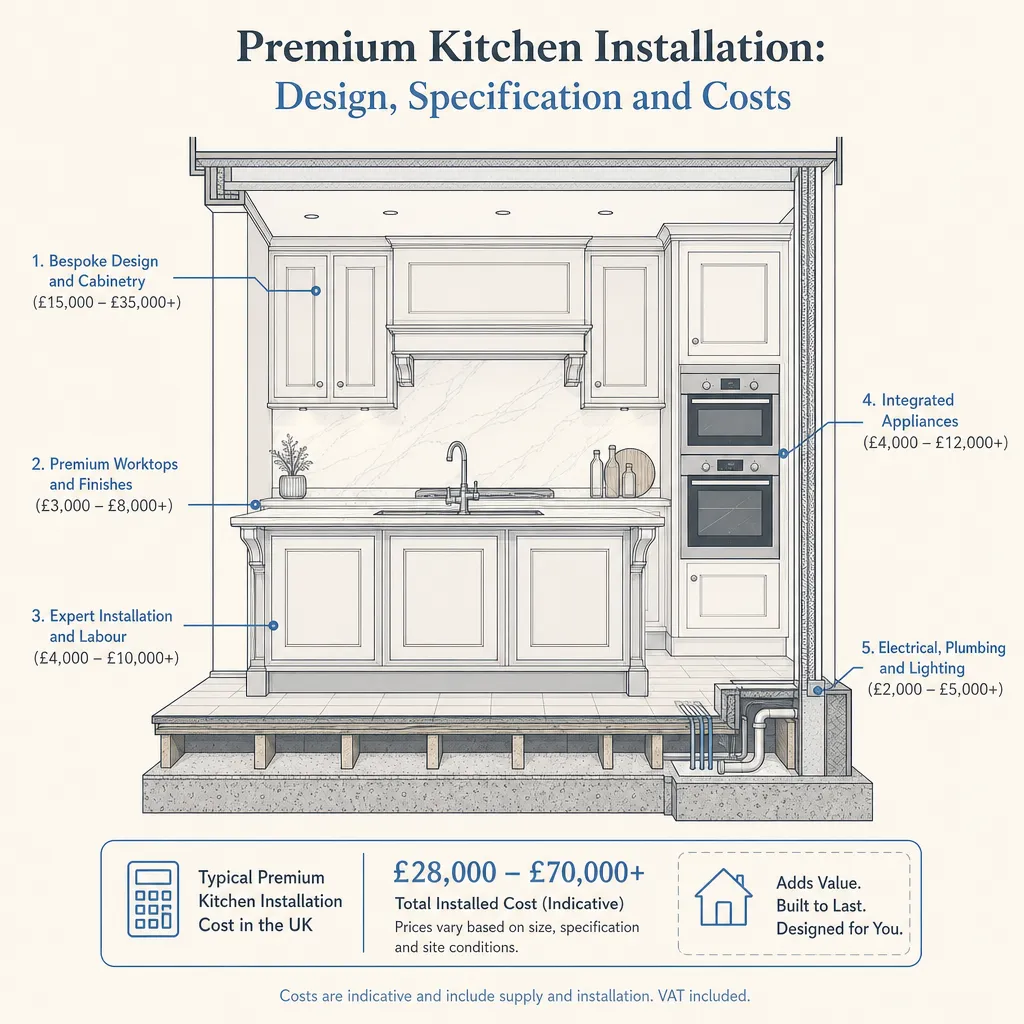
Premium Kitchen Installation: Design, Specification and Costs
A premium kitchen in the UK typically costs £20,000–£80,000 or more installed, depending on cabinetry specification, worktop material, appliance brands, and whether structural changes are needed.
 Improvement & Build
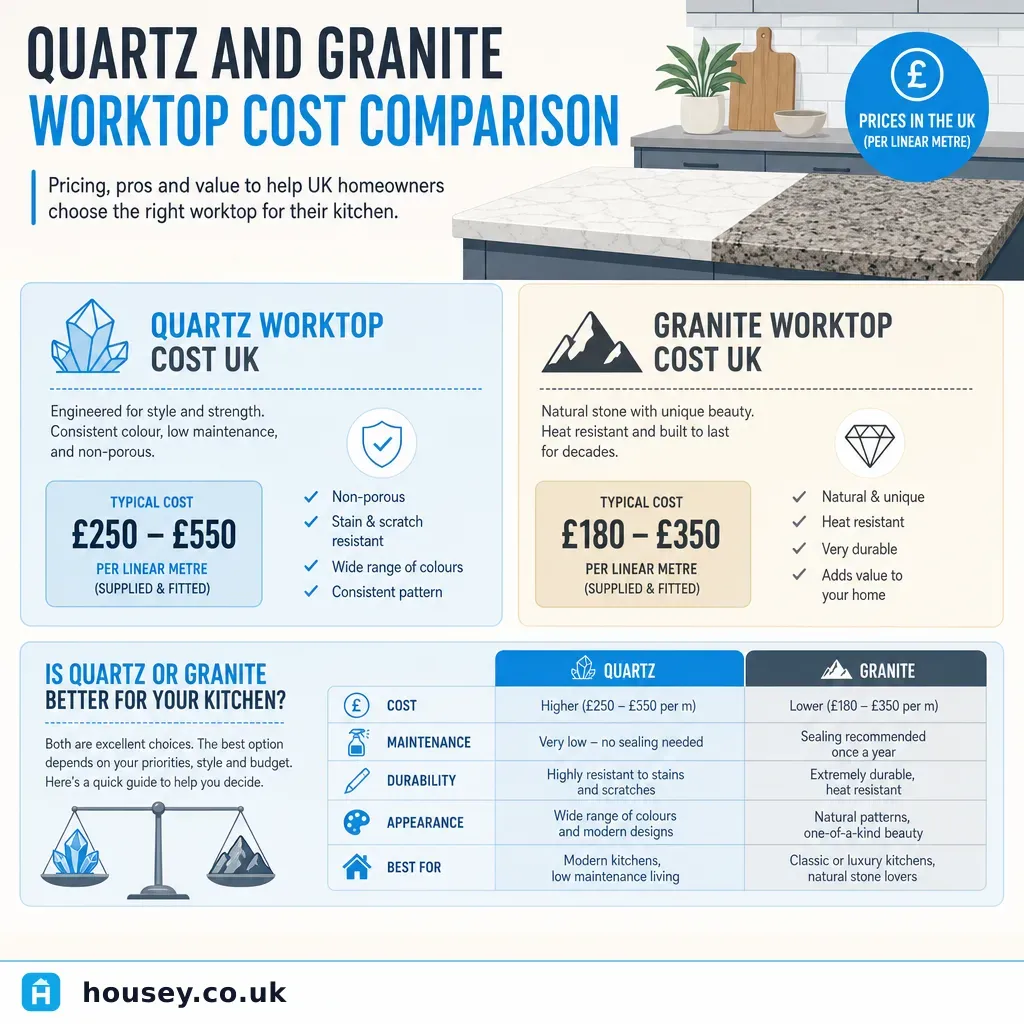
Quartz and Granite Worktop Cost Comparison
Quartz worktops in the UK cost £250–£650 per linear metre fitted; granite ranges from £200–£600 for standard slabs.
 Improvement & Build
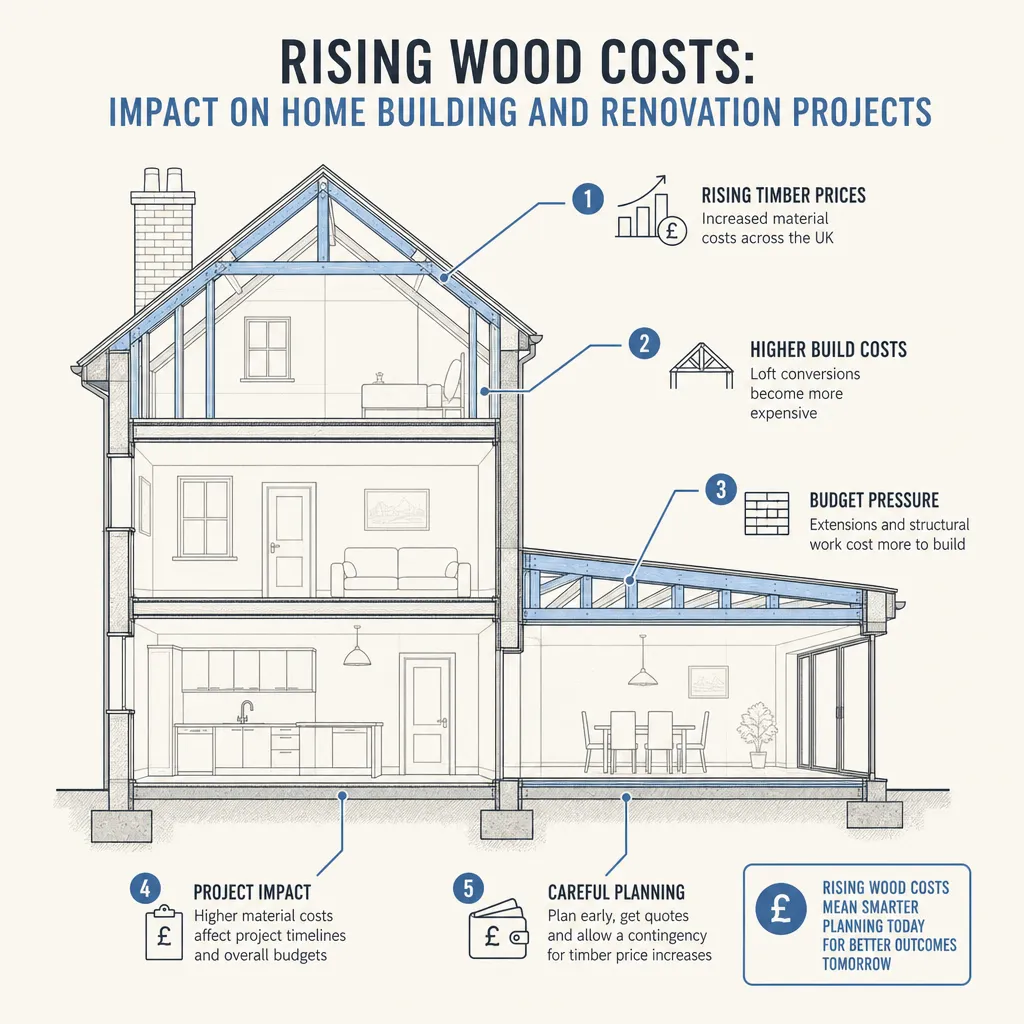
Rising Wood Costs: Impact on Home Building and Renovation Projects
Rising timber prices affect UK home renovation budgets most on timber-frame extensions, loft conversions, and self-builds, where structural wood can account for 15–25% of material costs.