Window Replacement Cost Calculator and Pricing Guide
By Housey · Last reviewed 7th of May 2026
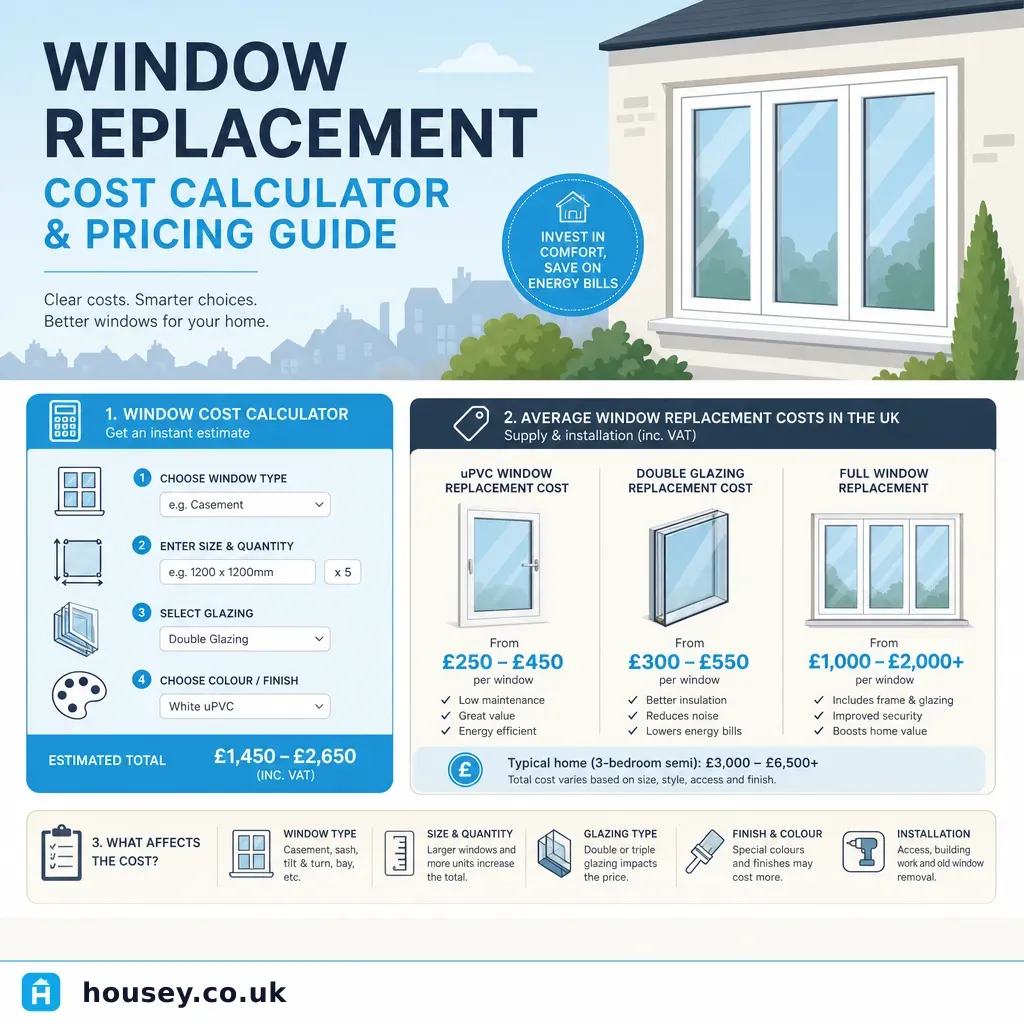
Window Replacement Cost Calculator and Pricing Guide
Replacing windows is one of the most common home improvement projects in the UK, yet costs vary considerably depending on material, glazing specification, window type, and installer. Understanding what shapes the price — and what regulatory certification is required — helps you budget accurately, compare quotes on equal terms, and avoid complications when you come to sell the property.
Key points
- Replacement windows installed by a FENSA- or CERTASS-registered installer are self-certified under Building Regulations Part L; no separate building control application is needed.
- If your installer is not registered with a competent person scheme, you must notify your local authority building control (LABC) before work begins, which adds cost and delay.
- A FENSA or CERTASS certificate is required for conveyancing if windows were replaced on or after 1 April 2002; missing certificates can delay or complicate a property sale.
- The current minimum whole-window U-value for replacement windows in England and Wales is 1.4 W/m²K under Part L — check GOV.UK for any revisions following future updates to the Approved Document.
- Conservation areas and listed buildings may require timber or aluminium windows with specific profile designs; permitted development rights do not override these restrictions.
How much does window replacement cost in the UK?
Costs vary by window size, material, configuration, and the number of units being replaced. The table below gives indicative supply-and-fit ranges per window for a typical mid-sized UK property.
Window type and material | Indicative supply-and-fit cost (per window) | Best for | Key considerations |
|---|---|---|---|
uPVC casement, double glazed | £400–£800 | Most UK homes, budget to mid-range | Low maintenance; wide colour choice |
uPVC sash (vertical sliding) | £800–£1,500 | Victorian and Edwardian terraces | Replicates sash profile at lower cost than timber |
Timber casement, double glazed | £800–£1,500 | Period properties, conservation areas | Higher maintenance; long lifespan if well maintained |
Timber sash, double glazed | £1,200–£2,500 | Listed buildings, conservation area requirements | May be required by planning condition |
Aluminium casement, double glazed | £900–£1,800 | Contemporary and commercial properties | Slimmer sight lines; thermally broken frames required |
Triple-glazed uPVC casement | £500–£1,000 | High-performance builds, Passivhaus | Marginal additional energy gain in most UK climates |
Bay window (3-panel, uPVC) | £1,500–£4,000 | Victorian bay-fronted houses | Structural lintel check usually needed |
Roof window (Velux-style) | £600–£1,500 | Loft conversions, flat-roof extensions | Separate flashing kit often required |
Indicative UK costs, last reviewed 2026-05-07. Prices vary by region, specification, installer, and number of units. Always obtain at least three quotes.
What is typically included in a window installation quote?
A complete quote should cover supply of frames and glass, removal of existing windows, installation, making good around the reveal (internal and external), and disposal of old units. Items often charged separately include:
- Replacement sills, internal or external
- Replastering or redecorating around the reveal
- Structural lintels if the existing lintel is inadequate or corroded
- Scaffolding or access equipment for upper-floor windows
Always confirm what is and is not included before signing the contract.
What drives window replacement costs up or down?
Number of windows: Most installers offer a lower per-unit price for larger orders. Replacing all windows in one project typically costs less per unit than replacing one or two at a time, and reduces scaffolding and disruption costs.
Glazing specification: Standard 4/16/4 mm double glazing is the baseline. Low-emissivity coatings, argon-filled cavities, laminated glass for security, and acoustic glazing all add to unit cost. Triple glazing typically adds 15–25% over equivalent double-glazed units.
Frame material: uPVC is the most widely installed material in the UK and generally the most cost-effective option. Timber and aluminium carry a premium for both supply and on-site installation.
Window configuration: Fixed-light windows cost less than opening casements. Tilt-and-turn, French casements, and large picture windows carry additional cost reflecting their complexity.
Access requirements: Upper-floor windows may require a scaffold tower or small scaffold, typically adding £600–£1,500 to the project. Ground-floor replacements rarely need additional access equipment.
Regional labour rates: London and the south-east typically run 15–30% above the national average for installation labour.
Building Regulations and certification
Replacement windows in England and Wales must comply with Building Regulations Part L (Conservation of fuel and power), which sets minimum thermal performance standards. The current minimum is a whole-window U-value of 1.4 W/m²K.
The simplest route to compliance is using a FENSA- or CERTASS-registered installer, both of which are government-authorised competent person schemes. Registered installers self-certify their work without requiring a separate building control application or inspection fee.
If using a non-registered installer, as the homeowner you must:
- Notify your LABC before work begins.
- Pay the building control fee, typically £150–£400 depending on the authority.
- Obtain a completion certificate once the installation is inspected and approved.
Keep all certificates — FENSA, CERTASS, or LABC completion — with your property documents, as solicitors will request them during conveyancing.
Conservation areas and listed buildings
Permitted development rights allow most like-for-like window replacements in standard residential properties. These rights do not apply where:
- Conservation area: Replacement windows should match the character of the area. Many councils require timber or aluminium with traditional profiles and glazing bar arrangements. Check with your local planning authority (LPA) before placing an order.
- Listed building: Listed building consent is required for any change to the external appearance, including windows. Unauthorised alterations are a criminal offence.
Even where permitted development applies, the replacement windows must still meet Part L thermal performance standards.
Homeowner checklist: before you replace your windows
What to ask before accepting a quote
- Are you FENSA- or CERTASS-registered, and will you issue the certificate on completion?
- Does the quote include all labour, supply, making good, and disposal of old units?
- Are replacement sills or lintel works included, or charged separately?
- Is scaffolding required, and if so, is it included in the quoted price?
- What glazing specification — U-value, glass type, gas fill — are you quoting?
- Is VAT included?
- What is the installation timeline, and for how long will openings be without glazing during the works?
- What warranty is provided on frames, sealed units, and hardware?
When to get professional help
Window replacement is generally low-risk when carried out by a competent registered installer. Seek additional professional input when:
- Structural concerns: Bay windows, large openings, or changes to opening sizes may affect lintels or structural elements. If there is any doubt, a structural engineer should assess before you order.
- Listed building or conservation area: A planning consultant or heritage specialist can advise on acceptable window designs before you commit to an order.
- Damp or condensation around existing frames: Evidence of penetrating damp, cavity wall issues, or rust-stained lintels should be investigated by a damp specialist or building surveyor before replacement takes place.
- New builds and extensions: Windows in new-build work and extensions must also comply with Part O (Overheating) — your architect or building control officer can advise on compliance.
How Housey can help
Housey connects you with vetted window and door installers who can provide fixed-price quotes for your project. Compare multiple installers side by side, check their FENSA or CERTASS registration, and manage the process from initial request through to completion on the Housey platform.
Frequently asked questions
Do replacement windows need building regulations approval?
Yes, replacement windows must comply with Building Regulations Part L. In practice this is handled automatically when you use a FENSA- or CERTASS-registered installer, who self-certifies the work on your behalf. If your installer is not scheme-registered, you must apply to your local authority building control before work starts and obtain a completion certificate on finish.
How long does window replacement take?
A standard replacement of 4–8 windows in a typical semi-detached property usually takes 1–2 days. Larger projects, bay windows, or properties requiring scaffold may take 2–4 days. Bespoke timber or aluminium windows often have a 4–8 week manufacturing lead time from order to installation, so factor this into your project timeline.
Does replacing windows reduce energy bills?
Replacing single glazing with modern A-rated double glazing can meaningfully reduce heat loss. The Energy Saving Trust estimates savings of around £75–£110 per year in a typical semi-detached home; check the Energy Saving Trust website for current figures as these are periodically updated. The saving from upgrading existing double glazing to triple glazing is typically smaller and takes longer to recoup.
What is a FENSA certificate and why does it matter?
A FENSA certificate confirms that replacement windows comply with Building Regulations Part L. It is required for property conveyancing if windows were replaced on or after 1 April 2002. Without it — or an equivalent CERTASS certificate or LABC completion certificate — your solicitor will raise a query that may delay or complicate your sale.
Can I replace windows myself?
You can replace windows as a homeowner, but you must notify your LABC before starting, ensure the installation meets Part L standards, and obtain an LABC completion certificate once inspected. Most homeowners find it simpler and more cost-effective to use a FENSA-registered installer who handles self-certification as part of the standard service.
Sources and further reading
- Approved Document L: Conservation of fuel and power — GOV.UK
- FENSA: competent person scheme for windows and doors — FENSA
- CERTASS: competent person scheme — CERTASS
- Double glazing energy savings — Energy Saving Trust
- Conservation areas and listed buildings guidance — Historic England
Useful next reads
 Improvement & Build
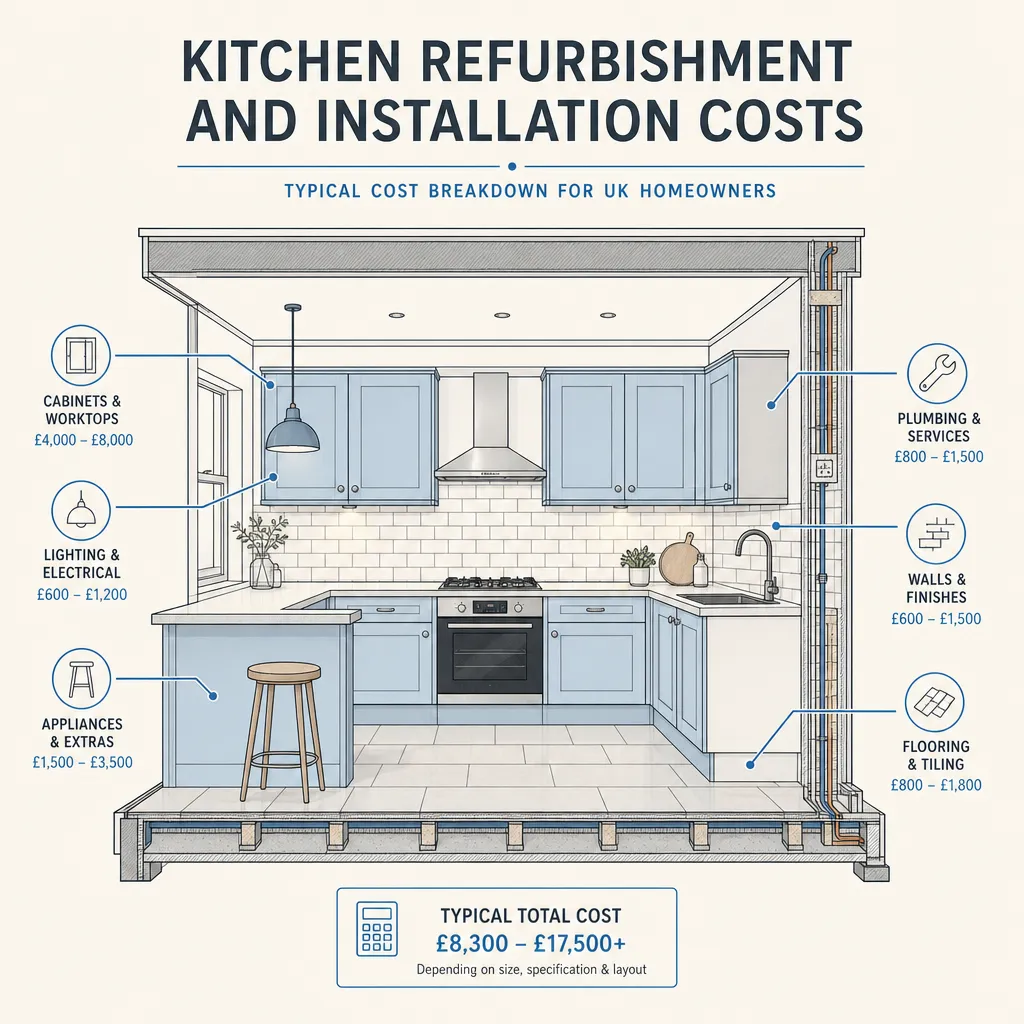
Kitchen Refurbishment and Installation Costs
A kitchen refurbishment in the UK typically costs between £3,000 and £40,000 or more, depending on whether you are replacing units only or carrying out a full design-and-build project.
 Improvement & Build
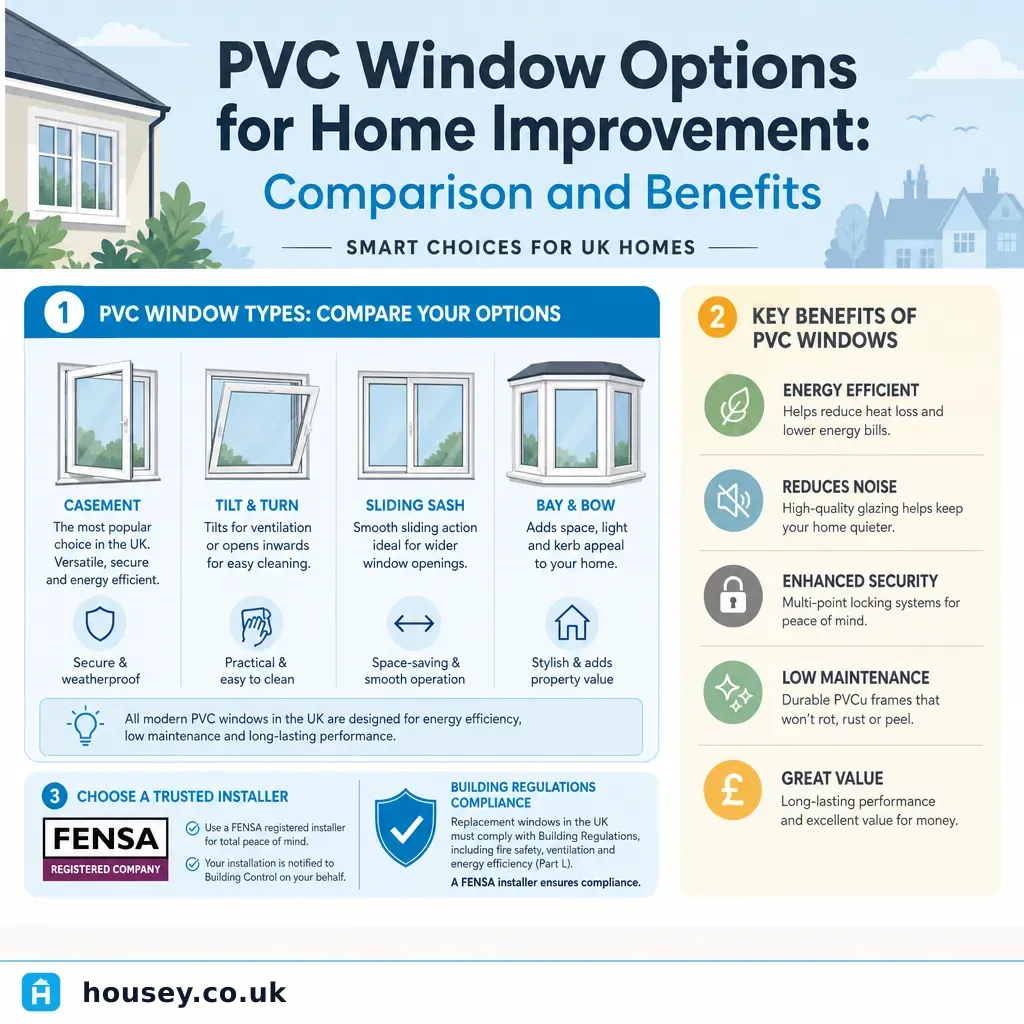
PVC Window Options for Home Improvement: Comparison and Benefits
uPVC (unplasticised PVC) is the most widely fitted material for replacement windows in UK homes, combining low maintenance with good thermal performance.
 Improvement & Build
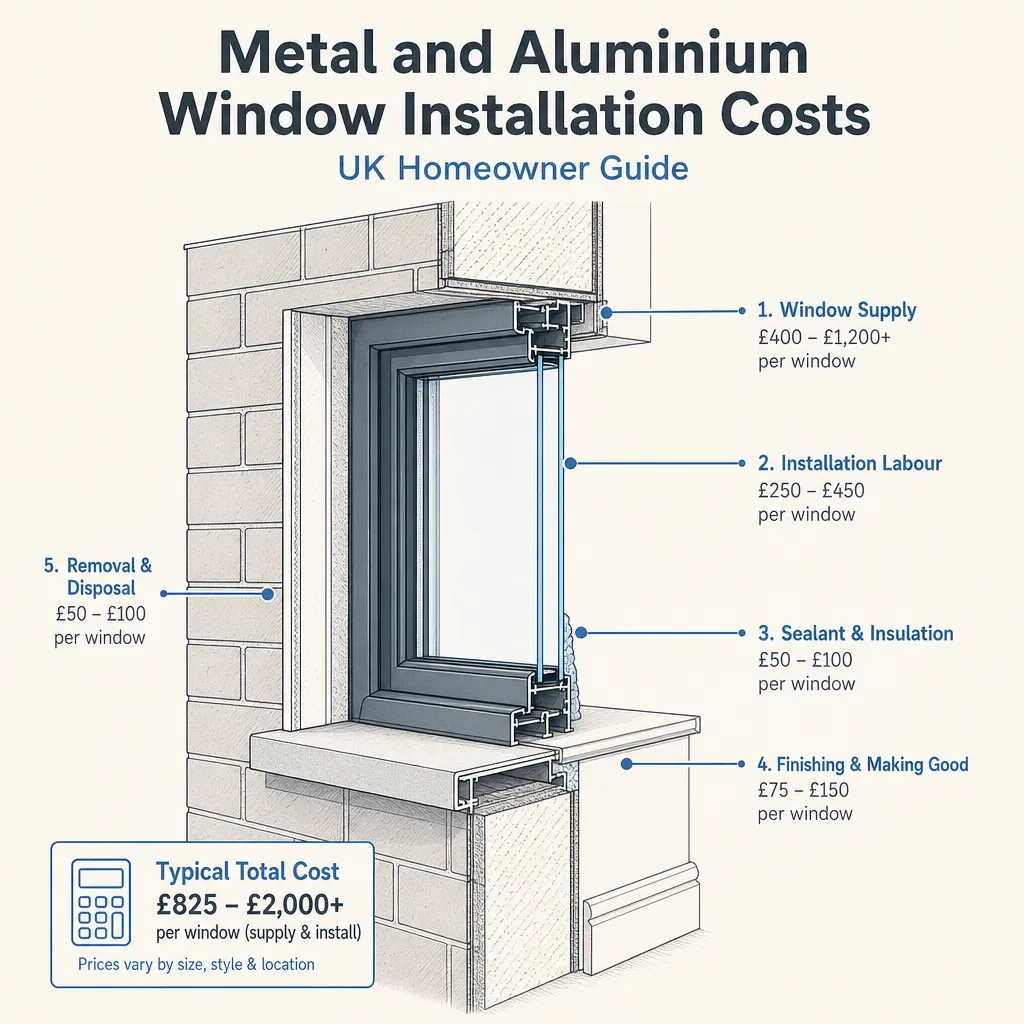
Metal and Aluminium Window Installation Costs
Aluminium window installation in the UK typically costs £450 to £1,800 per window depending on size, glazing, and frame system.
 Improvement & Build
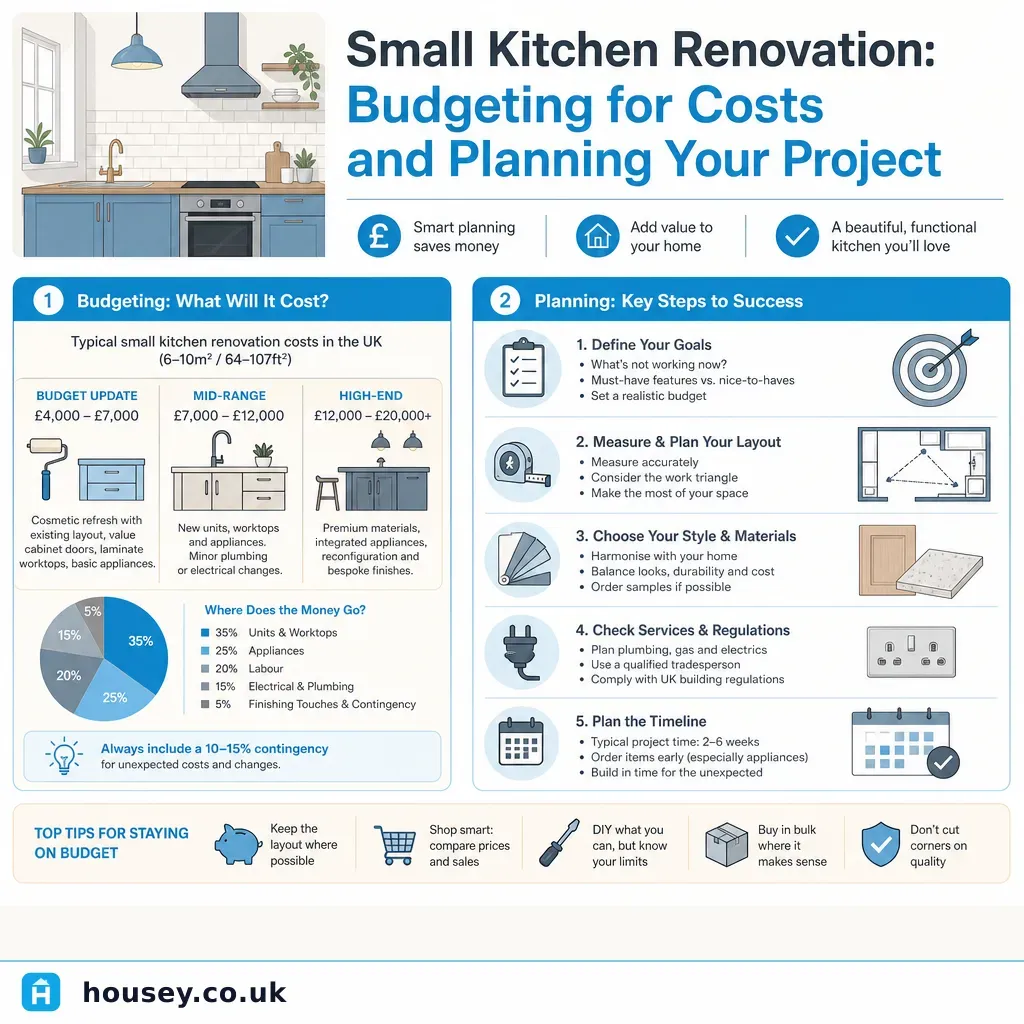
Small kitchen renovation: budgeting for costs and planning your project
A small kitchen renovation in the UK typically costs £5,000–£15,000 for a full refresh including new units, worktops, tiling, and appliances, though costs vary widely by specification, region, and whether structural changes or rewiring are involved.
 Improvement & Build
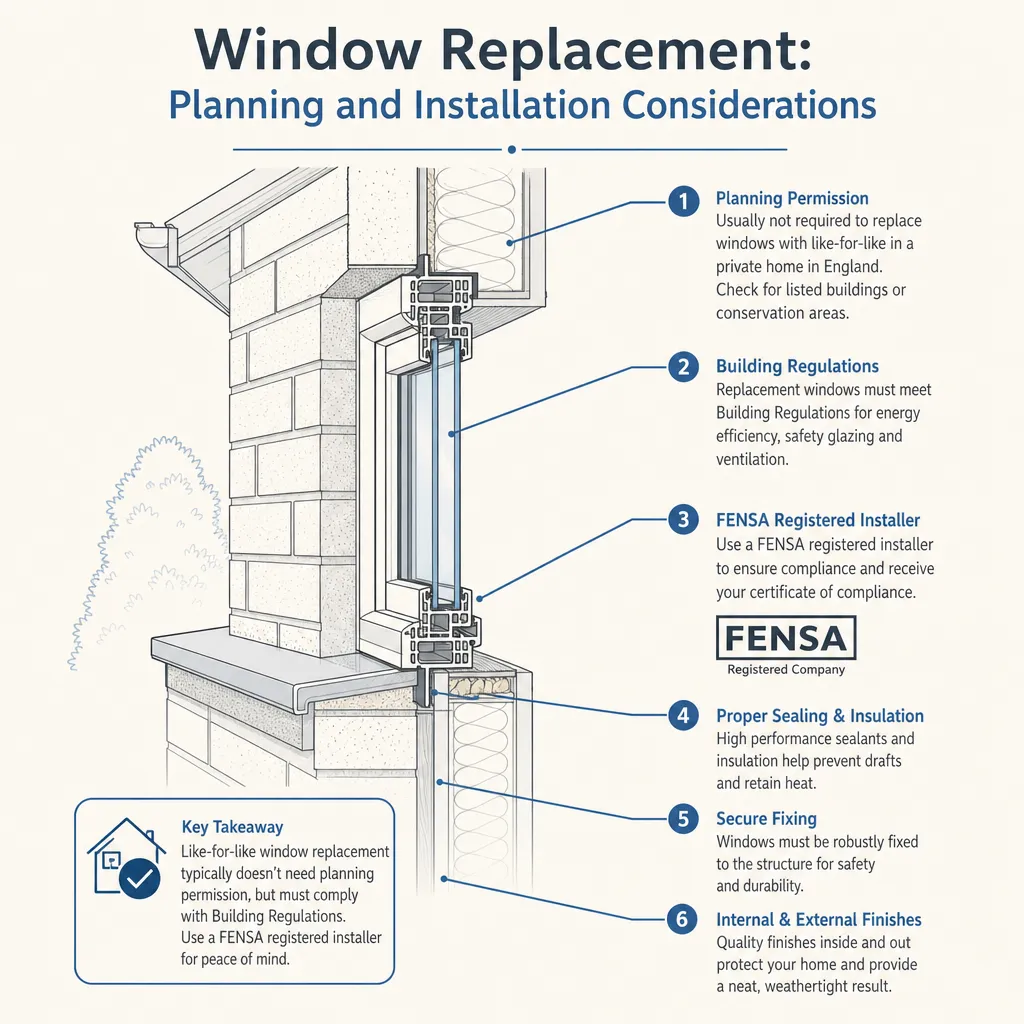
Window Replacement: Planning and Installation Considerations
Most window replacements in England fall under permitted development and do not need planning permission, though listed buildings, flats, and conservation areas are exceptions.