Landscape Fabric: Selection, Installation and Maintenance
By Housey · Last reviewed 1st of June 2026
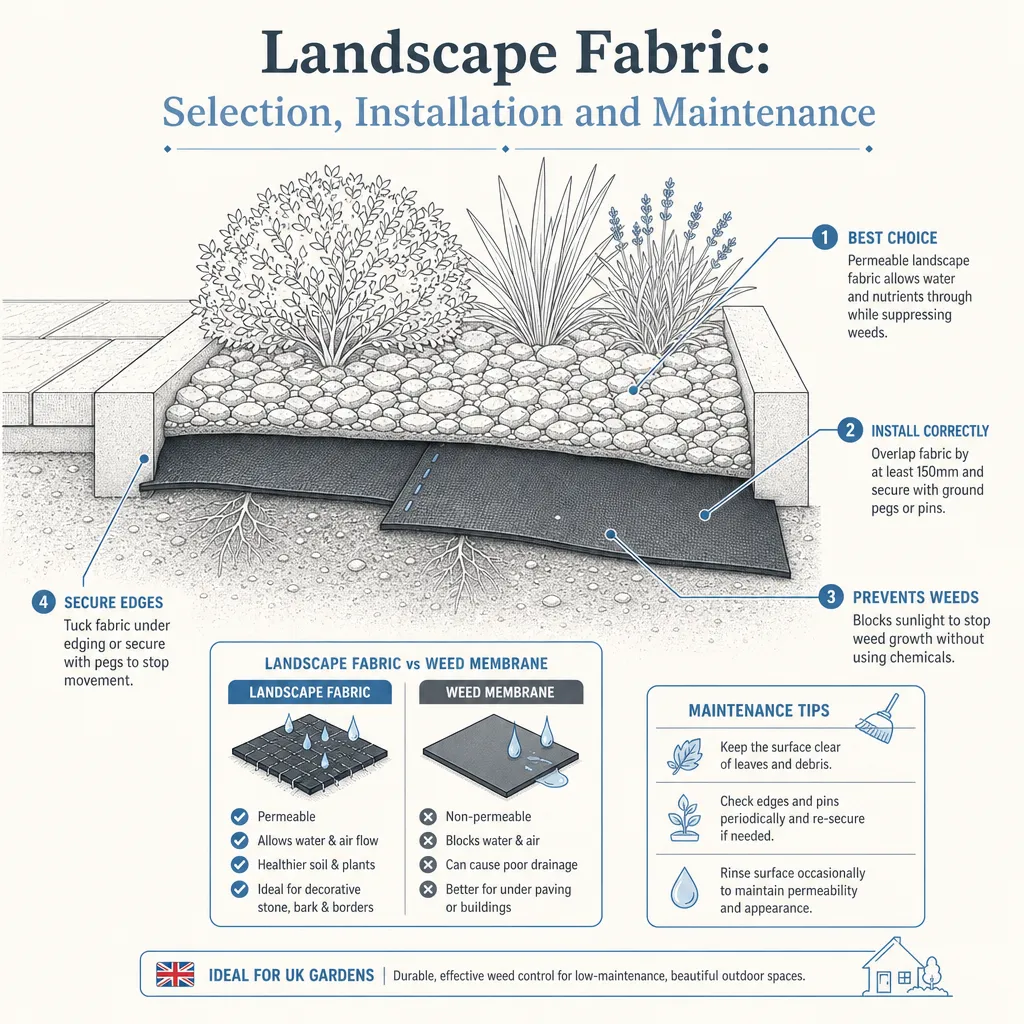
Landscape Fabric: Selection, Installation and Maintenance
Landscape fabric is a practical tool for managing weeds in borders, gravel paths, and hard-standing areas across all types of UK gardens — from a compact urban terrace to a large rural plot. Questions about which type to choose and how to install it properly tend to arise at the start of a landscaping project, when getting the groundwork right determines how much maintenance you will face over the years ahead.
Key points
- Woven polypropylene landscape fabric (typically 100–130 gsm) is the recommended choice for gravel paths, driveways, and hard landscaping where durability and load-bearing performance matter.
- Non-woven geotextile fleece allows greater water and nutrient penetration and is better suited to planting borders and ornamental beds.
- Seams must overlap by at least 150 mm; secure fabric with galvanised U-pins at 300–500 mm intervals to prevent lifting and weed growth at joints.
- Biodegradable jute or hemp fabric breaks down naturally within 1–3 years and suits temporary weed suppression in vegetable plots or new planting areas.
- Landscape fabric reduces weed growth but does not eliminate it — wind-blown seeds germinate in the covering mulch layer, so light annual maintenance remains necessary.
Choosing the right type of landscape fabric
Three main categories of landscape fabric are widely available in the UK, and the right choice depends on your application.
Type | Best for | Not ideal for | Typical lifespan | Key property |
|---|---|---|---|---|
Woven polypropylene | Gravel paths, driveways, hard landscaping | Planting beds where root access matters | 10–15 years | High tensile strength, permeable to water |
Non-woven geotextile fleece | Planting borders, ornamental beds | Heavy foot traffic or vehicle use | 5–10 years | Higher water and nutrient penetration |
Biodegradable (jute or hemp) | Vegetable plots, new tree planting, temporary use | Long-term permanent installations | 1–3 years | Breaks down to improve soil structure |
Gsm (grams per square metre) rating is the key quality indicator: heavier fabric (100–150 gsm) resists tearing and lasts longer under physical stress. Light fabrics below 50 gsm are sometimes sold as "garden fabric" but tend to degrade quickly under UV exposure.
How to install landscape fabric correctly
Correct installation is the difference between a system that works for a decade and one that fails within a season.
Step-by-step installation
- Clear and level the area. Remove all existing weeds, including roots. Any perennial weeds left under the fabric — such as bindweed or couch grass — will eventually push through.
- Improve the soil if needed. For planting borders, incorporate organic matter before laying the fabric. Once it is in place, feeding the soil becomes much harder.
- Lay the fabric. Unroll and cut lengths to fit the area. Work in one direction and leave an overlap of at least 150 mm at every seam.
- Secure with U-pins. Use galvanised landscape pins (150–200 mm long) at 300–500 mm intervals along edges and seams. In windy locations, pin more densely.
- Cut planting holes where needed. Use a craft knife or scissors to make X-shaped cuts. Fold the flaps under the plant's rootball to minimise the exposed opening.
- Apply a covering layer. Top with 50–75 mm of bark mulch or 40–50 mm of decorative gravel. This protects the fabric from UV degradation and significantly extends its working life.
Homeowner installation checklist
Before you begin, confirm the following:
Landscape fabric under gravel
Gravel driveways and paths are one of the most common uses for landscape fabric in UK gardens. Woven polypropylene at 100 gsm or above is the appropriate grade; lightweight fleece is unsuitable as foot traffic and gravel weight will compress and eventually breach it.
A common oversight is laying fabric directly on compacted clay without a sub-base. On clay soils, a 100–150 mm layer of compacted MOT Type 1 sub-base below the fabric improves drainage and structural performance. For driveways used by vehicles, this sub-base is essential, and a groundworker should be consulted to confirm the specification meets the surface's load requirements. Where a new driveway affects run-off into the public highway, Approved Document H: Drainage and waste disposal guidance is relevant to permeable surface requirements.
Landscape fabric in planting borders
In ornamental borders, non-woven fleece offers a better balance between weed suppression and plant health. However, there are genuine limitations worth understanding:
- Perennial shrubs and trees establish well through or alongside landscape fabric, but herbaceous perennials that need dividing every few years are much harder to manage once fabric is in place.
- Bulbs cannot be planted through fabric in the conventional sense; plan a separate area or use biodegradable fabric instead.
- Soil health can deteriorate over time beneath a permanent synthetic membrane as earthworm activity and natural organic breakdown are restricted.
The Royal Horticultural Society recommends a deep mulch layer — 75–100 mm of bark or wood chip — as an alternative to synthetic landscape fabric in planting borders. A deep mulch suppresses weeds, improves soil structure, and does not carry the long-term plastic disposal consideration associated with synthetic membranes.
Red flags: signs of a poor landscape fabric installation
Watch for these indicators that an installation is not up to standard:
- No overlap at seams — weeds emerge along join lines within weeks of installation.
- Lightweight fabric used under gravel — it will compress, shift, and eventually perforate under weight and foot traffic.
- Fabric laid without clearing perennial weeds first — bindweed and ground elder will push through standard fabrics within a single growing season.
- No covering layer applied — unprotected fabric degrades noticeably within 1–3 years from UV exposure.
- Cut holes too large around plants — weeds establish rapidly through oversized openings.
- No drainage provision on clay soil — standing water causes problems regardless of how permeable the membrane is.
When to get professional help
Most homeowners can install landscape fabric in beds and garden paths without professional assistance. However, the following situations benefit from specialist input:
- You are installing a gravel driveway used by vehicles and need advice on sub-base specification and drainage compliance.
- Your site has significant drainage problems, heavily compacted clay, or a high water table.
- You are undertaking a large-scale landscaping project where incorrect groundwork would be costly to undo.
- You need edging structures, retaining features, or irrigation systems integrated with the ground preparation.
How Housey can help
If your project involves more than a straightforward border or garden path, landscapers on Housey can advise on material selection and carry out installation as part of a wider garden design. For larger hard-landscaping projects — including driveways, patios, and drainage works — groundworkers can ensure the sub-base and drainage are correctly specified before fabric and surface materials are laid.
Frequently asked questions
Does landscape fabric kill existing weeds?
Landscape fabric suppresses weeds by blocking light but does not kill established perennial weeds with deep root systems. Bindweed, couch grass, and ground elder should be removed — including roots — before fabric is laid. If persistent perennial weeds are present, treat them and allow a full growing season before installing the membrane.
Can I use landscape fabric in a vegetable garden?
Synthetic fabric can be used for paths between raised beds, but it is not recommended inside vegetable beds due to its effect on soil health and earthworm activity. Biodegradable jute or paper mulch is a better choice for annual vegetable beds — it suppresses weeds for a season, then breaks down to improve the soil.
How long does landscape fabric last?
Woven polypropylene fabric typically lasts 10–15 years when protected by a covering layer of mulch or gravel. Exposed, unprotected fabric degrades in 3–5 years from UV damage. Non-woven fleece lasts roughly 5–10 years. Biodegradable jute or hemp fabric is designed to break down in 1–3 years.
Should I use landscape fabric under decking?
Landscape fabric under decking can reduce weed growth between boards and in voids beneath, but it is not essential. If you use it, choose woven fabric and ensure the ground beneath has good drainage — fabric does not resolve a waterlogging problem, and a damp sub-deck environment will accelerate timber decay regardless of the membrane.
Sources and further reading
- Weed management — Royal Horticultural Society
- Mulching — Royal Horticultural Society
- Reducing plastic use in gardens — WRAP
- Approved Document H: Drainage and waste disposal — GOV.UK
Useful next reads
 Improvement & Build
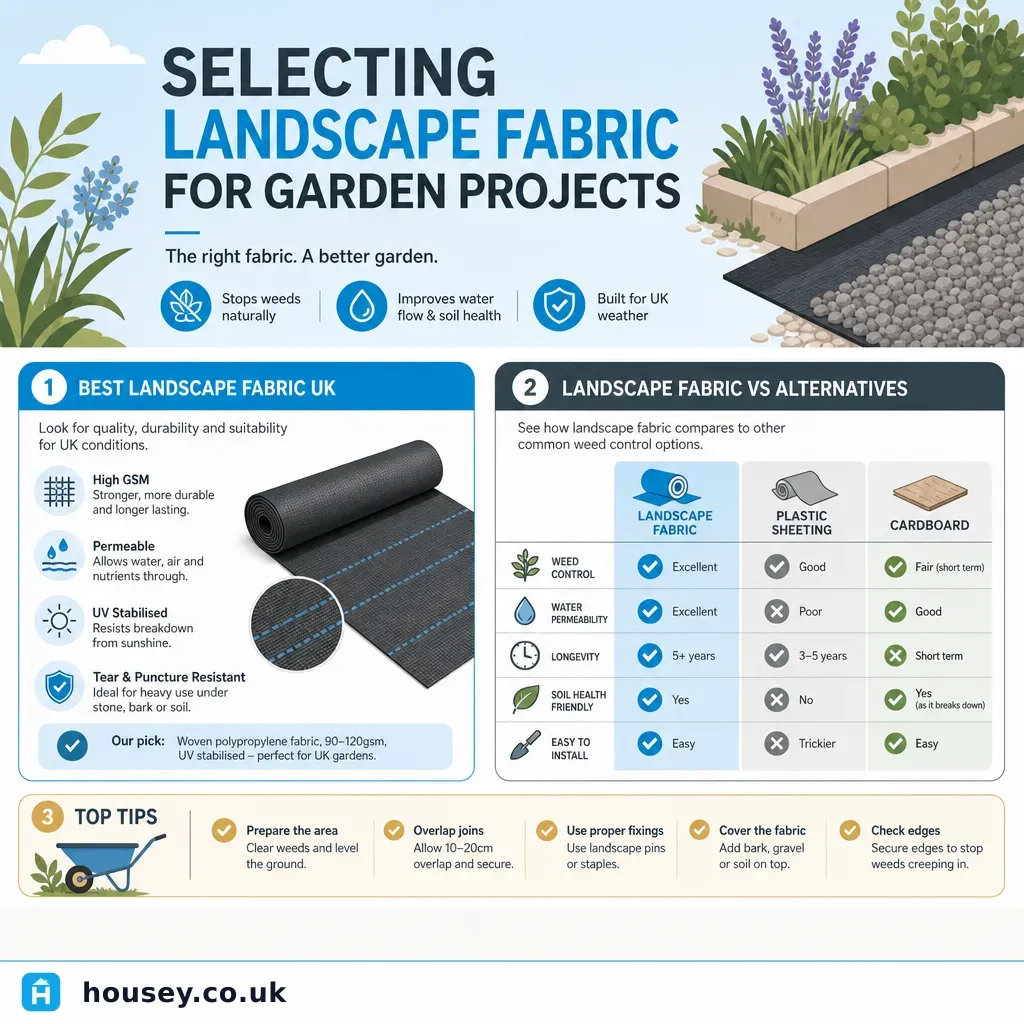
Selecting Landscape Fabric for Garden Projects
Landscape fabric suppresses weeds by blocking light and works best as part of a system with mulch or gravel on top.
 Improvement & Build
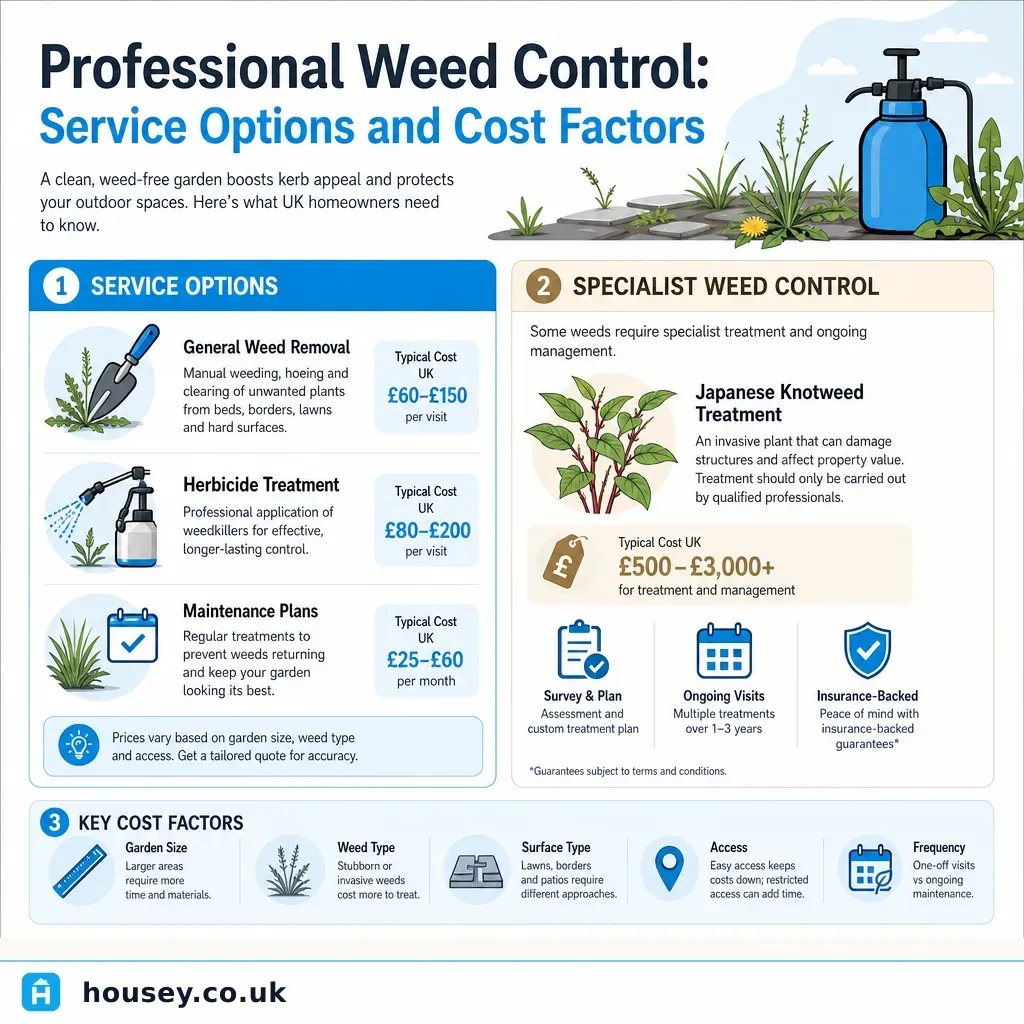
Professional Weed Control: Service Options and Cost Factors
Professional weed control in the UK typically involves herbicide treatment, manual removal, or a combination of both.
 Improvement & Build
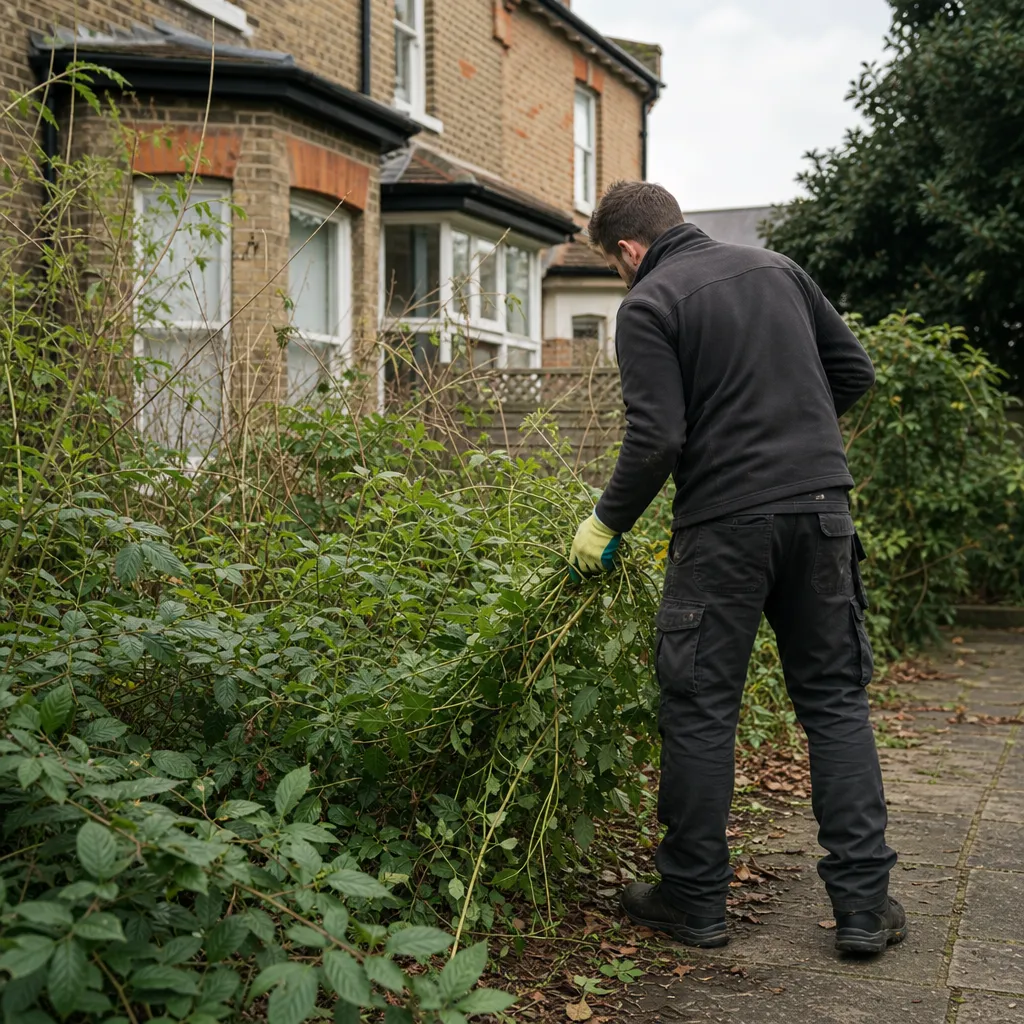
Managing Invasive Plant Species in Garden Design
Managing invasive plants in a UK garden starts with correct identification, since species such as Japanese knotweed carry specific legal duties under the Wildlife and Countryside Act 1981.
 Improvement & Build
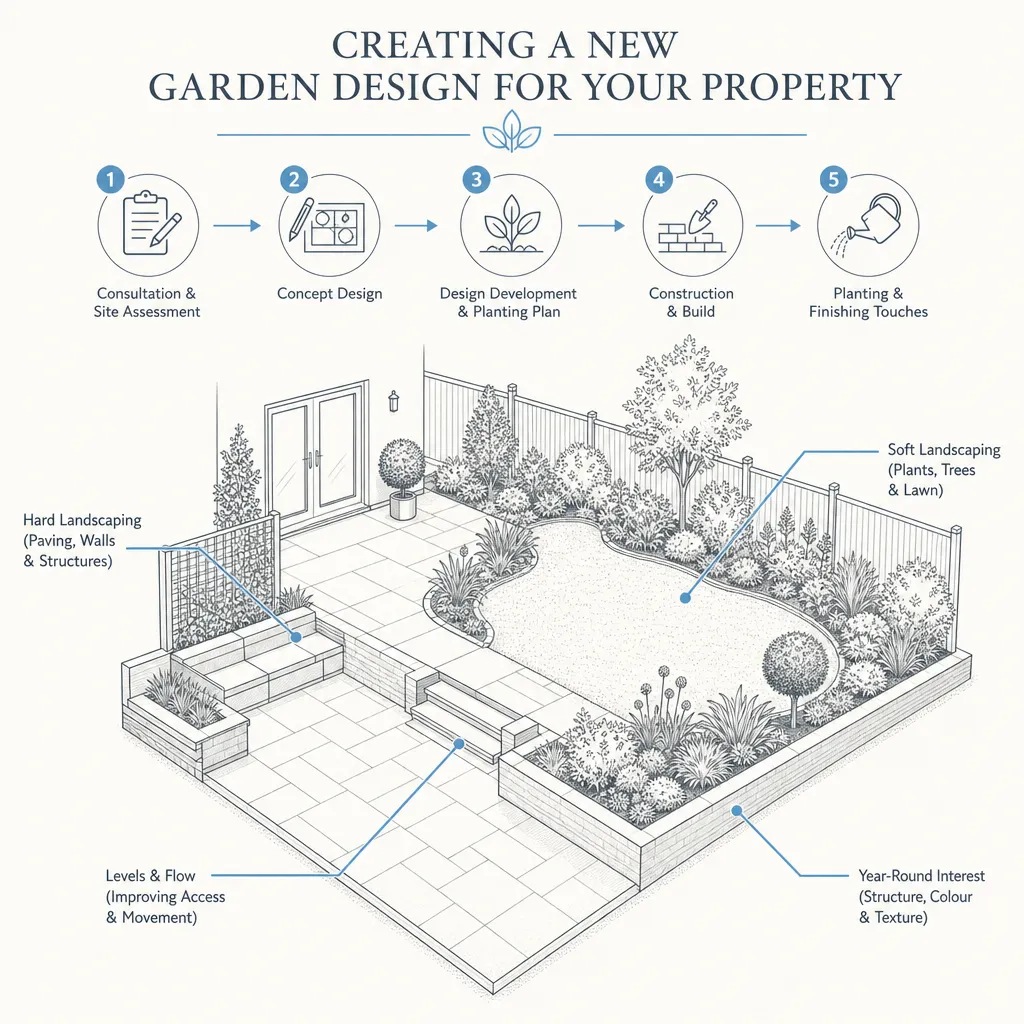
Creating a New Garden Design for Your Property
Creating a new garden design involves assessing your space, setting a realistic budget, deciding on hard and soft landscaping, and choosing a planting scheme suited to your soil and aspect.
 Improvement & Build
Garden Pest Management: Homeowner's Essential Guide
Common UK garden pests include slugs, aphids, vine weevil, and lily beetle.