Selecting Landscape Fabric for Garden Projects
By Housey · Last reviewed 10th of May 2026
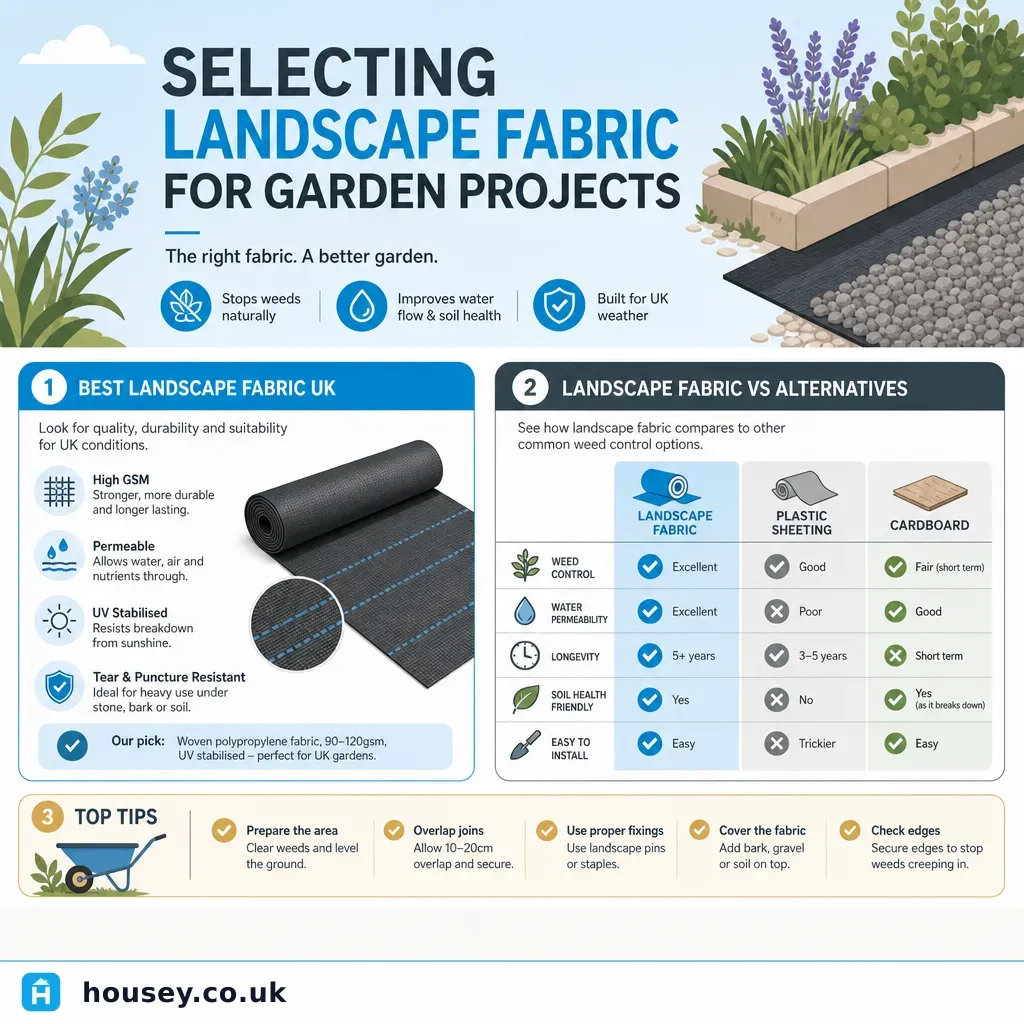
Selecting Landscape Fabric for Garden Projects
Landscape fabric — also called weed membrane or ground cover — is one of the most consistently misunderstood materials in UK gardening. Homeowners often buy the cheapest roll available, lay it with optimism, and find weeds growing through within a season or two. Understanding the differences between fabric types, when each is appropriate, and where fabric is not the right solution at all can save considerable time, money, and frustration — whether you are laying a gravel path, establishing a low-maintenance shrub border, or managing a kitchen garden in a 1930s semi.
Key points
- There are four main landscape fabric categories used in UK gardens: woven polypropylene, non-woven spunbond, biodegradable organic fabric, and heavyweight geotextile — each suited to different applications and durations.
- Landscape fabric does not permanently eliminate weeds; wind-blown seeds landing on mulch above the membrane will germinate regardless, and perennial weeds with deep root systems can penetrate lighter fabrics over time.
- Fabric weight is measured in grams per square metre (g/m²); heavier fabric is generally denser and more durable, but water permeability depends on weave structure rather than weight alone.
- Fabric left exposed to UV light degrades significantly faster — cover to a minimum depth of 50 mm; 75 mm is preferable for long-term installations.
- Biodegradable fabrics typically last one to three seasons; quality woven polypropylene can last 10–20 years if correctly installed and kept covered.
What is landscape fabric and how does it work?
Landscape fabric is a permeable or semi-permeable sheet material laid on prepared soil to suppress weed growth by blocking light from reaching the soil surface. Most types allow water to pass through to the soil below, though permeability varies considerably between products and grades.
In UK garden contexts, landscape fabric is most commonly used:
- Under gravel driveways and garden paths.
- Around ornamental shrubs, trees, and established perennial borders.
- In areas difficult to cultivate regularly, such as slopes or narrow borders alongside buildings.
- As a sub-base separation layer in structural hard landscaping projects.
Landscape fabric works best as part of a system rather than in isolation. Fabric left exposed to light and plant debris will degrade and allow weeds to establish within two to three years. Combined with a sufficient layer of aggregate, bark mulch, or stone covering, it performs considerably better and for longer.
Comparing landscape fabric types
Fabric type | Best for | Not ideal for | Typical lifespan | Water permeability |
|---|---|---|---|---|
Woven polypropylene | Driveways, gravel paths, long-term ornamental borders | Vegetable gardens, frequent replanting | 10–20 years (if covered) | Good — structured weave allows water through |
Non-woven spunbond | Frost protection, short-term weed suppression | Heavy traffic areas, gravel | 1–3 seasons | Variable — lighter grades restrict airflow |
Biodegradable (jute or coir) | Vegetable beds, erosion control on slopes | Permanent installations | 1–3 seasons | Excellent — breaks down beneficially into soil |
Heavyweight geotextile | Sub-base separation under hard landscaping | Surface weed suppression in planted beds | 25+ years | Moderate — designed for load-bearing, not weed control |
Which fabric should you choose?
- Choose woven polypropylene if you are laying a gravel path or driveway, or creating a long-term low-maintenance border around established shrubs or trees.
- Choose non-woven spunbond if you need a temporary solution, are protecting young plants from frost, or are working on a project where the fabric will be removed within one or two seasons.
- Choose biodegradable fabric if you are managing a vegetable plot, want to suppress weeds between crops, or are working on a project where soil health and organic decomposition are priorities.
- Use heavyweight geotextile if your project involves laying a compacted aggregate sub-base, paving, or a structural feature where fabric is needed as a separation layer rather than for weed suppression.
- Consider alternatives — deep bark mulch (100 mm or more), gravel alone with robust edging, or a layered combination — if your project involves frequent planting, naturalistic design, or regular soil amendment that fabric would complicate.
- Ask a landscaper or garden designer if you are unsure which material suits your specific site, particularly where drainage, heavy foot traffic, or a large-scale design is involved.
Common mistakes when using landscape fabric
Laying on unprepared ground. Landscape fabric does not kill existing weeds. Established perennial species — including bindweed, Japanese knotweed, and couch grass — must be fully removed, including roots, before laying. Leaving roots in place beneath the membrane allows regrowth that pushes through most fabric types within one or two seasons.
Insufficient covering material. Fabric exposed to UV light degrades faster and develops a surface suitable for moss and algae colonisation. Cover to a minimum of 50 mm depth; 75 mm is more reliable for paths and borders under sustained UK rainfall and frost conditions.
Too many cuts and loose overlaps. Every hole or loosely overlapping join is a potential weed pathway. Minimise cuts, make planting holes precisely the size needed, and fold flaps firmly back against the soil. Use fabric pins or ground staples to hold edges and joins securely flat.
Mismatching fabric to the application. A lightweight non-woven membrane rated for seasonal vegetable use will not survive under gravel trafficked by vehicles or frequent foot traffic. Match fabric weight and type to the actual application, not simply to the lowest price point.
Ground preparation before laying
Proper preparation significantly affects long-term results. Before laying any fabric:
- Remove all existing weeds, including roots of perennial species.
- Address drainage problems first — landscape fabric can worsen waterlogging on poorly drained ground by reducing surface evaporation.
- Level and firm the soil surface.
- Apply any soil amendments such as compost or sharp sand before laying — this is your last straightforward opportunity to do so.
- Mark planting positions before cutting the fabric, to minimise the number and size of holes required.
- Have fabric pins, edging material, and covering aggregate ready before you begin laying.
When to get professional help
Most landscape fabric projects are manageable as DIY tasks. Consider engaging a landscaper or garden designer if:
- Your project involves a large area where drainage specification and precise grading are critical, such as a new driveway or extensive patio surround.
- The site requires significant preparation including levelling, drainage improvement, or compacted sub-base work.
- You are designing a garden from scratch and fabric is one component of a wider scheme involving planting, irrigation, and edging systems.
- You are unsure which combination of fabric, mulch, and edging will perform reliably for your specific soil type and intended use.
How Housey can help
For larger garden projects — or where getting the specification right matters to avoid costly remediation — a landscaper or garden designer can advise on the right fabric grade, installation approach, and complementary materials for your site. Housey connects you with local professionals who can provide itemised quotes and specialist guidance tailored to your project.
Frequently asked questions
What is the difference between woven and non-woven landscape fabric?
Woven fabric is made from interlaced polypropylene strips, giving it strength, durability, and good water permeability — best for long-term projects under gravel or around established plants. Non-woven fabric is a lighter bonded material suited to short-term weed suppression or frost protection. For most UK garden projects lasting more than one season, woven fabric is the more practical choice.
Does landscape fabric kill weeds permanently?
No. Landscape fabric suppresses weeds by blocking light but does not sterilise the soil or prevent wind-blown seeds from germinating in mulch above the fabric. Persistent perennials such as bindweed can also penetrate cheaper membranes over time. Regular maintenance — removing surface weeds from the mulch layer — remains necessary even with fabric installed.
Can I use landscape fabric in a vegetable garden?
Biodegradable landscape fabrics made from jute or coir are well-suited to vegetable gardens — they allow water and air through freely, decompose into the soil, and can be replaced each season. Standard woven polypropylene is less suitable, as it restricts soil amendment, complicates crop rotation, and is difficult to remove once established plants or perennial weeds grow through it.
How long does landscape fabric last?
Lifespan depends on type and installation conditions. Biodegradable fabrics last one to three seasons. Non-woven spunbond typically lasts two to three seasons. Woven polypropylene can last 10–20 years if correctly covered to protect it from UV degradation. Heavyweight geotextile used in sub-base applications can last 25 years or more when fully buried under aggregate.
Sources and further reading
- Weed control using mulches and ground cover — Royal Horticultural Society
- Planning permission: driveways — GOV.UK
- Garden water efficiency — Energy Saving Trust
Useful next reads
 Improvement & Build
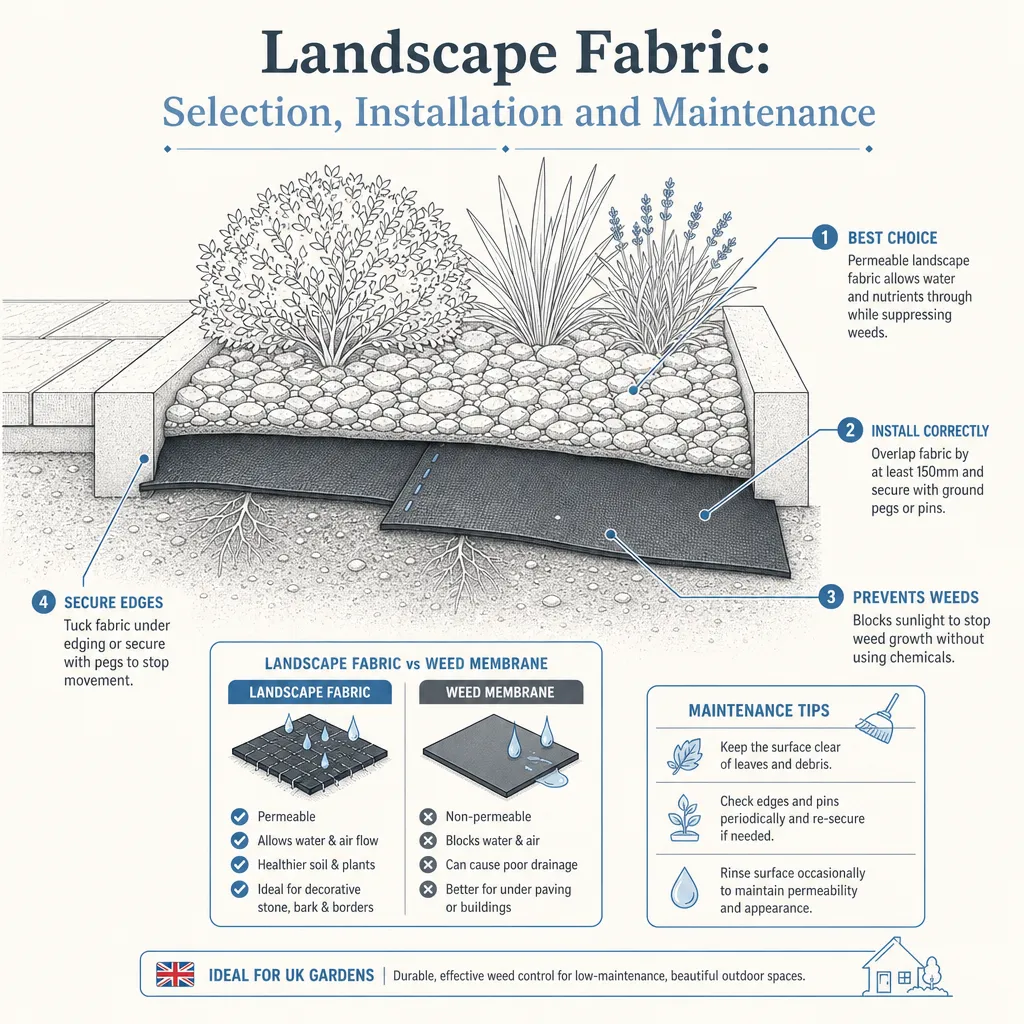
Landscape Fabric: Selection, Installation and Maintenance
Landscape fabric is a permeable membrane laid under mulch or gravel to suppress weeds while allowing water through.
 Improvement & Build
Installing a Fire Pit: Garden Features and Outdoor Space Design
Installing a garden fire pit in the UK is generally permitted, but Smoke Control Area rules prohibit open wood-burning in most towns and cities.
 Improvement & Build
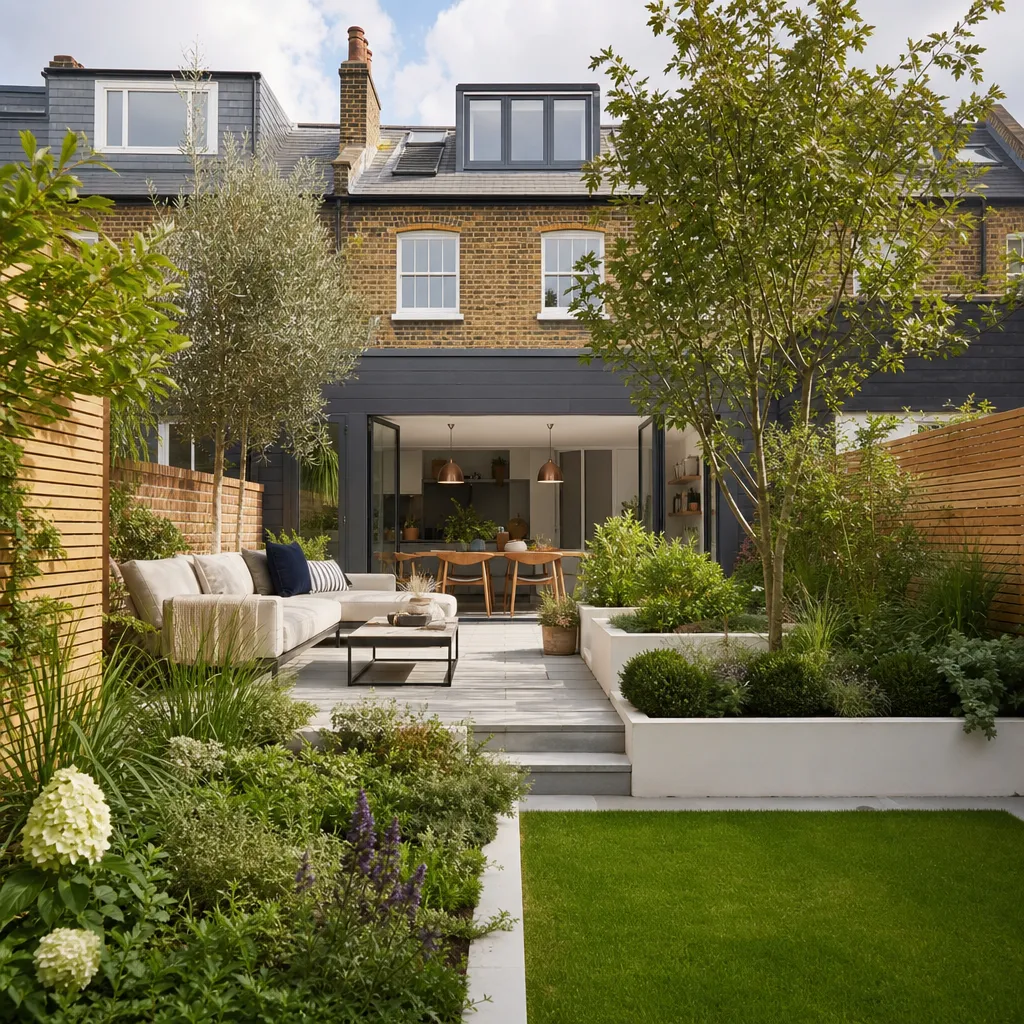
Seasonal Garden Transformations and Outdoor Design Ideas
A successful garden transformation in the UK works with the seasons rather than against them — establishing structure and hard landscaping in autumn or winter, planting in spring, and enjoying the results through summer.
 Improvement & Build
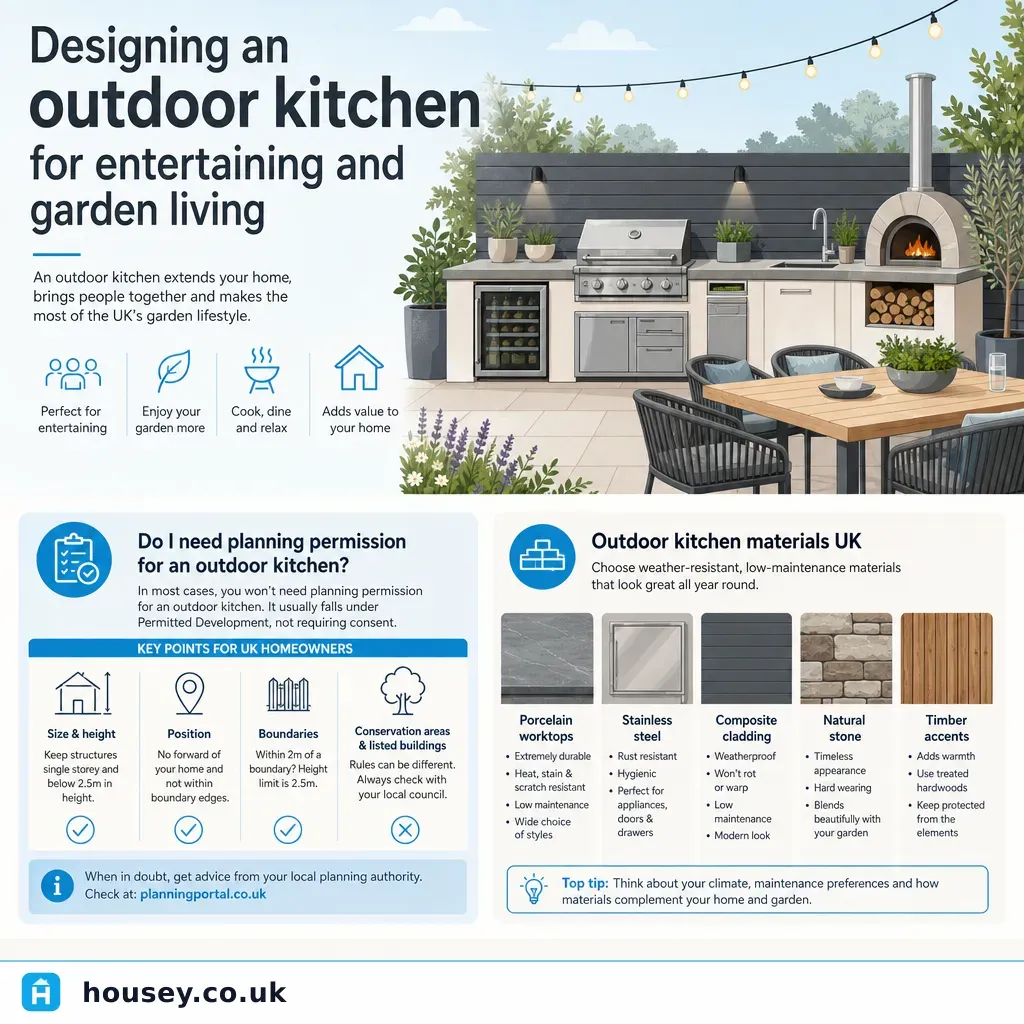
Designing an outdoor kitchen for entertaining and garden living
An outdoor kitchen in a UK garden needs a stable, level base — typically a concrete slab or quality paving — with weather-rated materials such as stainless steel grade 316 or frost-rated porcelain.
 Improvement & Build
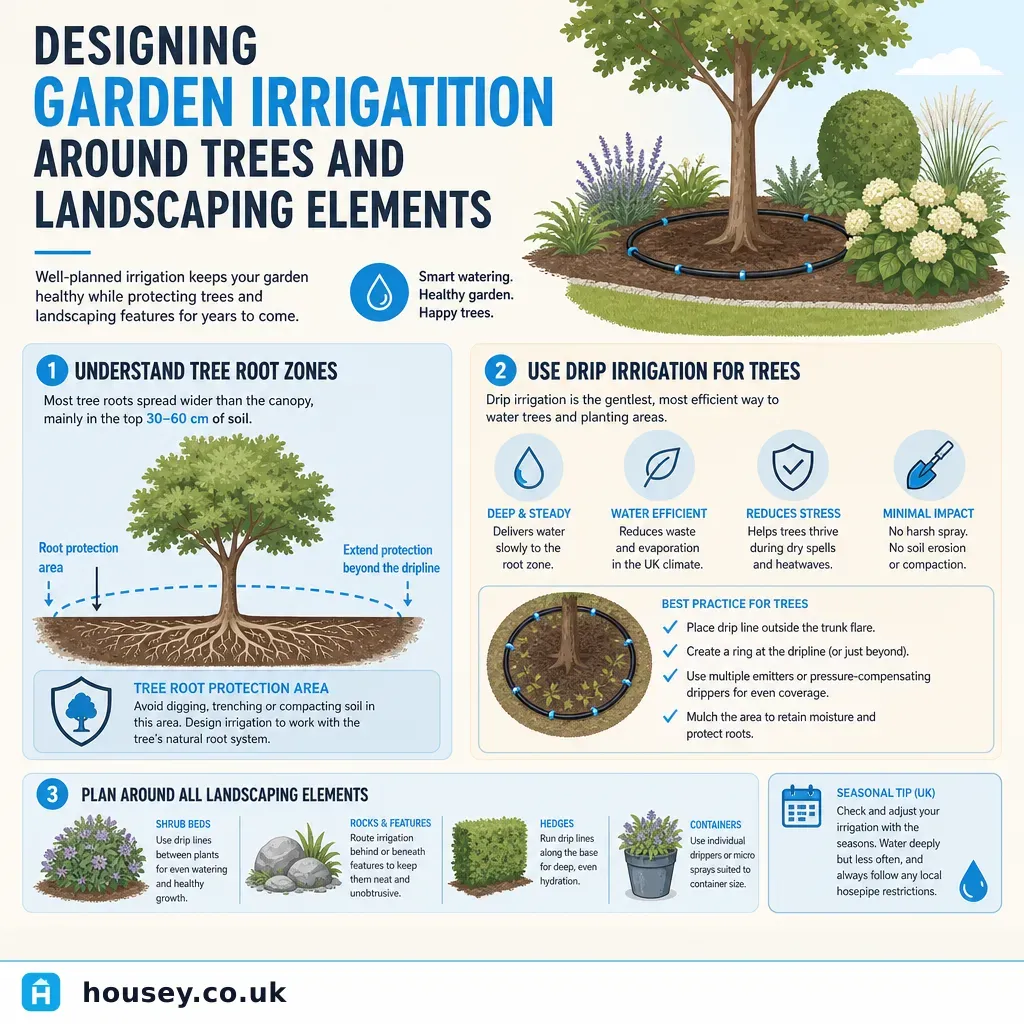
Designing Garden Irrigation Around Trees and Landscaping Elements
Design irrigation around trees by respecting the root protection area defined under BS 5837:2012, using drip or leaky pipe delivery rather than spray heads, and putting the tree zone on its own circuit.