Lead Paint Assessment and Safe Removal Procedures
By Housey · Last reviewed 9th of May 2026
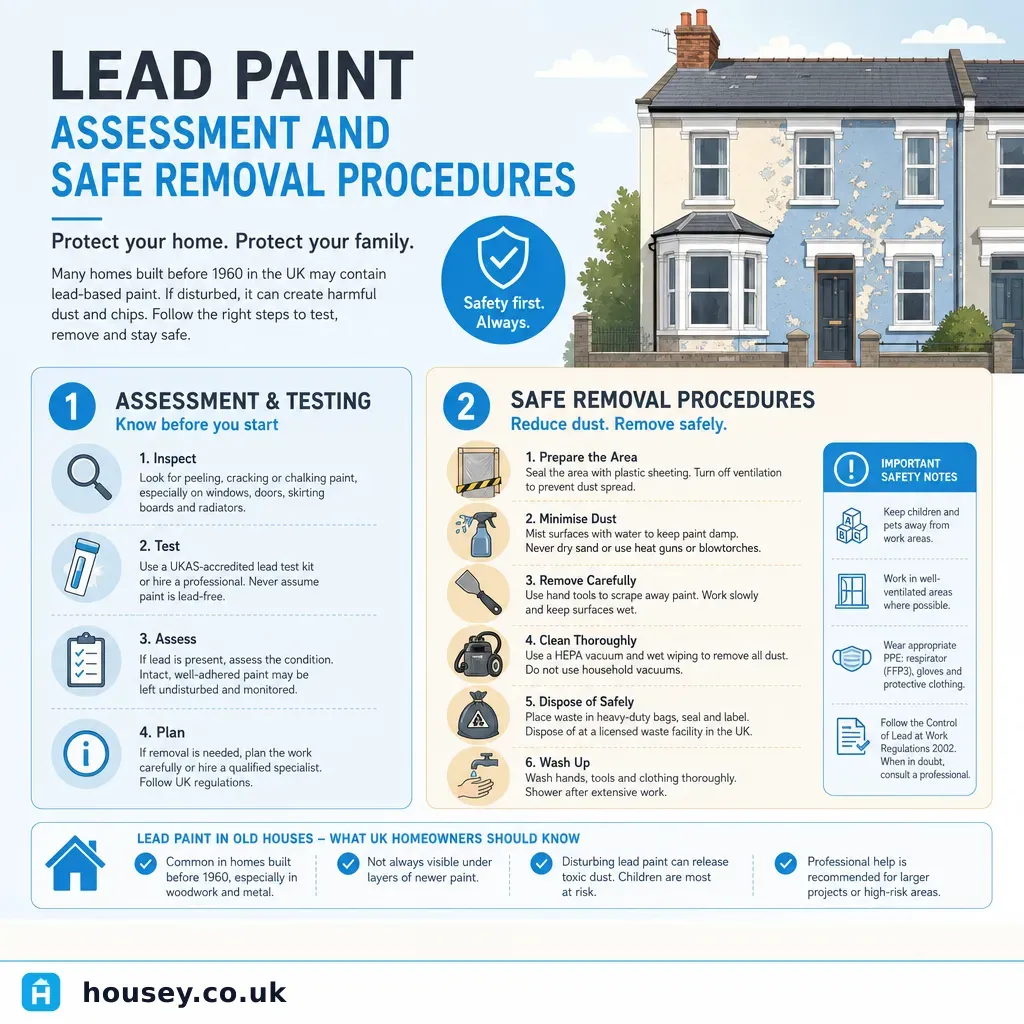
Lead Paint Assessment and Safe Removal Procedures
Lead paint is a common find in UK homes built before 1970, and it becomes a significant health concern the moment renovation work is planned. Homeowners, landlords, and contractors who disturb lead paint without proper assessment risk serious harm — and, in the case of rental properties and commercial buildings, potential regulatory liability under housing and health and safety law. Understanding the assessment process and what safe removal involves is an essential planning step before any works begin in an older property.
Key points
- Lead was commonly added to household paint in the UK until around 1970; any property built or substantially redecorated before this date should be assumed to contain lead paint until professional testing confirms otherwise.
- The Control of Lead at Work Regulations 2002, made under the Control of Substances Hazardous to Health (COSHH) framework, govern how lead paint must be assessed, managed, contained, and disposed of by contractors; homeowners who effectively act as their own employer on a project have duties under this framework.
- Disturbing lead paint by dry sanding, scraping, or burning off — without containment — releases lead dust and fumes that are toxic if inhaled or ingested; children under six and pregnant women are at substantially greater risk than healthy adults.
- Landlords in England have a legal duty under the Housing Act 2004 and the Homes (Fitness for Human Habitation) Act 2018 to address hazards including deteriorating lead paint; lead is assessed as a Category 1 hazard under the Housing Health and Safety Rating System (HHSRS) where it poses a serious risk to occupants.
- Professional lead paint assessment typically uses X-ray fluorescence (XRF) analysis — a non-destructive, in-situ method — or UKAS-accredited laboratory analysis of paint chip samples; surface swab tests indicate surface contamination but do not confirm paint-layer concentration and depth.
Why lead paint matters before renovation
Lead paint that is in good condition and left completely undisturbed presents a lower immediate risk to occupants. The danger escalates sharply when paintwork is disturbed, actively flaking, or when a property undergoes renovation — activities such as dry sanding, scraping, heat-stripping, or grinding can generate dangerous levels of lead dust and fumes in a short time. Children are particularly vulnerable because they absorb ingested lead more readily than adults, and even low-level exposure can affect neurological development. This is why assessment before renovation — not as an afterthought after work has begun — is the correct sequence of events, and why informing all contractors of suspected lead paint before they start is a legal duty in many circumstances.
How lead paint is identified and assessed
A competent lead paint assessment by a qualified professional follows a structured process.
Stage 1 — Desktop review and property history A qualified assessor will review the property's age, construction history, and any existing records of past decoration or renovation. Properties built before 1960 are at higher risk of containing lead in original coats; those built between 1960 and 1970 warrant careful investigation of any surviving original paintwork.
Stage 2 — Visual inspection and condition rating The assessor inspects all painted surfaces for condition: intact and sound, slightly damaged, flaking, or actively friable. Actively flaking or friable paintwork presents an immediate risk even without mechanical disturbance.
Stage 3 — Testing
- XRF (X-ray fluorescence) analysis: A hand-held XRF instrument reads lead concentration in paint layers non-destructively and in situ. Results are immediate and cover all paint layers without damaging the surface. This is the preferred method for in-situ surveys.
- Paint chip sampling: Small paint samples are removed and sent to a UKAS-accredited laboratory for analysis. Results take several working days. This method is appropriate where XRF access is limited or where precise laboratory confirmation is required.
- Surface swab (wipe) testing: Wipe tests detect surface contamination from lead dust. They are used as a supplementary check — for example, to confirm clearance after removal works — rather than as a primary method for assessing paint-layer lead content.
Stage 4 — Written report and recommended actions The assessment report should quantify lead concentration by location, rate the condition of affected surfaces, and set out recommended actions — ranging from periodic monitoring, to encapsulation of intact surfaces, to controlled removal by a specialist contractor.
Decision tree: what action does your property need?
- Lead paint in good condition, no renovation planned: Monitor annually for deterioration. No immediate remediation required, but document locations and brief all future contractors before they begin any work in the property.
- Lead paint in good condition, renovation planned in the affected area: Commission a lead paint assessment before wider works begin. A specialist contractor should encapsulate or remove the paint under controlled conditions before general trades start on the affected surfaces.
- Lead paint deteriorating or actively flaking: Commission an assessment immediately. Implement interim controls — do not disturb the paintwork, restrict access for children — until the assessment and remediation plan are agreed and actioned.
- Property is a rented dwelling with deteriorating lead paint: The landlord has a legal obligation under the HHSRS framework. Seek guidance from an environmental health officer at the local authority, or a solicitor with housing law experience.
- Property is a workplace or commercial building: Additional duties apply under the Control of Lead at Work Regulations 2002. A competent person must carry out and document the risk assessment before any work that could disturb the paint is commissioned.
Safe removal methods and their risk levels
Lead paint removal in the UK must follow HSE guidance under the Control of Lead at Work Regulations 2002. The method selected determines the level of containment and personal protective equipment required.
Method | Lead dust or fume risk | When appropriate | Specialist containment required? |
|---|---|---|---|
Wet hand-scraping | Lower | Small areas; intact paint with sound substrate | Yes — face-fit tested RPE (minimum FFP3), disposable coveralls, containment sheeting |
Chemical stripping paste | Lower | Where heat or abrasion would be unsuitable | Yes — skin and respiratory protection; waste disposal as hazardous waste |
Shot or wet blasting | High | External surfaces; large-scale or industrial applications | Yes — full enclosure, negative pressure containment, independent air supply |
Heat gun or open flame | Very high — lead fumes generated | Not recommended for lead-containing paint | Should be avoided; HSE advises against use on lead paint |
Dry sanding or grinding | Very high | Not appropriate without HEPA-filtered tooling and full enclosure | Yes — HEPA local exhaust ventilation (LEV), face-fit tested FFP3 RPE as minimum |
A properly managed removal by a qualified contractor should include:
- A written COSHH risk assessment and method statement before work begins.
- Worker health surveillance, including blood lead monitoring, for operatives carrying out regular lead work.
- Containment of the work area using polyethylene sheeting; negative pressure ventilation where mechanical removal is involved.
- Appropriate respiratory protective equipment (RPE) — minimum FFP3 face-fit tested; supplied-air RPE for high-exposure tasks.
- Disposal of all contaminated waste — paint chips, sheeting, dust — as hazardous waste under the Hazardous Waste (England and Wales) Regulations 2005, with a waste transfer note provided to the client.
- Post-clearance wipe testing before the area is reoccupied, particularly where children will be present.
Important limitations
This article is general information only and does not substitute for a site-specific risk assessment by a competent professional. Lead paint risk depends on paint-layer concentration, surface area, the condition of the paintwork, the type of renovation work proposed, occupant vulnerability — particularly children under six and pregnant women — and whether the property is residential or commercial, owner-occupied or rented. The guidance above reflects UK regulations as understood at the last reviewed date of 2026-05-09 but should not be relied upon as legal or safety advice for any specific property or situation. Duties also differ between England, Scotland, Wales, and Northern Ireland for residential properties — always check with the relevant housing or environmental health authority for your location.
What to ask a qualified professional
Before instructing a lead paint assessor or removal contractor, ask the following:
- What is your qualification for lead paint assessment? Look for BOHS P901 — Proficiency in the Management and Surveying of Materials Containing Lead in Buildings — or an equivalent occupational hygiene qualification.
- Are your laboratory sample analyses carried out by a UKAS-accredited laboratory, and can you provide the laboratory's UKAS certificate number?
- Will you provide a written report identifying locations, concentrations, surface condition ratings, and recommended actions?
- If removal is recommended, can you provide a written COSHH assessment and method statement — including the containment method and RPE specification — before work begins?
- How will contaminated waste be classified and disposed of, and will you provide a copy of the waste transfer note?
- Will you carry out post-clearance wipe testing before the area is signed off, and what clearance standard will you apply?
- Do your operatives hold current medical surveillance records for lead work, and can you provide evidence of blood lead monitoring?
When to get professional help
Do not attempt to identify or remove suspected lead paint using standard DIY methods. Seek a qualified professional when:
- You are planning any renovation work — including redecoration involving sanding or scraping — in a pre-1970 property.
- You notice flaking, chalking, or deteriorating paintwork in an older property occupied by children or where a child is expected to live.
- You are a landlord and a tenant has raised concerns about paint condition in a pre-1970 property.
- A general contractor proposes sanding or stripping painted surfaces in an older property without having first carried out a lead assessment.
- You are purchasing an older property and the homebuyer survey or EPC inspection has flagged the presence of lead paint.
Red flags requiring immediate action:
- A child in the household has unexplained health symptoms, or a GP has flagged elevated blood lead levels — contact your GP and the local authority environmental health team without delay.
- Contractors have already begun dry sanding or stripping painted surfaces in a pre-1970 property without prior lead assessment — stop works immediately and commission air quality and surface clearance testing before re-entry.
- Paintwork is actively flaking onto floor surfaces, window sills, or other areas accessible to children or pets in an older property.
How Housey can help
If you are planning works on an older property and need an environmental assessment before renovation begins, environmental surveys on Housey can connect you with qualified assessors covering lead paint, asbestos, and other pre-renovation hazards across the UK.
Frequently asked questions
How do I know if my home has lead paint?
The most reliable indicator is the age of the property. UK homes built before 1970 are likely to contain lead paint somewhere; those built before 1960 have a higher probability of lead in original decorative coats. Visual inspection alone is insufficient — only XRF analysis or laboratory testing of a paint chip sample can confirm the presence and concentration of lead in paint layers.
Is lead paint dangerous if it is left undisturbed?
Lead paint in good condition and left completely undisturbed presents a lower immediate risk than flaking or deteriorating paint. However, future decoration, repair, or renovation on affected surfaces will need to be managed carefully. Documenting where lead paint has been identified is important for informing future contractors and disclosing to future buyers.
Can I encapsulate lead paint instead of having it removed?
Yes. Encapsulation — applying a sound, adherent coat over intact lead paint — is an accepted management option and is often preferable to removal where existing paint is in good condition. The encapsulant must be compatible with the substrate and applied to a sound surface. It is not suitable over flaking or chalking paintwork. Encapsulation should be documented and disclosed to future contractors.
Who is legally responsible for lead paint in a rented property in England?
In England, landlords have a duty under the Housing Act 2004 and the Homes (Fitness for Human Habitation) Act 2018 to ensure properties are free from Category 1 hazards under the HHSRS. Lead paint in deteriorating condition or accessible to children can constitute a Category 1 hazard. Tenants may raise concerns with the local authority environmental health team if a landlord does not respond.
How much does a professional lead paint survey cost in the UK?
A basic XRF survey for a standard residential property typically costs £200–£600 depending on property size and coverage required. UKAS-accredited laboratory analysis of paint chip samples costs approximately £20–£60 per sample plus collection fees. Indicative UK costs, last reviewed 2026-05-09. Obtain at least two or three quotes and confirm whether laboratory fees, report writing, and travel are all included.
Sources and further reading
- HSE — Control of Lead at Work: Approved Code of Practice (L132) — Health and Safety Executive
- HSE — Lead at Work — Health and Safety Executive
- GOV.UK — Housing Health and Safety Rating System (HHSRS) — Ministry of Housing, Communities and Local Government
- Control of Lead at Work Regulations 2002 — legislation.gov.uk
- Homes (Fitness for Human Habitation) Act 2018 — legislation.gov.uk
Useful next reads
 Planning & Pre-Build
Treatment and Eradication of Japanese Knotweed Infestation
Japanese knotweed can be managed through herbicide programmes, excavation, or containment, depending on site conditions, timescale, and proximity to watercourses or structures.
 Planning & Pre-Build
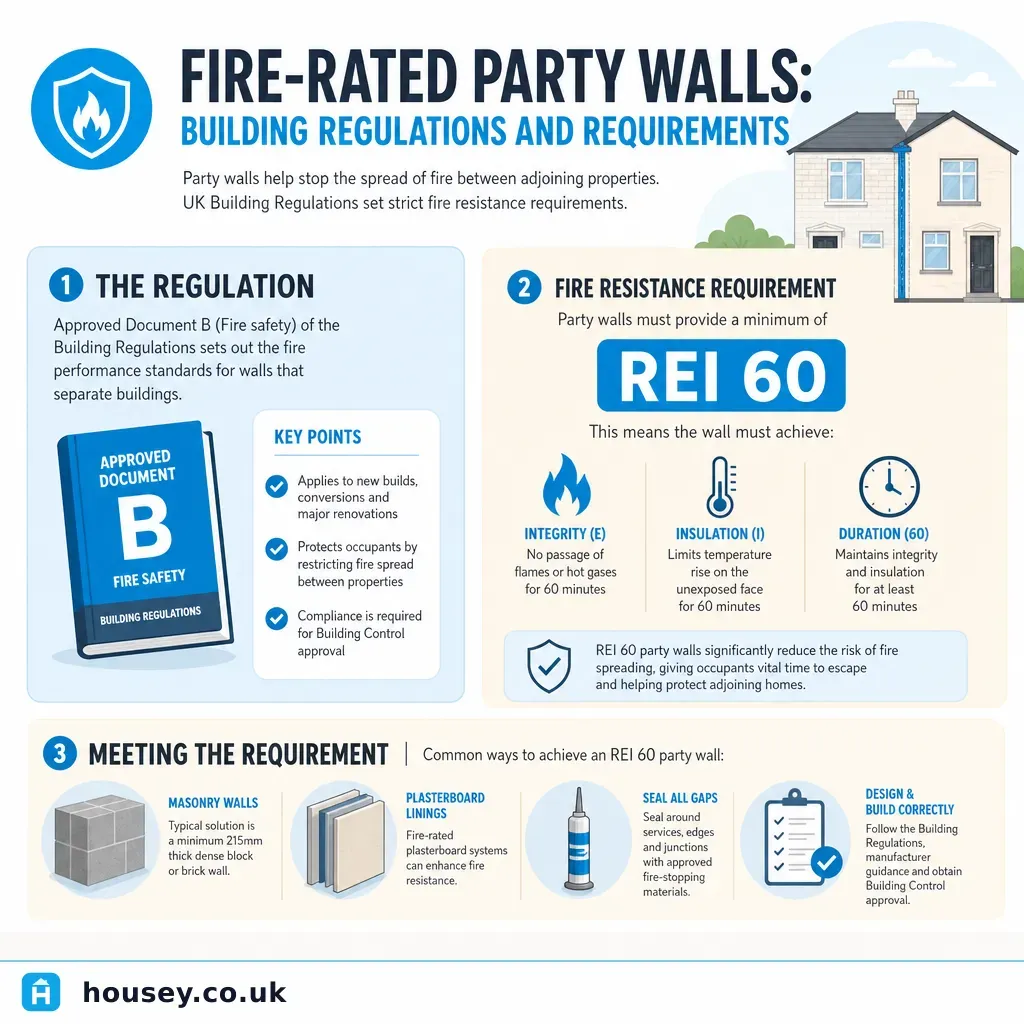
Fire-Rated Party Walls: Building Regulations and Requirements
Party walls between dwellings must achieve at least 60 minutes' fire resistance, expressed as REI 60, under Building Regulations Approved Document B.
 Planning & Pre-Build
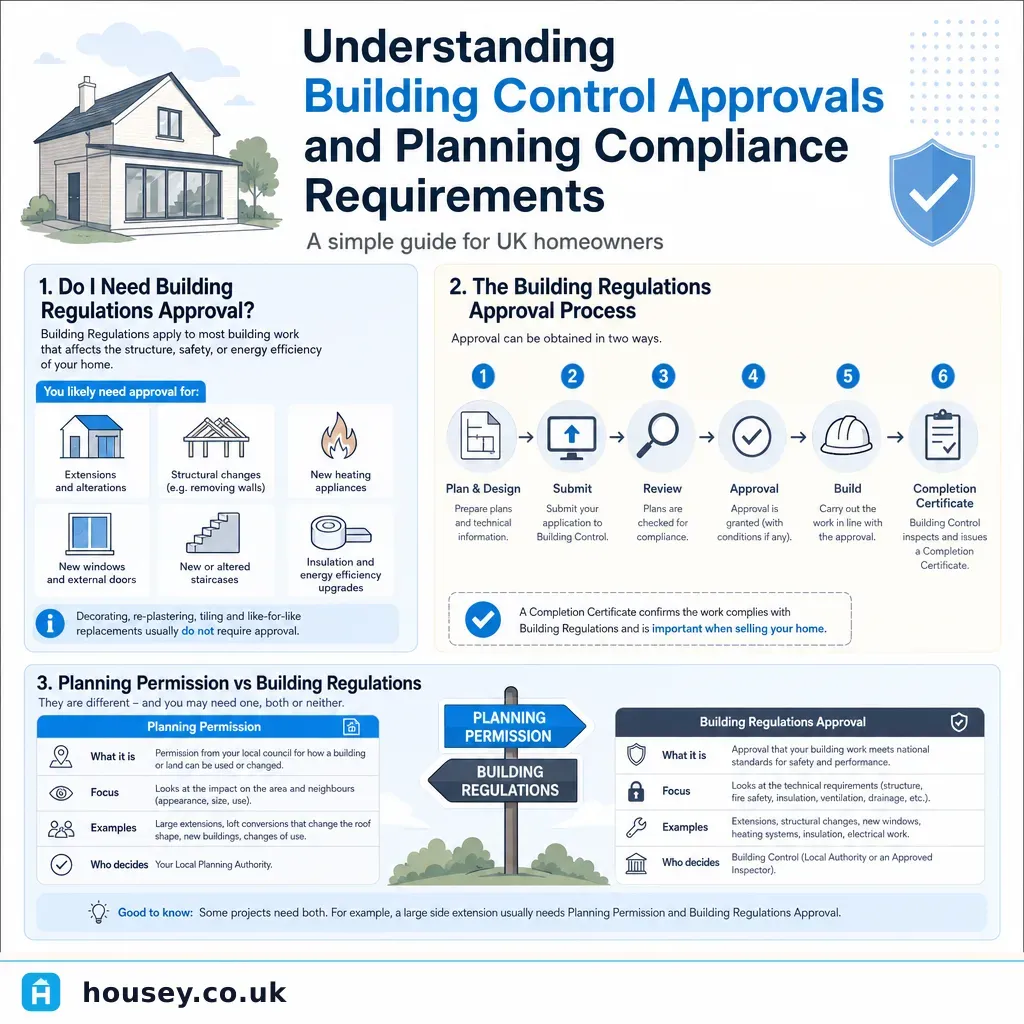
Understanding Building Control Approvals and Planning Compliance Requirements
Planning permission and building regulations are separate consents.
 Planning & Pre-Build
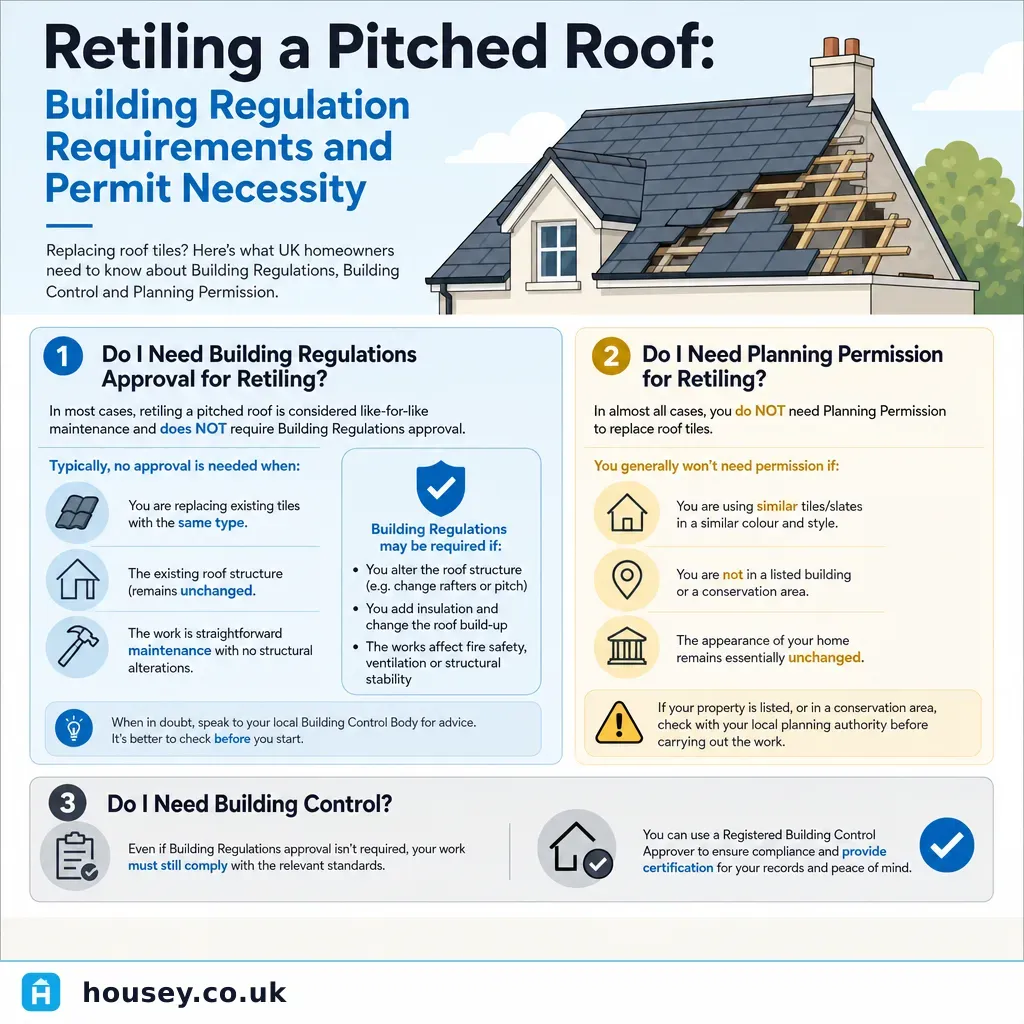
Retiling a Pitched Roof: Building Regulation Requirements and Permit Necessity
Like-for-like retiling of a pitched roof in England does not usually require planning permission or a building control application.
 Planning & Pre-Build
Can You Build Without Planning Permission? Legal Considerations
In England, many small-scale works fall within permitted development rights and need no planning application.