Lean-to Conservatory Construction Costs
By Housey · Last reviewed 7th of May 2026
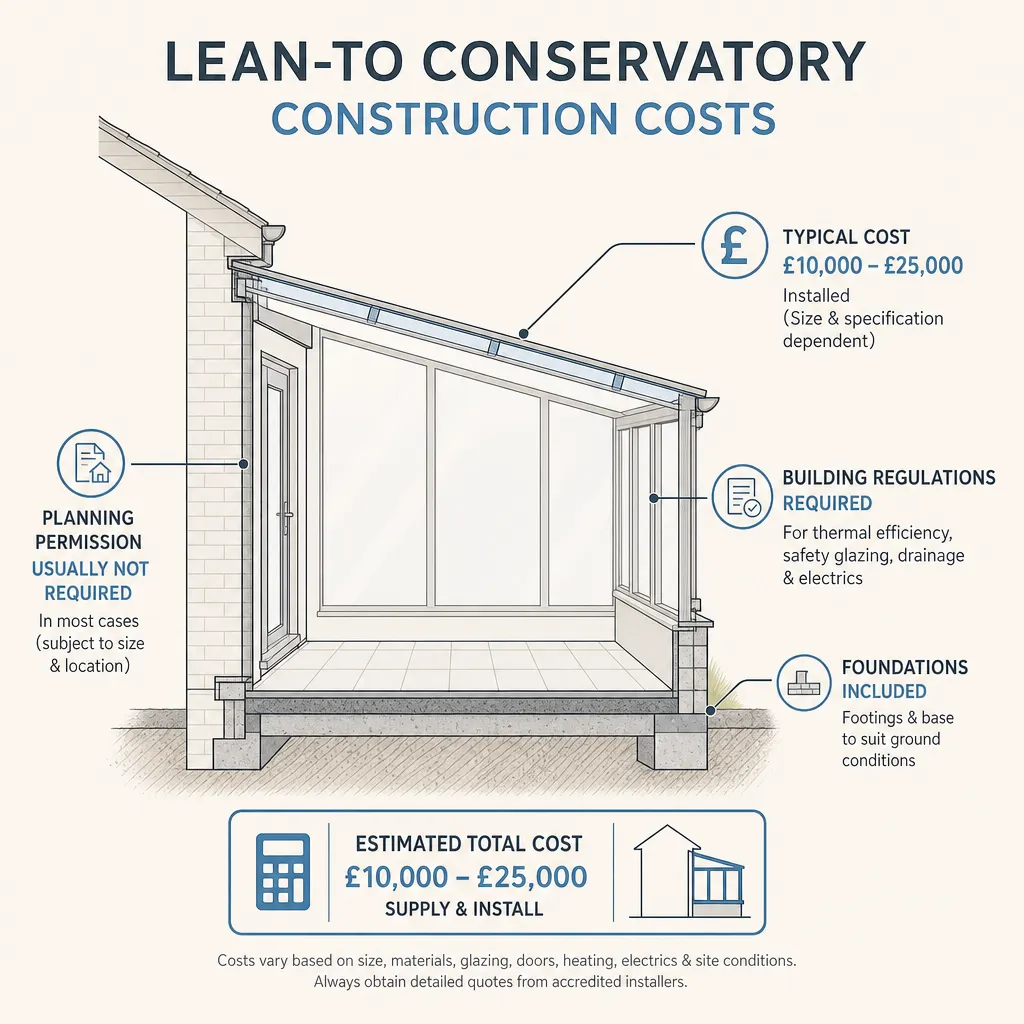
Lean-to Conservatory Construction Costs
A lean-to conservatory is the most popular and cost-effective way to add glazed living space to a UK home. The simple single-pitch roofline suits terraced and semi-detached properties with limited rear garden depth, and the structure often qualifies as permitted development — removing the need for a full planning application in many cases. Knowing what drives costs before you request quotes helps you compare proposals accurately and avoid unexpected extras once work is under way.
Key points
- A supply-and-fit lean-to conservatory in the UK typically costs £8,000–£25,000; a basic uPVC model sits at £8,000–£14,000, while an aluminium or timber-framed structure with enhanced glazing runs £15,000–£25,000+.
- Most lean-to conservatories qualify as permitted development under Class A, Schedule 2, Part 1 of the Town and Country Planning (General Permitted Development) (England) Order 2015 — but size limits, height restrictions, and location rules all apply.
- Building Regulations approval is required if the conservatory exceeds 30 m², incorporates a fixed heating system connected to the main supply, or lacks a thermal separation between the house and the conservatory.
- Roof glazing specification directly affects energy performance: a polycarbonate roof typically achieves a U-value of 1.8–2.0 W/m²K, a glass roof with warm-roof insulation can reach 1.0–1.4 W/m²K, and a solid insulated tiled roof can achieve 0.18 W/m²K or better under Approved Document L.
- VAT on conservatories is charged at 20% for most residential projects; confirm the treatment in writing with your installer and check HMRC guidance before finalising your budget.
What does a lean-to conservatory cost?
Indicative UK costs, last reviewed 2026-05-07. Prices vary by region, specification, and site conditions — always obtain at least three itemised quotes.
The total cost breaks into several components.
Base and foundations. A concrete strip or raft foundation costs approximately £1,500–£4,000 for a typical lean-to footprint; a dwarf-wall base (blockwork built up to sill height) adds a further £500–£1,500.
Frame material and glazing. This is the largest single cost element. The table below shows typical supply-and-fit ranges for a 3 m × 3 m lean-to:
Frame material | Typical supply-and-fit cost (3 m × 3 m) | Best for | Key considerations |
|---|---|---|---|
uPVC | £8,000–£12,000 | Budget-conscious buyers, modern homes | Low maintenance; standard colour palette is limited |
Aluminium | £12,000–£18,000 | Contemporary style, slim sightlines | Thermally broken frames needed for good energy performance |
Hardwood timber | £16,000–£25,000+ | Period and listed properties | Higher aesthetic quality; requires more maintenance |
Roof type. Polycarbonate is the cheapest glazed option at approximately £600–£1,200 for a 3 m × 3 m pitch. Glass roof panels cost £1,500–£3,000+. A solid insulated tiled roof adds £3,000–£6,000 to the frame cost but significantly improves year-round usability and thermal performance.
Doors and windows. A standard glazed door and one opening side light are usually included in package prices. Bi-fold or sliding door sets add £1,500–£5,000 per set depending on width and material.
Electrics. A basic lighting circuit with sockets costs £300–£800. Underfloor heating or a dedicated electric radiator circuit adds £500–£1,500. Note that a fixed heating connection to the main supply triggers Building Regulations.
Flooring. Often excluded from conservatory installer quotes; budget £800–£2,500 for tiles or a solid floor finish above the insulated base.
Planning rules for lean-to conservatories
Under the Town and Country Planning (General Permitted Development) (England) Order 2015 (Schedule 2, Part 1, Class A), a lean-to conservatory may qualify as permitted development if it meets all of the following conditions:
- Does not extend beyond the rear wall of the original house by more than 3 metres for an attached house (or 4 metres for a detached house) — or up to 6/8 metres respectively under the Neighbour Consultation Scheme prior approval route
- Does not cover more than half the area of the original garden
- The highest part of the roof does not exceed 4 metres
- Does not extend beyond a side elevation that faces a highway
- The property is not in a designated area — National Park, Area of Outstanding Natural Beauty, conservation area, or World Heritage Site — where additional restrictions apply
Wales, Scotland, and Northern Ireland operate under different permitted development frameworks; always check with the relevant planning authority.
Even where permitted development applies, it is good practice to apply for a Lawful Development Certificate from your local planning authority. This provides written confirmation that the structure is lawful and can be valuable when selling the property.
Building Regulations: when they apply
A conservatory is exempt from Building Regulations approval if it meets all of the following:
- Floor area does not exceed 30 m²
- Built at ground level
- Separated from the house by existing walls, doors, or windows
- Has no fixed heating connection to the main system
- Glazing and electrical work comply with the relevant regulations (Part K for safety glazing, Part L for energy efficiency, Part P for electrics)
If any of these conditions is not met, a full Building Regulations application — or a building notice — must be submitted to your local authority building control or an approved inspector. Where the conservatory involves removing or modifying part of the existing rear wall, structural engineer sign-off may also be required; Housey's structural engineering service can help you find a qualified engineer.
Worked UK property scenario
Scenario: A homeowner in a 1980s semi-detached house in Nottingham wants a lean-to conservatory measuring 3.5 m × 3 m (10.5 m²) across the rear of the property, with uPVC frames, a glass roof, one door, and two opening side lights. The ground is level with no drainage issues.
Cost item | Estimated cost (inc. VAT at 20%) |
|---|---|
Concrete strip foundations and dwarf wall | £3,500 |
uPVC frame and glass roof (supply and fit) | £9,500 |
Electrical first fix: sockets and lights | £650 |
Internal floor tiles (supply and fit) | £1,200 |
Estimated build total | £14,850 |
Lawful Development Certificate (optional but recommended) | ~£258 |
At 10.5 m², this comfortably sits within permitted development limits and below the 30 m² Building Regulations threshold. A Lawful Development Certificate provides written confirmation for future sale.
Note: this is a worked illustration only. Your project will vary based on site conditions, ground type, installer, and specification.
Lean-to conservatory checklist
Before instructing a builder or conservatory installer, work through this checklist:
When to get professional help
Most lean-to conservatories are straightforward projects, but engage a qualified professional if:
- The ground slopes noticeably, shows signs of poor drainage, or the property has a cellar or basement
- The property is listed, in a conservation area, or in another designated area
- The conservatory will incorporate a fixed heating connection to the main boiler
- You are unsure whether the proposal meets permitted development limits
- The project involves removing or modifying part of the existing rear wall, which may require structural engineer input
Housey's project managers can coordinate design, consenting, and construction if you would rather not manage multiple contractors yourself.
How Housey can help
Whether you need competitive quotes from trusted installers or support managing the whole project, Housey connects you with vetted extension builders and project managers experienced in conservatory and glazed-extension work. Request quotes, compare them side by side, and appoint with confidence.
Frequently asked questions
How long does a lean-to conservatory take to build?
Once foundations have cured — typically 7 to 14 days — a lean-to conservatory frame is usually erected and glazed in two to five days. Including groundworks, electrical first fix, and finishing, allow three to six weeks from groundworks start to practical completion depending on size and specification.
Do lean-to conservatories add value to a property?
A well-built, insulated lean-to conservatory can add value broadly proportionate to the usable space created, though the exact uplift depends on location, specification, and market conditions. A poorly insulated polycarbonate structure may add less value and could be noted on a homebuyer survey as a space with limited year-round use.
Do I need a party wall agreement for a lean-to conservatory?
If excavations for the conservatory base are within 3 metres of a neighbour's foundations, the Party Wall etc. Act 1996 may apply. A party wall surveyor or your installer can advise whether a notice is required before groundworks begin. Serving the notice early avoids delays to your build programme.
Can I build a lean-to conservatory myself?
Groundworks and frame installation require competent builders and specialist glazing skills. There is no legal bar on self-build, but errors in foundations or glazing can be costly to rectify. If the project requires Building Regulations sign-off, a building inspector will need to visit at key stages regardless of who carries out the work.
What is the difference between a lean-to conservatory and an orangery?
A lean-to conservatory is primarily glazed — walls and roof — with a single-pitch roof abutting the house. An orangery has solid masonry or rendered walls with a glazed lantern roof and more closely resembles a full room. Orangeries typically cost £20,000–£50,000+ and offer better thermal performance than a standard glazed conservatory.
Sources and further reading
- Town and Country Planning (General Permitted Development) (England) Order 2015 — legislation.gov.uk
- Building regulations: when you need them — GOV.UK
- Lawful development certificates — GOV.UK
- Party Wall etc. Act 1996: explanatory booklet — GOV.UK
- Approved Document L: conservation of fuel and power — GOV.UK / DLUHC
Useful next reads
 Improvement & Build
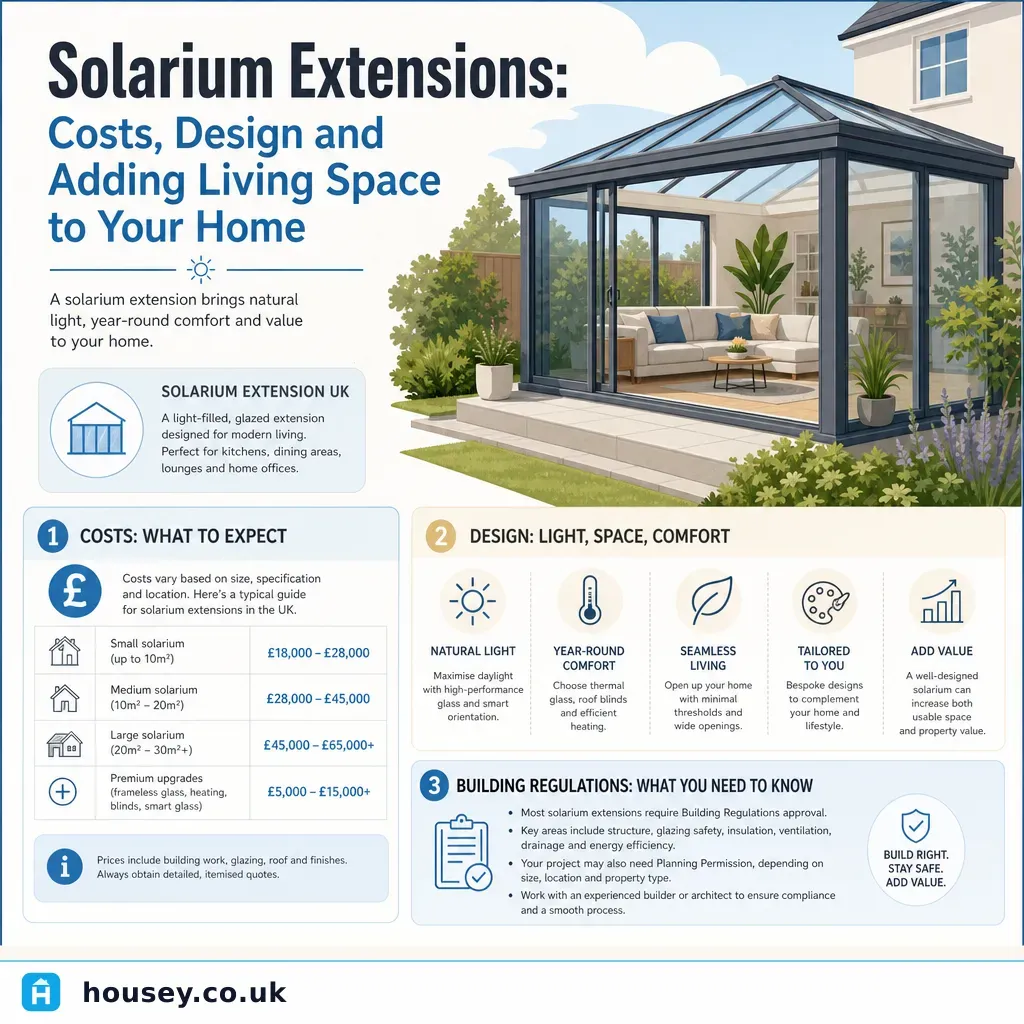
Solarium extensions: costs, design and adding living space to your home
A solarium extension is a predominantly glazed room addition with a structural glass roof, typically costing £28,000–£130,000 in the UK depending on size and specification.
 Improvement & Build
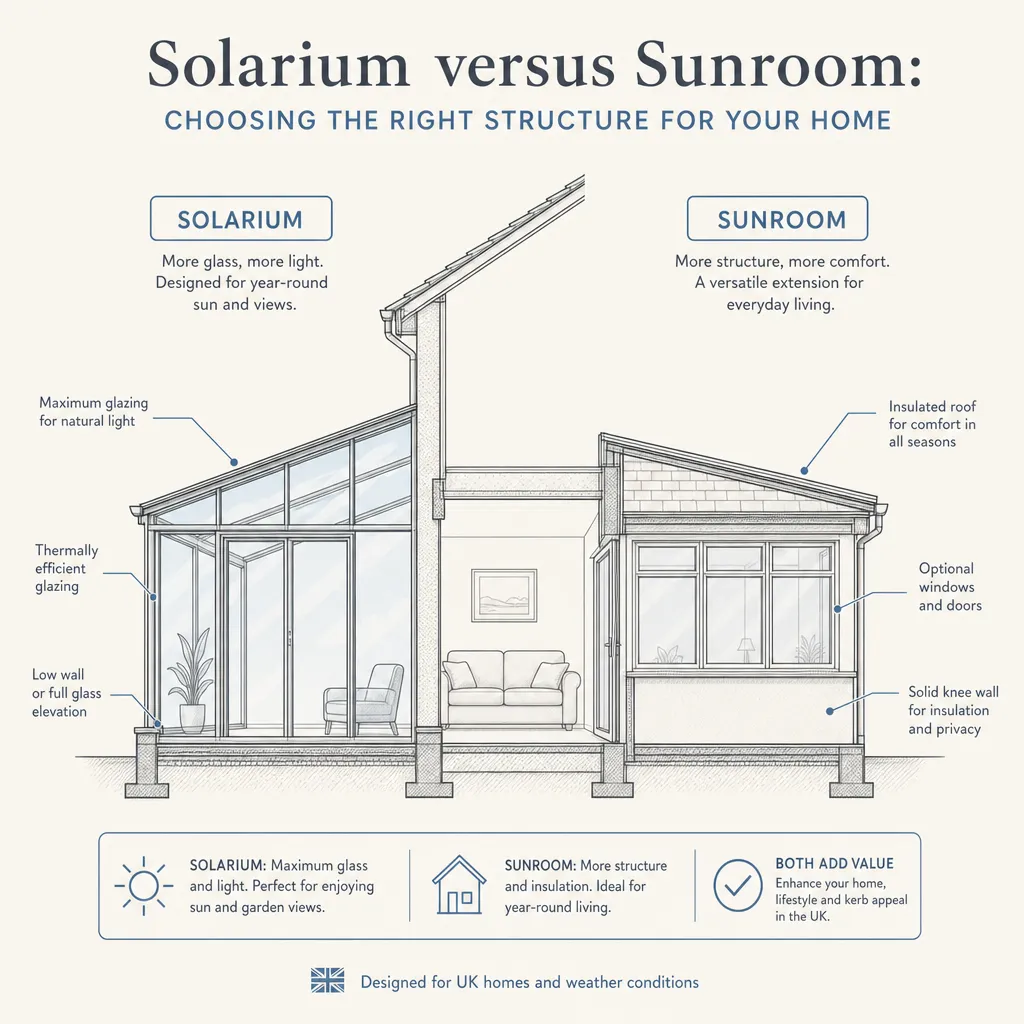
Solarium versus sunroom: choosing the right structure for your home
A solarium is a predominantly glazed structure designed for light and solar connection, best suited to seasonal use.
 Improvement & Build
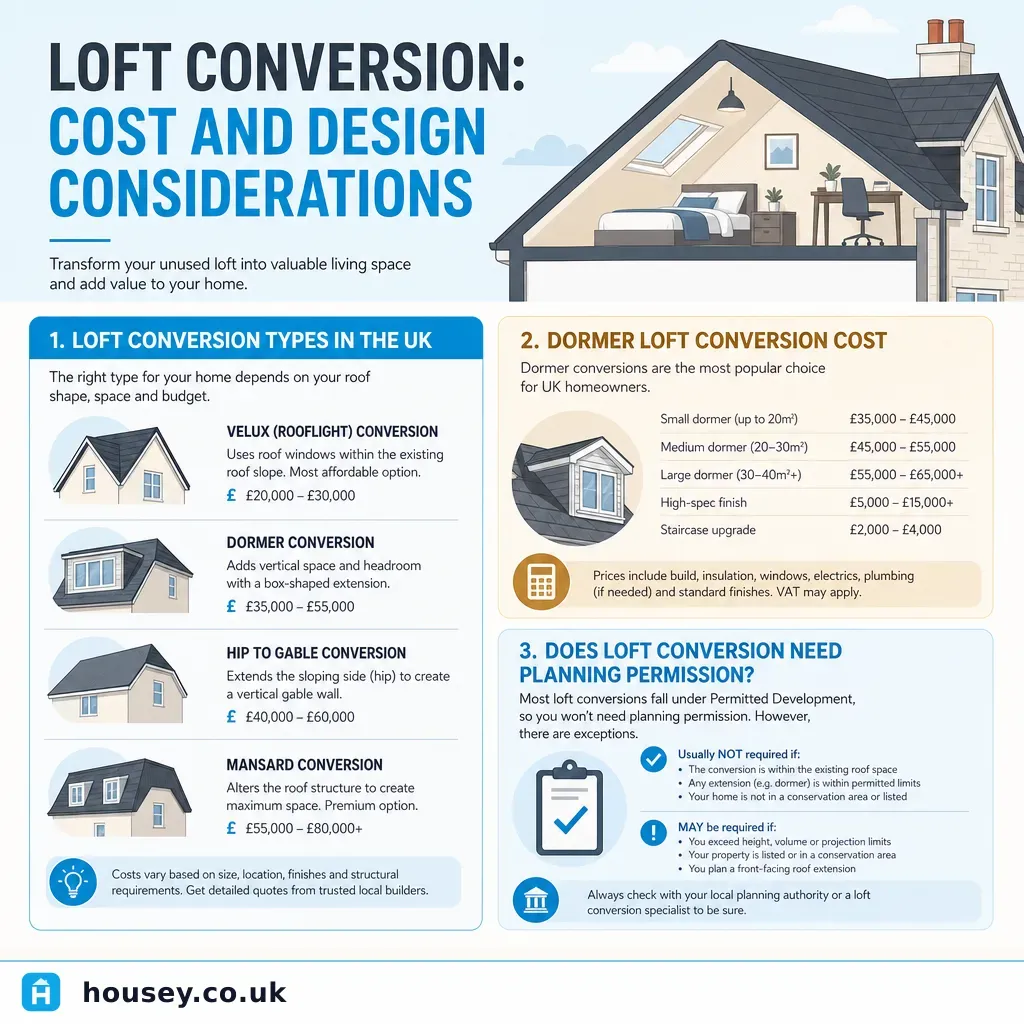
Loft Conversion: Cost and Design Considerations
UK loft conversion costs range from roughly £15,000 for a rooflight conversion to £70,000 or more for a full mansard.
 Improvement & Build
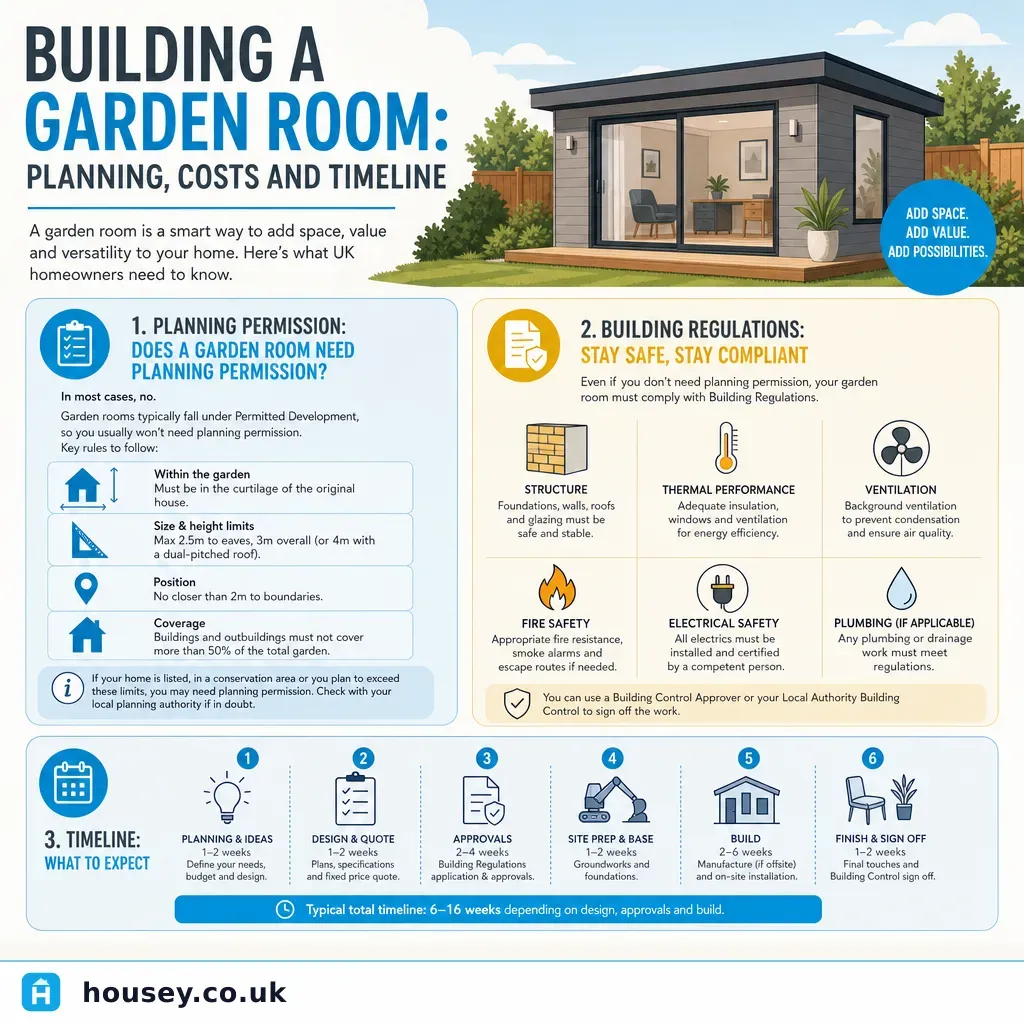
Building a Garden Room: Planning, Costs and Timeline
Most garden rooms in England fall under permitted development and don't need planning permission, provided the structure meets height, coverage, and boundary conditions.
 Improvement & Build
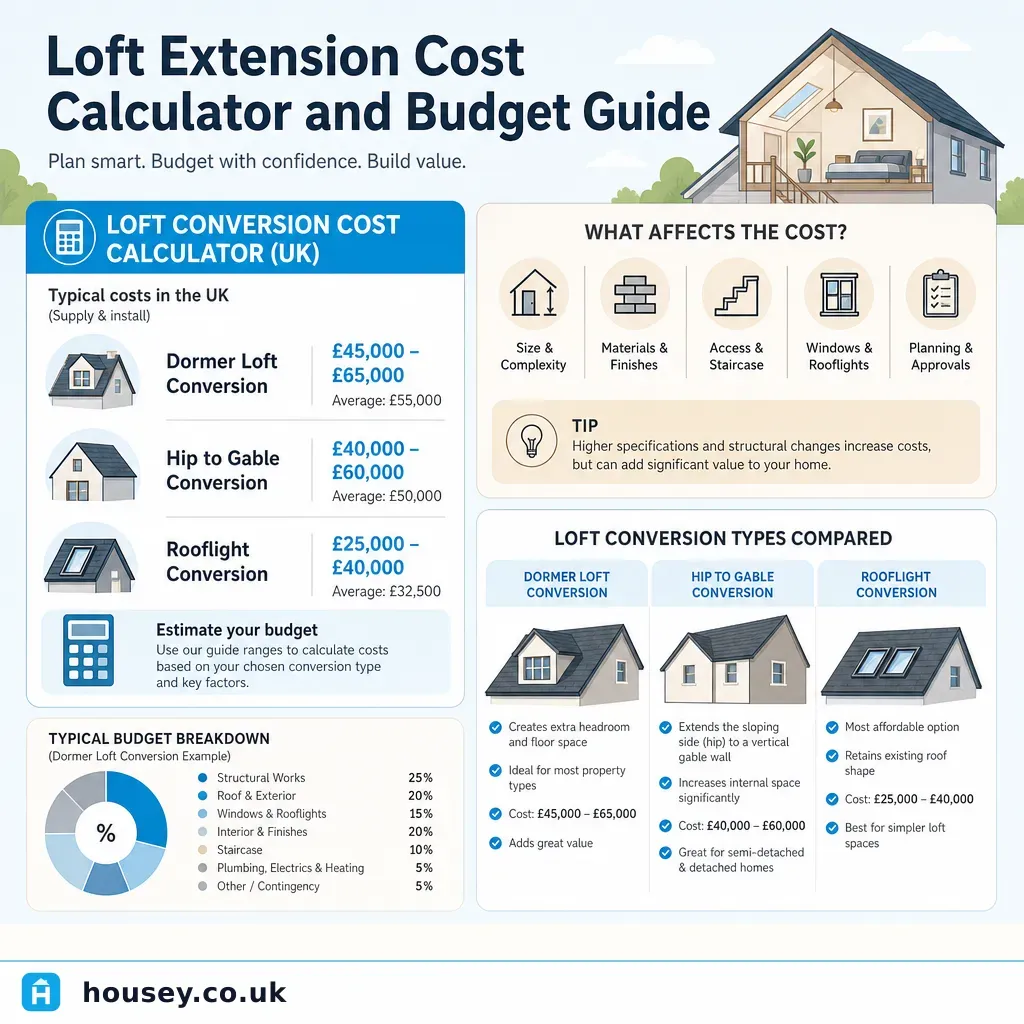
Loft Extension Cost Calculator and Budget Guide
Loft extension costs in the UK typically range from £15,000 for a basic Velux conversion to £75,000 or more for a mansard or L-shaped dormer.